Murder, She Wrote S1 E19: Armed Response (1985)

While in the hospital with a fractured leg, Jessica investigates the murder of a doctor.

Season 1, Episode 19: Armed Response (March 31, 1985)

Tonight on Murder, She Wrote

Even in the hospital, Jessica causes people to die.

Who’s in it, outside of Angela Lansbury, and were they in any exploitation movies?

Barney Ogden is played by Eddie Bracken. He was Roy Walley in Vacation!

Melanie Baker is Victoria Carroll. She also starred in Nightmare in WaxThe Kentucky Fried Movie and was the voice of She-Hulk in the 1980s Hulk cartoon.

Dr. Samuel Sam Garver is played by Stephen Elliott. He was the police commissioner in Death Wish.

James Gammon was in Silver Bullet and plays Billy Don Baker in this.

Dr. Wes Kenyon. He appeared on the TV show Otherworld this same season and has also appeared in Deadly Eyes and Deadly Games.

The cop in this is Ly. Ray Kenkins. And that’s not just any cop, that’s Bo Hopkins, who played Crazy Lee in The Wild Bunch, plus he was in movies like Uncle SamFrom Dusk till Dawn 2Nightmare at NoonFertilize the Blaspheming BombshellThe Fifth FloorWhat Comes Around and more.

Dr. Ellison is Martin Kove! Yes, Kreese! The helicopter pilot who screwed over Rambo! He’s in this!

Nurse Jennie Wells is played by Kay Lenz from House!

Kevin McCarthy was in more than 200 movies, but don’t we know him from Invasion of the Body Snatchers the most? He plays Milton Porter.

Nurse Marge Horton is Susan Oliver, who famously was Vina on the original Star Trek episode “The Cage.” Her mother was an astrologer, and amazingly,  she tried to be the first woman to fly a single-engine plane solo from New York to Moscow, but was not allowed into Russian airspace. She had a plane crash weeks after she left Peyton Place, and through hypnosis, could fly again, being elected pilot of the year in 1970. She also directed episodes of M*A*S*H* and Trapper John. MD.

Martha Raye shows up. We don’t have actors anymore like her, who we all knew was just Martha Raye, and she appears out of nowhere on shows like Murder, She Wrote.

In the small roles, we have Lucille Meredith, Paul Tuerpe, Fred D. Scott, Herbert Winters, Lavelle Roby (she was in Beyond the Valley of the Dolls), Denise Chesire (a mime and puppet performer who was one of the flying monkeys in Under the Rainbow) and Kimberly L. Ryusaki.

What happens?

Jessica goes to Texas to support a writer accused of plagiarism. When she’s picked up at the airport by lawyer Milton Porter, a kid knocks her over and she has to get her leg plastered up at the hospital, where she learns that Dr. Garver’s understudies, Dr. Ellison and Dr. Kenyon, hate each other. As Jessica listens to them fight — she had to get up with a broken leg to get a cup of tea because no one would help her — we discover that Dr. Garver has been drowned.

Everyone thinks it’s Jennie, who was Jessica’s nurse, but JB goes CSI and pulls off that old Murder, She Wrote trick where someone fired the gun once to kill someone and another time so no one knew when the murder happened. Also: Obviously, with a gun involved, this isn’t a drowning.

Who did it?

Dr. Ellison and Dr. Kenyon, who were tired of Dr. Garver making them fight one another.

Who made it?

Director Charles S. Dubin made tons of TV — 44 episodes of M*A*S*H*, 14 of Kojak, 11 of Matlock, the Topper TV movie, Death In Space, around 117 credits in total. It was written by Gerald K. Siegel, who wrote nine episodes of the show, as well as episodes of Darkroom and Salvage 1.

Does Jessica get some?

Not with that cast.

Does Jessica dress stupid or act drunk?

Not with that cast — wokka wokka.

Was it any good?

Good cast, somewhat boring episode.

Any trivia?

This episode is a lot like Agatha Christie’s They Do It With Mirrors.

Give me a reasonable quote:

Jessica Fletcher: Mr. Porter, this was an accident. I don’t want to sue.

Milton Porter: Hush, ma’am. Talk like that… put us lawyers out of business.

What’s next?

An unpopular show-business personality discovers that elaborate security systems are no guarantee of safety.
JUNESPLOITATION: Woman Revenger (1981)

June 15: Junesploitation’s topic of the day — as suggested by F This Movie— is Revenge! 

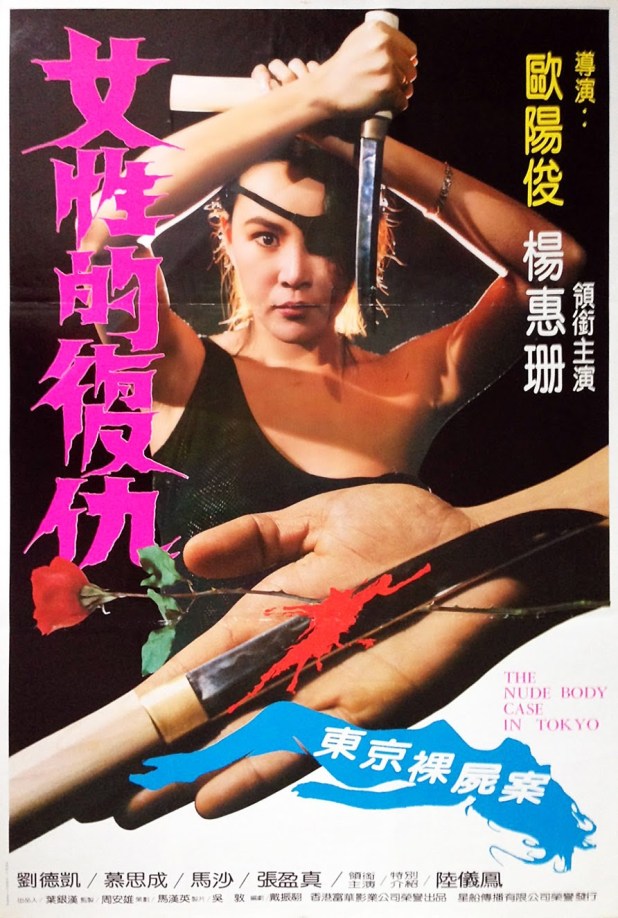
Nu xing de fu chou (New Type Revenge) AKA The Nude Body Case In Tokyo is a 1981 Taiwanese movie directed by Yang-Ming Tsai (Phoenix the RaiderThe Legend of Broken Sword) and written by Chen Kuo Tai and Chen-hsiang Tai. Sure, it’s a revenge-o-matic, but it’s also a Taiwan Black Movie, so called because it takes real life and goes hard in its depiction of a woman done wrong going for blood.

Ling (Elsa Yeung) is a dance instructor who has learned that her best friend Meihua has been killed in Japan. To add more pain, Meihua’s sister Meifeng is tied up in this, forced into prostitution to pay for the cocaine she’s stolen. Ling saves her, at the cost of her eye, making her into the Frigga of this film.

This is also wildly unfocused and padded, which I loved, because it includes Ling going to watch a KISS band play in the park and attend a sumo match. How this advances the plot is unknown, but then this goes for broke by having Yakuza gangsters torture women by crucifying them upside down before covering them with ants. After all this lunacy, Ling gets all of their victims together for the eye for an eye that they need. Literally.

You will believe that sexy gymnasts can obliterate evil men. This is how it should be.

You can download this from the Internet Archive. You can also watch it on the TaiwanPlus site.

JUNESPLOITATION: Treasure: In Search of the Golden Horse (1984)

June 14: Junesploitation’s topic of the day — as suggested by F This Movie— is Free Space!

In August of 1979, Kit Williams published Masquerade, a book that had clues to the location of a jewelled golden hare that Williams had created and hidden somewhere in Britain. He had been challenged by publisher Tom Maschler to create an illustrated book that did something no one else had before. He made sixteen detailed paintings of the story of Jack Hare, who is taking a treasure from the Moon to the Sun. He loses the treasure, and the reader is asked to help him find it.

In a box that said, “I am the keeper of the jewel of Masquerade, which lies waiting safe inside me for you or eternity,” he buried a gold rabbit pendant with celebrity witness Bamber Gascoigne.

He said, “If I was to spend two years on the sixteen paintings for Masquerade I wanted them to mean something. I recalled how, as a child, I had come across “treasure hunts” in which the puzzles were not exciting nor the treasure worth finding. So I decided to make a real treasure, of gold, bury it in the ground and paint real puzzles to lead people to it. The key was to be Catherine of Aragon’s Cross at Ampthill, near Bedford, casting a shadow like the pointer of a sundial.”

Three years later, Williams received a letter containing a sketch with the solution from a man named Ken Thomas, whom the writer soon realized had made a lucky guess. After he was given the prize, physics teachers Mike Barker and John Rousseau wrote in with their answer, but had not found the prize. That’s because the rabbit’s box went unnoticed in the dirt they dug up; Thomas saw it and lucked into winning. According to Wikipedia, “It was later found that Thompson had not solved the puzzle and had guessed the hare’s location using insider knowledge obtained from a former acquaintance of Williams.”

Ken Thomas was really Dugald Thompson, and his business partner, John Guard, was the boyfriend of Veronica Robertson, who had previously been Williams’s girlfriend. Guard allegedly convinced Robertson to help him win the contest because he wanted the money donated to animal rights causes.

William wrote a sequel, The Bee on the Comb, and a video game, Hareraiser, with a jewel as a prize that was never found. Other books like this — this was a big success — included The Piper of Dreams, The Secret, The Golden Key, The Key to the KingdomOn the Trail of the Golden OwlThe Merlin Mystery, Forest Fenn’s The Thrill of the Chase: A Memoir and the movie/book we are talking about today, Treasure: In Search of the Golden Horse.

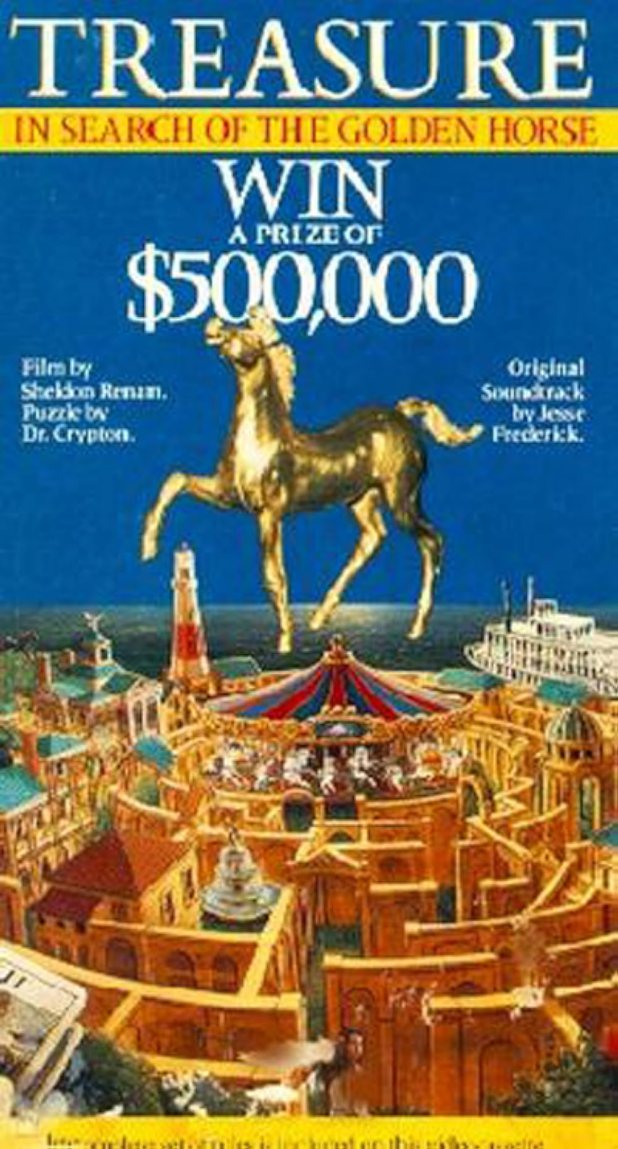
Published by Intravision, there was a movie directed by the man who came up with the idea, Sheldon Renan, and a book illustrated by Jean-Francois Podevin and published by Warner Books. A gold horse was the prize in this contest designed by Paul “Dr. Crypton” Hoffman, who was the president and editor-in-chief of Discovery magazine, president and publisher of Encyclopedia Britannica and the man who made the treasure map for Romancing the Stone.

Renan wrote the first book about underground movies, An Introduction to the American Underground Film and “The Blue Mouse and The Movie Experience,” an influential Film Comment article about how the Blue Mouse Theater in Portland went from Hollywood movies to grindhouse films. Wildly, he also directed The Killing of America, wrote Lambada and has been a speechwriter for every CEO of Xerox since 1990.

While IMDB says that cinematographer Hilyard John Brown (also a cameraman on This Is Spinal Tap and Solomon King) came up with the idea of a film with treasure — but “opted out of working on the film because director Sheldon Renan wanted a lot of helicopter shooting, and Brown had had too many close calls in helicopters” — every other article I have found says that this was Renan’s project.

You know who did shoot this? Hanania Baer, who was also the cinematographer for American NinjaMasters of the UniverseErnest Scared StupidNight PatrolBreakin’ 2Ninja 3UFOs Are Real and so many more, and Dennis Matsuda, a cameraman on HotlinePoltergeistRaising Arizona and Stand By Your Man.

The movie is about a girl (Dory Dean) trying to find her father and her lost horse, Treasure (Galahas). She’s helped by Mr. Maps (Elisha Cook Jr., Mr. Nicklas in Rosemary’s Baby), a blacksmith (John Melanson, who was an actual blacksmith and is also the Man with the Black Gloves), a sushi chef (Yasumasa Adachi), Mr. Night Music (Herman Sherman), Dream Dancers and the Ghost Party, all narrated by Richard Lynch. Yes, Richard Lynch, who says things like “The city. It was no place to find a horse. Not her horse. She knew that roads that started in the city led in all directions. How could she leave the city and find the right direction?”

This came out during the early console video game era, and there was also going to be a Colecovision game. A silver horse was buried and is still there, as the puzzle to find it never got made.

My dad was obsessed with this book, staring at it in B. Dalton and wondering how to solve it. We couldn’t afford it, so he would sit on the floor and draw sketches of it. No one won, and the prize money was given to Big Brothers and Big Sisters. Seven months after the contest was over, Nick Boone and Anthony Castaneda discovered where the horse was with the Captain Nemo solution.

You can watch this on YouTube.

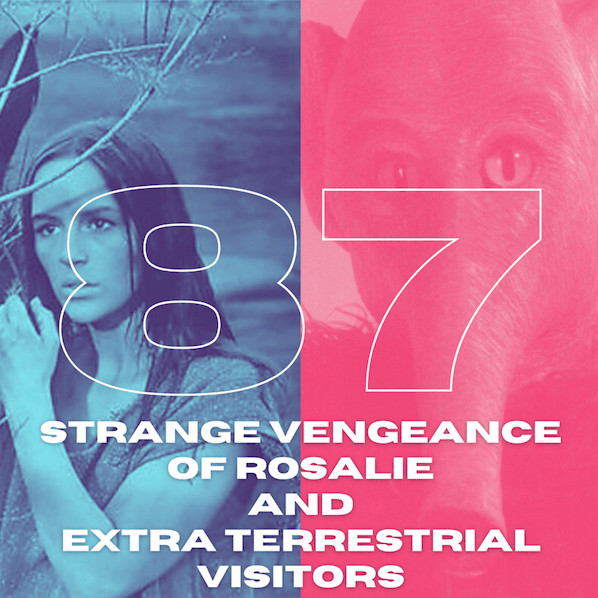
B & S About Movies podcast Episode 87: Strange Vengeance of Rosalie and Extra Terrestrial Visitors

Two movies this time: the weird desert film Strange Vengeance of Rosalie and Spanish E.T. ripoff Extra Terrestrial Visitors. Neither of these movies together. Maybe you will find the link and can tell me.

You can listen to the show on Spotify.

The show is also available on Apple Podcasts, iHeartRadio, Amazon Podcasts, Podchaser and Google Podcasts.

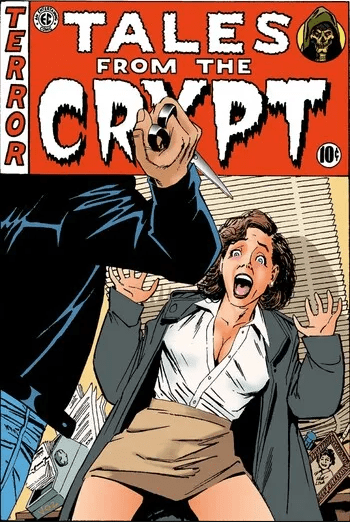
Tales from the Crypt S8 E9: Smoke Wrings (1996)

Barry (Daniel Craig), a young man with a strange device that can paralyze people and play with their emotions, is hired by Touchstone Edwards ad exec Jacqueline Edwards (Ute Lemper). He starts by embarrassing creative Frank (Denis Lawson) and then gets revenge on his boss for Alistair Touchstone (Paul Freeman, Belloq!), the boss she ruined.

They tell me Luca Brasi sleeps with the fishes. He’s a strange guy. But that’s not why I called this meeting of the five families. The Tahacklies, the Bonettis, the others. The reason I called you all together is this. As Godfather of the Goreleone family, I say its time that we in horrorganized crime stop frighting each other! I want there to be peace amongst us. I want there to be a whole lot of pieces! Which is kind of like the young man in tonight’s tale. He wants a whole lot of something, too, in a nasty nugget I call “Smoke Wrings.””

The device will soon be used to sell more Chalmer’s Chocolates, Amazon Cola, Alanis Lipstick, and Quarter Moonlight Condoms. In truth, it’s all been a plan by Alistair and Jacqueline, who hypnotize their clients and soon, all of England, as they send the inventor to his doom.

Gayle Hunnicutt is in the cast. You may recognize her from Shadows In an Empty RoomThe Legend of Hell HouseEye of the Cat and The Wild Angels.

This episode was directed by Mandie Fletcher (Absolutely Fabulous: The Movie) and written by Lisa Sandoval, an associate producer and script supervisor for the show who was also A.L. Katz’s assistant.

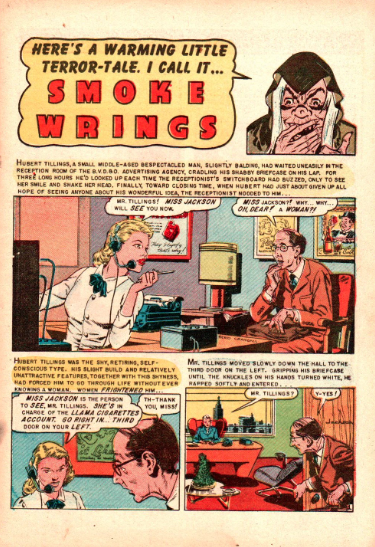
This episode was based on “Smoke Wrings” by Vault of Horror #34. It was written by Al Feldstein and William Gaines and drawn by Reed Crandall. It has a man get seduced by a client and his ad idea being taken by her; a cigarette smoking billboard that she uses to kill him before one of the smoke rings kills her. The title makes sense for that story, but not this episode.

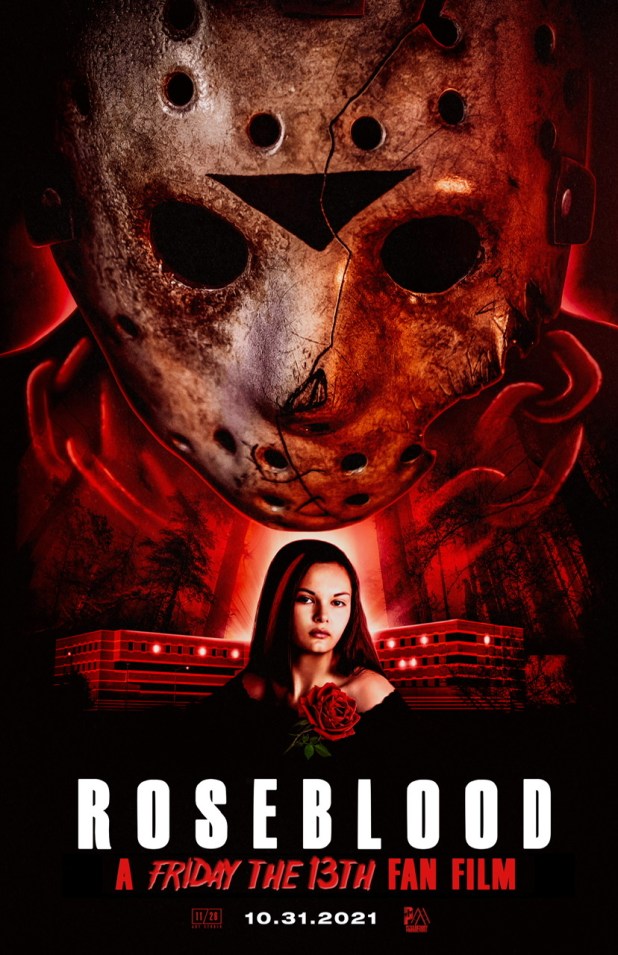
JUNESPLOITATION: Rose Blood: A Friday the 13th Fan Film (2021)

June 13: Junesploitation’s topic of the day — as suggested by F This Movie— is Friday the 13th! 

We’re decades away from the last official Friday the 13th movie, and we’ll see numerous Michael Myers reimaginings before we ever get back to Crystal Lake. Thank all the fan movies that are working to fill this space, especially good ones like this.

Until Horror Inc. and Victor Miller settle the lawsuit—or whatever has kept Jason dead for 16 years—we can thank director and writer Peter Anthony for this movie.

A direct sequel to Friday the 13th Part VII: The New Blood, this finds Tina Shepherd (Lar Park-Lincoln, reprising the role, at some points in the story; Jessica Hottman is the younger version) kept as a prisoner in the Crystal Lake Research Facility, being studied by General Brackbower (Anthony) and his team of scientists, which includes The Duke (Jequient Broaden), who is obviously Creighton Duke. There’s also a team of mercenaries — FAAST (Forward Assault Anomaly Strike Team) — on hand to guard new prisoner Rose (Sanae Loutsis), who is even more powerful than Tina.

The goal of the military is to use Rose’s power to bring back Jason Voorhees and make him a soldier for the U.S. Army. That takes the first hour of the movie, so if you’re not patient, you may dislike this. If you’re a fan of the series, you’ll love it, as it’s filled with moments from 7, 8, 9 and Jason X.

At the close, there’s a fan service moment that you’re either going to love or hate. I loved the whatever can happen will happen notion of all this, as well as the inventive kills that transform the movie from psychic girl movie back to a Jason movie. It’s well done, and this was worlds better than I had ever imagined it could be. It doesn’t look like a fan film. Instead, it looks better than most microbudget horror movies that I watch.

You can watch this on YouTube. You can also buy it here.

JUNESPLOITATION: Battle Royale High School (1987)

June 12: Junesploitation’s topic of the day — as suggested by F This Movie— is Cartoons!

Back in the pre-Internet days of buying fifth-generation VHS dubs at conventions, Battle Royale High School was one of the first anime I owned. There were no subs or dubs—just demons and karate while wearing a Tiger Mask.

Based on the Shin’ichi Kuruma manga Majinden (Legend of the Demons), this starts with high school asskicker Riki Hyōdo, who loves to fight. He’s also the chosen body for Lord Byōdo, demon king of the Dark Realm, who comes to Earth to challenge him. There’s also Space-Time Continuum Inspector Zankan, a robotic man who has come to protect reality from the demon, and Toshimitsu Yūki, a student who knows how to fight these dark creatures.

They all face Fairy Master Kain, who has started to take over the bodies of students and attack others, like Megumi Koyama, who is in love with Riki.

As you can imagine, a 50-minute adaptation of a long-running manga leaves a ton out. Director and writer Ichirô Itano worked on tons of famous anime, including Fist of the North Star, Violence Jack, Tekkaman BladeGantz and started as an in-between artist on stuff like Galaxy Express 999 and Farewell to Space Battleship Yamato: Warriors of Love before graduating to being an animator on Mobile Suit Gundam. Today, he designs kaiju for anime like SSSS.Dynazenon and SSSS.Gridman.

This is the kind of movie that has a woman explode all over the hero, then he rebuilds her from a gore-filled mess and says, “Nice tits.” You can only guess how much 15-year-old me loved this.

You can watch this on YouTube.

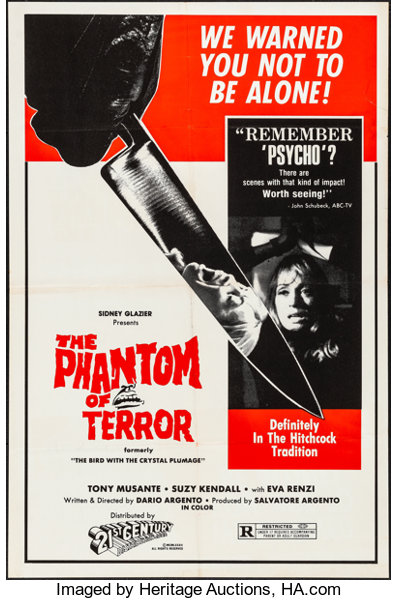
WEIRD WEDNESDAY: The Bird with the Crystal Plumage (1970)

Aside from Mario Bava’s influential films, such as Blood and Black LaceThe Girl Who Knew Too Much, no other movie has left as indelible a mark on the Giallo genre as Dario Argento’s 1970 directorial debut. Before this, Argento was a journalist who contributed to the screenplay of Sergio Leone’s Once Upon a Time in the West.

The title of the film, The Bird with the Crystal Plumage, is a metaphor for the protagonist’s predicament. Just as the bird is trapped by the beauty of the crystal plumage, Sam is trapped by the beauty of the art gallery and the mystery it holds. This metaphorical title sets the tone for the film and its exploration of the relationship between art and violence. In the film, Sam Dalmas (played by Tony Musante) is an American writer struggling with writer’s block. He travels to Rome for a change of scenery, accompanied by his British model girlfriend, played by Suzy Kendall. Just as he decides to return home, he witnesses a black-gloved man attacking a woman inside an art gallery. Desperate to save her, he finds himself helpless, trapped between two mechanical doors as the woman silently pleads for help.

The woman, Monica Ranier, is the gallery owner’s wife. Although she survives the attack, the police suspect Sam may be involved in the crime and confiscate his passport to prevent him from leaving the country. Unbeknownst to them, a serial killer has been targeting young women for weeks, and Sam is the only witness. Haunted by the attack, Sam’s memory is unreliable, leaving him without a crucial clue that could solve the case, adding a layer of suspense to the narrative.

This film introduces several tropes that would become hallmarks of the genre: the foreign stranger turned detective, the gaps in memory, and the black-clad killer—elements that later Giallo films would pay homage to. These elements, along with Argento’s unique visual style and use of suspense, would go on to influence a generation of filmmakers and shape the Giallo genre as we know it today.

Another recurring theme in Argento’s work appears for the first time here: the notion that art can incite violence. In this instance, a painting depicting a raincoat-clad man murdering a woman plays a significant role.

As the story unfolds, Sam receives menacing phone calls from the killer, and the masked assailant attacks Julia. The police manage to isolate a sound in the background of the killer’s conversations—the call of a rare Siberian bird. This bird, a Grey Crowned Crane, plays a significant role in the film’s narrative, serving as a clue that brings the police closer to unraveling the mystery. The film’s use of this rare bird as a plot device is a testament to Argento’s skill as a storyteller and his ability to create tension and suspense.

Alberto, Monica’s husband and the owner of the art gallery, ultimately attempts to kill her, revealing that he orchestrated the attacks. However, in true giallo fashion, mistaken identity is a crucial plot twist. Even though this film was made nearly fifty years ago, I won’t spoil the reveal of the real killer.

I recall my parents seeing this movie before I was born and disliking it so much that they would mention “that weird movie with the bird that makes the noises” whenever they encountered a confusing film. Ironically, I grew to love Argento’s work. My fascination with Giallo and difficult-to-understand films is a form of rebellion against their opinions.

This film, an uncredited adaptation of Fredric Brown’s novel *The Screaming Mimi*, was initially considered a career misstep by actress Eva Renzi. The film’s producer even wanted to replace Argento as director. However, when Argento’s father, Salvatore, spoke with the producer, he noticed that the executive’s secretary appeared shaken. When he asked her what was wrong, she revealed she was still terrified from watching the film. Salvatore convinced her to explain her fear to her boss, ultimately leading to Argento staying as director.

The outcome of this struggle? It is a film that played in one theater in Milan for three and a half years, leading to countless imitators—and inspired many elements in films featuring lizards, spiders, flies, ducklings, butterflies, and more—for decades to come. Argento would later continue his so-called Animal Trilogy with The Cat O’Nine Tails and Four Flies on Grey Velvet, then Deep Red before moving into more supernatural films like Suspiria and Inferno.

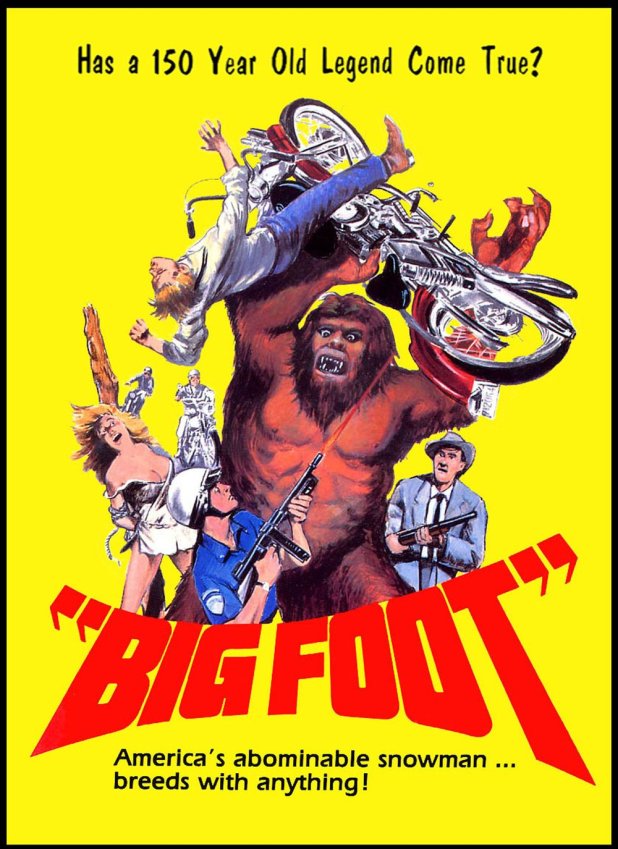
WEIRD WEDNESDAY: Bigfoot (1970)

Anthony Cardoza produced some really interesting films. You may call them turkeys. You may also call them…well, you wouldn’t call them works of art. But hey, his movies live on, like The Beast of Yucca FlatsThe Hellcats and today’s film, Bigfoot.

Jasper B. Hawks (John Carradine!) and Elmer Briggs (John Mitchum, brother of Robert and the writer of the John Wayne voiced “America, Why I Love Her” that TV stations used to sign off when TV stations still existed and actually signed off) are driving around the forest. And Joi Landis (Joi Lansing, a former MGM contract girl who shows up in the long tracking shot that begins Touch of Evilin her final role) is a pilot whose plane breaks down. She parachutes into the woods and encounters Bigfoot.

Then there’s Rick (Chris Mitchum, son of Robert and also an actor in films like Jodorowsky’s Tusk and Jess Franco’s Faceless) and his girlfriend Chris, who find a Bigfoot cemetery and get attacked, too.

Of course, the authorities are of no help. Only Jasper will help Rick, and that’s because he wants a Bigfoot for his freak show.

Peggy gets kidnapped by Bigfoot, and we discover that Joi has been taken, too. Upon reaching the lair of the Bigfoots (Bigfeet?), we discover that the creatures we’ve seen are his wives, and the real creature is 200 feet tall. Yes,. You just read that right. And he’s about to fight a bear that’s just as huge.

A gang of bikers gasses Bigfoot, but he escapes the freakshow and then gets blown up by bikers. John Carradine quotes from King Kong (he does throughout the film) and the movie ends.

Along the way, we find Doodles Weaver, whose scene in the completely bonkers The Zodiac Killer may be the most ridiculous scene in what is quite honestly one of the strangest films I’ve ever seen.

And hey, is that Bing Crosby’s son Lindsey? Yes, it is! And the first singing cowboy, Ken Maynard! This movie has actors with much more interesting stories than the film they’re stuck in.

But you know what is interesting? The strange doom funk that plays every time the bikers show up. And keep your eyes open for a quick appearance by Haji, who famously appeared in Russ Meyer’s Faster, Pussycat! Kill! Kill! 

Director Robert F. Slatzer only did two other movies, but one of them was The Hellcats, where Russ Hagen battles a female gang. Leather on the outside…all woman on the inside!

But hey — Bigfoot. Come for the bikers. Stay for the bigfoots. Enjoy the bikinis. But dig this crazy sound, man!

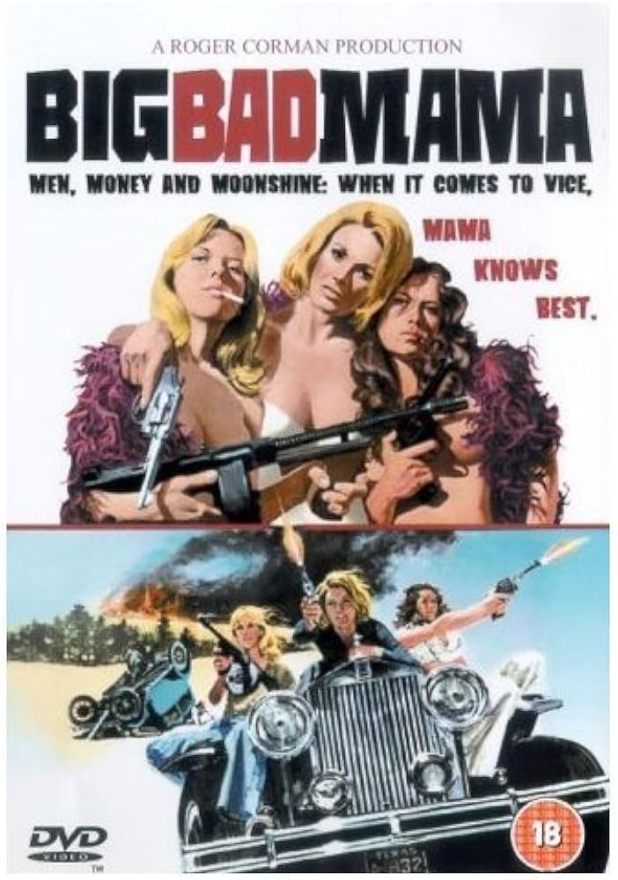
WEIRD WEDNESDAY: Big Bad Mama (1974)

Steve Carver originally intended to get involved in the worlds of cartooning, commercial art and animation before becoming a cameraman for ABC’s Wide World of Sports, shooting St. Louis Cardinals baseball games before he made thirty documentaries while teaching college at the same time.

One of those documentaries got him into the American Film Institute, where he studied under George Stevens, Alfred Hitchcock, Charlton Heston and Gregory Peck. He also had the opportunity to be the assistant director on Dalton Trumbo’s Johnny Got His Gun.

Carver’s final AFI project was a short based on Poe’s The Tell-Tale Heart, which brought him to the attention of Roger Corman. He edited 150 trailers for the producer and directed The Arena — which has Joe D’Amato as director of cinematography — before this film. He’d go on to make two Chuck Norris films, Lone Wolf McQuade and An Eye for an Eye, before leaving film for the world of photography, pining for the more fun days of working with Corman.

Texas, 1932. Wilma McClatchie (Angie Dickinson) has taken over her dead man’s bootlegging still but gets caught by the law. Forced to hand over all her money and even her wedding ring to the sheriff, she decides that she and her daughters Polly (Robbie Lee, Lace from Switchblade Sisters and eventually the voice of Twink on Rainbow Brite; she’s also the goddaughter of Roy Rogers and Dale Evans) and Billy Jean (Susan Sennett, The Candy Snatchers and wife of Graham Nash) are going to live a life of crime.

While Wilma is at a bank trying to pass a fake check, the girls end up helping Fred Diller (Tom Skerritt) as he knocks over the joint. He and Wilma soon become lovers, but that doesn’t last long before she’s bedding gambler William J. Baxter (William Shatner), and he starts sleeping with both of her daughters, sometimes at the same time, because Roger Corman produced this.

After kidnapping and ransoming the daughter of a millionaire, federal agents and the police finally track down the gang. Baxter gets cuffed, and the girls escape while Diller defends them with a hail of Thompson submachine gun fire. But as they drive away, Wilma dies, her bloody arm dragging against the left side of the car as it speeds away.

Well, or so you’d think, as there was a sequel.

I learned so much about so-called bad movies from the Medved brothers. In their 1986 tome Son of the Golden Turkey Awards, they nominated Dickinson’s role in this film as “The Most Embarrassing Nude Scene in Hollywood History.” Now that I’m older and wiser, I can say that these guys must have been embarrassed themselves as they actually enjoyed this trash. I hate the idea of guilty pleasures; just like what you like.

Oddly enough, Jerry Garcia performed most of the guitar and banjo music in the movie. And if you’re looking for fun actors, Sally Kirkland, Dick Miller and Royal Dano all show up. It’s not the best movie you’ve ever seen, but it’s filled with sin, skin and bullets. What else were you hoping for?

You can watch this on Tubi.