This is the seventh Forgotten Gialli set from Vinegar Syndrome. You can check out my articles on the others here:
- Forgotten Gialli 1
- Forgotten Gialli 2
- Forgotten Gialli 3
- Forgotten Gialli 4
- Forgotten Gialli 5
- Forgotten Gialli 6
- Forgotten Gialli 7
- Forgotten Gialli 8
This box set has the following movies:
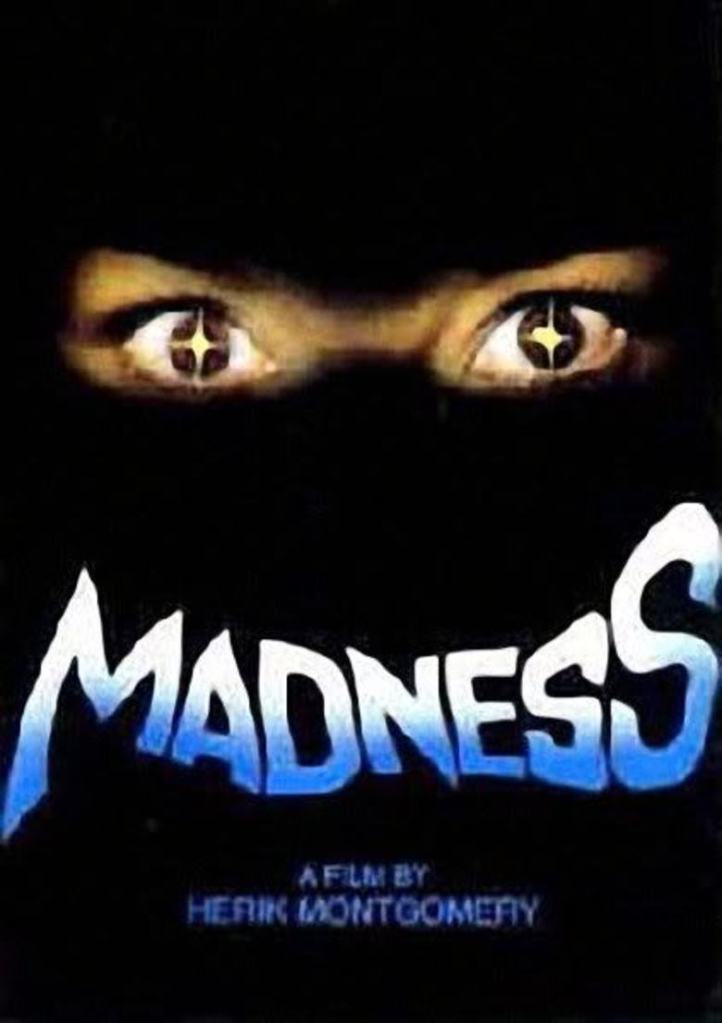
Madness (1992): Also known as Gli occhi dentro (The Eyes Inside) and Occhi senza volto (Eyes Without a Face), this Bruno Mattei* giallo — made a few decades late, but hey, give the man a break — tells the story of Giovanna Dei (Monica Carpanese, who is also in Mattei’s Dangerous Attraction and Legittima Vendetta). She’s the creator of a comic book called Doctor Dark, the tale of an anti-hero who is a Pagan professor by day and a babysitter killer by night, cutting out his victim’s eyes and replacing them with shards of broken glass. Now, someone is acting out the murders in real life and leaving the ocular evidence in her apartment.
Written by Lorenzo De Luca — who wrote Anthropophagus II and The Fourth Horsemen which will have Franco Nero as Keoma and Fred Williamson as Cobra, as well as appearances by Mick Garris Alex Cox, Ruggero Deodato, Fabio Testi, Enzo G. Castellari, Gianni Garko, Ottaviano Dell’Acqua, R.A. Mihailoff, Massimo Vanni and more but that feels like IMDbs — and shot by much of the same crew that worked on the aforementioned Dangerous Attraction.
There’s a fair amount of story taken from Tenebre — like the line “If they kill someone with a power drill, do they take it out on Black and Decker?” which comes directly from Peter Neal’s question “Let me ask you something? If someone is killed with a Smith and Wesson revolver…do you go and interview the president of Smith and Wesson?” in Argento’s movie, as well as the idea of art becoming real-life murder. Doctor Dark’s trick of putting glass into the eye sockets of his victims feels a lot like Manhunter. And, of course, there’s Eyeball to be taken from as well. And while we’re on the subject, the entire plot of Sexy Cat. But the most grievous theft is in the Italian VHS release of this film, which completely takes two murder scenes from Lamberto Bava’s A Blade in the Dark. Did Mattei think no one would notice**?
That said, it may just be the fact that I love giallo and am a Bruno Mattei apologist, but I found myself liking this movie. You’d have to be a superfan of both for me to recommend it to you, but if you are, come on over and watch it with me.
*Using the name Herik Montgomery.
**Trick question. He didn’t care.
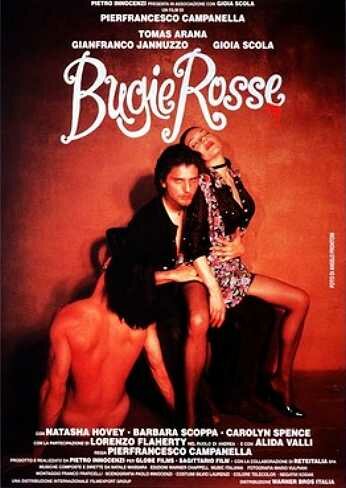
Bugie rosse (1993): A ruthless serial killer is stalking the Roman night, targeting male prostitutes with a cold, methodical precision that feels less like passion and more like pathology. Into this neon-and-shadow underworld steps Marco (Tomas Arana, Body Puzzle), a journalist who thinks he’s chasing a story but quickly realizes the story is starting to chase him back. His investigation pulls him deep into the city’s gay clubs, back rooms and coded encounters—territory that immediately invites comparisons to Cruising, except filtered through the glossy, psychosexual lens of late-period giallo.
Marco’s descent is as much internal as it is procedural. The deeper he goes, the more the film toys with the idea that exposure changes you—that proximity to desire, especially desire you don’t fully understand, begins to blur boundaries. He’s married to Adria (Gioia Scola, who is in another late 80s/early 90s giallo that needs more people talking about it, Obsession: A Taste for Fear), a stewardess who represents stability, normalcy and the hetero safety net the film keeps returning to like a nervous tic. The movie almost reassures the audience she’s there, like a defense mechanism, because otherwise Marco’s increasing discomfort (and curiosity) around male attention might actually lead somewhere more transgressive. And that’s where the tension lives: the film flirts with queerness but keeps one foot planted firmly in early ‘90s conservatism, no matter how one of the suspects, Andrea (Lorenzo Flaherty), makes him feel.
Still, it pushes further than most gialli ever dared. Traditionally, the genre treated queer characters as punchlines, perverts or disposable misdirection. Here, there’s at least a surface-level neutrality as men meet men, desire exists and the camera doesn’t leer at it with the same cruelty you’d expect from earlier entries. There’s even a surprisingly prescient detail: the use of early internet chat rooms as a way for men to connect. In 1993, that’s borderline sci-fi for this kind of movie, and it gives the film a strange, forward-looking edge, as if it accidentally stumbled into predicting the digital cruising culture that would explode years later.
Plus, I’m always happy to see Natasha Hovey (Cheryl from Demons) in a movie, as well as Alida Valli (Suspiria, Eyes Without a Face, The Killer Nun, Fatal Frames). It was directed and written by Pierfrancesco Campanella, who also made the 2003 giallo Bad Inclination and the shorts La goccia maledetta, L’idea malvagia and L’amante perfetta.
And then there’s that ending. Full spoiler territory, but it’s the kind of twist that reminds you why you’re watching this stuff in the first place: Adria disguising herself as a young man and deliberately entering her husband’s hunting ground is equal parts absurd and weirdly perfect. It collapses the film’s anxieties about identity, desire and performance into one final, lurid gesture.
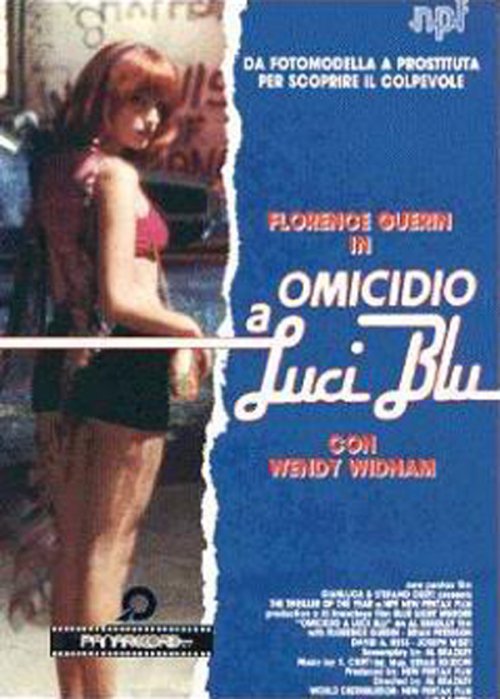
Murder In Blue Light (1992): By the time he got to this one, Alfonso Brescia was less a director than a one-man exploitation factory. The guy made 51 movies, jumping genres the way other filmmakers change lenses—westerns, war films, sci-fi knockoffs, crime flicks, gialli—you name it, movies like Killer Caliber .32, If One Is Born a Swine, Naked Girl Murdered In the Park, War of the Planets, Star Odyssey, Beast In Space, Iron Warrior, Miami Cops and more. He wrote this as well.
Enter Starlet DuBois, played by Florence Guérin, who feels like a relic from an alternate timeline where the giallo boom never died. She’s a decade late to be a proper genre queen, but she makes up for it by diving headfirst into plenty of fun late in the game entries like Bizarre, Cattive Ragazze, Faceless, Too Beautiful To Die, Knife Under the Throat. She’s the kind of presence these movies need—hypnotic, slightly unreal, like she wandered in from a better production and decided to stay.
Her character’s setup is pure exploitation insanity: by day she’s Starlet, by night she becomes Sherry (kind of like Angel), a Times Square sex worker prowling the neon gutters of the Deuce, hunting for the man responsible for her brother’s death. And what a death it is! This isn’t just backstory, it’s a dare. Russian roulette…with a hand grenade. The result? Multiple casualties, injuries and one very specific mutilation that becomes the film’s obsession. Because the killer she’s tracking isn’t just murdering men. He’s targeting their masculinity in the most literal, grindhouse way possible, turning the whole thing into a revenge story filtered through body horror and psychosexual panic.
Trying to impose some kind of order on this chaos is Flanigan, played by David Hess—yes, that David Hess — bizarrely cast as a quasi-heroic cop. And if that sounds strange, just wait until the movie asks him to dress up as Guérin’s character as part of the investigation. It’s the kind of tonal whiplash only late-era Italian exploitation could deliver: deadly serious one minute, completely unhinged the next.
If this all starts to feel like it’s referencing Body Double, well, that movie was a giallo, so Brescia is just getting back some interest for the Italians. DePalma’s film was called Omicidio a Luci Rosse in Italy, which means Red Light Killer. This is Blue Light Killer.
Stylistically, this is where Brescia’s late-career quirks really take over. He’d been dabbling in music video aesthetics — Iron Warrior already hinted at it — and here you get pulsing lighting, awkward slow motion and sequences that feel like they’re one synth track away from MTV rotation. There are even flashes of primitive computer graphics.
But most of all, it has David Hess in a dress, trying to pretend he’s Florence Guérin, one of the most gorgeous women in the history of, well, existence. And he’s David Hess.
You can get this from Vinegar Syndrome.
 B&S About Movies