Chattanooga Film Festival: American Meltdown (2023)

Directed and written by Andrew Adams, American Meltdown follows Olivia Walker (Jacki Von Preysing), who experiences a series of unfortunate events. Her boyfriend Rich (Christopher Mychael Watson) dumps her, her boss puts her on leave to avoid paying benefits, and her apartment is robbed, all on the same day. Her boss blames unions, her property manager, Lou (Clayton Farris), blames her lack of insurance, and the cops seem indifferent. The sheer absurdity of Olivia’s predicament is both amusing and unbelievable.

She becomes friends—and later roommates—with Mari Navarro (Nicolette Sweeney), who starts their relationship by lifting Olivia’s wallet. Their eventual burglary is a humorous yet poignant response to the absurdities the heroine has already endured. Sometimes, humor can be a balm that allows us to address more serious themes. In my mind, we’re going to need more of it to get through the next several years.

It feels like no one is here for you. The majority of the day is work, then more work and the reward is often, well, more work if you can handle it. But said, “You can handle it, right?” The notion that the only way to escape late-stage capitalism is through acts of crime should be frankly terrifying instead of heartwarming, but here we are.

Olivia has to face the idea that to escape the life she’s in, she must destroy it. For so many of us, this means leaving the comfort that we’ve created for ourselves. It’s so much easier to complain and feel that momentary release than to tear off the bandages and attempt to change everything forever. This film makes you face that, but in a way that is gentle, nudging and hilarious. It has definitely made me better consider the choices that I make.

The Chattanooga Film Festival is over. For more information and to see how you can donate so that next year is even bigger, visit chattfilmfest.org and follow us on Facebook, Twitter and Instagram.
CBS LATE MOVIE MONTH: House of Usher (1960)

EDITOR’S NOTE: House of Usher was on the CBS Late Movie on September 19, 1972; March 2, 1973 and July 26, 1974.

Based on Edgar Allan Poe’s short story “The Fall of the House of Usher,” this was the first of eight Poe adaptions by Roger Corman, often working with writer Richard Matheson. Shot in fifteen days, it was a big gamble for American-International Pictures, who had mostly done black and white double features. This was a color movie with a big budget by AIP’s standards.

The most important thing to know is that the Usher family are all cursed to grow mad and that horrible portent has spread to the very home they live in, which is crumbling around them and even destroying the very ground that it sits upon.

Philip Winthrop (Mark Damon, Black Sabbath) thas traveled to the House of Usher to take his fiancee Madeline, which is opposed by her brother Roderick (Vincent Price), who is determined to see his family’s bloodline end with this generation. This leads to an argument so brutal that Madeline’s catalepsy is triggered, making her appear dead and when she’s buried alive, she fully gives in to the madness within the Usher family, bringing the entire home down in flames all around everyone but our hero, who leaves with nothing.

Although Corman and Lou Rusoff are the people usually given credit for the AIP Poe cycle of films, Damon spoke up on a Black Sabbath commentary track, claiming he gave Corman the idea and was even allowed to direct The Pit and the Pendulum. This story hasn’t been confirmed, as there are several images of Corman directing that movie.

The success of this movie led to not only many more films with Corman and Price working together, but also the same sets and special effects being used over again. You can spot the Usher house set ablaze in more than one movie. It was really a barn scheduled to be demolished.

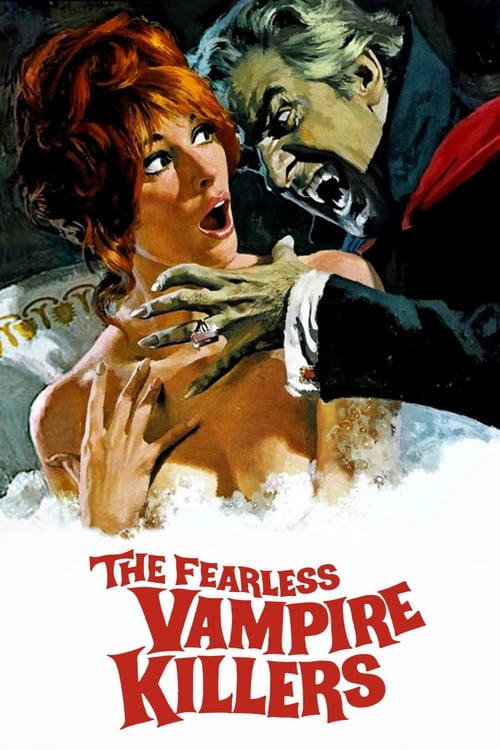
CBS LATE MOVIE MONTH: The Fearless Vampire Killers (1967)

EDITOR’S NOTE: The Fearless Vampire Killers was on the CBS Late Movie on February 18, 1972; May 31, 1974 and June 15, 1976.

Pete Stein asked for this movie and I was happy to write about it. Hope he enjoys this.

Created before Polanski’s U.S. debut, Rosemary’s Baby, this film was marketed by MGM as a farce, with twelve minutes cut from the movie, an animated prologue added, and both protagonists dubbed with cartoony and silly voices. This version was retitled from Dance of the Vampires to The Fearless Vampire Killers, or Pardon Me, But Your Teeth Are in My Neck.

I’ve seen that version of the film, which was the one most commonly seen in the U.S. until it disappeared from circulation in the mid-1970s.

In the early 1980s, MGM found the original cut and released it. This version has garnered new interest and better opinions of the film. I probably need to see that one to evaluate the movie properly, but I’m not sure I could make it through this one again.

Overall, it just feels too cute.

It’s about the adventures of the ancient Professor Abronsius and his apprentice Alfred, played by Polanski. They bumble their way through just about everything they do, which some would take as comedic, but I took as boring and cloying.

They end up in a village filled with angry townsfolk who constantly engage in occult rituals to keep the vampires away. Alfred falls in love with the tavern owner’s daughter, Sarah, but who can blame him? The best part of this movie is the doomed Sharon Tate, who owns every second she’s on screen.

The vampiric Count von Krolock (Ferdy Mayne, who played God in Night Train to Terror) captures her and even turns her father into a vampire. Soon, a convention of vampires and the Count’s gay son enter the story. Yet our heroes are never heroic and simply fail to make it to the movie’s end.

Again, I may need to check out the real version. But I’ve always found this too cheeky. Perhaps that’s the intention, and perhaps it’s just dated. Then again, a few hours of Sharon Tate isn’t the worst thing.

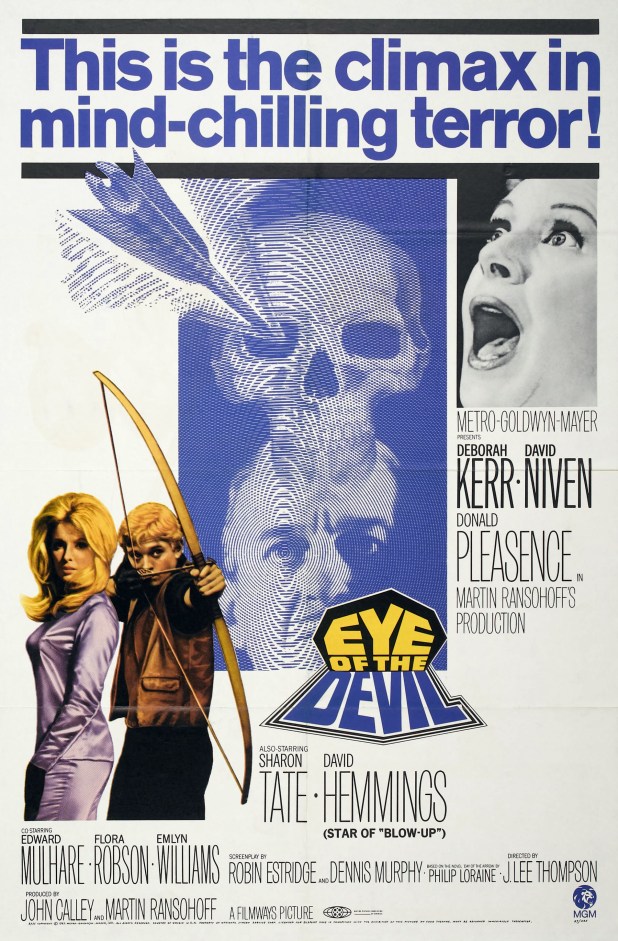
CBS LATE MOVIE MONTH: Eye of the Devil (1966)

EDITOR’S NOTE: Eye of the Devil was on the CBS Late Movie on May 10 and September 8, 1972 and September 6, 1973.

Based on Day of the Arrow by Philip Loraine, this was shot under the title Thirteen. It was a prophetic title, as the film had to have felt cursed.

Sidney J. Furie was originally going to direct, but he was replaced by Michael Anderson, who then got sick and was replaced by J. Lee Thompson. Even worse, two weeks before filming was scheduled to end, star Kim Novak was thrown from her horse and hurt her back. Production shot around her, but it would take eight more weeks for her to heal up, so the entire movie was shot with Deborah Kerr.

But the circumstances of her injury remain shrouded in mystery.

In Blow Up… and Other Exaggerations: The Autobiography of David Hemmings, the actor said that he saw Novak arguing with producer Martin Ransohoff, and she was fired afterward.

Philippe de Montfaucon, the Marquis de Bellenac (David Niven), owns an ancient estate in Bordeaux. The grapes have not grown in three years, but he lives far away in Paris with his wife Catherine (Kerr) and two children.

He is asked to come home, where Père Dominic (Donald Pleasence), a dark priest, gives him a strange amulet. After their son Jacques dreams about his father, Catherine takes her children to Bordeaux. As soon as they arrive, they see Christian de Caray (David Hemmings) shoot a dove.

When asked of him, Aunt Estelle (Flora Robson) says that he is “an evil little boy” and that his sister Odila (Sharon Tate) is “no better.” That night, Catherine watches them conduct a ceremony with the body of the dead dove before an old man closes the doors and tells her to take her children and get away.

That’s when she learns how many heads of the family have died and starts to see robed figures everywhere. Her husband must die to keep the family’s fortunes and even the town strong. There’s no stopping it.

Alex Sanders, renowned as the King of the Witches, was the consultant for all the rituals in this movie, adding a layer of intrigue and authenticity to the film’s occult elements.

This was Tate’s first movie and the last black-and-white movie from MGM.

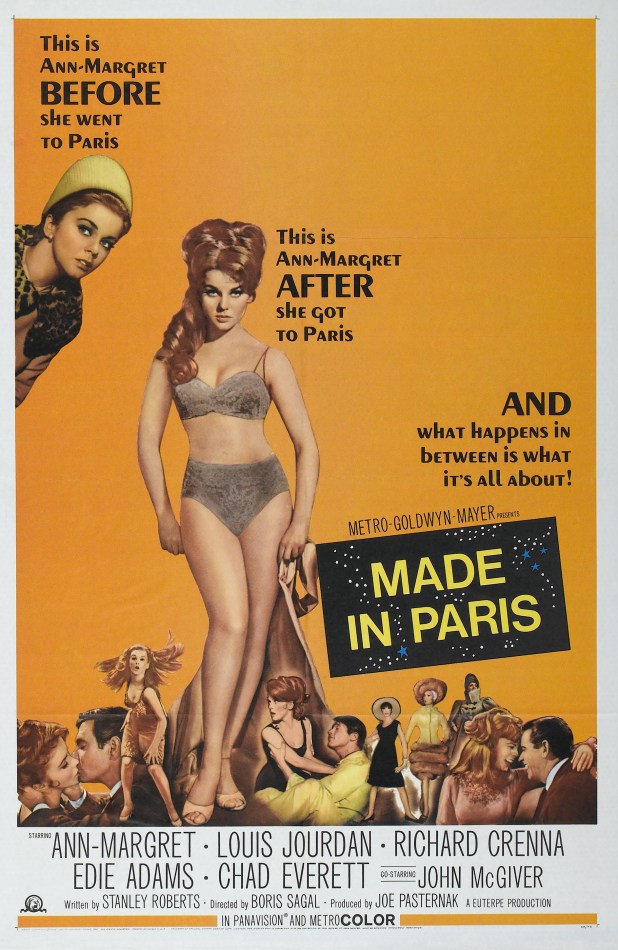
CBS LATE MOVIE MONTH: Made In Paris (1966)

EDITOR’S NOTE: Made In Paris was on the CBS Late Movie on April 3 and November 24, 1972; October 15, 1972; October 15, 1973 and January 19 and June 17, 1976.

Everybody is in love with Maggie Scott (Ann-Margret), a charming and ambitious young woman. Ted Barclay (Chad Everett) is the son of the department store owner where she works, and he is smitten by her. Fashion designer Marc Fontaine (Louis Jourdan) is captivated by her unique style and elegance. Fashion designer Marc Fontaine (Louis Jourdan). Journalist Herb Stone (Richard Crenna) is intrigued by her story. She’s working as the store’s representative for the annual fashion shows of the prominent European fashion designers,

Both Maggie and her boss, Irene (Edie Adams), wear great fashions in this, designed by MGM costumer Helen Rose, who also designed Princess Grace’s wedding dress. The film’s fashion, designed by Helen Rose, is a significant aspect of the movie, reflecting the elegance and style of the era. Ann-Margret had it in her contract that she could keep any of the clothes made for her for this movie.

Despite its Parisian setting, the movie was actually shot on the MGM studio’s backlot, adding a unique twist to the film’s production. The soundtrack, featuring the legendary Count Basie and his orchestra, further enhances the movie’s allure.

It was directed by Boris Sagal (The Omega Man) and written by Stanley Roberts (The Caine Mutiny).

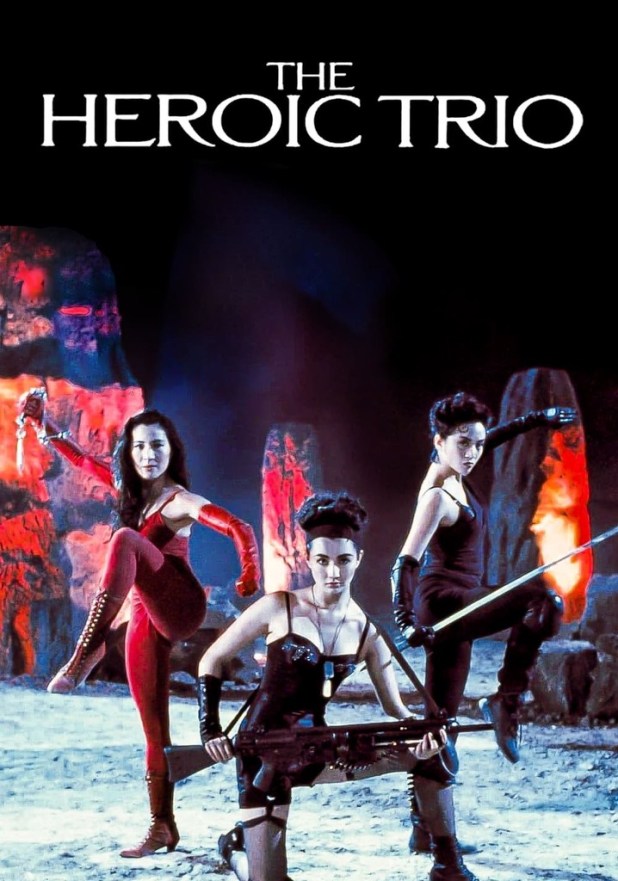
Bucheon International Fantastic Film Festival: The Heroic Trio (1993)

An invisible woman — actually, Invisible Woman as played by Michelle Yeoh — is stealing newborn children who are destined to be world leaders for her boss, the Evil Master. He needs to be stopped but Invisible Woman owes him her life after leaving behind an abusive father. Luckily, she has two other heroes to push her to the path of righteousness — Wonder Woman (Anita Mui), who is the mild-manner wife of a cop by day and a sword and knife-wielding heroine by night and Thief Catcher (Maggie Cheung), a motorcycle-riding, bomb-throwing mercenary struggling to also find her good side.

It was produced by Ching Siu-tung (who directed A Chinese Ghost Story) and directed by Johnnie To, who was also the director for its thematically different sequel, Executioners.

Let me be perfectly clear: this movie is everything that I want in a film, with monstrous bad guys, unstoppable women and plenty of kinetic martial arts. Sure, it’s often style over substance, but that’s quite often exactly what I’m looking for.

I watched this film as part of The Bucheon International Fantastic Film Festival (BIFAN). You can learn more at their official site.

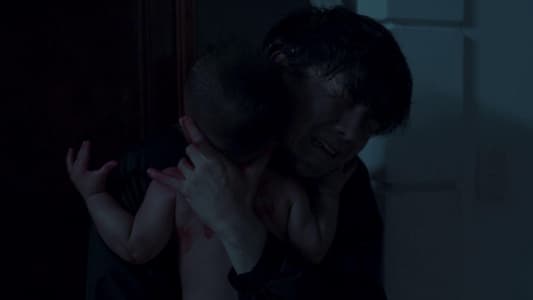
Bucheon International Fantastic Film Festival: Rock-A-Bye Baby (2022)

Tran Long, an influencer who uses his web show Memory of Murder to delve into actual crime scenes, weaves a complex web of interconnected narratives for his viewers. The movie unfolds with a man who killed his lover and his parents, another who broke into a jewelry store and then kills the family that owns it, and finally, a man trapped in gambling debts who tries to get an ex to help. When she refuses, he kills her. These stories, seemingly disparate, are intricately linked, leading to a compelling revelation.

Based on actual events, this movie honestly pulls no punches, with the last murder being incredibly grisly. This is an unsanitized view of crimes that men visit upon other men, unlike so much of reality-based true crime.

Vietnamese director Le Binh Giang, best known in America for his movie KFC, continues his exploration of the human psyche in Memory of Murder. This film continues his journey into the heart of darkness he started in KFC. By the end, we discover that Tran Long created his show to deal with his grief over his parents’ murder. All three stories are interconnected and point to who may be behind that crime.

I watched this film as part of The Bucheon International Fantastic Film Festival (BIFAN). You can learn more at their official site.

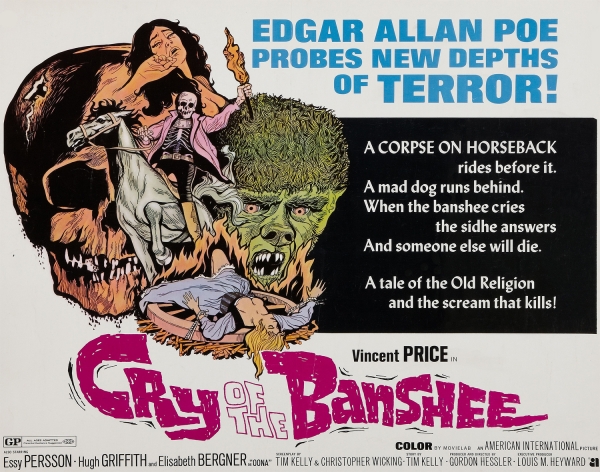
CBS LATE MOVIE MONTH: Cry of the Banshee (1970)

EDITOR’S NOTE: Cry of the Banshee was on the CBS Late Movie on April 10, 1973, 

“Who spurs the beast the corpse will ride?

Who cries the cry that kills?

When Satan questioned, who replied?

Whence blows this wind that chills?

Who walks amongst these empty graves

And seeks a place to lie?

‘Tis something God ne’er had planned,

A thing that ne’er had learned to die.”

That poem is Edgar Allan Poe’s “The Bells,” which sets the tone for this unique movie, the last of the American-International Pictures Poe movies. Directed by Gordon Hessler, this film, unlike its predecessors, had nothing to do with the Baltimorean author, offering a fresh take on the horror genre.

According to Peter Fuller on  Spooky Isles, AIP promoted this movie as the hundredth film that its star, Vincent Price, was in. The truth is that it was probably his seventy-sixth. Undaunted, AIP did the same publicity for his next movie, The Abominable Dr. Phibes.

This movie is a visual treat — it was shot in the Grim’s Dyke House, the same location as Curse of the Crimson Altar and The Devil Rides Out. The film opens with an incredibly excellent animation by Terry Gilliam, a visual masterpiece that, unfortunately, was cut from the American print, leaving the audience captivated from the start.

If you enjoyed Vincent Price’s portrayal as a witch hunter in Witchfinder General, you’re in for a treat! In this film, he plays the role of Lord Edward Whitman, a character who has taken it upon himself to rid England of every witch. His relentless pursuit leads to the disruption of Black Masses and the death of many witches, until one of them, Oona, possesses his loyal servant Roderick, complicating his mission.

The movie also inspired a band to name themselves Siouxie and the Banshees. Perhaps you’ve heard of them?

CBS LATE MOVIE MONTH: Black Noon (1971)

EDITOR’S NOTE: When I first wrote about this movie, I said “If this played on the CBS Late Movie, it would have probably taken two hours and forty minutes with all the commercials. Actually, it did, on August 29, 1972 and March 6, 1975.”

Bernard L. Kowalski has a decent horror pedigree, directing Night of the Blood BeastAttack of the Giant Leeches; Krakatoa: East of JavaTerror in the Sky and Sssssss. Here, he puts the terror on a slow boil and puts Reverend John Keyes (Roy Thinnes, always battling the occult) and his wife Lorna (Lynn Loring, The Horror at 37,000 Feet) against an unseen force bedeviling a small Western town named San Melas. There’s voodoo, devil worship and a mute young girl and a gunslinger possessed by the Left Hand Path.

Ray Milland shows up, proving that Old Hollywood is never to be trusted. Plus there’s Gloria Grahame (Blood and Lace), Henry Silva (Almost HumanMegaforce, the epic Escape from the Bronx), stuntman Stan Barrett, Joshua Bryant (Salem’s Lot), a young Leif Garrett (Thunder Alley) and Jodie Foster’s brother, Buddy.

70s made for TV horror neglects the Old West, so this is a strange film to start with. Then again, it also plays the Troll 2 trick of a town with a backward name and a connection to witches, but it doesn’t telegraph that. The ending — which moves to 1971 — more than makes up for the slow moving last 68 minutes.

Actually, I love dreamy TV movies that seem to take forever to get anywhere.

CBS LATE MOVIE MONTH: The Biggest Bundle of Them All (1968)

EDITOR’S NOTE: The Biggest Bundle of Them All was on the CBS Late Movie on March 24 and July 26, 1972; September 13, 1973; March 24 and August 30, 1976.

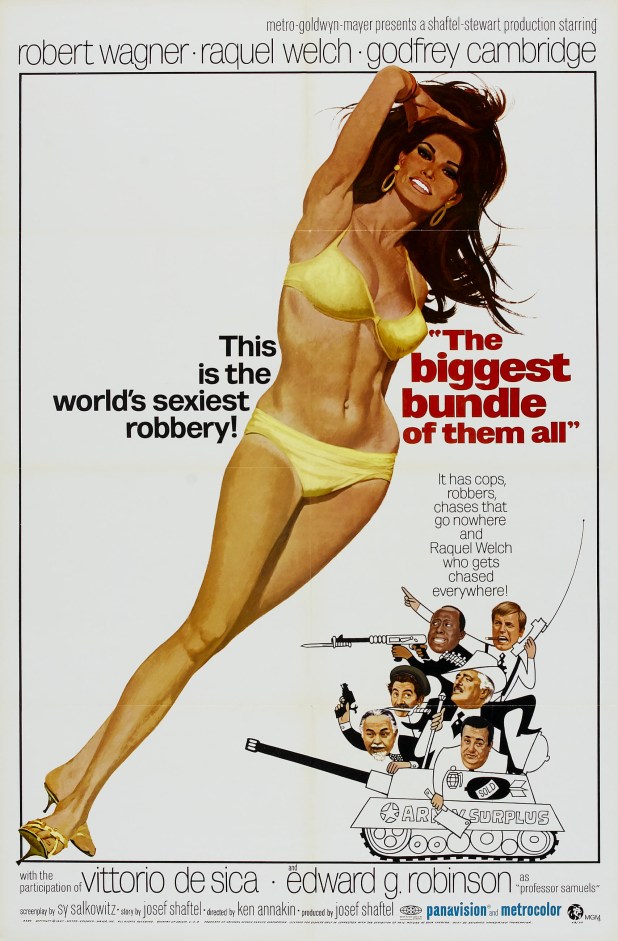
It’s easy for us in 2023 to forget just how big of a deal Raquel Welch was. I was born in 1972, so by the time I hit puberty, she was playing the role of the former sex symbol. But once you see her in this film, it all makes sense.

In this, she’s Juliana, the girlfriend of criminal Harry Price (Robert Wagner). Price’s gang has taken former Chicago gangster Cesare Celli (Vittorio De Sica, yes, the director of Bicycle Thieves) captive. Yet none of the older man’s fellow bosses try to save him. No one is more insulted by Cesare, who decides to teach Price and his gang how to steal $6 million in plutonium.

Ten days before shooting, director Ken Annakin realized he’d read a similar script called The Happening. That movie was being made by Sam Spiegel at Columbia, who got 15% of the profits for this, got to approve the script, changed the title from The Italian Caper and delayed it for six months after his movie.

There’s a great cast in this, with Edward G. Robinson as a professor of crime, plus Godfrey Cambridge, Davy Kaye, Francesco Mulé, Mickey Knox and Victor Spinetti. The soundtrack is also a pretty choice because Johnny Matthis sings “Most of All There’s You,” with music written by Riz Ortolani.

It’s funny reading interviews with Annakin and Robinson, as they both didn’t think much of Welch. They either said she winged all of her lines and didn’t learn them or that she was just using her body instead of being an actress. Robert Wagner wrote that she was late so often that Robinson cut a ten-minute promo, leaving Welch in tears.

She was late again the next day.