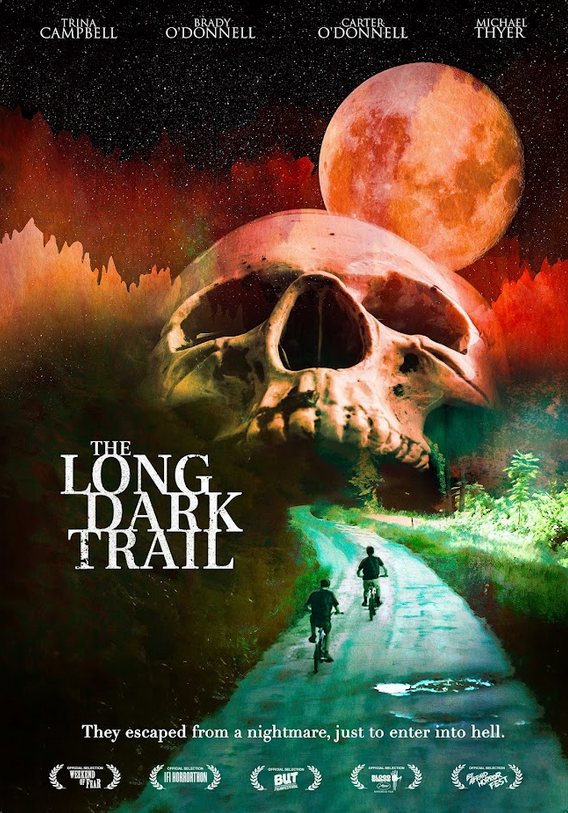
CLEOPATRA ENTERTAINMENT BLU RAY RELEASE: The Long Dark Trail (2022)

After two teenage brothers manage to escape their abusive father, they embark on a journey in the hope of finding their estranged mother who has joined a sadistic cult deep in the woods of Northwestern Pennsylvania. Like Erie, maybe?

Directed and written by Kevin Ignatius (a Pitt grad) and Nick Psinakis, this story of Henry (Carter O’Donnell) and Jacob (Brady O’Donnell) finally getting to find their mother and perhaps going from frying pan at home to fire in the outside world. The performances feel very amateur in places, yet the visuals are strong with gorgeous forest scenery and solid cinematography. I wish everything else was as well-done as that, as the story both seems too fast and too slow at the same time. This is a roundabout way of saying that the pacing is off.

That said, if you’d like some wandering around in the occult-filled woods, The Long Dark Trail can lead you to that. I’d like to see what Ignatius and Psinakis keep doing as there’s definitely some talent here, even if I didn’t enjoy all of this. The effects are always pretty nice, so there are definitely moments worth watching here, despite some of the things I’ve called out.

The Cleopatra blu ray looks gorgeous and has a slide show and trailer. You can get it from MVD.

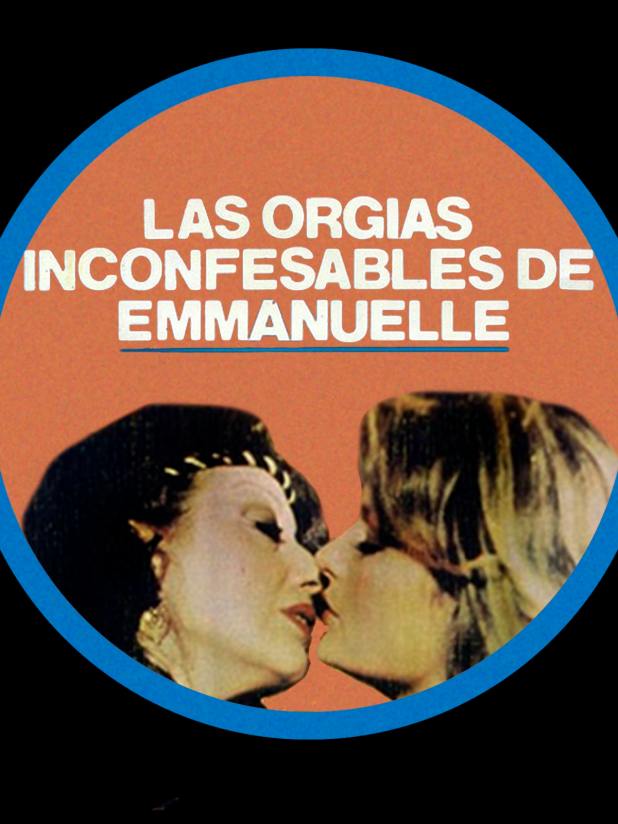
JESS FRANCO MONTH: Las orgias inconfesables de Emmanuelle (1982)

Emmanuelle, reunited with her husband and making love in a wax museum surrounded by images of Hollywood like John Wayne and Superman and you might think, “Wow, Jess Franco making an Emmanuelle movie*, I wonder what that’s like?” And then you realize that outside of this scene, the one that follows and the end didn’t really have Jess caring all that much. There’s no Lina, no jewel thieves, no mist that forces women to comply, not even good music to carry this through.

Muriel Montossé (who was also Cecilia) is Emanuelle, Antonio Mayans is her husband and Carmen Carrión from Night Has a Thousand Desires and Alone Against Terror is on hand. Our heroine finds herself trying to get back with her husband after he leaves her, yet again, when he sees her engaging in sapphic acts onstage. She floats through the world trying to win him over but only ends up assaulted along the way.

I would assume the name was just put on this by whoever chose to play this in their theaters. Even as much as Franco obsesses me, I can come clean and say he wasn’t always making a great movie every time.

*I just realize that Franco also made Tender and Perverse Emanuelle which is less Emanuelle and more giallo.

JESS FRANCO MONTH: Rififí en la ciudad (1963)

EDITOR’S NOTE: You can read another take on this film here.

Based on the Charles Exbrayat novel Vous souvenez vous de Paco, this is all about everyone in the orbit of a corrupt politician named Maurice Leprince (Jean Servais), those who want to protect him and those who seek to stop him. This is Franco’s homage to noir, with an aquarium scene that references The Lady from Shanghai as well as tips of the cap to other noir classics.

Juan (Serafin Garcia Vazquez) has learned that Leprince runs the crime in the city and is killed. His handler Mora (Fernando Fernan Gomez) goes after the criminal but is dumped in the river. He quits the force so that he can use whatever force he needs to get revenge. I mean, you throw someone through a good cop’s window and this is what happens.

There’s also a female killer — a Franco Cinematic Universe favorite — who is killing all of Leprince’s men to get revenge for Juan and wants him in her sights before it’s all over.

Franco as always struggles with action scenes but when it comes to capturing a city in the shadows and the smoke-filled jazz cabarets within, he proves to be a genius.

A year after making this, Franco would be Welles’ assistant on Chimes at Midnight.

You can buy this from Severin or watch this on Tubi.

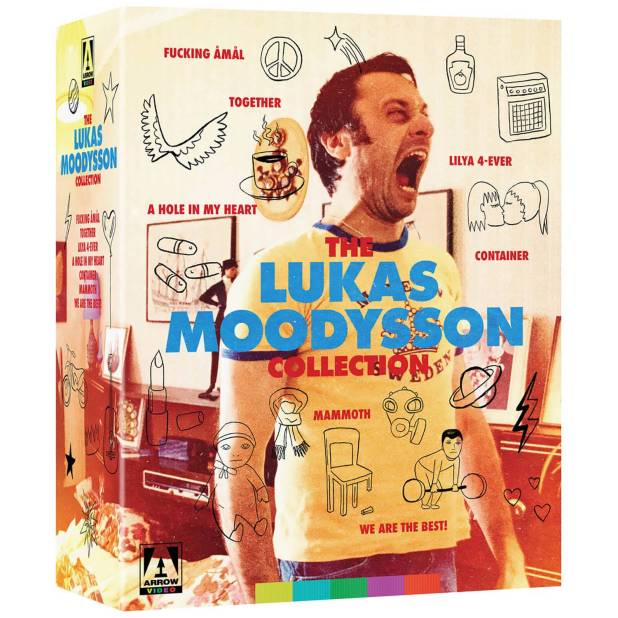
Arrow Video The Lukas Moodysson Collection

Karl Fredrik Lukas Moodysson is a Swedish short story writer, novelist and director who started his creative career as a poet but became known by directing 1998’s Show Me Love before undergoing a series of films that continually shift styles.

After Show Me Love won four Guldbagge Awards — best film, best actress (shared by the two girls Rebecka Liljeberg and Alexandra Dahlström), best direction and best script — he followed it with the 1970s period film Together, which shared what commune life was like.

While the first two films Moodysson made are humorous and optimistic, the movies that would follow, like true life-based Lilya 4-Ever, the shocking and divisive A Hole in My Heart, the near stream-of-consciousness and even more experimental Container and the English language Mammoth all went into various trips into darkness before We Are the Best! returned him to 1982 and a world of young punks trying to be heard.

I find it intriguing that Moodysson is a deeply committed Christian, which he claims was the only reason he was able to make Lilya 4-Ever. He’s just as much a believer in left-wing and feminist politics.

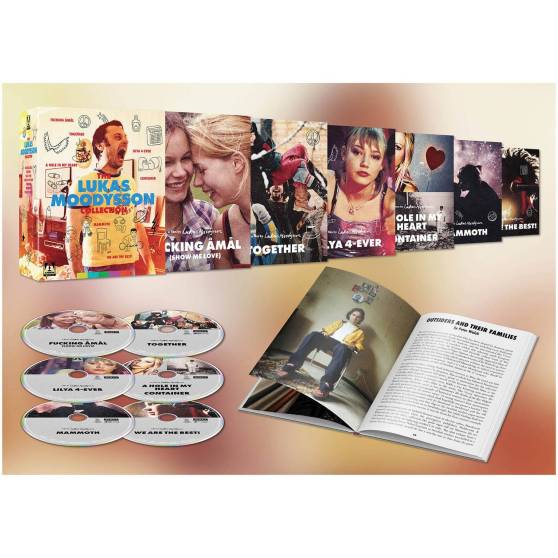
Available together for the first time, Arrow Video’s new set allows for Moodysson’s eclectic filmography to be viewed all at the same time and appreciated as one voice, which I found incredibly interesting. I had never seen one of his movies before but this was a tremendous opportunity to watch more than a decade of experimentation and growth through seven movies.

The set includes:

The limited edition The Lukas Moodysson Collection from Arrow includes high definition blu rays of seven films, as well as interviews with Moodysson and other cast and crew, moderated by film programmer Sarah Lutton. There’s also a two hundred page featuring new writing by Peter Walsh, excerpts from the original press kits for each film, interviews with and directors’ statements from Moodysson and essays on his films from a 2014 special issue of the Nordic culture journal Scandinavica by C. Claire Thomson, Helga H. Lúthersdóttir, Elina Nilsson, Scott MacKenzie and Anna Westerståhl Stenport and Kjerstin Moody.

You can get this set from MVD.

Arrow Video The Lukas Moodysson Collection: We Are the Best! (2013)

After the experimentation and bleak outlook of the past few Lukas Moodysson movies, We Are the Best! is a charming look at growing up young and punk rock in 1982 Stockholm. It’s based on his wife’s autobiographical graphic novel Never Goodnight.

Bobo and Klara are 13-year-old girls ostracized by their peers for their love of punk rock. Androgynous, with short hair and baggy clothes, they endure the wrath of condescending teen boys who play in a rock band called Iron Fist at their youth club. The girls start their own band to irritate the boys, even though neither can play an instrument. Bobo uses punk as a means of escape whereas Klara is angry and political and writes the sardonic lyrics she sings.

Bobo (Mira Barkhammar) and Klara (Mira Grosin) are young teenage girls dealing with being made fun of for their baggy clothes and boyish looks, particularly a band called Iron Fist. While neither girl has any musical talent, they soon meet a Christian girl named Hedvig (Liv LeMoyne) who plays classical guitar and form a band to spite the boys.

The girls deal with the normal trial of growing up — boys and the feelings that come from them — before being booked to play a holiday show in Västerås. After the audience starts to heckle the nervous girls, Klara changes the lyrics of their song “Hate the Sport!” to “Hate Västerås!,” which causes a riot and earns them the respect of Iron Fist and the anger of the adults who run their youth club. As they laugh on the bus afterward, they defiantly keep telling that man, “We are the best!”

I loved this movie, particularly the fact that Hedvig may be the most punk out of all three girls and the conversation about the song “Hang God,” which is a Christian song because you have to believe in God in order to hang Him. The end of this film, with the girls having made an audience outraged through their words and music and their sheer joy at causing such an outrage made me smile so wide.

The limited edition The Lukas Moodysson Collection from Arrow includes high definition blu rays of seven films, as well as interviews with Moodysson and other cast and crew, moderated by film programmer Sarah Lutton. There’s also a two hundred page featuring new writing by Peter Walsh, excerpts from the original press kits for each film, interviews with and directors’ statements from Moodysson and essays on his films from a 2014 special issue of the Nordic culture journal Scandinavica by C. Claire Thomson, Helga H. Lúthersdóttir, Elina Nilsson, Scott MacKenzie and Anna Westerståhl Stenport and Kjerstin Moody.

The extras include interviews with Moodysson and cinematographer Ulf Brantås, a background on Swedish punk from historian David Andersson, the Q&A from the 2013 London Film Festival screening with Moodysson and stars Liv LeMoyne and Mira Barkhammar and a trailer.

You can get this set from MVD.

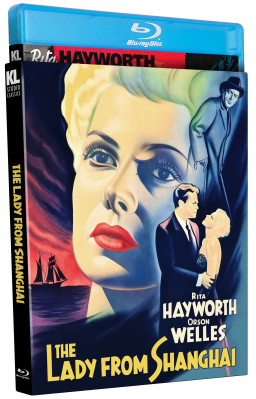
KINO LORBER BLU RAY RELEASE: The Lady from Shanghai (1947)

Columbia Pictures president Harry Cohn got this movie from Orson Welles — he promised to write, produce and direct it for just $55,000 — because he helped him pay for Welles’ production of Around the World, a musical stage adaptation of the Jules Verne novel Around the World in Eighty Days.

In Spine Tingler! The William Castle Story, it’s revealed that Castle had purchased the rights to the novel f I Die Before I Wake by Sherwood King. He asked Welles to pitch it to Cohn, with Castle hoping to direct the film, leading to him being disappointed when he was Welles’ assistant director for this film.

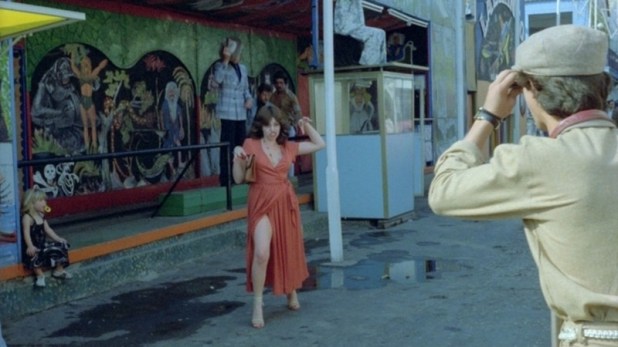
When Cohn got the cut from Welles, he was unhappy. Welles wanted the filmto look like a documentary and shot it on location in Acapulco, Pie de la Cuesta, Sausalito and San Francisco. This was an innovation at the time but Cohn liked the look of studio lighting. Cohn ordered extensive editing — which took a year to finish and editor Viola Lawrence cut an hour from Welles’ rough cut — and reshoots. The incredible ending of this movie in the amusement park was twenty minutes long and was cut to just three minutes with all of the footage on the cutting room floor lost forever.

Cohn was also enraged with one major cut: Welles had his estranged wife RIta Hayworth cut her trademark long red hair for short blonde hair. Cohn screamed at her, “He’s ruined you — he cut your hair off!”

Reviews at the time said that this was “wordy and full of holes” and “thoroughly confused and baffling.” Today, we see the film quite differently and the closing hall of mirrors scene is a classic in all of cinema and has been reused several times, most strikingly in Enter the Dragon and The Man With the Golden Gun.

Welles, who directed and wrote this with Castle, Charles Lederer and Fletcher Markle, plays sailor Michael O’Hara, a man trapped in the machinations between disabled criminal defense attorney Arthur Bannister (Everett Sloane) and his alluring wife Elsa (Hayworth). As he works on Bannister’s ship, he’s asked by his boss’ partner George Grisby (Glenn Anders) to help him fake his death. He can use the money to run away with Elsa, but at this point, even through he’s not thinking with the correct brain, he should know that this plot seems too murky to go down.

Sydney Broome (Ted de Corsia), the private investigator who has been following Elsa for her husband, learns that Girsby plans to kill his boss and frame Michael. Grisby shoots Broome and leaves the scene of the crime and heading off to another where he plans on killing Bannister, who is wise to the crime and kills the man, then follows through on blaming Michael.

Bannister acts as Michael’s attorney and soon learns that his suspicions were correct and that he’s in love with Elsa. That said there are so many twists to come, including hiding in a Chinese theater, before the final shots inside the Magic Mirror Maze.

Most of this was shot on Errol Flynn’s ship Zaca, which he was captaining between takes. You can see him show up in some background scenes and when a cameraman literally dropped dead durrng a take, he tried to stuff the body in a bag and bury it at sea. There was also an attack of millions of insects at one point with one stinging Welles directly in the eye and Hayworth collapsed from the heat in Mexico more than once.

What emerges is a movie worth watching and I love that with blu rays, I have this close by and ready to view at any time.

The Kino Lorber blu ray release of The Lady from Shanghai has three different audio commentary tracks, one by film historian Imogen Sara Smith, another by novelist and critic Tim Lucas, and a third by Peter Bogdanovich. There’s also an interview with Bogdanovich, comments by film noir historian Eddie Muller and a trailer. You can get it from Kino Lorber.
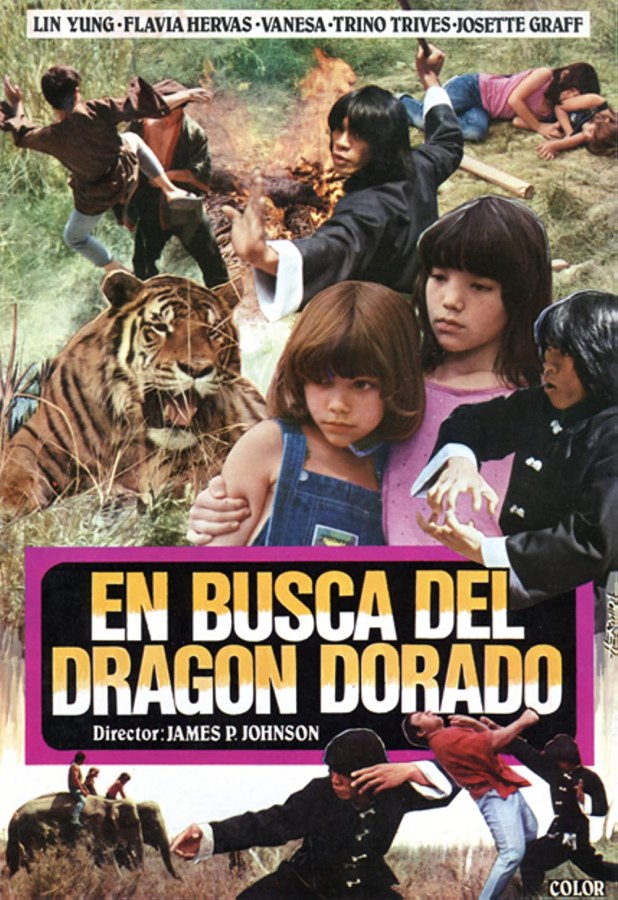
JESS FRANCO MONTH: En busca del dragón dorado (1983)

Jess Franco never seemed satisfied. How else do you explain not only making Vaya luna de miel in 1980 as an adaption of Edgar Allen Poe’s The Gold Bug yet also making a movie for kids with the same inspiration?

A child movie from Franco? I’m as surprised as you.

Also, not surprising: Franco would try to make this again in 1993 as Jungle of Fear!

What can we say about a movie where Franco is the wise ascetic who advises our young heroes and gives them assistance in the form of a Bruce Lee look-a-like? There’s also a chimp, a map-stealing tortoise and Antonio Mayans’ kids getting to star in a movie and facing off with stock footage jungle horrors.

Stephen Thrower has mainlined more Franco than anyone — I’m trying but he’s walked the same steps that Jess was once in and his lifetime of expertise is one to be in awe of, not one to challenge — and he said of this film, “If you’re so deep into your Jess Franco safari that you no longer need sex, violence or the vestiges of storytelling, En Busca Del Dragon Dorado possesses much to tickle the senses.”

There are no CGI cartoons in the Jess Franco Cinematic Universe, but there is this movie, one where Mayans and Lina Romay are the voices of other characters and that’s the best we’re going to get. I can’t believe that this movie exists and am awash in the wonder that it is real, that I’ve seen it and that I am telling you about it.

You can watch this on YouTube.

JESS FRANCO MONTH: Vaya luna de miel (1980)

Found by Jess Franco scholar Álex Mendíbil in the Filmoteca Española archive after being lost for forty years, this is pure joy on film.

Yolanda (Lina Romay, never more charming, vivacious or just, man, I want to hug her; just look at her in this cowboy hat in the movie and tell me that Jess Franco wasn’t a lucky man despite the trials of his life) has married a rich boy named Simón (Emilio Álvarez) for his family fortune and is on honeymoon on Banana Island, a place where dying men give them blank slips of paper covered with mysterious messages, treasure is waiting to be found, a gang can be summoned with a flute and oh yeah, a Franco-voiced robot shows up and threatens to murder people and self-destruct.

Also, somehow an adaption of Edgar Allen Poe’s The Gold Bug and has a lot in common with Is Cobra A Spy?

I can’t overemphasize enough how much this movie made me happy. Outside of Lina slipping out of her top a few times — la chica no puede evitarlo — this is as clean a Jess Franco movie as you’ll see, shot in gorgeous settings, filled with high adventure and always a laugh and smile. A movie that is trapped like a fly in amber, reminding one of youth, of spy action, of silly windup robots stumbling in and out of the movie.

Arrow Video The Lukas Moodysson Collection: Mammoth (2009)

Leo (Gael García Bernaland) and Ellen (Michelle Williams) are, from the outside, a success. He’s created a website that has made them rich while she dedicates her life to saving lives as an emergency surgeron. Their daughter Jackie (Sophie Nyweide) is being raised mostly by their nanny Gloria (Marife Necesito) while they all lead their lives away from their New York City apartment.

Gloria is a mother herself, with her children in the Philippines raised by her mother while she makes money for them in the U.S. And as he works in Bangkok, Leo spends time with a sex worker named Cookie (Run Srinikornchot) who is also hiding that she is a mother.

The moral of this movie has been debated. Is it that women who don’t remain home often lead tragic lives? Or is it, as Moodysson says, about how women of very different social backgrounds have a struggle between work and making time for their children?

The mammoth of the title comes up as one of Leo’s co-workers gives him the gift of a $3,000 pen made from mammoth ivory, the once large and majestic beast reduced to a piece of a writing implement that will be used to sign contracts that just need his signature and not any form of thought to become rich and yet that money solves none of his ennui or the sense that his child is being supported and raised by someone who is a stranger.

The limited edition The Lukas Moodysson Collection from Arrow includes high definition blu rays of seven films, as well as interviews with Moodysson and other cast and crew, moderated by film programmer Sarah Lutton. There’s also a two hundred page featuring new writing by Peter Walsh, excerpts from the original press kits for each film, interviews with and directors’ statements from Moodysson and essays on his films from a 2014 special issue of the Nordic culture journal Scandinavica by C. Claire Thomson, Helga H. Lúthersdóttir, Elina Nilsson, Scott MacKenzie and Anna Westerståhl Stenport and Kjerstin Moody.

Extras include interviews with Lukas Moodysson, line producer Malte Forssell and Gael Garcia Bernal, as well as a trailer and image gallery.

You can get this set from MVD.

Arrow Video The Lukas Moodysson Collection: Container (2006)

Lukas Moodysson said that this was “a black and white silent movie with sound” and used this sentence to set it up: “A woman in a man’s body. A man in a woman’s body. Jesus in Mary’s stomach. The water breaks. It floods into me. I can’t close the lid. My heart is full.”

As Jena Malone reads what sounds like an off the cuff soliloquy, we watch as Man (Peter Lorentzon), a man in women’s clothing, shares the screen with the ghost of Woman, an ideal he feels that he will never reach.

It’s been so incredible watching all of Moodyson’s films in sequence as he goes from the somewhat traditional feel — while still having a unique look — of Show Me Love and his films grow darker and less like ordinary narratives until by this point, it’s nearly just images against Malone’s monotone delivery, which is way more intriguing than that word choice may suggest.

I can see how some people would come to this movie and hate it. I was intrigued by how Moodysson uses a completely alien form to tell truths.

The limited edition The Lukas Moodysson Collection from Arrow includes high definition blu rays of seven films, as well as interviews with Moodysson and other cast and crew, moderated by film programmer Sarah Lutton. There’s also a two hundred page featuring new writing by Peter Walsh, excerpts from the original press kits for each film, interviews with and directors’ statements from Moodysson and essays on his films from a 2014 special issue of the Nordic culture journal Scandinavica by C. Claire Thomson, Helga H. Lúthersdóttir, Elina Nilsson, Scott MacKenzie and Anna Westerståhl Stenport and Kjerstin Moody.

Extras include interviews with Moodysson, a feature on the themes of this movie, a trailer and an image gallery.

You can get this set from MVD.