POPCORN FRIGHTS: Compulsus (2022)

Compulsus means “striking together; hostile;” that makes sense in this film, which finds a female poet named Wally (Lesley Smith) striking back at the male-on-female assaults in her neighborhood by turning the tables and making men live in fear, all while trying to start a new relationship with Lou (Kathleen Dorian). But is a normal life possible once she becomes addicted to beating men into pulps? And when Wally brings Lou into her world of violence, will it deepen their love or extinguish it?

Director and writer Tara Thorneis making her full-length directing debut with this film, which presents a neon-lit city where violence and sexual threat is around nearly every corner. It also allows for Wally’s poetry to frame nearly every step of her journey from frightened woman to frightening vigilante.

Whether this movie is a call to arms or a reflection or society, I leave up to you, the viewer. If anything, it has made me even more cognizant of the ways that men treat the women in their lives.

Compulsus is playing at Popcorn Frights and will be available to watch virtually as part of the festival.

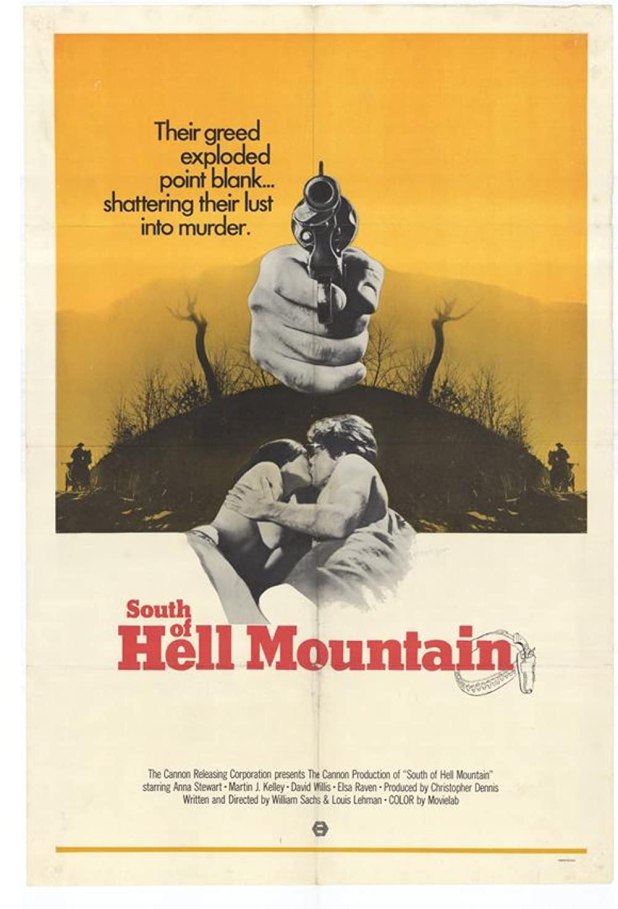
CANNON MONTH 2: South of Hell Mountain (1971)

William Sachs told Hidden Films — an incredible site devoted to obscure/rare movies not available for streaming — of this movie: “They fired the director (Louis Leahman). They didn’t know what to do with the footage. It was a meandering thing, there were so many things missing, nothing made sense. So I came up with a spine (for the movie), where the girl is in a mental hospital, and the guy comes to try to get her memory back, and that’s what I shot. I used flashbacks out of what was already shot. I shot it at Welfare Island — it’s now Roosevelt Island — at an old mental hospital. There were labs there with jars of fetuses and body parts that were 100 years old. They put my name on as co-director, though I really didn’t want them to.”

Yes, a movie originally about an outlaw and his two sons massacring the men working at a gold mine and then stopping at a cabin in the woods where a woman (Elsa Raven, Mrs. Townsend from The Amityville Horror) and her stepdaughter Sally (Anna Stuart, who was Donna Love for 976 episodes of Another World) live now became one told through the flashbacks of Sally as she attempts to come back to sanity.

And if you’re pondering why Helen looks familiar, that’s because she’s played by an uncredited Candace Hilligoss from Carnival of Souls.

That said — this movie is impossible to find and has even eluded me.

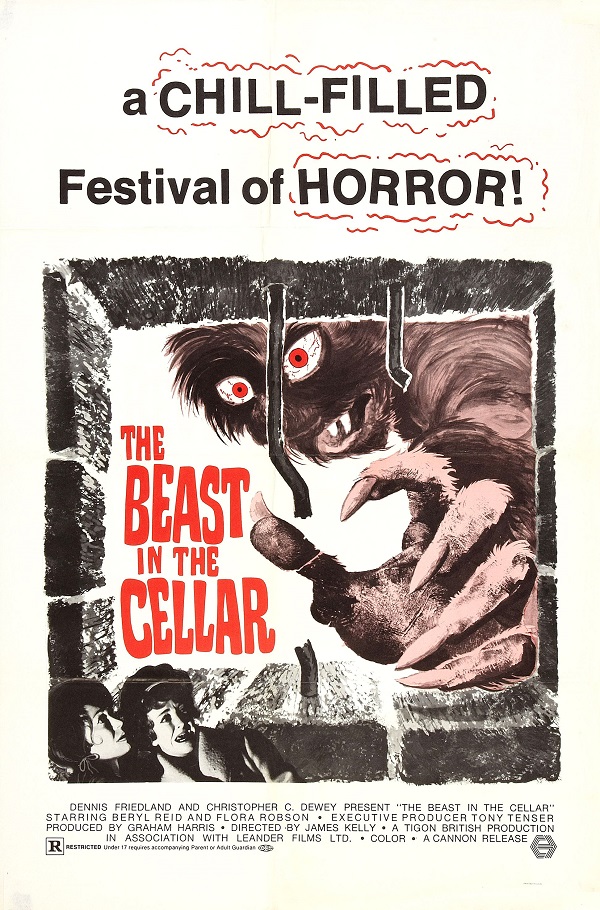
CANNON MONTH 2: The Beast in the Cellar (1970)

In addition to importing Joe Sarno films, Cannon started distributing the films of England’s Tigon, playing this on a double feature with the incredible The Blood On Satan’s Claw.

Soldiers are being torn to shreds by a wild cat, but Joyce and Ellie Ballantyne (Flora Robson and Beryl Reid) know that it’s their brother Steven (Dafydd Havard), who has escaped the cellar he’s been trapped in for thirty years. Joyce is injured trying to fix the hole that Steven has dug and Ellie must tell the police the truth: After their soldier father came back from war, he beat their brother. They didn’t want Steven to turn out the same way, so to keep him from fighting in the Second World War, they drugged him and kept him high for three decades, creating a killing machine who hates soldiers.

There’s a really great lovemaking to murder scene at the start of the film, showing that director and writer James Kelley (who wrote Doctor Blood’s Coffin and also directed What the Peeper Saw) knows how to create a scene filled with tons of quick cuts and no small amount of blood and terror.

Also known as Young Man, I Think You’re Dying, this gets pretty talky and not much happens for a while, but when the killings happen and the camera gets shaky, it’s pretty wild.

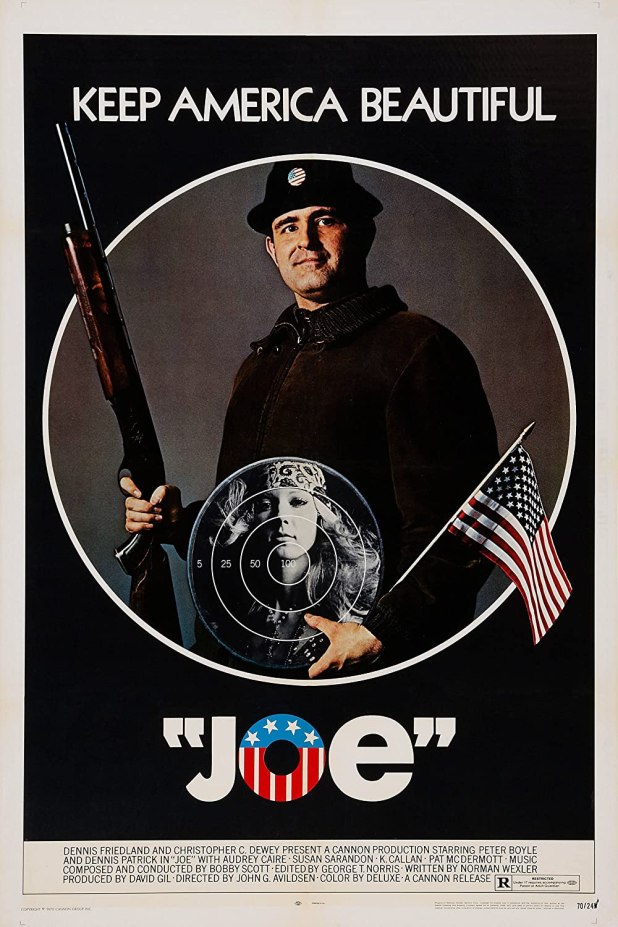
CANNON MONTH 2: Joe (1970)

“I saw a fella sellin’ junk to children

He gets nervous every time I pass

Cause he knows that if I catch him I’m gonna bust his head and kick his fat ass

Hey Joe, don’t it make you want to go to war, once more?

Hey Joe, why the devil did we go to war, before?

What the hell for?”

Joe Curran is a simple man, a factory worker who’s sick of the way the world is heading. He’s also MAGA a half-century before we knew what that meant, an older white man seemingly past by the rest of the world. Peter Boyle, the actor who played him, was so upset by the idea that audiences cheered on his violence that he publically said he’d never do another violent film, turning down the role of “Popeye” Doyle in The French Connection (although he is in The Friends of Eddie Coyle and played Joe Gallo in Crazy Joe, which isn’t a sequel to this).

Just imagine if Joe had been played by the original choice, Lawrence Tierney, who was supposedly fired two days before shooting began. Yet again, he was arrested for attacking a bartender who refused to keep serving him.
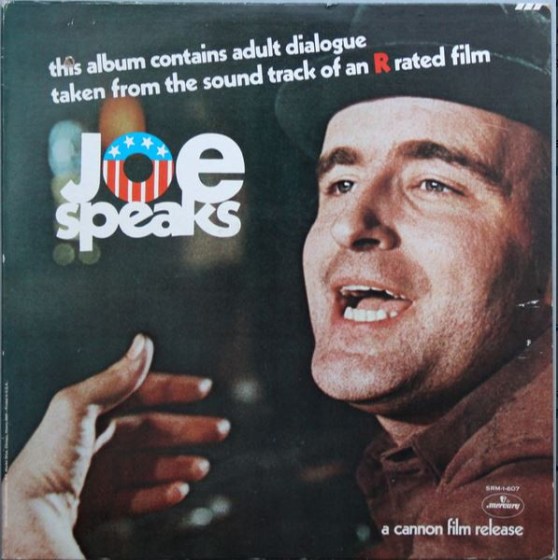
Joe’s rants in the film were so loved that they even released an album, Joe Speaks, which collects the dialogue and the theme song. I can’t even imagine anyone listening to this, but I also totally can.

One night while Joe holds court at a bar, he meets a businessman with the name of Bill Compton (Dennis Patrick). Hours ago, Bill killed the man who hooked his daughter Melissa (Susan Sarandon in her film debut) on heroin. He tells Joe that he’s just done exactly that; Joe’s excited and happy to be his friend.

Joe: I’d love to kill a hippie.

Bill: I just did.

What’s intriguing here is that 99%er Joe and 1%er Bill bond over their mutual hatred of hippies, so if you wondered, “How did the Republican party begin attracting the marginalized that their politics do the most damage to?” the answer is hate, racism and the need to feel as if the America where WASP men ran the world, their wives always had their slippers and newspapers ready and other races, creeds and politics knew their place.

But it wasn’t always that way. This movie was originally called The Gap and it was all about the chasm between Bill and his daughter. Yet Boyle was so good in his small role that the movie ended up being re-edited around him.

Unbeknownst to many, director John G. Avildsen — who was removed from both Serpico (also written by Norman Wexler, the same man who was behind Joe)and Saturday Night Fever — was fired from this film as well. William Sachs, who was an assistant editor at Cannon, renamed the movie, made Joe the lead and still turned down a co-directing credit, as he felt that the position of post-production supervisor was a better way of describing what he did. He’s fixed so many movies in the same way, including LeprechaunExterminator 2,  Servants of Twilight and Cannon’s South of Hell Mountain.

Of Joe, he told Hidden Films, “No one would sit through a screening. It was overdramatic and John Avildsen was demanding to be the editor. They didn’t want him to keep cutting it because it was awful, so they fired him. The first thing I wanted to do was start in reel five and throw away the first four reels, because it was boring. (Susan Sarandon’s character) was with her parents the whole time and Peter Boyle wasn’t even in it yet. It now starts fifty minutes into what was the movie. I didn’t have money for shooting, but I brought Peter Boyle back, and every time he was off camera I gave him lines. I basically made Joe the main character; he was a minor character before. And I changed the ending. It went on for ten minutes, with everyone discussing what happened.”

Sachs would go on to direct plenty of his own wild movies, like There Is No No. 13, The Force Beyond, The Incredible Melting ManVan Nuys Blvd.Galaxina and Cannon’s Hot Chili.

Back to Joe.

After an awkward dinner with the men and their wives, Melissa comes home from the hospital and hears her father say that he killed her boyfriend. She coldly says, “What are you gonna do, kill me too?” and runs away.

Bill and Joe follow her and end up indulging in forbidden fruit, trying the two things hippies were known for: drugs and free love. The gorgeous women they both ball and have disparate experiences, with Bill marveling at the outrageous lovemaking he just shared with a much younger woman — as young as his daughter — while Joe’s unsatisfied girl says, “You just broke the land speed record.”

That moment of post-coital bliss ends when Joe realizes his wallet has been stolen. Attacking the woman he was just inside, he beats out of her where the boyfriends who stole the money are. Heading to a commune upstate, Joe brings some guns — “I got what you might call a well-balanced gun collection, see?” — just to scare the hippies into giving up the money they took. As they hand over the empty wallets, Joe goes wild, opening fire on everyone, even the innocent. He runs out of bullets and as more hippies arrive, he convinces Bill to be part of the murder, which he quickly falls into lockstep, blowing away flower children left and right, including shooting a girl in the back who runs away.

A girl named Melissa.

His daughter.

“What are you gonna do, kill me too?”

Cannon tried to make a sequel to Joe after Golan and Globus took over. After all, they were able to take another right wing fantasy — Death Wish — and turn it into a franchise.

From the Twitter of Larry Karaszewski https://twitter.com/Karaszewski

The proposed second part of the story, Citizen Joe, would have Joe released from a decade in prison to deal with his liberal children. The tagline? “The man has changed but the times have not…He’s back.”

Joe is the kind of movie that reminds me of past culture that people post about on social media, saying “They couldn’t make this today.” To be fair, Joe is forgotten despite how popular it was. But the truth is so many of those elements of culture — like Archie Bunker, which had to have been inspired by Joe — were actually created to hold a mirror up to society and show it how far it had fallen. Instead, society looked at that twisted reflection, embraced it and said, “Finally, someone is telling it like it is.”

Never underestimate the intelligence of the American public.

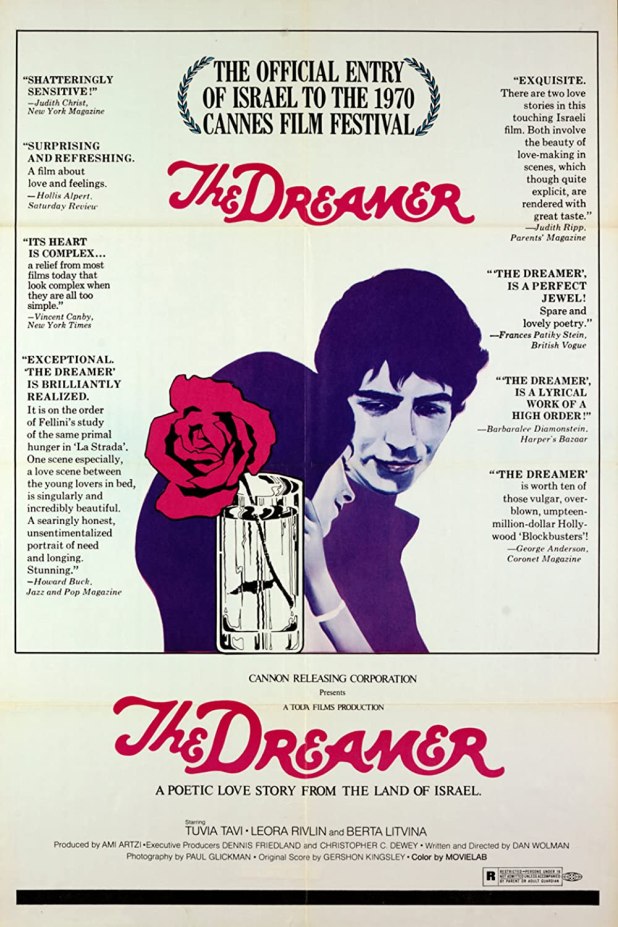
CANNON MONTH 2: Ha-Timhoni (1970)

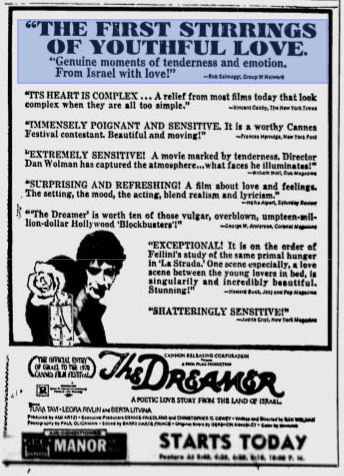
The Dreamer is an early Cannon Films pick up that was directed by Dan Wolman and entered into the 1970 Cannes Film Festival, which features prominently in the advertising. Wolman also directed the Cannon films Nana, the True Key of Pleasure; Baby LoveMaid In Sweden and Up Your Anchor, so he’s a connection between the Dewey-Friedland and Golan-Globus versions of Cannon.

Eli (Tuvia Tavi) is a handyman at an old folks home that is content to be the adopted son of one of the elderly ladies named Rachel (Berta Litvina). Yet when he falls for a young girl (Liora Rivlin), he forgets about painting portraits of Rachel and gets horizontal with his new lady — those love scenes may be why Cannon picked this up.

I kind of love that this played the Manor in Pittsburgh’s Squirrel Hill neighborhood:

CANNON MONTH 2: All Together Now (1970)

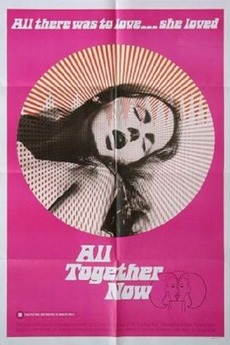
The only film from director William Louis Allan, who co-wrote this with Gayle Greene, this is an early Cannon film from their art/softcore days.

Listed as a House on 69th Street Production, hardly anyone in this movie did a single film other than this one. All I have to go by — I’m struggling to find this — is a synopsis: Marsha’s immature, and animalistic husband neglects and mistreats her, so she throws herself into an affair with a French man, but still doesn’t find the love she seeks. Determined that no woman will have the barren life that se has, she begins to write her own sex novels. To make her novels even better, she meets with a female doctor who is an expert in the field of sexuality. She’s seduced by the doctor and uses that for one of her books, but after suffering through writer’s block, Marsha ends up taking her own life because these old adult films need a square up reel because women certainly can’t have ownership of their own sexuality. Ugh — my least favorite part of these films.

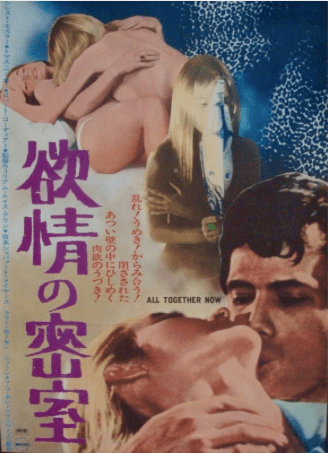
It’s listed in some places as a Swedish/U.S. co-production, which would make sense with the majority of Cannon’s content at this point. I did find a really cool Japanese poster, though.

Tales from the Darkside episode 10: “Djinn, No Chaser”

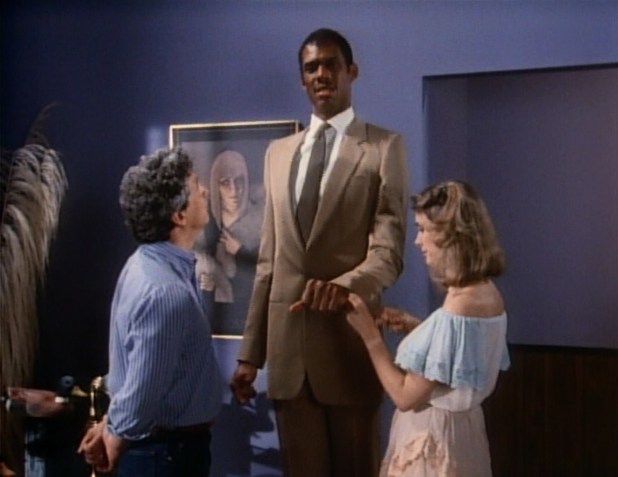
Based on a Harlan Ellison story, directed by Shelley Levinson and written by Haskell Barkin, this episode has Danny Squires (Charles Levin) in a lunatic wing explaining how his wife Connie (Coleen Camp) had bought an old lamp that brought a djinn (Kareem Abdul-Jabbar) into their lives. Nothing good has happened since that day.

Sadly, this episode is one of the sillier episodes and not in the best of ways. It’s wacky humor with a payoff that is an even bigger groaner. It’s as if all the issues of Danny in a straihtjacket don’t matter because of how easily everything comes together at the end.

Look, they can’t all be winners on Tales from the Darkside.

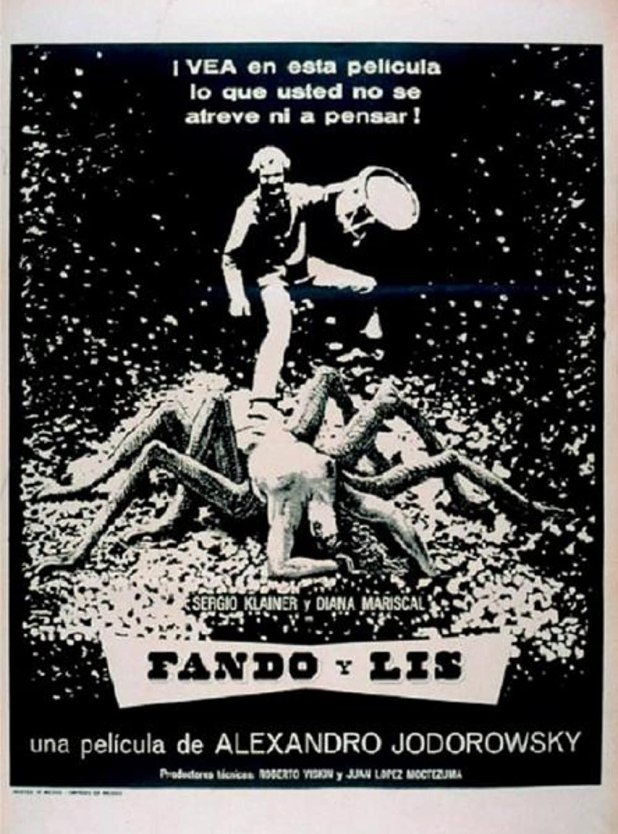
CANNON MONTH 2: Fando y Lis (1968)

I work in a basement with no windows all day, writing words for people about things that are sometimes beyond me, sitting in meetings with people way more important than me and then I take a break and write all night about all manner of subjects, sneaking in writing on this site when I can, but let me tell you, I’ve been writing so many emails that are so technical and in so many of those meetings that I felt no real will to write. And then I watched this movie — with commentary by director and writer Alejandro Jodorowsky at full blast — and let me tell you, I felt like I could write forever about anything.

Fando (Sergio Klainer) wheels Lis (Diana Mariscal) through the end of the world in search of the mythical city of Tar, a secret city that holds the true nature of enlightenment and eternity. But to get there will be a test. But man, my words are meaningless, because this can only be experienced by you. You will determine what the journey means.

Based on the memories of a play by Fernando Arrabal, the premiere at the 1968 Acapulco Film Festival became a riot, with Jodorowsky leaving the theatre by sneaking outside to a waiting limousine that was soon pelted by rocks; after sell-out showings the entire week in Mexico City, audiences continually broke into fights, leading to the Mexican government banning Fando y Lis from playing cinemas and Jodorowsky almost being deported.

Before all this, Jodorowsky was co-founder of The Panic Movement with Arrabal and Roland Topor, a guerrilla performance art that applied Antonin Artaud’s “heater Of Cruelty theories to change lives through violent theater.

In this film, he’s created a movie that makes us confront the fact that the divine could be true, as well as how insurmountable the climb to arrive there still could be. “To advance a mile, we only have to take a step. If Tar doesn’t exist, we can invent it.”

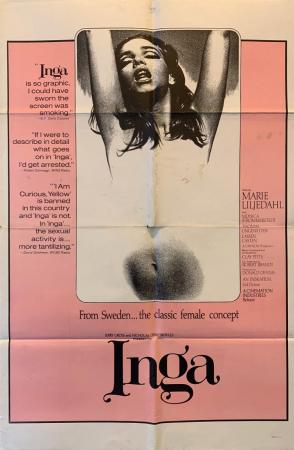
CANNON MONTH 2: Inga (1968)

After her mother dies, Inga (former ballet dancer Marie Liljedahl, who really hit the trifecta of late sixties sleaze being in this Joe Sarno movie and its sequel The Seduction of IngaMassimo Dallamano’s Dorian Gray and Jess Franco’s Eugenie… The Story of Her Journey into Perversion; she retired from acting by the time she was 21) goes to live with her aunt Greta (Monica Strömmerstedt), who only wants to set her up with a rich older man named Einar (Thomas Ungewitter) and make money off of her. Yet once Inga meets Karl (Casten Lassen) — her aunt’s younger lover — she runs from this rich world of decadence.

In November of 1969, the police busted into the Dakota Theater in Grand Forks, ND and arrested the manager and the projectionist, charging them with running an obscene film. They were found not guilty, which was a major step toward legally showing pornography.

That said — this is quite tame by today’s standards. And it’s filled with so much story and emotional content, it’s hard to compare it to what pornography has become.

There’s a gorgeous scene in the beginning of this as Inga, nude but for a diaphanous nightgown, takes a series of wind-up toys and lets them race across the floor in front of her. Inga continues to return to these toys as her sexuality is awakened and her innocence left behind.

The film is just as much about Greta, a gorgeous yet aging woman clinging to her youth by dating increasingly younger men which comes with it a price: these young men need money to stay around, not love or sex.

Sometimes, the feeling of sin is better than the sin itself.

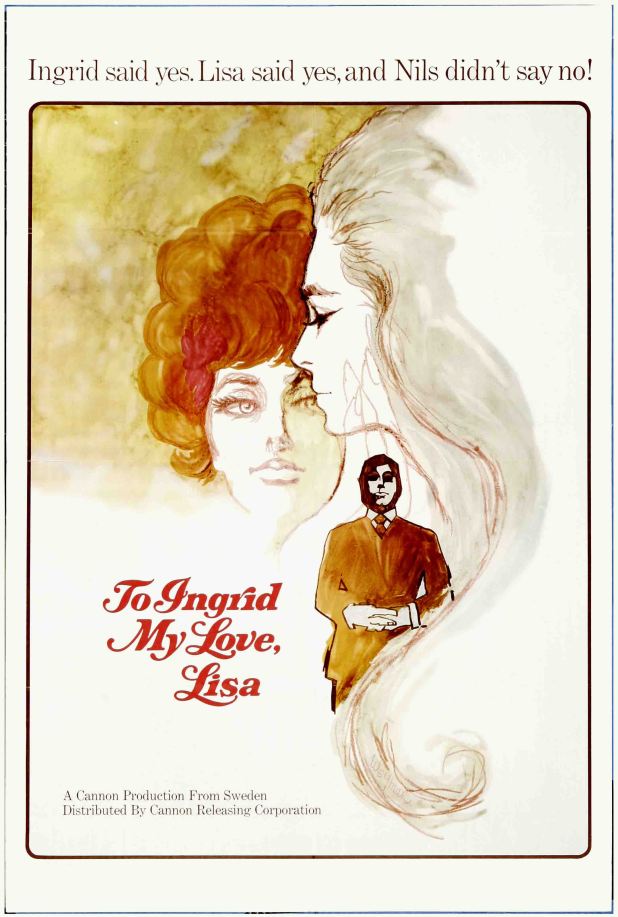
CANNON MONTH 2: To Ingrid, My Love, Lisa (1968)

Also known as Kvinnolek, this Joe Sarno-directed and written movie is about Lisa Holmberg (Gunbritt Öhrström), who is the latest Sarno leading lady to be gorgeous and at the same time emotionally unsatisfied, no matter how well the rest of her high fashion life may be.

She heads to the country to rest and meets Ingrid (Gunilla Iwansson), a young girl who she convinces that she could escape her normal life and become a model. Of course, she also has her own designs on her young charge. Can Sapphic May and December — more like February and June — romance blossom?

This was brought to the U.S. by Cannon, which seemingly carried everything Sarno was making.

I love that when this played Pittsburgh, the Pittsburgh Press drama editor Thomas Blakely said “Yes” draws no from one critic: Swedish import is cheap, shoddy, ragged sex romp. They sent the drama editor to a Joe Sarno movie!

Meanwhile, I Am Curious (Yellow) was playing in New Kensington at the Dattola Theater.