Next week, we’re doing comic book movies. Consider this a preview.
April 27: Lost Comic Book Movies — Forget the MCU. Let’s talk about superhero movies that no one is talking about.
Here are some movies to get you started:
3 Giant Men (1973): Santo and Captain America against a drug-dealing murdering Spider-Man? Yep. All that and so much more, like Spidey putting a woman’s face into an outboard motor.
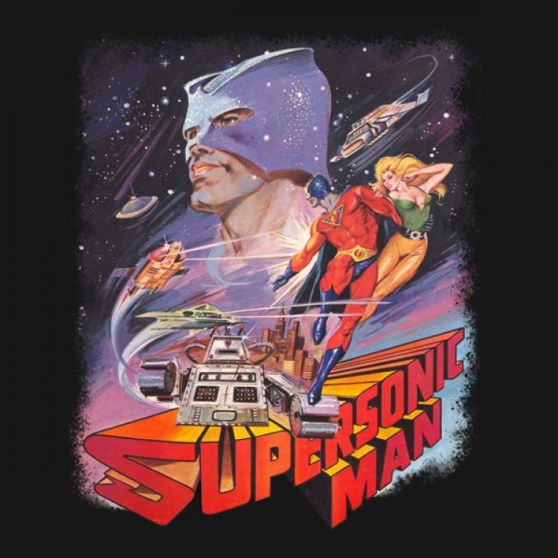
Supersonic Man(1979): A superhero from Juan Piquer Simon, the same man who brought us Pieces and Slugs. Oh man.
Infra-Man (1975): Beyond bionics? More like beyond amazing. If you haven’t seen this, fix that immediately.
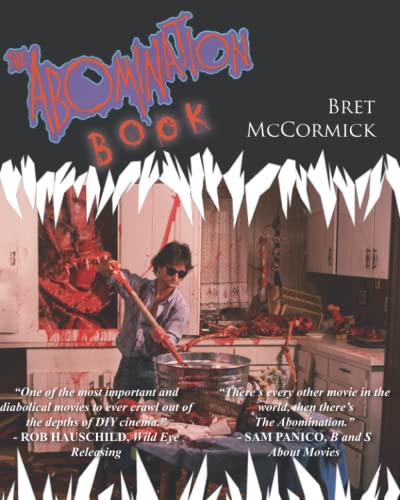
In 1986, Bret McCormick wrote, produced and directed one of the strangest direct-to-video feature films ever created – THE ABOMINATION. This companion book illuminates the history and critical reactions to the film for a new generation of viewers. Find out why THE ABOMINATION has a dedicated world-wide cult following with this book.
I’m super excited for this book to be released, as it takes the review that I did of the film and expands on an interview that I got to work on with Bret. I truly feel that this is one of the most interesting horror films of the 80s, so anything I can do to get it new fans I will.
You have no idea how excited I am to announce the first blu ray commentary track I’ve ever done, along with Bill Van Ryn, who I host the Drive-In Asylum Double Feature with! Get ready!
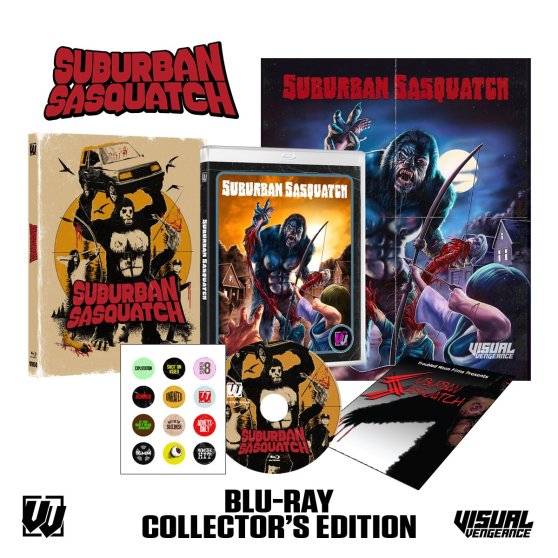
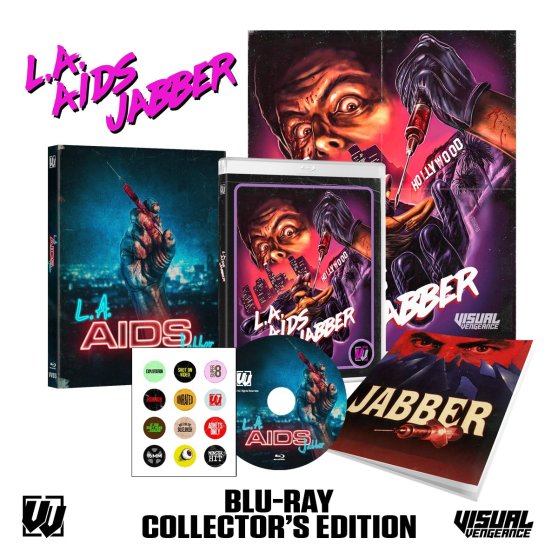
Wild Eye Releasing’s new sister label Visual Vengeance, a collector’s Blu-ray label dedicated to vintage Shot on Video and micro budget genre independents from the 1980s though 2000s, is excited to reveal the next two Blu-ray collectors editions in their fast growing catalog.
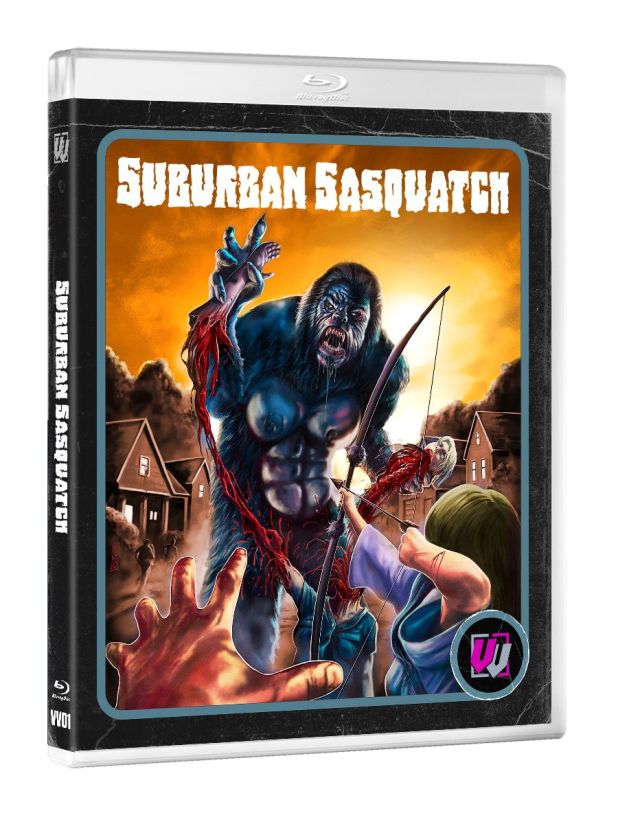
SUBURBAN SASQUATCH (2004): Perhaps the most beloved and recognizable shot on video movie of the last two decades, Dave Wascavage’s cult classic sees its first time ever on Blu-ray and is packed with bonus features, including the full RIFFTRAX episode of the movie! When a giant blood-thirsty Bigfoot goes on a killing spree in a sprawling suburban park area, it’s up to a couple of park rangers, a reporter and a mystical Native-American Warrior to try and stop Sasquatch’s limb-ripping rampage.
Select Bonus Features:
New 2021 Commentary by Director David Wascavage
Commentary from Sam Panico of B&S About Movies and Bill Van Ryn of Drive-In Asylum
Includes full RIFFTRAX version of the movie
Archival Behind The Scenes Featurette
Making The CGI for Suburban Sasquatch
From The Director’s POV: Archival Interviews
Limited Edition Slipcover designed by Earl Kessler FIRST PRINTING ONLY
Collectible Mini-poster
‘Stick your own’ VHS sticker set
And more
LA. AIDS JABBER (1994): One of the rarest and most sought-after bad taste movies of the SOV era. Jeff, a mentally unstable young man is diagnosed with AIDS and takes his anger out on the world by filling a syringe with his own tainted blood and trolling the seedy streets of Los Angeles looking for victims in an acid-washed and venomous delirium. Police slowly piece together his crimes in an attempt to stop this ticking virus time bomb from jabbing again. This is the first wide release of the movie since it was self-distributed by director Drew Godderis himself, and the Blu-ray is packed with newly produced bonus features and commentary from the original creators.
Commentary Track with Director Drew Godderis
Lethal Injection: The Making of L.A. AIDS JABBER
Bleeding The Pack: An Interview with Lead Actor Jason Majick
L.A. AIDS JABBER – 2021 Locations Visit
Interview with Blood Diner Director Jackie Kong
Actress Joy Yurada Interview
Cast and crew Interviews
Liner notes by Tony Strauss of Weng’s Chop Magazine
Limited Edition Slipcover – FIRST PRINTING ONLY
Reversible BR sleeve featuring original VHS art
Collectible Mini-poster
‘Stick your own’ VHS sticker set
And More
For more details on the label and updates on new releases – as well as news on upcoming releases – follow Visual Vengeance on social media – IG, Facebook or twitter
Admission is still only $10 per person each night (children 12 and under free with adult) and overnight camping is available (breakfast included) for an additional $10 per person.
You can buy tickets at the show or use these links:
There is also a limited edition shirt available at the event.
Pittsburgh is more than just my hometown. If you believe a source as vaunted as Joe Bob Briggs, we’re also the birthplace of modern horror, thanks to George Romero and friends creating Night of the Living Dead right here (well, actually Evans City, 45 minutes north of the city).
Horror may have laid dormant for a decade or so, but the 70’s and 80’s were packed with genre-defining creations made right here in the City of Bridges. There’s Dawn of the Dead, Martin and Day of the Dead just to name a few.
Then there’s the 1980 film Effects, made by several of Romero’s friends and all about the actual process of making a scary movie and the philosophy of horror. Much like every fright flick that emerged from the Steel City — let’s not include 1988’s Flesh Eater, a movie I’m not sure anyone but S. William Hinzman has any pride in — it goes beyond simple shocks to delve into the complex nature of reality, man’s place in the world and what it means to be afraid.
Pittsburgh is also a complex city, one that started last century as “Hell with the lid off,” died in the late1970ss and rose, much like the living dead, to become a hub for tech many years later. Effects is a document of what it once was decades ago and holds powerful memories for those that grew up here.
Joe Pilato (Captain Rhodes from Day of the Dead) stars as Dominic, a cinematographer who has traveled out of the city to the mountains — around here, anything east of the city is referred to as “going to the mountains” — to be the cameraman and special effects creator for a low-budget horror movie.
In case you are from here, he’s going to Ligonier. For the rest of the world, imagine a rural wooded area, the area where Rolling Rock beer once came from — yes, I know it’s Latrobe yinzers — Anheuser-Busch bought it, moved the plant to Newark, New Jersey and stopped making it in glass-lined tanks. As a result, it now tastes like every mass produced beer out there. It’s also a place with a Story Book Forest theme park.
I tell you that to tell you this — imagine a team of horror maniacs descending on this quiet little town to make a movie about coked up psychopaths making a snuff film in the woods.
Director Lacey Bickle (John Harrison, who created the music for many of Romero’s films and directed Tales from the Darkside: The Movie) is a strange duck, one who wants to push his crew to film scenes days and nights.
Luckily, Dominick meets Celeste, a gaffer who is disliked by the rest of the crew. They quickly fall in love at the same time as our protagonist discovers that an entirely different film is being made, one whose special effects don’t need any technical wizardry. As secret cameras begin to roll, what is real and what is Hollywood by way of Allegheny County wizardry?
Dusty Nelson, Pasquale Buba, and John Harrison — the three main filmmakers — all met at public TV station WQED, the home of Mr. Roger’s Neighborhood and all worked together on the aforementioned Martin. Inspired by their work on that film, they started an LLC and raised $55,000 from friends and family to make this movie.
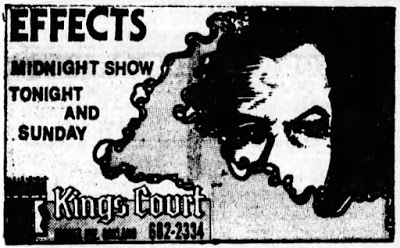
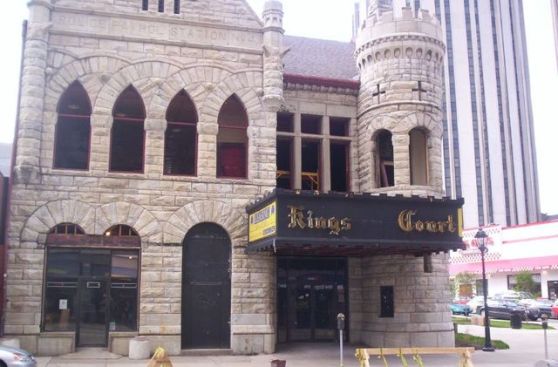
Due to a distributor problem, Effects was never released in theaters or on home video. Its lone theatrical screenings were at the U.S. Film Fest — which is now the Sundance Film Festival — and it had its world premiere at the Kings Court theater in Oakland, right down the street from Pitt, on November 9, 1979.
According to the website Temple of Schlock, Effects was picked up by Stuart S. Shapiro, a distributor who specialized in offbeat music, horror and cult films like Shame of the Jungle and The Psychotronic Man. His International Harmony company distributed the film, but it played few, if any, theaters. Shapiro would go on to create Night Flight for the USA Network. In October 2005, Synapse would finally release this film on DVD for the first time ever.
Pittsburgh is a lot different now. The Kings Court, once a police station turned movie theater transformed into the Beehive, a combination coffee shop movie theater, is now a T-Mobile store, a sad reminder that at one time, we rejected the homogenization of America here in Pittsburgh. Nowhere is this feeling more telling than at the end of this film, where the movie within a movie has its premiere on Liberty Avenue. Now in the midst of Theater Square, this mini-42nd Street went the very same way, with establishments like the Roman V giving way to magic and comedy clubs. As a kid, when my parents drove down this street, I was at once fascinated and frightened by dahntahn. But no longer.
You can also get the AGFA blu ray release of this from Amazon. It’s made from a rare 35mm print that was made before the distributor backed out.
Admission is still only $10 per person each night (children 12 and under free with adult) and overnight camping is available (breakfast included) for an additional $10 per person.
You can buy tickets at the show or use these links:
There is also a limited edition shirt available at the event.
Midnight is the movie Rob Zombie keeps trying to make. It’s seriously demented and filled with so many truly unlikeable characters. Most of them make you want to take a shower just watching them.
Written and directed by John Russo, one of the creators of Night of the Living Dead, Midnight was shot on location outside Pittsburgh, Pennsylvania, and features special effects by Tom Savini. While never prosecuted, the film was seized and confiscated in the UK as a section 3 video nasty.
How can you not love a movie that starts with a girl caught in an animal trap getting killed by a bunch of children who all pray to Satan while they murder her? And hey look — one of the killers is John Amplas, Martin in the flesh.
Midnight is really about Nancy Johnson, who runs away from home after her police officer stepfather Bert (Lawrence Tierney, berserk as always) tries to assault her. She gets picked up by two guys, Hank and Tom, who also grab a Baptist preacher and his daughter.
As they stop to see the preacher’s wife’s grave, the older man is soon killed. To top that off, the killer delivers the body to his daughter’s door and then kills her with the same machete.
After racists in the town refuse to serve Hank, the three heroes steal groceries before they’re stopped by some even more racist cops. The two men are quickly gunned down and Nancy goes on the run. Of course, the house she ends up in just so happens to be the one where her friends are being cut into pieces.
The movie then descends into even more depravity, like locking our heroine in a cage to witness a Black Mass, her insane stepfather tracking her down and finally, our heroine discovering herself in time to wipe everyone out with extreme malice.
The original ending had the crazed family — who had already killed the cops and stolen their uniforms — getting away with the murders. However, the distributors demanded that the film have a more uplifting ending, which is why the one that is in here happens so quickly. It works for me — it’s really shocking.
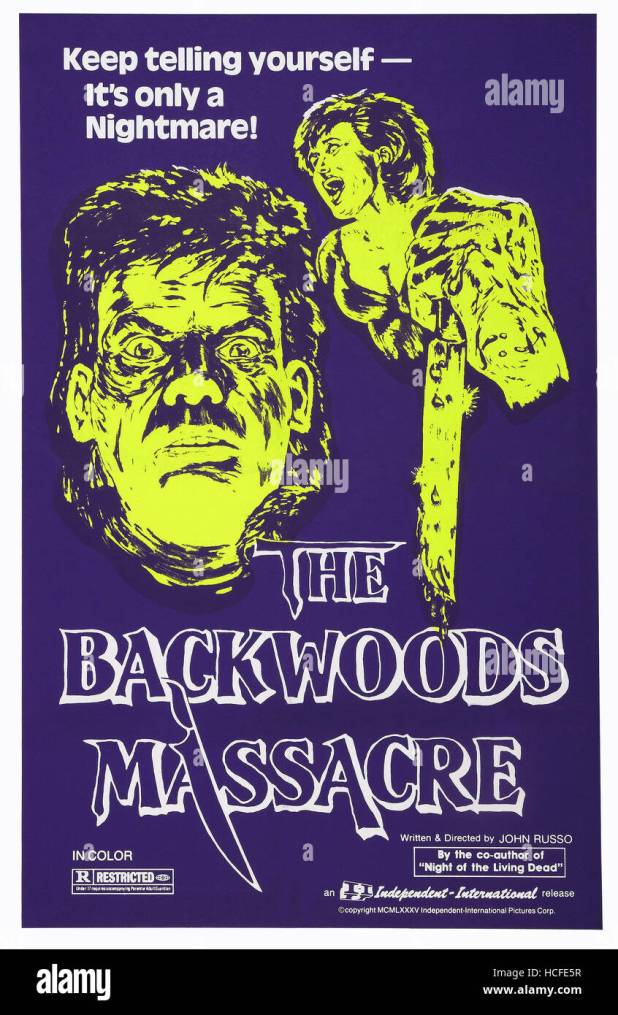
While the film was released as Backwoods Massacre, I’d compare it to more of a Western Pennsylvania Texas Chainsaw Massacre in tone.
UPDATE: I’m beyond happy that Severin has released this on blu ray and even used a quote from our site on the back cover!
How much do I love this movie? This poster is in our movie room.
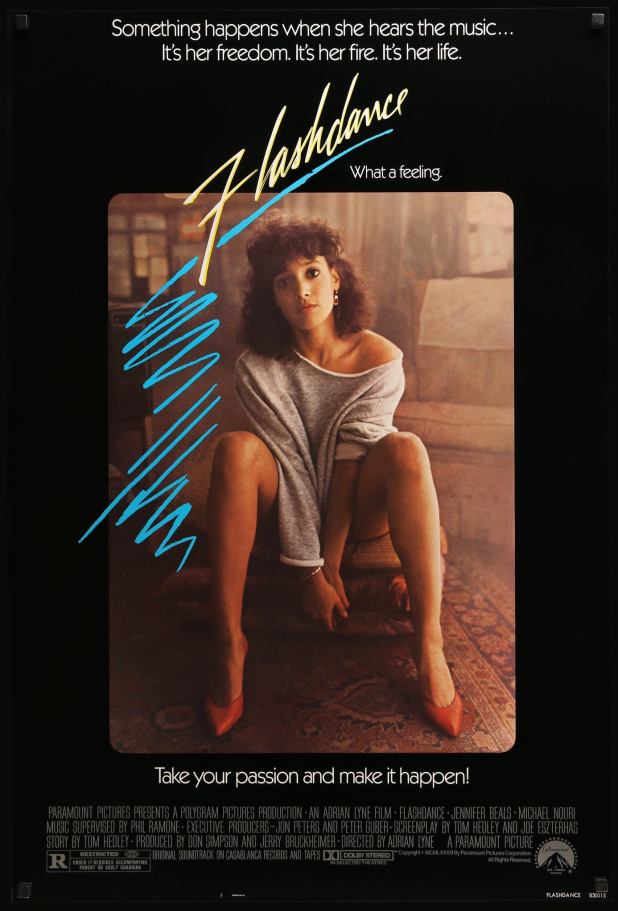
As someone from Pittsburgh, it’s kind of amazing that I’ve never watched this movie, perhaps the most famous movie shot here not in the horror or action genre.
Adrian Lyne was not the first choice to be the director, as both David Cronenberg and Brian De Palma turned it down. But Lyne came from commercials — his ads for Brutus Jeans are pretty much proof of concept for this movie — and he knew the right look for the film.
Paramount was so unsure of the movie’s potential that they sold 25% of the rights before it came out. Joke was on them — it made over $200 million worldwide and was the third highest-grossing film of 1983.
For the lead, there were three front-runners: Jennifer Beals, Demi Moore and Leslie Wing. As this was the first collaboration of producers Don Simpson and Jerry Bruckheimer, they were quite hands-on. Writer Joe Eszterhas* — oh man, I need to do a week of his films — claims that Eisner took a survey from “two hundred of the most macho men on the Paramount lot, Teamsters and gaffers and grips.” He asked one very important question: “I want to know which of these three young women you’d most want to fuck.”
Lyne used dark cinematography and montage music video editing to hide one important fact: that isn’t Beals dancing. Her body double is Marine Jahan and also male dancer Richard “Crazy Legs” Colón, a member of the Rock Steady Crew who is also in Style Wars, Wild Style and Beat Street. Gymnast Sharon Shapiro also doubled during the audition scene.
Alexandra “Alex” Owens (Beals) works as a welder in a steel mill by day — kids, learn a trade because welders are seriously always in demand and Alex is pretty smart to know this — and a dancer at Mawby’s by night. She dreams of being a professional ballet dancer, but dreams are in currency at that establishment, with Jeanie (Sunny Johnson, who sadly died not long after making this from a brain hemorrhage) wants to be a figure skater and her short-order cook boyfriend Richie (Kyle T. Heffner) wants to become a comedian.
Alex is in demand. Her boss Nick (Michael Nouri) is smitten with her while Johnny C. (Lee Ving!) wants her to dance at his strip club Zanzibar. She keeps thinking about applying to the Pittsburgh Conservatory of Dance and Repertory but is too afraid of the tryout. And then, one night, she and Richie are attacked by Johnny C. and one of his henchmen, Cecil (Malcolm Danare). Nick saves the day and they finally fall in love.
Things get tough, though. Richie makes it to Los Angeles, but Jeanie falls twice in her big skating competition and decides that Zanzibar is where her future is. Alex drags her out at the two cry in the rain. And Nick’s ex-wife (Belinda Bauer) complicates the love story for some time, but things work out and Alex nails her audition, using the rough edge of dance she did on stage mixed with the classical form.
Pittsburgh is just as much a character as anyone else in this movie. Alex rides the Duquesne Incline like a good Yinzer, which also doesn’t make sense because her apartment is miles away and near the home of her mentor at 2100 Sidney Street. Kind of like how she rides her bike all through Fineview and somehow ends up on the Smithfield Street Bridge, as close to a “Take Bigelow” moment as Flashdance gets. The Pittsburgh Conservatory of Dance and Repertory is obviously the Carnegie Museum, which is one of my favorite places (the nearby Carnegie Library is gigantic, has a hidden window to check out the dinosaurs in the history museum, is heated with old radiators and has an amazing DVD collection with so many out of print films).
Sadly, Alex’s loft is actually Los Angeles. And Mawby’s was a vacant warehouse on the corner of Boyd Street and Wall Street, even if it looks a lot like Jack’s on East Carson Street. The idea of Mawby’s is wild to me. It’s obviously a working class shot and a beer bar, yet it has dancers on stage who bring their own props and dance some incredibly intricate dancers of sultry near performance art whereas you’d expect gyrations and nudity. There was never a place like this in 1983 Pittsburgh that I know of — to be fair, I was 11 and would have been kicked out of the Edison Lounge, so maybe it was the Moon Township-based Fantasy’s Showbar while Zanzibar is closer to the Edison, Casino Royale or the frankly intimidating Chez Kimberly — but hey just add it to the list of strip club establishments in movies where no one gets naked. That said, Tina Tech (Cynthia Rhodes, who is also in Staying Alive, Runawayand plays Penny in Dirty Dancing) dancing to the song “Manhunt” is pretty incredible.
Zanzibar** is really Star Strip Gentlemen’s Club on 365 North La Cienega Boulevard in West Hollywood — thanks Movie-Locations.com — which is gone.
You can also see a lot of Pittsburgh, like the Southside clock — once owned by Duquesne Brewing — as well as a lot that’s gone, like the mills, the once glitzy world of Station Square which is mostly office space now (I spent years of my life working there and the nightclub Chauncy’s would blast bass into our advertising office while we worked all night, I was a maniac, maniac pasting up ads) and Vic Cianca, a Pittsburgh icon who was a dancing traffic cop who conducted the gridlock of dahntahn like it was a symphony. When he retired, The Pittsburgh Press — also gone — said “A downtown traffic jam without Vic Cianca is a traffic jam with no redeeming qualities.”
Debra Gordon, who was Rita in Effects is a ballet dancer in this. And always, a movie cannot be made in Pittsburgh without Chef Don Brockett being in the cast. Never change, City of Bridges.
The music of Flashdance is the last character we need to discuss.
Bruckheimer had collaborated with Giorgio Moroder on American Gigolo and sent him the script as soon as he had received it to give him a sense of the music they needed. The composer was busy while the movie was being shot and only had time to do a rough version of the theme song. Moroder had not committed to the project by the end of filming, but when he watched the movie, he decided to work on the score.
Moroder wrote the “Love Theme from Flashdance,” “Lady, Lady, Lady” and “Seduce Me Tonight,” as well as the movie’s main theme, “Flashdance… What a Feeling.” Session drummer Keith Forsey was assigned to write the lyrics and had help from Irene Cara after they watched the audition scene. Moroder wanted Joe Esposito to sing the theme, but Paramount wanted a well-known female singer. And after all, Cara had stipulated that if she wrote the lyrics, she would get to sing the song.
So many of the lyrics match how Alex feels about dancing in front of the drunks at Mawby’s. She says, “I never see them. You go out there, and the music starts, and you begin to feel it. And your body just starts to move. I know it sounds really silly. But something inside you just clicks, and you just take off. You’re gone. It’s like you’re somebody else for a second.” This freedom she describes is reflected in the lyrics, “When I hear the music, close my eyes, feel the rhythm wrap around, take ahold of my heart, what a feeling.”
Another song that was a big deal in the movie is “Maniac” by Michael Sembello. It was written with Dennis Matkosky and inspired by a story about a serial killer on the news and had some of its original lyrics written after a viewing of Maniac. Lyne heard a demo and wanted to use the song, saying “One of the tunes I’d heard had a kind of a chime in it, that kind of ‘bing-bong-bing-bong-bing-bong’, like that, and I said, “Let’s use that. Let’s use that as a kind of a motive, as a kind of a driving thing for a dance.””
*Flashdance was inspired by the real-life story of Maureen Marder, a construction worker and welder by day and dancer by night at Gimlets, a Toronto strip club who wanted to be a professional dancer. Tom Hedley wrote the story outline and Marder signed a release giving Paramount Pictures the right to portray her life story on screen for $2,300.
Sadly, her attorney was present for that and despite the movie making so much money, she was not entitled to more when she sued.
Paramount also went to court over the movie as the Jennifer Lopez video “I’m Glad,” which was directed by David LaChapelle, went a bit further on the side of ripoff than tribute. Her label, Sony, agreed to pay a licensing fee for the video.
Terry Gilliam was making this directly after The Fisher King and after abandoning A Tale of Two Cities. He was up on the sea of fates and had not entered the darkest phase of his career.
Executive producer Robert Kosberg was a fan of a French called La Jetée and convinced its director Chris Marker to let him try and get the movie made by Universal, who bought the rights and hired writers David and Janet Peoples. David was a writer on Blade Runner, Unforgiven, Ladyhawke, Soldier and wrote and directed The Blood of Heroes. Janet wrote several documentaries before collaborating with her husband on this script.
Producer Charles Roven felt that Gilliam was the perfect choice to direct this non-linear movie.
A deadly virus was released in 1996 by the Army of the Twelve Monkeys and now the survivors live underground. James Cole (Bruce Willis) is one of those survivors, a prisoner due to his violent outbursts and emotions, who is selected to go back in time and warn others in the past. He’s also suffering from dreams of a shooting in an airport.
When he arrives in Baltimore, he’s six years early and institutionalized, a prison all over again. Only Dr. Kathryn Railly (Madeleine Stowe) and another patient, the anti-capitalist Jeffrey Goines (Brad Pitt) listen to him. Cole tries to escape and ends up back in the future, where he’s told that he must stop Goines, who seemingly is the one to unleash the virus. The time machine is faulty and sends him to World War I before its correct destination of 1996, a time when Railly is giving a speech about the Cassandra complex — when a prophet warns others of danger and is not listened to — and ends up meeting Dr. Peters (David Morse), who tells her that anyone who believes in the end of the world is sane and anyone who denies the ecological collapse of Earth is the one truly crazy.
Cole kidnaps Railly and they learn that Goines definitely is the founder of the Army of the Twelve Monkeys, using the virus that his father Dr. Leland Goines (Christopher Plummer) invented and inspired from meeting Cole in 1990. Yet is that true? Is Cole insane? Is the time travel actually happening? And what really is his mission?
Gilliam himself said that “The story is disconcerting. It deals with time, madness and a perception of what the world is or isn’t. It is a study of madness and dreams, of death and re-birth, set in a world coming apart.”
At one point, Cole goes from believer to unbeliever and Railly makes the opposite decision. In one of Marker’s later films, Sans Soleil, a voiceover states “only one film has been capable of portraying impossible memory, insane memory: Alfred Hitchcock’s Vertigo*.” Cole and Railly watch this film within the movie — Cole says, “I think I’ve seen this movie before” — and we even hear the strings of Bernard Hermann’s theme play.
This was probably a hard watch back in 1995 and today, it’s really difficult. I mean, someone immolated themselves to draw attention to climate change yesterday. Wynn Bruce spent an entire year planning this action only for his death to be lost in the coverage of celebrity relationships.
The movie posits that 2035 is the darkest time of the future. Yet in 2030, if global emissions aren’t halved, this world will be unlivable. But what can one person do — like Cole, I feel I am not even a cog in this vast secret shadow machine — when the majority of the damage is caused by corporations? And oh yeah, a movie about a pandemic when we’re living in one that people want to be over and refer to this as post-COVID and people whip their masks off in joy on airplanes which already circulate air filled with illness.
This got dark quick, huh?
Cole says, “Maybe the human race deserves to be wiped out,” but I’m still not so sure.
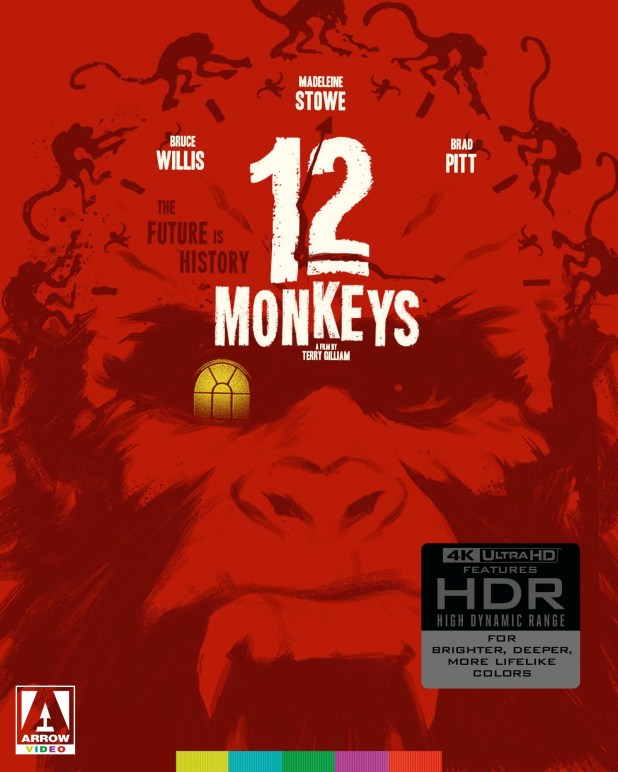
The Arrow Video UHD of 12 Monkeys offers a brand new restoration from a 4K scan of the original negative by Arrow Films, approved by director Terry Gilliam. There’s audio commentary by Gilliam and producer Charles Roven, a feature-length making-of called The Hamster Factor and Other Tales of Twelve Monkeys, feature-length making-of documentary by Keith Fulton and Louis Pepe (Lost in La Mancha), a 1996 interview with Gilliam and critic Jonathan Romney, recorded at the London Film Festival, an appreciation by Ian Christie, author of Gilliam on Gilliam, The Twelve Monkeys Archives, a trailer, a reversible sleeve featuring original and newly commissioned artwork by Gary Pullin and an illustrated collector’s booklet featuring writing on the film by Nathan Rabin and Ian Christie. You can get it from MVD.
*Credit for this goes to this article on Little White Lies.
Steve Barron directed some of the most famous videos like “Billie Jean” by Michael Jackson, “Money for Nothing” by Dire Straits, “Electric Avenue” by Eddy Grant, “Don’t You Want Me” by The Human League, “Africa” by Toto and “Take On Me” by A-ha. This was his first film, which was written by Rusty Lemorande, who also was behind Captain EO, Cannon’s Journey to the Center of the Earth and the Patsy Kensit and and Julian Sands-starring The Turn of the Screw.
Barron often shared his music videos with his mother Zelda. Now, that isn’t him being a mama’s boy. She was at the time doing continuity on Yentl with Lemorande — she also directed the movie Shag and Culture Club’s* videos for “I’ll Tumble 4 Ya,” “Miss Me Blind,” “The Medal Song” and “It’s a Miracle” — and showed showed him a video that Barron made for Haysi Fantayzee, which led to this movie.
The film is very much an extended music video and has lots of artists of the era, such as YB40, Jeff Lynne, Phil Collins, Heaven 17 and, most importantly, Giorgio Moroder, who was hired as the composer.
Barron would later say, “(Mordoer) played me a demo track he thought would be good for the movie. It was the tune of “Together in Electric Dreams” but with some temporary lyrics sung by someone who sounded like a cheesy version of Neil Diamond. Giorgio was insisting the song could be a hit so I thought I’d suggest someone to sing who would be as far from a cheesy Neil Diamond as one could possibly go. Phil Oakey**. We then got Phil in who wrote some new lyrics on the back of a (cigarette) packet on the way to the recording studio and did two takes which Giorgio was well pleased with and everybody went home happy.”
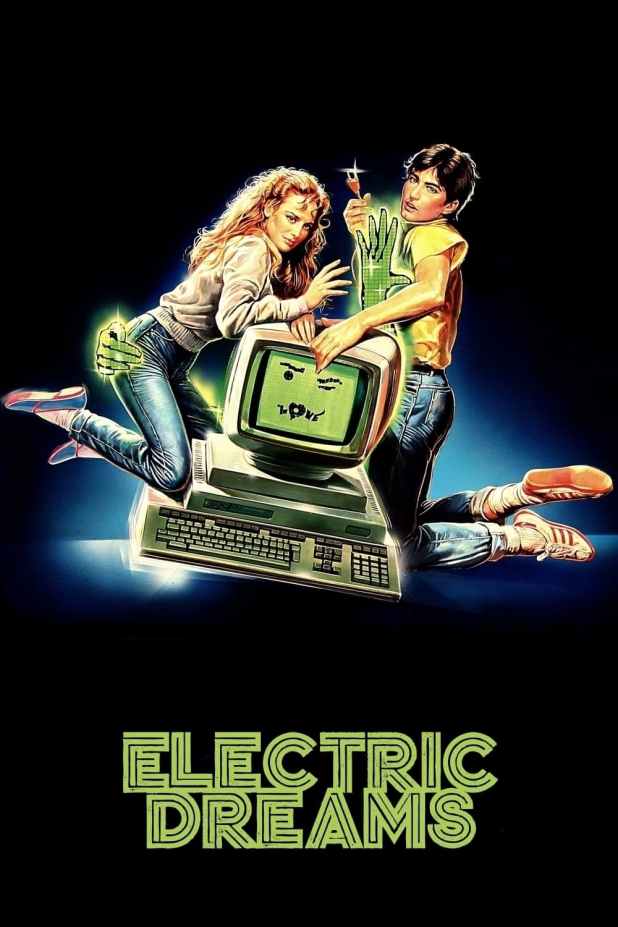
Miles Harding (Lenny Von Dohlen, Harold Smith on Twin Peaks) is an architect who wants to build earthquake-proof building, which is why he buys a computer to help him and goes overboard, buying everything he can to allow it to run his house. However, he screws up his own name and it calls him Moles. As the computer downlaods more information and it starts to overheat. Miles pours champagne on it, which is not how to fix a computer and it becomes self-aware, gains the voice of Bud Cort (Barron didn’t want Cort to be seen by the other actors so he did his lines in a padded box on a sound stage) and the name Edgar.
Miles and Edgar are both in love with neighbor Madeline Robistat (Virginia Madsen), with Edgar even playing cello along with her in a duet, a performance that Miles takes credit for. He even asks the computer to write a song for Madeline, but that takes things too far and soon man fights machine.
Yet don’t take this to be a horror movie. It ends up being quite sweet at the end and is a cute romance. You can even see Moroder show up as a record producer. This movie has one of my favorite movie things in it: computers that at once look dated and yet do more than they can today.
*Harold and Maude fan Boy George visited the set of this movie just to meet Bud Cort. George also helped compose the song “Electric Dreams” and contributed his band’s songs “Karma Chameleon,” “Do You Really Want to Hurt Me,” “Love Is Love” and “The Dream” to the soundtrack.
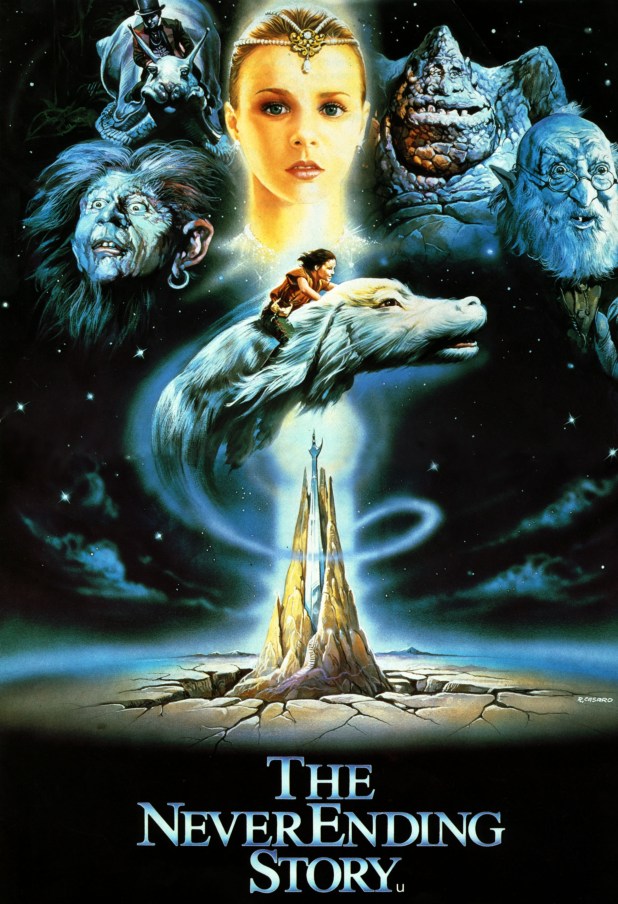
Die Unendliche Geschichte — based on the 1979 novel The Neverending Story by Michael Ende — was, at the time of its production, was the most expensive film produced outside the United States or the Soviet Union.
Ende was happy about his book being turned into a film and worked with director Wolfgang Petersen as a script advisor. He was paid $50,000 for the rights to his book and at the end of the day, he was upset that Petersen rewrote the script without consulting him and he demand that the production either be stopped or the film’s title be changed. He sued and list and called the movie “gigantic melodrama of kitsch, commerce, plush and plastic.”
Guess all those 80s kids were idiots, huh?
Bastian Bux is me at ten. He doesn’t want anything to do with anyone, he’s bullied and all he cares about books. One day, while hiding inside a book store, he’s warned about The Neverending Story by the owner, Carl Conrad Coreander. It’s not a safe book. Yet he steals it and runs.
Inside the book, Fantasia is being eaten alive by “The Nothing” while The Childlike Empress (Tami Stronach) grows ill. Atreyu (Noah Hathaway) is trying to cure her, using the Auryn medal to protect himself from the forces of evil. Well, those forces cause his horse Artax to be lost in the swamp in a scene that scars children for the rest of their lives.
Luckily, he’s saved by the Falkor, a furry dragon of sorts and Atreyu learns from the Southern Oracle that there’s one way to save the Empress: find a human child who lives beyond the boundaries of Fantasia to give her a new name. Someone like Bastian.
And, it turns out, the viewers, who are all part of The NeverEnding Story itself. Also, seeing as how Bastian names The Childish Empress Moonchild at the end, is this also an Aleister Crowley-related movie?
Petersen also directed Das Boot, Enemy Mine, In the Line of Fire, Air Force One, The Perfect Storm, Troy and Poseidon. That’s what we call a solid career.
In Germany, this movie sounds a lot different as it has an orchestral score by Klaus Doldinger of the German jazz group Passport. However, the English language version has a theme song composed by Giorgio Moroder, with lyrics by Keith Forsey and a performance by Christopher “Limahl” Hamill, a former lead singer of Kajagoogoo, and Beth Anderson. It was a big deal — it peaked at No. 17 on the Billboard Hot 100. But along with the techno-pop additions to the soundtrack, none of this plays in the German version.
Giorgio Moroder is more than just the father of disco. He’s contributed to the entire world of synth in music and his film work is vast.
It would take so long to list every amazing song and album Moroder created, but beyond his own work, I’d start with “Bad Girl” and “Last Dance” by Donna Summer, “Call Me” by Blondie, “The Number One Song In Heaven” by Sparks, his work with Daft Punk and, of course, “Body Next to Body” by Falco and Bridgette Nielsen.
His song “Chase” from Midnight Express is just part of the score that won Moroder an Academy Award for Best Original Score and the Golden Globe Award for Best Original Score. It was also used for years by the pro wrestling theme to the point that just the first few notes make most fans get ready to cheer. Moroder also won a Best Song Oscar for “Flashdance…What a Feeling” from Flashdance and “Take My Breath Away” from Top Gun, a song that he claims is his favorite. Other soundtracks include Electric Dreams, Scarface, Battlestar Galactica, D.C. Cab and Superman III.
April 26: Oh Giorgio! — Pick a movie with a Giorgio Moroder score. Here’s a list to get you started.
Here are some films we’ve already written about with Moroder songs:
Over the Top (1987): Moroder scored this movie, with probably the Kenny Loggins’ voiced song “Meet Me Halfway” being the most remembed song.
Foxes (1980): The second movie that Moroder scored after American Gigolo, he wrote Donna Summer’s “On the Radio” for this movie.
Cat People (1982): “Cat People (Putting Out the Fire)” is the best song from this film. David Bowie wrote the very film-referencing lyric while Moroder composed the music, which is built around only two chord changes. Bowie was unhappy with this version and re-recorded it for his album Let’s Dance with Niles Rogers producing and Stevie Ray Vaughn playing guitar on a much harder version of the song.







 B&S About Movies
You must be logged in to post a comment.