Rogue Cops and Racketeers: Two Crime Thrillers: The Heroin Busters (1977)

Enzo G. Castellari directing the kind of action you demand from poliziotteschi.

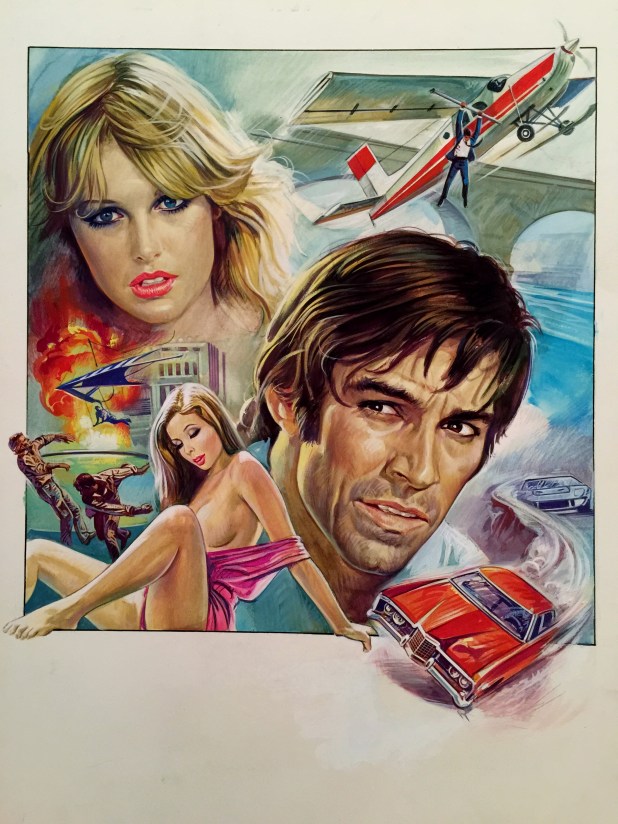
Fabio Testi and David Hemmings as the tough undercover cop and driven agent against unstoppable crime.

Goblin fresh off Suspiria making this movie sound like nothing else.

The Heroin Busters is ready to own you..

Mike Hamilton (Hemmings) is an Interpol agent trying to keep heroin from taking over Italy from his office. And from the streets, Fabio (Testi) is his undercover agent, getting in deeper and deeper into the drug trade until his cover gets blown and the world of crime comes for him. Can Mike save him in time?

That’s also totally Testi flying the plane in this movie.

Years before John Woo gave us bullet romance violence, Castellari has Testi sliding down stairs, blowing people away while looking improbably, effortlessly cool. It takes some time to get the action at the end of this movie, but you know, we could all use a little patience, because the payoff, for once, is more than enough.

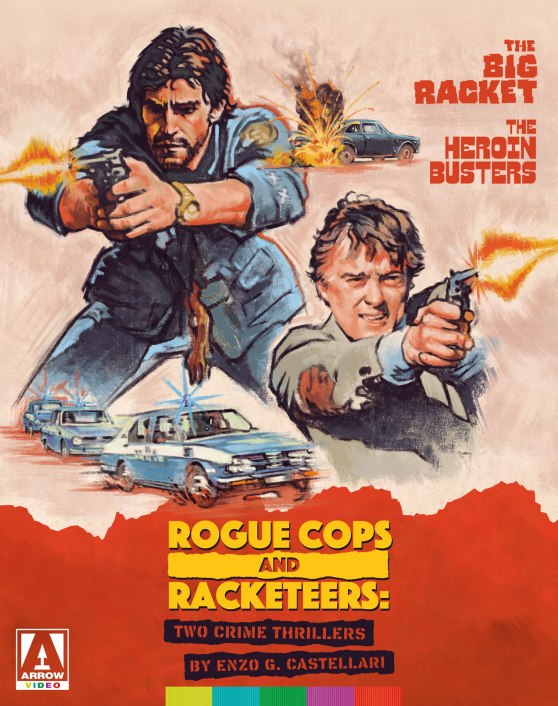
The Arrow Video limited edition of Rogue Cops and Racketeers: Two Crime Thrillers has this movie and The Big Racket. Both films have brand new 2K restorations from the original 35mm camera negatives by Arrow Films, with restored original lossless mono Italian and English soundtracks and newly translated English subtitles for the Italian soundtracks. Both movies also have new audio commentaries on both films by critics Adrian J. Smith and David Flint and the limited edition packaging has reversible sleeves featuring original and newly commissioned artwork by Colin Murdoch, as well as an illustrated collector’s booklet featuring new writing on the films by Roberto Curti and Barry Forshaw. If that’s not enough, you also get twelve double-sided, postcard-sized lobby card reproduction artcards.

The Heroin Busters also has new video interviews with Castellari, Testi, Vanni, editor Gianfranco Amicucci, retired poliziotto and criminologist Nicola Longo (who consulted on the film); The Eardrum Busters, a new appreciation and career retrospective of composers Goblin by musician and disc collector Lovely Jon; the film’s trailer and an image gallery.

You can get Rogue Cops and Racketeers: Two Crime Thrillers from MVD and Diabolik DVD.

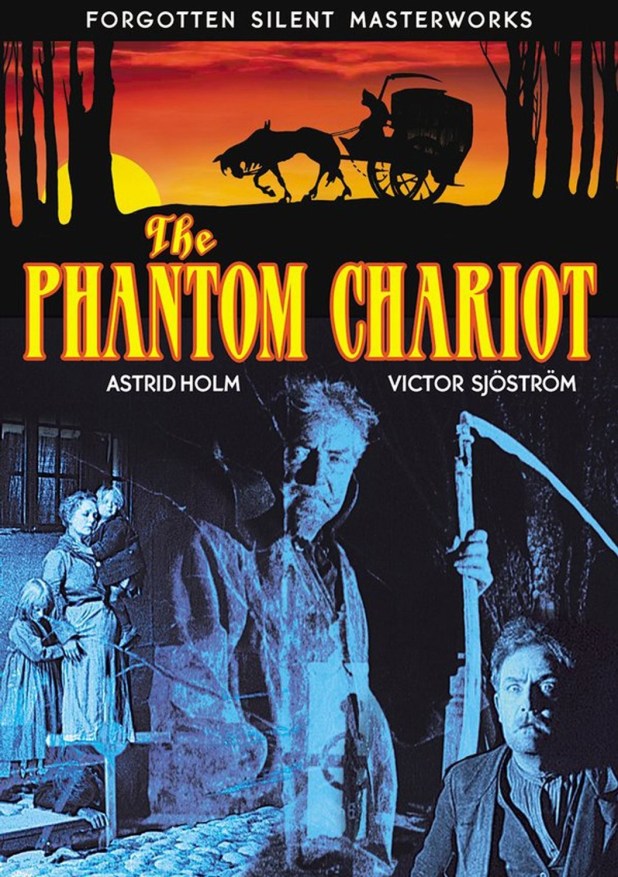
APRIL MOVIE THON DAY 19: The Phantom Carriage (1921)

Directed by and starring Victor Sjöström, this 1921 movie is based on the 1912 novel Thy Soul Shall Bear Witness! by Swedish author Selma Lagerlöf. It’s considered one of the first horror films ever made due to its atmosphere and it features both groundbreaking special effects and narrative innovations such as flashbacks within flashbacks.

Lagerlöf and A-B Svenska Biografteatern had a contract to adapt at least one Lagerlöf novel every year. Sjöström had made three of these adaptions, which had been well-received by audiences, critics and most importantly, the author. Lagerlöf was initially skeptical about how film could capture the book’s occultism and mysticism. The filmmaker went to her home and acted out the movie all by himself. Lagerlöf responded by offering him dinner.

This movie has the alternate title The Stroke of Midnight in the U.S., as how do you sell it? Is it horror? A fable? A drama?

The film takes place on New Year’s Eve, a time when a dying Salvation Army sister named Edit wishes for the chance to speak with David Holm. He’s currently drunk in a graveyard, telling the story about how the last person to die each year must drive Death’s carriage and collect the souls of the next year’s dead. And the person who told him? They were the last person to die last year. A fight breaks out not long after, with David hit in the head and him being picked up by his friend, driving the carriage of Death.

What follows is the bleak story of a man whose addictions have caused him to destroy his family and even doom the one woman who tried to save him, Enid, with consumption. His disease nearly killed his family as well, as his wife Anna locked them in a room and David broke in with an axe to attempt to see them.

If that sounds like The Shining, it is. Kubrick isn’t the only director inspired by this movie. Ingmar Bergman obsessed over the film — watching it once a year and calling it the “film of films” — and even refers to Death in The Seventh Seal as a strict master, the same words used in this movie. He also made The Image Makers, which is about the making of this movie. Charlie Chaplin also said it was the best movie ever made.

APRIL MOVIE THON DAY 19

For the nineteenth day of the B&S About Movies April Movie Thon, let’s remember.

April 19: Pre-1950 — Let’s go back in time and discuss a movie made a long, long time ago.

All April long, we’ll have thirty themes as writing prompts. If you’d like to be part of it, you can just send us an article for that day to bandsaboutmovies@gmail.com or post it on your site and share it out with the hashtag #BSAprilMovieThon.

Here are some films that we can recommend to watch today:

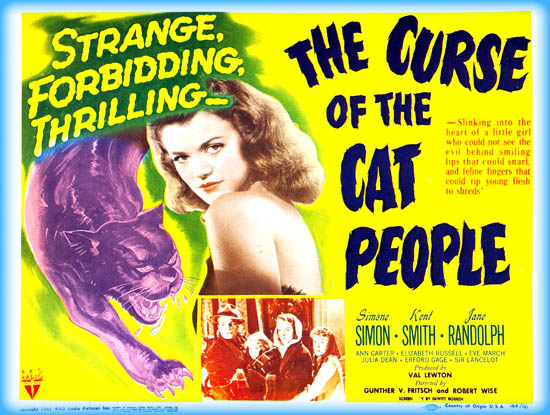
Curse of the Cat People (1944): Somehow, sequels can be better than the original movies. Here’s an example.

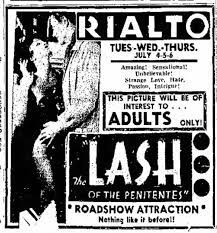
The Lash of the Penitentes (1936): Yes, this was made in 1936. Yes, it’s going to blow your mind.

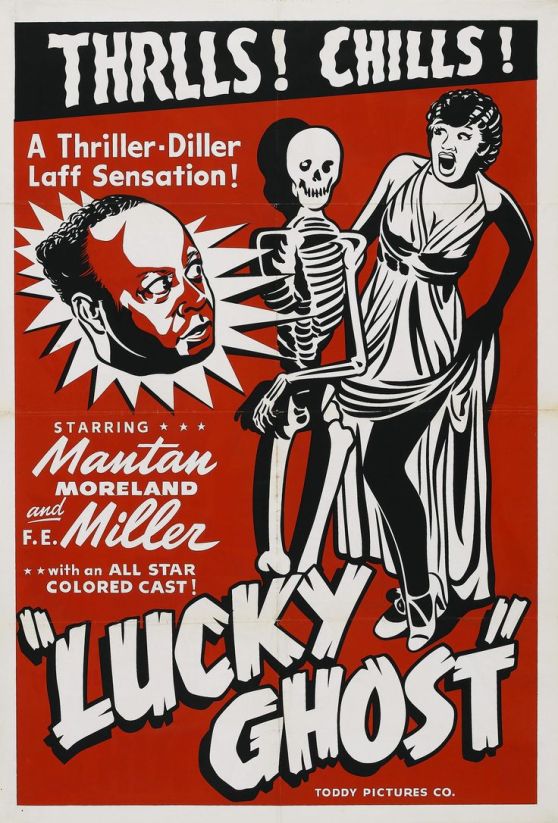
Lucky Ghost (1942): Race films — as they were called — featured parts for actors that never really got the chance to be anything other than servants. This is one such film.

What are you watching?

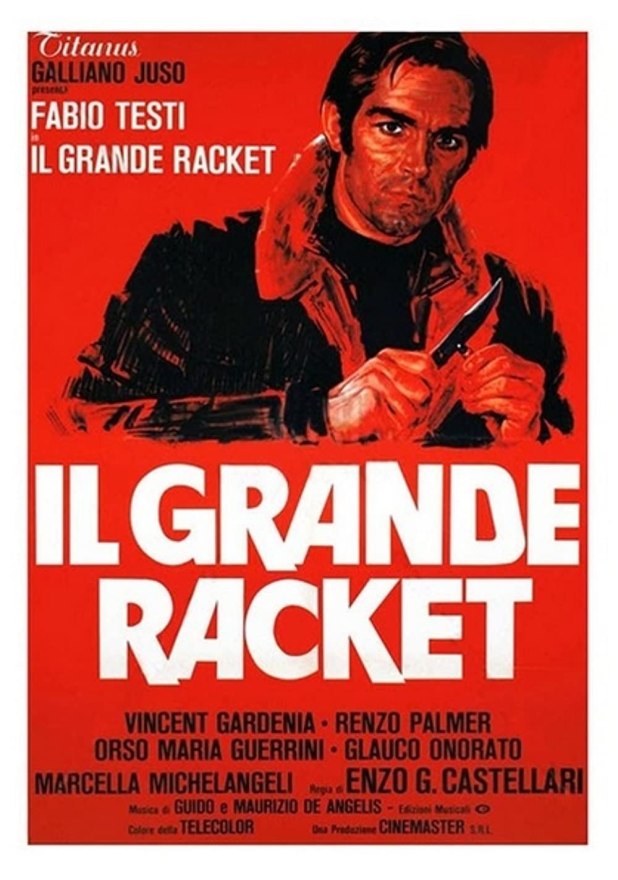
Rogue Cops and Racketeers: Two Crime Thrillers: The Big Racket (1976)

Both of the Enzo G. Castellari movies on Rogue Cops and Racketeers: Two Crime Thrillers push action further than anything we’ll see on screens this year, both films backed with brutality and danger both in the film and in making it, as there are no computers to make these stunts look like they’re spitting in death’s face. They’re all real, all true, pure guts and balls and power.

Nico Palmieri (Fabio Testi) is one man against a crime syndicate that starts with robbing a small town and charging them protection money, but has aims much higher. Nico’s hands are tied by the system so he forms his own squad of vigilantes who have each been damaged by the mob: a criminal named Pepe (Vincent Gardenia); Piero Mazzarelli (Glauco Onorato), who has been crippled by the gang; Luigi Giulti (Renzo Palmer), whose daughter was raped by the gang and who then committed suicide (this scene is Death Wish brutal and it’s even worse when you realize that it’s Castellari’s daughter Stefania playing the role), Gianna Rossetti (Orso Maria Guerrini), an Olympic marksman whose wife Anna was assaulted and killed by the mob — after they urinate all over her and set his house on fire, making them beyond Death Wish 3 goons — and the mercenary Doringo (Romano Puppo).

Nico’s lost his badge to take down crime. Will his gang be able to stop the crimewave?

There’s a scene where Testi is in a car that goes down a hill. We watch it slowly fall apart and glass flies directly at the actor and it looks truly harrowing because, well, it was. When you don’t have budgets and you don’t have time and all you have is guts, you shoot the movie.

The end of this movie is apocalyptic. Bullets fly, cars explode, fire is everywhere and by the end, even the shotgun that Testi grips can’t solve everything. His rage closes the movie, as crime doesn’t go away just because you’re a good man trying to save the world.

The Arrow Video limited edition of Rogue Cops and Racketeers: Two Crime Thrillers has this movie and The Heroin Busters. Both films have brand new 2K restorations from the original 35mm camera negatives by Arrow Films, with restored original lossless mono Italian and English soundtracks and newly translated English subtitles for the Italian soundtracks. Both movies aso have new audio commentaries on both films by critics Adrian J. Smith and David Flint and the limited edition packaging has reversible sleeves featuring original and newly commissioned artwork by Colin Murdoch, as well as an illustrated collector’s booklet featuring new writing on the films by Roberto Curti and Barry Forshaw. If that’s not enough, you also get twelve double-sided, postcard-sized lobby card reproduction artcards.

The Big Racket also has new video interviews with co-writer/director Enzo G. Castellari, Fabio Testi, Massimo Vanni and editor Gianfranco Amicucci. There’s also a new appreciation and career retrospective of composers Guido and Maurizio De Angelis by musician and disc collector Lovely Jon, a trailer and image gallery.

You can get Rogue Cops and Racketeers: Two Crime Thrillers from MVD and Diabolik DVD.

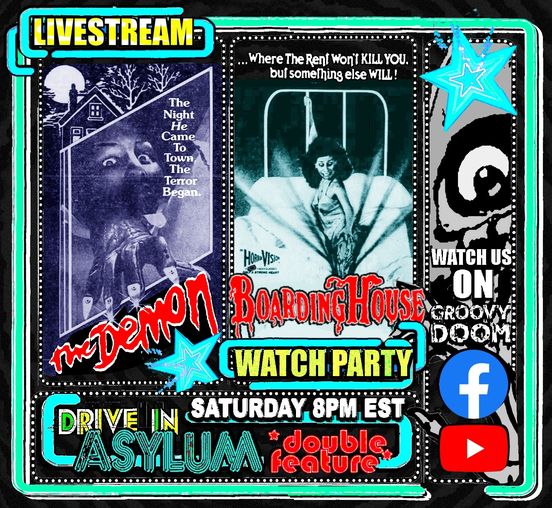
IT’S TIME TO GET WEIRD ON THE DIA DOUBLE FEATURE (WELL, WEIRDER THAN NORMAL)

Mike Justice will join us for two awesome movies at 8 PM EST on the Groovy Doom Facebook and YouTube page.

Up first is the South African shocker The Demon which has Cameron Mitchell — yay! — in it. You can watch it on YouTube.

Every week, we share two movies, along with ads for each film, a discussion of the movie and a drink recipe for each film. Here’s the first one!

Boobs Disco

  • 2 oz. Kraken rum
  • 1 oz. Cointreau liqueur
  • 1 oz. almond syrup
  • 1 splash simple syrup
  • .5 oz lemon juice
  • 3 oz. pineapple juice
  1. Place all ingredients in a shaker with plenty of ice, then shake until cold.
  2. Pour in a glass and pour some out for Cameron Mitchell.

Our second movie is the strange as it gets Boardinghouse. You can watch it on YouTube.

Poolside HorrorVision

  • 1.5 oz. vodka
  • 3 oz. coconut water
  • 2 oz. watermelon juice
  • .5 oz. lime juice
  1. Pour all ingredients in a shaker filled with ice.
  2. Watch out for that multicolored blob, then pour and serve.

See you Saturday!

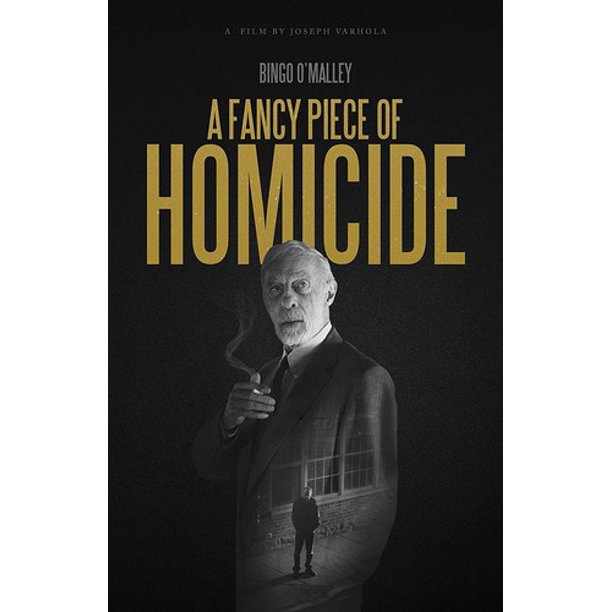
A Fancy Piece of Homicide (2017)

ABOUT THE AUTHOR: A.C. Nicholas, who has a sketchy background and hails from parts unknown in Western Pennsylvania, was once a drive-in theater projectionist and disk jockey, Currently, in addition to being a writer, editor, podcaster, and voice-over artist, he contributes to Drive-In Asylum. His first article, “Grindhouse Memories Across the U.S.A.,” was published in issue #23. He’s also written “I Was a Teenage Drive-in Projectionist” and “Emanuelle in Disney World and Other Weird Tales of a Trash Film Lover” for upcoming issues.

Bingo O’Malley was one of Pittsburgh’s greatest stage actors. For decades, he was the go-to guy for Pittsburgh’s best theater directors, with leads in Death of a Salesman, Bent, The Man in the Glass Booth, Glengarry Glenn Ross, and The Ruling Class. When folks shot movies in Pittsburgh, Bingo was in them: Dominick and Eugene, Wonder Boys, Out of the Furnace, Lady Beware, Bob Roberts, Love and Other Drugs, and so many others. He was also in Pittsburgh-shot TV series and TV movies. But to horror fans, he will always be remembered for the remake of My Bloody Valentine and three George Romero films: Knightriders, Creepshow, and Two Evil Eyes. In Two Evil Eyes, he played the titular M. Valdemar in Romero’s segment. He was born in the Pittsburgh area, and despite his formidable talent, he never left his hometown. For this, he was beloved by Pittsburghers. Thus, it gives me great pleasure to feature the crowning glory of his long career, a little-known Pittsburgh indie film called A Fancy Piece of Homicide.

In 2016, before Bingo’s health took a sharp decline, young local director Joseph Varhola cast him as the lead in something original, a Yinzer noir. Varhola’s screenplay harkens back to the noirs of old with a flawed, but honorable, lead trying to unravel the most complex of mysteries, a mystery that ultimately is inscrutable. The difference, though, was that these mean noir streets were those of the Steel City.

In A Fancy Piece of Homicide, Bingo plays a gumshoe who, years before, had taken the fall for a murder he didn’t commit. Now he’s been released from prison and determined to set the record straight by writing his memoirs. But the past returns to haunt him when he begins to receive cryptic photos and messages. Soon he’s in way over his head as he looks for closure in his life. 

Bingo himself received closure, passing away in 2019, two years after the release of A Fancy Piece of Homicide. It was to be his last acting triumph. Watching the film was a bittersweet experience. Here he was at the height of his powers, giving a performance that, had it been in a studio film with a multi-million-dollar budget, would have received raves, if not awards. He’s compelling as a man determined to understand bewildering events from the past—and now the present—not within his control. He’s also a rare lead: a smart, independent octogenarian, out to solve one last mystery before the final curtain. 

The film is almost completely in Bingo’s capable hands. It’s a nearly no-budget affair (I’m pretty sure everyone brought their own wardrobe to the shoot), which, despite an excellent score, some competent tech credits, and an intriguing plot, tends to meander as a slow-burn with some travelogue padding shots of the Pittsburgh suburbs. And when it gets to its Dashiell Hammett-like revelation, you might be inclined to ask yourself: Is that all there is?  Apart from another Romero regular, Mark Tierno (Knightriders and Day of the Dead), who plays a weasel pretty well, the rest of the cast ranges from serviceable to awful. 

But ultimately, none of this is important. What is important is that A Fancy Piece of Murder memorializes the performance of one of the best of Pittsburgh’s homegrown talent, the likes of which we may never see again, in a film merging the unique Pittsburgh sensibility with a classic genre. May we all be so lucky to go out on such a high note.

APRIL MOVIE THON DAY 18: Waterworld (1995)

The most expensive film ever made at the time, Waterworld lives in the same rarified air as Ishtar and Heaven’s Gate, except that it was one of the highest grossing films of 1995.

The thing is, while it cost $175 million, it made back $264.2 million worldwide, as well as having a profitable video and cable release. It’s still making money, because the stunt show based on the movie, Waterworld: A Live Sea War Spectacular, is still running at Universal Studios Hollywood, Universal Studios Singapore, Universal Studios Japan and Universal Studios Beijing 27 years after the movie was released.

Writer Peter Rader came up with the idea for Waterworld during a conversation with producer Brad Krevoy literally as a Mad Max rip-off. He probably also read the comic Freakwave by Peter Milligan and Brendan McCarthy*, which had been nearly optioned as a movie. Co-writer David Twohy even outright said that he was inspired by The Road Warrior and the filmmakers hired that movie’s director of photography, Dean Semler, for this film.

Before filming began, Steven Spielberg warned star Kevin Costner and director Kevin Reynolds not to film on open water, a lesson he learned from Jaws. They didn’t listen and watched the set sink. And hey, Reynolds quit before the movie was done because he and Costner fought so much.

So what did this all lead to?

Waterworld is way better than it’s been said to be. It is, quite literally, Mad Max on jet skis. Costner is the web-footed Mariner, a man who recycles his own urine as drinking water because since the polar ice caps melted, the drinking water is quite limited and the Earth is just plain filled with water. He saves Helen (Jeanne Tripplehorn) and a kid named Enola (Tina Majorino), protecting them from The Deacon, a one-eyed Dennis Hopper, and then uses the map on Enola’s back to find the only dry land on Earth, which is the top of Mount Everest.

It just takes two hours and fifteen minutes** to get there.

*Ironically, McCarthy would later co-write Mad Max: Fury Road.

**The Costner cut is three hours long.

APRIL MOVIE THON DAY 18: Fantastic Four (2015)

For all the power of the Marvel Cinematic Universe, no one has been able to translate the first Marvel superhero film properly to the screen.

First there was the 1994 Roger Corman-produced film, one made simply to secure a copyright and never intended to be seen. Then, there were two films made in 2005 and 2007, Fantastic Four and Fantastic Four: Rise of the Silver Surfer, that had some star power but ultimately didn’t do well. The creators should have taken a note from the cartoon versions, as both the 1994-96 series and the 2006-07 Fantastic Four: World’s Greatest Heroes captured much of what makes these heroes so special. Unlike the Avengers, they are two things, a family and also adventure scientists, not truly superheroes.

Despite the first two trailers building big excitement for the movie, it failed at the box office, earning only $120 million on a budget of $167.9 million. Why?

Well, first off, no one could line up on what movie they were making.

Let’s start with Josh Trank, who became the youngest director to have a number one at the box office with his first movie, the superhero found footage film Chronicle. He had a fresh new take on heroes and all seemed great.

Right?

X-Men: First Class was another well-regarded superhero movie and the writers, Zack Stentz and Ashley Edward Miller, started writing the script. Sounds awesome!

Right?

Except that their script followed Avengers as the way and had Dr. Doom as a herald of Galactus and was very comic book-oriented, which Trank did not like. So he wrote his own script.

Remember when comic book movies didn’t pay attention to the source material?

Trank left Slater out of discussions with Fox Studios and withheld certain studio notes. Slater added “I never saw 95% of those notes,” and left after six months and was replaced by Abraham Lincoln: Vampire Hunter writer Seth Grahame-Smith, with a final script written by Dark Phoenix (oh no, I have to watch that one soon, huh?) director Simon Kinberg.

And then, some stuff went really wrong.

During filming, producers Hutch Parker and Simon Kinberg rewrote Trank’s original script and gave the film a different ending. Despite this, execs demanded reshoots, saying that this movie felt more like a sequel to Chronicle than Fantastic Four.

To compound matters, Fox ordered their own changes to the film without Trank’s supervision, changing and omitting certain major plot points from his movie. Now, that’s usually where movies go wrong, but there was also reports that Trank was erratic on set. I tend not to believe these things and then he posted on Twitter days before the release.

“A year ago I had a fantastic version of this. And it would’ve received great reviews. You’ll probably never see it. That’s reality though.”

How did a movie with a budget like this one get so far into filming that the studio was blindsided by how dark the film was? How could a movie be that close to release and not have an ending decided on or filmed? How bad was the movie before Avatar editor Stephen E. Rivkin was hired to fix it in post with Trank referring to him as the director of the new cut? Were comic book fans so angry that Johnny Storm was black that they made death threats and Trank had to sleep with a gun under his pillow?

Look, I haven’t made a big budget Hollywood movie, but I have some theories.

Indulge me.

The biggest problem is that we’ve already seen the origin of the Fantastic Four. We want to see them in action, we want to see the drama between Dr. Doom (Tony Kebbell) and Reed Richards (Miles Teller), we want to see the Human Torch (Michael B. Jordan) and the Thing (Jamie Bell) pick at each other, we want to see Sue Storm (Kate Mara) prove that she’s the real heart of the team.

The original origin of the FF doesn’t make sense today, with them needing to go into space before Russia, but that’s an easy fix. And as pushed out of the spotlight as Sue was in the 1960s comics, she’s not even on their first flight. Doom is. She gets called in at the last minute.

In fact, the movie is an hour and twenty minutes past when the conflict between Doom and the heroes kicks off. Until then, we see Reed, Doom and Johnny get drunk and petulant after learning that they won’t be the ones going into the Negative Zone — never referred to as such — so they take the trip without telling anyone and chaos (and powers) ensue.

Not really the stuff of heroes.

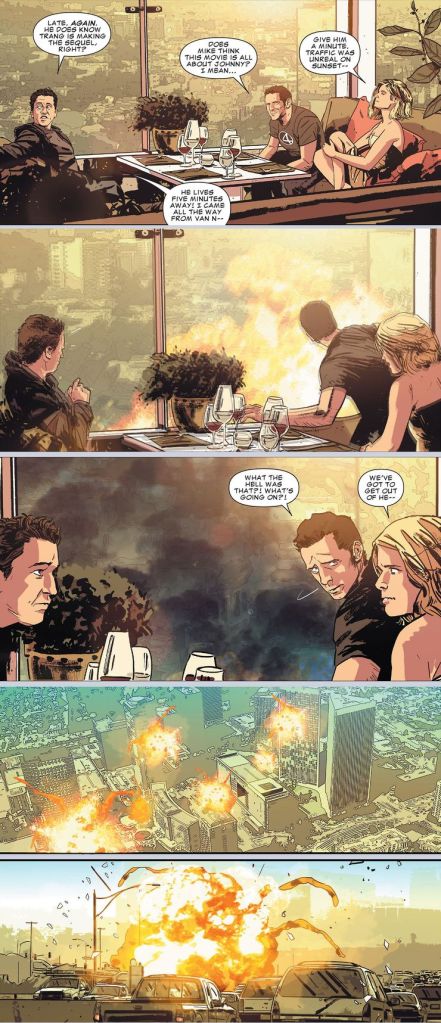
You know when a movie is bad? When Marvel kills off its actors — except Michael B. Jordan, who redeemed himself by playing Erik Killmonger in Black Panther — in a comic.

You can’t really blame Kate Mara. She wanted to read the comics to prepare and Trank explained to the cast that it was unnecessary as the film was an original story not based directly on the comics. Well, at least she met Jamie Bell on set and they got married. She was also allegedly bullied by the director on set, which isn’t as bad as getting into a fistfight with him, as Miles Teller discovered.

It’s sad because this movie had every chance to succeed. I still can’t fathom how a script isn’t locked down on projects with this much money and so much on the line. But hey — I just write about movies. I don’t write movies.

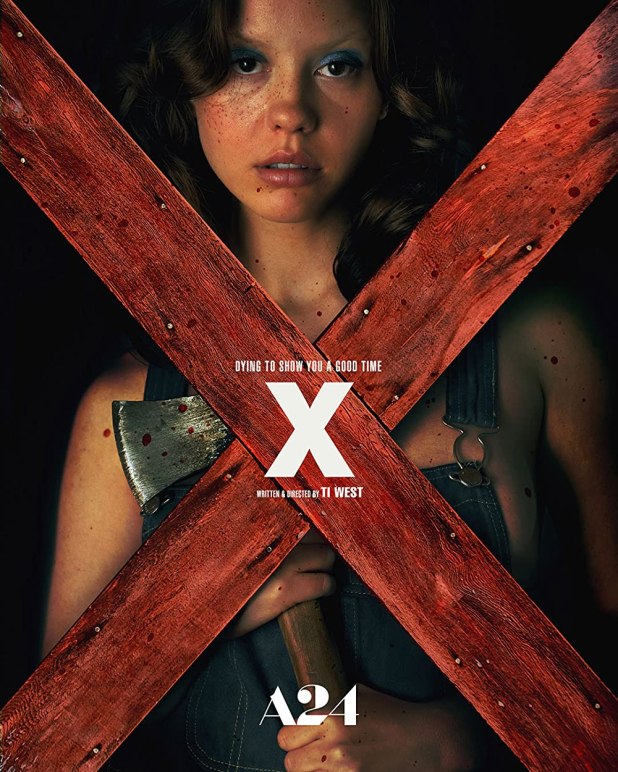
X (2022)

Consider the law of diminishing returns: is the best slasher that I’ve seen all year, last year, the year before and probably for the rest of this year.

It may also be the law of the desert island in that it may be the only slasher in years that approaches the blood-soaked heaven of 1978-1981, yet were it released then, would I feel the same way?

And after seeing tweet after tweet about how debauched and filthy and sexed-up this movie was, did we see the same film? Or am I really the “affable pervert” that Grindhouse Releasing said I was and I’ve become too desensitized? Or, probably more true, has this generation become more puritanical and repressed than we were?

Probably most importantly, I decided to just shut up and enjoy the movie.

What I came away with was a film that actually gave me that uncomfortable and awesome feeling of “I wonder what’s next” and a worry for each of its characters.

Back in 1979, a group of young filmmakers set out to make a dirty film in rural Texas, learning nothing from another Texas-shot slasher. And when their elderly hosts discover what’s happening, the cast find themselves in a way different movie.

Reading that description, I felt sure that I would dislike this movie, but then again, this was Ti West, who somehow took a very basic story in The House of the Devil and made something great and lasting.

I’ve been burned by an A24 trailer before. Come on, we all have. But again, I decided to shut up and watch the movie.

And I’m glad that I did.

Maxine Minx (Mia Goth, Nymphomaniac) dreams of being an adult film star and people knowing her name. This brings her to deepest, darkest New Zealand, err Texas, along with her producer/boyfriend/suitcase pimp Wayne (Martin Henderson), director RJ (Owen Campbell), his assistant/girlfriend Lorraine (Jenna Ortega, Scream) and two co-stars, Bobby-Lynne (Brittany Snow, the Perfect Pitch movies) and Jackson Hole (Kid Cudi!). As they go deeper into the rural world, we’re reminded — of course — of that aforementioned Texas film, what with the van that propels them and the farmhouse they end up in.

RJ has a goal. Just because it’s porn doesn’t mean that it can’t be art, he says, almost like a non-burnt out Gary Graver. Wayne knows something more important: porno chic died because middle America is stil too afraid to go to a porno theater and still blushes when they buy a skin mag. But if they can have that movie in the safety of their home? He’s ahead of the video era, Caballero and VCA before they’d even realized what was next. The themes of this movie are desire and age battling hand in hand and the fact that the new type of entertainment they’re making is based on the oldest joke there is — The Farmer’s Daughters — points to the intelligence of this endeavor.

Meanwhile, there’s Howard (Stephen Ure) and Pearl (also Mia Goth, we’ll get to that shortly), the elderly couple who owns the land. Howard barks at everyone while Pearly stays in the shadows, except for the moment where she invites Maxine in for lemonade, a remembrance of youth, some jealousy and a rebuffed sexual December to May advance.

That afternoon, Pearl watches Maxine and Jackson at work and begs Howard to make love to her one more time, but while the spirit and the emotional heart are willing, the flesh and the physical heart are weak.

That night, Lorraine surprises everyone by asking if she can be in the film. RJ tries to use art as the reason why the script can’t be changed; she defeats his argument and he watches her make love through the eye of his camera. That night, he leaves everyone behind but runs into Pearl and that’s where — nearly an hour into the film — “Don’t Fear the Reaper” plays and we’re reminded of exactly what kind of movie we’re in for.

The end of the film surprised me. I should have seen it coming, but the repeated dialogue, the divine intervention and Greek chorus of televangelists all came together in a way that I had no idea was going to occur. Seriously, that preacher gives Estus Pirkle a run for his money.

I also had no idea that Goth spent ten hours a day in makeup for the dual role, which she’ll take up again in Pearl, a prequel that was shot at the same time as this movie.

Even the soundtrack works, written by Tyler Bates and Chelsea Wolfe, who covers Fred Fisher’s “Oui, Oui, Marie.” What doesn’t, however, is the moment where Snow and Kudi sing “Landslide,” as we’ve already established the closeness of the actors and this seems only in the movie to have them remind us they also do music.

As bad as 2022’s Texas Chainsaw Massacre is, this is good. It feels closer to Eaten Alive, another Hooper film, what with the alligator scene — I winced when someone claimed this movie had a scene that echoed Alligator — and I love how the final girl is the least chaste character in the movie, continually doing drugs and putting herself first.

Here’s to more horror being committed to only being inspired by the past instead of wallowing within it, pushing itself to new heights. I was worried if West would ever come close to House again; my fears were unnecessary.
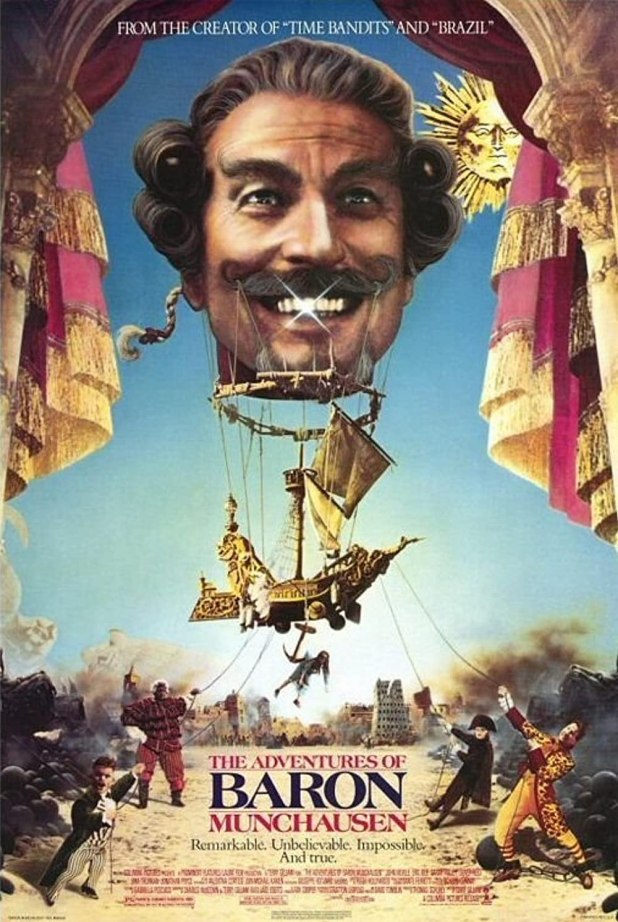
APRIL MOVIE THON DAY 18: The Adventures of Baron Munchausen (1988)

Hieronymus Karl Friedrich Freiherr von Münchhausen, or Baron Munchausen, began his life as a series of urban legends and tall tales that were collected by author Rudolf Erich Raspe in 1785 as The Surprising Adventures of Baron Munchausen (or Baron Munchausen’s Narrative of his Marvellous Travels and Campaigns in Russia). Since then, these stories were further exaggerated and finally made into a series of movies, including the Georges Méliès-directed Baron Munchausen’s Dream, Münchhausen, The Fabulous Baron Munchausen and The Very Same Munchhausen.

The third entry in Terry Gilliam’s “Trilogy of Imagination”, preceded by Time Bandits and Brazil, this is a film that was made during a battle between Columbia CEO Dawn Steel and Gilliam. As the film’s budget blew up, so did the war.

Gilliam blamed the whole thing on the simple fact that the new regime didn’t want anything to do with the old regime’s films. Except they released the movie to just 117 theaters, which is literally nothing. He would later say, “The joke is, if you look back, we got the best reviews and we were doing the best business in the opening weeks of any film they had released since Last Emperor. We actually opened well in the big cities — we opened really well. A friend who had bought the video rights said he had never seen anything so weird — Columbia was spending their whole time looking at exit polls to prove the film would not work in the suburbs, and so it would be pointless to make any more prints. He said, “I’ve never seen anything like this.” There it was. Then it becomes this kind of legend–which it deserves to be… even if it’s the wrong legend.”

Yet what emerges on the screen — the legend of Baron Munchausen (John Neville) — does not seem impacted at all by the trauma of making the movie. Even the movie itself goes against the structure of storytelling, with the real Baron interrupting the play that starts the movie and taking the viewer on a journey through his life. Whether the story he’s telling is true or polished to be even better than the truth is up to you.

Yet the Angel of Death — which looks directly out of Cemetery Man which makes complete sense when you see Michele Soavi’s name in the credits as second unit director  — is true and it’s been hunting the Baron, who is saved by young Sarah Salt (Sarah Polley) and together they escape in a hot air balloon to find the Baron’s old friends, the super-fast Berthold (Eric Idle), master rifleman Adolphus (Charles McKeown), Gustavus (Jack Purvis) who has remarkable hearing and breathing abilities and the strongest man in the world, Albrecht (Winston Dennis).

I’m struck by the fact that the Baron is actually an idea — a man who may or may not exist yet one who rallies for ideas and creativity — and ideas can’t die, as even when the Angel of Death finally claims him, he’s just telling a story and says that this was “only one of the many occasions on which I met my death.”

With cameos by Oliver Reed as Vulcan, Uma Thurman as Venus, Robin Williams as the king of the moon, Sting as a soldier sacrificed because bravery is demoralizing to other soldiers and citizens, and so many more events, this is a movie made by an imaginative artist seeking to give you that same joy and ability.