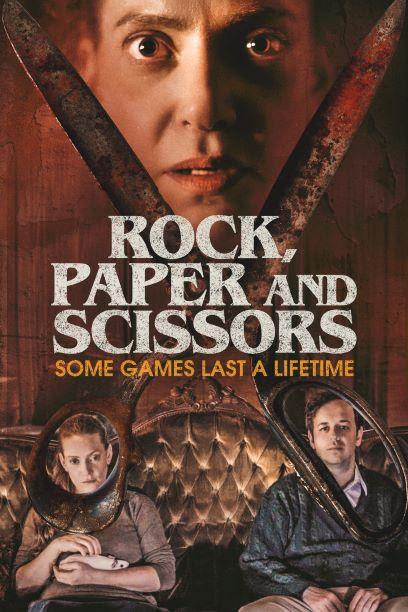
Known as Piedra, papel y tijera in its home country of Argentina, this is the story of Jesus and Maria José, who live together in the home of their father, who has recently died. Their world is not ours — filled with unending games and no small amount of malice toward one another. Now, their sister Magdalena has arrived to sell their home and get her share of the inheritance. The siblings don’t want their game to stop, so they bring her into the hopes that they never have to leave.
Maria doesn’t just love The Wizard of Oz. She has become Dorothy Gale and everyone else is trapped within her universe. And when Magdalena is hurt and trapped in the house with her family, things only get stranger. Also — Jesus is making a horror movie the entire time with Maria as his star and that reality also starts to intrude into the lives of our characters.
Pablo Sigal and Agustina Cerviño played the roles of Jesus and Magdalena when this story was set as a stage play written by the film’s co-director Macarena Garcia Lenzi. The film was adapted with the help of co-director Martin Blouson.
With just three people — as well as a hamster named Toto and various containers with dead humans in various states — this movie gets really claustrophobic and isn’t one for people who get stressed when they head home for the holidays. For the rest of us, it’s an interesting watch.
Rock, Paper and Scissors is available on demand from Dark Star Pictures.
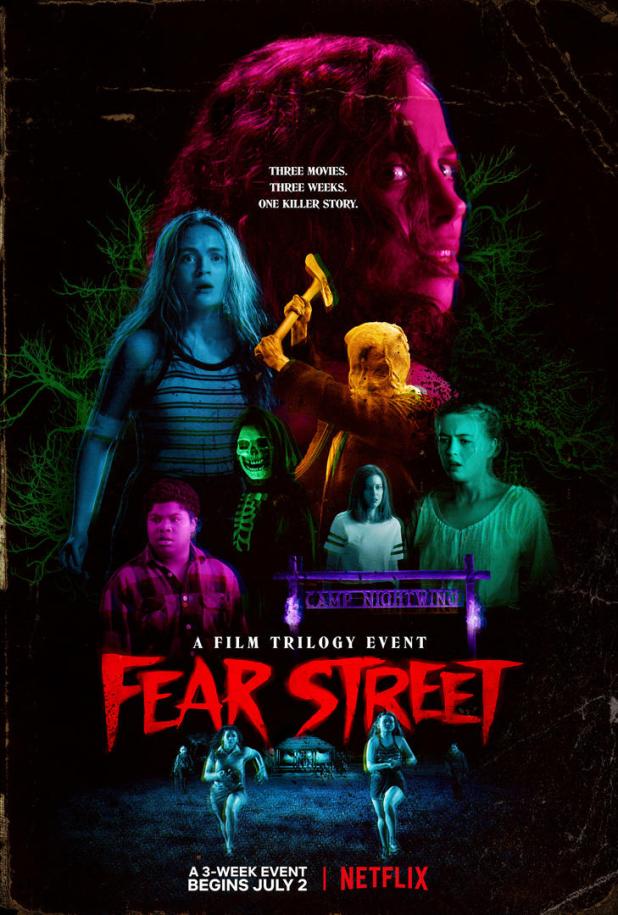
I was born a bit too late for R.L. Stein, sadly. His Goosebumps books were a big deal with my wife, as are the Fear Street books. Written for older teens, these take place in the city of Shadyside, a place cursed by the Fier family. Unlike Goosebumps, these books were packed with more scares and plenty of violence.
There was an attempt to make a series out of the stories way back in 1997 with Ghosts of Fear Street, which aired on ABC Television on July 31 of 1998. Several years later and the books have finally become a series of movies.
Spoiler mode on if you haven’t seen this yet…
The film takes a page out of Scream by starting off with the death of its most well-known actor, Maya Hawke, who plays Heather, a B. Dalton’s employee who is killed by her Spencer’s employee friend Ryan with no warning as they close the mall. I really enjoyed this open, particularly the fact that every single one of the chains in it were dead stores. This isn’t a mall for the sake of a mall; this truly captures what it was like to close a store when the rest of the world is living a life outside your retail life.
Her death is just another massacre for Shadyside, Ohio, the murder capital of the United States. And yet, right across the tracks lies Sunnyvale, one of the richest and safest cities in the country. Nearly every teen in Shadyside has grown up believing that Sarah Fier placed a curse on their town before being executed for witchcraft in the incredibly foreboding year of 1666.
Our heroine is Deena Johnson (Kiana Madeira) and her life is in shambles. She’s pretty much raising a brother named Josh (Benjamin Flores Jr.) who lives in chat rooms. Her two best friends Simon (Fred Hechinger) and Kate (Julia Rehwald) make a living selling drugs and her closeted girlfriend Sam (Olivia Scott Welch) has left her behind in the move to Sunnydale.
At a vigil for the latest massacre, Deena and Sam reconnect just in time for a riot to cause an accident that sends her car into the grave of Sarah Fier, touching her bones and bringing the witch and every killer she has inspired after her, demanding to taste her blood.
Director Leigh Janiak made Honeymoon and some episodes of the series Outcast, Panic and Scream: The TV Series, but this film points to her as being a director to watch. She also worked on the script along with Kyle Killen (The Beaver) and Phil Graziadei (who wrote Honeymoon).
I was pretty impressed with the intensity of this film, which I did not expect, much less its casual attitude toward drugs and how matter of fact the love story not being straight is. In short, this whole movie was a pleasant surprise for me, particularly how much you care for its characters, which makes the outright massacre of several of them to actually be quite shocking. If you liked Intruder, well, it seems like the makers of this movie did as well.
Fear Street Part Two: 1978 and Fear Street Part Three: 1666 will follow this month and I’ll be there for both of them.
EDITOR’S NOTE: We originally reviewed this film on August 8, 2020. Since it’s part of Arrow’s new Vengeance Trails box set, we’ve revised and added to this article.
Massacre Time was originally supposed to be an Italian-Spanish co-production with Ringo co-star George Martin playing Tom Corbett. According to Troy Howarth’s book Splintered Visions: Lucio Fulci and His Films, the Spanish side withdrew their involvement and funding after Fulci refused to tone down the script’s violence.
Fulci instead cast Nero at the suggestion of his assistant director, Giovanni Fago, based on his look from the production stills of the recently completed Django. George Hilton was cast in the other lead and had difficulty dealing with Fulci as a director.
This was written by Fernando Di Leo, who co-wrote A Fistful of Dollars, For a Few Dollars More, A Pistol for Ringo and The Return of Ringo, with the title taken from Franco Enna’s book Tempo di Massacaro.
Speaking of the violence in this film, Fulci would later claim that he pushed Di Leo to make the film as violent as possible, which Di Leo refuted, stating “I don’t know anything about Fulci’s claims that he insisted that I write a very violent movie. Fulci only directed well what was already on the page. The script was good and ready and he liked it the way it was, otherwise I’d have complied to his demand if there had been any”.
Nero and Hilton play the Corbett brothers, with Tom (Nero) coming back to their hometown to find it under the iron rule of Mr. Scott (Giuseppe Addobbati, billed as John MacDouglas for American audiences; he’s also in Nightmare Castle) and his son, Junior Scott (Nino Castelnuovo, Strip Nude for Your Killer).
Although an English-language version was made, AIP made their own dub of the film and released it as The Brute and the Beast, making it one of only two Italian Westerns released in the U.S. by the studio (the other is God Forgives… I Don’t!). In the UK, this is known as Colt Concert and in Denmark and West Germany, it was released as Djangos seksløber er lov (Django’s Six-Runner Is Legal) and Django – Sein Gesangbuch war der Colt (Django – His Hymnbook was the Colt). My favorite alternate title has to be what it was called in Hong Kong, Ghost Gun God Whip, and Spain, Las Pistolas Cantaron su Muerte (y fue Tiempo de Matanza)(The Pistols Sang His Death (and it was Time for the Killing).
Arrow Video’s Vengeance Trails box set has 2K restorations of this movie, as well as My Name is Pecos, And God Said to Cain and Bandidos, as well as a collector’s booklet featuring new writing by author and critic Howard Hughes plus a double-sided poster featuring newly commissioned artwork by Gilles Vranckx. Massacre Time has an alternate U.S. dubbed audio track, new commentary by authors and critics C. Courtney Joyner and Henry Parke, a new documentary featuring a new video interview with Franco Nero and an archival video interview with George Hilton, an interview with film historian Fabio Melelli and the Italian trailer. You can order this from MVD.
It’s also available on the ARROW player. Head over to ARROW to start your 30 day free trial (subscriptions are available for $4.99 monthly or $49.99 yearly). ARROW is available in the US, Canada and the UK on the following Apps/devices: Roku (all Roku sticks, boxes, devices, etc), Apple TV & iOS devices, Android TV and mobile devices , Fire TV (all Amazon Fire TV Sticks, boxes, etc), and on all web browsers at https://www.arrow-player.com.
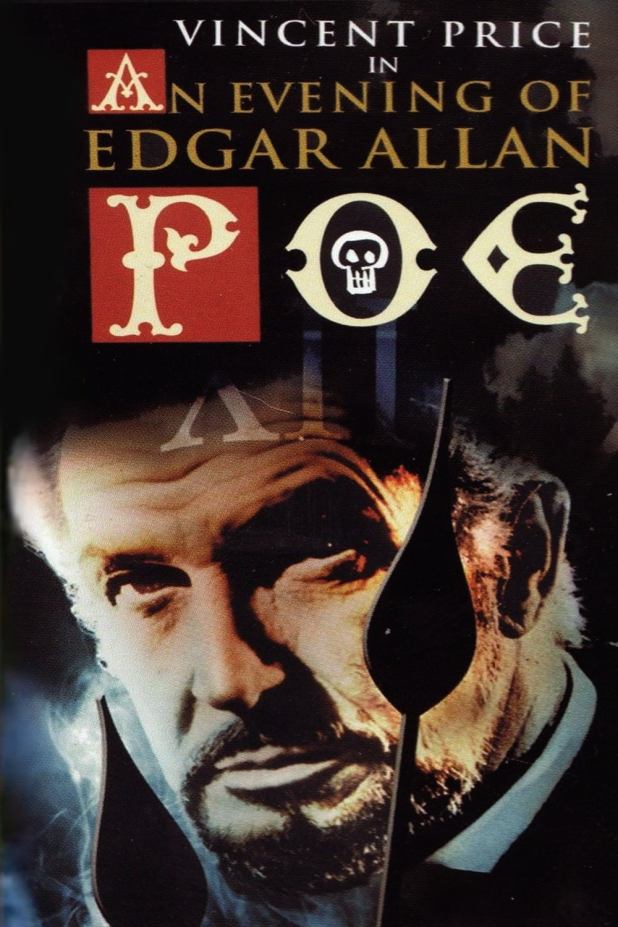
I love Vincent Price and stand against anyone who dislikes how hammy he was. But hey, if you feel that way, perhaps you should avoid An Evening of Edgar Allan Poe, which features Price all alone on the stage — with props and outfits that change with every story — matched with only music by Les Baxter, recorded at the same time and with the same orchestra as Cry of the Banshee.
Produced by Samuel Z. Arkoff and Kenneth Johnson (who wrote, produced and directed this; you may know him from creating The Incredible Hulk TV series, as well as The Bionic Woman and V), this is an opportunity to see Price go wild telling the stories “The Tell-Tale Heart,” “The Sphinx,” “The Cask of Amontillado” and “The Pit and the Pendulum.”
The really cool thing about this is that it seems like every single story was shot in one take, which speaks to Price’s ability as an actor as well as his endurance, as he really goes full Vincent Price on every one of these stories.
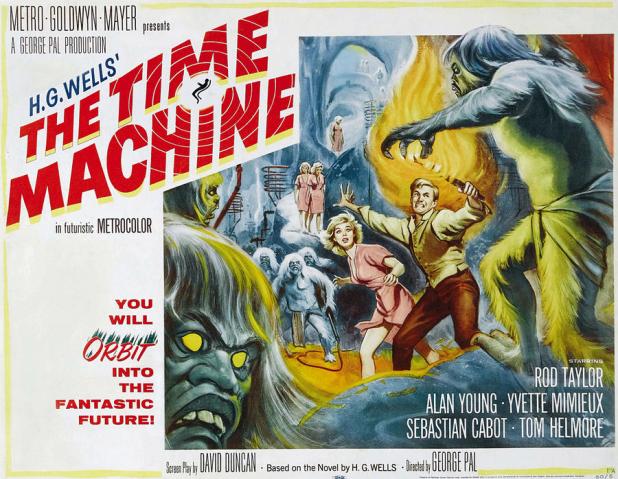
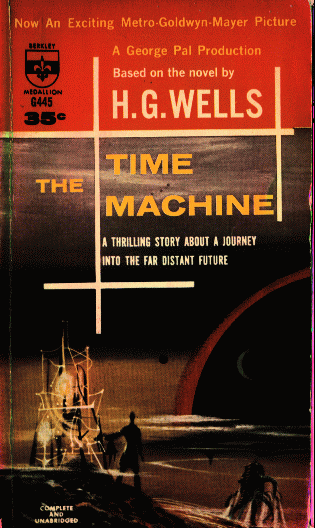
There have been plenty of adaptions of H.G. Wells novel — a 1949 BBC made for TV movie, the 1978 made for TV movie and the 2002 film — but the best one is George Pal’s 1960 special effects-heavy opus, which takes H. George Wells (Rod Taylor) from January 5, 1900 to September 13, 1917; June 19, 1940; August 18, 1966 and October 12, 802,701. The deeper he goes into the timestream, the worse off humanity is, especially in the future when the highly evolved Eloi and the deeply devolved Morlocks are all that is left.
Yvette Mimieux plays one of the Eloi that our hero falls for. This was her first feature film — Platinum High School was released first, but this was filmed before that — and MGM put her under contract. Her career took to TV, American-International Pictures and plenty of fun roles in movies we love like The Black Hole, Jackson County Jail, Snowbeastand Devil Dog: Hound of Hellbefore retiring in 1992.
Yet the real star of this movie are the effects, like the actual time machine that was created by Bill Ferrari and built by Wah Chang, who also designed the Morlocks. Made for around $1 million dollars — the costumes from Forbidden Planet got reused and man, those must have been pretty sweaty when you consider how many movies used them — and filled with matte paintings, stop-motion and optical wizardry by Gene Warren and Tim Baar, this movie obviously won the Academy Award for Best Special Effects.
If you’re a fan of this movie, I recommend tracking down Time Machine: The Journey Back. Produced in 1993 for PBS stations to tie-in with the Back to the Future sequels, the first segment is all abut the making of the George Pal movie, including Gene Warren giving a rare on-air interview in which he discussed creating the special effects, along with comments from Wah Chang in which he reveals how the Time Machine itself was made.
However, that’s just the start, because the third part of this features a cannon sequel to the original film, written by the original screenwriter David Duncan. A now older George (Rod Taylor looks great!) goes to find his friend Filby (Alan Young) just before the start of World War I. George knows that his friend will die on May 15, 1916 and tries to get him to travel with him and Weena through time. He refuses and George thinks that he’ll try again, because he loves his friend. Man, just writing about this — much less watching it — makes tears drop from my eyes. That’s how much this movie means to me. This ends with Walter Kemp (Whit Bissell in his last role) showing up in 1932, wondering whatever happened to his inventor friend.
Ah man! I didn’t even mention how much I love Sebastian Cabot in this movie!
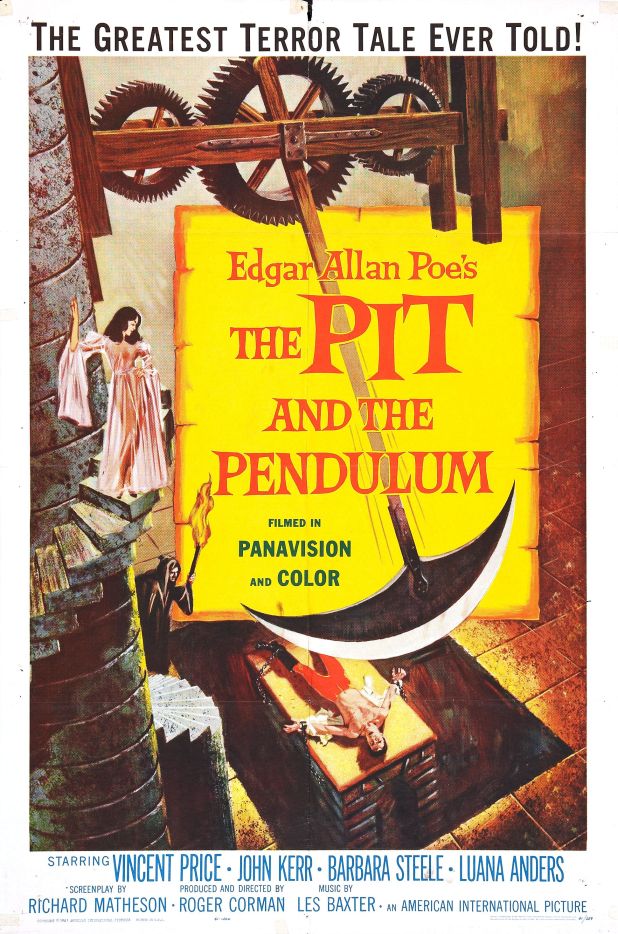
A loose — very loose — adaption of the Edgar Allan Poe story, this film was written by Richard Mattheson*, directed by Roger Corman and learns from the success of The Fall of the House of Usher by bringing back much of its creative team — cinematographer Floyd Crosby, art director Daniel Haller and composer Les Baxter — which led to six more Poe adaptions.
I often bring up the influence of Italian horror cinema on the films of other countries, I can freely admit that the Corman Poe adaptations had to have made a major impression on Mario Bava**.
Englishman Francis Barnard (John Kerr, South Pacific) visits the castle of his brother-in-law Nicholas Medina (Vincent Price) to figure out what has happened to his sister Elizabeth (Barbara Steele). There’s a bad excuse — Elizabeth died of a blood disorder — and no real details, so Francis decides to remain until he gets his answers.
Soon, he learns that his sister died from fright, at which point Nicholas confesses that the oppressive nature of his family home obsessed his wife until she began to play with the torture devices, locking herself into the iron maiden while repeatedly saying the name Sebastian. So yeah, Nicholas is a mess, but who can blame him? His father was one of the main torturers of the Spanish Inquisition and as a child, he watched his dad kill his brother Sebastian, who was cuckolding him, before torturing his wife until she died.
This is one of those times in life when you shouldn’t ask questions you aren’t ready to hear, because the true story is that Nicholas walled his wife into the castle — that’s another Poe story, The Cask of Armadillo — and now “if Elizabeth Medina walks the corridors of this castle, it is her spirit, not her living self.”
Even the idea of a premature burial — Nicholas claims his wife was dead — upsets the rich noble, so when they cut through the wall and find her corpse, which died trying to claw her way out, he finally loses his mind. He keeps hearing his wife calling to him, begging him to come into the torture chamber.
And we haven’t even got to the pit and the pendulum yet!
I’m so obsessed by this movie that my old band had an entire song called “Truth” that was pretty much me singing one of Price’s rants from the film as he reveals how the torture chamber obsessed his wife. And has any image been so stunning as Barbara Steele’s eyes looking out from the darkness?
If you haven’t seen this — fix that right now.
*In The Movie World of Roger Corman, Matheson explained how he wrote the Poe movies: “The method we adopted on The Pit and the Pendulum was to use the Poe short story as the climax for a third act to the motion picture… because a two-page short story is not about to give you a ninety-minute motion picture. We then constructed the first two acts in what we hoped was a manner faithful to Poe, as his climax would run only a short time on the screen.”
**In an interview with Tim Lucas in Video Watchdog, The Whip and the Body screenwriter Ernesto Gastaldi claimed that the producers of that film showed him a print of The Pit and the Pendulum and said, “Give us something like this.”
EDITOR’S NOTE: We originally reviewed this on August 19, 2020. Seeing as how Arrow Video has included it as part of their Vengeance Trails box set, we’ve updated our review and provided some information about this set. Phil Bailey also reviewed this for on site on August 20, 2020.
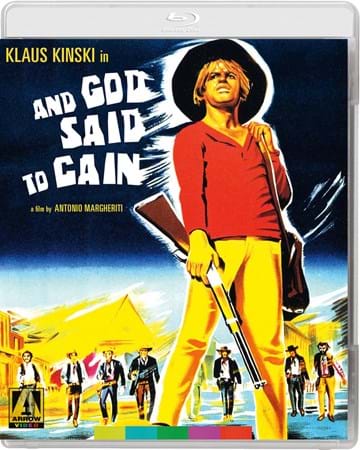
Gary Hamilton (Klaus Kinski!) is released from ten years of hard labor with a pardon for a crime he didn’t commit, so he does what any insane character played by Kinski would do. He sets out to kill everyone who ever did him wrong.
Kinski wants Acombar, his former friend who set him up, dead. He has to go through the man’s son (Antonio Cantafora, Baron Blood) to do it, as well as Acombar’s wife Maria, who was once his lover. He’s helped by the people of the town who hate his enemy, as well as his knowledge of the Native American burial grounds.
This is less Western than horror film, with Kinski’s character nearly a ghost, continually followed by gusts of winds and tolling bells as he returns to get his bloody vengeance.
Upon seeing this again on the new Arrow blu ray release, it feels like a totally new film. I’d always loved this one — I’ve watched it at least three times in the last year — but this as a revelation. The scene where Kinski explains his hatred to the priest is transcendent: “Day after day, they convinced me that my place was inside. Life outside has no more meaning for me. Now it’s only revenge.”
There’s also the moment when the storm opens up on the town as Kinski opens fire on everyone. Every other man is hesitant, worried as to what happens next. Their enemy has become death itself.
While there are similarities to another Margheriti film Vengeance, this is very nearly a remake of Salvatore Rosso’s A Stranger in Paso Bravo, which was made just a year before. This one, however, is unafraid to let the gruesome side of violence be seen. The original story for both was written by Eduardo Manzanos Brochero, but the screenwriter for this was Giovanni Addessi, who also produced the movie.
There aren’t many horror Italian westerns, but if there were hundreds, this would still be the best (and you can also put Django the Bastard up there, too). Also — the theme song to this movie — “Rocks, Blood and Sand” by Don Powell — is beyond fabulous.
Arrow Video’s Vengeance Trails box set has 2K restorations of this movie, as well as My Name is Pecos, Massacre Time and Bandidos, as well as a collector’s booklet featuring new writing by author and critic Howard Hughes plus a double-sided poster featuring newly commissioned artwork by Gilles Vranckx. And God Said to Cain has new commentary by author and critic Howard Hughes, a new documentary featuring a new interview with Fabio Melelli and a new audio interview with actress Marcella Michelangeli, plus a new interview with actor Antonio Cantafora. You can order this from MVD.
It’s also available on the ARROW player. Head over to ARROW to start your 30 day free trial (subscriptions are available for $4.99 monthly or $49.99 yearly). ARROW is available in the US, Canada and the UK on the following Apps/devices: Roku (all Roku sticks, boxes, devices, etc), Apple TV & iOS devices, Android TV and mobile devices , Fire TV (all Amazon Fire TV Sticks, boxes, etc), and on all web browsers at https://www.arrow-player.com.
Based on the 1970 novella Fengriffen by David Case, this Ray Ward Baker (Asylum, A Night to Remember, The Vault of Horror) is a rare non-anthology Amicus film.
After moving to her fiancé Charles Fengriffen’s family estate, Catherine (Stephanie Beacham, Dynasty) keeps seeing an undead man with a birthmarked face, no eyes and a severed right hand. In fact, a spirit goes so far as to assault her on her wedding night. So imagine how she feels when she meets a woodsman who lives on the grounds. He has the same birthmark as her horrible dreams.
Anyone that answers her questions about all of these strange happenings is killed immediately — by axe, by severed hand, by throwing down the stairs, bye bye.
Charles believes that his wife is mentally ill, but since she is with his child, he calls for Dr. Pope (Peter Cushing), who gets close to the truth before the hand shows up again and kills his witness. That’s when Charles reveals that his grandfather (Herbert Lom!) once assaulted his servant Silas’ wife and sliced off that man’s hand as punishment for trying to get revenge. The child grew up to be the woodsman, whose father Silas cursed the Fengriffen family. The next virgin bride to enter their home — Catherine — would be attacked by a ghost, her decency taken and her child possessed. Anyone who tries to help her will die.
The end of this movie is completely deranged. The baby is born looking exactly like Catherine’s vision — no eyes, the birthmark and missing a hand — so Charles shoots the woodsman in both eyes before digging up Silas and tearing his corpse apart.
This film was shot in Oakley Court, which you may recognize from several Hammer films and The Rocky Horror Picture Show. Today, it’s a luxury hotel.
One more fact: producer Max Rosenberg attempted to use the title I Have No Mouth and I Must Scream, which is a Harlan Ellison book. How quickly do you think Harlan ran to court to stop him?
You have so many options to watch this! It’s on Tubi, Shudder and available from Severin.
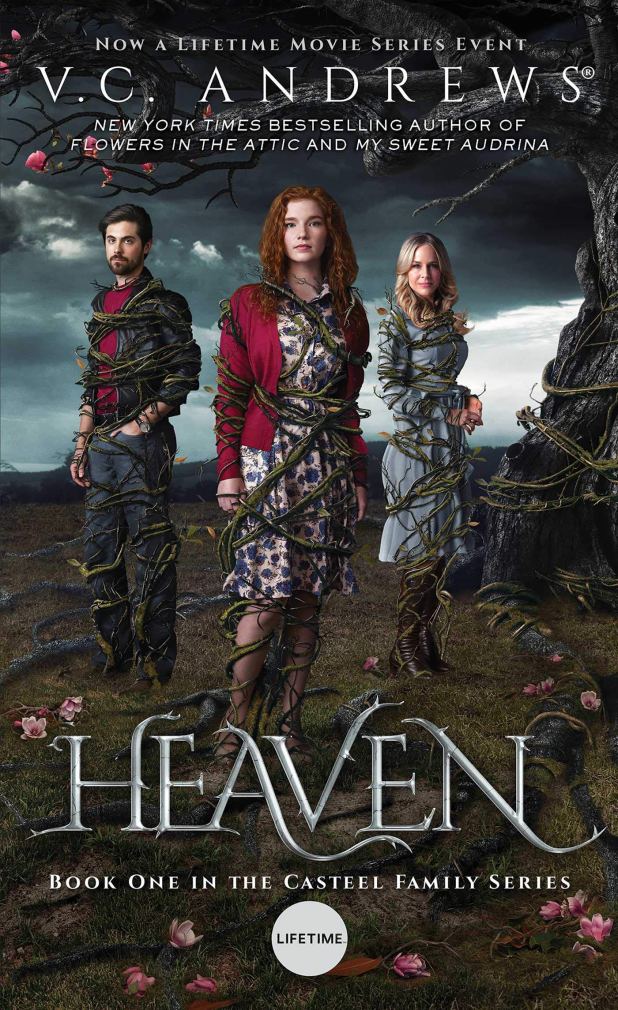
The Casteel series started after VC Andrews wrote the Dollanganger books — which includes Flowers in the Attic — and My Sweet Audrina. Only the first two books appeared before her death and the series tells the story of a troubled West Virginia family, starting with Heaven, a gir whose mother died in childbirth, which leads to a hate-filled relationship with her father.
Lifetime made all five books in this series into films following their success with the Dollangager movies. Directed by Paul Shapiro (whose career is all over the place in the best of ways, working on plenty of TV movies and episodic TV) and written by Scarlett Lacey (who also was the scribe for the My Sweet Audrina TV movie and Wendy Williams: The Movie), this film places Annalise Basso into the role of Heaven Leigh Van Voreen Casteel.
Heaven is the oldest child in her family, driven to escape Winnerow, West Virginia with her academic abilities. It takes until late in her teens before she learns that she’s the daughter of the rich Leigh Cateel, who died in childbirth, causing her father to never love her. Yet when he father’s drinking grows out of control, she and her siblings are sold off to other family members, sending her to live with his ex-wife Kitty and her new husband, a writer named Cal who starts an affair with her.
Man, I’m behind in my VC Andrews TV movie watching. What is wrong with me? I have no priorities!
This is the kind of movie I love, one where a woman on her deathbed tells a teenager that it’s good with her if she keeps arrdvarking with her husband, a man who should be her father figure yet asks to be called daddy.
Now I have to stop writing this and get to watching like twenty more of these. My work is never done.
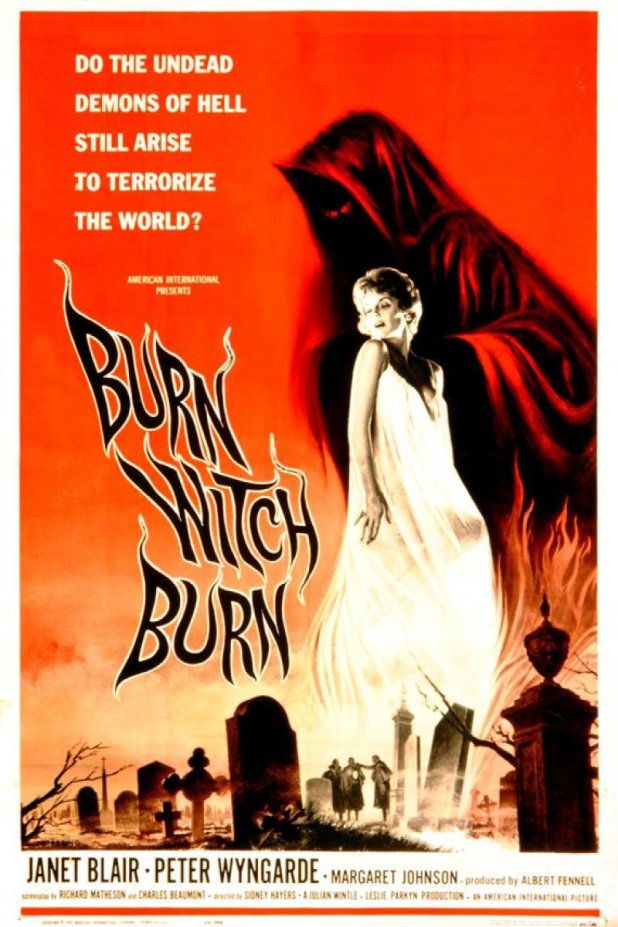
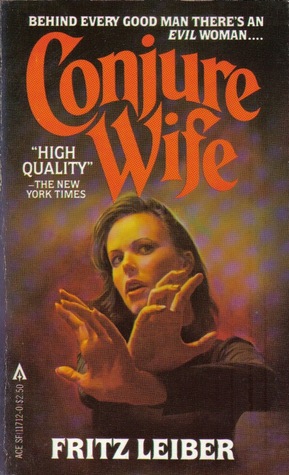
Based upon the 1943 Fritz Leiber novel Conjure Wife, this movie was called Day of the Eagle in the UK before getting a title that sounded more like a horror movie for American audiences. The book had already been adapted once before as Weird Woman in 1944 and then one more time afterward in 1979 as Witches’ Brew.
The American version also has an opening in complete blackness where the voice of Paul Frees reads a spell intended to protect the audience from the evil within the film. Filmgoers also were given a special pack of salt and the words to an ancient incantation. Man, going to the movies used to be awesome. American-International Pictures knew how to sell an occult movie!
Written by a combination of Charles Beaumont (The Masque of the Red Death, several great Twilight Zone episodes), Richard Matheson (I Am Legend, Duel) and George Baxt (Shadow of the Cat, The City of the Dead), this is the story of Norman Taylor (Peter Wyngarde, Klytus from Flash Gordon), a man who discovers that all of his career success is due to the magic skills of his wife. As soon as he demands that she burns all of her magical ephemera, everything in his life goes wrong
By the end of the movie, his rational view of the world must confront the fact that magic truly exists. It also posits that women are the magic workers of the world and that men just stumble through, a view I can completely agree with.







 B&S About Movies
You must be logged in to post a comment.