Return from Witch Mountain (1978)

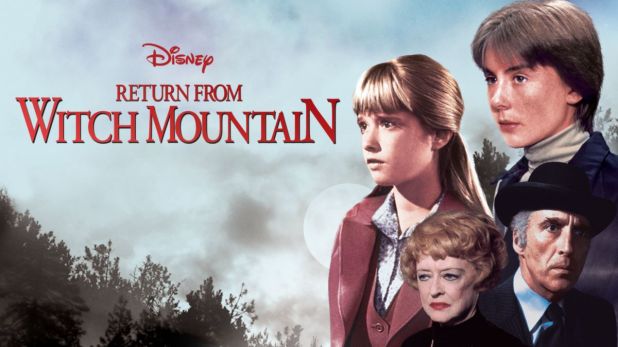
In the second Witch Mountain movie, Ike Eisenmann, Kim Richards and Denver Pyle all come back as Tony, Tia, and Uncle Bené, a family of extraterrestrials with special powers. How could they make this even better, you wonder? How about by having Bette Davis as the film’s villain, a woman named Letha Wedge, who is financing the mad science of Dr. Victor Gannon (Christopher Lee).

Just imagine how many bad movies I’ve enjoyed just because Ms. Davis or Sir Lee appeared in. Both of them in the same film? You know that I jumped up and down for most of the run time of this.

It’s funny because the bad guys have such cross purposes: Gannon wants recognition and power, while Letha merely wants to achieve better ROI. They see Tony using his power, kidnap him and turn him into a robot that steals gold for them.

This movie also has kids living in a destroyed mansion — the Earthquake Gang — and Jack Soo from Barney Miller as Mr. “Yo-Yo” Yokomoto, an adult on the side of the good guys. Sadly, Soo was diagnosed with esophageal cancer in the autumn of 1978, several months after the film’s release. He’d die just a few months later, making this his final appearance.

While John Hough would return to direct, the script for this was written by Malcolm Marmorstein, who wrote 69 episodes of Dark Shadows, the incredible Juan López Moctezuma-directed Mary, Mary, Bloody MaryPete’s Dragon and wrote and directed Dead Men Don’t Die and Love Bites.

Escape to Witch Mountain (1975)

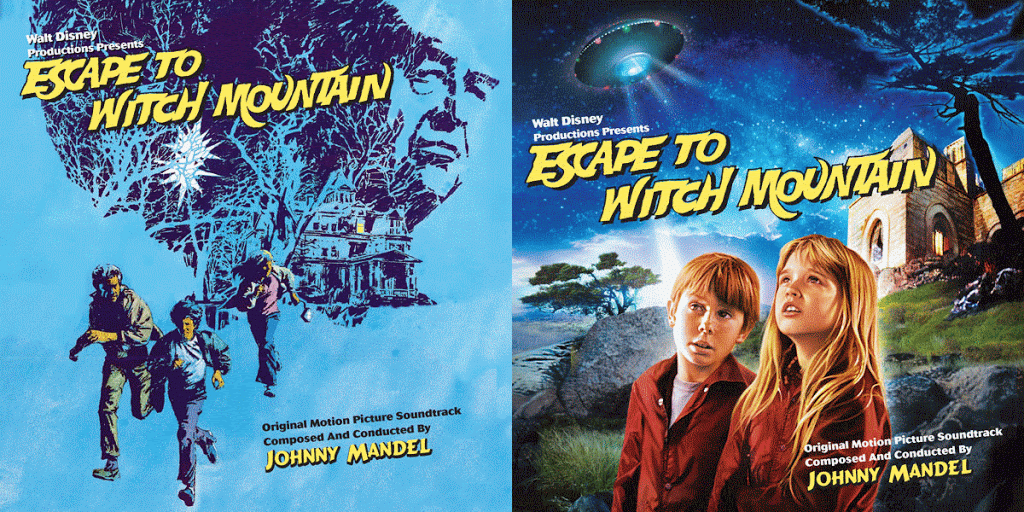
Based on the science fiction novel by Alexander H. Key, Disney has had great success with Witch Mountain, making two movies in the seventies, a Disney Channel sequel in the 80s, a 1995 remake and a 2009 cannon sequel that was marketed as a remake, despite the fact that Tia and Tony kind of cameo and are played by Kim Richards and Ike Eisenmann*. Now, there are plans to make a new series for the Disney+ channel.

Back to the past and the original film and we find our heroes in an orphanage. They’re not like the other kids — Tony controls inanimate objects with the aid of his harmonica — yes, really — and Tia can communicate telepathically with Tony, feel the emotions of animals and see the future. They have a star map that they can’t figure out as well as memories of an uncle who saved their lives, but otherwise, they are both a blank slate.

One day, one of Tia’s premonitions saves the life of attorney Lucas Deranian (Donald Pleasence!), which he reports to his millionaire boss, Aristotle Bolt (Ray Milland), a man obsessed with the paranormal. While acting as their uncle, Lucas adopts the children, but it is only so that Bolt can study them. They run away, meet RV-driving widower Jason O’Day (Eddie Albert) and convince him to take them to their destiny at Witch Mountain, all while being pursued by Deranian, Bolt and their henchman Ubermann (Lawrence Montaigne, The Great Escape sure, but also the chauffeur in Young Lady Chatterley).

The Witch Mountain films were the result of Disney looking to reinvent itself after the death of founder Walt. They wanted movies that were a little edgy and when they saw director John Hough’s The Legend of Hell House, they knew they had the right person. Hough also made The Incubus, Twins of EvilAmerican Gothic and Dirty Mary Crazy Larry. The end result was a big success and they’d bring the characters back three years later for Return from Witch Mountain.

*They were so good at playing siblings that they do it again in Devil Dog: Hound of Hell.

You can check out Mark Begley’s review of this movie here.

The Keep (1983)

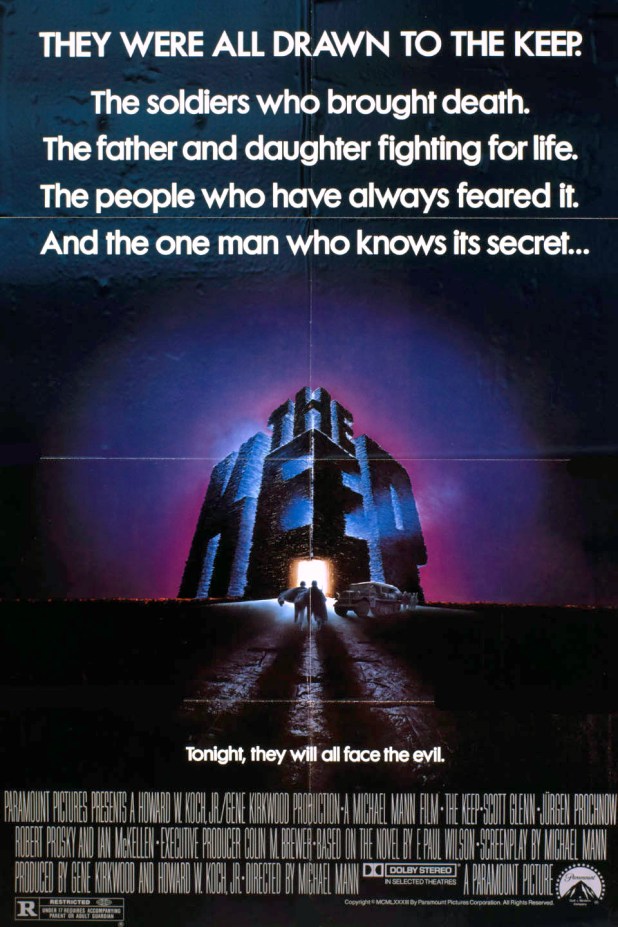
Based on the novel by F. Paul Wilson* — which was the first of a seven book series called The Adversary Cycle — The Keep is the movie you find on Wikipedia when you look up troubled production. Starting with a rough thirteen week shoot that went all the way to twenty two weeks with reshoots and a supernatural creature that kept changing because director Michael Mann couldn’t decide how he wanted it to look, the fact that this movie was ever released is pretty amazing.

Making things even more challenging was the sad fact that visual effects supervisor Wally Veevers died while the film was still being made and nobody knew how he planned to finish the visual effects scenes in the movie. Mann had to finish 260 shots of special effects himself after Veever’s death.

This is a movie with so many different endings that it’s hard to keep track. The original end was close to the effects Veevers did for 2001: A Space Odyssey with a dimensional wormhole tearing through The Keep and time and space itself. Paramount refused to pay for the filming of the additional footage needed for this finale, so Mann had to compromise.

Mann’s original cut was 210-minutes long and we may never see that version of this movie. It was taken out of his hands and cut down to 96-minutes and the result was utter hackwork. Huge chunks of the story are missing, continuity is all over the place and there are obvious mistakes in the sound design, soundtrack and editing. And that’s what played in theaters!

There was a Laurie Anderson score for this — it ended up becoming her album United States Live — but this film wouldn’t be as successful as it is without the Tangerine Dream score that plays throughout.

Somehow, it took until 2020 for this to come out on DVD and that was only in Australia. It looks like this will never get a big release, but hey — we’ve been surprised before. When asked if it would ever be released in 2016, Mann said, “No. we were never able to figure out how we were to combine all these components that were shot (pre blue and green screen). That one’s going to stay in its…” before he just stopped talking.

A German unit of soldiers have occupied an uninhabited citadel n Romania in an attempt to control the Dinu Mountain Pass. Two soldiers attempt to steal a religious icon before releasing Radu Molasar, a monster that kills several soldiers as it becomes more physically real. And as the soldiers struggle to keep their ownership of The Keep, even more sadistic troops come to town, killing the local villagers.

There’s also a Jewish historian named Prof. Theodore Cuza (Ian McKellen) who the Molasar is using to escape the confines of this building, another mysterious named Glaeken Trismegestus (Scott Glenn) and yeah — just listen to the cool music and watch the pretty lights and let this movie wash over you. I mean, German soldiers and Jewish people joining together to stop a golem? Is that a good explanation? Who knows!

There’s a great cast game for whatever happens, like Gabriel Byrne, Robert Prosky, Jürgen Prochnow and Alberta Watson.

As for Mann, he left the movies behind for a while. But he did just fine, creating Miami Vice and making films like the fascinating ManhunterHeat and The Insider.

Somehow, Mayfair Games was able to take the movie and make a board game and a Dungeons & Dragons module in its RoleAids line.

No matter how disjointed or poorly editing this movie is, I keep watching it. Maybe someday, the film I get to see will be the one that Mann actually wanted audiences to see.

*Wilso disliked this movie so much that he wrote a short story called “Cuts” in which a writer puts a voodoo curse on a director who has ruined one of his books.
Diary of a Madman (1963)

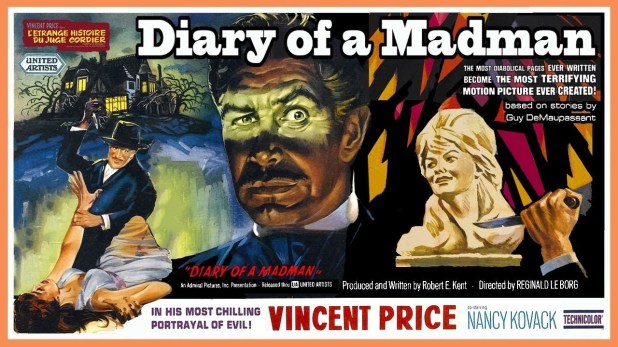
Based on “La Horla” by Guy de Maupassant, this Reginald Le Borg-directed film starts at the funeral of Simon Cordier (Vincent Price), who had been possessed by one of the horla, a race of evil monsters who exist only to make humans go nuts.

Trying to find a hobby after thinking that a prisoner has infected him with a horla, Cordier got into sculpting and fell in love with the already married Odette Mallotte DuClasse (Nancy Kovack, The Silencers). The horla makes him believe that she’s merely after him for his money, so he cuts her head off and tosses it in a river. When it’s found, her husband is executed for the crime, but Simon knows he has to get rid of the creature. So he does what any of us would — he sets his whole house on fire and dies along with it.

This was written by Robert E. Kent, who would make Twice-Told Tales with Price the same year.

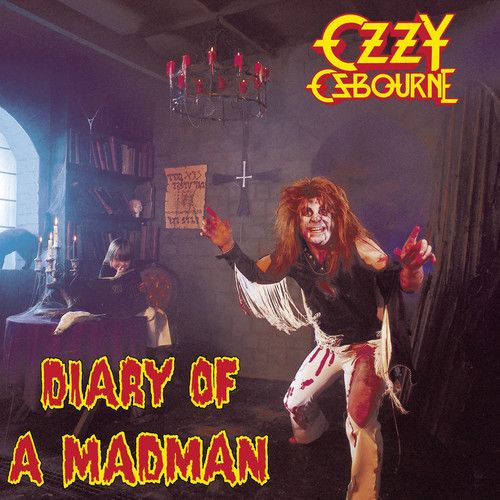
Obviously, Ozzy Osbourne has seen this movie.

Audrey Rose (1977)

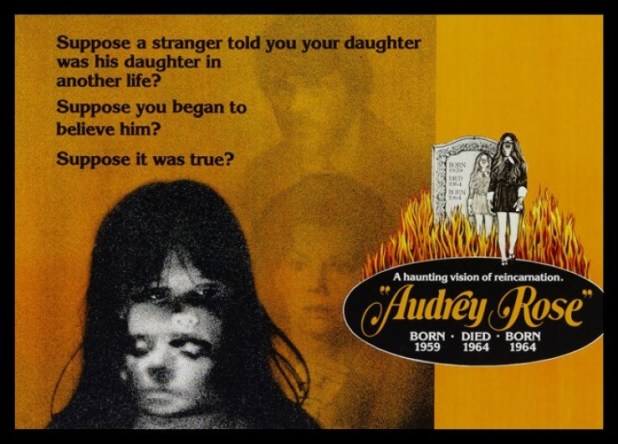
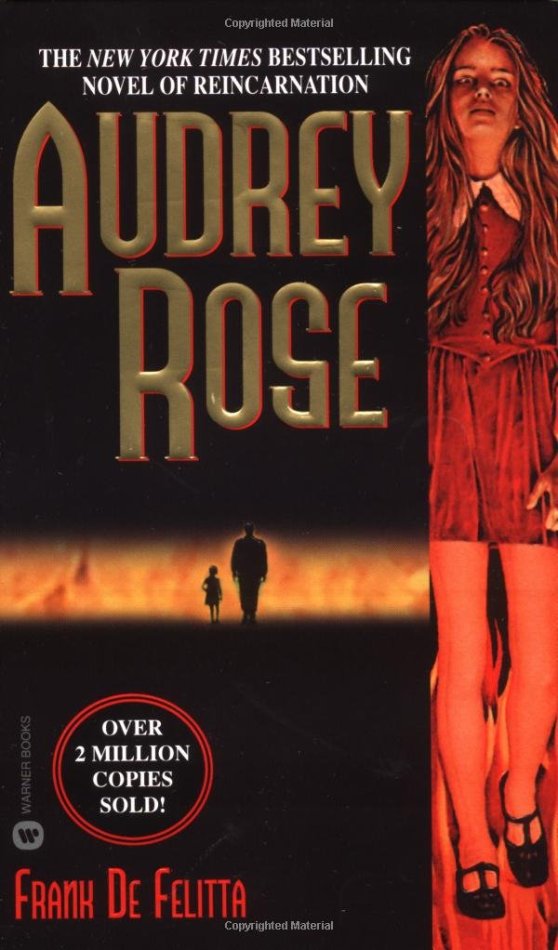
Based on the 1975 novel of the same name by Frank De Felitta — who also wrote the screenplay, as well as The Entity and Dark Night of the Scarecrow — this is the story of Bill and Janice Templeton, who are being hounded by a mysterious stranger who just wants to meet their daughter Ivy. That man is Elliot Hoover (Anthony Hopkins), a lost soul whose wife and daughter — Audrey Rose — died eleven years ago on the night that Ivy was born. He believes that she is his daughter.

Man, the 70s, huh? This movie takes that decades love of reincarnation and the occult — before we backtracked into the Satanic Panic of the 80s — and concocts a world where Higgins — John Hillerman plays a prosecutor — must deal with holy men claiming past lives are possible and hypnosis bringing Ivy back to her last incarnation. And then it ends with a quote from the Bhagavad-Gita? Ah man. What a decade.

Poor Robert Wise. He had to follow this one up with Star Trek: The Motion Picture. He made much better movies before that, like The Curse of the Cat PeopleWest Side StoryThe HauntingThe Sound of Music and The Andromeda Strain. However, as goofy as this gets, I kind of admire this movie. It’s cornball psychic hokum, but the best kind of carny BS — because it believes its own BS.

By the way, Brooke Shields tried out for this movie and even had the claim that she posed for the art of the paperback cover, which wasn’t BS.

As for De Felitta, he tried some BS to sell his book sequel For Love of Audrey Rose to the rubes, claiming that he’d heard his five-year-old son suddenly be able to play ragtime music on the piano.

Magic (1978)

William Goldman — who pretty much owns cinema when you think of it, between writing HeatThe Princess BrideButch Cassidy and the Sundance KidMarathon Man and so many other great scripts — wrote the book and screenplay for this one, which concerns the relationship between Charles “Corky” Withers (Anthony Hopkins) and his foul-mouthed dummy Fats.

You’ve seen it before with The Great Gabbo, but have you seen it with Ann-Margaret hooking up with a mentally ill man who channels his rage through a wooden doll? Or a scene where Burgess Meredith is killed by being bludgeoned with said inanimate person and then drowned?

Richard Attenborough may have directed this, A Chorus Line and Ghandi, but did he get an action figure made from any of those movies? Many kids will know him only as the man who welcomed us to Jurassic Park, John Hammond.

When asked what role he’d always wanted and didn’t get, Gene Wilder revealed that it was the role of Corky. Attenborough and Goldman wanted him for the part, but producer Joseph E. Levine said that a comedian would take away from the emotional story.

You can watch this on Tubi.

The Guardian (1990)

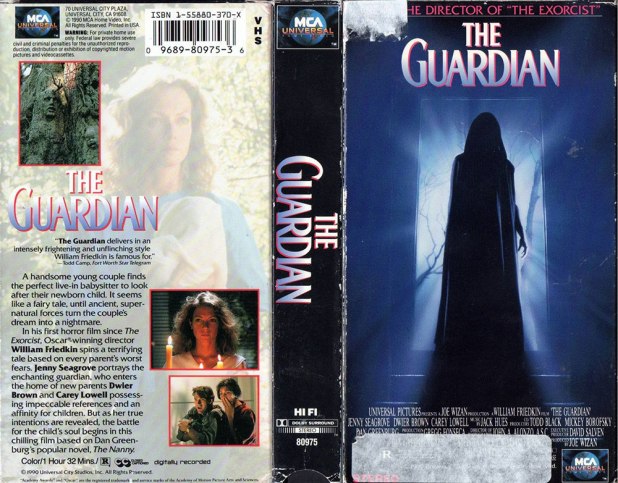
What if the man who wrote Private Lessons — Dan Greenburg — wrote a book about a hamadryad, which is a tree spirit, and somehow William Friedkin made it his first horror film since The Exorcist?

It’s true. All true.

The original script — Sam Raimi was going to direct — was a lot closer to the book and was about a nannuy who steals the children she is charged with. Screenwriter Stephen Volk reworked the script for Friedkin, including coming up with the idea of making the villain Lilith, but then Friedkin wanted a straight and realistic movie, which Universal didn’t and Volk said “What if it was a tree monster?” And Friendkin went, “Yessssssssssssss.”

As a result of all that, Volk suffered a nervous breakdown and left the production, leaving Friedkin to finish the script.

Jenny Seagrove, who actually had to play this part, said that her role went from being a nanny to being a druid to actually being a tree. Or was she a wolf? Man, I have no idea and I’ve tried to watch this more than once and that’s probably why I kind of love it. This movie has no idea what it is even when it’s trying so hard to be it, like a kid in school who is fighting to be cool and has somehow made a persona of every single social group.

I mean, twatching Brad Hall get brutalized by wolves is something that I wish I could do more often. Yet this movie goes from The Hand That Rocks the Cradle to occult horror to an absolutely ridiculous scene with the evil nanny’s bark-like skin has baby faces inside it. Who would come up with this? Who would give them millions of dollars?

What if the man who wrote Private Lessons — Dan Greenburg — wrote a book about a hamadryad, which is a tree spirit, and somehow William Friedkin made it his first horror film since The Exorcist?

It’s true. All true.

The original script — Sam Raimi was going to direct — was a lot closer to the book and was about a nannuy who steals the children she is charged with. Screenwriter Stephen Volk reworked the script for Friedkin, including coming up with the idea of making the villain Lilith, but then Friedkin wanted a straight and realistic movie, which Universal didn’t and Volk said “What if it was a tree monster?” And Friedkin went, “Yessssssssssssss.”

As a result of all that, Volk suffered a nervous breakdown and left the production, leaving Friedkin to finish the script.

Jenny Seagrove, who actually had to play this part, said that her role went from being a nanny to being a druid to actually being a tree. Or was she a wolf? Man, I have no idea and I’ve tried to watch this more than once and that’s probably why I kind of love it. This movie has no idea what it is even when it’s trying so hard to be it, like a kid in school who is fighting to be cool and has somehow made a persona of every single social group.

I mean, watching Brad Hall get brutalized by wolves is something that I wish I could do more often. Yet this movie goes from The Hand That Rocks the Cradle to occult horror to an absolutely ridiculous scene with the evil nanny’s bark-like skin has baby faces inside it. Who would come up with this? Who would give them millions of dollars?

There’s also a cable TV edit that Friedkin hated so much that it got an Alan Smithee directoral credit. In this one, the tree woman known as Camilla is not killed by a chainsaw and is instead alive and naked at the tree as the movie ends.

Sharky’s Machine (1981)

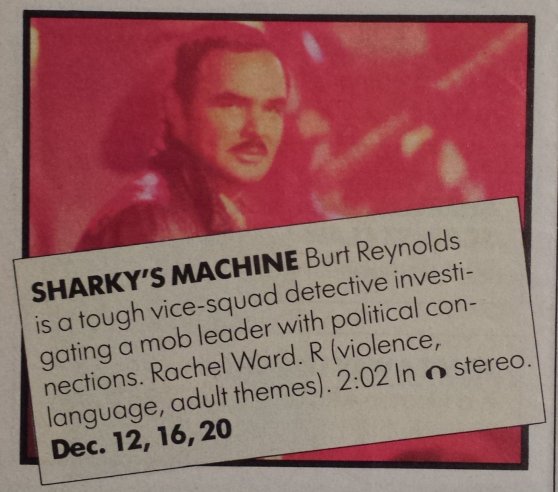
Man, when I was a kid, the only movie that I think HBO had — besides The Car — seemed to be Sharky’s Machine. I never watched it back then and I totally should have, because it would have changed my life.

Yes, I know this is from The Movie Channel. I got it from https://twitter.com/ClassicHBOGuide/status/1070400413726269440

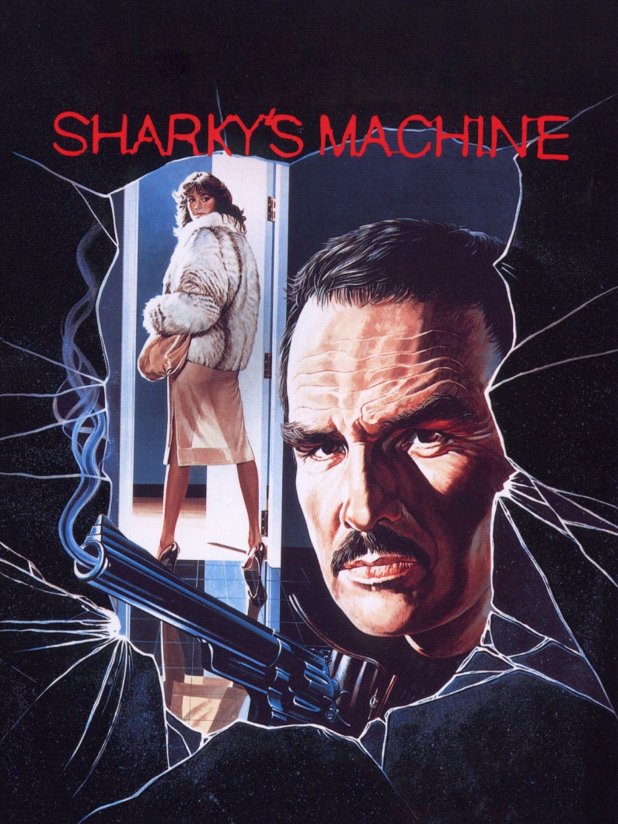
Based on the book by William Diehl, which was sent to the film’s director and star Burt Reynolds by Sidney Sheldon, this was Reynold’s chance to get away from the funnier movies he’d been making. He told the Boston Globe, “I figured it was time to get away from Smokey. I’d been doing a lot of comedy in recent years, and people had forgotten about Deliverance.”

Reynolds wanted to make a movie like his favorite film ever — the noir masterwork Laura — and he wanted John Boorman to direct. However, he was busy with Excalibur.

A bust gone wrong has moved Tom Sharky (Reynolds) from drugs to the vice squad, the worst occupation a police officer can have. Working under Frescoe (Charles Durning), our hero discovers a high-class prostitution ring that includes a thousand dollar a night girl named Domino Brittain (Rachel Ward) who is connected to governor candidate Donald Hotchkins, who is owned by Victor D’Anton (Italian star Vittorio Gassman).

One evening, while conducting surveillance and falling for Domino, Sharky watches her get blasted in the face with a shotgun by the evil William “Billy Score” Scorelli. Let me tell you, if you think Henry Silva was great before, this is perhaps the best I’ve ever seen him. He’s a force of complete terror and mayhem in this and I couldn’t love him any more after the ending of this film, which features the highest free-fall stunt ever performed from a building for a commercially released film.

As everyone thinks Domino is dead, she suddenly shows up and tells Sharky that it was her friend that ate the blast to the face. Now, she could bring the entire conspiracy down, if everyone can just stay alive.

Tough cop movies only wish they were a sliver as good as this movie. I mean, you have Bernie Casey and Brian Keith as cops, you’ve got bad guys slicing off Burt’s fingers and you have  a Doc Severinsen-orchestrated theme that Tarantino took for Jackie Brown.

Supposedly, when Clint Eastwood made Every Which Way but Loose, Reynolds said, “Clint, you’re getting into my territory and if it’s a success, I’m going out and make Dirty Harry Goes to Atlanta!”. When this film went into production, Eastwood sent a telegram to Reynolds saying, “You really weren’t kidding, were you?”

Of Unknown Origin (1983)

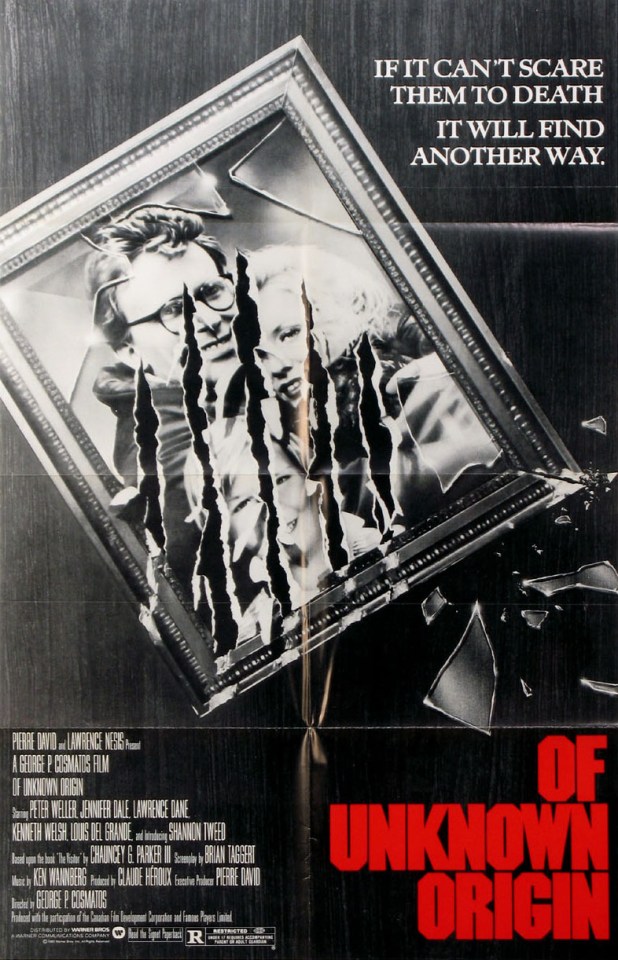
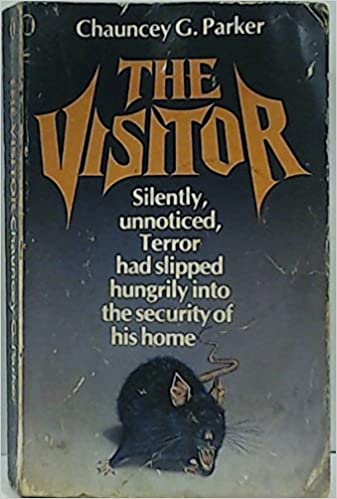
Based on The Visitor by Chauncey G. Parker III, this movie is totally worth watching just to see Peter Weller pretty much be in a movie by himself for long stretches, going absolutely ful nutzoid at the premise of having a rat in his walls. If you’ve said, “I want a movie where rats attack people while they’re arrdvarking and children at birthday parties,” Of Unknown Origin is your movie. I mean, there was one point where I had to stop this movie and just catch my breath and be amazed that it exists.

George P. Cosmatos may be known today as the father of Beyond the Black Rainbow and Mandy director Panos Cosmatos, but he was a more than dependable director, turning out blockbuster fare like Rambo: First Blood Part II, Cobra, Leviathan and Tombstone.

Bart Hughes (Weller) stays behind to work on the job that will get him a promotion while his wife (Shannon Tweed) and child go away on vacation. He just redid their brownstone, so this should be a great weekend for him, but no, a rat shows up and that’s the story. Ninety minutes or so of a rat and Peter Weller descends into destructive dementia and screams stuff like, “Watch and weep, you furry f**ker” and “Keep it up. Just keep it up. I’ve got friends in Jersey.”

There’s also a moment where he tells everyone at a dinner party that no one knows where rats come from — Of Unknown Origin — and no one corrects him and calls BS and explains that they come from Asia, but then again, no one had Wikipedia in 1983 and they had to figure out how to get the title into the movie.

Premature Burial (1962)

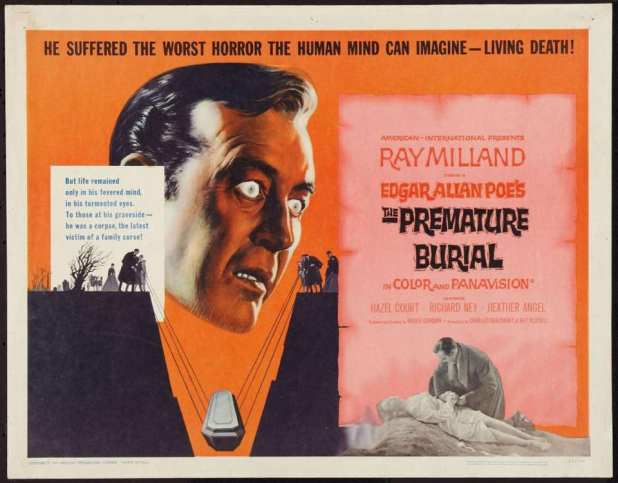
This is the third of Roger Corman’s Poe movies. This time, Corman decided to make his own Poe film outside of his deal with American-International Pictures. He got his financing through Pathé Lab, the company that did the print work for AIP.

While he wanted to use Vincent Price, the actor had an exclusive deal with AIP, so he hired Ray Milland.

Unexpectedly, on the first day of shooting, James H. Nicholson and Samuel Z. Arkoff of AIP made a surprise visit. They informed Corman that they were working together again and were thrilled that they’d convinced Pathé to bring the movie back to them after threatening to pull all their lab work.

Guy Carrell (played by the talented Ray Milland) is a British aristocrat with a unique condition. He suffers from catalepsy, which causes him to fear being buried alive. This fear almost ruins his marriage to Emily (Hazel Court, a familiar face from movies like The Raven and The Masque of the Red Death). Despite his peculiarities, they decide to get married, even though he has constructed an elaborate coffin from which he can escape.

Let me tell you, the dream sequence where he does get buried alive? I saw it before I was ten when forced to visit the home of other children instead of getting to watch movies at home alone, as I have preferred my entire life. They went and played some games. I grabbed the TV Guide and found a horror movie. This is what I saw, and the burial sequence completely destroyed me. I remember walking onto their porch, staring into the sunset and wondering how the adults could be so carefree when death was stalking our every waking moment. I was a weird kid and grew up to be even more odd.

And to add to the surprises, Dick Miller makes a memorable appearance as a grave robber!