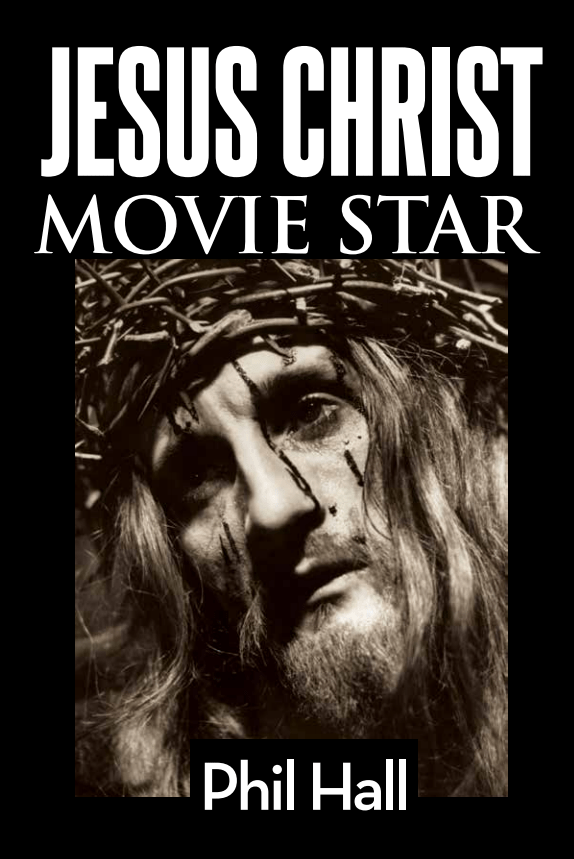
Jesus Christ Movie Star: The book and interview with author Phil Hall

A few months back, we interviewed Phil Hall, the author of The Weirdest Movie Ever Made: The Patterson-Gimlin Bigfoot Film.

Now, BearManor Media has released Jesus Christ Movie Star, a new book by the author of The History of Independent Cinema and In Search of Lost Films and host of the award-winning podcast The Online Movie Show. This 176-page illustrated book is now available in a $22 paperback edition and a $32 hardcover edition.

It’s a great idea for a book, as Jesus Christ has challenged and inspired filmmakers from the very start of film and has seen so many different interpretations. I really enjoyed it as it unites everything from the silent film era through Old and New Hollywood, from blockbuster films to the world of the exploitation filmmaker, from movies by Hollywood royalty to movies made in the gutter.

From largely unseen oddities like Assassin 33 A.D and The Passover Plot to famous films such as The Last Temptation of ChristThe Greatest Story Ever Told and even Monty Python’s Life of Brian, the book gives a balanced overview of the many interpretations of the Son of God on screen. Even if you’re not religious, I recommend this book.

I had the opportunity to ask Hall some questions about the book and discover what went into making it, why Jesus appears in so many movies and what films do the best job of portraying Christ.

B&S ABOUT MOVIES: What inspired you to write this book?

Phil Hall: During my youth, I considered the ministry for a career – my minor in college was religious studies – and my academic interest in the Christian faith never waned over the years. In the early 2010s, I had hoped at one point to do a book on Pilate’s wife, who is not identified by name in the Bible but is popularly known as Claudia Procula, but that project never moved forward. This new book comes from some of the research in the Claudia book’s section of cultural depictions of her place in the story of Jesus.

B&S: What makes Jesus such a uniquely filmable figure?

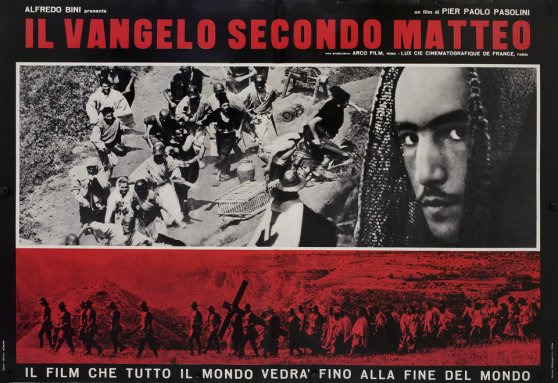
Hall: Jesus defies pigeonholing. His life story and message resonates differently with anyone who comes to the Gospels. This obviously includes filmmakers, which explains why there are so many different cinematic considerations of Jesus’ philosophy, actions and behavior. Griffth’s Jesus in Intolerance is worlds removed from Pasolini’s in The Gospel According to St. Matthew and Stuart Hazeltine’s in The Shack. There is no other historic figure who has been open to so many different interpretations, nor is there any that has been on the big screen from the dawn of silent film in the 1890s to today’s digital cinema.
What really struck me about your book is how the films of Jesus unite everything from highbrow features to the exploitation films of Sunn Classics and Larry Buchanan. Why do you think Jesus is so fascinating to filmmakers?

Hall: A crass answer would be the commercial viability of the subject – with relatively few exceptions, films about Jesus have consistently been profitable. It is also a story that can be molded to fit the times – consider the pacifist Jesus in Thomas Ince’s 1916 antiwar epic Civilization, the surly anti-authority Jesus of Pasolini’s 1964 film, and the hippie Jesus in the 1973 Godspell and the “bro” Jesus that we’ve seen in more recent films like Risen and The Shack.

B&S: It may be difficult, but what’s your favorite film in the book? Which do you think gets closest to translating Jesus (in your opinion)?

Hall: I believe Pasolini’s The Gospel According to St. Matthew and the 2003 The Gospel of John come closest in terms of staying on topic, as both were adapted exclusively from their respective Gospels. Most Jesus-centric films take a buffet approach in borrowing some aspects from the four Gospels while omitting others.

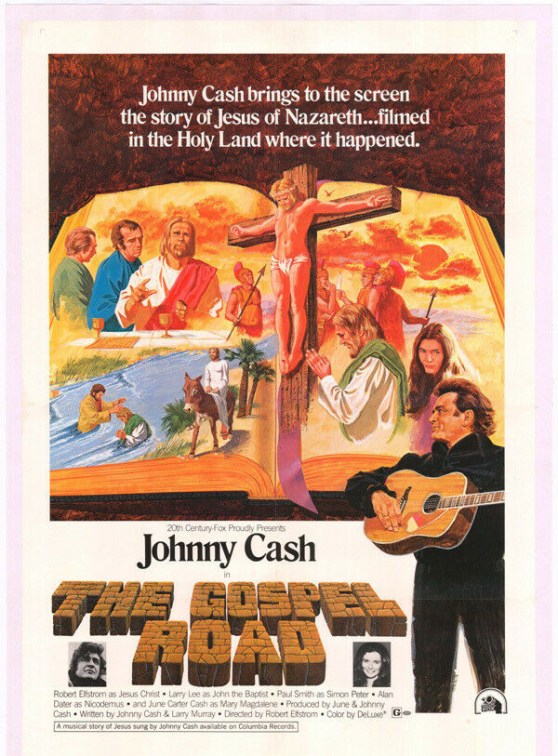
For personal favorites, George Stevens’ The Greatest Story Ever Told (1965) is wildly imperfect, but among the epics I think it comes closest to being an act of cinematic reverence. The Johnny Cash-produced 1973 The Gospel Road is wonderfully idiosyncratic and represents a true work of sincerity – plus, it has a great country-gospel score that never shows up in this cinematic genre.
B&S: What actor did the best job? Which one surprised you?

Hall: Max Von Sydow’s presence in The Greatest Story Ever Told is my favorite – he resembles an Eastern Orthodox icon come to life and he possesses the right degree of otherworldliness that sets him apart from the rest of the cast.  As a surprise, Donald Sutherland took what could have been a one-dimensional caricature in Dalton Trumbo’s Johnny Got His Gun (1971) and gave the role a degree of charisma and humor that helped to sell an interpretation of Jesus that some might have found offensive.

B&S: Are there any angles that have not been explored in Jesus films?

Hall: No. And if you ever see the 2000 short Jesus and Hutch with the Nazarene (played by Eric Stoltz) as a 70s’-style detective whose right hook gives criminals a new meaning of turning the other cheek, then you will realize the possibilities are infinite – if, perhaps, for the wrong reasons.

B&S: You’ve written about the movies that include Bigfoot and Jesus now. What historical figure, if any, is next?

Hall” I have no plans for new books at the moment, although outside of cinema studies I am writing a weekly series for the financial news site Benzinga called “Wall Street Crime and Punishment” about historic and contemporary figures who faced criminal charges for running amok with other people’s money. My next column is about Howard Hughes’ controversial acquisition of AirWest in the early 1970s, which I am writing after concluding this interview.

You can get your copy of Jesus Christ Movie Star at BearManor Media. They have the paperback, hardback and ebook versions available for sale. Thanks to Phil Hall for his time and great interview.
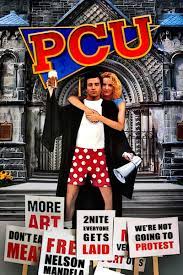
PCU (1994)

At one point in human history, Jon Favreau was not making Marvel and Star Wars movie, but was instead playing a character in a teen sex comedy. Also, at this very same moment, Jeremy Piven would be seen as a heroic character and not the creepy scumbag that we always feared that he could be.

That said, if anything, this is a movie that will teach you not to wear the shirt of a band to that band’s concert.

PCU (Port Chester University) is a college where fraternities have been outlawed and political correctness runs rampant. This movie is probably prescient in that way, as forward-looking as a movie mostly concerned with drugs and sex can be.

Much like The Warriors, the school has moved from frats to gangs of like-minded students such as the heroic gang of The Pit, the antagonists known as Balls and Shaft, the Womynist House, the Afrocenterists, the Cause-Heads and Jerrytown.

Hart Bochner — Doc from Terror Train — directed this movie. He also made HIgh School High, which is a lot more of a parody than this. Supposedly he didn’t allow much ad-libbing, which Piven brings up in interviews, but then Bochner claims he did.

At least it has a good soundtrack. BeyondParliament-Funkadelic appearing in the actual film, Mudhoney covers Elvis Costello’s “Pump It Up” and you get some Redd Kross.


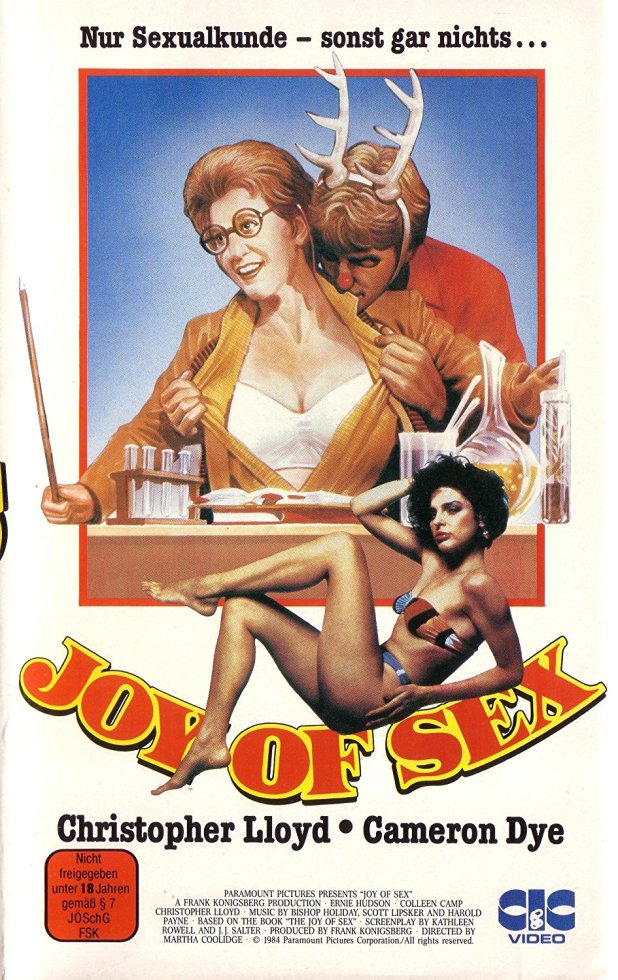
Joy of Sex (1984)

Did everybody’s parents have a copy of Dr. Alex Comfort’s The Joy of Sex? What a frightening book that was, what with its Chris Foss (Flash GordonGuardians of the Galaxy, Jodorowsky’s Dune) illustrations of incredibly hairy flower children engaging in all manner of marital congress.

Paramount Pictures thought that with the name of the book, they’d have a big movie, too. They spent all kinds of money to get the right and then paid Charles Grodin — who was told the movie could be about anything — to write the script. So he wrote a script about writing the script. That movie was eventually made as Movers & Shakers.

Next, John Hughes was to write a script that Penny Marshall would have directed and John Belushi would have starred in, but then Belushi died. That would have been a National Lampoon movie and the studio tried to keep their name on the film before the publisher, Matty Simmons, made a huge deal of the Lampoon having nothing to do with the film.

Finally, Paramount was running out of time and had just four months left on their option. They went to TV producer Frank Konigsberg, who said “They knew that in television you do things quickly. We threw together a script. They wanted me to use director Martha Coolidge, who’d just made Valley Girl. It was a job. We just had to get it done. I didn’t think it was a successful movie at all. It was awful. Martha hated it. I hated it.”

As for Coolidge, she would say, “Paramount insisted on topless girls running down the hall because they thought the formula demanded it and it was totally gratuitous. I hated putting them in for no reason and argued against it. But when the film was previewed the audience, particularly young women and girls, hated the nudity so Paramount then asked me to cut as much of it out as I could!”

She described that experience as miserable, telling her official site, “We were under constant pressure and scrutiny to do the impossible, we had eight days of prep, 20 days to shoot and my A.D. quit because he was so angry.”

By the end, she applied for an Alan Smithee credit for her directing. However, her name stayed on. She’d follow it up with Real Genius, which I hope was a more rewarding experience (It was — despite turning it down twice, once it was rewritten, she came around to the film and really got into it after producer Brian Grazer told her, “Making a movie should be fun!” She said that he ended up being “supportive, great to be around and knowledgeable about comedy and film production.”).

As for the movie, it’s all about high school senior Leslie Hindenberg (Judy from Revenge of the Nerds, who left acting to practice Zen Buddhism), who gets a mole looked at and learns that she only has six months to live. That leaves her with one goal in life: to lose her virginity.

There’s a good cast with Cameron Dye (Valley GirlOut of the Dark) as the love interest and Christopher Lloyd as Leslie’s gym teacher dad, plus Colleen Camp, Ernie Hudson, Darren Dalton and Canadian scream queen Lisa Langlois (Happy Birthday to MeDeadly Eyes).

But otherwise, if you were expecting something better, this isn’t it. I don’t blame Coolidge for the failure of this film.

Junesploitation 2021: Truck Turner (1974)

June 8: Junesploitation’s topic of the day — as suggested by F This Movie — is blacksploitation.

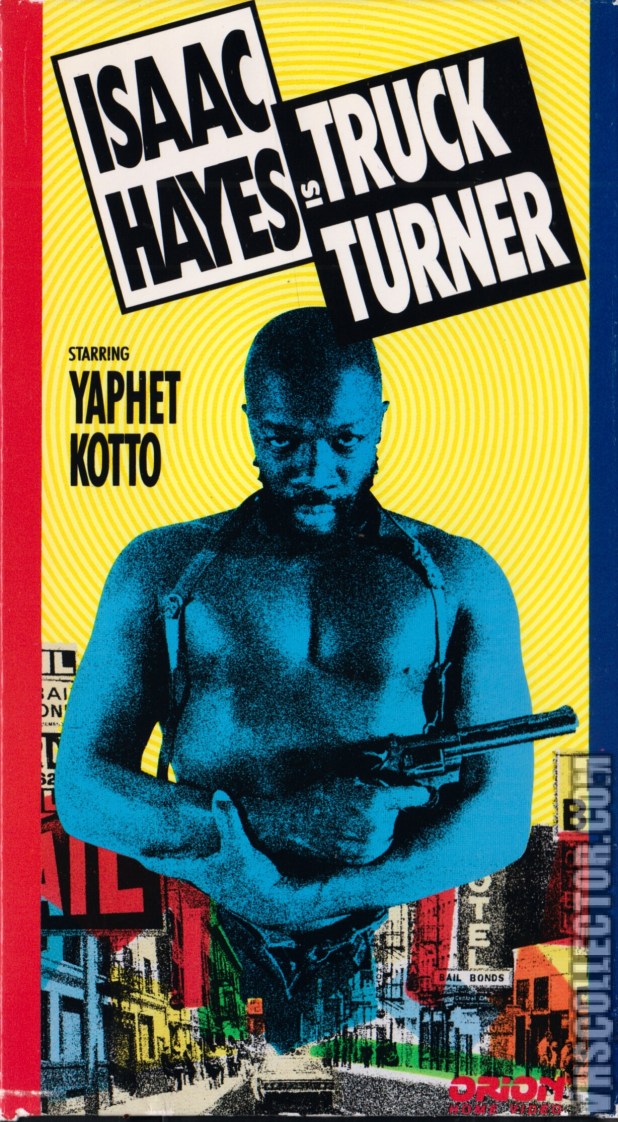
Released by American International Pictures as a double feature with Foxy Brown, this movie features Isaac Hayes as former pro football player turned bounty hunter Mack “Truck” Turner. After another successful job with his friend Jerry, he gets another bounty from Fogarty (Dick Miller), but not before seeing his girlfriend Annie (Annazette Chase, The Toy). She wants him to give up this crazy and violent life.

That next job is all about catching a pimp named Gator (Paul Harris, Across 110th Street), who runs and ends up getting killed. His main lady Dorinda (Nichelle Nichols!) gets all of his prostitutes under control and makes a deal with all of the other pimps in Los Angeles. Whoever kills Truck Turner gets to be the main pimp. Only Blue (Yaphet Kotto) takes the challenge, but no matter what he tries or who he hires — a veritable rogue’s gallery of villainy — Truck keeps making it through.

Director Jonathan Kaplan, who went from movies like this and The Student Nurses to bigger things like Heart Like a Wheel and The Accussed, told Monthly Film Bulletin that Truck Turner was written for Lee Marvin, Robert Mitchum or Ernest Borgnine, but Larry Gordon at AIP said, “Well, we can’t get any of them so now it’s a black picture.”

The Breakfast Club (1985)

I was with this movie when I was thirteen until the end.

John Bender (Judd Nelson), Claire Standish (Molly Ringwald), Andrew Clark (Emilio Estevez), Brian Johnson (Anthony Michael Hall) and Allison Reynolds (Ally Sheedy) all have their own reasons for a Saturday 7 a.m. to 4 p.m. detention with Vice Principal Richard Vernon (Paul Gleason). Before they leave, each of them must write a thousand-word essay that describes who they think they are.

Despite the fact that they all come from different worlds, they’re all living similar lives, crushed by parents who either give them too much or not enough attention. In one day, they all learn that they could be friends.

John Hughes, who wrote, produced and directed this film pretty much ran the 80s when it came to teen films. Of course, the error in this film, the one that never makes sense to me, is when Allison gives up her quirky individuality to put on makeup and become like everyone else. Even when I was young it felt hollow and it seems even more empty today.

P.J. O’Rourke, who worked with Hughes at the National Lampoon, summed up the film in a way that makes me question so much of it. He said that the movie lives up to Hughes’s politics, in that the students do not organize a protest together but, “like good conservatives do, as individuals and place the highest value, like this conservative does, on goofing off. Otherwise known as individual liberty.”

Everyone wants to have a moment of rebellion but when faced with the opportunity, so many of us put on makeup and try to fit right in.

Blackstock Boneyard (2021)

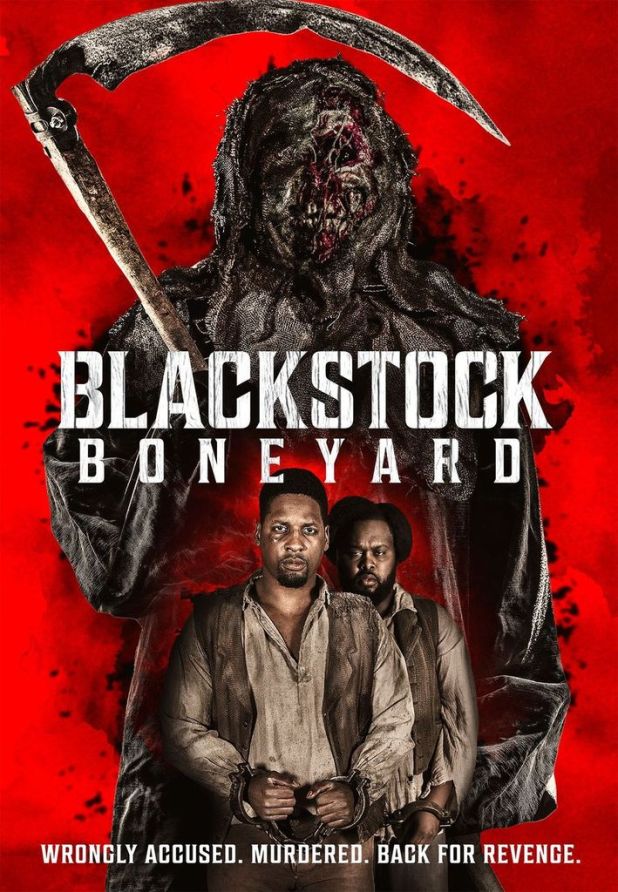
Originally called Rightful, this is the story of two black brothers who have come back from the grave to avenge their deaths and reclaim the land that’s rightfully theirs.

It’s actually based on the true story of Thomas and Meeks Griffin, who were forced to sell their land after being framed for the murder of 75-year-old Confederate veteran John Q. Lewis. The Griffin brothers were convicted based on the accusations of another black man, John “Monk” Stevenson. As he had the murder weapon in his possession, he was given a life sentence, while two other black men, Nelson Brice and John Crosby, were also executed for the same crime.

The truth may have been in Lewis’s suspected sexual relationship with 22-year-old Anna Davis, who was black. Davis and her husband were never tried, possibly for fear of the scandal that would arise when it came out that a white older rich man was sleeping with a black woman.

The Griffins were the richest black men in the area and had to sell their farm to pay for the trial. Despite more than a hundred people — including the town’s mayor, sheriff, two of the jurors and the grand jury foremen — petitioned Governor Richard Manning to commute their sentence, but they still went to the electric chair.

In 2009, Tom Joyner — a former member of the Commodores before they were famous and the host of The Tom Joyner Show — learned that he was related to the Griffins. He sought their pardons from the Columbia, South Carolina state appeals court and received it, finally setting things right.

Obviously, this is a sensitive subject to base a horror film on.

The tale of the film is about the property itself, which is about to be claimed by Judge Carroll Johnson “CJ” Ramage, who is the grandson of the judge that sentenced the Griffins to die. The farm is still worth plenty of money. However, his lawyer Roger Newbold(Jonathan Fuller, Castle Freak) has discovered that a woman named Lyndsy (Ashley Whelan, The Houses October Built) actually in the true heir to the land. They decide to scare her off, just as the brothers come back The Fog style.

The film really tries to hit so many other hot button topics like police brutality and workplace harassment, but it already has a great story to be inspired by. That said, for the state of horror in 2021, this is pretty interesting and worth checking out.

Blackstock Boneyard is available on demand and on DVD June 8 from Uncork’d Entertainment.

Goin’ All the Way! (1981)

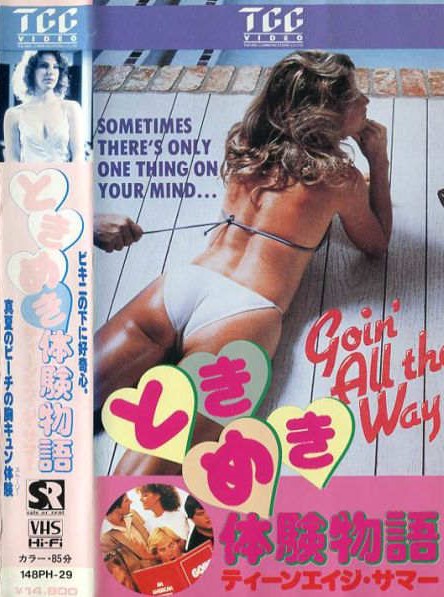
This movie starts with a female weightlifter* luring a guy into the gym showers with the promise of sex, then she and her friends shave his head as she laughs. Trust me, if young Sam had seen this in 1981 — he would have been nine — he would have had yet another obsessive crush.

Robert Freeman directed one movie. This is it. He also was the negative cutter on True Blood and the absolutely deranged movie The Forest. It was written by Roger Stone — not the right wing maniac but instead the writer of A Night at the Magic CastleLethal Pursuit and Paradise Motel. He also wrote several of the songs in this movie** — “Goin’ All The Way,” “Love or Nothing at All,” “No Time Like Now,” “Secret Hideaway,” “She’s a Bad Girl” and “Hot Spell” — as well as music for Talk Dirty to Me: Part 2Bodies In HeatAdult 45 Volume 1 and An Unnatural Act. He also wrote the song “Get Even” from Gymkata. He was joined by Jack Cooper, who was not Jackie Cooper.

Artie wants to sleep with his girlfriend Monica and she won’t give in, so they break up, because high school. Actually, because guys, too.

There’s also a big beefy dude named Bronk who is played by Joshua Cadman, Johnny Big Head from Surf II and you should really just go watch that movie instead of this movie. He was also Spike in Angel and yeah, you should watch that instead, too.

The movie ends at a Sadie Hawkin’s Dance, which was an invention of Al Capp in the comic strip Li’l Abner. This dance is one where the girls ask the guys and yet another invention by the high school elite to remind geeks why they must remain in their caste, unasked to the party and home playing Dungeons & Dragons and listening to Grim Reaper. Oh, that was me? Yes it was.

You can watch this on Tubi.

*Seeing as how this is a guy-centered movie, her only name is weightlifter in the credits.

**He was joined by Richard Hieronymus on some of these tracks. He also composed the music for Lethal Pursuit, as well as The ForestSweater GirlsThe Love ButcherAmanda By Night and more.

Mischief (1985)

Mel Damski mainly did TV — episodic and movie — but man, this movie, he hit it out of the park for every teenage male in 1985, who all probably taped it off Cinemax. The number of folks I know that had a copy of this and know about this movie is pretty astounding. It was written by Noel Black, who directed the classic Pretty Poison as well as the not as much of a classic Private School.

The reason for all the attention to this movie was, well, we didn’t have the internet and the love making scene with Jonathan Bellah (Doug McKeon) finally hooks up with his crush Marilyn McCauley (Kelly Preston) was like a bolt from heaven. I’m not proud of it, but porn magazines didn’t always just turn up in the woods in those days. But some days, they totally did.

His friend, Gene Harbrough, is in love with their friend Bunny (Catherine Mary Stewart), who already has a man in Kenny Brubaker (D. W. Brown). Plus, Jami Gertz is in this, as is Terry O’Quinn as Jonathan’s father. We had not yet arrived where the thought of O’Quinn as a father was a terrifying concept.

There’s a great soundtrack as well with so much of the music of the time, like Fats Domino, Chuck Berry, Buddy Holly, Gene Vincent, The Platters, Bill Haley and the Comets, The Skyliners, Elvis Presley, Little Richard and more.

When you watch this movie in 2021, you realize that the hero is pretty much a jerk, not understanding that no means no, that women aren’t just objects to be grabbed, that if a date agrees to sleep with you that you’re responsible for birth control and if you agree on the pull out method, actually pull out. I kind of hate him, to be perfectly frank.

The Malibu Bikini Shop (1984)

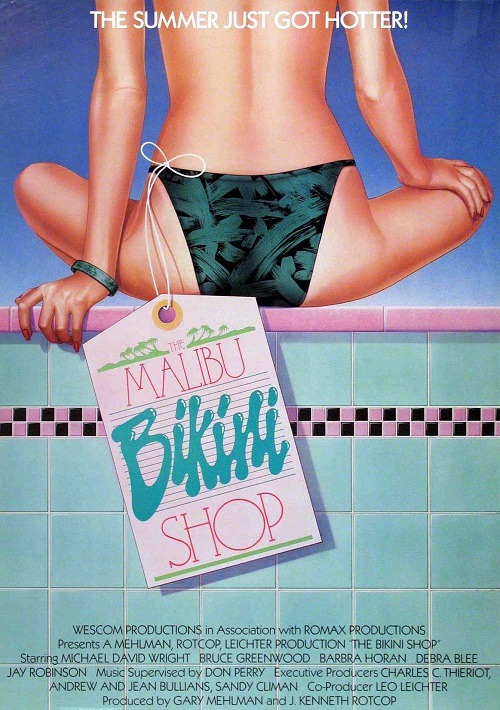
Even my bad movie resolve was tested by this movie, which tells the story of Alan (Michael David Wright) and Todd (Bruce Greenwood, who has had quite a film career after this), two charged up fellows who inherit the bikini shop owned by their aunt who has drunkenly jet skiied her way into the world beyond.

Alan has a mean fiancee (Debra Blee, who is in Savage Streets and Hamburger: The Motion Picture, two movies you should watch instead of this), the girls they hire to work at the shop are really cool, rich people and cops get in the way of the madcap shenanigans and there’s no nudity, but this is called The Malibu Bikini Shop, so that should give you some idea that there is not going to be a lot of bare flesh.

I know this may be someone’s favorite movie, but as you can tell, it is not mine.

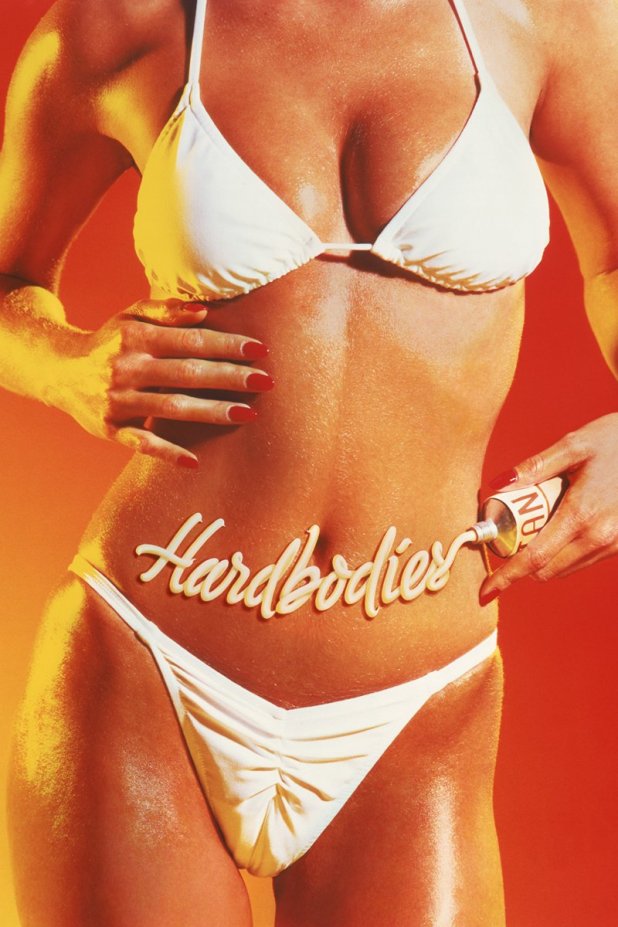
Hardbodies (1984)

This movie ran all the time on cable to the point that it was a puberty rite of passage amongst the teens of my hometown, which really seems to come up in so many write-ups this week. Yes, before the internet and sexting, we were all in our rooms alone watching cable and hacking the carrot. The 80s were not an innocent time.

Grant Cramer (Killer Klowns from Outer Space) is Scotty, who gets hired by three old men — Gary Wood, Michael Rapport (Patrick from Black Christmas) and Sorrells Pickard — to teach them how to pick up young women. He has a skill called BBD (Bigger and Better Deal) that allows him to “dialogue” women into bed. Then, you know, he falls in love with a girl named Kristi and starts seeing how sad the life he led once was. Because yeah, that’s how guys are.

I mean, what do you expect about a movie that’s based on an article in the November 1983 Penthouse Magazine that was written by the film’s screenwriters Eric Alter and Steve Greene? Supposedly, this is based on a true story.

Courtney Gains — Malachi! — is in this, as is Darcy DeMoss from Friday the 13th Part VI: Jason Lives and Vice Academy 3, Roberta Collins (Matilda the Hun from Death Race 2000), Kathleen Kinmont (Halloween 4), Kristi Somers (Valerie from Savage Streets), Marcia Carr (Stevie from Savage Streets and Nancy from Maniac Cop), Emily Longstreth (American Drive-In), Leslee Bremmer (School Spirit), Kane Hodder as a geek and the band Vixen playing Diaper Rash.

Is it good? Well, no. Not really. Is it something that I watch every once in a while to remind myself of when I was closer in age to the hero and not the men who hire him?

Yes. I can admit it.