Brotherhood of the Wolf (2001)

It’s pretty amazing that this French-language film played cineplexes in the United States, but I saw it twice in theaters during its run and bought the DVD as soon as it came out. This is a film that I am evangelical about, purchasing numerous copies for people and recommending it to countless more.

How many other movies do you know that have incestual werewolves battling the martial arts of a royal naturalist and his Native American companion while Monica Belucci plays a courtesan who is really an assassin for the Pope?

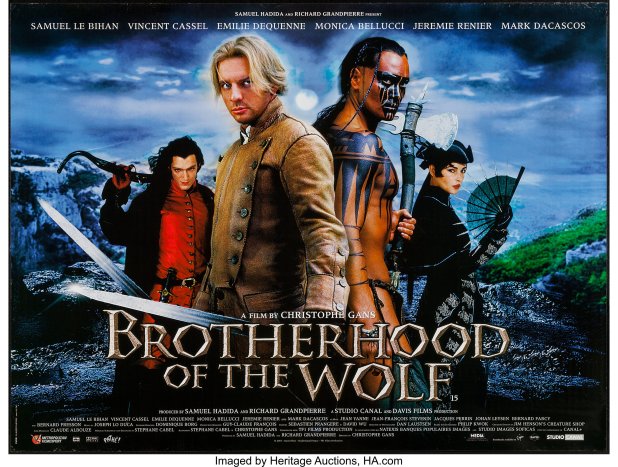
Grégoire de Fronsac, a knight of King Louis XV of France, and his Iroquois friend Mani (Mark Dacascos) have come to the French village of Gévaudan. A mysterious beast has been killing people and seems to be controlled by a human master.

The truth is that the town — in fact the entire country — is consumed in a conspiracy to undermine the king of France. Somehow, this beast will help their cause, as the Brotherhood of the Wolf wants to restore God through blood and chaos.

Not many period pieces combine horror, martial arts and mystery all in one movie, but I’ve always found this combination to be perfect. There’s also an audacious shot of Belucci’s cleavage that transforms into a mountain range that is so ridiculous that I cheered in the theater.

This was based on a true story, as the Beast of Gévaudan was a wolf-like creature that killed 100 people in the Auvergne and South Dordogne regions of France from 1764 to 1767. Also, all od the primary characters, with the exception of Mani, actually were real people who lived during the time of King Louis XV.

Director Christopher Gans also made Crying Freeman, a Japanese anime adaption also with Dacascos, a 2014 reimagination of Beauty and the Beast (starring Vincent Cassel as The Beast, who — spoiler — is a member of The Brotherhood of the Wolf) and video game adaption Silent Hill.

There’s really no other movie like this. I’ve barely scratched the surface of it in my explanation, but that’s because I want you to discover it for yourself.

House of Dracula (1945)

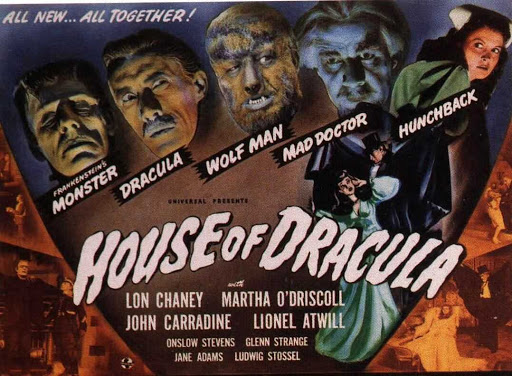
A sequel to House of Frankenstein, this would be the seventh film to feature Frankenstein’s Monster (Glenn Strange*) and the fourth for both Count Dracula (John Carradine) and the Wolf Man (Lon Chaney, Jr.). Although it was a success, it would be the last of the serious Universal Monster films, with the comedic Abbott and Costello Meet Frankenstein coming out in 1948.

Director Erle C. Kenton made 131 movies between 1916 and 1957, including several horror movies for Universal like The Cat Creeps and The Ghost of Frankenstein. He started as an actor with Mack Sennett’s Keystone Kops and finished his career on TV, directing shows like The Texan and Telephone Time.

Baron Latos — come on, everyone knows that you’re Dracula — ha come to Visaria to discover a cure for vampirism from Dr. Franz Edelmann (Onslow Stevens, Them!) and his assistants Milizia (Martha O’Driscoll, Ghost Catchers) and Nina (Jane Adams, who was given her first name by American servicemen and played Vicki Vale in the second Batman and Robin movie serial). Of note is that Nina is a hunchback, which is certainly a gender switch way ahead of its time.

Edelmann has been working on the clavaria formosa plant, which has the ability to reshape bone. How this is possible is the kind of horror movie science that requires you to just accept it and move on.

Soon, Larry Talbot also shows up and he wants the cure for his lycanthropy. What, did Edelmann put out an ad in a trade magazine for monsters? They don’t believe him, so he begs Inspector Holtz (Lionel Atwill, who memorable was quoted in Hollywood Babylon as saying, “All women love the men they fear. All women kiss the hand that rules them… I do not treat women in such soft fashion. Women are cat creatures. Their preference is for a soft fireside cushion, for delicate bowls of cream, for perfumed leisure and for a master – which is where and how they belong.”) to lock him up. He transforms and then the doctor theorizes that pressure on the brain is why he turns furry, not the moon. He responds by flinging himself into the ocean, where he survives and washes up inside the castle, where an unresponsive Frankenstein’s Monster still holds the skeleton of Dr. Niemann from House of Frankenstein.

If you’re thinking — I bet Dracula tries to sleep with that comely blonde assistant, because after all Martha O’Driscoll played Daisy Mae in the original Li’l Abner, you’d be right. The quick-thinking Edelmann drags his coffin into the sun and sets him ablaze, but before long, a blood transfusion gone wrong leads to Dracula’s blood making him evil.

By the end, the good doctor is breaking necks, villagers descend on the castle and Talbot ends up being the one to save the day, wiping out every single other monster. This would be Chaney’s last Universal contract film, although they’d bring him back for the aforementioned Abbott and Costello movie.

Throughout the production, his drinking was out of hand. For example, Glenn Strange was stuck in the cumbersome Frankenstein’s Monster makeup and also had to spend the day in quicksand. He could barely feel his feet, so Chaney helped the only way he knew how. He got the actor smashed thanks to a bottle of scotch.

Speaking of sad stories, Atwill died a few months after this movie from lung cancer. The last few years of his life were a mess. He had married socialite Louise Cromwell Brooks, the ex-wife of General Patton, but after their 1939 separation, he went a little wild. So wild that a 1940 Christmas party, where at the least stag loops were shown and at the worst underage girls were assaulted, ended up getting him in front of a grand jury on morals charges. Sure, he was judged guilty of felony perjury and sentenced to five years probation. But thanks to the Hays Office — who also took the fangs )pun intended) out of the original version of this script — his career went from Universal to movie serials and lower than B movies. He died while making one of those serials, Lost City of the Jungle.

This movie was a big part of monster kid’s lives, as it was part of the Son of Shock package that was sold to TV stations in 1958. The other movies are Before I HangBehind the MaskThe Black RoomThe Boogie Man Will Get YouThe Face Behind the MaskIsland of Doomed MenThe Man They Could Not HangThe Man Who Lived TwiceThe Man With Nine LivesNight of TerrorThe Devil CommandsBlack FridayThe Bride of FrankensteinCaptive Wild WomenThe Ghost of FrankensteinHouse of FrankensteinThe Invisible Man’s RevengeJungle CaptiveThe Mummy’s Curse and The Soul of a Monster.

*Actually, four different actors played Frankenstein Monster: Strange, Boris Karloff in footage from Bride of Frankenstein (1935) and Lon Chaney Jr. and his stunt double Eddie Parker from The Ghost of Frankenstein.
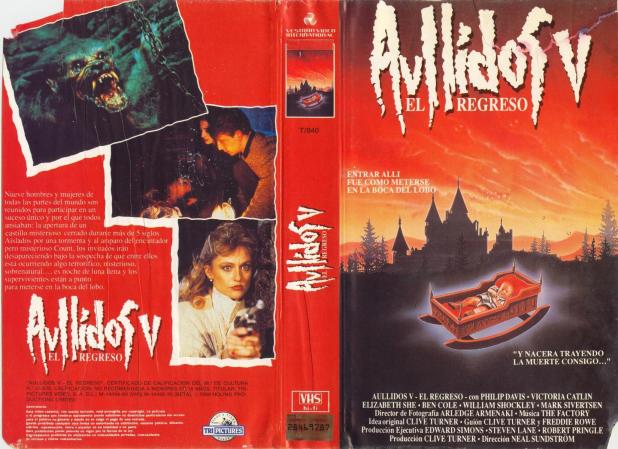
Howling V: The Rebirth (1989)

Neal Sundstrom — yes, the director of Space Mutiny — made this, the fifth of many werewolf movies that are not always connected. This time, the movie plays out like a furry Ten Little Indians.

We start in Budapest, where the owners of a castle are killed sometime in 1489 by a murderous couple who then kill themselves. Yet before they pass away, they notice that a baby survived.

500 years later, a whole bunch of somehow connected people comes to the same castle, invited by a count. They soon learn that Satan himself once controlled the wolves that would lay waste to the people of this country.

Thus begins a game of “who is the werewolf” with no werewolf break to help us along the way. And yes, in case you wondered, this has nothing to do with the Gary Brandner source material.

Cedric Sundstrom was originally to direct this (he did the third and fourth American Ninja movies), but he was already working on another movie. He recommended his brother, hoping that he would have a better time here than on the aforementioned Space Mutiny, which he took over halfway through filming. Instead, he found himself at war with writer Clive Turner (who was behind the fourth, fifth and Howling: New Moon Rising films in this long and, well I guess storied history of this franchise) and the film’s cinematographer leaving on the first day as since he couldn’t speak English, he couldn’t work with the director.

You can watch this on Tubi.

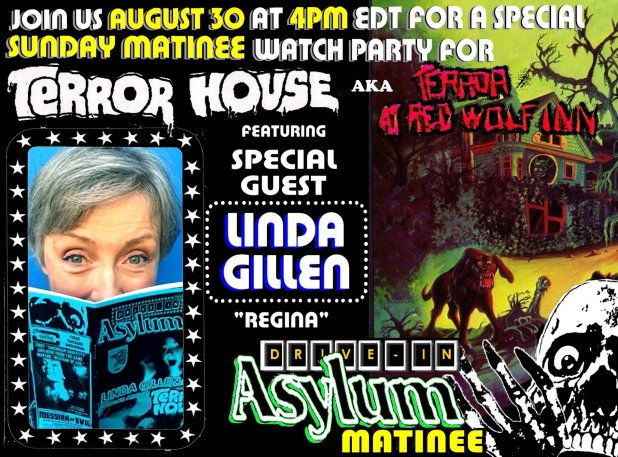
Drive-In Asylum Matinee this Sunday!

Announcing a special Drive-In Asylum online event this Sunday, August 30 on the Groovy Doom Facebook page!

We’re having a matinee watch party at 4pm of the 1972 cannibalism family jam Terror House, featuring our special guest for the show Linda Gillen! Linda stars in the film as our final girl Regina, and she’ll be live on cam with us both before and after the movie. So come hang out in the chat, ask Linda some questions, and enjoy this unique precursor to a flick that came a few years later about a certain powertool massacre in Texas!

As a reminder, you can either choose to watch the film with your own copy or find it on YouTube. Here’s a link!

Here’s a drink recipe that we’ll be making on the show!

Regina on the Beach (modified from this recipe)

  • 1/2 oz. vodka
  • 1/2 oz. coconut rum
  • 1/2 oz. peach schnapps
  • 1 1/2 oz. pineapple juice
  • Dash of grenadine
  • 1/2 oz. heavy cream (or half and half, if you’re healthier)
  1. Pour everything into a shaker with ice.
  2. Shake it up like you’re beating a shark into oblivion.
  3. Pour into a glass and enjoy.

We can’t wait to see you — and Linda — this Sunday!

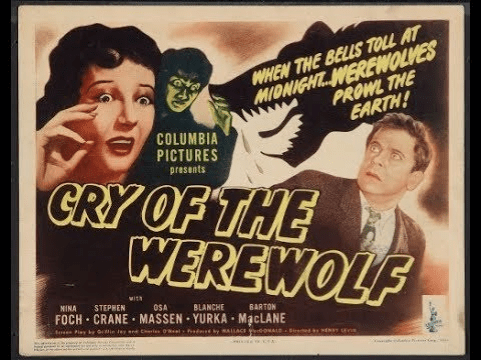
Cry of the Werewolf (1944)

ABOUT THE AUTHOR: Mark Rochester is a librarian. Mad about movies and books and film soundtracks. His favorite film is The Private Life of Sherlock Holmes. He recently reviewed Death Played the Flute for us.

Made by Columbia Pictures on a low, wartime budget, Cry of the Werewolf (1944), also known as Daughter of the Werewolf, is a notch or two down in quality and entertainment from the fabulous Universal horror films of the 30’s and 40’s. For one thing,  there is the cast – there are no A-listers or even B-listers here. Top billed, as the Gypsy Princess and werewolf, is Nina Foch, the Dutch-born actress who went on to have a distinguished career in Hollywood, starring in An American in Paris (1951) and getting an Oscar nomination for Executive Suite (1954).  But Cry of the Werewolf was only her second movie and her unpolished performance here is both unconvincing and uneven.  Extremely stiff in his debut movie (the first of, thankfully, just three movies he made) is Stephen Crane, as Professor Morris, son of the eminent Dr Morris who is killed at the start of the movie by the werewolf Princess after he discovers her secret.  Equally as poor as Crane is Danish actress Osa Massen as the ‘love interest’ – however, with her ‘foreign’ accent and long curly locks, her Simone Simon look ties in nicely with the other obvious influences of Cat People (1942) on this movie, most notably in its use of shadows.  Sturdier performances come further down the pecking order, in particular from Barton MacLane, who as the bullish police chief, provides some of the movie’s better moments with his (often comical) investigation of the series of weremurders.

Unfortunately, as a murder mystery, or whodunit, this film flunks badly.  Right from the first ten minutes we know who the werewolf is….the film gives it all away. The film is also very low on atmosphere and excitement. One of the few really good moments comes midway through the film when the Professor is stalked by the werewolf in the records room of a mortuary – effective use of lighting and stock music creating a memorable, shadowy scene only matched by the last five minutes of the film when the police and then the Professor are attacked by the werewolf.

Fans of horror movies will probably be most disappointed by the ‘transformation’ sequences of this movie.  Werewolf films are, in some ways, measured by the scenes in which the human turns into a wolf or back again, and the wonderful make-up that transforms an actor into a werewolf. Jack Pierce famously did the brilliant wolfman makeup in The Wolf Man (1941) and the underrated Werewolf of London (1935) – and it is a shame that someone with his talent could not have worked on Cry of the Werewolf,  because the result would have been totally different.  Instead, probably for budgetary reasons, as a substitute for a transformation, we just get to see Foch’s shadow replaced by that of a wolf shadow, and, instead of seeing a hairy, snarling half-woman half-wolf, we get, as our werewolf, an actual wolf that looks suspiciously like an Alsatian dog.

Although it is hard not to be disappointed with Cry of the Werewolf,  if you are a fan of old horror movies and go into it not expecting too much you will probably not be too miffed – and it is only an hour long.

Points of interest  – 1. During the opening credits we see a wolf snarling and chewing at something – maybe a bone?  No. If you look closer, you can see an elastic band around its jaws, put there to make it look fiercer.   2. Actor Stephen Crane infamously married actress Lana Turner twice – in 1942, and then again in 1943 after the first marriage had to be annulled due to Crane’s bigamy.  3.  Although female werewolves are fairly commonplace in movies nowadays, Foch was one of the first female werewolves on screen, with the honour of the first going to Phyllis Gordon in first-ever werewolf movie, The Werewolf (1913).

You can watch this on YouTube.

Rounded Corners (2019)

Sarah has no mother and unlike other kids her age is only focused on school, college, her future career and the financial markets. Her babysitter Nellie is carefree and happy to be alive, just excited to see where life takes her. Sarah’s Wall Street father pays her to join her for the summer and life changes for both of them.

Paul Check wrote, produced, directed and stars — as Sarah’s father — in this film. He worked on Wall Street in Mortgage-Backed Securities as a quantitative modeler, strategist, analyst, risk manager and portfolio manager, so all of the financials in this movie are probably really well-researched. And he made this a family affair by having his daughter Marie play the lead role, Sarah. She has great chemistry with Tinuke Adetunji, who plays Nellie, possibly because she really was babysat by her when she was younger.

Rounded Corners has been playing at select theaters. If you want to know more, check out the official site and official Facebook page.

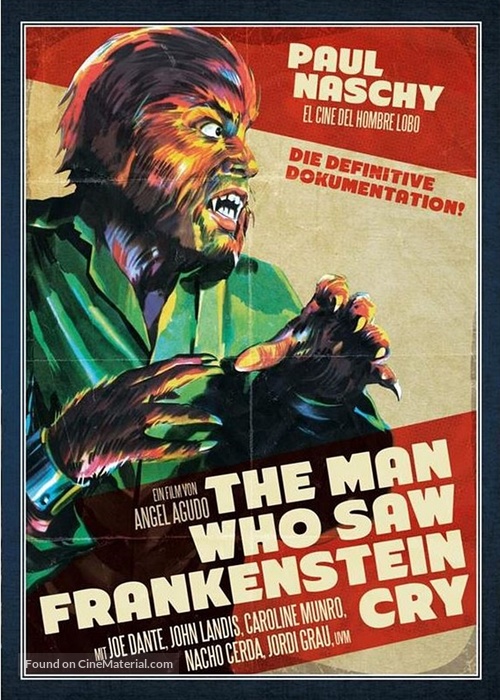
The Man Who Saw Frankenstein Cry (2010)

Did you know that we like Paul Naschy movies here? Oh, you’ve seen us post one of his movies ever few weeks? You know who else likes him and talks about him in this documentary? Just people like John Landis, Joe Dante, Antonio Mayans, Caroline Munro, Javier Aguirre, Jack Taylor, Jorge Crau and Donald. F. Glut.

Beyond hearing how Jacinto Molina Alvarez became Naschy, you also learn how his films fit into the troubled history of 20th century Spain and how his hard work led him to living out his monster movie dreams.

From stories about encounters with the Yakuza while making The Beast and the Magic Sword to what happened to the never released Howl of the Devil and every bit of werewolf-fur covered piece of history in between, this movie is a feast for Naschy fans or anyone wanting to learn more about Spanish horrror.

You can watch this on YouTube.

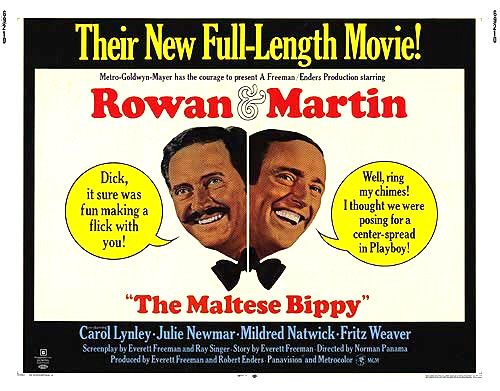
The Maltese Bippy (1969)

As a kid, I was thrilled when Laugh-In came back to TV. I’d read about it—I was already a devotee of pop culture—and was excited to see this stream-of-consciousness show for myself. Yes, it was before the internet when we couldn’t just dial up everything we wanted to see instantly.

It may seem dated today — it has to; it was nearly sixty years ago — but at the center of this mad show were two men: Dan Rowan and Dick Martin. They were the everymen who couldn’t keep the wild energy of the show from bursting through the screen. But they were also fascinating people in their own right, who knew that the show was the star.

Dan Rowan spent his childhood years following his parents from town to town as they performed their carnival dancing act. He was orphaned at 11 and spent four years in an orphanage. By the time he was 18, he hitchhiked to Los Angeles, where he got a job in the Paramount mailroom. Soon, he was the youngest writer on the lot.

During World War II, Rowan was a fighter pilot, winning the Distinguished Flying Cross with Oak Leaf Cluster, the Air Medal and the Purple Heart. He returned from action and formed his comedy duo with Martin. He was married three times—to Miss America 1945 runner-up Phyllis J. Mathis, Australian model Adriana Van Ballegooyen and TV spokeswoman Joanna Young—and retired in the early 1980s. He only returned to help celebrate NBC’s 60th anniversary in 1988 by appearing with his comedy partner.

Dick Martin didn’t serve in the war — tuberculosis kept him from combat — but was a young writer as well, working on the radio show Duffy’s Tavern. He started teaming with Martin in 1952, playing nightclubs, hosting NBC’s Colgate Comedy Hour and appearing in the movie Once Upon a Horse Together. He also played Lucille Ball’s neighbor on The Lucy Show before Laugh-In became a big hit. After his partner retired, Martin was a frequent game show guest and TV show director. He was married to singer Peggy Connelly and Beyond the Valley of the Dolls star Dolly Read twice.

Anyways…The Maltese Bippy.

Sam Smith and Ernest Grey (Rowan and Martin) are the producers of nudie cuties — their latest film is Lunar Lust — and they’re forced out of their office for not paying the rent. Somehow, a G-rated movie in 1969 could concern pornography, and no one cared.

They move into Ernest’s house by the cemetery in Long Island, a place where a mutilated corpse has already been found and a woman is frightened by a howling man. Oh yeah, Ernest is also given to barking like a dog.

Somehow, despite not being successful, Ernest can have a housekeeper (Mildred Natwick, Do Not Fold, Spindle, or Mutilate). He also has two roommates, the bubbly Robin Sherwood (Carol Lynley, The Poseidon Adventure) and Axel (Leon Askin, Hogan’s Heroes), a Swedish violinist.

Meanwhile, the Ravenswoods next door — Mischa (Fritz Weaver, Creepshow), Carlotta (Julie Newmar!) and Helga (Eddra Gale, Fellini’s 8 1/2) — are vampires who want Ernest to join their pack. Sam thinks they should be a variety act, but the truth is that nearly everyone just wants to search for a giant diamond inside the house. (and more to the point, inside the corpse of the home’s original owner).

Hijinks ensue, and everyone but our heroes perish. But that’s not good enough, so they both present their happy endings to the audience and walk into the sunset together.

Look for a pre-Brady Bunch Robert Reed, David Hurst (the head waiter in Hello, Dolly), character actor Dana Eclar, voiceover actor Alan Oppenheimer, Arthur Batanides  (he was Mr. Kirkland in Police Academy 234 and 6), Jennifer Bishop (who was in the William Grefe movies Mako: The Jaws of Death and Impulse, as well as Al Adamson’s Horror of the Blood MonstersJessi’s Girls and The Female Bunch) and Garry Walberg, who played Jack Klugman’s poker buddy Homer “Speed” Deegan on The Odd Couple and his boss Lt. Frank Monahan on Quincy, M.E.

Director Norman Panama wrote White Christmas and 1959’s Li’l Abner. He also directed the Hope and Crosby — with Joan Collins! — film The Road to Hong Kong.

This isn’t a great movie—or even alright—but the TV lover in me appreciated it and found joy in discovering this buried moment in time.

Moon of the Wolf (1972)

Daniel Petrie made some pretty much films — Fort Apache the BronxA Raisin in the Sun and The Betsy — as well as some memorable made-for-TV movies like Sybil (which ruled mid-70’s bookshelves and viewings) and The Dollmaker.

Here, he’s in Louisiana along with a stellar cast making a movie that honestly could have played drive-ins. That’s how great these made-for-TV films were.

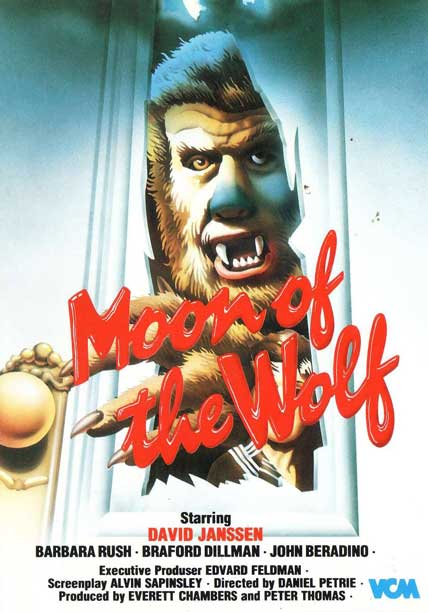
In the Lousiana bayou country of Marsh Island, two farmers (Royal Dano! and John Davis Chandler) find the ripped apart remains of a local woman. Sheriff Aaron Whitaker (David Janssen!) and the victim’s brother Lawrence Burrifors (Geoffrey Lewis!) both show up at the scene, but it’s soon determined that somehow, some way, the girl died from a blow to the head. Lawrence blames her most recent lover. The sheriff things it was wid dogs. And the Burrifors patriarch claims that it was someone named Loug Garog.

That mysterious lover could have been rich boy Andrew Rodanthe (Bradford Dillman!), who along with his sister Louise (Barbara Rush, It Came from Outer Space) lives in an old mansion, the last of a long line.

Based on Les Whitten’s novel, this originally aired as an ABC Movie of the Week on September 26, 1972, then reran as part of ABC’s Wide World of Mystery on May 20, 1974.

You can watch this on Amazon Prime and Tubi.

Howling IV: The Original Nightmare (1988)

John Hough has some great movies on his directoral history, including Twins of Evil, The Legend of Hell House, The Watcher in the Woods, The Incubus, American GothicEscape to Witch MountainReturn to Witch Mountain and Biggles. Thats a great run. He also made this movie, which attempts to bring The Howling series back to something closer to the first film.

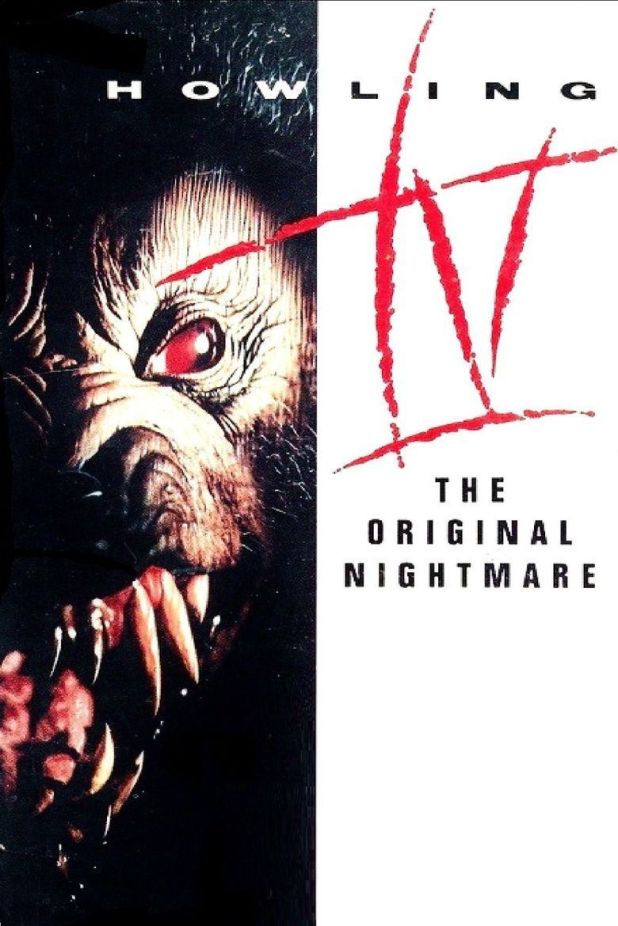
Author Marie Adams keeps having visions of nuns and werewolves attacking her from a fire. It seems like the same imagination that helps her write books is also helping her go crazy. Her husband takes her to a small village of Drago, where a small cottage will be the place that she plans on resting and relaxing away all the terror that she is going through. That would work if she didn’t keep hearing howling in the woods.

Much like the first film, her man can’t stay faithful. The small town is also rife with werewolves, ghosts and visions of the nun. The whole thing ends in a burning church and yes, that same werewolf leaping through the fire.

Well, if anything, this is the only werewolf movie I’ve seen that has a theme song by the lead singer of the Moody Blues. So there’s that.

That said, this is a more faithful version of the book than The Howling. Yet it’s not as good of a movie. Writer and co-producer of the film Clive Turner was originally going o direct, but when the financiers pulled out he had to get Hough on board.

That’s one story. The other is the one that Hough told Fangoria. The script was written by someone named Freddie Rowe and he would also receive notes and messages from him as well as additional pages of the script while making the movie. However, when the director asked for Rowe’s contact information, he was never given it, leading him to suspect Rowe of actually being Clive Turner, who really wanted to be the director of the movie. Seeing as how Rowe only wrote one other movie — Howling V: The Rebirth, which Turner also wrote — that may or may not be true.

Making that story sound even more true is the fact that Turner recut and re-edited the film, adding scenes like the one where the evil werewolf queen Eleanor went bobbing for hot dogs with Marie’s husband.

You can watch this for yourself on Tubi and try and make better sense of it than I did.