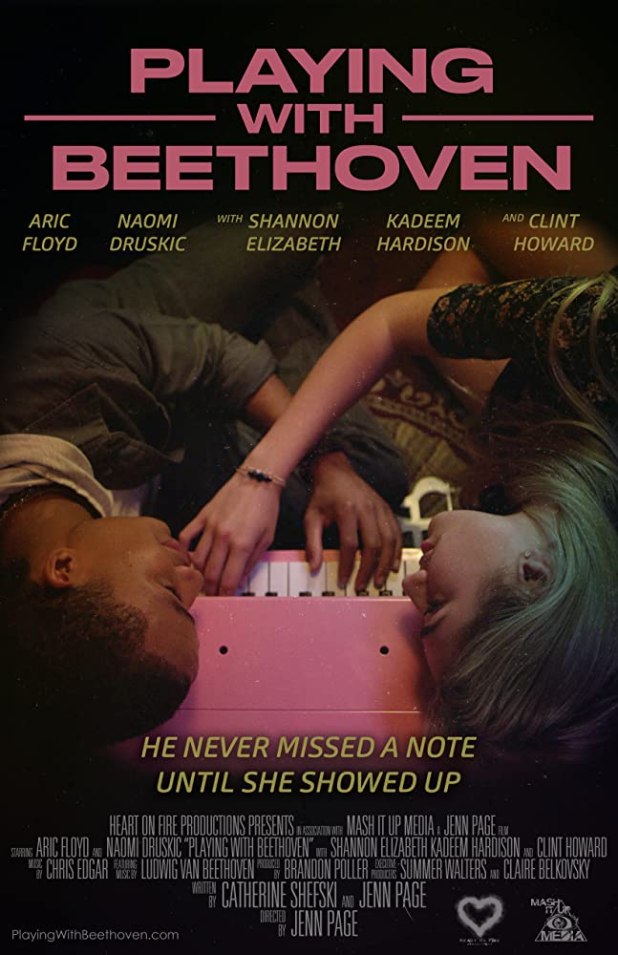
Josh (Aric Floyd) is focused on one thing: winning a piano competition. He wants nothing to do with the father who keeps trying to get back into his life (he’s played by Kadeem Hardison from A Different World) or anyone else until Charlotte (Naomi Druskic in her first role) comes into his life. She’s a jazz pianist who keeps trying to distracts him to improve her chances of winning the contest.
However, the more time they spend together, the closer they become. Could the real winning be finding one another?
I was pretty surprised by the big names in this cast. Besides Hardison, Shannon Elizabeth (American Pie), Lyn Alicia Henderson (ER) and Clint Howard (do I even have to list roles for him?) are in this. Director Jenn Page comes from music videos and does a good job with this film.
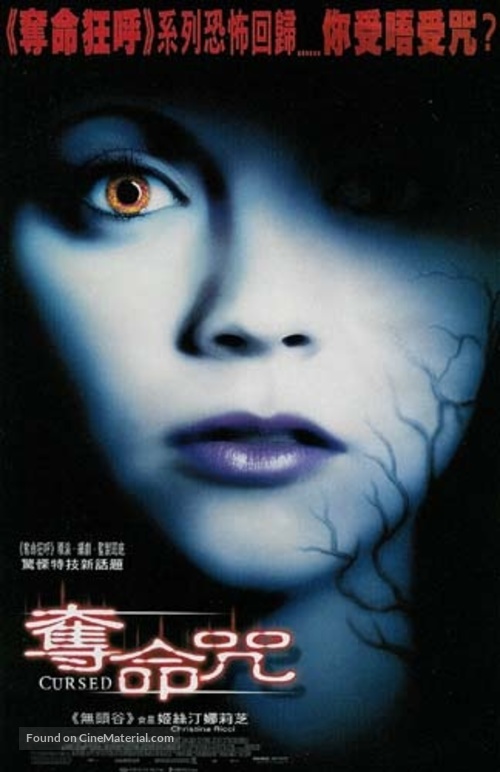
Consider this movie a precursor to next week’s deep dive into the horror films of the 2000’s. It’s an example of the creative voices of that era — Wes Craven and Kevin Williamson — whose Screamwould lead to a renaissance of horror on screens — and Bob and Harvey Weinstein, whose heavy-handed production often led to films turning into hellish battles.
For example, there’s an entirely different cut of this movie, with two different versions of the werewolves by Rick Baker and KNB replaced with CGI and entire characters — Omar Epps, Skeet Ulrich, Mandy Moore, Heather Langenkamp, Illeana Douglas, Scott Foley, Robert Forster and Corey Feldman are all pretty much exorcised in the cut that ended up being released — being excluded.
The Weinsteins — beyond the numerous scandals — ruined plenty of genre films despite Dimension Films being a studio known for their release. Craven also had a career marked with movies that were taken over by studios and chopped up against his will.
Cursed would be the perfect storm of these two groups working together.
Star Jesse Eisenberg would tell Bloody Disgusting that there were so many reshoots — Judy Greer has said that it felt like they shot the movies for seven years — that they could have made four movies in the time and energy that it took to make this movie. These reshoots took the film from an R-rated film to a more PG-13 friendly version, but along the way, the film’s narrative cohesion was destroyed.
So what’s it all about? It all begins with Mya and Shannon Elizabeth’s characters getting a dark fortune from a gypsy, which comes true moments later. After a car crash with Eisenberg and Christina Ricci’s characters, a wolf comes out of nowhere and devours Elizabeth. As for Mya, she’s soon killed after flirting with Ricci’s boyfriend at a party.
The big reveal of all of this is that said boyfriend — Jake, played by Joshua Jackson — has passed on the curse of the werewolf through sexual contact, turning all of his one-night stands into monsters. The film also claims that the transfer of blood can make one a werewolf as well, which explains how the dog Zipper can become a beast.
I feel like every time I talk about a Wes Craven movie post-Freddy I have to include the phrases studio interference, reshoots, directorial cut and lost footage. You’d think after his successes — The Last House on the Left, The Hills Have Eyes, A Nightmare on Elm Street, Scream — he’d be allowed to do whatever he wanted. Instead, we have movies like Deadly Friend and this one, where scripts were tossed out and studio interference led to movies that tarnished his name above the film.
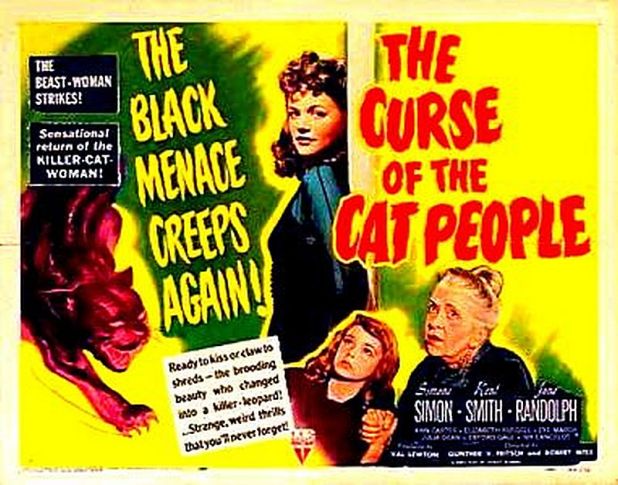
After the success of Cat People, RKO demanded that Val Lewton get started on a sequel. The original director was Gunther von Fritsch, but when he fell behind schedule, Robert Wise took over.
It was the first film for both men. Fritsch would eventually make Body and Soul and Stolen Identity while Wise would win Best Director and Best Picture for both West Side Story and The Sound of Music. Of interest to genre fans would be his films The Body Snatcher, A Game of Death, Star Trek: The Motion Picture, The Andromeda Strain and, of course, The Haunting.
Sharing sets with The Magnificent Ambersons — just as the original Cat People did — this film may be a sequel and have the same cast and characters, but it is a much different movie. Lewton wanted to call it Amy and Her Friend, but the studio wanted to make money.
Lewton invested so much of his time and himself into this movie, basing it on his childhood and own mindset. RKO, on the other hand, was upset that it wasn’t the same movie that Lewton had already made.
Sometime in the past, Irena (Simone Simon) died — see Cat People — and Oliver Reed (Kent Smith, The Cat Creature) moved on to marry Alice Moore (Jane Randolph, Abbott and Costello Meet Frankenstein). Now, he has a six-year-old daughter named Amy (Ann Carter, The Boy with Green Hair) who lives in a dream world. At the center of it is Irena — now a ghost who she only knows from a photograph.
Amy also becomes friends with an aging actress named Julia Farren (Julia Dean, Nightmare Alley) whose daughter Barbara (Elizabeth Russell, who was also implied to be a cat person in the original film) hates her. Barbara also begins to hate the attention that Amy receives from her mother.
The end of this film — with Barabara about to kill the young girl and Irena’s spirit returning to save her — is sheer artistry on celluloid. It astounded me and I still can’t shake the feeling I had as I watched this film.
The theme of this film — everyone believes that Amy is insane because she cannot leave the world of fantasy — was pretty much how Lewton lived as a child. In fact, his wife believed that he never truly came back to the real world as an adult. He also based the tension between Amy and her father on the relationship that he had with his daughter Nina.
You could see this as a holiday movie. You could also see it as a story of what child abuse does. Several therapists used this movie as a teaching tool for years, even asking Lewton why he had such a silly name for such a serious movie.
Shout! Factory has a blu ray of this that I urge you to purchase. This is pure cinema and has my highest recommendation.
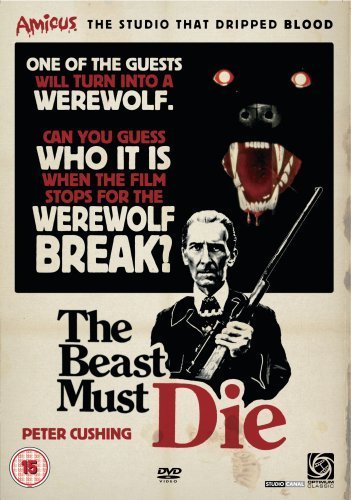
Paul Annett mostly directed TV and this is the lone theatrical movie that he directed. It’s one of the few non-anthology releases of Amicus. It’s notable for including a werewolf break, a feature of the film that Annett disliked, saying, “What can I say about it? I hated it. It stopped the film stone dead and I thought it was completely artificial and unnecessary.”
Yes. You have to guess who the werewolf is.
Millionaire Tom Newcliffe (Calvin Lockhart, Hell Up In Harlem) has invited a group of people to his English mansion: his wife Caroline (Marlene Clark, Night of the Cobra Woman, Ganja and Hess), diplomat Arthur Bennington (Charles Gray!), married couple Jan and Davina Gilmore (Michael Gambon and Ciaran Madden), ex-con artist Paul Foote (Tom Chadbon) and archaeologist and a lycanthropy enthusiast Professor Lundgren (Peter Cushing!). Why are they here? One of them is a werewolf. And whoever the beast is…The Beast Must Die.
So who is the werewolf? Why would I go and ruin the werewolf break after Milton Subotsky spent so much time putting it together?
Robert Quarry was originally slated to play the lead, but at the last minute, Amicus went with Lockhart to hope that this movie could take advantage of the success of blaxploitation movies. Somewhere, Vincent Price giggled.
Sadly, this would be the last official Amicus film, even though Madhouse, The Land That Time Forgot, At the Earth’s Core and The People That Time Forgot are considered Amicus movies.
You can watch this on Amazon Prime and Tubi or buy the new re-release from Severin, which has the best quality version of the movie ever released.
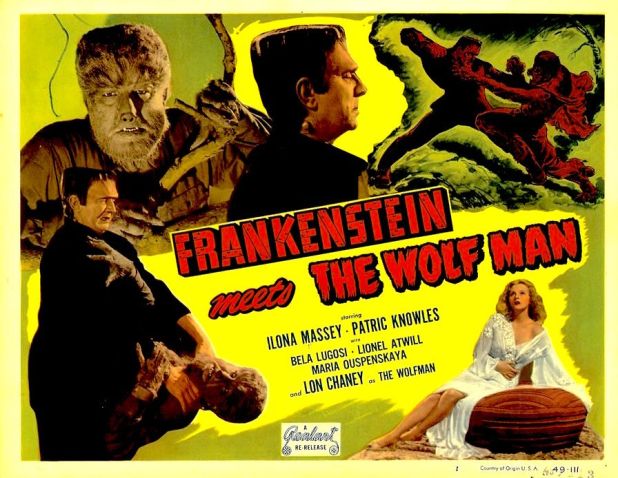
Curt Siodmak (I Walked with a Zombie, Son of Dracula) made a joke to producer George Waggner that he needed a downpayment for a car and that they should make Frankenstein Wolfs the Meat Man. It was lunch. He was joking. Waggner called him to his office and said, “Go ahead, buy the car.” That’s how this movie, the sequel to The Wolf Man and The Ghost of Frankenstein got made.
Bela Lugosi plays Frankenstein’s Monster here, eight years after he turned down the role that made Boris Karloff famous. This follows up the Monster getting the brain of Ygor and speaking in his voice at the end of Ghost. In the original version of this film, the Monster would speak for the entire film — in a Hungarian accent — and audiences could not accept it. Also, the fact that the Monster was blind as a side effect of the transplant was negated and many of these scenes were cut.
Grave robbers break into the coffin of Larry Talbot (Lon Chaney Jr.) and remove the wolfsbane on his body, which turns him back into the werewolf that his father’s bullets put to sleep. He makes his way to Vasaria, the home of Dr. Frankenstein, who he hopes can cure him once and for all.
There’s also the plot of Dr. Mannering, Lionel Atwill’s Mayor and Baroness Elsa Frankenstein trying to destroy the Monster. As a kid, I booed these horrible humans and their attempts to make this movie boring by stopping these awesome creatures from causing chaos.
Lugosi turned sixty while making this movie and suffered from exhaustion, so he was often doubled for any of the strenuous parts of the film. This is also the last Universal Monster movie for Dwight Frye, who died the very same year.
Here’s something nice, at least. The German shepherd that played Bruno is dog Bruno, who he adopted after he played the wolf that attacked him in The Wolf Man.
This film was part of the Shock Theater package that started off the monster kid era. These 52 films are pretty much the foundations of pre-1948 horror. Trust me, I watched them all so many times that I can recite them when asked.
In today’s Marvel movie world, we just accept movies crossing over and universe building. These movies just made it happen. They’re so ingrained in our DNA that crossover movies — King Kong vs. Godzilla and Alien vs. Predator — pay tribute by using the music and scenes from this film.
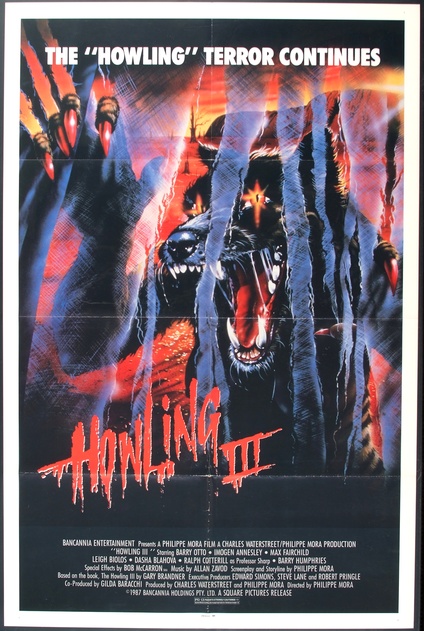
This is the last Howling movie to play in U.S. theaters. Gary Brandner, author of the Howling novels, approved director Philippe Mora’s purchase of the rights to his novels. The credits even claim that this is based on his book The Howling III: Echoes. But in truth, it has a different setting and really only has werewolves as sympathetic characters.
Professor Harry Beckmeyer is an Australian anthropologist who has found footage of aborigines sacrificing a wolf creature in 1905. After hearing that a werewolf has killed a man in Siberia, he tries — and fails — to warn the President of the U.S. about the potential of lycan assaults.
Meanwhile, an abused girl who just might so happen to be a werewolf is running away from home. Her name is Jerboa and after meeting a young American named Donny Martin, she gets a role in the horror film, Shape Shifters Part 8. She gets into horror movies and after watching a werewolf film with Donny, she reveals that transformations don’t happen that way. He asks her how she knows, she goes full furry beast and he responds as we all would, by engaging her in some interspecies aardvarking.
As the movie wraps, strobe lights cause Jerboa to transform. She runs into the night and is hit by a car. When the doctors try to save her, they notice that she is with child and has a marsupial-like pouch on her belly. Holy cow, this movie! I can’t believe that I watched that, much less typed it out for you to read.
There’s also a Russian ballerina that happens to be a werewolf, because I guess if you bark at the moon you have really wonderful artistic abilities as a bonus secondary mutation.
Suffice to say that you should stick with this movie, if only to see Dame Edna out of drag as Barry Humphries and a pack of werewolves go wild at the cheapest looking Academy Awards outside of The Lonely Lady.
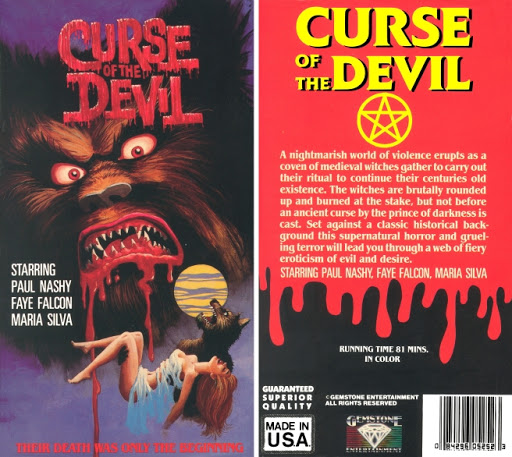
For the seventh appearance of Count Waldemar Daninsky, Paul Naschy threw out everything that came before and decided on a new origin for El Hombre Lobo. Now, his bloodline was cursed by Countess Bathory, a servant of Satan who one of Daninsky’s ancestors had burned at the stake.
Well, there’s that, and then there’s Daninsky killing a wolf on his grounds that transforms into a man. He’s cursed again by a gypsy witch who sends a young girl to seduce him and then bite him with the skull of a wolf while he’s sleeping.
I kind of love the alternate title for this, The Black Harvest of Countess Dracula, which really has nothing to do with this story at all. But the real joy of this is one of its taglines: “Damn the Exorcist! The Devil won’t let go!”
Insane murderers on the loose, Satanism, beheadings, gore, bad dubbing, Daninsky as a rich nobleman and witchfinder, more gore and, yes, the flesh that you expect when you watch a Naschy movie.
There’s nothing like a movie starting with the beheading of a Satanic knight and ending with Bathory being reborn from her grave to engage a werewolf in combat. Pure magic.
The Lewton Bus is also known as the Cat Scare. You may also know it as the Jump Scare. It’s that moment in so many horror movies where tension is raised and built and then, when it seems like the heroine is about to be attacked, a cat will hiss or the brakes of a bus will loudly intrude into your senses. It’s the sound and fury of tension being released. It is pretty much everything horror has that takes the anxiety of the outside world and releases it.
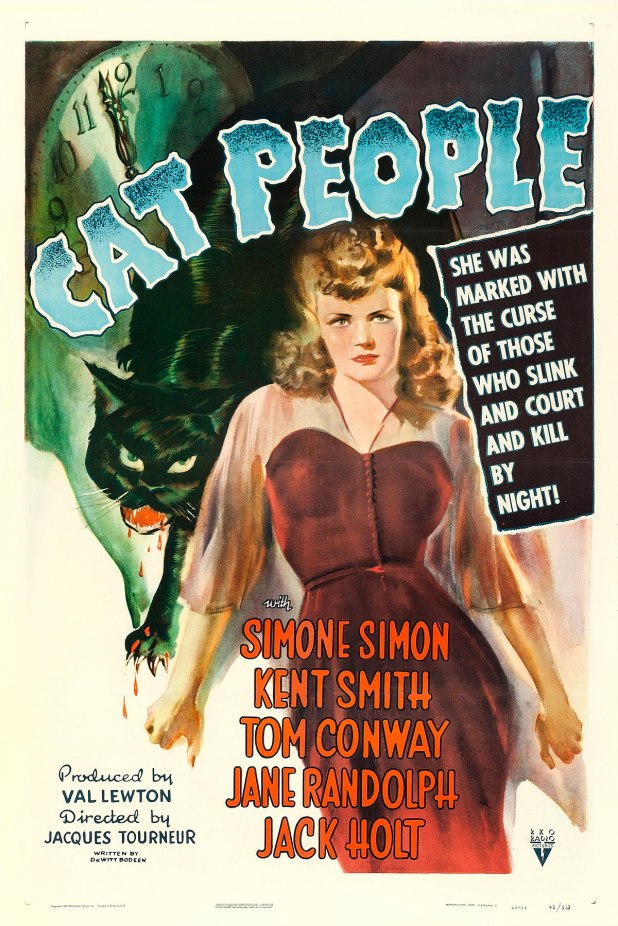
Speaking of tension, Cat People is a movie packed with it. For 1942, it’s an incredibly prurient film. Serbian-born fashion illustrator Irena Dubrovna (Simone Simon) is so convinced that she’s descended from werecats that she holds back the passion that her husband and marriage demands, pushing him into the arms of another woman.
It’s the first movie that producer Val Lewton — just leaving his deal with producer David Selznick — would make for RKO pictures. While these movies were modestly budgeted, Lewton was able to assemble a team to make the films that he wanted to make. With director Jacques Tourneur, writer DeWitt Bodeen, screenwriter DeWitt Bodeen and editor Mark Robson — the creator of the aforementioned Lewis Bus — he would go on to make deeply personal tales hidden in the guise of the B picture.
The studio had come up with the title and told Lewton to make a movie of it. He told Bodeen that he was unhappy with the title already and “”if you want to get out now, I won’t hold it against you.” But the writer dug into the history of cats within horror and worked to make a movie less about vampires and monsters, more about psychological terror and the unseen. Yet Lewton also told his team, “if you’re going to have horror, the audience must be able to identify with the characters in order to be frightened.”
Irena is first glimpsed sketching the panthers in a New York City zoo. There, she meets and falls for Oliver Reed (Kent Smith). Over tea, she explains to him how she is descended from a village that turned to witchcraft and devil-worship after being enslaved by the Mameluks. While King John would drive the Mameluks out, when he learned that villagers had gone wild, he had them killed. Yet only the wisest and most evil of them escaped. Oliver laughs it off, but Irena believes this legend.
Despite the fact that cats hiss in her presence and just her touch kills a bird, Oliver marries Irena. But soon, the fact that she will not consummate their marriage — that passion would awaken the beast within — he’s pushed into the arms of Alice Moore (Jane Randolph). This is where the Lewton jump scares come from in the film, as Irena continues to stalk Alice through the streets and, even more famously, the claustrophobic pool of the Royal Palms Hotel.
Despite costing $135,000, Cat People made $1 million back in rentals, leading to RKO asking for a sequel. We’ll get to The Curse of the Cat People later this week, a side story in a way that is superior to this film. The Seventh Victim would also bring back Tom Conway’s Dr. Judd character — despite him being seemingly killed in this movie — as he tries to help another woman who seeks the embrace of death.
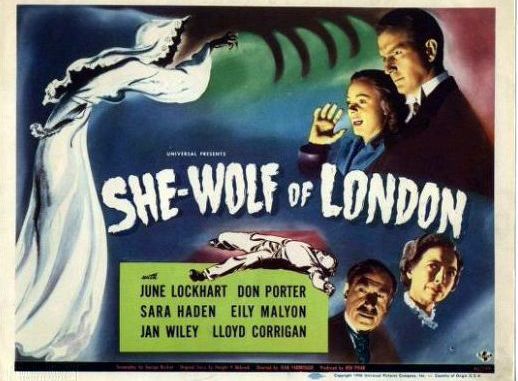
The shadowy tone of this film and the idea of a woman who is filled with animalistic passion — and the ability to become an animal — became a trope of its own in other films released in the wake of this movie. They include Cry of the Werewolf, Jungle Woman, The Soul of a Monster, Cult of the Cobra, The She-Creature, She-Wolf of London and more.
Cat People’s influenced every horror movie that would come after. Perhaps the most obvious devotee was Curtis Harrington, whose Night Tide takes the idea of a woman convinced she is from another world to the boardwalk carnival, and his TV movie The Cat Creature, a tribute that even features Kent Smith in its cast.
You can get this movie from the Criterion collection.
As a kid, I’d see a title like She-Wolf of London and prepare myself for lupine madness, only to be angered by the fact that there is not a single werewolf in this movie. Imagine how angry I am as an adult when I watch films like The Wolf of Wall Street!
Years before Lassie and Lost In Space, June Lockhart would play the title character. There’s been a series of murders at a local park and her relatives inform her that because the blood of a werewolf runs in the family and that she is responsible for the deaths. Not Maureen Robinson!
As our heroine begins to worry that she is the next to suffer the Curse of the Allenbys, her aunt both tries to help and worry her at the same time. I smell gaslighting! Can you smell gaslighting? Because I totally can.
Sara Haden, who plays Aunt Martha Winthrop, is perhaps best known for playing another movie aunt, Aunt Milly Forrest in thirteen Andy Hardy films.
This was directed by Jean Yarbrough, who also brought us Hillbillys in a Haunted Houseand Jack and the Beanstalk, one of only two movies that Abbott and Costello made in color (the other is Abbott and Costello Meet Captain Kidd).
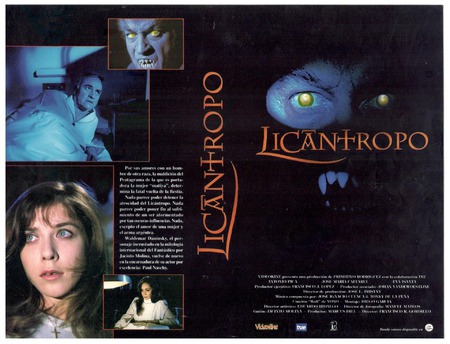
Following his near-fatal heart attack in 1991, Paul Naschy made this werewolf film in an attempt at a comeback, but it was poorly distributed and received bad reviews. He’s still playing the cursed Waldemar Daninsky, who is still a werewolf but growing old. Only the love of a pure woman can end his curse. Until then, he’s going to keep killing everyone he can. But now, a serial killer is competing with him for victims.
This film doesn’t score as well with lovers of these films. Perhaps because it’s talky. It doesn’t have much gore. Because it’s a morality story. Or probably because the werewolf doesn’t show up for a long time while female scientists and ghosts talk and talk and Naschy has heart issues.
However, just when I was ready to check out, there’s a scene where a crazy dubbed voice starts making evil phone calls and I was all in.
Sure, it’s a somewhat sanitzied Naschy film with strange bluesy soundtrack choices. It’s still better than watching what passes for the news.

 B&S About Movies
You must be logged in to post a comment.