Las Sicodelicas (1968)

This movie is giving me flashbacks to our month of Eurospy films, seeing as how like many of those films this is a multi-nation production, uniting the worlds of Mexico and Peru.

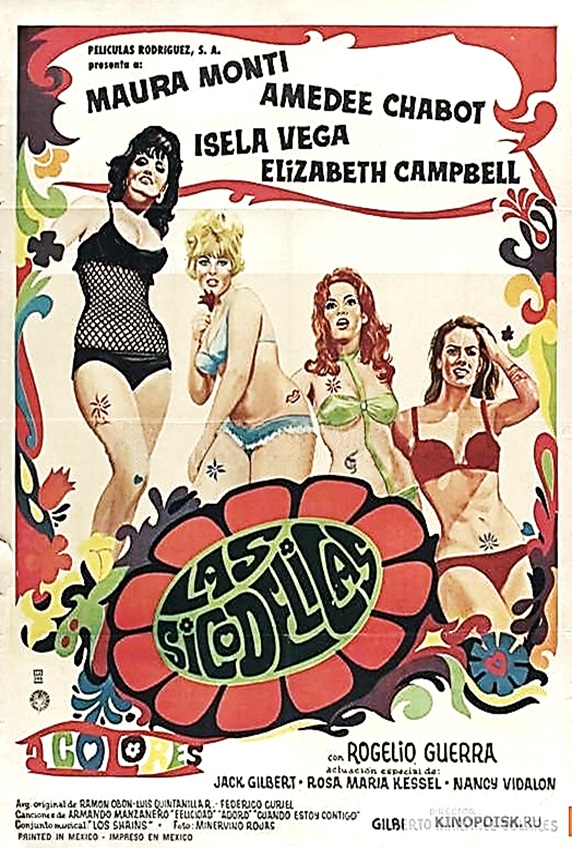
Mireya (Maura Monti, who was The Batwoman in La Mujer Murcielago), Adriana (Amadee Chabot, Murderers’ Row) Patricia (Elizabeth Campbell, Martesia from El Planeta de las Mujeres Invasoras) and Dalila (Isela Vega, The Snake People) met in reform school before being adopted by a millionaire named Aunt Ermentrudis (Tamara Garina, Darker Than Night).

She employs her girls at Seguros Internacionales de Proteccion, an insurance company that serves only the most powerful. If people screw them over or even decide to stop using their services, she sends the girls out to murder them and then uses her funeral home to hide the evidence.

That’s a great plan until private detective Arsenio Junker Tres Alas starts snooping around after dating Adriana. And now things are further murked up by the fact that Aunt Ermentrudis has ordered the death of rock star Ringo Peniche, who is Delila’s boyfriend!

Also known as The Psychedelic Girls, this is a movie packed with fashion, which you know I adore. Its director, Gilberto Martinez Solares, would go on to make Satanico Pandemonium, the magical Santo and Blue Demon vs. the Monsters and the even stranger Misterio en las Bermudas.

In 1987, writers Luis Quintanilla and Ramon Obon created a direct to video remake called Adorable Criminals.

The best review I can think of for this came from Letterboxd reviewer Lencho of the Apes, who said, “Remember that movie Russ Meyer made at Disney Studios? Me neither, but that’s what this is.”

You can watch this on YouTube.
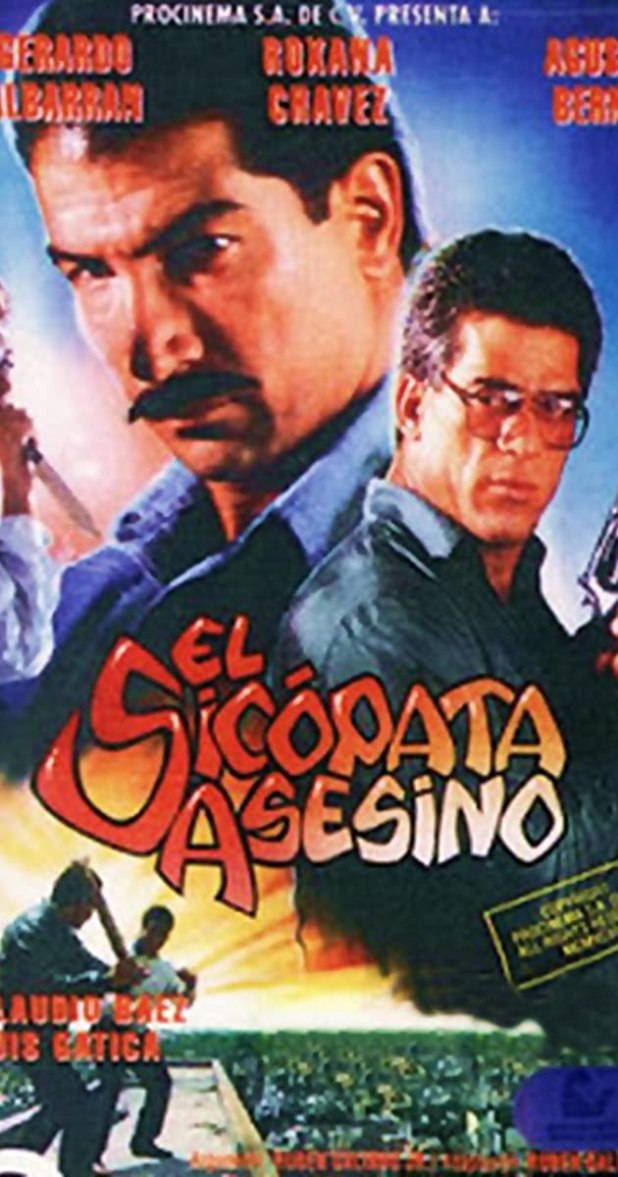
El Psicopata Asesino (1992)

Ruben Galindo Jr. made Don’t PanicCementerio del Terror and Ladrones de Tumbas, all movies more than worthy of praise. This is a mix of a cop film, a slasher and some occult themes, as the killer is a psychiatrist who is able to influence the minds of his patients.

This feels more like an Americanized direct to video cop on the tail of a killer with something extra — The First Power, if you need an example — which here ends up being mental powers.

Sadly, this movie does not live up to the first three of Galindo’s films that I enjoyed so much. But I’m not giving up on him, especially when he has movies like Mutantes del Ano 2000, where a giant mutant rat runs while in a teacher’s house, and Resucitare Para Matarlos, where a bullied kid learns how to kill all the soccer players once he comes back from the dead.

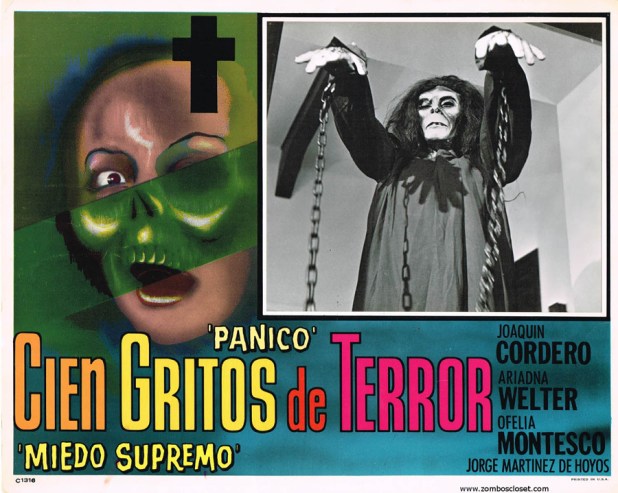
Cien Gritos de Terror (1965)

There are two stories here in this Mexican portmanteau. The first, Panico — hey, how about that title — is about a man (Joaquin Cordero, Dr. Satan) who wants to leave his wife for his new lover, but things are not that simple. The second is Miedo Supremo, which is about a man trapped alive in a burial crypt who discovers that he is not alone.

Translated as 100 Cries of Terror, this film is very much an Edgar Allen Poe movie. Director Ramon Obon also wrote The Living Coffin, another movie of Mexico’s Golden Age. Sadly, he died not long after making this movie, the first he directed.

There was a plan in 2014 to remake this movie with Reversal director JM Cravioto. It never was made and I’m probably one of the few people who is still wondering if it will happen.

You can watch this on YouTube.
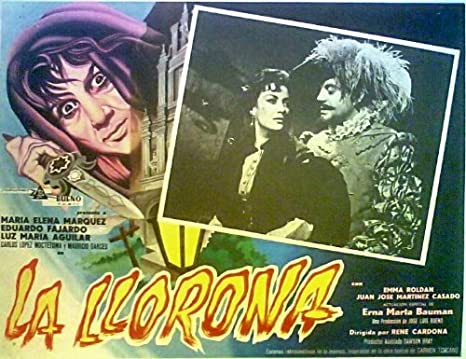
La Llorona (1960)

Rene Cardona directed this take on the Crying Woman of Mexican legend. It starts with newlyweds being told the legend and flashes back to the origin of the story, where a woman named Luisa is spurned by her husband for not being pure Spanish. She kills their children before being put to death. The reason the story is being told to them? Because the bride is a descendent of the conquistador who wronged Luisa. Now, his entire family has been cursed to die violently.

I’ve joked that every few years, we get a new and worse retelling of this legend. Luckily, this is one of the better versions, with an ending filled with some genuine fright and doom. When viewed by modern audiences, it will seem slow and like a stage play, but to me, that was part of its charm.

You can watch this on YouTube.

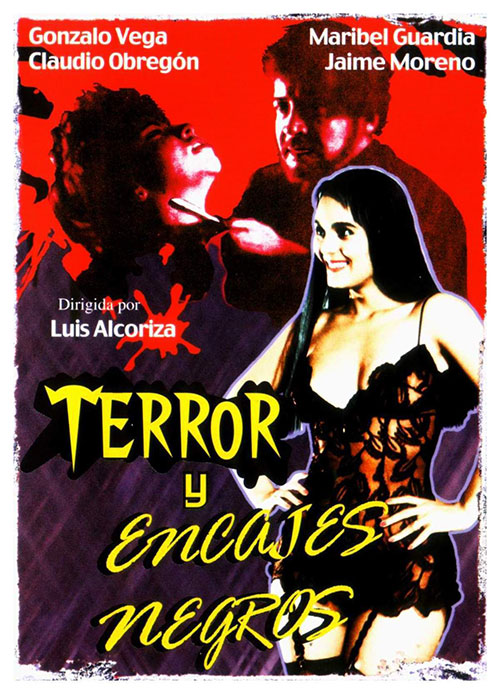
Terror y Encajes Negros (1985)

Why did I watch this? Is it my OCD-fuelled need to get overwhelmed by any film genre the more I study it? Or is it because its title — translated in English as Terror and Black Lace — references one of my favorite films of all time, Mario Bava’s seminal Blood and Black Lace?

The answer is ambas, mi amigos.

Isabel is a good wife, one who stays at home and patiently waits for her abusive husband to come home and knock her around. She thinks that the next door neighbor is the polite and kind man of her dreams, but this being a Mexican exploitation movie from 1985, we all know that he’s going to be a maniac as well.

As she sits and waits for hubby — clad in black lingerie, so there’s the reason for the title — she watches said neighbor dispose of a body in a kind of La Ventana Trasera situation. The neighbor is played by Claudio Obregon, who is no relation to noted Andy Sidaris villain Rodrigo Obregon.

Actually, I was too rough by lumping this film into the exploitation world. It’s lead actress Maribel Guardia was nominated for an Ariel Award for this movie. So maybe if you come in expecting a giallo, instead you’re getting drama. Which probably isn’t what you want with a title like this, hmm?

You can watch this on YouTube.


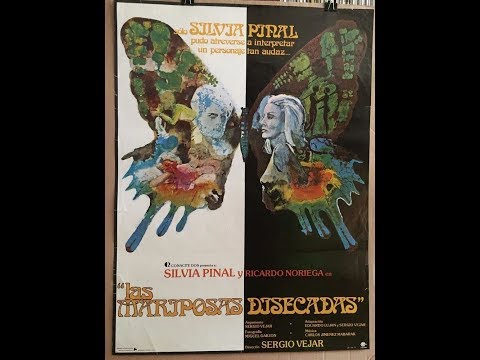
Las Mariposas Disecadas (1978)

Julia (Silvia Pinal, who was a star in the Golden Age of Mexican Cinema yet completely unafraid to go for it in this absolutely insane film, but she was in three Bunuel films, so that adds up) is a writer who uses the pen name Cassandra Fuller.

She’s keeping to herself, not leaving her home, obsessed with writing. I relate. What I can’t relate to is her obsession with beauty and youth, as well as how it informs her next book The Dried Butterflies.

She begins to connect with the outside world once several children enter her yard, looking for the dead body of a bird. She brings them into her home to show off her canary and begins to obsess over one of the boys named Olak. Every afternoon, he comes back to see the bird while Julia remembers an obsessive love with another boy named Jorge that was ended by his parents. Unable to give him up, she murdered him and kept his body parts inside a closet near her room, but the smell is too much for her. She’s forced to bury him in her back yard while trying to decide how she will keep Olak with her forever.

If you watched Butcher, Baker, Nightmare Maker and said, “This movie didn’t get crazy enough,” Mexico realizes this and has you, mi amigo. Necrophilia and pedophilia in the same film, but treated with nuance and skill? This isn’t for everyone, but for those that want a movie that creates an allegory between this story and religion, well, here it is.

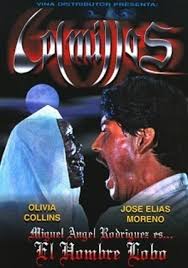
Colmillos, El Hombre Lobo (1993)

Rene Cardona III just wants to entertain you. His Vacaciones de Terror is well worth grabbing, as is this werewolf film that somehow combines a Paul Naschy-style wolfman style film with political commentary on the rich people of Mexico, mostly told through their obsession with horse racing.

Our hero Cristobal works at that horse racing track and after he gets attacked by a white-clad sorceress named Tara — cue the Naschy werewolf origins! — he steals a statue filled with expensive stones that he sells to win over rich girl Susana, who wears shoulder pads and power suits 14 years after Dynasty went off the air.

Some animal attacks are happening while all this romance is in the air and, of course, it’s our friend Cristobal doing the killing. This movie keeps on moving, is filled with fog and cave hideouts for evil female ghosts and has just enough bloodletting for the gorehounds out there.

You can watch this on YouTube.

La Llorona (1933)

The first Mexican horror film, this movie is all about the legend of “The Crying Woman.” There’s been a film made about this story every few years and few of them are good. This one at least has some interesting atmosphere and is historically important.

Maria is a woman who has two children and is quite poor, but finds a wealthy man to marry. However, he cares more about the kids than her, so in a jealous rage she drowns them both and kills herself. Now, she’s trapped between life and death, unable to ever stop crying. She can never move to the next plane of existence until she finds her sons.

The film also relates other tales of women who took the lives of their children, all reduced to being crying women as well. Obviously, this movie is very influenced by Universal’s horror movies, yet it isn’t the same level of quality. That said, it’s still worth a view.

You can watch this on YouTube.

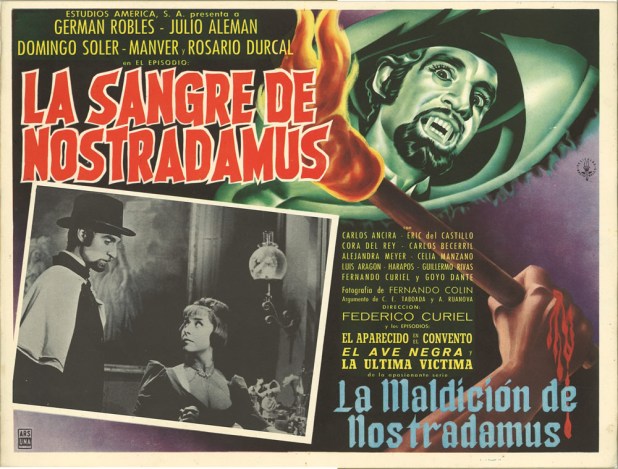
La Sangre de Nostradamus (1962)

After three films — The Curse of Nostradamus, The Monsters Demolisher and The Genie of Darkness — we have arrived at the end of our tale, where the society to eliminate superstition must rise up against what we’re to assume is the son of the seer Nostradamus (although this is disputed in this series, depending on where you come in).

The good guys are about as intelligent and effective as a bunch of cops in a giallo film, as they think that by removing the ashes of Nostradamus’ ancestors from his coffin that he will die at sunrise. He just laughs and tells them that are the ashes of someone else he killed. Yes, he sleeps surrounded by the sooty remains of those he has killed before. You go, Nostadamus. You go.

Somehow, the good morons manage to kill off the hunchback and get their hands on a sonic weapon, which does some damage to the vampire before the sword cane of Igor — remember that dude who died and it was kind of a shock? — poetically is used to stake Nostradamus while in bat form.

I don’t know if you should watch all four of these movies in one day, but then again, I’ve also watched around fifty Mexican horror movies in the last few weeks, so I may be muy macho when it comes to watching peliculas de terror.

You can watch this on YouTube.

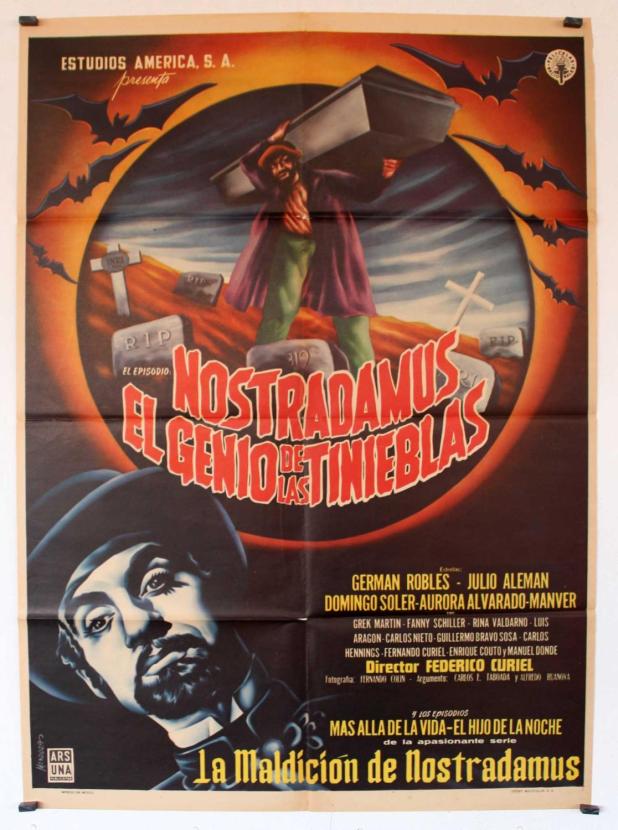
Nostradamus, el Genio de las Tinieblas (1962)

The real trouble with the villagers and professor who are supposed to be the heroes of the Nostradamus film series is that they’re boring as all get out. The only interesting one, Igor the vampire hunter, is unceremoniously dispatched early in this film. The rest just sit around and yammer away at what they should do instead of doing anything.

Meanwhile, the nattily dressed Nostradamus and his hunchback pal Leo are living it up. Well, maybe not so much Leo, whose witch mother Rebeca dares to question the villainous vampiro and gets set on fire for her troubles.

Director Federico Curiel would go on to work with Santo several times, as well as write one of the most out there of all early Mexican horror films — and trust me, that’s saying something — El Baron del Terror.

You can watch this on YouTube.