The Girls of Summer (2020)

We mentioned this feature film screenwriter debut by actress Tori Titmas in passing during our review of the indie time travel fantasy Making Time, in which Titmas stars. We had The Girls of Summer on our longlist for our “Rock ‘n’ Roll Week” of film reviews (ran from Sunday, July 19th, to Saturday, July 25), but even with six reviews a day (over our usual four) across seven days, we still couldn’t fit all of the rock movies we wanted into the schedule. So goes the B&S About Movies’ folly: too many movies and so little time on the calendar. Damn those day jobs and need to sleep.

Now, if you haven’t read our review for Making Time (and you should, it’s a wonderful indie film), then good: you’ll appreciate the B&S About Movies twist on this country music-centric romantic tale. One of the most enjoyable aspects of being a reformed UHF cathode ray tube warrior and VHS-renting savant that now uploads movie reviews into the digital ethers, is recognizing the obscure-to-most-but-stars-in-our-eyes names of actors and directors from that UHF and VHF, and even drive-in past. And in the case of The Girls of Summer, the name of the man in the director’s chair stood out. (No, it can’t be the same guy?)

Now, in reviews on various social media and VOD platforms, the threaders mentioned director John D. Hancock’s work with Robert DeNiro in one of the greatest sports dramas committed to film, Bang the Drum Slowly (1973). Others mention Hancock’s work with Nick Nolte in the memorable cult cable flick, Weeds (1987). But those threaders failed to mention that Hancock made of one of the most unconventional, ambiguous Christmas movies of all time, Prancer (1989) (He killed the reindeer! Well, we think he did?). And when HBO went on the air in the early ’80s, two of Hancock’s movies became cult classics courtesy of their incessant replays due to HBO’s then limited library: the very good, but theatrically-buried Baby Blue Marine (1976; starring Jan-Michael Vincent) and California Dreaming (1979; starring Dennis Christopher). (Both aired alongside Matt Dillon’s debut in the juvenile delinquency drama Over the Edge, Hazel O’Connor’s punk romp Breaking Glass, and the punk-doc Urgh! A Music War. Ah, the HBO days. . . .)

However, before Nolte. Before DeNiro. Before his HBO cult status, Hancock, inspired by George Romero’s success with Night of the Living Dead on the drive-in circuit — along with Shirley Jackson’s The Haunting of Hill House (that became 1963’s The Haunting) — he decided to make his feature film debut with his own drive-in centric horror movie. But instead of just giving us another run-of-the-mill, low-budget monster romp or zombie soiree, he gave us one of the ’70s creepiest (without the gore) drive-in horrors that explores the psychology of a main character that may or may not be stalked by a vampire — 1973’s Let’s Scare Jessica to Death. (You don’t think so? Well, tell it to my childhood-self sitting in the back of the family Ford LTD station wagon. I slept with a quilt around my neck for the next two weeks because of Jessica’s folly. So thanks for the memories, Mr. Hancock.) Then we lost track of John D. Hancock. (It seems Prancer’s unconventional approach to the Christmas spirit was too much for Hollywood to handle.) But no matter. He’s back and we couldn’t be happier. And we have Tori Titmas to thank for bringing one of our favorite directors from our snowy n’ static analog childhood back into our lives.

“Dude, you’re doing it, again.”

“What?”

“Going off the rails with the squeezin’ the Charmin love for old movies and their directors and actors. Just live in “the now” and review the movie already. And please, don’t tie this back into Seinfeld. That’s really getting annoying.”

Hey, I can’t make any promises. It’s my slice of web and I’ll go off the rails if I want to. . . .

As we mentioned earlier, country music (actually, it’s more of an Americana-genre vibe) plays a part in this well-scripted, metaphorical tale about Maren Taylor (Tori Titmas), a Michigan-Midwest sod farmer who experiences a metamorphosis as she learns how to adapt to the environments around her.

After her two younger sisters leave home, for college and a big city job in advertising on the west coast, Maren’s left alone to tend to the family’s sod business and care of her clinically depressed, narcotic-abusing father, which was triggered by her musician-mother’s untimely death. The one thing that kept Maren afloat was The Girls of Summer, the local country band in which she serves as drummer and that she put together with her guitarist-singing sister Grace. And now that life preserver is gone.

A chance visit from Luke Thomas (Dr. Lewis Rand on a story-arc of Chicago P.D.), a down-and-out country star trying to claw his way back to the top, to the bar where Maren’s resigned as being her last gig, offers a ray of hope: his band needs a new drummer and he’s impressed by the original songs she wrote for her sister. Once Maren’s father realizes his “loss of color” and her having to be “his parent” is robbing his daughter of her colors, he urges her to follow her dreams and take the gig with Luke’s band (even if it is just a tour of local watering holes, state fairs, and retirement communities). And she finds true love for the first time as result of her writing what turns out to be a sort-of-comeback hit for Luke — in a duet. But she also discovers the hurt of his unrequited love. And she discovers the gift of how the baggage of the past — if not let go — can destroy one’s future. As with the grass she spent her life cultivating, Maren learns she needs to keep looking to the sun. And growing.

If you’re looking for the dramatic bombast of TV’s Nashville or the acting hysterics of A Star Is Born (2018), keep in mind: this a low-budget movie that takes a quiet, under-played delicateness to its musician-on-the-rise story (which, if you haven’t figured it out, isn’t the “point” of the story). Courtesy of Titmas creating an effectively-arced character infused with verve and wide-eyed innocence, and expected, solid direction by John D. Hancock, along with expertly-executed cinematography by Misha Suslov (who, like Hancock, has a long career that stretches back to the hicksploitation romps Smokey and the Judge* and Trucking Buddy McCoy*, along with John Carpenter’s forgotten, big-engine actioner Black Moon Rising**), The Girls of Summer rises over the horizons of many of the similar, low-budget romance flicks airing on the Hallmark Channel.

Yeah, the B&S About Movies staff is pretty happy to see the director of Let’s Scare Jessica to Death and the cinematographer of Trucking Buddy McCoy back together again. So kudos to Tori Titmas for penning a compelling script that inspired them both and brought them together — and back to our (streaming) screens. And shame on us for losing our inner-John D. Hancock and Misha Suslov after Prancer. So it looks like we got some catch-up movie watching to do, as team Hancock-Suslov have four other films on their dual resume that swept under our VCR radar: the Top Gun-centric Steal the Sky (1988; with Ben Cross), the rom-com A Piece of Eden (2000), the horror-thriller Suspended Animation (2001), and the musical-drama The Looking Glass (2015).

Other cult cable TV favorites in the Misha Suslov canons are the teen delinquent drama 3:15 the Moment of Truth (1986; with Adam “My Bodyguard” Baldwin and Deborah “Valley Girl” Foreman) . . . and you know how we are about Eric Roberts (Power 98) around here: Suslov shot the 1986 Roberts-Rosanna Arquette comedy Nobody’s Fool. And, what the . . . he shot a Mark L. Lester movie . . . with Eric Roberts? Yep, 1996’s Public Enemies*ˣ. And does anyone remember the action-horror The Runestone (1991; with Peter Reigert of Animal House)? I do! (As if we don’t have enough movies to watch n’ review around here. Thanks a lot for opening that film canister of worms, Tori!)

Making its VOD premiere on Amazon Prime, The Girls of Summer recently made its free-with-ads stream debut on TubiTv. You can learn more about the film on its official Facebook page and website. And be sure to visit Indie Rights Movies and check out the trailers for their current roster of films, most of which, as with The Girls of Summer, are available on TubiTv.


* There’s more hicksploitation flicks to be had with our “Top 70 Good Ol’ Boys Film List: 1972 to 1986,” rife with review links of redneckin’ drive-in classics.

** We reviewed Black Moon Rising as part of our week-long tribute to the Fast & Furious franchise, which we round-up with our Mill Creek “Savage Cinema” box set of reviews.

*ˣ We reviewed Public Enemies as part of our week-long tribute to the filmography of Mark L. Lester (just plug in “Mark Lester/Mark L. Lester” into the site’s search box and you’ll find cinema gold!).


Disclaimer: We weren’t provided with a screener nor received a review request from the filmmakers. We discovered this film on our own and truly enjoyed the movie.

About the Author: You can learn more about the writings of R.D Francis on Facebook. He also writes for B&S About Movies and publishes on Medium.
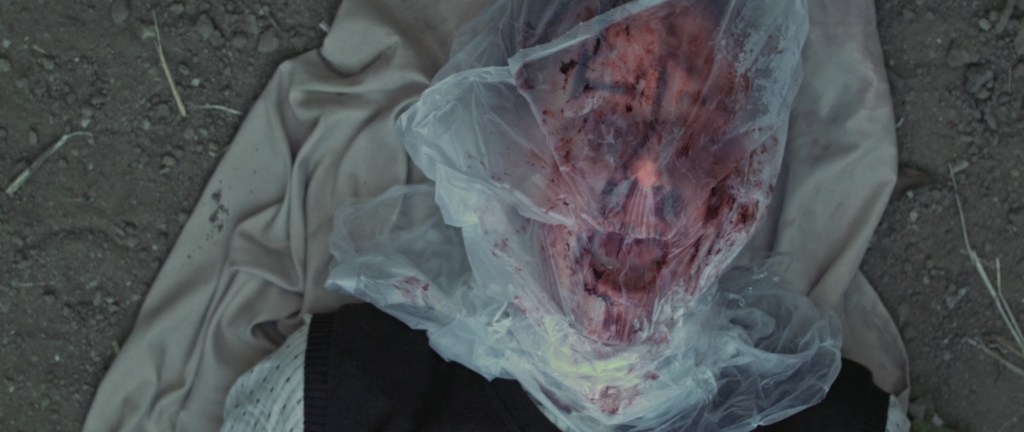
We Die Alone (2020)

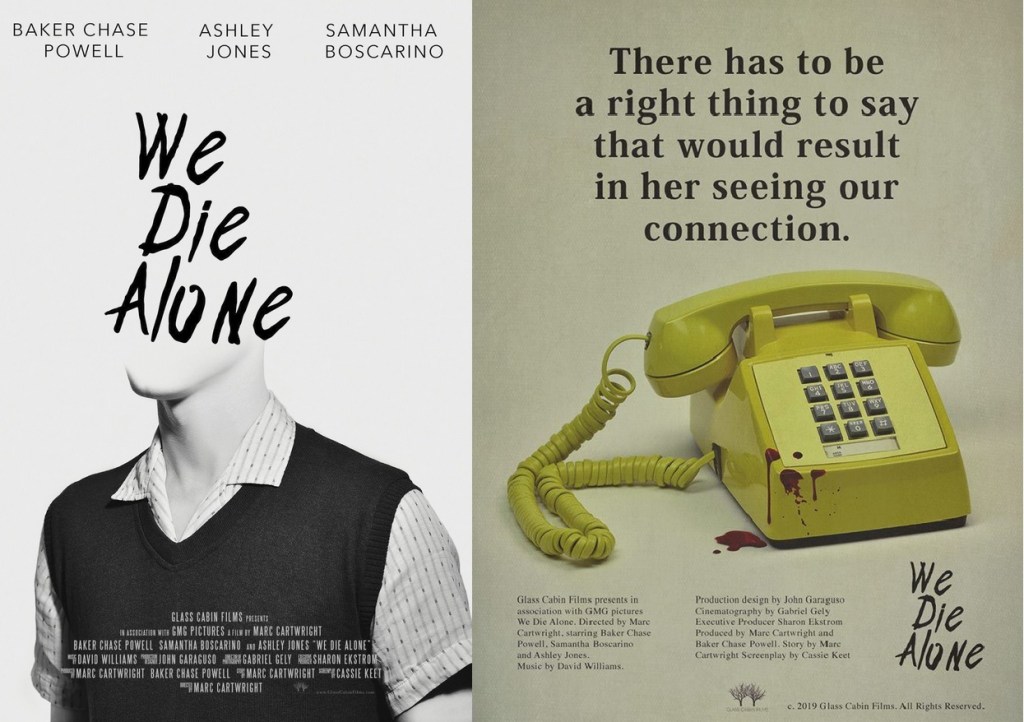
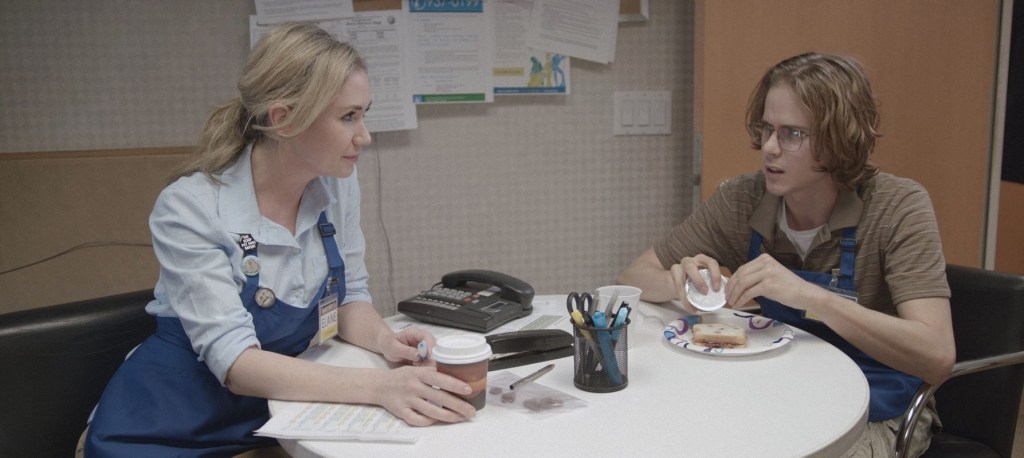
Aiden (Baker Chase Powell), a socially-inept thrift store clerk, wants to find true love (“true love” is a girl who likes jigsaw puzzles), but his courage-defying insecurities lead to social media ghosting of any connections he makes on dating apps (and his “agoraphobic-dating” a dumpster-dived mannequin). Also looking for — and fearful of love — is his co-worker, Elaine (Ashley Jones), whose own generosity with advice and to-a-fault kindness crossed with shyness perpetuates her own loneliness. And Aiden’s inability to pick up on another’s social cues makes him oblivious to Elaine’s feelings for him.

Aiden comes to find the courage through Chelsea (Samantha Boscarino), his new, beautiful — an ulterior-motive driven — apartment-across-the-hall neighbor (who digs the puzzle on his coffee table and his “vintage” ’70s-era phone). And she, like Aiden, has a failure adapting to and connecting with others through social (media) norms. And that common — real life and social media — awkwardness sends Aiden and Chelsea into a noirish decline of dangerous infatuation and obsession.

Sigmund Freud just called. Mommy’s womb wants you back; you’re not ready to be around people.

This creepy thriller effectively updates the twisty, black & white tales of Dashiell Hammett and James M. Cain for a digital world. And when the “harmless” Aiden locks his stare on his mannequin and he starts stealing dainties . . . and the friendly Elaine comments, “. . . you think you know people. . . .” Chills (courtesy of the-just-nails-it Powell). You know this isn’t going to end well. And Cassie Keet’s script (written with director Marc Cartwright) of well-crafted herrings and Cartwright’s taste for the (Dario) Argento hits all the noir-giallo cues: when that dainty, red slip hits the Laundromat floor — well, poor Aiden just found Ms. Dietrichson’s “honey of an anklet” (Double Indemnity) and triggered a femme fatale chain-of-events.

If you’ve hung out with B&S About Movies for a time, then you know how we feel (but we’re nice) about indie films by unknown filmmakers meandering with an unfocused narrative structure towards a patience-trying two-hour mark that’s crying for a 30-minute celluloid sushi in Final Cut Pro. Then there are those films that run extensive end credits to pad their too-short running time to a home-distribution acceptable 80-minutes.

What’s makes this 22-minute fifth short by writer-director Marc Cartwright so refreshing is that you’re left wanting more. And that doesn’t happen often (the recent The Invisible Mother is an example of that “wanting”). You feel denied by not getting that other hour of film with We Die Alone. If there’s ever a short film that deserves expanding into a feature film (Fruit Chan’s cringey masterpiece Dumplings comes to mind), then it’s We Die Alone.

If Baker Chase Powell is familiar, that’s because he co-starred as Steve Dodd in Dolemite Is My Name, Eddie Murphy’s multiple-award winning biopic on ’70s exploitation filmmaker Rudy Ray Moore. Daytime TV fans have watched the Emmy-nominated Ashley Jones on The Young and the Restless and The Bold and the Beautiful; HBO surfers know her from her recurring role as Daphne on True Blood. You’ve recently watch Samantha Boscarino on FOX-TV’s The Resident, but our younger readers will remember her recurring role on Disney Channel’s Good Luck Charlie; Lifetime fans enjoyed her as the lead in 2016’s The Cheerleader Murders (and she’s very good there, and here).

We Die Alone made its premiere at the Oscar-qualifying festivals LA Shorts and The Newport Beach Film Festival. It also picked up award wreaths at the Indie Memphis Film Festival (“Best After Dark Short”), iHorror Film Festival (“Best Director”), Shriekfest (“Best Thriller Short” and “Best Actor” for Baker Chase Powell), Filmquest (“Best Horror Short” and “Best Supporting Actress” for Ashley Jones), Crimson Screen Film Festival (“Best Actor” for Powell), Nightmares Film Fest (Powell, “Best Actor,” natch), and finally, GenreBlast (“Best Short Film”). Most recently, the Deep in the Heart Film Festival in Waco, Texas, granted three award nods to the film: Best Horror/Thriller Short, Best United States Short, and Best Performance for Baker Chase Powell. That festival streams from Waco on September 25 through 27 and October 2 through 4. Tickets are now on sale now at www.deepintheheartff.com.

You’ll be able to stream this multi-award festival winner beginning August 21 through Amazon Prime, with other services to follow. You can stay abreast of those developments with We Die Alone — as well as the other projects of Glass Cabin Films — on You Tube and Facebook and their official website.

Disclaimer: We were provided a screener by the film’s P.R firm. That has no bearing on our review.

About the Author: You can learn more about the writings of R.D Francis on Facebook. He also writes for B&S About Movies and publishes on Medium.
Clownface (2019)

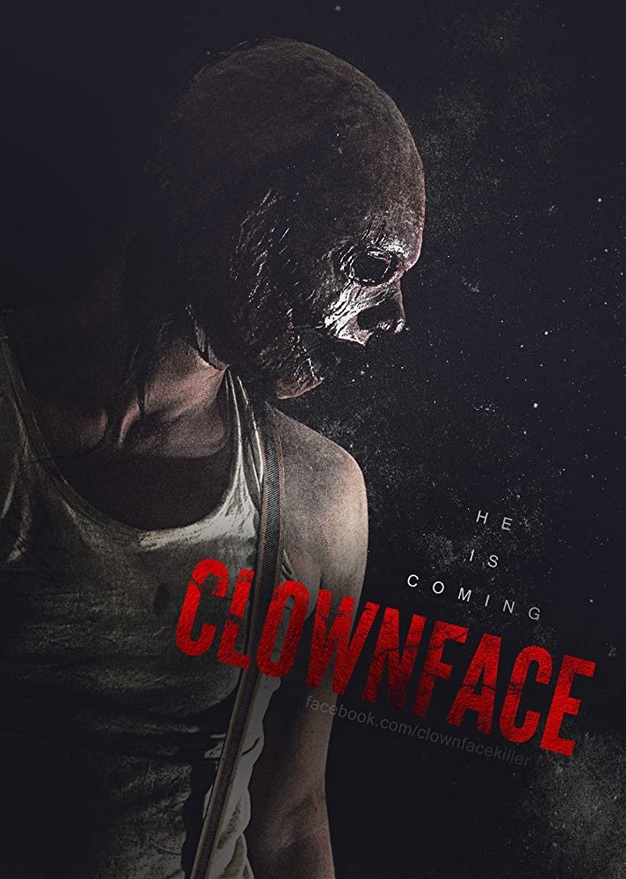
Alex Bourne is a British filmmaker that indie-horror fans and streamers have spent time with before, courtesy of his multi-nominated-winning debut feature film The House of Screaming Death (2017), which served as his homage to the British Gothic Horror anthologies of the ‘60s and ‘70s. His welcomed return to the streaming-verse is this homage to American ‘80s slashers — with a touch of Italian giallo — about a legendary, deranged serial killer known as “Clownface” (British stuntman Philip John Bailey) terrorizing a small town.

As with the past “urban legends” surrounding ‘80s slashers: no one speaks of Clownface, as the deaths and disappearance by his hand are written off as run-of-mill disappearances, disenchanted runaways, and accidents. Yes, the townsfolk scoff at and chase off anyone who comes to town asking questions.

The story starts a year after the abduction of Zoe, with her friend, Jenna, teaming up with Owen, a survivor of a Clownface attack ten years earlier. Both are convinced that, not only is Clownface real, but Zoe is alive and held captive — as Clownface searches for the “perfect flesh” to construct real-life masks to cover his disfigured face.

While Clownface wants to be a British Halloween and is affable in its homages, what it lacks in Carpenter-finesse or Argento-tact is effectively compensated by well-executed in-camera effects (and a very creepy mask) and the cinematography is sharp and solid above the usual horror-streaming norms. So what we end up with is more like Tobe Hooper’s slasher cop-in, The Funhouse, which was a well-done film that’s respected in some quarters, but certainly not revered as an ’80s “slasher classic.”

As with most unknown, new-to-thespin’ actors in these streamers, the acting is a bit strained in spots; they’re not great, but not awful either. But kudos to Bourne for his killer going the Leatherface-route and making his mask from victims, as opposed to just painting on a crazy clown face (like the recent, lot-of-fun Clown Fear) or wearing a crazy-clown Halloween mask (like The Funhouse).

And Clownface brings on the rock ‘n’ roll with the ’80s-esque appropriate song “Video Nasty”* by Lesbian Bed Death as its theme song; the band briefly appears in the film — with one of its members meeting a graphic end courtesy of Clownface. And you know how we dig being turned onto new, indie tuneage via an indie film. Clownface is a worthy streamer, indeed.

Clownface hits streaming platforms on August 18 courtesy of Wild Eye Releasing. *And be sure to join us for our three part series of reviews of the films released during the early 1980’s U.K. video scare “Exploring: Video Nasties.” (Part 1, Part 2, Part 3).

Disclaimer: We were provided a screener by the film’s P.R firm. That has no bearing on our review.

About the Author: You can learn more about the writings of R.D Francis on Facebook. He also writes for B&S About Movies and publishes on Medium.
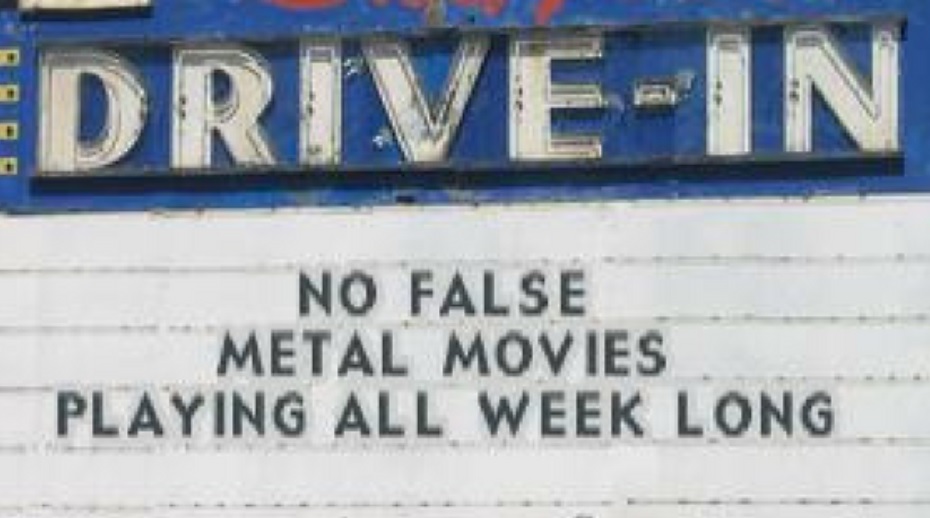
REPOST: NO FALSE METAL MOVIES WEEK: Trick or Treat (1986)

From the Publisher’s Desk with R.D Francis: We’re sadden to hear that Pete Way, the bassist for UFO, passed away this morning, August 14, at the age of 69. His death was the result of “life threatening injuries” he received in an accident earlier this summer.

Pete Way
August 7, 1951 – August 14, 2020

In addition to help found UFO, Way formed his own self-named project, Waysted, and was the bassist for his longtime friends Ozzy Osbourne and Michael Schenker. He also co-founded Fastway, which provided the music for the ulitmate “No False Metal” god, Sammy Curr, in Trick or Treat.

Way left UFO to collaborate with Fast Eddie Clarke of Motörhead; their brief union became known as Fastway, co-founded with Humble Pie (Peter Frampton’s old band) drummer Jerry Shirley. The band quickly fell apart, with Way forming his namesake, Waysted. Fastway carried on with vocalist Dave King and bassist Charlie McCraken, Shirley’s old bandmate from the Irish power trio Taste that was headed by Rory Gallagher.

Fastway’s then three-album output: Fastway (1982), All Fired Up (1984), and Waiting for the Roar (1986) comprised the soundtrack for Trick or Treat.

Spend a few moments this evening to remember Pete Way and stream some UFO, Waysted, and Fastway. Godspeed, Pete. (You guys blew Cheap Trick off the stage in 1980! Three encores!)

Sadly, this isn’t the first rock-flick veteran we lost in these several months. Be sure to remember Nigel Benjamin, who served as the “voice” of the second greatest “No False Metal God” of rock flicks, Billy Eye Harper. You can read our tribute to Nigel with our “Remembrance of Nigel Benjamin” that reflected on his career with Mott, London with Nikki Sixx of Motley Crue, and his work with the Sebastians on Rocktober Blood.

Here’s UFO at their absolute, bass ass peak in 1975. And enjoy this review of Trick or Treat from Sammy P. that originally ran on July 17, 2017, as part of our “No False Metal Movies Week.” Take it away, Samuel!

The director of A Dolphin’s Tale and A Dolphin’s Tale 2, Skippy from Family Ties and one of the stars of A Chorus Line made the most metal film ever. Let that sink in.

I grew up a fat, bespeckled child in a small town with crushing self esteem issues, a love for gore movies and a sarcastic mind that loved the way people treated me when I started dressing all in black. Every single situation that Eddie Weinbauer (Marc Price, the previously mentioned Skippy) endures in this film…I lived it. If a monster Glenn Danzig (Verotika) could take over shop class and kill my tormentors, I would have gladly welcomed such mayhem and menace.

Eddie is a big fan of Sammi Curr, a superstar who went to the same high school Eddie is in, was tormented and bullied the same way Eddie is, became a big star and then died in a mysterious fire. Radio DJ Nuke (Gene “inventor of the devil horns” Simmons, who played a great transgendered bad guy in Never Too Young to Die while wearing his girlfriend Cher’s clothes) gives Eddie the only vinyl copy of Sammi’s satanic masterwork “Songs in the Key of Death.”

Eddie does exactly what I’d do: he listens to the record and falls asleep. He has a crazy dream about the fire that killed Curr and awakens to the album playing backwards, telling him how to gain revenge on the bullies that torment him.

Eddie chickens out though — he doesn’t want to kill the jocks who have made his life so rough. Sammi takes matters into his own hands, creating an electric surge that allows him to escape the record and come back to our reality. Eddie responds by smashing his stereo. Sammi’s response is as fucking perfect as it gets: “No false metal.”

Sammi’s friend Roger gets involved and unwittingly plays a cassette — fucking metal — at the school dance, causing Sammi to leap out of a guitar amp and take the stage. The crowd goes wild before Sammi starts killing audience members, shooting lightning at them and revealing his burned face. Holy shit — I saw this scene at the drive-in this year and the exuberance of hearing Fastaway blasting from car stereos in the fog at 5 AM is an experience I recommend to every single person reading this.

Can Eddie stop Sammi from being played on the radio and attacking everyone that hears it? Of course. It’s an ’80s horror movie. But man — I’m all from more Sammi Curr (sadly, Tony Fields died of AIDS in 1995).

Oh I forgot – Ozzy is a preacher in this that Sammi attacks. It’s a small cameo, just like Gene Simmons’ role, but that doesn’t stop my DVD cover from claiming they starred in this.

If you’re an 80s metal fan (and if not, man, thanks for reading this far), there are so many band logos and posters to spot in this, from the expected like Anthrax and KISS to the out of left field like Raven, Exciter and Savatage. You’ll also be much more likely to not dismiss this film as a piece of shit.

Me? I quote from this film almost every day. “The bait is you. Let the big fish hook themselves. You’re the bait. The bait is you.”

NEVER BOW TO FALSE METAL!

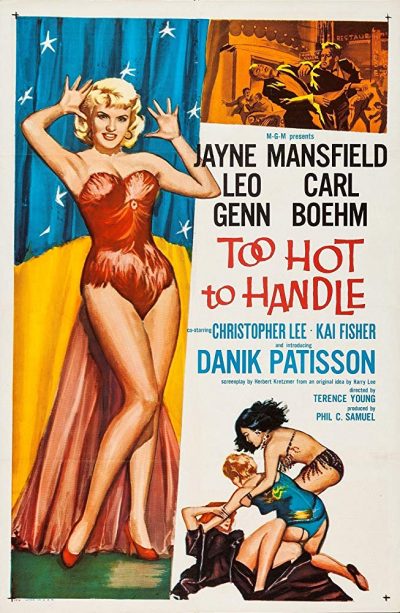
Too Hot to Handle (1960)

Released in the U.S. as Playgirl After Dark, this was Jayne Mansfield’s first film away from 20th Century Fox after her star started to dim. The studio loaned her out for this British drama, directed by Terence Young (Dr. NoFrom Russia With LoveThunderball, The Klansman).

While billed as “an exposé of ‘sexy, sordid Soho, England’s greatest shame,” the film may not appear all that scandalous today. But in 1960, Mansfield’s see-through outfits and sexy music numbers kept the movie out of American theaters until puritanical heads cooled. Playboy came to the rescue of horndogs everywhere — I mean, discriminating gentlemen — and showed several shots of the film to build interest.

Mansfield plays nightclub siren Midnight Franklin, who wants her man Johnny Solo  (Leo Genn, Lizard In a Woman’s Skin) out of the business of owning the Pink Flamingo. When an underage dancer named Ponytail (Barbara Windsor, who was in nine Carry On movies) is killed, the cops and the crooks are all over Johnny. One of those underworld types is a very young Christopher Lee.

You can watch this on YouTube.

The Wayward Bus (1957)

Jayne Mansfield and Joan Collins in the same movie? My dreams do come true.

Joan is Alice Chicoy, the owner of a restaurant that likes her booze. Her husband Johnny (Rick Jason, The Witch Who Came from the Sea) owns a bus that is falling to pieces. She’s unhappy with life, so she determines that she needs to leave her husband.

Meanwhile, Camille Oakes (Mansfield) is a stripper on her way to Mexico and falling for a salesman (Dan Dailey, who most often worked in musicals).

All of their lives — and others — will come together on that falling apart bus as it makes its way through the California mountains. Dolores Michaels plays a passenger that makes a pass at Johnny in a scene that eclipses the sexiness of the two female leads, but this movie really showcases Mansfield’s ability as any actress.

Actually that scene was so hot — some compared it to Jane Russell’s The Outlaw — that two different versions were shot by director Victor Vicas, who was trying to make a high brow film — this is based on the John Steinbeck novel — but for shredded by critics.

This is kind of, sort of Jayne’s version of Bus Stop, which her rival Marilyn Monroe made a year before. The difference is that 20th Century Fox spent $3 million on Monroe and made her film in color. This was a $1.5 million black and white film that barely made its money back, while Monroe’s film went on to be a major success.

You can watch this on YouTube.

Primitive Love (1964)

Luigi Scattini’s directing career is all over the place, hitting all the various genres of the 60’s and 70’s. There’s comedy — War Italian Style, which unites silent film legend Buston Keaton with the Italian comedian duo of Franco Franchi and Ciccio Ingrassia (more on them in a bit). There’s mondo — Sweden Heaven and Hell, narrated by Edmund Purdom and featuring Piero Umiliani’s “Mah Nà Mah Nà, which would be used by Benny Hill and The Muppets. And more mondo — the magical Witchcraft ’70, as well as Questo Sporco Mondo Meraviglioso (This Dirty Wonderful World) and Sexy Magico. There’s Eurospy — the Richard Harrison-starring Ring Around the World. And plenty of sexual themed films like La Ragazza dalla Pelle di Luna (The Girl with the Moon Skin), La Ragazza Fuoristrada (The Off-Road Girl), The BodyLa Notte dell’alta Marea (The Night of High Tide, which has Pam Grier) and Blue Nude. He’s also the father of Monica Scattini, the only actress I know who could be in both One from the Heart and Ruggero Deodato’s Concorde Affaire ’79.

Saying this is an uneven film is being generous to uneven films. The moronic antics of Franchi and Ingrassia, who play bellhops, play out around Mansfield lounging about and gradually getting undressed. Her husband at the time, Mickey Hargitay, also shows up.

Yes, a movie where Jayne is a doctor — of sexual relations — whose film of mating rituals around the world is an excuse to show mondo footage. These are the movies I fill my life with and bring to you.

Credit — or blame — goes to Massimo Pupillo, who would make Bloody Pit of Horror with Hargitay, and Amedeo Sollazzo, who worked with Franchi and Ingrassia throughout their long careers.

Drive-In Friday: Rock, Rock, Rock Night

It’s time to forget all your troubles and indulge yourself in some musical films that just want to entertain you. Each of these movies are borderline insane and make little to no sense, which is just how we like them. Feel free to sing, dance and honk your horns whenever you want.

MOVIE 1: Streets of Fire (Walter Hill, 1984): In some better world than the one we exist in now — another time, another place — this movie was the most important film to come out in 1984 and people celebrate its comic book feel and shot completely indoors feel. This being the hellscape that we’re trying to escape with these movies, we’re not so lucky. But just watch the first five minutes of this and tell me, has Diane Lane ever looked or sounded so transcendent? That’s a trick question. Of course she has, she was in Ladies and Gentlemen, The Fabulous Stains.

MOVIE 2: Wild Zero (Tetsuro Takeuchi, 1999): There’s a chance that this movie is going to wipe everyone out by the end. It’s one of the most astounding films I’ve ever seen, a movie where Guitar Wolf is getting grenades tossed at him, so he starts tuninghis guitar. If you’re ever wondering what the perfect distillation of my brain looks like on film, this is it.

MOVIE 3: Voyage of the Rock Aliens(James Fargo and Bob Giraldi, 1984): James Fargo made The Enforcer and Every Which Way But Loose. Bob Giraldi made the video for “Beat It” and Club Med. Together, they made this ode to 1950’s films, but also a movie where Michael Berryman and a sea monster menace Pia Zadora. This is impossible to find, but guess what? If I had my own drive-in, I’d show it to you.

MOVIE 4: The Apple (Menahem Golan, 1980): If you thought I was going to show four musical movies and not show this, well, you don’t know me. I unironically love this movie like some people are slavish devotees to Star Wars. Except fans of the The Apple don’t get action figures or theme parks. We just get this movie, which is quite honestly the most camel toe that has even been on a screen and almost caused Menahem to kill himself, which would have deprived us of the magic that was Canon Films.

What are your four drive-in movies? Let us know. Any theme, any movies, no rules. Let us know!

The Fat Spy (1966)

If Jayne Mansfield lived long enough, she most assuredly would have been in Italian western, giallos, slashers and any other films that would have had her. She even made this film, a Eurospy takeoff, not long before her sad demise.

Some young people are on a scavenger hunt which brings them to an island close to Cape Coral, Florida, where the fountain of youth supposedly exists. The rich owner of the island gets his daughter (Mansfield) to kick them all out, but she only wants to see her chubby lover Irving, who somehow is the second person I’ve seen in a film with the trope of being completely uninterested in aardvarking with Jayne. Somehow, Irving has an evil twin named Herman and he has an evil woman in his life named Camille Salamander, played by Phyllis Diller.

Director Joseph Cates also made the sleazy Who Killed Teddy Bear? and somehow went on to produce the Tony Awards. This movie is so threadbare that when they ran out of money, instead of shooting the last scenes, they literally filmed the script.

You can watch this on YouTube.

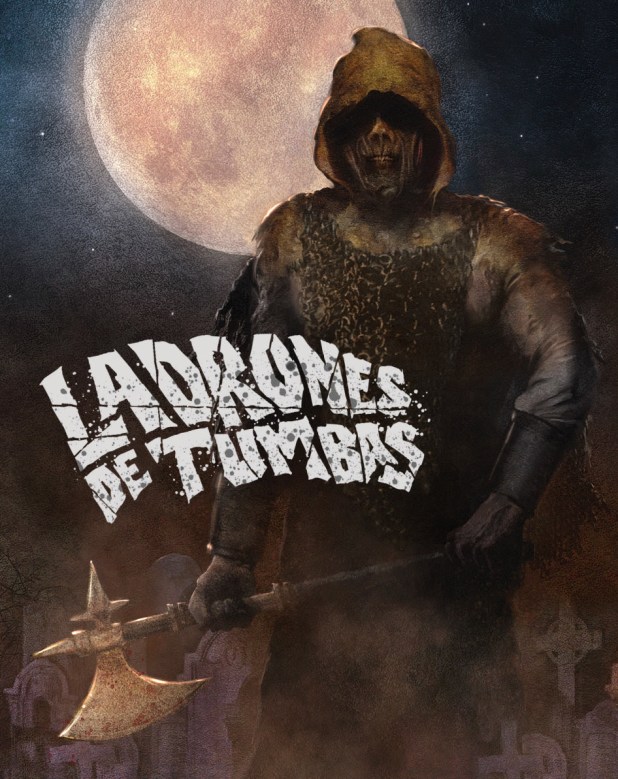
REPOST: Ladrones de Tumbas (1989)

EDITOR’S NOTE: This is now streaming on Shudder!

OMFG Vinegar Syndrome is releasing Ladrones de Tumbas, or Grave Robbers, for the first time ever on blu ray complete with an interview with director Rubén Galindo Jr.! Here’s hoping that this is the first of a series of Mexican VHS era premium releases! All those rituals and all that blood — it finally pays off!

I am a complete fanboy for Ruben Galindo Jr. who made Don’t Panic and Cemetery of Terror. I’ve never been let down by any of his films so far and I am getting the idea that I may never be disappointed by them after reading the description of this film on IMDB — “Teenagers accidentally resurrect a Satanic killer who targets the local police captain’s daughter to birth the Antichrist.”

It’s like people are making the exact movies I want right now, except they made them in Mexico 31 years ago.

Like all great Satanic movies — I’m looking at you Black Sunday and Evilspeak — this movie starts in the past, as the executioner of the Mexican town of San Ramon throws in with the devil instead of God, assaults a virgin and battles the other monks of his order before he’s stopped with an axe right to the chest. He then says, “Some day someone will come and wrench the ax out. Then I’ll return with more power to father Satan’s son in one of your descendants.”

If you’re not all in, get out.

That descendent is Olivia, the lovely young daughter of Captain Lopez and she is the lone virgin amongst her slasher victim friends. Woe be to them, as they’re camping next to a cemetery that’s beset by — get this — grave robbers. That foursome includes Manolo, his psychic girlfriend Rebeca (trust me, Mexican films are not content to stay within one genre, they’re going to toss in every ingredient) Armando and Diana.

You may wonder if they’re about to find an abandoned church and tear the axe out of the body of the villain, setting this all in motion. Wonder no more. And when the first villagers die, of course the grave robbers are blamed by Olivia’s dad. So he does what any real cop would: he tells them to go find the axe killer themselves. Yes, two people are dead, they’ve been blamed and he asks them to be junior detectives.

I love this movie.

Nearly everyone dies — by axe, by magic, by getting mashed into a pulp, bye bye and adios — until a priest explains that a Satanic idol and the axe itself, not to mention a whole bunch of TNT, are what it takes to kill off the executioner. This being Mexico, the action is intercut with Padre Jeronimo conducting a midnight mass while the cop uses a machine gun to continually blast the undead killer.

This may not be the best movie I’ve ever seen, but it’s edging closer to that space every time I watch it, just by sheer force of will and my belief that if Fulci lived in Mexico, this is the kind of lunacy that he’d have made. As Mexican Nicholas Cage might say, “Eso es un gran elogio.”