Last year, we made a trip to Scarecrow Video in Seattle, Washington. There are over 125,000 movies or more — who can keep track — in the store. You can check out the video of it right here — I used some giallo music so you wouldn’t have to hear me swear and evoke the name of the Creator over and over again.
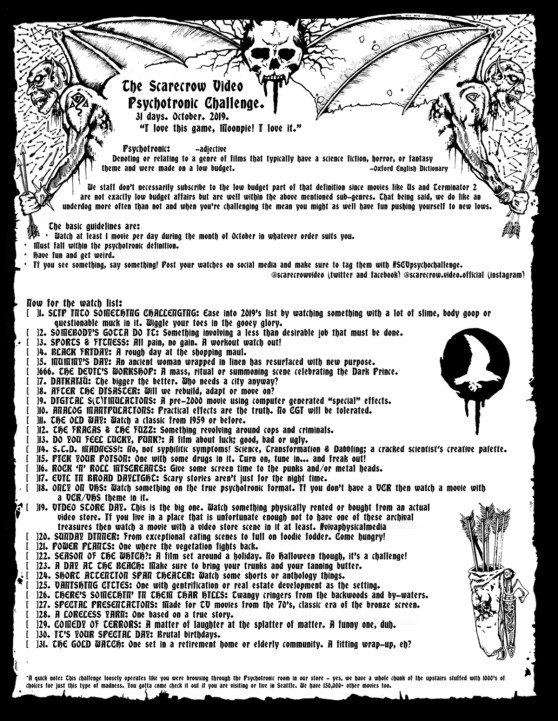
On that trip, I learned about the Scarecrow Challenge — 31 days of psychotronic movies — and I made it! Doing the Scarecrow Challenge — you can relive mine on our site or on Letterboxd — taught me a ton about movies and inspired plenty of further explorations. I can only hope for the same this year.
Here’s the list. Maybe you’ll join me and do your own challenge!
Years after the events of The FP, JTRO (Jason Trost) and KCDC (Art Hsu), former members of the 248 gang, must travel through the Wastes to save the FP all over again in a Beats of Rage tournament. This time, the enemy is AK-47, the leaders of the Wastes, and he may finally be the man who will 187 JTRO.
This is the first of many planned sequels to The FP, despite Trost and none of the film’s investors making any money from that film. He said that it was a challenge “to figure out a way to get people to fund a sequel to a movie that recouped zero dollars.” The inspiration for this one is Escape from L.A. while the next film will be like Rocky Balboa (which makes sense, as the line about girls taking away your legs appears here word for word from Rocky).
Much like The FP, you’ll enjoy this if your early years on this Earth were primarily spent playing side-scrolling beat ’em ups like Double Dragon and watching post-apocalyptic movies — like I’ve been writing about all month long, along with the Nadir to my Scorpion, the Parsifal to my Big Ape, R. D Francis.
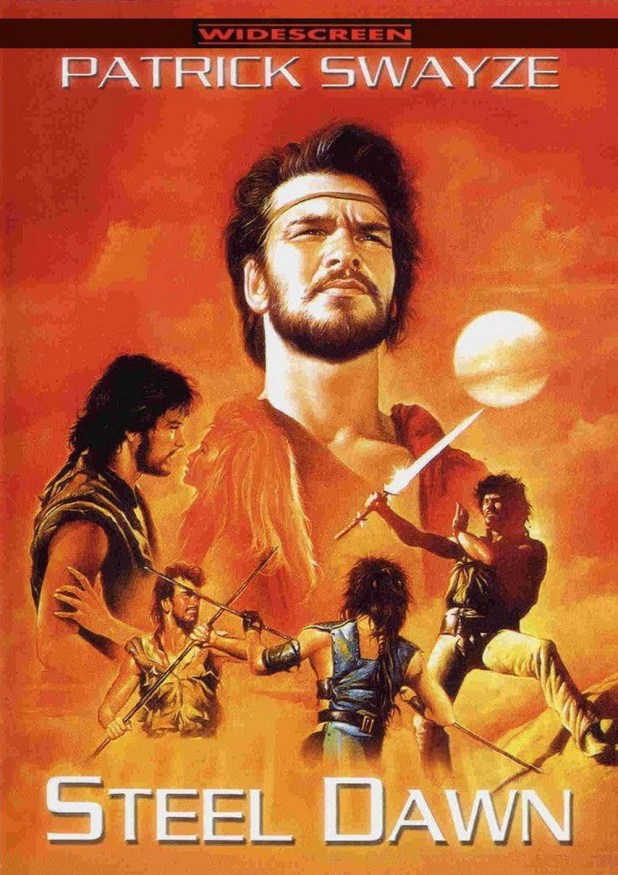
Steel Dawn has a pretty great post-apocalyptic pedigree. Brian May — not the Queen guitarist — who did the music for the first two Mad Max films wrote the score. Anthony Zerbe, who was Matthias in The Omega Man, shows up as does Brion James, who was Leon Kowalski in Blade Runner, and Christopher Neame, who was in No Blade Of Grass.
And then we have Patrick Swayze as the hero, Nomad. Yes. Swayze.
Nomad was once a soldier, but his family was tortured and killed. Now, he wanders the desert, seeking the killer of his mentor and seeking revenge for his family. This brings him to the town of Meridian, where he learns how to be a farmer as he works alongside Kasha (Swayze’s real life wife Lisa Niemi), her son Jux (Brett Hool — trust me, between the producer, director and one of the stars, this was a Hool family project) and her foreman Tark (James).
Damnil (Zerbe), a local landowner and his gang — which coincidentally includes the man that Nomad wants revenge on, Sho (Neame), want a monopoly on the water supply. It just so happens that Kasha has a source of pure water that she plans to give to the entire valley. Hijinks ensue — Tark is killed, Jux is kidnapped and Nomad kills everyone before walking off alone.
Like all the smart post-apocalyptic films, this movie realizes that it shouldn’t be ripping off Mad Max, but should instead rip off Westerns like Shane. The scenery makes up for a lot of the plot’s shortcomings, particularly the desert scenes. There’s one astounding visual where Nomad walks past a shipwreck partially buried in the desert. That ship is supposedly the Eduard Bohlen, a cargo ship that wrecked off Namibia’s Skeleton Coast in 1909.
Editor’s Note: Once hard to find, Ravagers is now out of the vaults and airing on various Smart TV platforms.
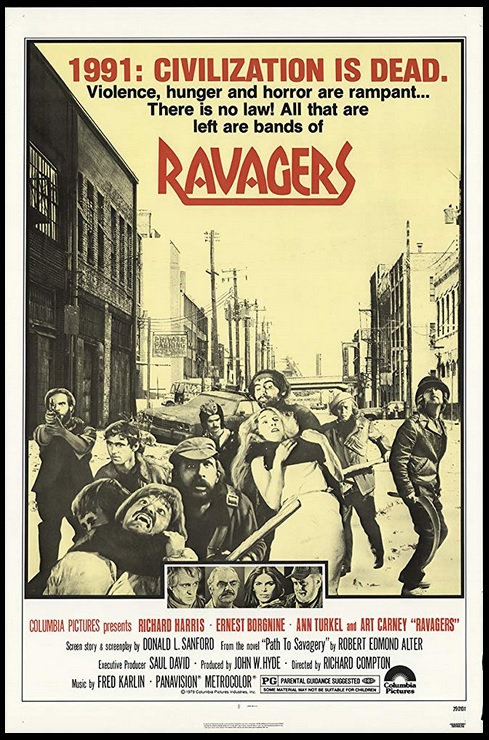
Ravagers is the final film of the 2nd wave of post-apocalyptic films from the 1970’s (the first wave encompassed films from the ‘50s and ‘60s that began with the likes of 1955’s Day the World Ended and 1963’s The Last Man on Earth and ended with 1968’s Planet of the Apes) that began with Charlton Heston’s The Omega Man in 1971 and solidified with Heston’s next film, 1973’s Soylent Green. (The third wave of post-apoc films began with 1979’s Mad Max, then solidified with 1981’s Escape from New York; which begat the knock offs from Italy and the Philippines.)
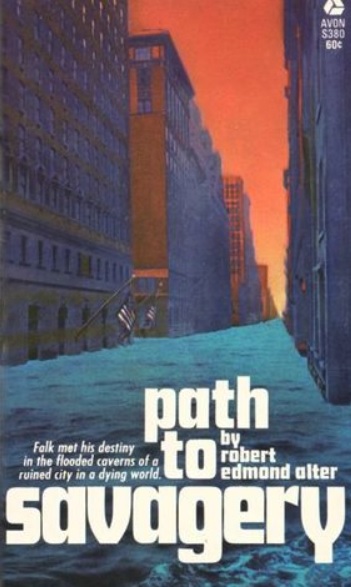
As with Planet of the Apes (based on Pierre Boulle’s 1964 Monkey Planet), The Omega Man (Richard Matheson’s 1954 I Am Legend), Soylent Green (Harry Harrison’s 1966 Make Room! Make Room!), and Damnation Alley (Roger Zelazny’s 1969 novel), Ravagers was a long-in-development film based on another best-selling, ‘60s science fiction novel: 1966’s Path to Savagery by Robert Edmond Alter.
And as with those book-to-screen adaptations — especially in the case of Damnation Alley — the final celluloid product barely resembled its popular, best-selling source material. And as with Oliver Reed’s Z.P.G, Yul Brenner’s The Ultimate Warrior, Sean Connery’s Zardoz, Jackie Cooper’s Chosen Survivors, Paul Newman’s Quintet, and George Peppard’s Damnation Alley, Ravagers was also buried by its distributor (in this case, Columbia Pictures) after its less than stellar critical and box office performance: it was hoped each film would match the success of Heston’s films. (Yep, you guess it: Ravagers was in desperate need of dump truck-bulldozer hybrids scooping up humans and Anthony Zerbe thespin’ with sclera-lenses from under a monk’s habit.)
In addition, these failed, ‘70s A-List apoc-films rarely — if at all — were redistributed as 2nd feature-undercards on the Drive-In after their initial run, and each were a rare find on television. Even during the early ‘80s cable television boom, with the “Superstations” of TBS-Atlanta, WGN-Chicago, WOR-New York, and the USA Network, and the burgeoning VHS home video market — both formats hungry for product to fill their airtime and store shelves — the films were wholly absent from the marketplace. Ravagers did see a release on Betamax and VHS in the mid- ‘80s (now highly coveted by VHS collectors; it doesn’t appear as an entry in any U.S-published VHS guides), but in the U.K and Europe only. For whatever creative or legal reasons, it seems Columbia didn’t want — or couldn’t allow — the film to be viewed by U.S audiences.
Now, with the explosion of the present day online/digital “television” platforms, Ravagers is commercially available worldwide for the first time in forty years. While there’s no free copy offered in the extensive library at TubiTV, the film is available for a nominal fee on You Tube and Vudu — with retro-prices that harkens the VHS rental fees of the ‘80s. It’s also available for rent on cable television system VOD platforms for about the same price.
Excelling at writing war-projects, screenwriter Donald Sanford made his theatrical debut, after a long career in U.S television, with Submarine X-1 (1968), and received praises for his work on Midway (1976; directed by Damnation Alley’s Jack Smight). While it’s unknown why Sanford retired from the industry—perhaps as result of its critical and box office failure — Ravagers was his final film; he transitioned to a career as an executive in the mining industry. Ravagers also became the final theatrical directing job for Richard Compton, who had box office success with the biker flick Angels Die Hard (1970) and Macon County Line (1974). He “retired” into a prolific television directing career.
Nothing like have a dog bark at your movie to induce you to retire (more on that, later).
As is the case with most apocalyptic films (unlike Blade Runner, which built its “world” from scratch), Ravagers, shot for the then major studio “low budget” price of $4 million, made use of preexisting structures (as did 1972’s Conquest of the Planet of the Apes, which also took place in “1991” via 20th Century Fox’s “Century City” complex) to create its “future.” So, again . . . we’re in another future world . . . that looks pretty much like our present day. And speaking of Planet of the Apes, and the art of economic “repurposing” in film: Astute science fiction fans will notice the matte painting that the opening titles are show over in the beginning of the film is the same matte painting seen by the ape army in Beneath the Planet of the Apes (1970).
It’s that repurposing — and perhaps Sanford’s interest and connection to the mining industry — that led to the film’s stellar production values. The film is rife with majestic, rusted processing facilities, while other scenes were shot at the infamous “Three Caves Quarry,” which is noted as one of Alabama’s first limestone quarries that, during the Cuban Missile Crisis of 1962, was slated to be used as a fallout shelter. Alabama’s Space and Rocket Center — again, repurposing preexisting architectural structures to save money — also served as a backdrop.
As with most post-apoc adventures, Ravagers is a futuristic-western featuring a peaceful protagonist out for revenge against those who upended his life: in this case, the rape and murder of Falk’s wife Miriam (Alana Hamilton, the wife of George Hamilton and, later, musician Rod Stewart; she made her debut in Evil Knievel and appeared in Roger Corman’s Night Call Nurses). Taking place in 1991 in the aftermath of a nuclear holocaust, the fallout mutated most of the world’s population into cannibalistic creatures known as “The Ravagers” (actually just homeless-looking humans with a nasty disposition) that hunt the unaffected survivors, known as “The Flockers.” (The Ravagers are led by prolific character actor Anthony James, who made a niche-career playing slimy-greasy characters in the films High Plains Drifter (1973), Burnt Offerings (1976), and Blue Thunder (1983), as well as countless U.S TV series.)
Richard Harris (A Man Called Horse, Juggernaut) is Falk; he ventures into the wastelands to dispense vigilante justice (just like in a Clint Eastwood western, such as Unforgiven (1983) — which stars Anthony James in his final film). Along the way, Falk befriends a crackpot army sergeant (Art Carney; Roadie, Harry and Tonto) and a strong and sassy scavenger (as all apoc-females are), Faina (played by Harris’s real-life wife, Ann Turkel). Together they find sanctuary in a peaceful community led by Rann (Ernest Borgnine, Escape from New York; while top-billed, he’s in the film less than 10 minutes) living on a rusted-out ship anchored off shore — that is subsequently destroyed by the Ravagers. Falk reluctantly becomes the survivors’ new leader as they embark on a quest to find a mythical safe haven: the Land of Genesis.
While visually stunning — and Anthony James, as usual, delivers the goods — the pompous judgment-diction of a woefully miscast Richard Harris makes you wonder when he’s going to pick up a skull and start evoking Shakespeare and pine for Esmeralda. And in the grand tradition of apoc-romps such as Def-Con 4 and Damnation Alley substituting action for talky-philosophical babbling of the “why we’re here and what are we gonna do now” variety, Ravagers moves like a gimp turtle being beaten by a snail.
Like with the earlier apoc-romps The Ultimate Warrior and Damnation Alley, Ravagers isn’t a total waste of time . . . it’s just that it could be so much better. Regardless of its shortcomings, I hold the film in high regard due to the memories of my late father taking me to see it at the local Drive-In (it didn’t play in theatres; and it was gone by next the weekend). My dad hated Ravagers; then again, he hated Soylent Green, Rollerball, and Damnation Alley for having “too much talking and not enough action” and, in a way, pops was right. There was a lot of yakity-yak in those films.
But my dad didn’t hate it as much as Gene Siskel of PBS-TV’s Sneak Previews. Roger Ebert’s svelte sidekick chose Ravagers as his “Dog of the Week” (well, actually Spot the Wonder Dog picked it; you can forward to 2:29 for the “ravaging” review). And Siskel’s review killed the film: For when a canine barks at your $4 million dollar gorilla, telling you it’s a “dog” . . . you quickly pull the big ape from release, cancel the rollout to additional U.S screens, cancel your overseas theatrical schedule, and quietly release the beast years after the fact to video in Europe. Why release it on U.S video, only to have reviewers dredge up Spot the Wonder Dog in reviews all over again? Nuked by a dog: now that’s an apocalypse!
. . . And that’s, my apoc-rats, is the story of Ravagers.
Oh, and if you absolutely must have more Ann Turkel (yes, please!) working alongside her then-husband Richard Harris, you can check out their first three movies together: 99 and 44/100% Dead! (1974), The Cassandra Crossing (1976), and Golden Rendezvous (itself a long-in-development novel-to-screen project optioned in 1962 and not made until 1977). But here, at B&S Movies, we love Ann for Roger Corman’s amphibian-monster Alien rip-off, Humanoids from the Deep.
Sorry, Ms. Turkel. We know you probably want to forget that one. Along with Ravagers.
About the Author: You can read the music and film reviews of R.D Francis on Medium and learn more about his work on Facebook.
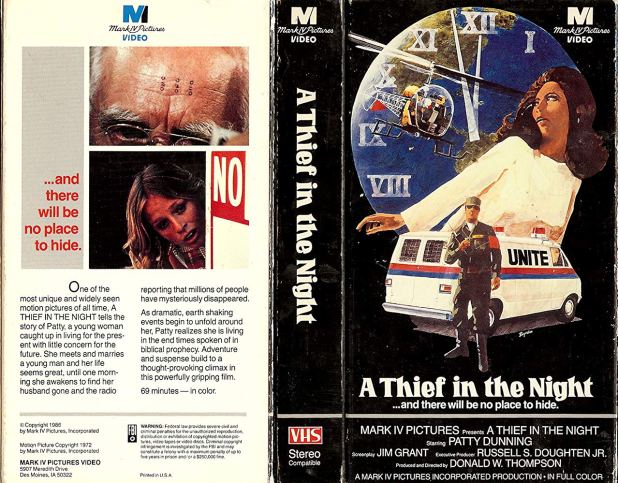
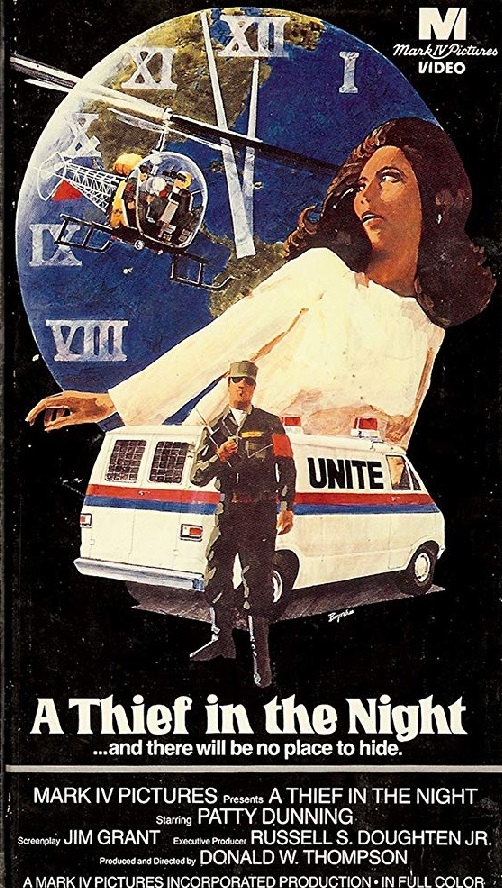
When I was a kid, my parents went to a lot of religious bookstores for some reason. I was always left to my own devices and would always find my way to the Jack Chick comics and posters on the wall. In the pre-millennium tension world that was the late 1970’s, one movie was always getting shown and that was A Thief In the Night.
This movie is thought to have been seen by an estimated 300 million people and was the pioneer of a whole new genre of Christian film, one that would marry rock music and horror movies to create a film that would, quite frankly, scare you into believing. This isn’t family-friendly evangelic filmmaking. This is punch you in the face and demand you get saved now mania.
Patty Myer wakes up to learn that millions of people have disappeared in the Rapture. Even her family is gone and she’s been left behind. She’s trapped in a world where the United Nations has set up an emergency government system called the United Nations Imperium of Total Emergency (UNITE) and declare that those who do not receive a symbol of identification — yes, the Mark of the Beast — will be arrested.
It didn’t have to be this way for Patty. One of her friends loved Jesus and followed Him. Another friend was bitten by a snake before finding his way. And now, she doesn’t believe in Jesus or the UNITE preachings, so she’s on the run.
Patty is chased by UNITE to a bridge where she falls to her death, but then she awakens only for it to all be a dream. But guess what? The Rapture happens again and her family is all gone again. What happens next? Will she accept the Mark? Will she try to find her way to Heaven? If even a priest will take the Mark, how can a normal person avoid Satan?
There were three other movies in this series — of course we’ll be covering all of them — and they all build on the tension of the end of all things. These things played in libraries and churches and used fear to lead the conversion call at the end. I’ve never understood that, but the majority of humanity leaves me questioning a lot of things.
All I know is that I spent most of my childhood nights awake in bed worrying about the end of the world. Would I be ready? Would I make it to the Rapture? How would I survive when the rest of my family went to Heaven and I was left alone to battle the forces of the evil ones? I would get the shakes, waking my whole family up screaming in terror.
Did the movie work? According to an interview on a Baptist church website, Heather Hendershoot, associate professor in the media studies department at Queens College, City University of New York said, “I have found that A Thief in the Night is the only evangelical film that viewers cite directly and repeatedly as provoking a conversion experience.”
25 years later, the authors of the Left Behind series of books and films had the same success but on a much more secular level. We’ll never lose our fear of the end times until after they come…and according to scripture, we’ll never know exactly when we’ll all be taken or left behind.
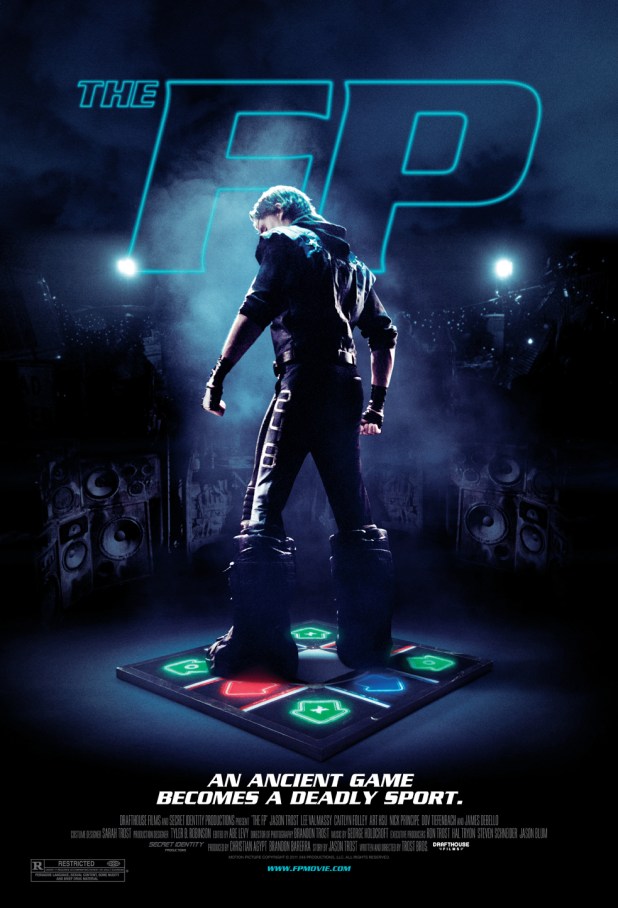
In The FP, disputes between rival gangs are settled by playing Beat-Beat Revelation, a dancing video game similar to Dance Dance Revolution. The 248 and the 245 are battling to control the FP — Frazier Park — and lessons must be learned.
This all comes from the minds of Brandon and Jason Trost. Brandon has gone on to do cinematography for Crank: High Voltage, Rob Zombie’s Halloween II, and Ghost Rider: Spirit of Vengeance, while Jason has created the film series All Superheroes Must Die and the film Wet and Reckless. He’s really blind in his right eye — or is trying to be fashionable — which is why he’s always wearing an eyepatch.
The film begins with L Dubba E, the leader of the 245 gang, murdering BTRO, the leader of the 248 gang. As a result, his brother JTRO (Jason Trost) leaves the FP behind to become a lumberjack.
A year later, L Dubba E has taken over the FP and is holding back all the booze, which is leading to an increase in meth usage and homelessness. KCDC (Art Hsu, who is also in Crank: High Voltage), another 248 member, brings our hero back home, where he reunites with Stacy, an ex-girlfriend who is now sleeping with the enemy.
Can JTRO rise to the level of his brother? Will Stacy stop having sex with the main bad guy and realize she loves our hero? Will people bring guns to a dance off?
If you’ve ever played video games, you’ll probably enjoy this more than most people. Jason Trost came up with the idea in his teens when he noticed people treating Dance Dance Revolution like an intense battle. The dialogue was inspired by Def Jam: Fight for NY, which makes absolute and total sense.
Best of all, James Remar is in the film as the narrator. He met the brothers when their dad worked on Mortal Kombat Annihilation‘s effects team.
This is the kind of film that you’re either going to fall in love with instantly — like I did — or think it’s the dumbest thing you’ve ever seen. Imagine Mad Max with dance-offs and you’ll get the idea.
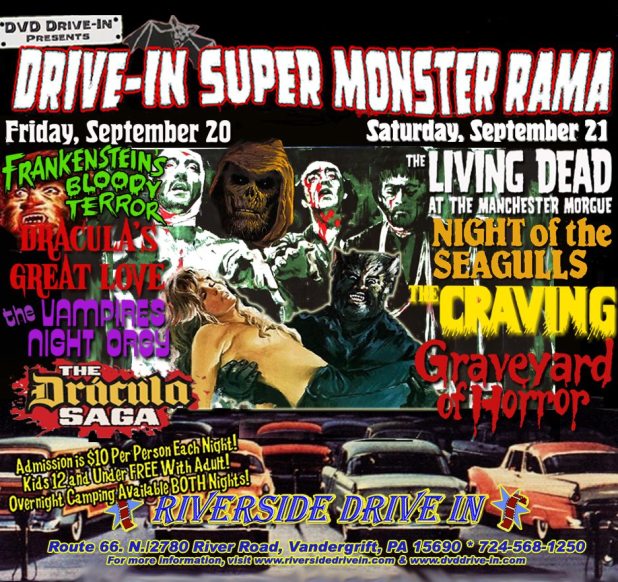
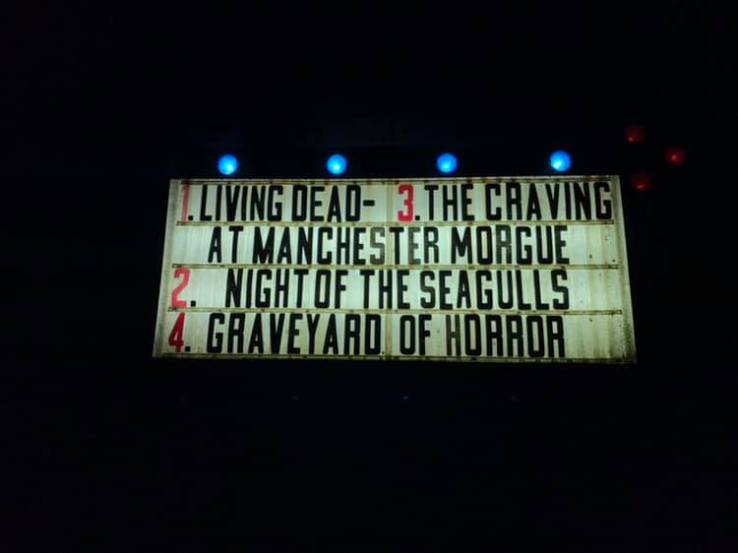
There’s no better place to watch the movies that we love than the drive-in. And twice a year, we travel to the Riverside Drive-In in Vandergrift, PA to see eight movies in two days. This September, we were entertained by a veritable cuerno de la abundancia of werewolves, vampires and zombies Spanish style.
Unlike past years, this time we had near-perfect weather! We even brought Cubby the dog along to enjoy the festivities. He is now a huge fan of El Hombre Lobo!
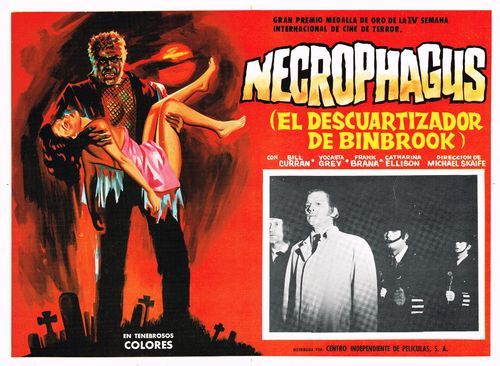
There’s something to be said about the last movie on a multiple film bill late night at a foggy drive-in. You’re half-awake, you’re probably trying to sober up and you might be the only one not sleeping. It feels like you’re surrounded by others but still discovering a movie for yourself for what could be the first time. That’s how I got to experience Graveyard of Horror, or as it’s also called, Necrophagus and The Butcher of Binbrook.
It’s written and directed by Miguel Madrid, whose film The Killer of Dolls has just been unearthed and re-released by Mondo Macabro.
Michael Sherrington travels via train to his ancestral castle, where he soon learns that his wife has died giving birth to his son. Then, we meet way too many characters for one movie, such as his brother, who seems to have become a mad scientist who buried himself alive and is being fed blood all to prove a point; various sisters-in-law who all like to argue and cheat on their husbands, Michael’s monther and two lcoal doctors who are keeping things from our hero. Oh yeah, there are also some graverobbers or thieves or somebody wearing Halloween masks skulking outside.
Unhappy with the answers he’s getting, Michael digs up his wife’s coffin, which he finds is empty just in time for those graverobbers to knock him out and a monster — none of the budget went to this monster — to attack.
Then, our hero disappears for an hour and all mannner of new plot and surrealism happens. This is either the worst — or the best, if you ask me — movie to watch when coming down from two straight days of horror movies in a secluded wooded drive-in. Anyone awake is going to be baffled and anyone still asleep would barely be able to keep this movie straight in their heads.
I mean, I was watching this movie through a slight fog — both in atmosphere and mental headspace thanks to multiple cans and jugs and bottles of all manner of drinks — and I gotta tell you, what I remember was lots of braying jazz, quick camera zooms that would make Lucio Fucli proud, sepia dream sequences, nausea-inducing handheld shots, editing that simultaneously makes no sense and all the sense in the world, outre camera angles and weird close-ups for no reason. If you ask me — and you did, because you’re reading this — I watched this in the absolute peak conditions by which this film should properly be displayed.
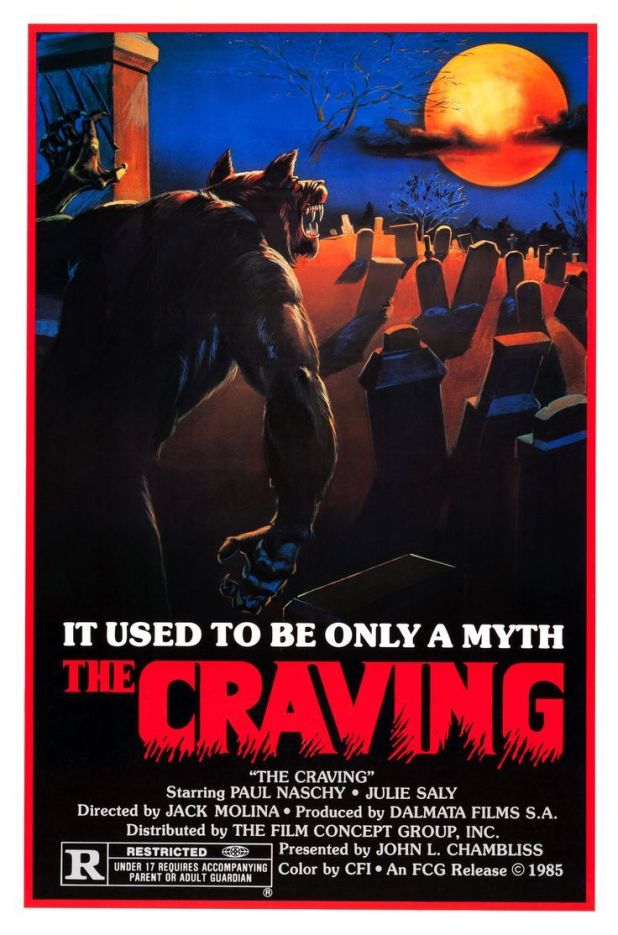
The ninth movie in the saga of Count Waldemar Daninsky — as always played by Paul Naschy — this movie wasn’t released in the United States until 1985 when it was renamed from its original title, El Retorno del Hombre Lobo (The Return of the Wolfman). The last Naschy movie to play the U.S. theatrically, it’s also been released here on DVD and blu ray as Night of the Werewolf.
Naschy has gone on record saying that this was his favorite Hombre Lobo film and considered it a remake of his 1970 effort La Noche de Walpurgis (Walpurgis Night).
Waldemar Daninsky is sentenced to be executed along with a number of witches, including Elizabeth Bathory. He actually prays for his suffering to end, but it’s nearly impossible to truly kill him. That means the authorities have to pretty much bury him alive, with a silver dagger piercing his heart and an iron mask to keep him from biting anyone dumb enough to let him loose.
Of course, that’s exactly what happens centuries later when the dagger is removed. That said — it’s just in time, as Bathory is back and needs to be stopped. Oen of the women that Daninsky meets in our time — Karin — will become his great love, but if you’ve watched any Spanish werewolf movies, love is often doomed to mutual death and funeral flames.
This higher budgeted effort — created by Naschy’s own Dalmata Films — failed to score in foreign markets and spelled doom for its studio. That’s a true shame, as it’s probably the best looking version of Naschy’s werewolf vision.
Is there a more striking visual in horror than the Blind Dead, freshly awakened from their centuries of slumber, slowly plodding their way toward their victims? Not for my peseta. Well, they don’t make those any longer. Let me rephrase: not for my euro.
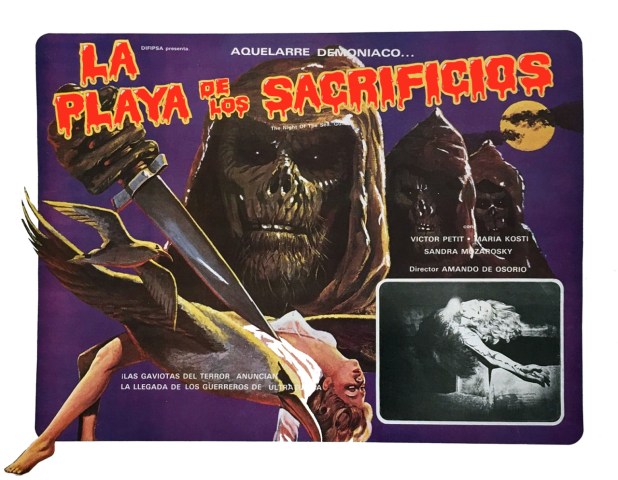
Night of the Seagulls (La Noche de las Gaviotas) is the fourth and final Blind Dead film, a series which began with 1972’s Tombs of the Blind Dead and continued with 1973’s Return of the Blind Dead and 1974’s The Ghost Galleon. Like those films, this was also written and directed by Amando de Ossorio.
Ossorio would lament the fact that these films’ budgets meant the final product could never live up to the vision inside his head. The end of The Ghost Galleon, where a boat in a bathtub is supposed to be the Knights’ dreaded ship set ablaze, is prime evidence of this.
His iconic Templar Knights would later appear in two other Spanish horror films, Jess Franco’s film Mansion of the Living Dead and Paul Naschy’s The Devil’s Cross. These aren’t official sequels, but homages.
PS – If you catch this movie and think, “I saw a movie called Don’t Go Out at Night, or was that Night of the Death Cult, and that seemed a lot like this one,” you’re not crazy. Those are some of the wild alternate titles for this movie.
Night of the Seagulls shares the same Templars we’ve come to know, love and perhaps fear while not sharing continuity with any of the previous films.
Back in medieval times, we watch a young couple get attacked by the still human Knights Templar, who kills the man and sacrifice one of the women to their unspeakable god.
Centuries later, Doctor Henry Stein and his wife Joan come to the same town, where they’re shunned by the locals. Seriously — Joan can’t even buy apples at the only store in town without some attitude.
The reason why is that it’s Templar season. Yes, every seven years, the Templars rise and demand a virgin sacrifice for seven consecutive nights. Of course these outsiders are going to screw it all up for the town by trying to save one of the girls. Luckily — or unluckily — a village idiot attempts to aid them in their question, but all he’s really good at is being struck and thrown down hillsides.
While not on any of the official video nasty lists, this movie — under the title Don’t Go Out at Night — was listed on Greater Manchester Police’s original list of titles that were worth seizing. It took over a minute worth of cuts to enable this to be released again in 1987, but the Anchor Bay 2005 release was uncut.
Your enjoyment of this film will depend on how much you buy into the Templars, who appear to a haunting theme and then slowly make their way down the beach to expose a virgin and then do away with her. Some people find this movie slow and boring. We’re not in that camp.
Scream Factory has released this on blu ray recently, so you have no excuse not to check it out!






 B&S About Movies
You must be logged in to post a comment.