Lifechanger (2018)

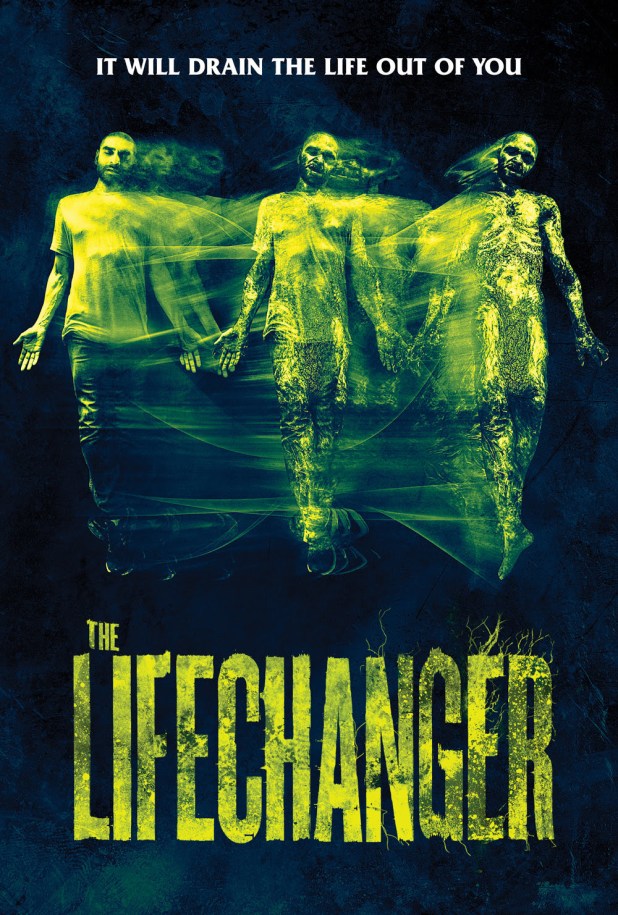
Life and love are complicated enough. Just imagine, for a moment, that you have to switch bodies every 24 hours before the body you’re in starts to die. Could you go on consuming body after body?  How would you find anyone to spend your life with?

Written, produced and directed by Justin McConnell, Lifechanger has an intriguing premise.

Drew, the main character of this film, has an identity crisis. That’s because if he doesn’t stay in the same shape for more than a few days, he’ll die. So he steals and copies people, taking their look, along with their memories. Once this happens, he can only be them for a few days before, again, he moves on.

We’re never given any idea how old Drew is, but his internal monologue sounds weathered. It’s the voice of Bill Oberst Jr., who has been in a ton of independent horror films. For example, he’s the lead in Abraham Lincoln vs. Zombies. 

The only thing he really cares about is Julia, a woman he’s fallen in love with. But how can he make a life with her when the majority of his existence is all about stealing lives?

I really enjoyed this movie because while it has elements of horror and plenty of practical gore, it’s also a very human story with some very inhuman elements. It has more ideas and heart than three mainstream films and is well worth seeking out one it comes out.

Lifechanger releases on January 1, 2019 on all VOD platforms. Visit the official site for more information.

Disclaimer: I was sent this movie by the film’s PR company. That has no bearing on the review.

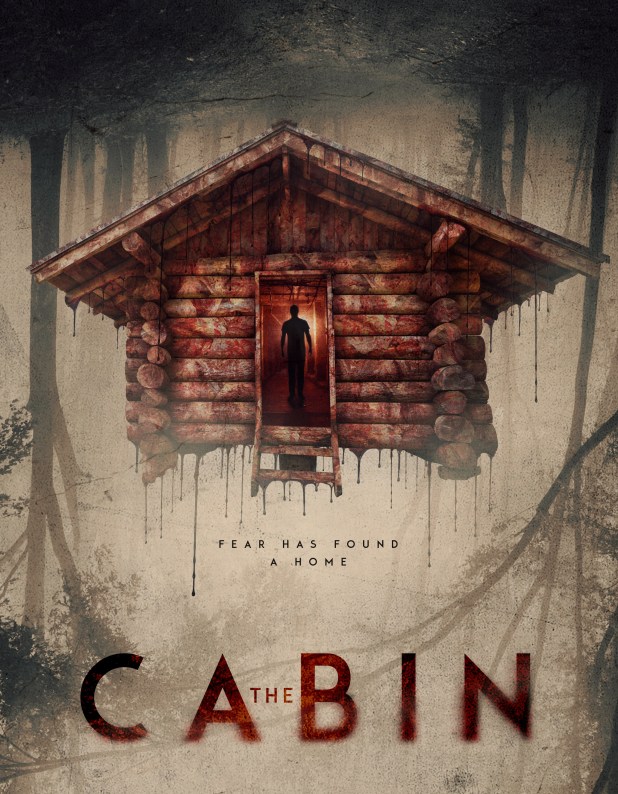
The Cabin (2018)

Rose and Harry are on their way to visit Harry’s family cabin as a way to reconnect their fractured relationship. But just like Green Acres, Rose really doesn’t want any of Harry’s attempted return to his childhood. And just like a slasher, they’re not the only ones who have come back to the Swedish countryside.

The Cabin is the debut feature by director Johan Bodell and takes place in the countryside of his home country, Sweden. Once they get there — and argue at one another the entire way — it turns out that a maniac named Sven (Erik Kammerland, who also wrote the film) is also there.

Eventually, the couple starts bickering — thankfully, I was getting past relationship flashbacks — and engages in a cat and mouse battle with Sven. Everything you could use to describe this film makes it seem like one of a million others with the same premise, but Bodell’s skill as a director is what elevates the proceedings. The colors and scenery work together so well to give the film a sense of isolation, so you really feel it when Sven finally reveals just how horrible he can be.

The Cabin is a quick and brutal film. There isn’t a ton of new ground that gets broken, but it’s certainly done well and filled with plenty of decent gore. I’m looking forward to the next project from Bodell, as he seems to be a talent on the rise.

The Cabin is available on DVD and VOD on December 4. You can also visit the official site.

Dislaimer: I was sent this film by its PR team. That has no bearing on the review of this film.

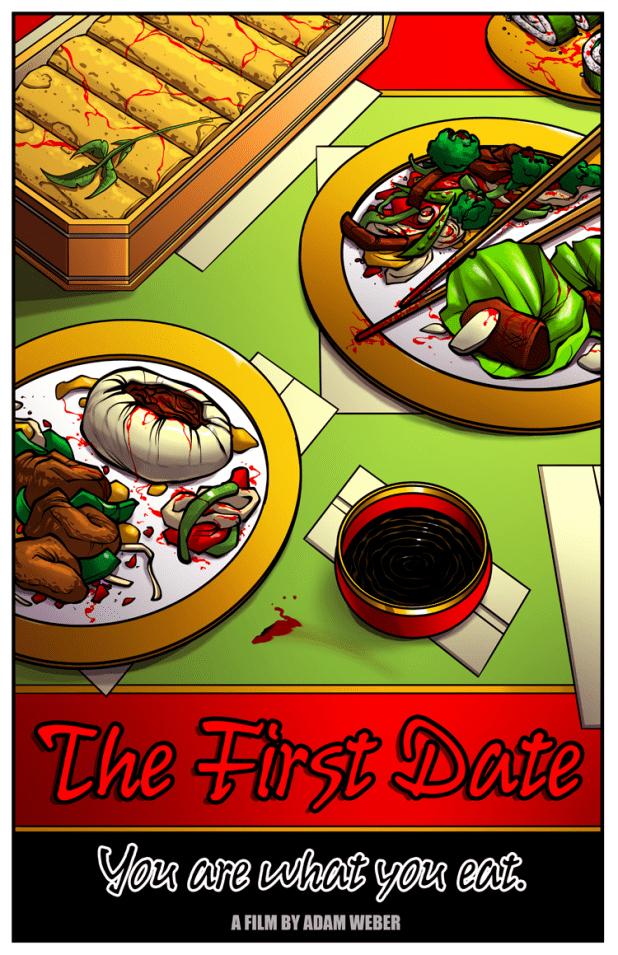
The First Date (2018)

Writer/director Adam Weber sent me a copy of his new 5-minute film, The First Date, for review.  It’s a self-funded, completely independent project inspired by films like Tucker And Dale Vs. Evil, 100 Bloody Acres and Evil Feed.

Weber was an associate producer on Terrifier, so if that movie’s graphic gore didn’t make you lose your lunch, this take on a dinner date may be right up your alley.

It’s a pretty simple premise: A man is waiting for his blind date, who is supposedly stuck in traffic. The truth, however, is pretty horrifying. I feel like if I discuss anything else that happened, I’ll give the whole story away, as it’s such a quick tale.

There are some decent FX on display here. If I had any issue with what I watched, it’s that the text conversation may have worked better as supers on the screen, thereby not getting in the way of the running time by having dissolves in between waiting for the messages. And the ending punchline could have used a little work.

That said — it’s a fun effort and I look forward to seeing what Weber does next. Thanks for sending this our way!

Disclaimer: This film was sent to the site by its writer/director. That didn’t impact our review at all. 

Luciferina (2018)

If you’ve been reading my writing for awhile, you may know that I’ve learned some rules from horror movies that have aided in my survival for the last forty some odd years. For example, I don’t do drugs or have sex in the woods. And I avoid old Hollywood actors and actresses. Now, thanks to Luciferina, I’ve added a new one: don’t drink Ayahuasca in a haunted church.

Natalia is a 19-year-old novice nun — who has never been baptized — who must return home when her mother dies and her father is in a coma. Her sister Angela blames her for leaving the family behind and claims that evil forces have been attacking the home. That makes sense — her father claims that their mother repeatedly cut herself, painted a series of uterus heavy imagery and then attacked him.

Angela has fallen in with a bad crowd while at university, as she’s constantly high and dealing with her abusive boyfriend Mauro. As time goes on, however, we learn that Natalia may not be the pure innocent that she appears to be — she’s at war with the desires in her body as she tries to keep her spiritual marriage pure with God.

Natalia decides to join her sister’s friends as they partake in an Ayahuasca ritual, which often means vomiting or defecating repeatedly on the road to enlightenment before visions take hold. These visions don’t erase the dark parts of the soul, as promised. Instead, they cause murder, self-mutilation, revelations about the girls’ parents and set Natalia up for a one-on-one confrontation with Satan in the human form of Abel, a boy who has had mental illness issues his entire life.

Writer/director Gonzalo Calzada also created the film Resurrection, which was the most successful horror movie in the history of Argentina. This is the first of his “The Trinity of the Virgins,” films that will be centered around virgin girls batting demons. His imagery is dreamlike and its intriguing to see a non-Italian or American take on demonic possession.

Luciferina makes the narrative leap from possession film to slasher to arthouse freakout by the end of its running time. There’s a pretty sinister image of Abel sitting with all of the bodies of his victims stacked up on the altar that leads into the final confrontation. Natalia attempts to protect herself with both a pentagram and a gun before learning that she can use her light to destroy the evil that is inside her former love interest.

Calzada has the makings of being a great director. I would have cut this one down by around a half an hour, but I also have no attention span. That said, the last fifteen minutes of this film, where Natalia embraces her womanhood and sexually exorcizes the demons inside Abel, is on the level of bonkers The Exorcist clones like Enter the Devil and The Return of the Exorcist. This is also a film that echoes the Psycho shower scene with its heroine feeling herself until three gigantic cockroaches appear, frightening her back into being chaste.

You can get your own copy of this film on DVD/blu ray via Amazon or you can stream it on on iTunes, Amazon Instant Video, Google Play, Vudu and more. You can also visit the official page for the film.

Disclaimer: I was sent this film by its PR team, but that has no impact on my review.

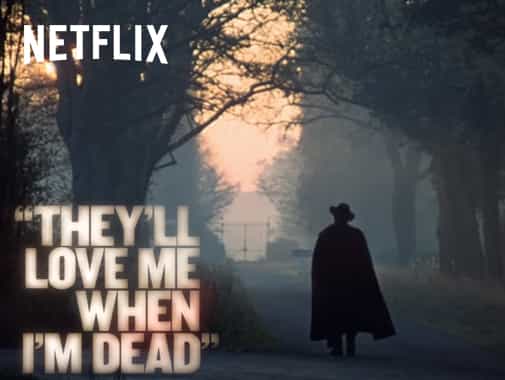
They’ll Love Me When I’m Dead (2018)

I don’t know for certain if I’ve ever had the chance to espouse on this site exactly how much Orson Welles means to me. As a child, I was obsessed with his radio work on Mercury Theater and The Shadow, blasts through the nighttime ether via WKST-AM radio (the first station that Alan Freed would work at before he coined the term rock and roll). In the late 1970’s, the opportunity to watch classics films wasn’t as simple as grabbing a movie off the shelf or streaming it. No, when Citizen Kane aired on broadcast TV, it was a major event. I remember my father sitting me down and telling me that we were about to watch something special.

That may have been the birth of my lifelong love for Welles work, but it’s only grown as I’ve read innumerable books and watched so many documentaries that attempt to explain his genius and madness. Now, They’ll Love Me When I’m Dead explains even more as it details his legendary lost film, The Other Side of the Wind.

Directed by Morgan Neville (Won’t You Be My Neighbor?), this work tries to explain exactly the trials and tribulations of this film, which ties together Welles attempted from European exile in the wake of the new Hollywood to the Iran crisis and the dissolution of his friendship with his acolyte, Peter Bogdanovich.

This movie had to have been hard to make for many of the people caught in the wake of Welles. For Cybil Shepherd, he was the combative old man who lived in the same wing as her in the home of her lover Bogdanovich, so forgetful that he’d put lit cigars into the pockets of his robe. For Bogdanovich, he went from hero to villain, vilifying him with Burt Reynolds on The Tonight Show and placing a character into the film that was a not-so-thinly veiled assault on his relationship with Shepherd.

Nobody was more impacted by Welles than cameraman Gary Graver, who volunteered to work with the artist at a young age and then basically gave his life and sanity over. Welles was the central figure of his life and to supplement the money he lost working for him (he was given the 1941 writing Oscar that Welles won for Citizen Kane, but was sued by his daughter to get it back when he tried to sell it) by working on films like Trick or Treats and Mortuary. This film also sheds a light on the fact that Graver also worked as a writer and director in the adult film industry, often credited as Robert McCallum. He didn’t just make one or two films. More like 135 and he was inducted into the AVN Hall of Fame for his contributions to the adult film industry. In fact, in order to get Graver back to work on his film faster, Welles himself would personally cut a scene in the film 3 A.M.: The Time of Sexuality. While a hardcore lesbian scene, it totally looks like an Orson Welles movie, complete with low camera angles. How many major directors silently work in the adult industry just to finish a film they’d been trying to complete for a decade?

As time moved on, characters would become real people and real people would become the characters in the film, in an extreme magical rite of sorts. Welles was obsessed with the nature of reality, with what is the truth and what is an illusion (see all of his perfect film F for Fake for more). The near decade creation of The Other Side of the Wind both predicted and reacted to the changing story of its creator’s life.

The strangest thing of all is that They’ll Love Me When I’m Dead is a documentary about the last film in Welles life. But so is The Other Side of the Wind, when you get right down to it. Then again, there were over a hundred hours cut together to make the latter, so of course, it needs some further exploration and interpretation.

My favorite part of this documentary are all the moments where you wish there was more, such as Welles conversation with Dennis Hopper about the changes in Hollywood. I’m fascinated by Welles, well, fascination with femme fatale Oja Kodar. And amazed that Rich Little would agree to appear in this when he comes off so badly. Anything for Orson, one assumes.

If you love Welles at the level that I do (I can totally understand Graver throwing away his life to work with him), you’ll love this. And even if you don’t know a single thing about him, this is an intriguing meditation on the nature of art and reality.

Both They’ll Love Me When I’m Dead and The Other Side of the Wind are now available on Netfilx.

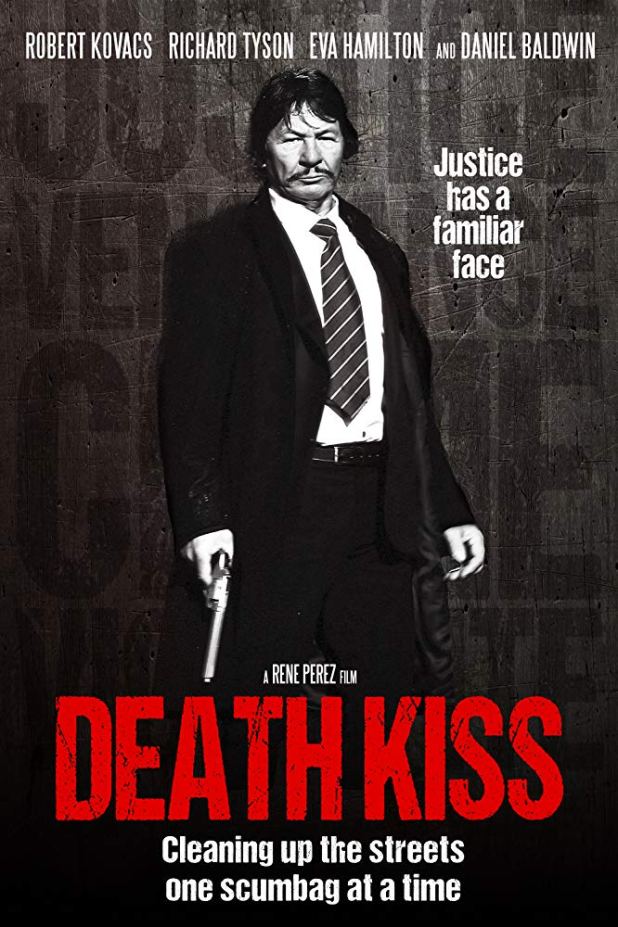
DEATH WISH WEEK: Death Kiss (2018)

A vigilante with a mysterious past. A city under assault by crime. A young mother and her child that need saving. Sounds like a Charles Bronson movie. And thanks to actor Robert Bronzi, who looks pretty much exactly like the Bronson we know, love and miss, it looks like we get the chance to enjoy one more chance to enjoy one of his films. At least that’s the idea.

Bronzi previously appeared in From Hell to the Wild West, which was also directed by the same director as this movie, Rene Perez. Here, he plays The Stranger, a man who may or may not be Paul Kersey, who wanders the United States looking for wrongs to right. One of those wrongs happened when Ana’s (Eva Hamilton, Ruin Me) daughter was hit by a bullet and handicapped. Since then, he’s left her money to help out of a sense of obligation.

This could be a Death Wish film with all the violence, gunplay, rape and mayhem, thanks to Richard Tyson as Tyrell. One look at Tyson’s IMDB page reminds you he was in Kindergarten Cop, but also shows you that he’s a working actor with double digit roles currently in production.

The part that doesn’t feel like a Death Wish movie is that The Stranger isn’t constantly reminded by an unfeeling God just how much He hates His creation, killing everyone that Paul Kersey loves. Well that and it’s missing any real motivation or actual gravitas behind why The Stranger does what he does. It’s like they wanted to fast forward to the crazy scenes of Death Wish 3 without the hard work and pain that it took for the character to get there. Basically, it’s a video game with no gun scenes, just gunplay.

Director/writer Perez also plays all of the film’s music as The Darkest Machines and the 80’s style synth works pretty well. The special effects feature plenty of exit wounds that spray geysers of blood like a Japanese samurai film, but as they’re often CGI, then feel a little less organic than they should.

Daniel Baldwin also shows up as a right wing DJ that we hear throughout the movie. It seems like he and The Stranger have some kind of relationship where they help one another to get their missions accomplished.

Plenty of reviews have stated that there’s really no story here and that it’s mostly a series of action pieces. Basically, I hope that no one is coming into this movie expecting the emotional weight of Death Wish. That said, I may have an opinion on this film that’s not the highest, but Bronson did say: “We don’t make movies for the critics, since they don’t pay to see them anyhow.”

Disclaimer: I was sent this movie by its PR team, but as you know, that has no bearing on my review.

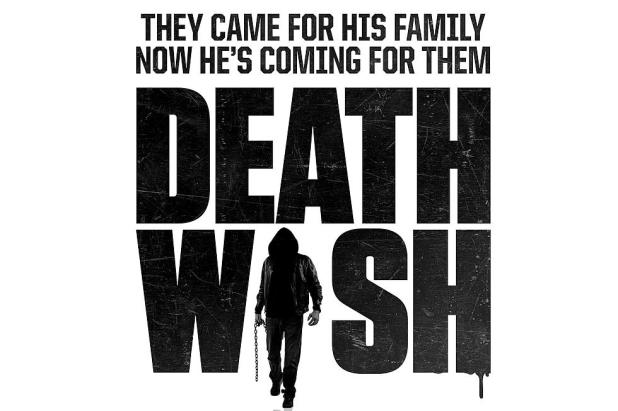
DEATH WISH WEEK: Death Wish (2018)

Written by Joe Carnahan (writer and director of Smokin’ Aces and the movie version of The A-Team, as well as a member of the Creative Council of Represent.Us, a nonpartisan anti-corruption organization) and directed by Eli Roth (Cabin FeverThe Green Inferno), Death Wish was a movie delayed several times by the rampant mass shootings in our country. It arrives at a time when the debate over guns has reached a fever pitch. That said, one viewing of The Killing of America, made way back in 1982, shows that that argument has been going on almost the entire way back to the original Death Wish series.

Do we need another Death Wish? After all, there were five different movies already. Is there something new that the film can speak to? This one attempts to, with numerous blips of info from various media sources as diverse as Chicago DJ Mancow, memes and the site mediatakeout to hip hop’s Sway in the Morning.

Paul Kersey (Willis) and his wife (Elisabeth Shue) are getting ready to say goodbye to their daughter Jordan before she goes to college. After lunch at a restaurant, a valet looks up their home address on their car after hearing they’ll all be out that night. However, Paul gets called into his job as a trauma surgeon — instead of an architect — leaving his family alone at home. This being Death Wish, I’m certain we can all guess what happens next.

Police Detective Kevin Raines (Dean Norris, Starship Troopers) and Detective Leonore Jackson are the cops in charge of the case, but they aren’t getting anywhere. Jordan remains in a coma while Paul grieves for his dead wife, including trying to stop a mugging which ends up with him being beaten. He debates buying a gun but realizes he’ll have to register it and be videotaped (the film wavers here between gun ownership being too easy and providing the right info).

A patient drops a Glock 17 while Paul tries to save his life and thanks to online videos, Paul learns how to use it. Soon, he’s stopping carjackings and killing drug dealers and has been dubbed the Grim Reaper by the media.

When Paul recognizes his stolen watch on a man’s wrist, he uses that man’s phone to get closer to the men who destroyed his family. One by one, he eliminates them before realizing that his actions have brought his family — daughter Jordan, who has emerged from her coma, and brother Frank (Vincent D’Onofrio) — into the killer’s sights.

Paul then uses his legally purchased weapons to defend his home, the police come after its all over and our hero easily explains that he’s not the Grim Reaper. Free of consequence, he’s able to take his daughter to college in New York City. There, he sees a mugging and stares right at the criminals, making the same finger pistol mannerism that Bronson used at the end of the first Death Wish. Interestingly enough, this is an inversion of the original film’s ending, where Kersey moves from New York City to Chicago.

Seeing as how director Eli Roth loves exploitation films, there are plenty of references, such as Paul telling a criminal that he’s torturing that he’s about. to put them into “the most pain a human can endure before going into cardiac arrest,” a fact discovered by scientists of Unit 731 and chronicled by the movie Men Behind the Sun. That scene also uses the Sorcery song “Sacrifice,” which comes from the film Stunt Rock (Sorcery also played the band Headmistress in Rocktober Blood). And a trivia note just for my wife: the last movie that Elisabeth Shue and Vincent D’Onofrio appeared in together was Adventures in Babysitting, which also takes place in Chicago.

This isn’t a bad film. But there’s no real reason for it to exist as it says nothing new other than being a serviceable action film. It’s been criticized as alt right and racist, but I think any Death Wish film is going to be branded the same way. I thought it was pretty even in its depiction and had plenty of different voices throughout.

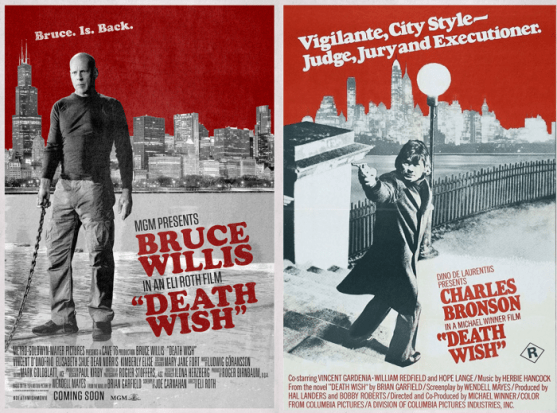
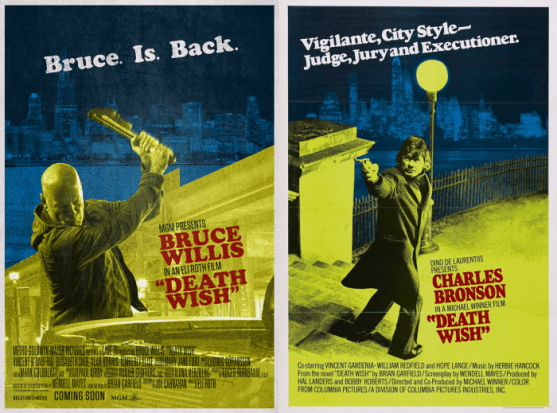
No matter what you feel about the movie, at least these posters are pretty nice.

Summer of 84 (2018)

I was 12 years old in 1984. It was the year of GhostbustersIndiana Jones and the Temple of DoomA Nightmare on Elm StreetTerminatorStreets of FireThis is Spinal TapC.H.U.D.The Adventures of Buckaroo Banzai Across the 8th DimensionPurple Rain, GremlinsNight of the Comet and so many more cultural touchstones that will be endlessly watched again and again until humanity no longer has eyes.

Today’s culture — while offering endless platforms for experiencing it — is limited by comparison. Sure, you could argue that we’re living in a golden age of television and horror movies are finally hot at the box office again, but are there many things made in 2018 that you’ll feel like watching in 2052?

A major reason could be that we’re trapped in a loop of 1980’s nostalgia. It’s one thing to love the films of that era more than anything made today (I’m guilty of that), but it’s quite another to make new culture that endlessly refers backward to this past decade. I get it — when I was growing up, everyone wanted it to be the 1950’s again, thanks to GreaseHappy Days and Sha-Na-Na.

In defense of Summer of 84, this film was made before Stranger Things and the remake of It, so you can slightly forgive its reliance on the Spielbergian kids-on-bikes trope. The filmmakers even stated in an interview that they deleted a Dungeons & Dragons scene so people didn’t think they were ripping off the kids from Hawkins.

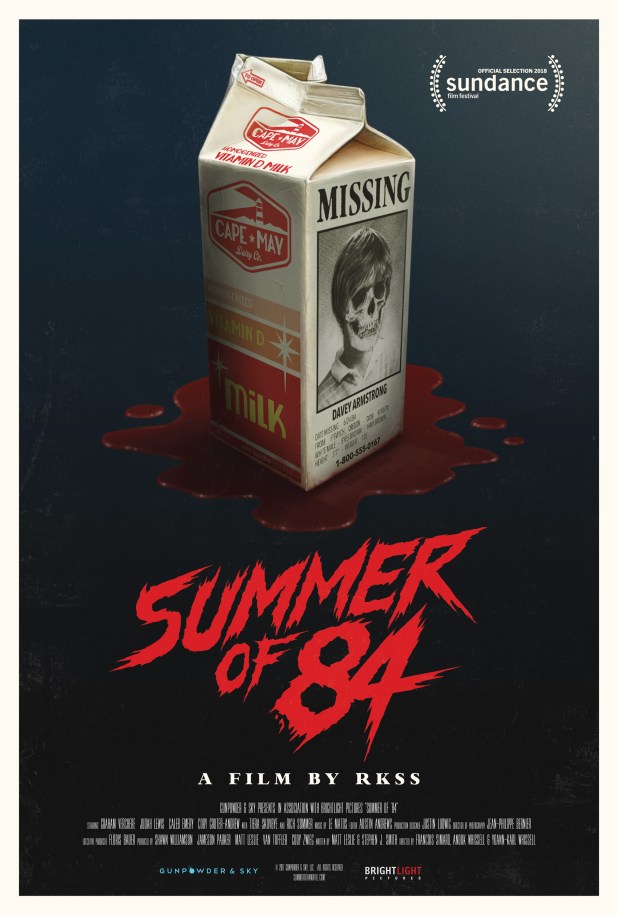
This entire movie reminds me of this John Mulaney quote: “I had no supervision when I was a kid. We were free to do what we wanted. But also, with that, no one cared about kids. I grew up before children were special. I did. Very early ’80s, right before children became special. Like, I remember when milk carton kids became a thing. When they were like, “Hey, we should start looking for some of these guys. I don’t think they’re just blowing off steam.””

Davey Armstrong is fifteen and starts the film by explaining how the bad stuff really happens in the suburbs. He should know — in the last decade, 13 boys have gone missing from his hometown of Ipswitch, Oregon.

Sure, Davey is a believer in urban legends and conspiracy theories — just a scan of the World Wide Journal headlines in his room read “Cannibal society in sewer system?” a reference to C.H.U.D., “2 years left before Haley’s Comey hits Earth”  for Night of the Comet, “Cursed fog terrorizes small town!” for The Fog, as well as stories about Hitler clones, a conspiracy in the Vatican, a crying Virgin Mary and werewolves — but now he feels that Wayne Mackey, his police officer neighbor, is a serial killer.

He talks his friends Curtis Farraday, Dale “Woody” Woodworth and Tommy “Eats” Eaton into helping him uncover whether or not Mackey is the Cape May Slayer. My major gripe with the film is that these characters aren’t really people but instead archetypes of what we expect from a 1980’s teen cast. We have the nerdy Curtis, the rebellious John Bender clone Eats and Woody, the token chubby friend. Perhaps the lone surprise here is that Woody and Eats haven’t flip-flopped their names.

You can see Davey as any manner of 1980’s hero — he’s the boy yearning to be a man yet still full of innocence that is struggling to find the truth. You could also see him as a giallo archetype — thanks to puberty, he has become a stranger in a strange land, ill-equipped for the investigation that he is about to undertake, surrounded by ineffective cops and red herrings, while romancing a stylish and sexy woman — his next door neighbor Nikki — who he has a past history with. The only reason I don’t feel this is a giallo is that the kids drink MacReady’s Whiskey (a reference to Kurt Russell’s character in The Thing) instead of J&B Scotch Whiskey.

Speaking of inside jokes, there are plenty of them in Summer of 84, such as a Polybius machine (see our article on Sequence Break for more on that urban legend) in the arcade, G.I. Joe walkie-talkies and a MOBAT tank, a toybox contains a Turbo Kid figure (RKSS Films also made that throwback movie) and even the Bananarama song “Cruel Summer” is used with the exact same framing as Daniel-San riding his bike in 1984’s The Karate Kid. The kids even read Boudoir, the same fictional porn magazines from the beginning of The Goonies.

Even when Mackey finds the killer, Davey won’t give up. He’s come too far and reason won’t stop him now. After all, he’s found a bloody t-shirt that matches a boy he saw in his neighbor’s window. Who buys that much dirt and sodium hydroxide? And why would he have a hidden VW Bug, the same car that Ted Bundy drove?

Davey finally convinces Woody and Nikki to take his dad’s TV station camera into Mackey’s basement, where they find a room made to look like a childhood bedroom, a dead body and a still living kidnapped boy.

Here’s where this movie owes so much to the giallo, with perhaps the dumbest cops this side of Stagefright: after convincing his parents and the police, which leads to Mackey’s home being raided, no one places the boys in protective custody. Instead, they are easy prey for Mackey to abduct and bring to an isolated place where he hunts them down.

The boys have been playing a game called Manhunt their entire lives, but the real world is much more brutal than a child’s game. This is where Summer of 84 careens unsteadily from a junior giallo into a straight up slasher, with Woody’s throat graphically slit open and Davey cornered in the red Bava light. Instead of killing him, Mackey tells him that he’ll come back for him someday, a day that the fifteen-year-old may fear for the rest of his days. That’s honestly the best part of the film — a chilling reminder that adults are more messed up than the dreams of any kid.

As Davey returns to normalcy — or what passes for it — we retrace the paperboy route that started the film. But now, there are holes left behind — the abandoned home of one of the missing boys; his lost friendship with Curtis and Eats, who are cleaning the debris of another parental battle; and finally Mackey’s home, still covered with police tape. The final moment of horror comes with an act as simple as opening the newspaper to reveal the headline: the Cape May Slayer is still at large.

One of my best friends absolutely hated this movie, feeling that this was a story better told before, that there was nothing new here and no reason to care about the characters. My wife absolutely loved it, happy that a movie made in 2018 had an actual beginning, middle and end, as well as some surprises along the way. And I came out somewhere in the middle. I liked the look and feel of the film. And hey — it has a really nice logo.

Decide for yourself. It’s currently streaming exclusively on Shudder.
Channel Zero: Butcher’s Block (2018)

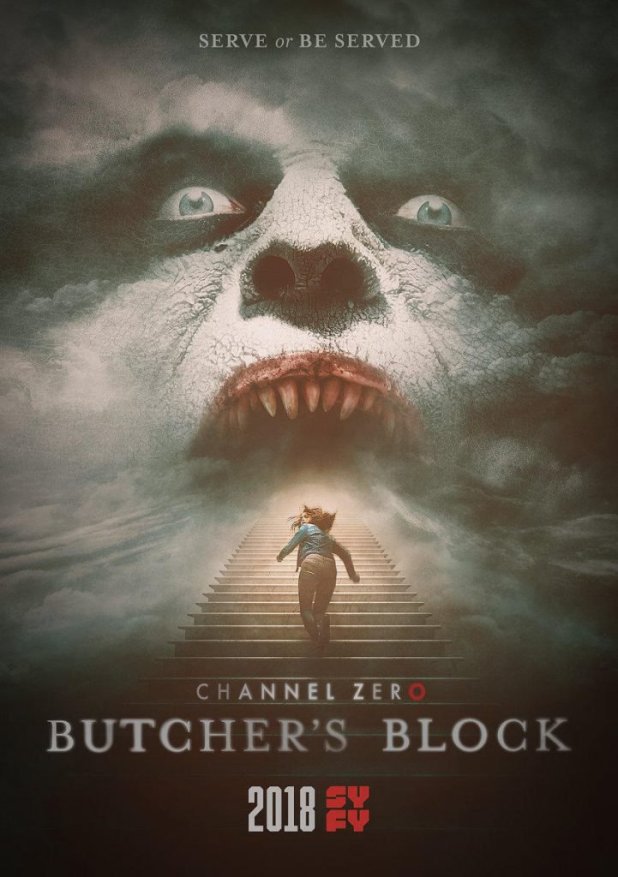
A girl named Alice Woods and her sister Zoe have come to the town of Garrett in the hopes of escaping the madness that destroyed their mother. However, there are staircases to nowhere and the Peach family to contend with, even if the rest of the world believes they’ve been gone since the 1950’s. Welcome back to Channel Zero. Things are about to get weird all over again.

From the beginning of the first episode and the strains of “Crucified Woman” by Riz Ortolani (from the film Cannibal Holocaust), you know that this season, you’re in for it. Throw in Rutger Hauer as the leader of the Peach Family and you have a recipe for what is fast becoming the perfect horror show.

Ever since the death of the Peaches’ youngest daughters, they have left our world behind and become part of a side world called Slaughterland, which lies behind the many doorways and staircases to nowhere that show up randomly in Medallion Park. There, they are immortal thanks to the Pestilent God, who randomly asks that children be sacrificed to him.

Alice is the exact opposite — a social worker trying to save people. But soon,  a little girl named Izzy and her mom disappear from her care in broad daylight. Her sister Zoe begins to continually hallucinates the face of the Pestilence King, seeing him no matter where she goes. The Peach Family calls to her to join them, demanding that she help sacrifice Izzy as part of their covenant.

Meanwhile, the girl’s landlady is writing a book all about the horrors of the area now known as Butcher’s Block. Of course, she knows way more than she lets on. And then there are the children of the Peach clan, one of whom is arrested and promptly eats his cellmate before being released by the police with no charges.

Think things are crazy? Get ready — the elder Peach cures Zoe of her schizophrenia by drilling directly into her brain, then invites Louise and Alice to a feast that ends up being Izzy’s mom. Two episodes in and this season has eclipsed all of the Channel Zero terrors that have come before!

The Peaches want Zoe to consume human flesh and become one of them, but she refuses, instead subsisting by eating her own flesh. And Alice? By now, she’s seeing visions of herself as various creatures that look like giant puppet-headed Alices.

What I loved about this season is that the heroines’ roles are reversed by the last few episodes, begging the question of who will save who. And you can understand the motivation of the Peach family, as they went away to avoid the rapidly changing horrors of the world but ended up being changed into something even worse.

There are also goblin children, a meat servant, two generations of policemen forced to face the sins and compromises of the past, 1950’s housewives, a crazy scissors lady and so much more, you’ll wonder how six episodes is enough to contain it all. Unlike the bloated seasons of American Horror Story that rely on stunt casting and deus ex machina endings season after season to increasingly worse effect, Channel Zero has only improved with every successive tale.

I don’t want to spoil anything else for you. I insist that you simply watch the entire season now on Shudder.

A Brilliant Monster (2018)

In my non-movie watching life, I write advertising copy for a living. A lot of that involves the constant search for inspiration as I battle against deadlines. So the central conceit of this movie, which concerns how Mitch Stockridge, a self-help author, gets his story ideas spoke to me. But how’s the final product?

Mitch (Dennis Friebe) has taken his life from being bullied in his teens to a successful career as a self-help author. But it’s not enough. He’ll never please his father. And he’ll never quiet the fans, journalists and even close friends who keep asking him where he gets his ideas. That’s because the truth is stranger than fiction: his ideas come from a monster that lives in his bathroom that he feeds people to. In exchange, he gets a crumpled piece of paper with scrawled ideas that he takes for his own.

After trying to write an actual novel instead of just another self-help guide, Mitch deas with the depression that comes with shooting for the stars and falling short. That’s when he decides to start feeding everyone and everything he can to the creative beast. And all of the people disappearing around him leads to the police investigating him, with Abby the lead detective going for interested to a vendetta to pure hatred. That’s because of more than just this case — one of Mitch’s self-help books inspired her husband so much that he left her and their family behind to chase his dreams.

So is this a real monster? Or is Mitch just crazy? And is Abby just as crazy for starting to believe in it, too?

Now, Mitch wants to prove the critics and his father wrong once and for all. And that means drastic measures and deaths that are way more important than just some girls he’s met in bars and on CraigsList. No, it’s time for his best friend John to meet the teeth of the bathroom monster if he really wants to be a celebrated writer.

There’s definitely a bit of Little Shop of Horrors and Basket Case at work here. I really liked how you never really see the monster, just its teeth and the sounds it makes as it tears apart its meals. There are a lot of questions raised by this film, such as Mitch’s journey from abused child to the caretaker for his father, the pains and sacrifices that it takes to create and the relationships that it costs along the way. I really felt that last part a lot.

This is definitely a low budget film, so go into it knowing that. It looks decent, though, with some solid editing and the leads are way better actors than you’d expect. There aren’t a lot of characters to like, however, as almost everyone is uniformly a bad person. There isn’t anyone to root for or learn from in this. But it is an intriguing meditation on the creative process, even if it feels like there could be more to the overall story.

The film’s IMDB site says that this film will be released on December 1. To learn more, visit the official site.

Disclaimer: I was sent this movie by its PR team, but as you know, that has no bearing on my review.