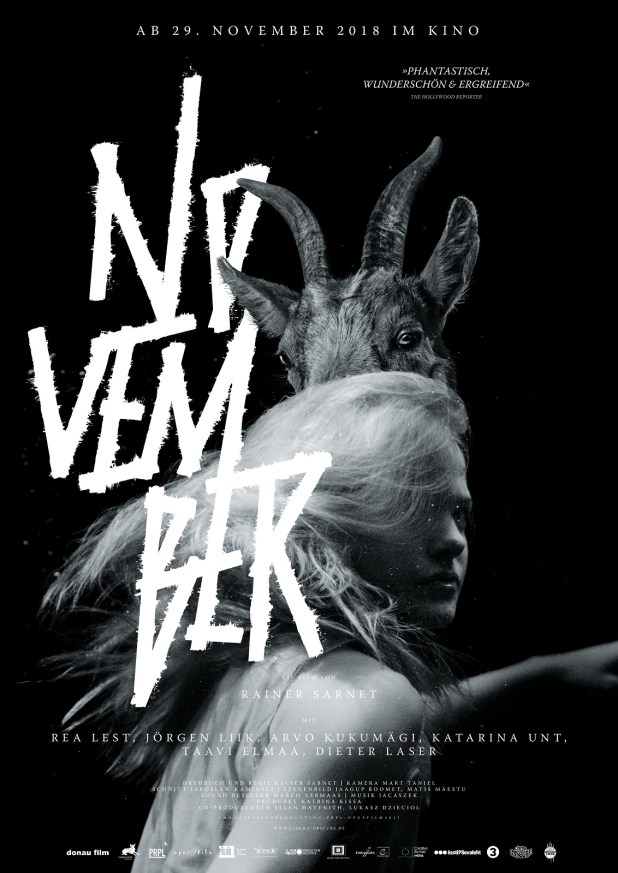
Based on Andrus Kivirähk’s novel Rehepapp ehk November (Old Barny aka November), November takes place in 19th century Estonia. It begins with a kratt appearing. The kratt is kind of like the Warbound in D&D, as its a collection of hay and old household implements powered by the Devil (Jaan Tooming) and three drops of blood. The kratt steals a cow for a villager named Raak (Arvo Kukumägi), who has tricked Satan by giving him three drops of dark berries instead of the blood that is part of his soul.
There’s so much going on in this village, like the Plague descending as a young woman and then a pig, who makes a deal with Sander, an elder, to allow Liina (Rea Lest-Liik) and Hans (Jörgen Liik) to live. But then the pig is killed while swearing on a Bible. Liina is in love with Hans but has basically been sold in a drunken deal with the pig farmer Edsel, while Hans is obsessed with a sleepwalking Baroness (Jette Loona Hermanis). Liina — also a werewolf — gets a magical arrow from a witch, as she wants to kill the rich girl to win over Hans, but can’t bring herself to do it.
The supernatural becomes a way for nearly everyone to attempt to find their doomed love and make it true. Hans sells his soul for a kratt that regales him with stories of love before melting down into the snow, leaving behind a ring that he uses to propose to the Baroness, who turns out to be Liina in disguise. As for the Baroness, she’s sleepwalked to her death. As the kratt melts away, the Devil returns to snap Hans’ neck. Now, two funeral processions make their way through the village.
Liina drowns herself in the river, bringing gold to all of the villagers, who leave her a necklace, the perfect gift for a virgin bride. Before she passes on, she kisses Hans one more time and says, “Oh, yes. Just what a virgin bride dreams of.”
Director and writer Rainer Sarnet has created a black and white world where the rich mock the poor with their manor homes and gold altars, as the put upon hire a witch (Klara Eighorn) to do their bidding. The villagers are able to trick the devils that befoul them once or twice — like wearing their pants on their heads — but the next time, the next person, well they’re not so lucky. No one wants to work and their kratts fulfill their labors, but they’re secretly deadly or unlucky to everyone.
Even though this is a magical realism film set in another world, I couldn’t help but see so much of real life here.
Novemberis part of the new Severin box set, All the Haunts Be Ours Volume 2. It has extras including a video essay by John DeFore Kratt, test footage, a trailer and the short films Boundary, Journey Through Setomaa and Midvinterblot.
Here are the short films that I watched at this year’s Fantastic Fest.
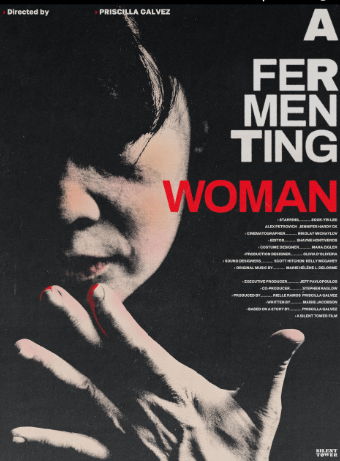
A Fermenting Woman (2024): Visionary chef and master fermenter Marielle Lau (Sook-Yin Lee) is about to be let go from the restaurant that she has given her life to. However, she has an idea to save things, as she begins to ferment a new dish that has an ingredient that truly feels like part of her. Directed by Priscilla Galvez and written by Maisie Jacobson, this puts you directly into the kitchen and all the time and energy that this dish takes. And perhaps it’s a pun to say that it has her blood and sweat in it, because Marielle uses her menstrual blood in her garden, so she decides that it should be the main ingredient in this fermented food. Marielle has taken a piece of her, perhaps the egg that she will never get to fertilize, and gives it to people who don’t pay attention to a bite of their meal, instead ignoring it as simple sustenance when she has given everything to make it into their mouths. The truest horror is that we create — whether its foods or the words you’re reading now — just so that they can be consumed and forgotten.
ATOM & VOID (2024): Gonçalo Almeida has magic here, a mixture of effects and real spider, as it watches the end of all things and perhaps the birth of a new adventure. The score, sound design and look of this film all work together to create perfection, just a true joy of watching and listening. In fact, I went back several times and saw it again, one of the few advantages of seeing this online and not in a theater. If you get the opportunity to watch it, take it. This is a short that I will think of far beyond most full length movies I see this year.
Be Right Back (2023): Ah, the worst words to say in a horror movie. In this short, Maria is left home alone while her mother goes to buy dinner. However, her mother takes way longer than she should and as the night grows dark, Maria is startled when she hears a knock on the door. Is it her mother? Or is it something else? Have you ever gone shopping when you were young and gotten lost, then looked for your parents only to find someone who you thought were them and were instead strangers? That’s the feeling that this creates and it is not one I ever thought that I would live through ever again.
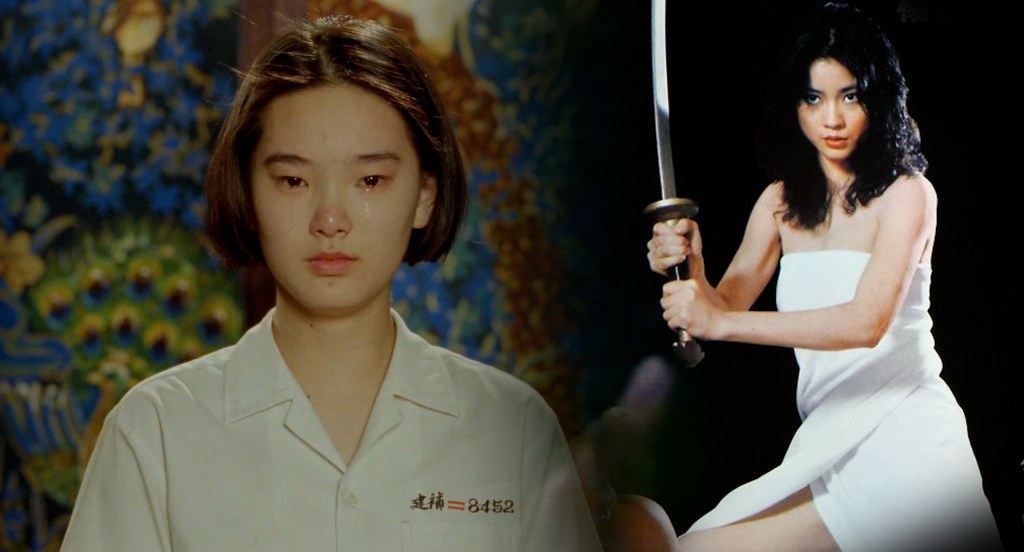
A Brighter Summer Day for the Lady Avengers (2024): As if I couldn’t love this short enough, just check out this paragraph from its creator, Birdy Wei-Ting Hung: “My first encounter with Yang Chia-Yun’s Fēng Kuáng Nǚ Shā Xīng / The Lady Avenger (1982) was an uncanny experience. I was researching Italian giallo film when a vintage newspaper movie poster grabbed my attention. The advert depicted a sensational female vigilante that visually recalled Edwige Fenech in Tutti i colori del buio / All the Colors of the Dark (Sergio Martino, 1972), only this time it was an Asian woman’s face. Her alluring body was barely covered by a white sheet, and her lustrous black hair rested on her collarbones. Standing in a martial art squat stance, the way she holds a katana (Japanese sword) is reminiscent of Meiko Kaji in Shurayuki-hime / Lady Snowblood (Toshiya Fujita, 1973) and Uma Thurman in Kill Bill(Quentin Tarantino, 2003). I had found our lady avenger Wan-Ching, who was played by Hsiao-Feng Lu—the Taiwanese “sexy goddess” of the 1980s, and Taiwanese pulp films.”
This short is a video essay that mixes “two specific female characters in Taiwan Pulp films and Taiwanese New Wave…the female protagonists in Yang’s The Lady Avenger, and in Edward Yang’s Gǔ Lǐng Jiē Shǎo Nián Shā Rén Shì Jiàn / A Brighter Summer Day.”
I love that this film puts these movies against one another, just as a young woman spends a day in the theater savoring a watermelon drink while watching several films beyond the two mentioned, as Deep Red is one of them. A sexual awakening as well as an exploration of what film tells its viewers about the path that being a woman can take, this is one of the most gorgeous shorts I’ve seen in years. I want people to just give Birdy Wei-Ting Hung as much money as she needs to create movies that will inspire us in the same way that films have motivated her.
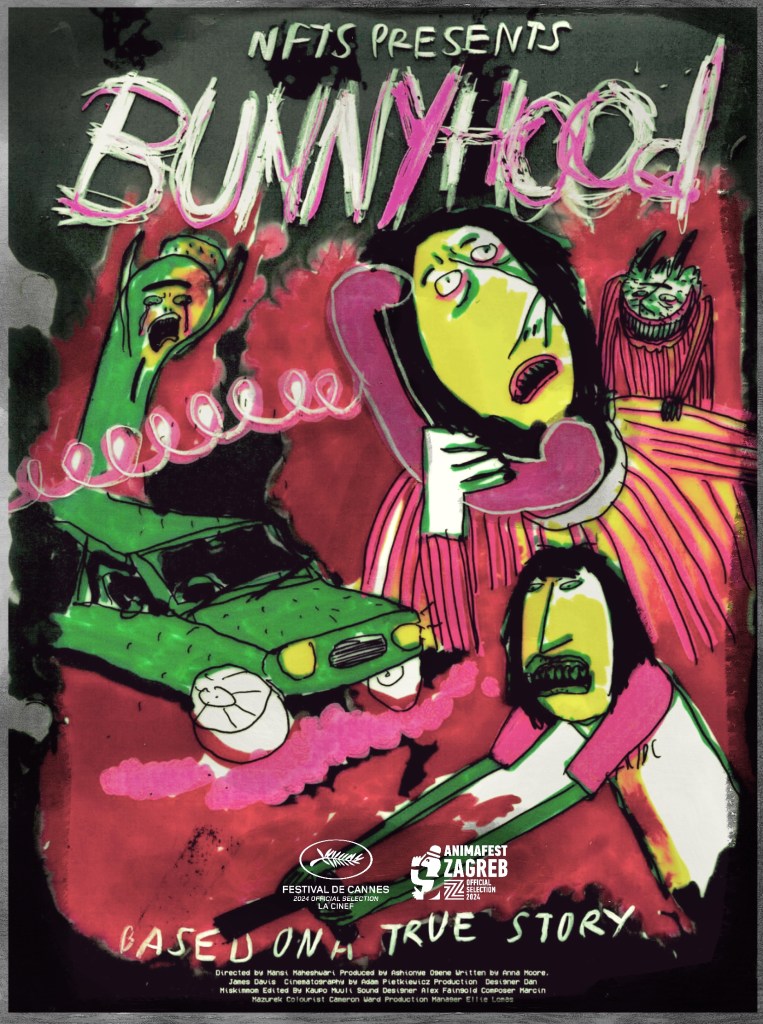
Bunnyhood (2024): “Mum would never lie to me, would she?” In this short by director Mansi Maheshwari, writers James Davis and Anna Moore, as well as several talented animators, Bobby (Maheshwari) learns the answer as he is rushed to the hospital. The frenetic style of the animation creates the worries of childhood, replicating the fears that aren’t always rooted in the rational or the real. The hospital and surgery come across as horrific places where nothing good can happen and at times, our parents will lie to us to keep us from worrying about the truth. Is that the right way to be a parent? Who can say!
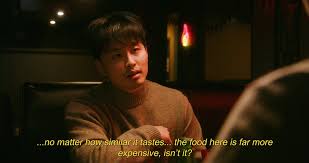
CHECK PLEASE (2024): I am a veteran of the wars of fighting for the check. The director, Shane Chung, is too. He said, “As a kid, I witnessed firsthand the quickness with which friends can turn on each other whenever my parents took me to dinner with their pals. It was all smiles until it came time to pay for the bill – then the fangs came out. “I got it!” “Don’t be ridiculous, it’s my treat!” “You can get me next time!” It got so serious for no reason. Arguing, subterfuge… it was killing with kindness taken to another level. I wondered how far someone could take fighting to pay for the bill. Inspired by my love of goofy slapstick action comedies like Drunken Master and Everything Everywhere All At Once, I thought: what if they literally fought each other? I challenged myself to write a ten-minute long action scene where two Korean-Americans fought each other with chopsticks, grill coverings, and credit cards… and CHECK PLEASE was born.”
Starring Richard Yan and Sukwon Jeong, this is a simple story but is so perfect. It gets across what it means to be a man — paying the bill — as well as the director’s attempts at getting across the feeling of assimilating to a new culture. It’s also filled with great action. I laughed really hard throughout and found joy here.
Compost (2024): Directed by Augusto and Matías Sinay, this film presents an intriguing way at looking at grief. Anastasia (Natalia di Cienzo) has just lost the love of her life, Lisandro (Maximiliano Gallo), after an accident as he builds the greenhouse where she plans on spending most of her time. How can a dream place be as such when it is filled with so much pain? And can she carry through with his last wish, which is to become compost for their plants? Can we become part of the cycle of death and rebirth when emotions are part of our equation, unlike the plants that we help bring to birth each year, only to have to watch them die in the fall?
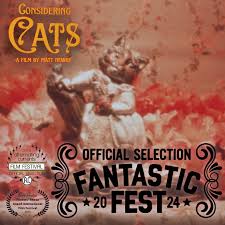
Considering Cats (2024): A short experimental documentary shot at the Long Island Pet Expo in 2023 by director Matt Newby, this short asks us to “Take a moment to consider the cat.” Seeing as how I live with two, I do this every day. This does a good job of showing the joy that people find in the small creatures that become part of our lives, if only for a short time, in an interesting lo-fi style.
Do Bangladroids Dream of Electric Tagore? (2024): Allem Hossain’s short is described as “desi-futuristic sci-fi.” Interesting. The director says that this genre is “a body of sci-fi work that dares to imagine speculative futures through a South Asian lens.”
In this, a documentarian goes into the New Jersey Exclusion Zone to meet the droids that live there and learn why they are obsessed with a subversive Bengali Renaissance poet. Featuring the poem “Freedom” by Rabindranath Tagore, which is read by Bernard White, this is AI generated but its director asks us to think of “how AI and other technology will impact us but I think we should also be thinking about our moral and ethical responsibilities towards what we create.”
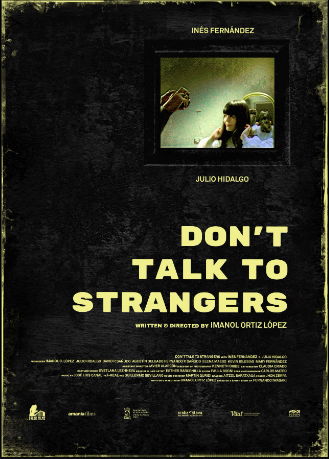
Don’t Talk to Strangers (2023): Imanol Ortiz López has created a short that looks like vintage Kodachrome and is set within a toy store that only looks bright and friendly. Even the IMDB description of this movie is somewhat scary: “Mom always told me not to talk to strangers, but Agustín is not a stranger, because whenever we go to his store he offers me treats.” A young girl is saying that and in this, she’s played by Inés Fernández, who explains how she was abducted by Agustín (Julio Hidalgo). It sounds simple and expected, but in no way does what is revealed end up that way. A really interesting short.
Down Is the New Up (2018): Directed and written by Camille Cabbabe, this is the story of how an ambitious filmmaker and his crew attempt to tell the story of the last hours of a man who plans on killing himself at dawn. To be honest, I found it kind of indulgent and wish that I had spent a bit more time watching it. Maybe it was the language barrier or honestly how many shorts I watched in a few days, but there wasn’t anything here that jumped and grabbed me. I feel I owe the filmmaker an apology and am certainly willing to try and see what was here one more time.
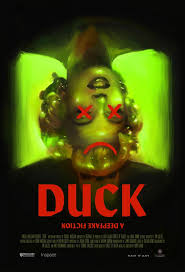
DUCK (2024): The sell copy for this promises that this is “a classic spy thriller turned on its head.” What it is is a deep fake generated film starring almost every actor to blame James Bond and Marilyn Monroe, all voiced by director and writer Rachel Maclean.
As someone who uses AI for my real job and to create music, I have no hate for it. I do, however, dislike this movie. It should be something I love, one that gets into aliens and conspiracies while using pop culture characters. Instead, it feels like robbing the graves of the cemetery at the lowest part of Uncanny Valley. It goes on and on, reminding you of the much better work of the actors who it is raising from the dead to serve as stiff actors for a plot that can be worked out in seconds. I believe AI and deep fake can create the kind of cinema that we want to see, movies that create joy. This just engendered ennui.
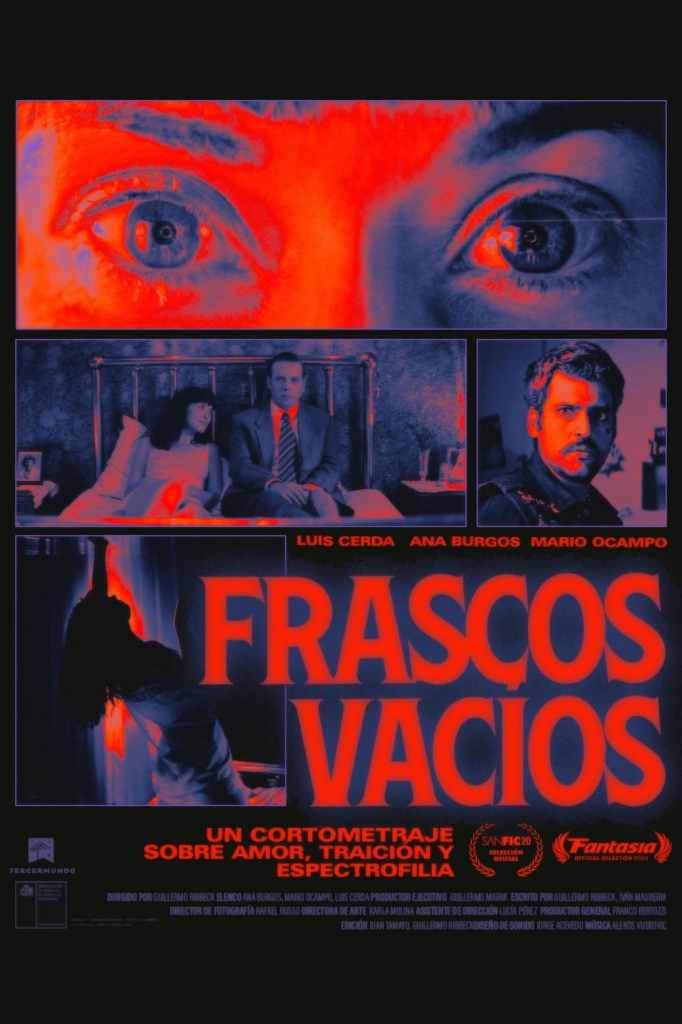
Empty Jars (2024): After the last two shorts I watched, this brought back the love I have for film. Director Guillermo Ribbeck Sepúlveda has crafted a fantasy world where a woman (Ana Burgos) deals with the loud guests at her hostel by freeing a ghost from a jar, a spirit that, well, fills her with something else, giving her an experience that she hopes to replicate again and again. Yet, as this movie shares with us, the dead are even less trustworthy than the living. What a gorgeous looking and feeling short. I can’t wait to see what else Sepúlveda can do!
Faces (2024): Look out for Blake Simon. In this film by the director and writer, he starts with Judy (Cailyn Rice) being invited to a fraternity party by Brad (Ethan Daniel Corbett). However, in the ether all around this is a character called The Entity, a creature that has been abducting women the same age as our heroine, such as Bridget Henson. Now, as the frat party hits its height, the struggle for identity and who or what people are plays out. Faces feels like an entire film in its short running time and could easily become a full length feature. Whatever The Entity is, whatever it is looking for and why it does what it does are all unimportant. What is is that Simon seems ready to become a valued new talent in horror and this announces him so well.
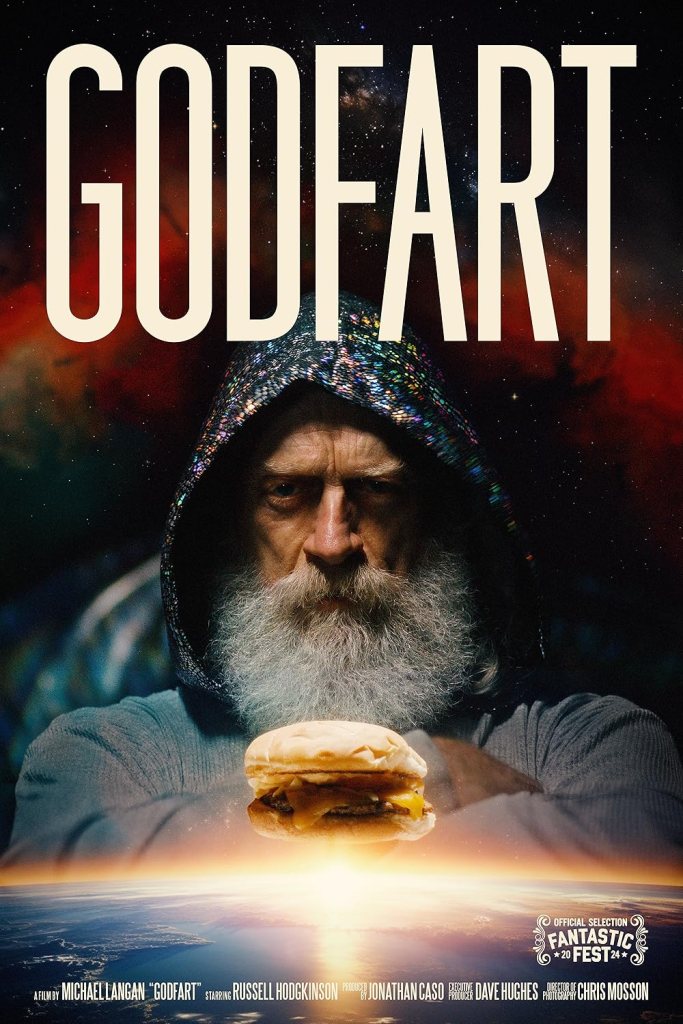
Godfart (2023): Directed and written by Michael Langan, this is “The very true story of how the universe was created.” God (Russell Hodgkinson) is looking for breakfast. This short explains it all. This is part of something called the Doxology Universe. As someone who loves breakfast, I want to know more.
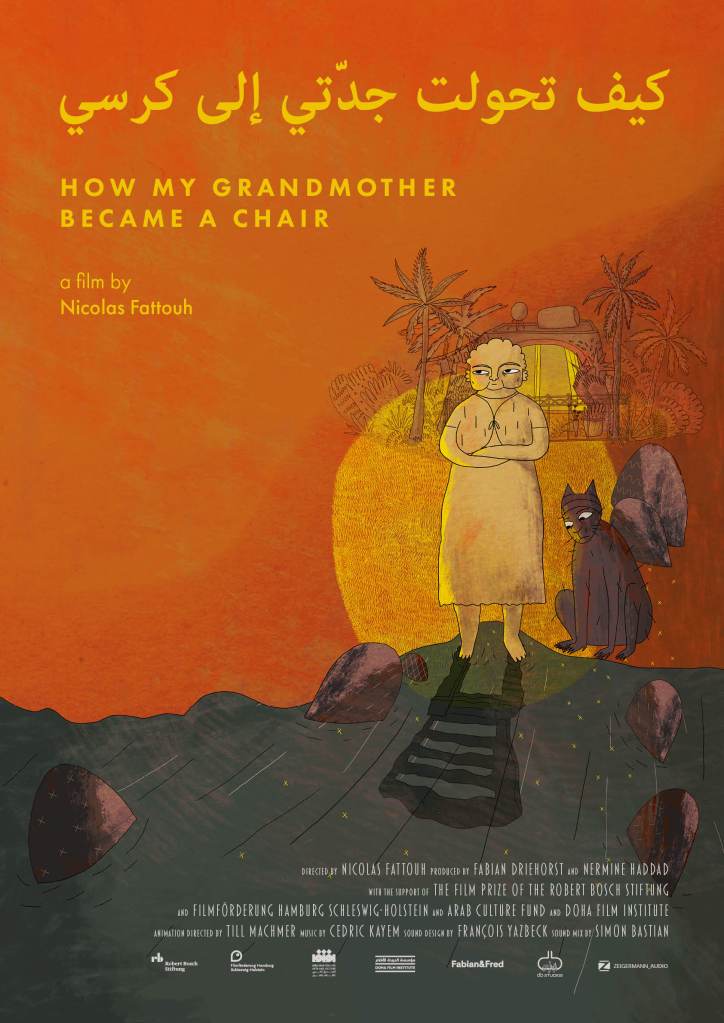
How My Grandmother Became A Chair (2020): Director and writer Nicolas Fattouh has created the perfect way of showing what it’s like to slowly lose an aging family member, something that I have gone through several times of the past years. His grandmother is losing her senses, one by one, until she — as the title lets you know early — becomes immobile furniture. There are times when it takes animation and the surreal to make life — which never makes all that much sense — something more easily explainable. This looks so wonderful and moves so perfectly that even though I knew where it was going, it still ended up as an emotional experience.
Huntsville, July 1981 (2024): In Sol Friedman’s short, four characters must deal with the ferocious attacks of a creature that is hiding in the woods. I loved the look of this, which seems like the wildest sketches the weirdest kid in school made and here they are, coming to life.
J’ai le Cafard (Bint Werdan) (2020): “J’ai le cafard” means “I have the cockroach,” yet it also means “I am depressed.” Director and writer Maysaa Almumin is followed everywhere by a dying large cockroach, which is her mental anguish. She connects more with this gigantic roach than anyone else around her until she realizes the impact that it is having on her life. I loved the puppet work and enjoyed seeing how this idea came to life. Can you be friends with an insect? This movie asks that question and I think the answer is yes, but roaches can be just as infuriating as people.
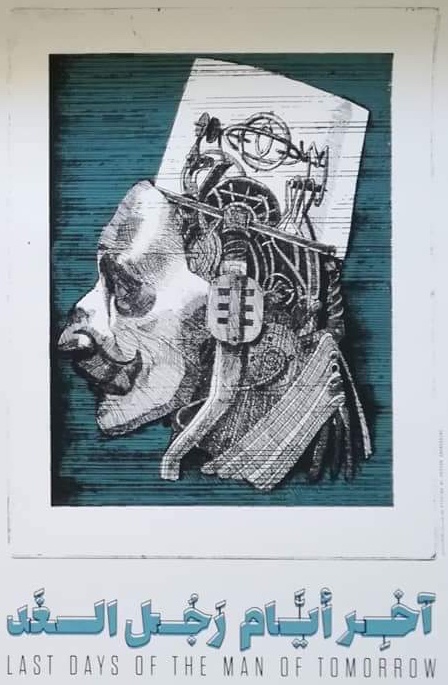
Manivelle: The Last Days of the Man of Tomorrow (2017): Directed by Fadi Baki Fdz, who wrote this with Omar Khouri and Lina Mounzer, this takes a realistic look at an unrealistic story, exploring the life of Manivelle, an automaton from Lebanon whose life seems to mirror the history of the country. His glory years were in the past, when life felt free, and today he is falling to pieces, his body failing him, reaching out in vain to people whose lives he ruined. Manivelle has been an actor, a soldier and now, he’s just a lost robot that claims to run a museum and read books, but he fails at all of that. I absolutely loved how this was shot. It’s perfect.
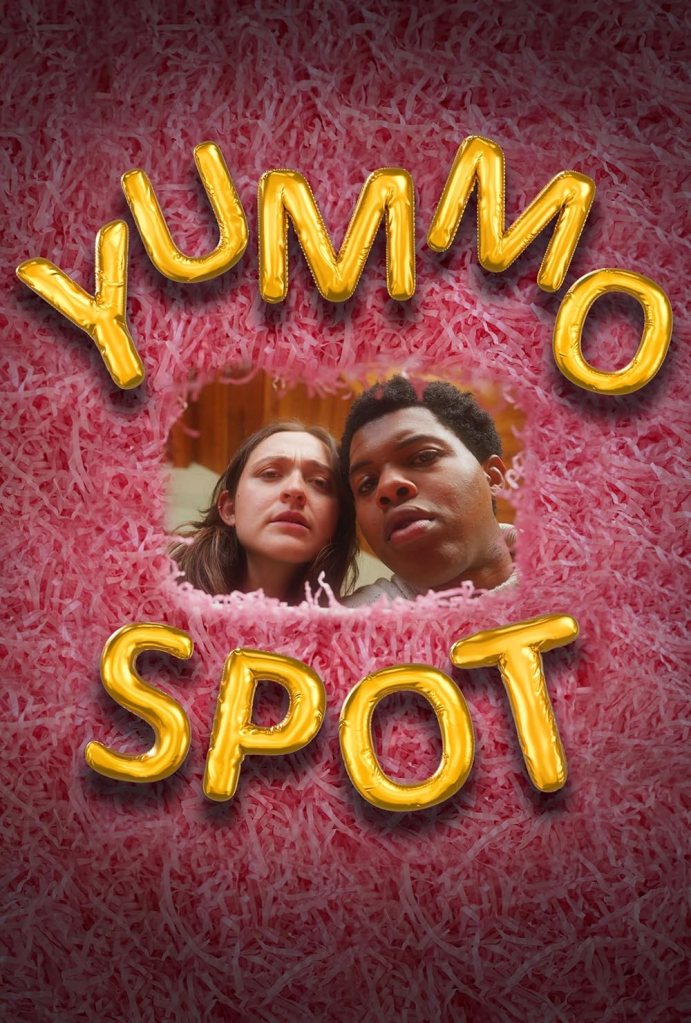
Yummo Spot (2024): Directed and written by Ashley Brandon, this is about a couple who moves to the woods and tries to start a family. Soon they learn that the Live, Laugh, Love lifestyle may be more difficult than they thought. This had a strange vibe but you may enjoy it more than me.
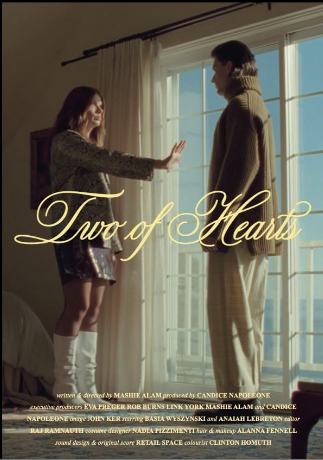
Two of Hearts (2024):Director and writer Mashie Alam places a boy (Anaiah Lebreton) and a girl (Basia Wyszynski) in a battle over some decisions, like eating a piece of pizza. Are they brother and sister? Are they a couple? Where did they get all of those great clothes? What’s happening? This is one of those times when the way something is filmed outdoes the basics of the script. Does the title refer to a Stacey Q song? Where is this house where they live? Can I visit? This movie has an amazing look and I want all of the answers to these questions and so many more. It’s good to have questions. It’s good to want to know more.
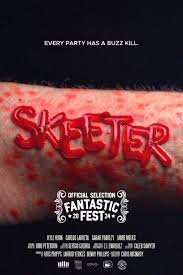
Skeeter (2024): Chris McInroy gets me every time. Actually, he’s made me physically sick a few of those times, no complaints. That’s because his movies are always fun, like this one, where someone has been raised by mosquitoes. If you’ve seen his movies Guts, We Joined a Cultand We Forgot About the Zombies, you know what you’re in for here. Thank you again, Chris, for shocking me and reminding me to never eat popcorn — or any food — during your movies.
June 28: Junesploitation’s topic of the day — as suggested by F This Movie— is Westerns! We’re excited to tackle a different genre every day, so check back and see what’s next.
Do you want a Western with Jack the Ripper leaving England for the Wild West? And what if he dresses like a slasher killer and has talks with himself about purifying women? Wouldn’t that be awesome? Maybe more awesome than A Knife for the Ladies.
But what if Jack the Ripper battled a man named Mr. Buchinski who looked just like Charles Bronson because he’s played by Robert Bronzi, a sixtysomething Hungarian action star who was born Robert Kovacs. The man who would be Bronzi was performing in a European Wild West stage show when director Rene Perez saw his photo on the wall of a bar and thought it was from an undiscovered Bronson movie. Since then, he’s been in Death Kiss, Cry Havoc, Once Upon a Time in Deadwood, Exorcist Vengeance, Escape from Death Block 13 and this Western.
If you didn’t get the significance, Bronson’s real name was Charles Dennis Buchinsky.
A lot of the female cast of this were also victims in another movie by Rene Perez, Playing With Dolls: Havoc. Perez also made the movies They Want Us Woke Not Awake and Pro God – Pro Gun, so I have to track those down because, yeah. Wow. Also: that Havoc serial killer is also in Cry Havoc where we can answer “What if Jason fought Bronson?”
The killer might be Francis Tumblety who some people think was the Ripper. He did not look like a slasher villain but who are we to try and bring logic into a movie where a fake Bronson battles a monster in a tourist Western town? Also, the Ripper wears a mask like Cronenberg in Nightbreed.
You won’t care about anyone in this by Bronzi. Such is his power. But seriously, nobody really matters. This should have just been an hour of Bronzi shooting guns at a serial killer.
Directed by Stefan Ruzowitzky and written by Martin Ambrosch and Claudia Kolland, Cold Hell is about a cab driver named Özge Dogruol (Violetta Schurawlow), who deals with the worst in humanity as she drives the of Vienna every day. She comes across a crime scene and thinks that she’s been spotted by the killer but the police think she hasn’t found anything and is in no danger.
Özge is a character that is anything but a stereotype. She’s Muslim, she’s a Muay Thai fighter in training and she has no problem either knocking men out who are abusive to her or running after the killer to try and catch whoever they are.
Her cousin Ranya (Verena Altenberger) is dating, even though she’s married to Özge’s boss Samir (Robert Palfrader) and depends on Özge to cover up her affairs. She also borrows the Muay Thai championship jacket that our heroine wears, which has the killer come after her and snuff her out, which adds a layer of guilt to the reasons why Özge need to find that smiling knife murderer who is also a radical religion believer who is killing Muslim sex workers based on how the Koran speaks of Hell.
Not only is Özge an outsider in this new country, she is in her family as well. They’ve never believed that her father molester her and now that Ranya’s young daughter will be raised in their house, she takes her away even though she’s been trailed by a giallo-style killer. To protect herself, she moves herself in to the home of a burned out cop, Christian Steiner (Tobias Moretti), who is taking care of his father Karl (Friedrich von Thun) who has dementia.
I really enjoyed Cold Hell — it refers to the icy netherworld of Islamic religion — and how it was never an expected story or had a lead you can easily pin down.
We live in a world where David DeCoteau made a Christmas movie with Tara Reid. She plays Alison, who dated King Charles (Ingo Rademacher) in college without ever knowing he was royalty. One night, the king’s assistant Rosa (Mira Furlan) forced her to break up with him and he never knew that they had a daughter, Lily (Haley Pullos), together. He had an arranged marriage and is now a widower.
Seventeen years later. Charles is in the U.S. on business and wants to see Allison, even meeting her former roommate Sam (Mykel Shannon Jenkins) for help.
Except…this isn’t a Christmas movie. It doesn’t have a big dance. It’s just…kind of like a fairy tale movie. But at least the twist wasn’t as unforeseeable as Bigfoot vs. D.B. Cooper, which surprised me with a scene where a sasquatch watches a guy take a one-handed shower. Ah, you know, if that’s what you like, it’s what you like. I’ve found myself watching so many DeCoteau Christmas movies, much less DeCoteau movies and I recommend Santa’s Summer House.
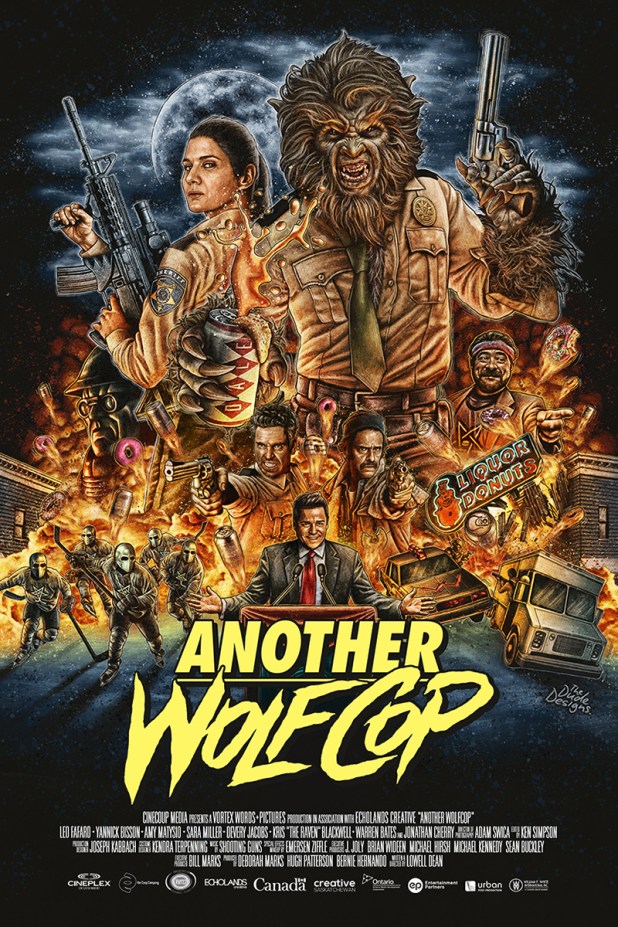
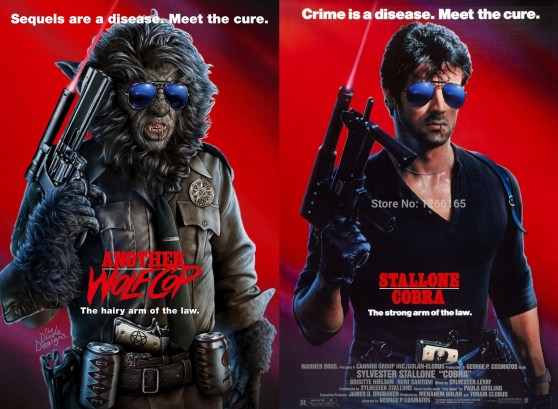
Directed and written by Lowell Dean, the same man who made WolfCop, this movie takes everything that was wonderful about the original and makes it bigger and more ridiculous. I mean, if all we got out of this was the poster that looks just like Cobra, it would be a success.
Sergeant Lou Garou (Leo Fafard) is still promoting the town of Woodhaven, except now that includes alien parasites, which are coming within cans of Chickenmilk Stout created by Sydney Swallows (Yannick Bisson), who also owns the new hockey stadium.
This is the kind of movie where Astron-6 (Matthew Kennedy, Adam Brooks and Conor Sweeney) can show up as a gang of evil Santa and elves, there’s an extended human on werecat love scene, Kevin Smith as the mayor, Officer Tina (Amy Matysio) being one of the few capable cops in town, Willie (Jonathan Cherry) returning after being replaced by an alien and a plot that’s pretty much ripped off from Strange Brew.
If you loved the first one, well, this is more of a good thing. If you don’t have much appetite for silliness, well, you’re going to hate it. Me? I’m waiting for WolfCop 3: Season of the WolfCop. Or maybe WolfCop 3D.
Alden Rockwell (Tom Wopat) used to be a sheriff but now he’s taking life easy. One day, he takes his friend played by Clint Thorne (Jeff Fahey), a sheriff in a neighboring county, out to lunch only to watch him get shot and killed. Sheriff Preston (Grant Goodeve) promises to investigate but as the case grows cold, Alden wonders if there’s some kind of conspiracy in his little town.
Directed by Shea Sizemore, who wrote it along with Jon Nappa and Jason White, this is a solid action film that seems like it would be something your grandfather would put on at 8 PM on a Sunday night.
Wopat plays a role outside what you may expect. His daughter is going off to war, his wife has just died and without them and his job, as well as the loss of his friend, he feels hopeless. Figuring out the conspiracy keeps him feeling normal and also leads him down to yes, an actual plot that he has to solve.
Fahey is always great and I kind of wish they’d not killed him off so soon. If you’re into this, there’s also a sequel, County Line: All In and a third movie coming out this year, County Line: No Fear, which adds Casper Van Dien, so you know I’ll watch that. Was Eric Roberts busy?
Deaf Crocodile Films — who released the amazing Solomon King on blu ray this year — has also released four feature films by acclaimed Iranian filmmaker Shahram Mokri on demand for U.S. audiences. The four films will be available on Amazon, iTunes and Projectr and tell the stories of aerial killers, kite flyers, vampires and arsonists who disappear into time. You can also buy the blu ray box set from Deaf Crocodile.
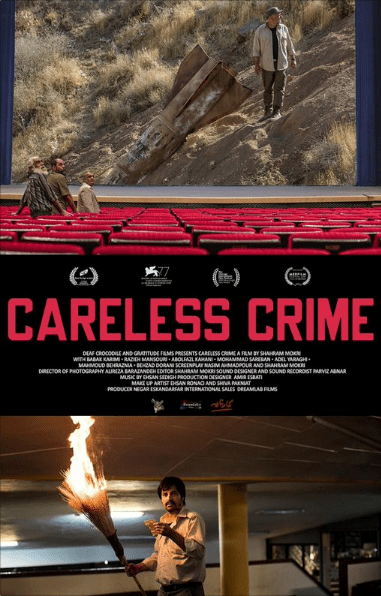
Careless Crime (Jenayat-e Bi Deghat) (2020): Inspired by the Cinema Rex fire in 1978 that triggered the Iranian Revolution, this movie follows three different paths: arsonists planning the fire, the students at the cinema interacting with the employees of the theater and the characters on the screen of the movie that played that night. The crime that was committed that night was so horrible that it literally burns through the reality that unites these three storylines.
The night Cinema Rex burned — one of the biggest terrorist attacks in Iran for decades — The Deer was playing. Two women attempt to play that same film in the desert in another storyline as they come across soldiers who have discovered an unexploded munition from another conflict in the past.
The theme of carelessness is carried through by so many in this, as many of the terrorists believed that the audience would just rush out and be unharmed and their message would be heard. Yet the theater manager oversold tickets to the show and his greed is just as responsible for the deaths.
This is a movie that is historical beyond true crime while also telling of the world of film. It may get repetitive and a little long at two hours and twenty minutes, but wow, those last twenty minutes make up for it. You won’t just know about what happened. You will feel it.
Fish & Cat (Mahi Va Gorbeh) (2013): In the Caspian region, students have gathered for a kite-flying event during the winter solstice. Next to their camp is a small hut occupied by three cooks who work at a nearby restaurant, a place that serves human meat on the menu. Meanwhile, the space-time loop within this film both gives away the ending and also makes it seem suspenseful at the same time. And here’s one more thing that makes this break from the pack: The entire movie is one single 140-minute take.
Director Shahram Mokri said, “I like the paintings of Maurits Escher, where you can see a change in perspective in the same visual. In my film, I wanted to give a change in perspective of time in one single shot. So the idea for the film came from his paintings.”
Consider this an Iranian Texas Chainsaw Massacre, yet one where we don’t see the horror of cannibalism yet feel it even more, if that’s possible. What a wild film.
Ashkan, The Charmed Ring And Other Stories (Ashkan, Angoshtar-e Motebarek Va Dastan-haye Digar) (2008): Mokri’s first feature was a black and white comedy about fate that, yes, has the feel of Tarantino yet establishes the director’s own voice as it tells the tales of blind jewel thieves Shahrooz and Reza; Askhan, a man who can’t quite seem to commit suicide, some cops, some hitmen, a young couple who wants to run away to get married, the boy’s angry father, art dealers, two female morgue attendants and, oh yeah, a fish on the loose and a missing ring.
Beyond Tarantino, there are moments that feel like film noir and others that reference Jim Jarmusch. Remember when Crash or Magnolia or any of those post-Quentin movies where everyone’s connected seemed to be every other movie? Sure, this is like that, but it also has an episodic nature and fun edge that makes it stand out from also-rans like Eight Heads In a Duffle Bag.
I know that Mokri made shorts before this, but it’s pretty amazing that this was his first full-length movie.
Invasion (Hojoom)(2017): I can honestly say I’ve never seen another movie like this and it was absolutely astounding.
The sales copy for this describes it as “a science-fiction/detective/vampire story, with nods to stylized 1980s New Wave-era films like Liquid Sky” and yeah, that’s almost as close as I can come to figuring out how to explain it to you.
At some time somewhere in the future, teams of tattooed athletes play a never explained sport in a foreboding and dangerous stadium where a murder has already taken place. The police have been trying to reconstruct the crime over and over again, using the vampiric twin sister of the married man in his place. There’s also a way too long eclipse and a global pandemic happening all at the same time.
I mean, this movie also has the one shot technique of Fish & Cat while also looking like a grimy 70s science fiction horror movie — Thirst maybe? — along with way too much fog and the red-eyed, face-tattooed and androgynous female vampire Negar gliding through all of this. Did Ali kill her brother, his best friend Saman? What’s up with the way he poses in front of the mirror in the beginning? What’s up with all those no gender mixing warning signs? Were Saman and Negar the same person when it comes down to it or were they really just switching lives and souls? How can an Iranian film made in 2017 feel so much like Jean Rollin or Jess Franco?
And most importantly, why did it take me so long to find this? Absolutely essential.
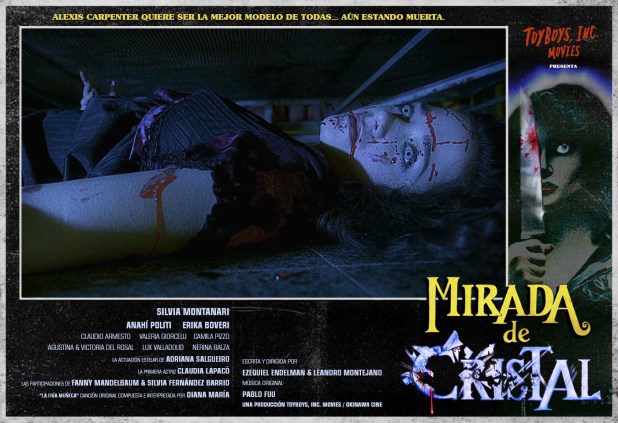
Mirada De Cristal feels like it was made in 1987, influenced by 1970 and filled with neon, sleaze and murderous intent. In other words, it was exactly what I was looking for. Directed by Argentina natives, co-directors and co-writers Ezequiel Endelman and Leandro Montejano, this takes place in Buenos Aires in 1985. As the fashion world mourns a year without supermodel Alexis Carpenter (Camila Pizzo), who died one night after a backstage rampage that saw her take the eye of a makeup girl named Barbara (Valeria Giorcelli), do tons of coke and then get burned alive on the catwalk after she douses the lights with champagne.
Now, fashion editor Lucia L’uccello (Silvia Montanari) must choose between two supermodels — Eva Lantier (Anahí Politi) and Irene del Lago (Erika Boveri) — to honor the lost Alexis on the cover of her magazine. However, the night before the shoot, the dress for the cover image disappears, soon to be followed by the deaths of anyone connected to the magazine and that night, all at the hands of a masked diva who wears a long leather coat and strikes poses as they kill, baby, kill.
This is a film that understands the giallo obsession with duality, frequently showing characters in matched costumes when two people appear on-screen at the same time. It also isn’t shy about its influences, with a Hitchcock book in a desk drawer, a setting borrowed from Blood and Black Lace, a set that echoes Suspiria, a blind man named Lucio and a black cat sharing the name Decker with the feline in Mas Negro Que La Noche. It’s also filled with smoke and neon, probably more than you’ve seen since Cinemax stopped showing smut after midnight on Fridays.
While this looks and feels like a giallo — hell, it even literally has a bird with crystal plumage kill someone — it doesn’t feel slavish to the genre but instead a celebration of it, as well as later entries like Tenebre, Dressed to Kill and Delirium.
Written and directed by Thunder Levin, the writer of Sharknado, this movie has a dark matter asteroid crash into Earth and then unleash earthquakes all over the planet. This being a disaster film, that means that the real story is all about Johanna (Natalie Pelletier) and her two stepdaughters. There aren’t any stars to throw at this environmental hell on earth, so we must make due with what we have. That means family drama, Johanna trying to find her husband Matt (Matthew Pohlkamp) and also convince his son Rick (Erich Riegelmann) that she’s not trying to replace his dead mom.
What we have are electrical storms, some more groundshaking quakes, tidal waves and volcanos. In fact, everything happens in this movie and I’m shocked there wasn’t a famine or a bird attack.
In case you wonder, “What does the title mean?” I have the answer. This was the “We have Geostorm at home” for The Asylum. It came out 17 days before that movie.











 B&S About Movies
You must be logged in to post a comment.