Aug 25-31 Natasha Lyonne Week: There’s a new season of her weirdo mystery of the week coming out (I can’t remember the name rn, you can look it up), and she’s been steadily delivering chuckles for decades now.
Imogene Duncan (Kristen Wiig) was once a promising playwright, but now has a magazine writing job. She gets fired, her boyfriend leaves her, and she tries to kill herself, but really wants her boyfriend to save her. Instead, her friend Dara (June Diane Raphael! Hello people of Earth!) brings her to the hospital, and she has to be released to the care of her gambling addict mother (Annette Bening) and taken back home to New Jersey.
Directed by Shari Springer Berman and Robert Pulcini and written by Michelle Morgan, this has Imogene learn that her father (Bob Balaban) never died and never felt bad about leaving the family.
This is very much a sitcom, and luckily, Kristen Wiig would go on to do better things. You can play the spot Natasha Lyonne game like I did, wishing she were in the movie more than she is. Same as Matt Dillon, who is good, but almost not in this.
Aug 4-10 Stoner Comedy Week: I don’t gas reefer anymore, but I love it when people in movies do!
Lawrence Kasanoff executive produced movies like Party Camp, Blood Diner, The Underachievers, Dream a Little Dream, Blue Steel, Class of 1999, A Gnome Named Gnorm and Ghoulies III: Ghoulies Go to College before finding success with the Mortal Kombatmovies. He also founded the Vestron Pictures genre subsidiary Lightning Pictures in 1986, Lightstorm Entertainment with James Cameron in 1990 and Threshold Entertainment in 1993, which is where this movie came from. Threshold claims to have done the first morphing in a film for Terminator 2, as well as tons of 3D and 4D work on theme park attractions.
Kasanoff and Threshold Entertainment employee Joshua Wexler created the concept that would become Foodfight! in 1997. They entered into a $25 million joint investment with Korean investment company Natural Image, thinking that foreign pre-sales and loans against the sales would cover the budget. Kasanoff also decided to produce and direct the film, despite having no prior experience in animation.
If this was a success, the movies Arcade and Mascots would be next. As those movies never came out, you can assume that Foodfight! was anything but successful.
In fact, it was a mess.
After raising tens of millions of dollars in funding, the film was initially scheduled for a Christmas 2003 theatrical release. It was also said to come out in 2005 and 2007. Then, when a loan was defaulted on, creditors auctioned off the film’s assets and all associated rights to Fireman’s Fund Insurance Company.
In an article in Animation Magazine, “The Long, Strange Odyssey of Foodfight!,” Kasanoff was beyond gung ho on the project, saying, In terms of coming to have an independent digital animation studio making a digitally animated movie right now, I think we’re pretty much it. We’ve got the movie, we’ve got the property, the place, the equipment, the talent, we’re there. Do we believe our next film, Foodfight!, is going to be a huge hit? Of course we do! We think it’s great. We’ve gotten a fantastic response to it. I’ve told people all over the world, and we’re getting a uniform reaction to it. We’re betting a ton that it’s going to be a great movie. We’re risking more on this movie than any other venture I’ve ever been involved in in my life. Every studio but one offered us a deal on the movie, but for us as producers, not for us as the animation studio. We’re never going to be the next Pixar, being for-hire producers with some other shop.”
Before the rights were sold, the hard drives holding this movie disappeared. Industrial espionage was claimed. In 2012, it was released on DVD and on demand in Europe.
So those are the facts. Here’s another one: this movie is weird.
Weird because none of the corporate mascots paid to be in this. They allowed the film to use them, but no one made money. And yet this feels like a sell-out film. And they’re barely in the movie, despite being all over the poster. Somehow, some execs got worried and pulled their characters, like Cheetos’ Chester Cheetah, the Coca-Cola Polar Bears, Count Chocula, the M&Ms (the animators had “mistakenly rendered the Green M&M, a female mascot, as male within the footage shown to company representative”) and cereal mascots like Sugar Bear, Lucky the Leprechaun, the Trix Rabbit, Cap’n Cruch, Sonny from Cocoa Puffs and the Honey Nut Cheerios Bee.
It all takes place in Marketopolis, a grocery store that when the lights go down turns into a neo-noir film where Dex Dogtective (Charlie Sheen) and his partner Daredevil Dan (Wayne Brady) protect other foods from criminals — and run a nightclub called the Copabanana, don’t fall in love — when Dex isn’t pining for his lost love Sunshine Goodness (Hilary Duff). There’s also the new Brand X, led by General X (Jerry Stiller) and Lady X (Eva Longoria), taking over the store, which is populated by the Energizer Bunny, Kid Cuisine and K.C. Penguin, Punchy from Hawaiian Punch, Mr. Clean, Twinkie the Kid, Mrs. Butterworth (Edie McClurg), the Vlasic Stork, Charlie the Tuna (Jeff Bergman), The California Raisins, Tootsie the Owl and Mr. Bubble. These characters are Ikes, or icons, and when they die, their brands die. Someone is killing Ikes — this is a kid’s movie, but has a cartoon cat played by Harvey Fierstein be Harvey Fierstein and a joke from Midnight Cowboy, not to mention the “La Marseillaise” sequence from Jean Renoir’s La Grande Illusion being parodied (thanks as always to my guiding light when it comes to writing things like this, Nathan Rubin) — and there’s a secret plot that’s not all so secret.
This is a movie with Larry Miller playing Vlad Chocool, a chocolate cereal vampire bat who has a forbidden love for Daredevil Dan (this is them getting back at General Mills for not allowed Count Chocula out to play); Chris Kattan as Polar Penguin; Ed Asner as the old guy who runs the grocery store; Cloris Leachman as the Brand X Lunch Lady and Christopher Lloyd as the voice of Brand X.
According to comments made by animators, Kasanoff didn’t seem to realize the difference between live-action and animation, often demanding retakes and notes like “make this more awesome.” He also insisted on bringing his dogs to the studio, one of which was said to be a nightmare. He also reportedly asked for a personal nude 3D render of Lady X, which he would keep and admire.
Either the animation was unfinished in this or that’s how bad it is, a movie that wants to be a tough gumshoe film yet is a movie for kids but filled with outright unpaid product placement and sold off to Europe, who didn’t have most of these characters — or may outright hate them, like Chef Boyaredee — where no one wanted to watch it.
How did this get made?
Why did this get made?
It’s still better than Sausage Party.
You can watch this on YouTube.
To learn even more, watch ROTTEN: Behind the Foodfight!
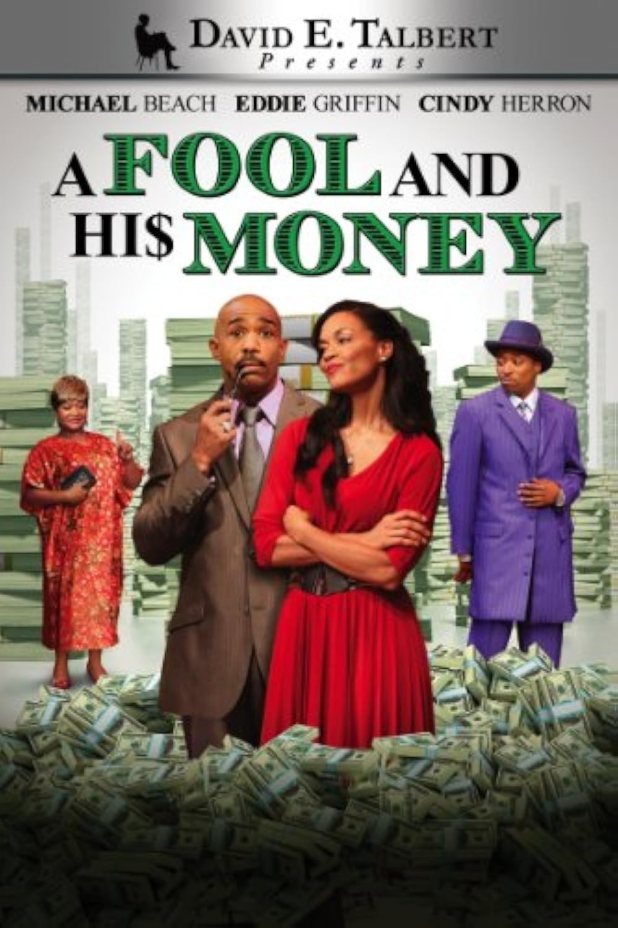
When I was a little kid, I would often see ads late at night for touring black plays that were coming to churches and community centers, usually starring my favorite actors from Good Times or What’s Happening? I would ask my parents if we could go, and I didn’t understand that this was an experience maybe not for a 7-year-old white kid from the sticks. I still wish I had gon, and this movie proves I would have loved it.
Directed and written by David E. Talbert, this has a logline that made me tune in: “When the blue-collar Jordan family wins a radio contest for a million dollars, they quickly begin to realize that more money means more problems. It seems everybody wants a piece of their new fortune, including a long-lost uncle played masterfully by comedian Eddie Griffin.”
Then again, this IMDB reviewer did not enjoy this: “The story moved extremely slowly. The jokes were mediocre, and the storyline was just so-so. Even so, I will continue to support black playwrights, artists & businesses.”
At least they’re supportive!
There was also a 10/10 review that stated, “If you have an hour and forty minutes to waste, this is OK”, and another 9/10 review that claimed, “For reviews of theatrical singing only.”
Not high praise.
Anyways, the Jordan family is struggling. The factory has closed, leaving the father jobless. His wife is ready to leave him, the son is trying to help out by becoming a gangster, and the daughter is dating the gangster, only for her soldier ex-boyfriend to come home. Only grandma is happy, because all she does is go to church and sing her songs. As for Uncle Eddie (Eddie Griffin), he was once in trouble but seems to have turned his life around, even if no one believes it.
Money changes everything, as they say, but as they also say, more money, more problems. As you can imagine, everything works out fine in the end. It feels like the play where you kind of had to be there, and the movie really isn’t. I worry that people might think I’m enjoying this inauthentically. Still, as a long-time lover of shows like Soul Train and Showtime at the Apollo , which aired during the mid-afternoon on weekends and at night, I would be, with all my heart, singing along and laughing.
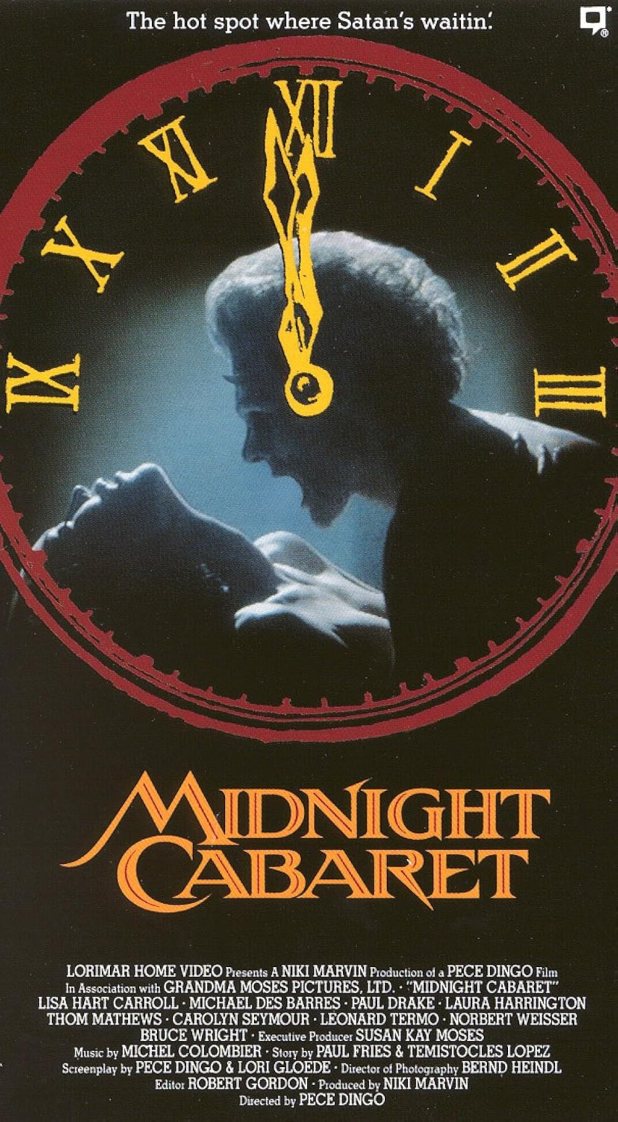
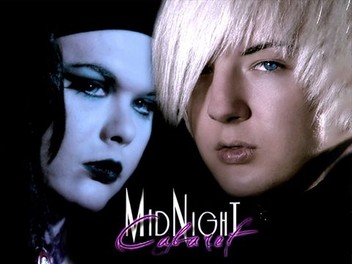
Midnight Cabaret (1990): Directed and co-written by Pece Dingo, this movie has the kind of cast that I look for, which includes former member of Detective and MacGyver enemy Michael Des Barres and Thom Mathews (Tommy Jarvis!).
This is a musical, strange theatrical play, a Satanic movie, an erotic thriller and a giallo-adjacent — you know, the Italian movies where you have no idea what else to call them, so you say that they’re giallo — film all thrown into a shaker with ice, then covered with bongwater and grain alcohol.
It’s Euro-trash but made at home; like how tariffs will someday soon cause the finest in Euroscum movies to cost too much, except we can never make them at home this good. That said, this tries and often looks like an old music video while it’s throwing vampires with straight razors, a cult that wants to impregnate an actress with the Antichrist and moments that feel sexually ambiguous. It’s something. Whether that something is good is up to you.
Midnight Cabaret (2012): As I was looking for the former movie, I discovered this on YouTube and was so far into it before I realized it was a different movie that I just went with things.
Directed by Donna R. Clark, who wrote it with Peter C. Foster, this is the story of Adam (Brad Hilton), a young man struggling to find acceptance and definitely not getting help in his hometown, where he remembers being bullied at home and at school, his mother killing herself and his brother Todd (Jason Mac) going to prison. Now, he becomes inspired by a drag queen named Eve (Elexius Kelly) and becomes a performer at the Midnight Cabaret, finding a world of drugs, crime and who he is inside.
There’s something in this, a movie that feels trapped in digital video but wanting to break free. I don’t know who it’s for, as there are so many gay slurs that it may turn off those it needs to reach most. But otherwise, it wasn’t an unwelcome watch.
Syd March (Caleb Landry Jones) is a salesman for The Lucas Clinic, a company that takes infections from celebrities and sells them to their fans. Yes, it’s possible to get sick from your obsessions or even eat meat harvested from their cells.
Hannah Geist (Sarah Gadon) is the company’s most famous celebrity, and her pathogens remain big sellers as her health falters. When her exclusive procurer, Derek Lessing (Reid Morgan), is fired, Syd takes over. Yet, he’s already in over his head as he’s been using his own body to carry a variety of illnesses, including one that he’s injected from Hannah that causes a series of hallucinations. He intends to sell the sickness to Arvid (Jon Pingue), whose butcher company, Astral Bodies, sells meat from human cells. But when he loses his laptop and Hannah dies from the same illness in his bloodstream, he must find out who has created a new sickness that no one can classify.
Malcolm McDowell is Dr. Abendroth, Hannah’s personal doctor and a man who has grafted her skin onto his body. There’s also the rival company Vole & Tesser, which is fighting The Lucas Clinic to be the leader in celebrity contagion.
While I wasn’t a fan of the young Cronenberg films, I enjoyed this. It has such a great concept and feels like the closest we’ve had to an ancient future movie in some time, such as the ’90s and ’00s weirdness of movies like Freejack and Paycheck, but much better. It’s a world that I wish there were more movies inside, a strange and downbeat yet weirdly hopeful slice of biomechanical celebrity worship.
The Severin release of Antiviral is scanned in 4K from the 35mm protection internegative, supervised by Brandon Cronenberg and cinematographer Karim Hussain, with 3 hours of new and archival special features including commentary by Cronenberg and Hussain; Broken Tulips, a short film by Cronenberg; a making of feature; a discussion of the restoration process; deleted scenes; an interview with production designer Arvinder Greywal; an electronic press kit; the Cannes cut of the film with an introduction by Cronenberg and a thermal camera test. You can get this from Severin.
Directed and written by Julian Pölsler and based on Marlen Haushofer’s The Wall, this follows a woman (Martina Gedeck) who goes to the Austrian Alps hunting lodge of her friends Hugo and Luise. Somehow, she is cut off from all human contact when an invisible wall suddenly appears. She adopts her friend’s dog, Lynx, and learns just how strong she is when all alone in the world.
By the end of the film, she feels born again and just when you think that there’s a message in this, a man appears and kills one of her cows and — spoiler warning but I hated this — her dog. She shoots him, throws him off a cliff and buries Lynx. Why?
I wanted to like this more than I did. I love the slow-moving story and the way that it was shot. And yes, I understand the circle of life and that animals must die (a cat also dies in a windstorm). But the ending feels unnecessarily cruel. Maybe that’s the story, and this has no moral. Everything is left up to you, even the idea of the wall and what happens next. Maybe I’m an idealist, and I’d like to remember the woman, her cow, her cat and the dog making their yearly trip in spring to live on a mountain in happiness rather than the gory and nonsensical close.
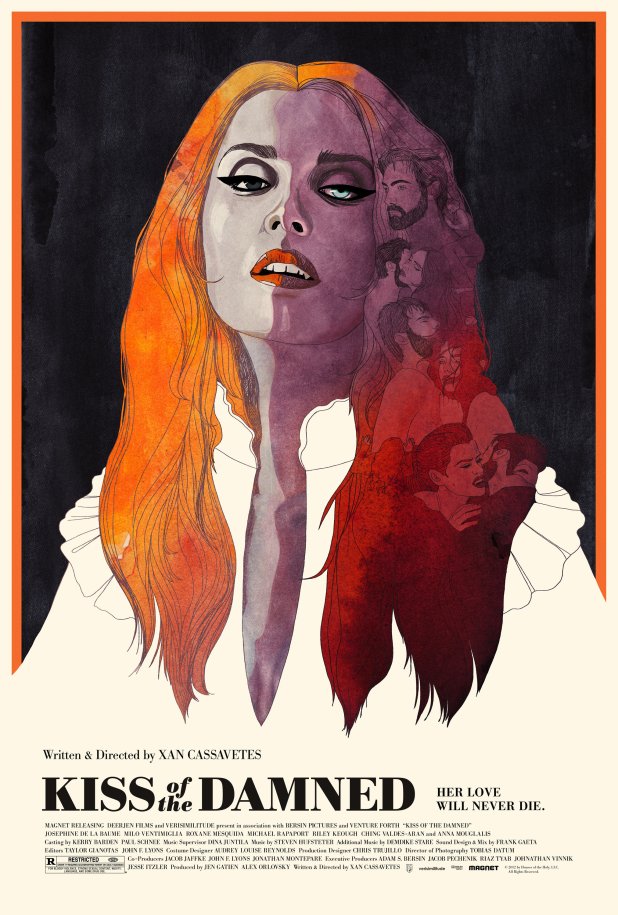
Directed and written by Xan Cassavetes, the daughter of John Cassavetes and Gena Rowlands, Kiss of the Vampire is a simple story told beyond well. Djuna (Josephine de La Baume) is a vampire who translates for a living and only drinks animal blood. She tries to stay away from humans, but movie writer Paolo (Milo Ventimiglia) falls for her when he sees her in a video store. He can’t stay away, no matter how much she pushes him away, so when she reveals her vampire side to him, he quickly is turned and becomes part of her world.
The bad news? Her world includes her sister Mimi (Roxane Mesquida), who quickly ruins the vampiric high society led by actress Xenia (Anna Mouglalis) as she murders humans without a thought and seducing both Paolo with her body and Xenia by offering her a fan of hers (Riley Keough).
The good news? Vampire familiars always take care of things. In this case, Irene (Ching Valdes-Aran) watches Mimi explode in the sunlight and lights a cigarette from her.
I liked how this movie presents a world where vampires are part of society. Most of all, I loved that this is closer to 70s Eurohorror — if this had a grandfather clock or a scene on a foggy beach with a pirate ship, I’d think it was a Jean Rollin movie — than anything Hollywood has to say about the living dead. Sure, it’s arty and even overly full of itself, but it has a hot redhead vampire who watches movies by Bunuel and De Sica, not to mention a great soundtrack. I’m sure that so many people watched this for artistic reasons, but if you watch it because it’s actually sleazy, filled with pretty people and has so much sex in it, I won’t be upset.
As always, the line between the arthouse and grindhouse is thin.
I can hear you thinking—if you even care about Jess Franco’s very late period shot on digital video in a hotel room era—”Didn’t you already talk about La cripta de las condenadas?” Yes, I did. Yes, I referred to The Crypt of the Damned as “Jess Franco in one or two rooms watching women writhe around and zoom in and out of their curves for 90 minutes or so.”
This has the same cast: writer and cinematographer Fata Morgana (she also made Montes de Venus with Franco), Carmen Montes from Snakewoman, Eva Palmer from Jess Franco’s Perversion and actresses whose careers were in these two movies: Marta Simoes, Olivia Deveraux and María Traven.
This is supposed to be a hundred years after the first movie, but it’s the same idea other than images of a cemetery. Was Jess learning from 1990s VCA who would take one movie — Party Doll-A-Go-Go, for example — and break it down into two parts, even though it didn’t need to be?
There’s music by Daniel J. White, alongside Bach and Ravel. This is basically Jess getting to film nude women and then crawling all over his apartment, then selling it,t probably based on his name. But who are we to deny him the ability to see and film women, much less get the most out of the zoom feature? Are we to do as we always do and add to the blank slate that is a Jess Franco movie and find some meaning, some profound lesson here? I don’t think this is for getting off. It’s too slow, too moody, too strange. But hey, whatever gets you there, I guess. Some old people make home movies of their grandchildren, Jess Franco studies labias. Such is life. Is it a bad time to watch women kiss? If that’s boring to you, perhaps Franco’s entire work — point to the sign: you must watch every Franco movie to understand Franco — is not for you.
Based on “What’s So Funny About Truth, Justice & the American Way?” from Action Comics #775, this cartoon was written by Joe Kelly, who also wrote the original comic, which was pencilled by Doug Mahnke and Lee Bermejo, and inked by Tom Nguyen, Dexter Vines, Jim Royal, Jose Marzan, Wade Von Grawbadger and Wayne Faucher.
When the Atomic Skull (Dee Bradley Baker) destroys much of Metropolis and kills several people, Superman (George Newbern) is asked why he doesn’t kill his enemies to protect humanity. A new group of heroes, The Elite — British psychic Manchester Black (Robin Atkin Downes), electricity controlling Coldcast (Catero Colbert), the demonic Menagerie (Melissa Disney) and the magician The Hat (Andrew Kishino) — responds by killing the Atomic Skull and winning over people, saying that they are willing to do what Superman won’t.
Kelly said, “The story tackles themes that go way beyond a typical superhero story…politics, the price of power and America’s place as a force in the world are all viewed through the lens of the DC Universe. Even if fans aren’t paying close attention to these issues, they’re all over the media. You can’t escape them. So with the state of affairs being what it is, I can’t think of a better time to see Superman confront these themes…I’m a big fan of taking real world issues and working them out through our “superhero” stories—but this one goes beyond strict allegory. Like the original comic story, the film is thought provoking without being preachy and really delivers a punch.”
By the end of this, Superman proves while he is still needed, even if he has to trick The Elite into believing. that he’s as ruthless as them.
The Elite are the same as The Authority, superheroes that became popular for their debauchery and willingness to end problems with violence and murder. They would show up again with new members, including cyborg Vera Black, a second Menagerie and Bunny. This team would eventually form the Justice League Elite, led by Black as Sister Superior and team members Coldcast, Menagerie II, Manitou Raven, his wife Dawn, Green Arrow, Flash, Kasumi (Batgirl in disguise), Major Disaster and Naif al-Sheikh.
In the fourth season of Supergirl, The Elite appeared with members Manchester Black, Menagerie, the Hat and a Morae responding to Agent Liberty and the Children of Liberty’s bigotry toward aliens, as well as the Department of Extranormal Operations’ ineffectiveness against people who kill aliens.
Adapting the Frank Miller — with Klaus Janson and Lynn Varley — comic book is a feat. Other than perhaps Watchmen, no comic took hold of my imagination in 1986 the same way, reinventing — for better or worse — the way that many saw Batman and Superman.
Directed by Jay Oliva and written by Bob Goodman, this two-part animated movie has Peter Weller as Bruce Wayne, retired for years after the death of Jason Todd, who was Robin. As Commissioner Gordon (Dark Shadows actor David Selby) nears retirement, they both seem themselves as old men about to be put to pasture. The world is filled with mutants and killing machines; Harvey Dent (Wade Williams) has had surgery to heal his face and been forgiven for his crimes as Two-Face; The Joker (Michael Emerson) is locked up for good.
As crime increases, Wayne decides that it’s time to be Batman again, bringing Carrie Kelly (Ariel Winter) on as his new Robin. He’ll need her help to stop the mutants, who may not be his greatest enemy, as the public remains divided in the media-dominated world of the future. Or today, as this is taking a two decade old story and telling it when it would be happening.
It’s strange to hear Miller’s dialogue — the mutants dialogue reads good on the page, not out loud — and news breaks within a film. At the time, it was cutting edge and influenced other media. Today, it may feel trite, even if this is nearly where it all began. The internal monologue of Batman may seem silly to the audience of today; it’s strange to hear them in a voice that isn’t the one you had in your head when you read the comic.
So much of RoboCop took from the works of Miller, to the point that he wrote the original script to the sequel. If you told teenage me that I would get to see a movie of this someday, I would have been so surprised. As such, I can’t help but like this.
You must be logged in to post a comment.