Let me tell you what. One of my rules of films that no matter how little I want to watch a movie by its description, if Brian Trenchard-Smith directed it, chances are I’m going to love it.
A Christian end times movie based on the Left Behind series? I should despise this.
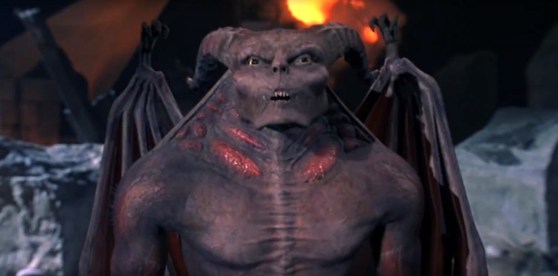
But there’s Trenchard-Smith’s name. And wait — Udo Keir playing a demon? Michael York having the absolute time of his life as the Antichrist? Michael Biehn as his heroic brother? Franco Nero as a general? R. Lee Ermey as the President? An appearance by Chad Michael Murray?
Yeah, I loved it.
This movie defines gigantic scope, but made on the budget of a TV episode and featuring CGI that looks Playstation 1 level in quality. It even has intros by various members of the Trinity Broadcasting Network giving testimony to its high quality. Dude, what kind of world do I live in where religious rich men give the maker of Turkey Shootmoney to make movies about the end of the world?
There were so many moments during this film where I jumped around like a small child, throwing myself all over our movie room. This is the kind of film that I want more people to recognize, find and love.
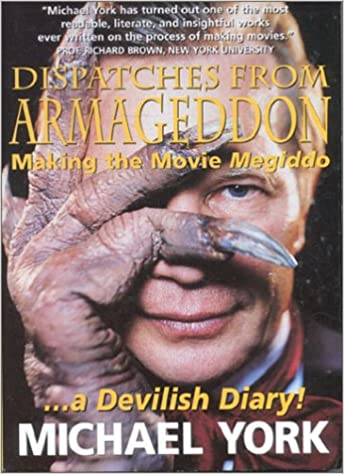
To make it even better, Michael York wrote a journal while acting in this, Dispatches fromArmageddon, and it became a book.
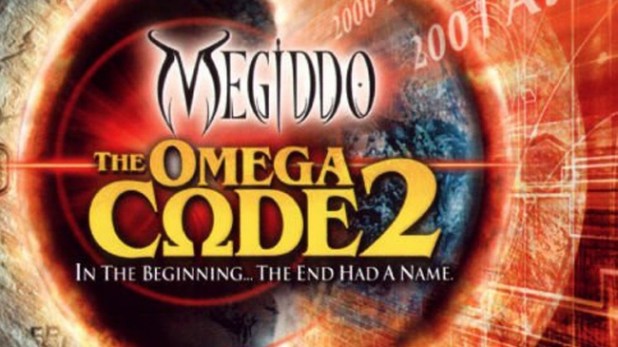
Also, imagine my glee realizing that this movie is basically a prequel and remake — I should have guessed because it had a number in the name — called The Omega Code. York also plays the Antichrist in a movie released by GoodTimes Entertainment.
That film has Casper Van Dien, Catherine Oxenberg, Michael Ironside and a soundtrack by Alan Howarth and Harry Manfredini, which, quite frankly, is blowing my mind right now. Even better, the original website has been saved by the Internet Archive and it is everything that a 1999 website should be.
ABOUT THE AUTHOR: Jennifer Upton is an American (non-werewolf) writer/editor in London. She currently works as a ghostwriter of personal memoirs for Story Terrace London and writes for several blogs on topics as diverse as film history, punk rock, women’s issues, and international politics. For links to her work, please visit https://www.jennuptonwriter.com or send her a Tweet @Jennxldn
GMK wipes the slate clean (again) and starts yet another entirely new time line in the “G” universe. Here, Godzilla has not been seen since 1954 when the oxygen destroyer killed him. General Tachibana (Ryudo Uzaki ) of the Japanese Self-Defense Force is starting to suspect that Godzilla is back and responsible for the destruction of a submarine off the coast of Guam.
Tachibana’s daughter Yuri (Chiharu Nîyama), with whom the general has a strained relationship, works for a reality TV show called Digital Q. The show specializes in stories on Blair Witch and Bigfoot type legends which contain a lot of made up details to get ratings. That is, until Yuri and her crew stumble upon the real thing. They meet a mysterious old man (played by Toho Kaiju veteran Eisei Amamoto) who explains that the Guardian Monsters of Japan – Mothra, Baragon, and King Ghidorah – are re-awakening to defend the homeland from Godzilla. Yuri’s goal becomes to report the story as accurately as possible at any cost. Simultaneously, her father is trying to destroy Godzilla.
Expectations were very high for GMK as is was the first Godzillafilm to be directed by Shusuke Kaneko, who redfined the genre with his Heisei Gamera trilogy. Unfortunately, it does not live up to expectations in some areas
In the Gamera series, Kaneko was often criticized for having too much story and not enough monsters. Sadly, GMK suffers from the exact opposite ailment. Does story really matter in a giant monster movie? Perhaps not. The fights are staged very well with lots of nods and winks to great Kaiju battles of the past 50 years. The special effects and suit designs are some of the best ever with the final battle between Mothra, Godzilla and King Ghidorah being particularly ambitious. The daylight stand-off between Baragon and Godzilla was pleasantly reminiscent of the work of Ishiro Honda in such ‘60s films as Monster Zero and Destroy All Monsters.
The biggest disappointment is the musical score by Kaneko regular Ko Otani. There are a few good cues (such as the theme when Mothra breaks forth from her cocoon) but most of it strays a little too deep into John Barry territory for it to maintain its own identity. The classic theme by Akira Ifukube is only used once at the very end of the film to great effect.
Is GMK better than its predecessors Godzilla 2000 and Godzilla vs. Megaguirus? You bet it is. The American re-boot with Bryan Cranston owes a lot to this film.
When I was a kid, before this whole internet, we all had dial-up modems and called into BBS systems. I remember the first time I went to a meet-up and everyone just had their code names on professionally made name tags. I might have been the youngest kid there, as everyone I had been talking to online ended up being old guys obsessed with making their own computers and getting inside the phone system. They taught me how to call people without paying for it and how to make the phone ring inside my own house and call my family.
So the adventures of these guys will always blow my mind.
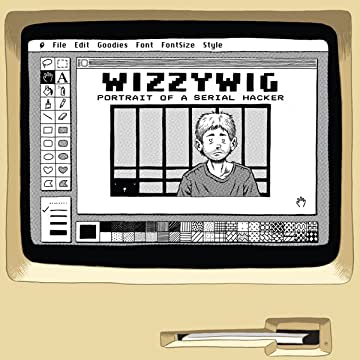
John Draper, Steve Wozniak and Kevin Mitnick are the main characters in this, but it hits nearly everyone. The computer that I am typing on right now is the result of the work these guys did. Mitnick’s story is pretty astounding and a lot of it ended up inspiring Ed Piskor’s genius comic Wizzywig.
An artist named Hideo is painting his girlfriend. Just by reading the title of this film, you know that it’s Tomie. He flips out when she tells him that his art isn’t good, so he kills her and two of his friends help him bury the body. And if we know anything else about these movies, you know that this can’t end well.
Everything Tomie can be reborn, from her head, which grows limbs, to even the paint used to make her portrait and outright possession. Even suicide can’t stop Tomie, as one of the girls possessed by her tries to jump off some cliffs and she survives. Basically, Tomie is the mistake that you should have never made, but you can’t stop her once it all begins.
This version of her story was directed by Takashi Shimizu, who would go on to make Ju-on: The Grudge and — rare for American remakes — even get the chance to helm his own Western version with 2004’s Sarah Michelle Gellar-starring movie.
There is one great part in this one: a mother and a son bond while slicing a young girl to bits and hiding her body. Family togetherness. Get it wherever you can.
New Queer Cinema (see Gregg Araki and his “Teen Apocalypse Trilogy”) director, writer, and producer Todd Stephens used his youth-raised years in Sandusky, Ohio (yep, the same town in Chris Farley’s Tommy Boy from 1995), to his advantage: most of his auto-to-semi-autobiographical films are set in that Buckeye State enclave.
While he turned the directorial reigns over to David Moreton (currently in production with his fourth film, Big America), Stephens made his screenwriting debut with the alternative, coming of age rom-com Edge of Seventeen, which was concerned with a Eurythmics-obsessed teenager coming to terms with his sexuality. And as with Stevie Nicks inspiring the title of his debut film, the “Welsh Witch” influence returned for Stephens’s second writing effort, which also served as his directorial debut. While mainstream critics applauded the film — and it found acceptance on the art house circuit (I made the drive to see it) — the film only managed to score award nods and wins in the LGBT film festival community.
To propel this coming-of-age road trip filled with the usual eclectic characters (a sexually-confused Amish teen runaway; Karen Black as a washed-up retired singer), Stephens used the then de rigueur Stevie Nicks Festivals where fans celebrated her music. Gypsy Vale (Sara Rue of CBS-TV Rules of Engagement and The Big Band Theory) and Clive Webb (Kett Turton; Vampire Steve on CW’s iZombie) are early-twentysomething goths who travel to the 1983 Stevie Nicks Festival, aka Night of a Thousand Stevies, in New York for Gypsy to realize her dream to become a famous singer, like her idol, Stevie Nicks. Fueling and supporting her musical dreams is her ex-musician father, Ray (John Doe of X; Border Radio), who deals with the loss of Gypsy’s mom and his musician-wife, Velvet.
Gypsy 83 served as one the earliest art house entries from Palisades Pictures. The studio would come to acquire the catalog of the shuttered, UK-based Tartan Films, which distributed East Asian films under the Tartan Asia Extreme imprint between 1992 to 2003 (Battle Royale, A Tale of Two Sisters, Oldboy). Comic book aficionados with take notice of Andersen Gabrych in the cast (also of Stephens’s Edge of Seventeen and Another Gay Movie) as a writer for several issues of Batman, Batgirl, and Detective Comics.
There’s no free-with-ads or VOD streams in the online marketplace, but we found a You Tube rip for you to enjoy.
About the Author: You can learn more about the writings of R.D Francis on Facebook.He also writes for B&S About Movies.
Editor’s Desk: This review originally ran on October 1, 2020, as part of our October 2020 annual “Slasher Month” and we’ve brought it back for “John Doe Week.“
As I write this, Boston’s iconic, trendsetting alternative rock station, WFNX 101.7 FM, is no more.
When the station went on the air in 1947 as WLYN, it broadcast a programming palate of simulcasting its sister AM station with the same callsign on AM 1360, then originated its own programming at night after the AM went off the air at sundown (an AM-FM combo broadcast standard until the mid-70s). Upon the convergence-birth of Los Angeles’ alternative rock station KROQ (the home of Rodney Bingenheimer; his career chronicled in The Mayor of the Sunset Strip) and MTV in the early ’80s, the station came to drop its variety-ethnic programming in 1981 and began experimenting with new wave music in the evenings.
By 1982, WLYN became known as “Y-102,” one of the first full-time new-wave rock stations in the country; a station sale in 1983 resulted in the format remaining, but birthing a new set of call letters — WFNX — until another station sale in 2012 to Clear Channel Communications (now iHeartMedia) resulted in an automated format flip to an “Adult Hits” and a new set of call letters: WBWL (a common practice — live to automation — in these digital times).
The first song WFNX played under its new, full-time alt-rock format was the Cure’s “Let’s Go to Bed.” In August of 1991, with buzz on the group in full effect, DJ Kurt St. Thomas gave the then commercially unknown Nirvana their world broadcast premiere of their new album, Nevermind, from start to finish — and we all know how that album turned out.
At that point, WFNX became a trendsetter of the alt-rock community, giving the first national airplay to the top-selling bands The Darkness, Franz Ferdinand, Florence and the Machine, Hawthorne Heights, and Jet, just to name a few. When the station when off the air in 2012, they went off with the song that started it all: the Cure’s “Let’s Go to Bed.” Nirvana’s first major, mainstream concert appearance beyond the college-rock club scene was for WFNX’s annual anniversary party in August 28, 1991.
To call St. Thomas — as do Beatles historians with New York DJ Murray the K as “The Fifth Beatle” — the “fourth Nirvana member” (or fifth, if you count the late addition of Pat Smear of the Germs as a second guitarist during the In Utero years), is no understatement.
VHS image courtesy of sweesus-smasher/Paul Zamerelli of VHS Collector.com
By 1996 Kurt St. Thomas transitioned into filmmaking. Along with fellow WFNX DJ Mike Gioscia, they made the 1999 black and white film noir Captive Audience. The film dealt with the odd, symbiotic relationship between an overnight DJ and a gun-toting intruder at the station. Winning several international and domestic film awards, St. Thomas and Gioscia were encouraged to shoot a more adventurous feature production.
Recruiting John Doe of X (Border Radio) as their star, The Red Right Hand is a horror film that begins in 1963 as it follows five high school friends forced to relive a terrifying secret at their 15th high school reunion in 1978. Also released to video under the titles Above and Below and Jon’s Good Wife, the original title was taken from a Nick Cave song.
As with most of the Troma Entertainment catalog, don’t let the logos from The Asylum deter you from spinning the DVD, as the studio only distributed the film; they were not involved in its production.
Is it “The Creepiest movie since Rosemary Baby!” as the DVD box claims? No. And The Asylum marketing department has a lot of balls making us thing we’re getting a film that matches the majesty of Roman Polanski. However, St. Thomas and Mike Gioscia have crafted a solid mystery drama rife with blackmail, murder, private demons, and rattling bones: all the plot points you expect in a noir.
St. Thomas would later work at the KROQ, the L.A. rock station responsible for birthing WFNX; while there, he came to produce the long-running specialty show “Jonesy Jukebox” for Steve Jones of the Sex Pistols (The Great Rock ‘n’ Roll Swindle). He and John Doe are currently in post-production stages on their latest effort — and St. Thomas third feature film overall — D.O.A: The Movie, with co-star Lucinda Jenney, who we last saw in Rob Zombie’s 3 from Hell. A noir homage, it concerns Frank Bigelow (John Doe), a Florida private detective hired to follow the ne’er-do-well husband of a St. Augustine socialite. The spiraling double-crosses ensue.
Even though The Asylum made the VHS and DVD widely available in the marketplace — I’ve seen it numerous times on rental and retail shelves, cut-out bins and second hand stores — they’ve opted not to offer it as an online stream. There’s not even an online trailer or clips to share. But if you Google it, you’ll readily find VHS and DVD copies in the online marketplace.
About the Author: You can learn more about the writings of R.D Francis on Facebook.He also writes for B&S About Movies.
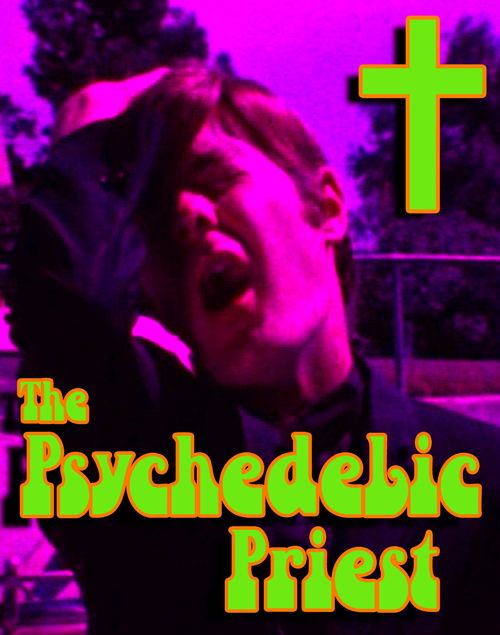
Also known as Electric Shades of Grey and Jesus Freak, The Psychedelic Priest wasn’t really directed by Stewart “Terry” Merrill, but instead William Gréfe, who was paid for this movie in trading stamps, which he described in Brian Albright’s Regional Horror Films, 1958-1990: A State-by-State Guide with Interviews as “Instead of cash, if you owned a TV store and I owned a garage, and you needed your transmission fixed, you’d give me trading stamps. When I needed a TV, I could go get a TV from you.”
Gréfe got paid $100,000 in trading stamps to make this movie that was never released until thirty years later because everyone felt it would be a bomb. As for Gréfe, he was now the president of Ivan Tors Films, making family movies, so he realized that “I didn’t want some wild hippie drug movie with my name as writer and director.”
The cast and the crew were non-actors, mostly real hippies, and the story is rambling at best, as Father John realizes that he can no longer preach to the young people, so he goes on some sort of quest to learn how to fit into a world that doesn’t need religion any longer. He almost leaves the cloth for a woman named Sunny, but by the end of the movie, he’s come back to his commitment to the church.
This was shot on the fly, with scenes mainly being improvised, as well as a soundtrack that is really solid. It’s a great experiment and whether or not it works for you is, well, up to you. I dug what it was trying to do, even if it’s not always successful.
Originally released by Something Weird, Arrow Video has put this on their new He Came from the Swamp box set. Diabolik DVD has it for sale now.
As I write this, Boston’s iconic, trendsetting alternative rock station, WFNX 101.7 FM, is no more.
When the station went on the air in 1947 as WLYN, it broadcast a programming palate of simulcasting its sister AM station with the same callsign on AM 1360, then originated its own programming at night after the AM went off the air at sundown (an AM-FM combo broadcast standard until the mid-70s). Upon the convergence-birth of Los Angeles’ alternative rock station KROQ (the home of Rodney Bingenheimer; his career chronicled in The Mayor of the Sunset Strip) and MTV in the early ’80s, the station came to drop its variety-ethnic programming in 1981 and began experimenting with new wave music in the evenings.
By 1982, WLYN became known as “Y-102,” one of the first full-time new-wave rock stations in the country; a station sale in 1983 resulted in the format remaining, but birthing a new set of call letters — WFNX — until another station sale in 2012 to Clear Channel Communications (now iHeartMedia) resulted in an automated format flip to an “Adult Hits” and a new set of call letters: WBWL (a common practice — live to automation — in these digital times).
The first song WFNX played under its new, full-time alt-rock format was the Cure’s “Let’s Go to Bed.” In August of 1991, with buzz on the group in full effect, DJ Kurt St. Thomas gave the then commercially unknown Nirvana their world broadcast premiere of their new album, Nevermind, from start to finish — and we all know how that album turned out.
At that point, WFNX became a trendsetter of the alt-rock community, giving the first national airplay to the top-selling bands The Darkness, Franz Ferdinand, Florence and the Machine, Hawthorne Heights, and Jet, just to name a few. When the station when off the air in 2012, they went off with the song that started it all: the Cure’s “Let’s Go to Bed.” Nirvana’s first major, mainstream concert appearance beyond the college-rock club scene was for WFNX’s annual anniversary party in August 28, 1991.
To call St. Thomas — as do Beatles historians with New York DJ Murray the K as “The Fifth Beatle” — the “fourth Nirvana member” (or fifth, if you count the late addition of Pat Smear of the Germs as a second guitarist during the In Utero years), is no understatement.
VHS image courtesy of sweesus-smasher/Paul Zamerelli of VHS Collector.com
By 1996 Kurt St. Thomas transitioned into filmmaking. Along with fellow WFNX DJ Mike Gioscia, they made the 1999 black and white film noir Captive Audience. The film dealt with the odd, symbiotic relationship between an overnight DJ and a gun-toting intruder at the station. Winning several international and domestic film awards, St. Thomas and Gioscia were encouraged to shoot a more adventurous feature production.
Recruiting John Doe of X (Border Radio) as their star, The Red Right Hand is a horror film that begins in 1963 as it follows five high school friends forced to relive a terrifying secret at their 15th high school reunion in 1978. Also released to video under the titles Above and Below and Jon’s Good Wife, the original title was taken from a Nick Cave song.
As with most of the Troma Entertainment catalog, don’t let the logos from The Asylum deter you from spinning the DVD, as the studio only distributed the film; they were not involved in its production.
Is it “The Creepiest movie since Rosemary Baby!” as the DVD box claims? No. And The Asylum marketing department has a lot of balls making us thing we’re getting a film that matches the majesty of Roman Polanski. However, St. Thomas and Mike Gioscia have crafted a solid mystery drama rife with blackmail, murder, private demons, and rattling bones: all the plot points you expect in a noir.
St. Thomas would later work at the KROQ, the L.A. rock station responsible for birthing WFNX; while there, he came to produce the long-running specialty show “Jonesy Jukebox” for Steve Jones of the Sex Pistols (The Great Rock ‘n’ Roll Swindle). He and John Doe are currently in post-production stages on their latest effort — and St. Thomas third feature film overall — D.O.A: The Movie, with co-star Lucinda Jenney, who we last saw in Rob Zombie’s 3 from Hell. A noir homage, it concerns Frank Bigelow (John Doe), a Florida private detective hired to follow the ne’er-do-well husband of a St. Augustine socialite. The spiraling double-crosses ensue.
Even though The Asylum made the VHS and DVD widely available in the marketplace — I’ve seen it numerous times on rental and retail shelves, cut-out bins and second hand stores — they’ve opted not to offer it as an online stream. There’s not even an online trailer or clips to share. But if you Google it, you’ll readily find VHS and DVD copies in the online marketplace.
About the Author: You can learn more about the writings of R.D Francis on Facebook.He also writes for B&S About Movies.
We’ve since done a “John Doe Week” tribute in December! You can visit this recap/round up for those film reviews.
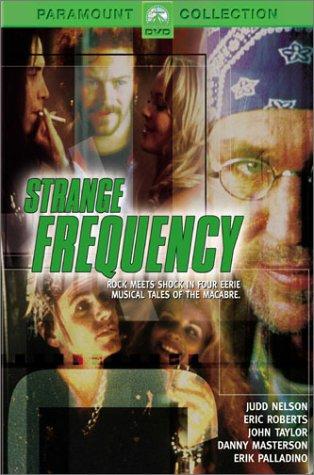
Mary Lambert (Pet Semetary) and Bryan Spicer (McHale’s Navy) came up with this VH1 series, of which this movie was the pilot and also provided four episodes. Unlike Tales from the Crypt, which used the old comic books for inspiration or the morality plays of The Twilight Zone or Night Gallery, this show turned to rock and roll to create its stories.
The Who’s Roger Daltry serves as the narrator for this first go-round, which originally aired on January 24, 2001.
The first story, “Disco Inferno,” finds two rockers stuck within their own personal hell — a disco that never stops playing the music they hate. Penthouse 1992 Pet of the Year Brandy Ledford appears, as does That 70’s Show actor Danny Masterson.
“My Generation” has Danny’s brother Chris matching wits with Eric Roberts (here he is again) as two serial killers with deadly taste in music.
“Room Service” has a real rock star, Duran Duran bassist John Taylor, who is trying to destroy his hotel room but the maid always fixes it.
“More Than A Feeling” has Judd Nelson as a music producer who keeps breaking new artists who sadly die right after they find their success.
Sadly, the follow-up series only lasted ten episode, with “Daydream Believer” never airing. It was a good concept, if you ask me. But then again, I love anthologies, so put another dime in the Mystic Seer, baby.
Get ready for a drunk driving PSA that lasts 84 minutes, as Cassie (Melissa Sagemiller) gets in an accident that kills her boyfriend Sean (Casey Affleck) after a night of clubbing in a potentially haunted bar and a misunderstanding with her ex-boyfriend Matt (Wes Bentley). Oh yeah, Eliza Dushku is in this as well.
It all ends up being a dream in which the evil Deathmask, a scarred up dancer and a girl named Raven try to keep her from coming back to the world of the living. Luke Wilson also is in this as a priest who tries to help.
Writer and director Stephen Carpenter was also behind the movies The Dorm That Dripped Blood, The Kindred, The Power and the TV series Grimm. I’d watch the first one of those before this, which Affleck has mentioned as one of the worst films he’s been in. Or watch Sole Survivor instead, which is the same idea done much better.
In the wake of Scream and Final Destination, I can see why this movie was made. The fact that I found myself compelled to watch it — I blame the gimmick-filled DVD — is an issue that I’ll have to deal with, hopefully with the help of dancing ghosts, a booming soundtrack with the Deftones on it and a kindly clergyman.





 B&S About Movies
You must be logged in to post a comment.