Spellbinder (1988)

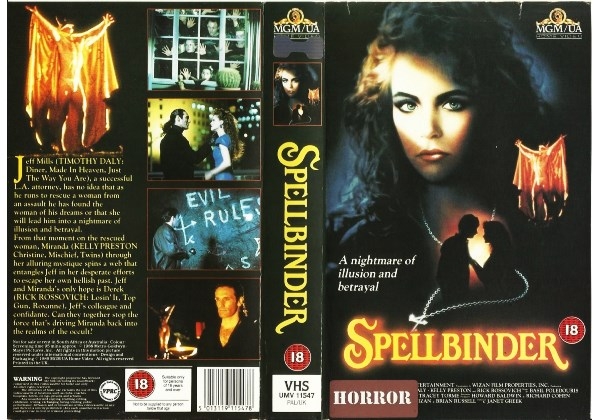
Janet Greek is best known for her TV work and for directing the first Weird Al video, “Ricky.” This is one of her few theatrical films and it’s very much of the 1988 video store get five movies for five nights era, which is by no means a bad thing.

Los Angeles attorney Jeff Mills (Tim Daly, Wings) and his friend Derek Clayton (Rick Rossovich, Top Gun) rescue Miranda Reed (the gone before her time Kelly Preston) from an abusive boyfriend who spouts Satanic epithets before running into the night. So Jeff does what any of us would — he lets her move in and take over his life. The sex is, one expects when sleeping with a witch, astounding. But then, in the cold light of day, things start to be quite frightenging.

Along the way, there are appearances by Diana Bellamy (who knows something of video store rentals with credits like Critters 3My ChauffeurD.C. CabThe Nest and Stripped to Kill), Sally Kemp (The Glove), Audra “Mrs. Roper” Lindley, Cary-Hiroyuki Tagawa (the Mortal Kombat movies) and Karen Baldwin, who along with her husband, Penguins owner Howard Baldwin, would make Pittsburgh’s second favorite movie, Sudden Death.

This movie was supposedly difficult to find for years, as the Church of Scientology kept it hidden due to Preston’s nude scenes — I call B.S. on that one, no one was keeping Mischief from anyone and that goes way further — and the fact that she plays a witch, a fact that I can more than see them being upset about.

Glory (1989)

Yeah, we sometimes watch movies that win actual awards and are seen as substantial pieces of art. You can bet your sweet bippy that Sam has nothing to do with the selection of those movies, as he often says things like, “You know, I’d like to watch Human Lanterns,” and Becca just rolls her eyes.

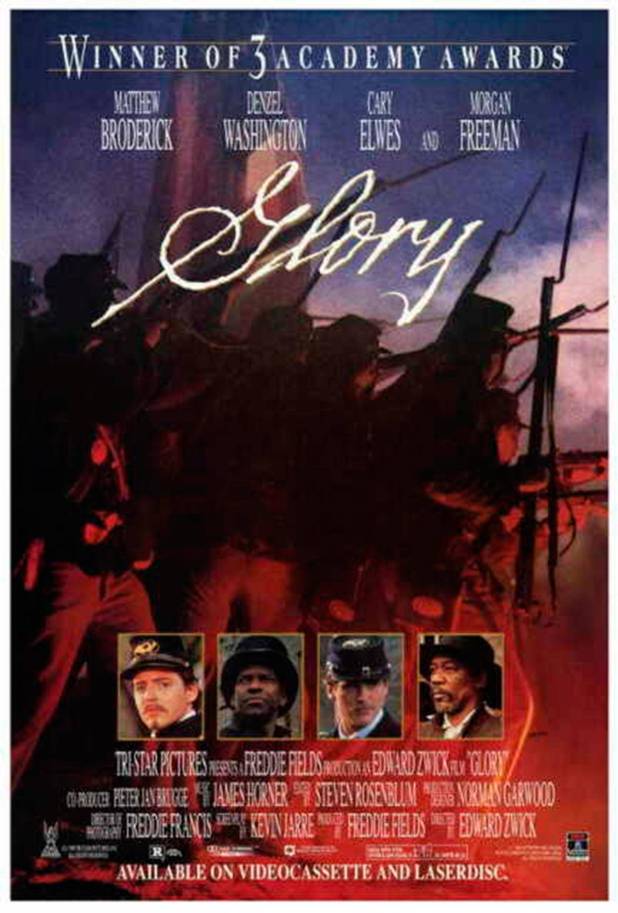
The spoonful of sugar that helped the medicine go down? This movie’s cinematographer is Freddie Francis. Yes, the very same person who directed Dr. Terror’s House of Horrors, Torture Garden, Tales from the Crypt and Son of Dracula. Before he made any of those movies, Francis had already won an Oscar for 1960’s Sons and Lovers. He won major acclaim for being the cinematographer for The Elephant ManDuneCape Fear and this movie, which he won an Oscar for in 1989.

Based on the books Lay This Laurel by Lincoln Kirstein and One Gallant Rush by Peter Burchard, as well as the personal letters of Colonel Robert Gould Shaw (who is played in the movie by Matthew Broderick), this is the story of the 54th Massachusetts Infantry Regiment, the Union Army’s first African-American regiment in the American Civil War.

While Glory was the first major motion picture to tell the story of black U.S. soldiers fighting for their freedom from slavery during the Civil War and even has Shelby Foote — who was a major part of Ken Burns’ The Civil War — as a technical advisor, it still takes massive liberties with history. For example, a major scene has Private Trip (Denzel Washington) being flogged for running away, a punishment that was stopped two years before when this movie takes place. The reason behind his insubordination — the lack of shoes for the black soldiers — was also untrue, as on the day the recruits arrived at Readville (way after Christmas 1862, so that’s wrong) they were given new uniforms and boots. There are many more issues — the direction of the actual attack, the fact that most of the 54th were free men and not slaves, the fact that Fort Wagner really was taken over by Union forces in 1863 and that General Charles Garrison Harker never served around Charleston — but why let them get in the way of the story?

There’s a great quote from Roger Ebert about this movie: “Watching Glory, I had one recurring problem. I didn’t understand why it had to be told so often from the point of view of the 54th’s white commanding officer. Why did we see the black troops through his eyes — instead of seeing him through theirs? To put it another way, why does the top billing in this movie go to a white actor?”

I feel that if this movie had been made in 2020 and not 1989, it would be a completely different story.

That said, Morgan Freeman is great as Sergeant Major John Rawlins. It’s still an important movie, if you’re aware of the historical changes. What has not changed is that the Civil War was fought for many reasons, but the fact that we could be all equal has always been the lesson that I’ve taken. I rarely get political in my writing here — how can I when mostly I discuss Shaw Brothers, Turkish ripoffs and Mexican pro wrestling movies — but make no mistake, anyone that flies a rebel flag today is the most baseless moron there can be.

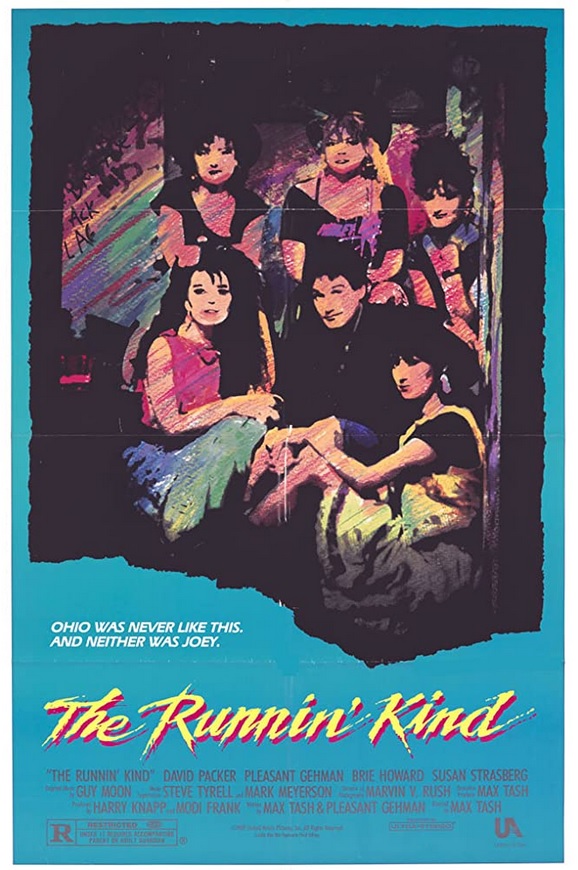
The Runnin’ Kind (1989)

This is one of those punk flick obscurities that no one saw in theatres and barely caught on video due to a poor critical reception and worse distribution. Movies starring James Cromwell (Dr. Zefram Cochrane in Star Trek: First Contact; the evil warden in Adam Sandler’s remake of The Longest Yard, just to name two of his films) and El Duce of the Mentors, tend to work out that way.

My memory of The Runnin’ Kind stems from Henry Rollins name dropping the film, along with Robert Altman’s O.C and Stiggs (1985), in the pages of one of his books, possibly Fanatic!: Songs Lists and Notes from the Harmony In My Head Radio Show, about his DJ exploits on L.A.’s Indie 103.1 FM. It wasn’t until the mid-’90s when I finally found a copy of The Runnin’ Kind (along with the college-rock coveted A Matter of Degrees) courtesy of a mom-and-pop video store’s “Going Out of Business Sale.” (I VHS-snagged O.C and Stiggs off a late ’80s UHF-TV replay.)

The latter Altman film received Rollins’s fandom as result of King Sunny Ade appearing the film; if you know Rollins, you know how he feels about that Nigerian African pop singer — and Robert Altman. The Runnin’ Kind (as I vaguely recall) got his attention as result of it serving as the screenwriting debut of Pleasant Gehman, the lead singer of the underground L.A. cowboy-punk band, the Screamin’ Sirens. The band’s then pioneering mix of punk, country, and rockabilly was more commercially acceptable than the somewhat similar the Cramps, and served as an early progenitor to what became known in the grungy, early ’90s as “alternative country,” a musical form practiced by the likes of Wilco, Uncle Tupelo, the Jayhawks, Whiskeytown, and Son Volt.

In existence from 1983 to 1987, the Screamin’ Sirens managed to released one album on Engima Records (Capitol affiliated; home to hitmakers Stryper, Poison, and Hurricane): Fiesta! (1984), along with Voodoo (1987) on the U.S. “college rock” indie label, Restless Records. In addition to appearing on a couple of Engima compilations and a 1983 Rodney on the ROQ compilation, they also provided the songs for a Thrasher Magazine CD compilation, along with “Love Slave” for Reform School Girls (1987; starring Wendy O. Williams of the Plasmatics).

Directing and assisting in rewrites on Gehman’s screenplay was Max Tash; getting his start in television, The Runnin’ Kind, produced for United Artists, was his feature film debut. Upon the film’s poor reception (and its failure in advancing the Screamin’ Sirens to mainstream acceptance; it was a multimedia showcase), Tash returned to television, forging a career with the likes of Parker Lewis Can’t Lose (Corin Nemic, later of Mark L. Lester’s Sand Sharks) and The New WKRP in Cincinnati, just to name a few.

Courtesy of strosfan74/eBay

As story unfolds, it’s pretty obvious United Artists’ was going for a (little late to the show) Risky Business vibe with its preppy, self-discovering ne’er-do-well in the Cruise-esque David Packer (most notably as Daniel Bernstein in NBC-TV’s sci-fi series V).

Packer is Joey, a recent college graduate with his future planned by his over-bearing father and well-meaning, but naive mother (notable TV mainstays John Carter and Susan Strasberg). But — as with the Max Glass, the preppy ne’er-do-well of A Matter of Degrees on his way to Columbia and having a “college-life crisis” and losing himself in the campus radio station — Joey Carter isn’t having any of this clerking-for-his-father’s-law firm non-sense and attending Yale Law in the fall. In a last fling before signing his life away, Joey’s yuppie buddies from Shaker Heights take him to the rundown part of Cleveland to check out a punk show. At the concert Joey’s heart is “thunderstruck” (Thanks, Angus!) by Thunder (Brie Howard), the female drummer of a band fronted by Joe Wood (of T.S.O.L, who perform “Hit and Run” on stage).

Head over heels in love, Thunder is the inspiration Joey needs to escape his father’s grip; he ends up Los Angeles and bunks with his Uncle Phil and Aunt Barbara (James Cromwell and Julie Cobb; yep, the mom from Charles in Charge). During his search of the L.A. punk scene for Thunder, Joey’s befriended by Pleasant Gehman and her band, the She-Devils (aka the Screamin’ Sirens). In need of a drummer, he comes to introduce the band to Thunder and uses his law skills to manage the band. Along the way Joey also meets Susan Ursitti (sigh . . . Boof from Teen Wolf) and Juliette Lewis (if you don’t know Juliette by now, buddy), El Duce (Suburbia, The Mentors: The Kings of Sleaze), and Rodney Bingenheimer (Mayor of the Sunset Strip).

The affable-on-screen Brie Howard was a member of the pioneering, all-female rock band Fanny. Their album, Rock and Roll Survivors (1974; Casablanca Records, home of Kiss and Angel), had a hit single in “I’ve Had It,” which reached #79 on the U.S. Top 100 Billboard chart; the album’s second single, “Butter Boy,” peaked at #29 in 1975. Transitioning into acting, Howard made her big screen debut as the “Ripley” character in the Alien-inspired and Klaus Kinski-starring Android and followed up her work in The Runnin’ Kind with Tapeheads (starring John Cusack, along with Jello Biafra of Terminal City Ricochet). Patti Quatro, the sister of Suzi Quatro (Suzi Q), was a one-time Fanny member alongside Howard.

T.S.O.L, through a plethora of roster upheavals (from Jack Grisham to Joe Wood on lead vocals) and style changes (from hard core, metal, and back again), continue to record in 2020. In addition to appearing in Suburbia, they also provided songs to The Return of the Living Dead and Dangerously Close. Their songs “Flowers by the Door” and “Hear Me Cry” also appeared in Hear Me Cry, an ’80s installment of the CBS Schoolbreak Special (yeah, we found it on You Tube).

We found a free rip of The Runnin’ Kind on You Tube, and be grateful; for this one isn’t available as a DVD (not even in the grey market) or as PPV or VOD stream. It was previously available for streaming at Amazon Prime, but ran into licensing issues and is no longer accessible on that digital platform.

About the Author: You can learn more about the writings of R.D Francis on Facebook. He also writes for B&S About Movies.
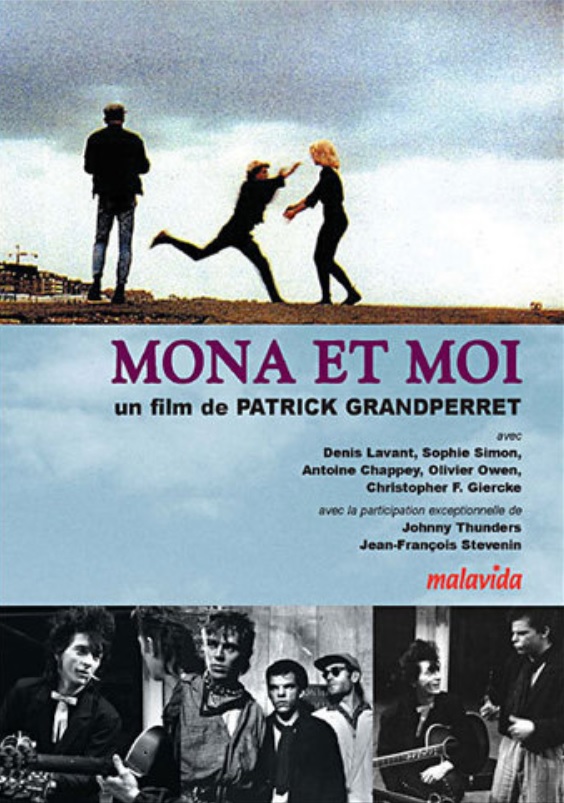
Mona et Moi (1989), aka Mona and I

Guitarist Johnny Thunders and vocalist David Johansen were the garage-punk coefficient of the Rolling Stones’ “Glimmer Twins” Keith Richards and Mick Jagger. They were the “Toxic Twins” before Aerosmith’s Joe Perry and Steven Tyler. Before there were Sex Pistols, there were New York Dolls. As with those British-screaming snots, the “Gemini Snots” defined a scene: the ‘Dolls were New York. Bands such as Siouxsie and the Banshees, formed out of “The Bromley Contingent,” the Sex Pistols’ fan-clique based around London’s 100 Club. The Buzzcocks (!) birthed because of the ‘Pistols. There’d be no Clash or the Ruts or the Stranglers without ‘Pistols. In New York, bands formed out of the ‘Dolls’ audience at The Bowery-based CBGBs. There’d be no Blondie, Ramones, Television, or Talking Heads without the Thunders-Johansen dichotomy.

But not every gunslinger of the six-string electric is destined to be Thomas Edison: sometimes you’re Nicola Telsa.

While their Todd Rundgren-produced (Meat Loaf’s Bat out of Hell was the ex-Nazz leader’s big one; he produced Sparks (of Rollercoaster fame) as well) eponymous debut on (Mercury, 1973) is regarded as a “rock classic,” no classic rock radio station will ever play them. (Nor will any of today’s alt-rock stations spin the ‘Dolls’ as “golds” analogues to classic rock radio’s spins of the Rolling Stones.) The ‘Dolls’ debut was—as with most “innovators”—a resounding marketing failure compounded by the release of their appropriately-titled sophomore-final, Too Much Too Soon (Mercury, 1974). And, with that, the New York Dolls—along with, to an extent, their Detroit-based inspirational precursors the MC5 and Iggy and the Stooges—singlehandedly soured major records labels on punk snot . . . at least until some blonde-haired kid from the Pacific Northwest decided (well, the X-Generation decided) to become the new Jim Morrison. By the time the Sex Pistols first took to the stage in 1976, the ‘Dolls’ were punk vestiges, but not enough in ruins that megla-Svengali Malcolm McLaren (The Great Rock ‘n’ Roll Swindle) didn’t want to sink his fangs and extract the last ounce of snot. But it gave him the idea to “form” the Sex Pistols <eye roll>, so it all worked out.

In the midst of the fad-driven major-label mania over rock “supergroups” (that run the gambit from Blind Faith in the 60’s to KBG in the ‘70s to Asia—the last of them—in the ‘80s), there was (before some kid named Tom Petty absconded it as a suffix-moniker) (The) Heartbreakers—a ‘Dolls’ phoenix stoked by Johnny Thunders and Jerry Nolan with ex-Television (formed out of the ‘Dolls’ audience, natch) bassist Richard Hell. As with all supergroup outings (Fastway comes to mind: UFO’s Pete Way was out before Motorhead’s Fast Eddie Clark and Humble Pie’s Jerry Shirley recorded their debut album proper and became the “No False Metal” voice for Sammy Curr in Trick or Treat), Hell was out before Thunders and company recorded their first album in England (where the ‘Dolls’ had a rabid fan base as much as they had an indifferent fan base in America), L.A.M.F (1977). And, with that, Richard Hell was off to form the Voidoids.

Could you imagine—if he wasn’t so ambivalently indifferent in perpetuity—Kurt Cobain being talked into taking an acting role, say like the Kurt-divergent Eddie Vedder appearing in Cameron Crowe’s “grunge Friends” flick, Singles?

Well, Thunder’s ex-Heartbreakers’ mate Richard Hell used his infamy for a quick stage-to-film transition in Blank Generation (1979). It would be a decade before Thunders repeated the cinematic leap made by Hell (and Debbie Harry in Union City, Iggy Pop in Cry Baby, or the Ramones in Rock ‘n’ Roll High School)—and Thunders had to cross an ocean to do it.

Initially shot in 1984 in a start-stop-start, financially-plagued production schedule (and released three years before his 1991 New Orleans death; it was released in 1988 in France; then Europe in 1989), this acting debut by Johnny Thunders is, needless to say, an extremely rare VHS that’s impossible to find outside of its native country of origin. Alongside with a little-to-nothing to say Jerry Nolan and Billy Rath from Heartbreakers, Thunders stars as Johnny Valentine: a troublesome New York rock star (not far removed from his own self, natch) that’s left in the charge of a music manager assigned to “babysit” the hard-living artist for a week. The thin premise for the drama is a down-and-out rock promoter flying Johnny into Paris to headline a concert. The romantic triangles tinkle as Thunders falls in love with Mona, the manager’s girlfriend. And if that sounds a lot like the character and pseudo-plot of Richard Hell’s Blank Generation, then it probably is. And if the “babysitting” manager angle sounds too much like Get Him to the Greek (with Russell Brand’s obnoxious-oblivious-rocker Aldous Snow—only with less heroin sheik and more Apatow raunch), then it probably is.

While Hell was clean (we think) and coherent in his role in Blank Generation, it’s hard to watch Thunders swagger-stagger through the film either drunk, stoned—or both. Regardless of the cool factor in having one of punk’s forefathers in an acting role (and truth be told, Thunders isn’t half bad at it), it’s nonetheless heartbreaking (sorry) to see a clearly broken Thunders squeezing out (or manipulated into) his last ounce of fame infamy—especially when considering the mainstream film appearance of his clean and sober ‘Dolls’ mate David Johansen in hit films such as Scrooged and Married to the Mob.

While Thunders was (always) a musical-footnote oddity in the States, he was, nevertheless, a celebrity in France—alongside ex-U.S. punks Stiv Bators of the Dead Boys and Willy DeVille of Mink DeVille. So, in that country, he continued to record and perform in concert—long after the early ’70 glam and late ‘70s punk halcyon days. In a historical twist, his solo debut, So Alone (1978), featured the backing of ex-Pistols Steve Jones and Paul Cook. Director Lech Kowalski (D.O.A) examined the troubled life of Thunders in Born to Lose (1999) and offered additional insights with the direct-to-video New York Doll. The Polish director also shot and recorded a pair of shows with Thunders for his heroin-document Gringo, aka The Story of a Junkie; while that film-music partnership floundered, the footage ended up in Lech’s subsequent Thunder-documentaries.

An extremely clean rip of the Mona Et Moi—with subtitles—is offered on the You Tube page of Cult Fusion TV — and we found an extended clip to enjoy. You say you need more Johnny Thunders? Then check out the fictitious take on his life with Room 37: The Death of Johnny Thunders, available on DVD/Blu-ray and Amazon from Cleopatra Entertainment.

About the Author: You can learn more about the writings of R.D Francis on Facebook. He also writes for B&S About Movies.
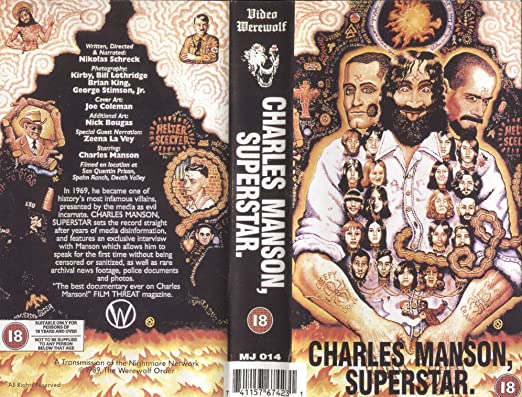
Charles Manson Superstar (1989)

Nikolas Schreck founded the musical magical recording and performance collective known as Radio Werewolf, which also included his former wife Zeena LaVey Schreck. He’s also worked with NON, Death in June and Christopher Lee, with whom he conceived and produced the album Christopher Lee Sings Devils, Rogues & Other Villains.

Schreck also worked with the Church of Satan and was a member of the Temple of Set before renouncing Satanism in 2002. This film is part of his study of the philosophy, music and spiritual ideas of Charles Manson, including his ATWA ecology theory and Gnosticism. One of Schreck’s main beliefs is that Manson was set up by the media.

For example, Schreck states that the murders of Sharon Tate and the others were the result of a deal gone bad between Charles Watson and Jay Sebring. If anything, Schreck’s theories come from a researched place and not sensationalism, which is difficult to do when it comes to Manson.

This film features a 90-minute interview with Manson, edited down to what one can only surmise are the easiest to comprehend moments. The actual breakdown of his life and the influences on his mindset are much better, including the destruction of the claims in The Family that the Process Church had anything to do with Manson and the somewhat tenuous link between the Church of Satan and the subject of this movie.

That said, Manson comes off as, well, Manson. A dope who was able to win over impressionable teens and rock stars looking for some magic in the waning days of the hippies. The best part of it all is the Rising Forth ritual that LaVey used to hopefully bring about the end of the age of free love: “Beware you psychedelic vermin! Your smug pomposity will serve you no longer! We know your mark and recognize it well. We walk the nigh as the villain no longer! Our steeds await and their eyes and ablaze with the fires of Hell!”

For what it’s worth, LaVey did speak on Manson: “”These people are not Satanists. They are deranged. But no matter how many they do, they’ll never catch up with the Christians. We have centuries of psychopathic killing in the name of God.”

You can watch this on YouTube.

Beverly Hills Vamp (1989)

Oh, Elke Sommer and Britt Ekland, oh, how I love thee both. Let me count the ways. The way I confuse your German bombshellness and Swedish beauty and mixed up your credits and get a quarter-way into a review and realize that I credited babe Elke — with her also ’90s low-budget horror doppelganger Severed Ties (which was a long ways away from her Baron Blood and Lisa and the Devil days) — for Britt’s vampy role.

Forgive me, Britt, ye of our Roy Ward Baker-Milton Subotsky opuses Asylum (1972) and The Monster Club (1980), for this is your movie. And how did you end up in this knock off of Jim Carrey’s Once Bitten (1985)? Why Fred Olen Ray hired you, ye of the great Terminator-cum-Alien patch job Alienator (1990). Which leads us to wonder: Why didn’t Fred offer you a two-picture deal and give you the role of the Alienator? How perfect that film would be with you — and Ross Hagan and Robert Quarry goin’ — on all “Star Wars” in the OlenVerse.

But wait! Hey, Father Ferraro is Robert Quarry (a long ways away from the Count Yorga days). And look! There’s Michelle Bauer (Witch Academy! Evil Toons! Sorority Babes in the Slime Bowl-o-Rama!, aka adult star Pia Snow!). And what the . . . ubiquitous film “nerd” Eddie Deezen (do we really have to rattle off his resume of B&S favorites) . . . as the hero?

We bow, oh, Lord Olen Ray. We bow before ye for employing Ernest Farino, the writer behind the Sly Stallone rip Terminal Force (1989) and Wizards of the Demon Sword (1991), in giving us this bevy of bloodsucking hookers from Transylvania. Which is a better title, come to think of it . . . but we get it: you needed to get some of that Eddie Murphy Beverly Hills Cop stank on ‘ya . . . or was that Terror in Beverly Hills? Which leads to ask: Why haven’t you and Frank Stallone done a movie, yet? (Fred’s rest on B&S: Biohazard, Dinosaur Island, Wizards of the Demon Sword, Evil Toons, and Beverly Hills Vamp. One day we’ll get to Star Slammer, Cyclone, Deep Space, Evil Spawn, and Hollywood Chainsaw Hookers.)

Watch this scene clip and trailer.

So wow. (The always affable) Eddie Deezen is the “cool” nerd, Kyle (you know, like Anthony Michael Hall’s “Farmer Ted” in Sixteen Candles), the brains of the geek-triad of Brock (Tim Jr., the son of Tim Conway from the The Carol Burnett Show; know your Antenna TV reruns, youngins) and Russell aspire to make a movie. And it turns out Brock’s uncle Aaron (who’s so “hep” he dresses like Sonny Crockett from Miami Vice) is a down-and-out director in Hollywood who can “help” them get their script made.

So to pass the time — in between their big meetings and sightseeing — they visit a call girl service, (i.e., prostitutes, i.e., brothel) managed by Madame Cassandra (Ekland) and her “girls” Jessica, Claudia, and Kristina (Bauer). Of course, the call girl service is a front for a vampire coven. Now Kyle, being the “cool nerd,” has a girlfriend, Molly, and, to be faithful to her, leaves Brock and Russell behind for a night of fun. And they never return. And when Kyle goes to the brothel, whadda know: nobody knows what Kyle is talking about. And Molly flies into Hollywood to help Kyle find his friends — and gets fanged. And when Brock finally shows up, he’s not the same either: yep, he’s been fanged to a pale and clammy complexion. Cue Robert Quarry. His Father Ferraro is the Van Helsing (and priest-aspiring-screenwriter) of this vampy boondoggle (as only Lord Olen Ray can give us) that helps — again, the “hero” — Eddie Deezen defeat Britt Ekland Elke Sommer, damn it, Britt Ekland. Oh, and to get some of that Jim Carrey Once Bitten (1985) stank on the celluloid: we have Balthazar, a gay butler-daylight protector-man servant (just like Clevon Little’s Sebastian) with the “hots” for Eddie Deezen, who confesses he doesn’t think he even likes girls.

So, after that fabulous light-show vamp disintegration (in the clip above) do we really have to tell you this is no Love at First Bite: you remember that George Hamilton vampire-in-modern-New York comedy that cleared near $40 million against a $3 million budget in the summer of 1979? Does this movie need chainsaws and a cult of Egyptian chainsaw-worshipping prostitutes, you know, like Olen Ray’s (last year’s) vamp rom, Hollywood Chainsaw Hookers? And that’s what we have here: the same vamp romp played for camp. Well, both are “campy,” but you get the drift.

Now, amid all of the excessive nudity — surely added to distract our one-track minds from the swing-and-a-miss vaudevillian one-liners endlessly poking holes (sorry) in vampire folklore and vampires movies in general — Olen Ray claims that, amid the bad gags, there’s a socio-“subtext” about practicing safe sex.

Oh, Fred Olen Ray, you scamp. We don’t come to your movies for the social commentary. For ye are the king of all things boobs, blades, and blood, with a (very large) soupçon of aliens and bikinis.

But what I am talking about. I sans all of that ’80s boobs and bikinis tomfoolery of your 158-and-climbing resume for your Christmas movies. Yes, you heard me right: Fred Olen Ray is in the Christmas movie business these days. No more chainsaws. Bring on the enchanted mistletoe and magical snowglobes.

And it’s that time of year where Hallmark is holiday-programming the automation hard drives for — what looks like — a COVID Christmas. (Now that’s an exploitation title, Asylum Studios! Hint!) So, to help you make the list — and we checked it twice — we give you the holiday films resume of the man that went from vamps . . . to Santas.

And for that, we bow to ye, oh, Lord Olen Ray. We bow before ye.

Fred Olen Ray’s Holiday Films Resume

2020
A Royal Christmas Engagement – Director

2019
A Christmas Princess – Director
One Fine Christmas – Writer & Director
Baking Christmas – Director

2018
A Wedding for Christmas – Producer & Director
A Christmas in Royal Fashion – Writer & Director

2016
A Christmas in Vermont – Producer, Writer & Director

2015
A Prince for Christmas – Producer, Writer & Director

2014
Christmas in Palm Springs – Producer & Director

2013
All I Want for Christmas – Producer & Director

2013
Holiday Road Trip – Writer & Director

2012
A Christmas Wedding Date – Producer, Writer & Director

About the Author: You can learn more about the writings of R.D Francis on Facebook. He also writes for B&S About Movies.
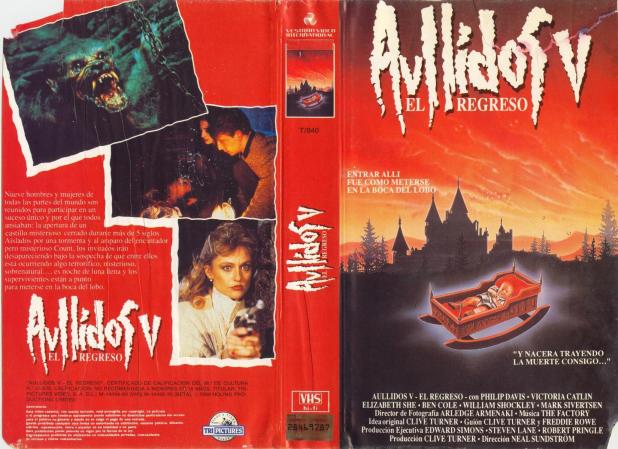
Howling V: The Rebirth (1989)

Neal Sundstrom — yes, the director of Space Mutiny — made this, the fifth of many werewolf movies that are not always connected. This time, the movie plays out like a furry Ten Little Indians.

We start in Budapest, where the owners of a castle are killed sometime in 1489 by a murderous couple who then kill themselves. Yet before they pass away, they notice that a baby survived.

500 years later, a whole bunch of somehow connected people comes to the same castle, invited by a count. They soon learn that Satan himself once controlled the wolves that would lay waste to the people of this country.

Thus begins a game of “who is the werewolf” with no werewolf break to help us along the way. And yes, in case you wondered, this has nothing to do with the Gary Brandner source material.

Cedric Sundstrom was originally to direct this (he did the third and fourth American Ninja movies), but he was already working on another movie. He recommended his brother, hoping that he would have a better time here than on the aforementioned Space Mutiny, which he took over halfway through filming. Instead, he found himself at war with writer Clive Turner (who was behind the fourth, fifth and Howling: New Moon Rising films in this long and, well I guess storied history of this franchise) and the film’s cinematographer leaving on the first day as since he couldn’t speak English, he couldn’t work with the director.

You can watch this on Tubi.

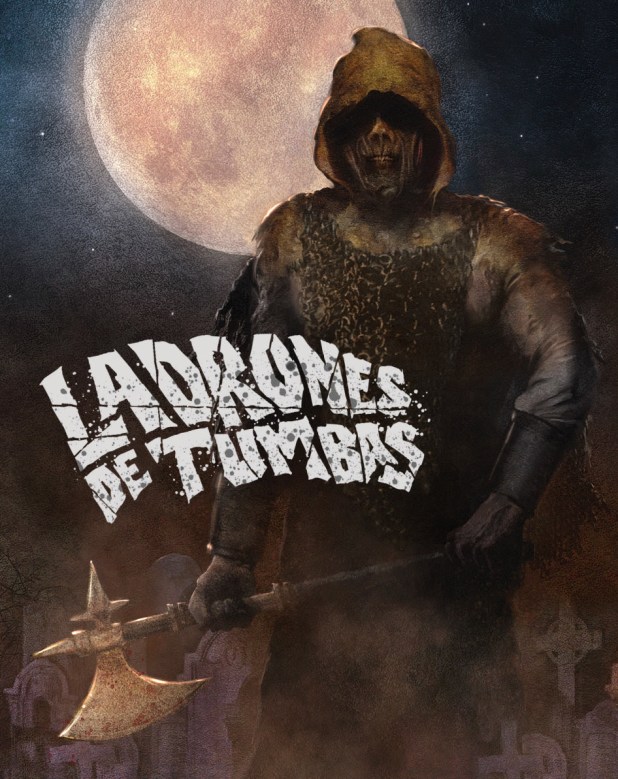
REPOST: Ladrones de Tumbas (1989)

EDITOR’S NOTE: This is now streaming on Shudder!

OMFG Vinegar Syndrome is releasing Ladrones de Tumbas, or Grave Robbers, for the first time ever on blu ray complete with an interview with director Rubén Galindo Jr.! Here’s hoping that this is the first of a series of Mexican VHS era premium releases! All those rituals and all that blood — it finally pays off!

I am a complete fanboy for Ruben Galindo Jr. who made Don’t Panic and Cemetery of Terror. I’ve never been let down by any of his films so far and I am getting the idea that I may never be disappointed by them after reading the description of this film on IMDB — “Teenagers accidentally resurrect a Satanic killer who targets the local police captain’s daughter to birth the Antichrist.”

It’s like people are making the exact movies I want right now, except they made them in Mexico 31 years ago.

Like all great Satanic movies — I’m looking at you Black Sunday and Evilspeak — this movie starts in the past, as the executioner of the Mexican town of San Ramon throws in with the devil instead of God, assaults a virgin and battles the other monks of his order before he’s stopped with an axe right to the chest. He then says, “Some day someone will come and wrench the ax out. Then I’ll return with more power to father Satan’s son in one of your descendants.”

If you’re not all in, get out.

That descendent is Olivia, the lovely young daughter of Captain Lopez and she is the lone virgin amongst her slasher victim friends. Woe be to them, as they’re camping next to a cemetery that’s beset by — get this — grave robbers. That foursome includes Manolo, his psychic girlfriend Rebeca (trust me, Mexican films are not content to stay within one genre, they’re going to toss in every ingredient) Armando and Diana.

You may wonder if they’re about to find an abandoned church and tear the axe out of the body of the villain, setting this all in motion. Wonder no more. And when the first villagers die, of course the grave robbers are blamed by Olivia’s dad. So he does what any real cop would: he tells them to go find the axe killer themselves. Yes, two people are dead, they’ve been blamed and he asks them to be junior detectives.

I love this movie.

Nearly everyone dies — by axe, by magic, by getting mashed into a pulp, bye bye and adios — until a priest explains that a Satanic idol and the axe itself, not to mention a whole bunch of TNT, are what it takes to kill off the executioner. This being Mexico, the action is intercut with Padre Jeronimo conducting a midnight mass while the cop uses a machine gun to continually blast the undead killer.

This may not be the best movie I’ve ever seen, but it’s edging closer to that space every time I watch it, just by sheer force of will and my belief that if Fulci lived in Mexico, this is the kind of lunacy that he’d have made. As Mexican Nicholas Cage might say, “Eso es un gran elogio.”

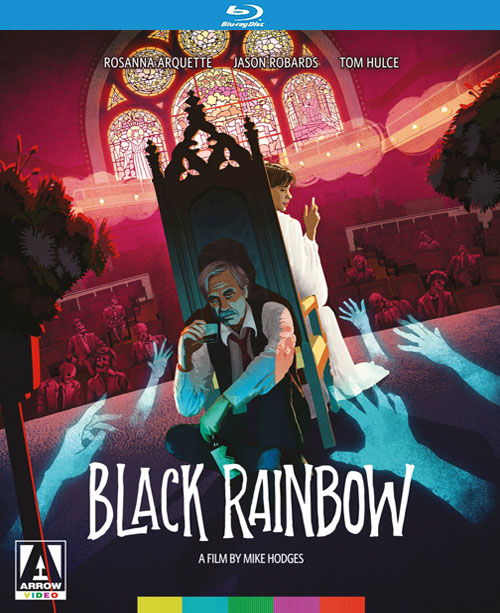
Black Rainbow (1989)

Mike Hodges has had a crazy career. Who else could make both Flash Gordon, Pulp and Get Carter? This film is even stranger, a tale of Martha Travis (Rosanna Arquette), a carny clairvoyant who is traveling the rails with her father (Jason Robards), pulling off that old cold reading trick, letting people feel better about their dead loved ones. One night, however, she predicts a death, which starts spiraling her life — and everyone connected to it like journalist Gary Wallace (Tom Hulce, Amadeus) — out of control.

After predicting the death of a whistleblower, Martha is soon followed by the police, the press and the man who keeps killing anyone to keep the secrets of industry. While she was once content to use her gifts for showmanship, now she feels the need to tell her growing audience that there is nothing left in the great unknown. Worse, she is starting to see how each of them will die.

This is an anachronistic film, because if you asked me when it took place, I’d say the 1930’s, but there are references to R2D2 in the dialogue. That kind of incredulity makes me love this movie even more. It’s a shame that it was basically dumped on release. No surprise, it was produced by Miramax over here.

Arrow has re-released this film (it came out in 2005 from Anchor Bay), keeping archival features whole adding their always stellar extras. With a brand new restoration from the original negative approved by writer-director Mike Hodges (Arrow will also be releasing his movie Terminal Man in 2021) and new audio commentary by film historians Kat Ellinger and Samm Deighan, this is the best version of this movie that you can find.

You can grab this from Arrow Video.

Speed Zone (1989)

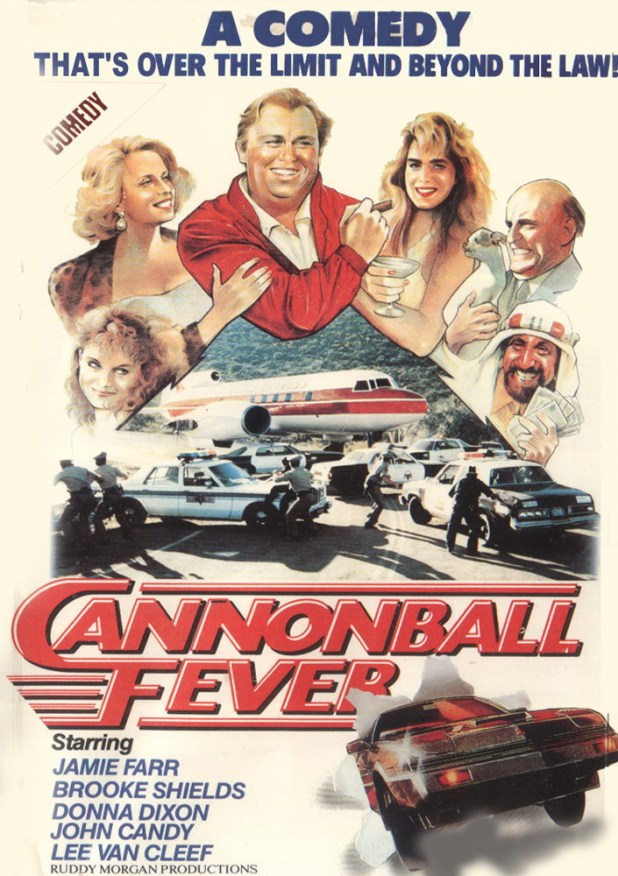
I’m the biggest fan of movies inspired by the Cannonball Baker Sea-To-Shining-Sea Memorial Trophy Dash — Cannonball, Cannonball RunCannonball Run 2 — yet I had never heard of this movie. Can you believe that? While this is known as Speed Zone in the U.S., it was called Cannonball Run III and Cannonball Fever overseas.

I only found out about this because it was directed by Jim Drake, who made Police Academy 4: Citizens On Patrol. It was written by Martin Short’s brother Michael, who has worked with the SCTV cast on projects from the Ed Grimley cartoon to Schitt’s Creek.

This movie was absolutely despised by Siskel and Ebert. While the former said, “It is an atrocious excuse for entertainment. If I have a pet peeve about movies is that they are so venal that don’t even try to be good,” Ebert went all in on his hatred for this movie, stating “Read my lips. Cars are not funny. Speeding cars are not funny. It is not funny when a car spins around and speeds in the other direction. It is not funny when a car flies through the air. It is not funny when a truck crashes into a car. It is not funny when cops chase speeding cars. It is not funny when cars crash through roadblocks. None of those things are funny. They have never been funny.”

The teams for this race are:

BMW: Parking valet Charlie Cronan (John Candy), racing for his school rival Leo Ross (Eugene Levy), who sends his girlfriend Tiffany (Donna Dixon, the wife of Dan Aykroyd) along for the ride.

Jaguar XJS: Mob hitman Vic DeRubis (Joe Flaherty!) and compulsive gambler Alec Stewart (Matt Frewer, Max Headroom in the flesh), who have turned Viuc’s contract on Alec’s head into a chance to win money.

Ferrari Daytona Spyder: MIT students Lee Roberts and Margaret (Melody Anderson and Shari Belafonte), who see the race as a challenge that their love of technology can solve.

Lamborghini: Italian porter Valentino Rosatti (Brian George, who is really Isreali-English) and former cop Flash (Art Hindle, Black Christmas).

Bentley Corniche: Cheating rich guys Nelson and Randolph Van Sloan (The Smothers Brothers), who decide to fly to the finish line.

The News Van: TV reporters Heather Scott and Jack O’Neill (Mimi Kuzyk and Tim Matheson) who become part of the story they are covering.

They’re all being chased by Police Chief Spiro T. Edsel (Peter Boyle) and Whitman (Don Lake, Police Academy), who has already arrested one entire race worth of contestants.

Man, this movie has some cameos. Brooke Shields (who was hit by the shrapnel of this movie and got a Golden Raspberry Award for her brief moment in the, well, sun), Alyssa Milano, Carl Lewis, Richard Petty, Michael Spinks, John Schneider (who is pretty much playing a Duke boy in the beginning), Lee Van Cleef in one of his last roles and Jamie Farr, who appears as Sheik Abdul ben Falafel, making him the only actor to be in all three Cannonball Run movies.

Seeing as how this has never been releasedon DVD or blu ray, I don’t feel bad sharing the link to watch this on YouTube. Here’s to a Cannonball Run-themed box set!