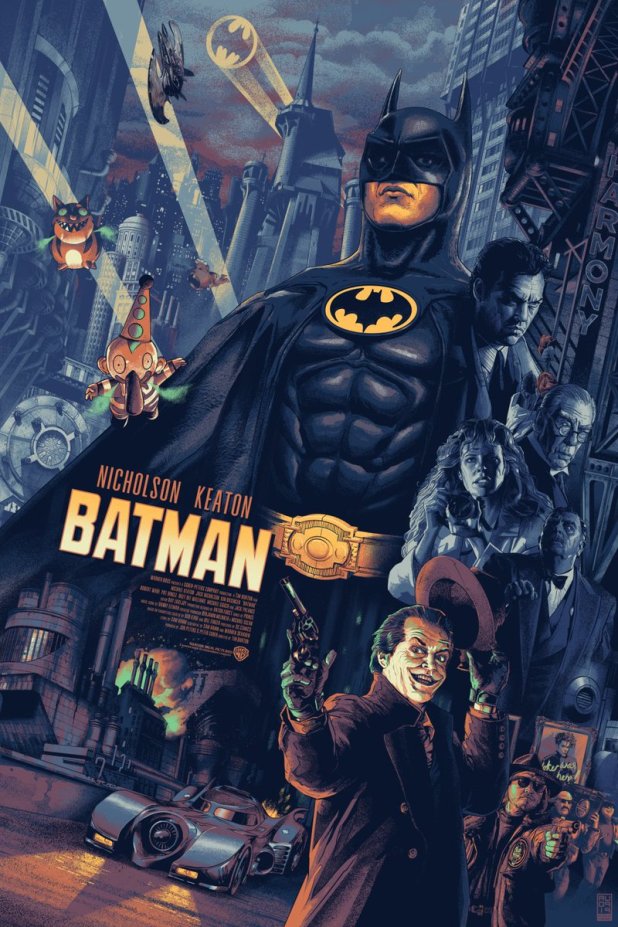
Batman (1989)

I’m beyond happy that social media did not exist for Tim Burton’s Batman. Could you imagine how upset — more than letters columns, fans in comic book stores angry about the film and the 50,000 protest letters sent to Warner Brothers — they would be about Batman being played by comedic actor Michael Keaton? The guy who made Pee-Wee’s Big Adventure making Batman? Didn’t we come so far from the Adam West Batman which people still hated and had not reevaluated in 1989?

Producers Benjamin Melniker and Michael E. Uslan had purchased the film rights of Batman from DC Comics in 1979 and Uslan continued pushing the dark detective side of the character when every studio wanted camp.

This was almost made a decade earlier, as Tom Mankiewicz completed based on the comics by Steve Englehart and Marshall Rogers, who was hired to do the concept art. It never happened — at one point, William Holden was going to play James Gordon, David Niven almost was Alfred Pennyworth and Peter O’Toole would have been the Penguin –despite Joe Dante and Ivan Reitman — who wanted Bill Murray and Eddie Murphy as the Dynamic Duo — getting involved.

At this point, Batman in the comics had become a grim and gritty force of crime-fighting vengeance. The Dark Knight Returns and Batman: The Killing Joke became critical successes and despite an Englehart script that got closer, it was Sam Hamm who would take the story and make it work.

It took another Burton success with Beetlejuice to get this movie greenlit. Yes, comics were not big business in 1989. Bob Kane, who always had his name listed as Batman’s creator despite Bill FInger probably doing all the work with none of the savvy to get the credit, endorsed the film in the face of disbelieving comic book fans.

With Keaton on board, the role of the Joker had plenty of potential actors attached, such as Tim Curry, Brad Dourif, Ray Liotta, James Woods, Robin Williams, David Bowie and John Lithgow. Burton wanted John Glover, which I would have loved. But the studio always wanted Jack Nicholson.

Comic book fans were happy with this casting. As for Nicholson, he reduced his $10 million fee to $6 million for a cut of the film’s earnings and merchandise, which ended up making him around $90 million dollars.

The third star of the film would be Gotham City itself, a place designed by Anton Furst, who Burton had wanted to work with since he saw The Company of Wolves. He would later say, “I don’t think I’ve ever felt so naturally in tune with a director. Conceptually, spiritually, visually, or artistically. There was never any problem because we never fought over anything. Texture, attitude and feelings are what Burton is a master at.”

The city was based on Brazil and Blade Runner, as well as the idea that Gotham was — in the words of Furst — “what New York City might have become without a planning commission. A city run by crime, with a riot of architectural styles. An essay in ugliness. As if hell erupted through the pavement and kept on going.”

Before Batman‘s release in June of 1989, a whole new wave of Batmania took over with $750 million worth of merchandise sold. I can’t even explain to people not alive for that summer what it was like or the lines of people waiting to see this movie. It was incredible, levels of fandom not seen since Star Wars.

For once, in the face of so much hype, a movie delivered.

Gothan is on the edge of chaos, as always. Boss Grissom (a perfect Jack Palance) openly challenges the authority of the police and government. His associate Jack Napier (Nicholson) is making time with his best girl Alicia Hunt (Jerry Hall). And reporter Alexander Knox (Robert Wuhl) and photojournalist Vicki Vale (Kim Basinger) are investigating a human bat that has started destroying criminals.

Napier and Batman face off at Ace Chemicals and the mobster crashes into toxic chemicals, transforming body and soul into the Joker. He takes over the mobs of the city and declares war on Gotham and Batman, who of course is Bruce Wayne (Keaton) and who has fallen for Vale.

Sure, it’s simple in retrospect, but that’s because it’s become part of the fabric of our fandom. Even today I marvel at the fact that Prince did this soundtrack, that Nicholson got his buddy Tracy Walter into the role of Bob the Goon — who had his own action figure and we figured was a major new bad guy only to unceremoniously be killed off by his own boss — and that character actors like Michael Gough and Pat Hingle could so easily become who so many of us envision Alfred and Commissioner Gordon.

Batman changed culture. It’s why superhero movies were finally taken seriously, even if it took Marvel to finally cement that. It launched Batman the Animated Series, perhaps the greatest comic book adaption of all time, a show better than its source material. And according to Scott Mendelson, it led to an increased importance of opening weekend box office receipts, less time between movies playing in theaters and being released for home viewing which killed second-run theaters, big time merchandising tie-ins and PG-13 being the best possible rating for box office.

As for Melniker and Uslan, all their hard work really added up to nothing. Their 1992 case against Warner Brothers claimed they were “the victims of a sinister campaign of fraud and coercion that has cheated them out of continuing involvement in the production of Batman and its sequels. We were denied proper credits, and deprived of any financial rewards for our indispensable creative contribution to the success of Batman.” The films made $2 billion but the settlement offered by Warner Brothers to the production team was minuscule.

Batman is a film that holds up for me. It was released at a magical time, my final summer at home before college, seeing my love of comic books shared on a big screen surrounded by my brother and best friend. I can still imagine it as if it were yesterday, my brother endless repeating the Joker lines we’d seen in endless trailers and commercials until the lights went down. “Wait until they get a load of me.”
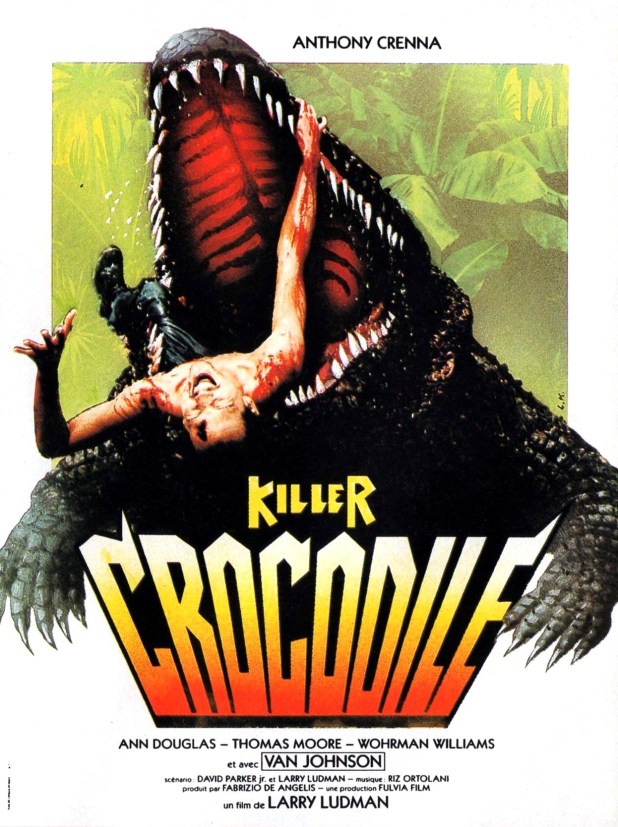
Killer Crocodile (1989)

Fabrizio De Angelis — who directed, co-wrote with Dardano Sacchetti and produced this movie — was so sure of its success that he made the sequel immediately afterward. You know, De Angelis doesn’t get mentioned all that often when people bring up Italian sleaze merchants, but the guy made three Thunder movies and six Karate Warrior movies, so he knew how to replicate a successful formula. He also produced so much great junk, such as The Last MatchThe BeyondCop Target, Emanuelle Around the World and so much more.

Kevin (Richard Anthony Crenna, son of Richard, providing his own wardrobe and also getting dysentery while making this), Jennifer (Ann Douglas), foxy Pam (Sherrie Rose, Summer Job),  Bob (John Harper) and Mark (Pietro Genuardi) are sailing down a river in Santo Domingo to report on the water’s radioactivity. What happens if that radioactivity also gets into a crocodile? You won’t have to wait forever to find out.

For a while, they’re guided by Conchita and her dog Candy, but when that mutated reptile rises and destroys her, instead of the local government led by Judge (Van Johnson) figuring it all out, they frame the youngsters for murder, as Judge and Foley (Wohrman Williams) are the reasons why the town is in this whole mess.

There’s also Joe (Ennio Girolami, Viking from Sinbad of the Seven Seas), a hunter who knows the truth and is the Robert Shaw to no one’s Roy Scheider. The real star of the whole show is the gator, who pops up repeatedly and wipes out man — and spoiler warning — canine alike, but Joe is also man enough to literally surf on the thing.

If Becca and I ever get out to the Amazon, after watching this, Cubby is staying home.

You can get both this movie and its sequel from Severin or watch Killer Crocodile on Tubi.

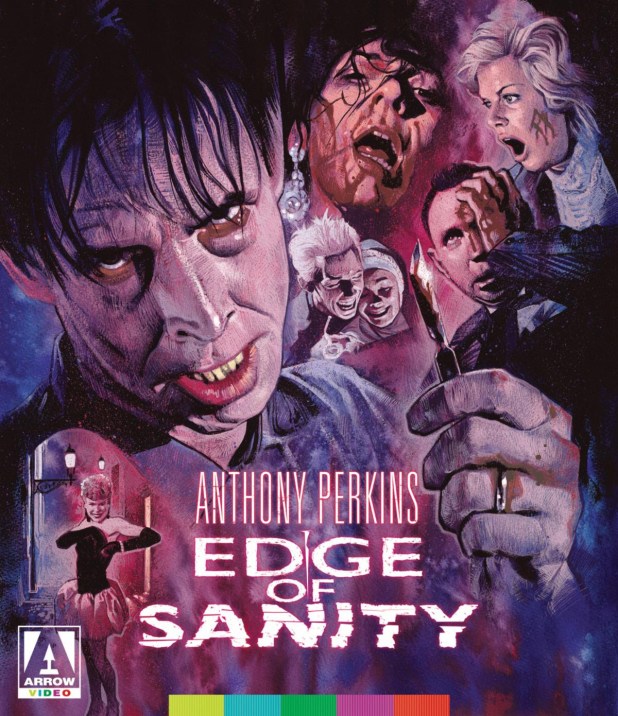
ARROW BLU RAY RELEASE: Edge of Sanity (1989)

When Henry Jekyl was young, he caught his father cheating on his mother in the barn. Caught, he was beaten by his dad as the half nude woman laughed at him, forever intertwining sex with violence and repressed sadomasochistic longings.

Welcome to a totally different take on the Strange Case of Dr. Jekyll and Mr. Hyde.

Many years later, Dr. Jekyll is experimenting with the human mind, but really he’s just mixing ether with cocaine, which drives him insane and transforms him into Mr. Edward Hyde. Actually, it goes even further than that because it turns him into Jack the Ripper, a killer of women of the night who look just like the woman his father slept with all those decades ago.

That mix of ether and cocaine also allows him to play master to prostitutes and their clients where they lose their inhibitions and end up murdering one another. Meanwhile, his wife Elisabeth (Glynis Barber) begins to suspect that perhaps her husband has something to do with all the Whitechapel murders.

Director Gérard Kikoïne also made the 1989 version of Buried Alive (with Ginger Lynn, Robert Vaughn, Donald Pleasence and John Carradine), Lady Libertine, the Cannon film Master of Dragonard Hill and Love Circles. It’s a strange movie, as the costumes and money seem to be modern, yet it’s set in the Victorian era. Perkins doesn’t make the full makeup transformation as most actors do, but goes wild in the way he carries himself, adding another different killer to his career of odd characters. It’s definitely not for everyone — it mixes huge doses of sex with violence, which always seems to upset people — but for those ready for its surreal take on Jack the Ripper and a classic horror novel, there are plenty of rewards to be had.

Leonard Maltin said that it was, “Tasteless, pointless, and unpleasant.” That’s a standing ovation where I come from.

The Arrow blu ray of Edge of Sanity has a new 2K restoration from the original 35mm camera negative by Arrow Films, as well as brand new audio commentary by writer David Flint and author and filmmaker Sean Hogan, interviews about the movie with Stephen Thrower and Dr. Clare Smith, author of Jack the Ripper in Film and Culture, features on director Gérard Kikoïne’s career and him discussing the film, a reversible sleeve featuring original and newly commissioned artwork by Graham Humphreys and a collector’s booklet featuring new writing on the film by Jon Towlson. You can order it from MVD.

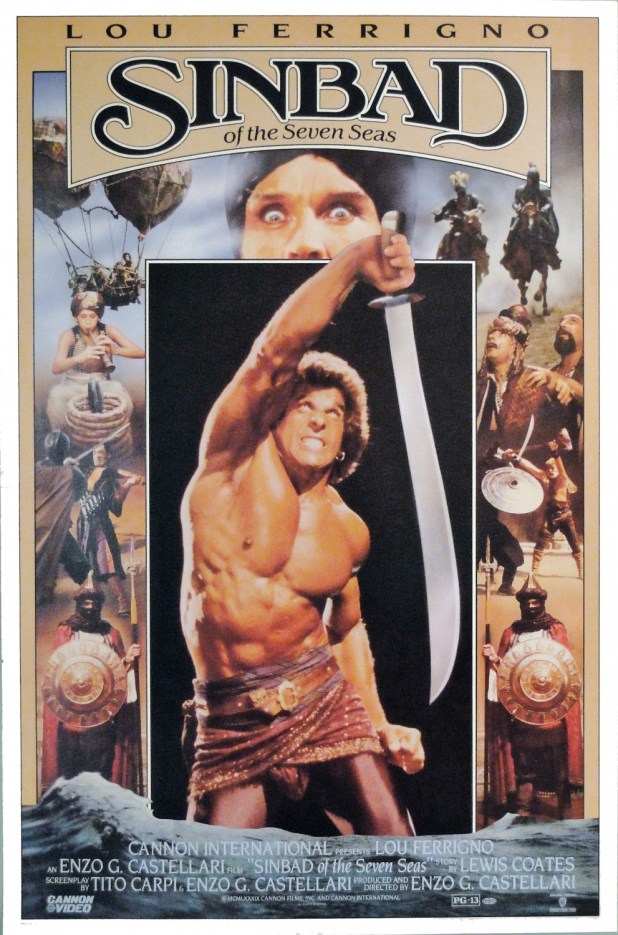
JUNESPOLITATION 2022: Sinbad of the Seven Seas (1989)

June 18: Junesploitation’s topic of the day — as suggested by F This Movie— is Cannon! We’re excited to tackle a different genre every day, so check back and see what’s next.

To read my five-part interview with The Cannon FIlm Guide author Austin Trunick, click here.

To catch up on the 145 — so far! — Cannon reviews on the site, check out the Letterboxd list.

If there was ever a movie that checked off nearly everything that I’m looking for in a movie, it would be this, which is an even better sequel to Luigi’s Cozzi’s Hercules than The Aventures of Hercules.

I knew that I would love it from the moment it started with an image of Edgar Allen Poe and the claim that it was based on his story The Thousand-and-Second Tale of Scheherazade, even though that’s complete bullshit. God bless the filmmakers of my people. I mean, both stories have a hot air balloon, so I guess that’s good enough.

Austin Trunick, writer of The Cannon Film Guide, broke down how this film came to be in a series of tweets, explaining how a couple weeks into the shoot for Hercules in the summer of ’82, Menahem Golan was so happy with Cozzi’s rushes that he asked him to come up with another movie. Cozzi pitched Sinbad and Ferrigno — who had not yet been through the weirdness that saw a reshoot for Seven Magnificent Gladiators turn into The Aventures of Hercules. Yes, Cannon made a movie that everyone in the cast and crew other than Lou and his wife knew was a sequel and not a reshoot. That’s some Badfinger level kayfabe.

After making those three movies, Cozzi finally wrote Sinbad, but Cannon’s Italian division — unlike its American side — could only make one movie at a time. The Assisi Underground was their movie of the year, so Cozzi waited until Dario Argento asked him to work on Phenomena.

Meanwhile, Cannon’s Italian officer finally decided that instead of making a movie, this would make a great Italian kids TV show. They hired Enzo Castellari( 1990: The Bronx WarriorsStreet LawKeoma)  to direct, padded out the script to four hour-long episodes and shot as much as they could, seeing as how it was 1986, the year Cannon made hundreds of movies and suddenly had to start cutting budgets. I mean — couldn’t they have floated over the ship from Pirates — it was docked at Cannes for years — and saved even more?

Cannon hated what they had in the can and thought it was unreleasable. Have you seen Italian movies? I can only imagine what they saw, because the footage here looks really classy for the most part.

A year later, Cozzi cast Cannon exec John Thompson in Argento’s TV series Turno di Notte and Thompson revealed the fate of Sinbad. He had an offer: instead of letting that movie just sit there, what if he fixed it? Cozzi said that they could make a movie, Menahem agreed and with a fraction of the film’s budget, he shot a The Princess Bride opening with his daughter and Daria Nicolodi in his apartment, added some special effects and a voiceover, and somehow put it all together.

As for Castellari, he had no idea that Cannon and Cozzi turned his footage into a movie until he saw it in an Italian video store shelf in the early 1990s. He rented the movie but wasn’t able to finish watching it.

It’s amazing that the film that resulted is as good as it is.

Daria plays a mother reading a bedtime story to her daughter and prepare yourself for Italian to English dubbing. She tells her of how Jaffar (John Steiner) has taken over the city of Basra from its kindly caliph (Donald Hodson). He’s put Princess Alina (Alessandra Martines) into captivity until she agrees to marry him instead of Prince Ali (Roland Wybenga) and you know, normally I wouldn’t ask if they were brother and sister but this is an Italian movie.

Sinbad (Ferrigno) and his crew — which includes Ali, Japanese (or Chinese but definitely Asian because he quotes Confucius and dressed in kabuki gear) warrior Cantu (Haruhiko Yamanouchi), the small Poochie (Cork Hubbert), the cook (Cannon utility fielder Yehuda Efroni) and a viking (Ennio Girolami) — sail on in to town and are captured by the soldiers they once called friends.

What follows are a series of episodic moments — which makes sense, seeing as how these were all going to be episodes of the TV show — like Hercules tying snakes into a ladder to escape a trap, an attack by the undead Legion of Darkness, a battle with rock monsters, Amazons that act like sirens and nearly kill the entire crew before Sinbad exposes the true nature of Queen Farida (Melonee Rodgers), the Ghost King and Knights of the Isle of the Dead, a Swamp Thing looking beast known as the Lord of Darkness and finally a battle between a good and evil Sinbad that uses the same laser effects that Cozzi throws into all of his movies and we’re all the better for it.

Man, there’s so much more, like Hercules meeting his true love Kira (Stefania Girolami Goodwin) and escaping the Isle of the Dead by inflating a hot air balloon by blowing into it like he’s Jon Milk Thor. There’s also a great villainess by the name of Soukra who is played by the muscle-bound Teagan Clive, who we all know as the Alienator.

This movie is non-stop fun, featuring scenes where Ferrigno bursts out of chains, throws dudes into alligator-filled pits, fights himself, defeats a laser trap, beats up numerous monsters and rips out a zombie’s heart, which has a face on it, and squeezes it while it screams.

Sinbad was intended to be a kid TV show, remember, so you may be surprised to know that this is an Italian movie through and through with blood, guts, impaling and all sorts of muck. It also looks like the cast is having an absolute blast filming it with everyone going over the top. I’d love to have had this be a full series, just like how Yor Hunter from the Future has even more Yor once you track down that miniseries.

You can listen to The Cannon Canon episode about Sinbad of the Seven Seas right here.

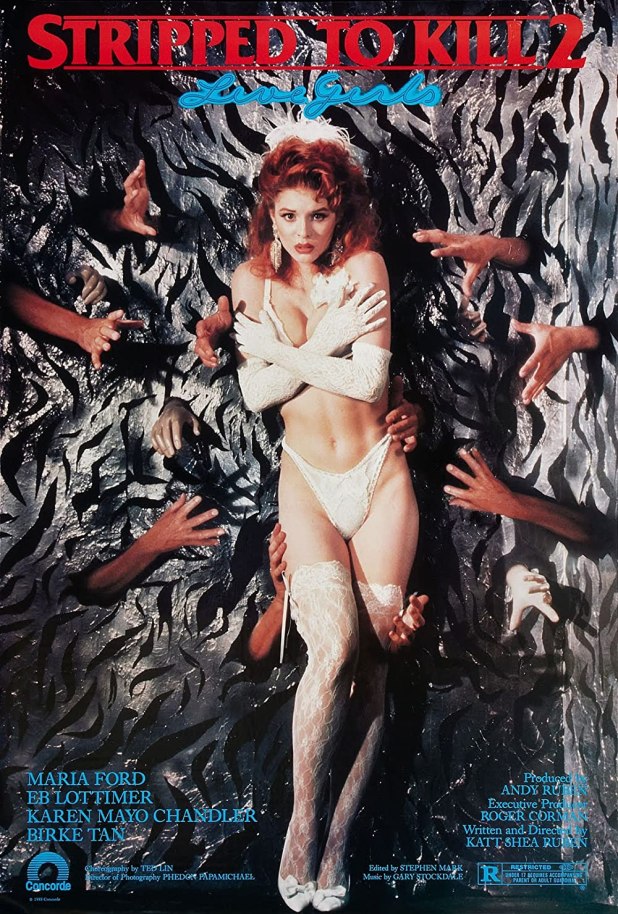
Junesploitation 2022: Stripped to Kill 2: Live Nude Girls (1989)

June 6: Junesploitation’s topic of the day — as suggested by F This Movie— is slashers! We’re excited to tackle a different genre every day, so check back and see what’s next.

Katt Shea finished Dance of the Damned on a Saturday. Roger Corman asked if she could come up with a movie by Monday because he still had the strip club set for a few more days. On Monday through Friday of the next week, Shea and her crew shot topless dancing footage. Then, she and partner Andy Ruben took three weeks to write the movie around all that bump and grind.

This would explain why the dancing scenes in the follow-up to Stripped to Kill seem to come from another universe, the place where patrons disappear and we mainly see music videos of girls doing interprative dance.

As for the slasher part of the story, Maria Ford’s Shady has the giallo problem of passing out and waking up covered in blood. If that happened one time to you, you’d be concerned. But five times?

Marjean Holden (Sheeva from Mortal Kombat: Annihilation), Karen Mayo-Chandler (976-Evil II), Birke Tan, Debra Lamb (who was in the first movie), Lisa Glaser (Humanoids from the Deep) and Jeannine Bisignano all appear as the dancers who are the target of the killer, whoever he or she may be.

This movie is full of hallucinations, love scenes in the rain and a slasher plot that is really hard to follow to the point that I’m tempted to call it a giallo and figure out another slasher for my Junsploitation slasher day movie. That said, I think we all need more movies with saxophone sex dream sequences and if it takes calling this a slasher to make it happen, that’s the price we all have to pay.

Shea has no idea why people like this movie, one she wrote as she went as Corman kept telling her to put more nude scenes into the product. Sometimes when you’re working under rough conditions, weird magic happens.

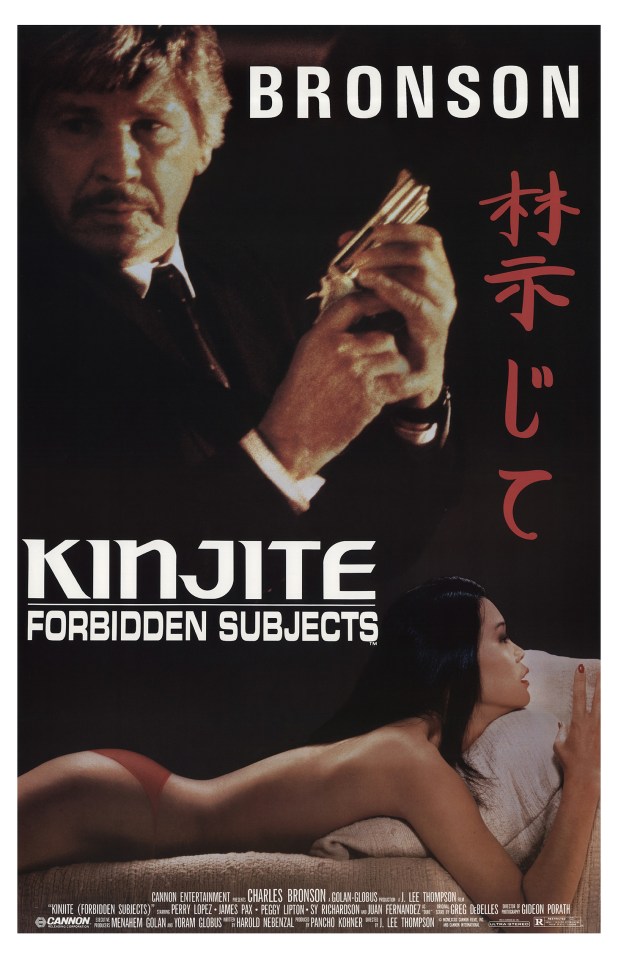
Kinjite: Forbidden Subjects (1989)

The final film between director J. Lee Thompson and Charles Bronson, Kinjite was the ninth movie they made together and was going to be shot back to back with The Golem, a movie I wish had been made.

When reviewing the movie, the Los Angeles Times said, “If you think you might be offended by it, don’t go. You will be.”

While in Japan, a businessman had watched a woman be assaulted on the subway without complaint. And when he comes to Los Angeles, that moment continues to obsess him to the point that he attempts to recreate it and he learns that American women refuse to suffer in silence. Running from the scene of his attempted crime, he’s mugged and as others in the community learn of the crime and begins attacking men who resemble the businessman.

The woman who was involved is Rita Crowe (Amy Hathaway), the daughter of LAPD vice-squad detective Lt. Crowe (Bronson). And when he learns that the man that tried to hurt his daughter has just lost his own daughter to a child prostitution ring. Now he must get past his hate for the man and prejudice against the Japanese to do his job.

There’s not really a happy ending here — the girl is saved but the experiences she’s endured have ruined her to the point that she overdoses — and Bronson and his partner (Perry Lopez) go against their badges and attempt to murder the gang to stop them from ever doing what they did again.

Beyond the last film they did together, this was Bronson’s last Cannon movie — he would make Death Wish V with Golan — and Thompson’s final movie. It’s a dark movie in two careers where plenty of equally dark corners were explored ending with a man satisfied with finally finishing the job he set out to do.

You can watch this on Tubi.

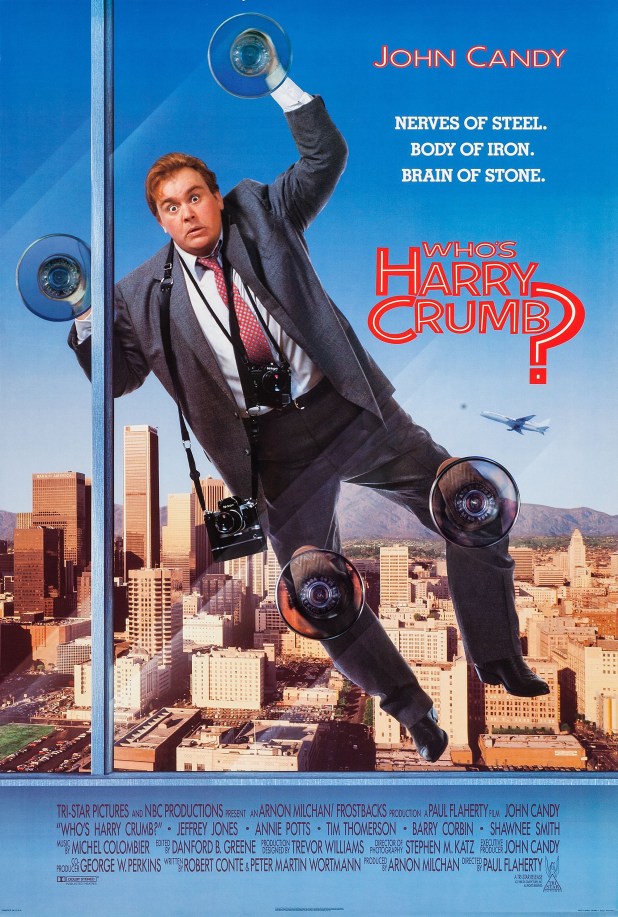
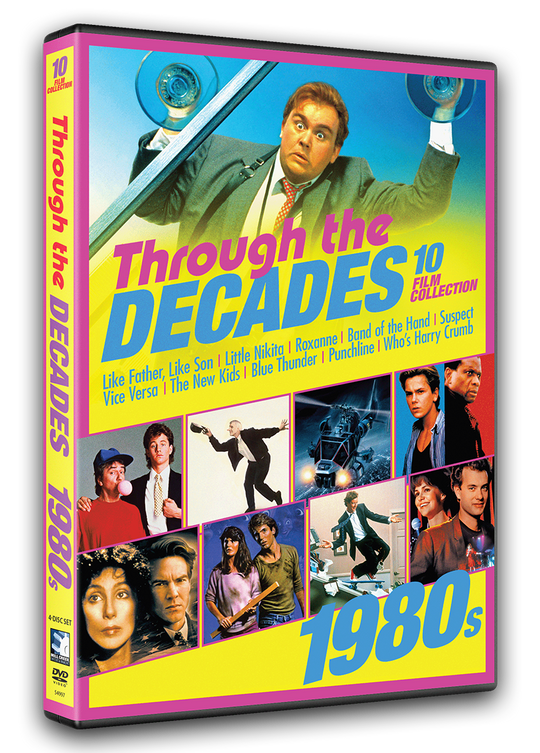
MILL CREEK DVD RELEASE: Through the Decades: 1980s Collection: Who’s Harry Crumb? (1989)

Directed by Paul Flaherty (brother of Joe — who shows up as a doorman in a memorable part of this film — and director of 18 Again! and Clifford, as well as a writer on SCTVManiac Mansion and several Martin Short projects) and written by Robert Conte and Peter Wortmann (who wrote The Breed and Who Do You Love together), Who’s Harry Crumb? is the kind of movie that would be a failure were it to star anyone other than John Candy, a comedy force of nature who makes it successful by sheer force of talent and will.

When model Jennifer Downing (Renée Coleman, A League of Their Own and the evil leaper Alia on Quantum Leap) is kidnapped, her father (Barry Corbin) visits the detective agency Crumb & Crumb. The boss there, Eliot Draisen (Jeffrey Jones, never the hero), actually did the kidnapping, so he hires out the worst detective they have: Harry Crumb (Candy), the grandson of the company’s founder.

Helped by Jennifer’s sister Nikki (Shawnee Smith), he soon discovers that there’s a lot going on. Jennifer’s stepmother Helen (Annie Potts) is having an affair with tennis coach Vince Barnes (Tim Thomerson) as well as Eliot, and they’re all trying to get all the money for themselves.

John Candy would make this, Uncle Buck, Speed Zone and The Rocket Boy in 1989. He believed that TriStar Pictures’ poor marketing of this film was the reason why it bombed. He refused to work with them for five years until Wagons East, which sadly was the last film he’d make. Candy suffered severe anxiety and panic attacks throughout his life and self-medicated with alcohol, eating, smoking and occasional drug use. He’s also one of my favorite performers of all time and I wish he’d found the help and peace he needed, because he only made it 43 years in this reality and truly deserved a long and happy life.

The Mill Creek Through the Decades: 1980s Collection has a ton of great movies at an affordable price. It also has Punchline, Little NikitaVice VersaThe New KidsRoxanneBlue ThunderSuspect, Band of the Hand and Like Father, Like Son. You can get this set from Deep Discount.

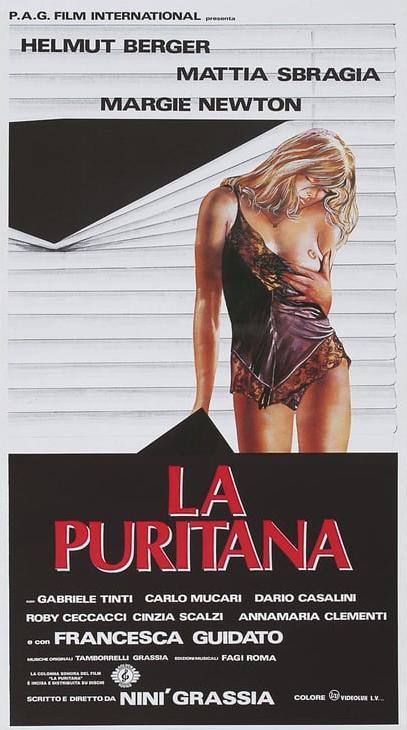
La puritana (1989)

Act of Revenge is all about Annabella Allori (Margie Newton, Hell of the Living DeadThe Adventures of Hercules) and how she gets revenge for her brother and mother (Francesca Guidato Berger, whose husband Helmut is also in the cast). After opening a law firm in her hometown, people start dying.

And by dying, I mean that this is one of the few giallo — it’s closer to an erotic thriller, but by 1989 obsessives will take what we can get — where the protagonist murders someone with a skillful blowjob. Also: two women make love by pouring tea all over one another, which feels like the most unsexual sapphic moment ever.

Written and directed by Ninì Grassia, Act of Revenge predates the opioid crisis by making a pharmacist the target of revenge. I’m no lawyer, but I’m unsure if Annabella’s scheme couldn’t have been better set for the boardroom than the bedroom, but then we wouldn’t have this movie.

After some time, the giallo gives way to the softcore sexual thriller, a genre that sadly seems like it’s gone away. This isn’t the best example, but at least Newton is wonderful in it.

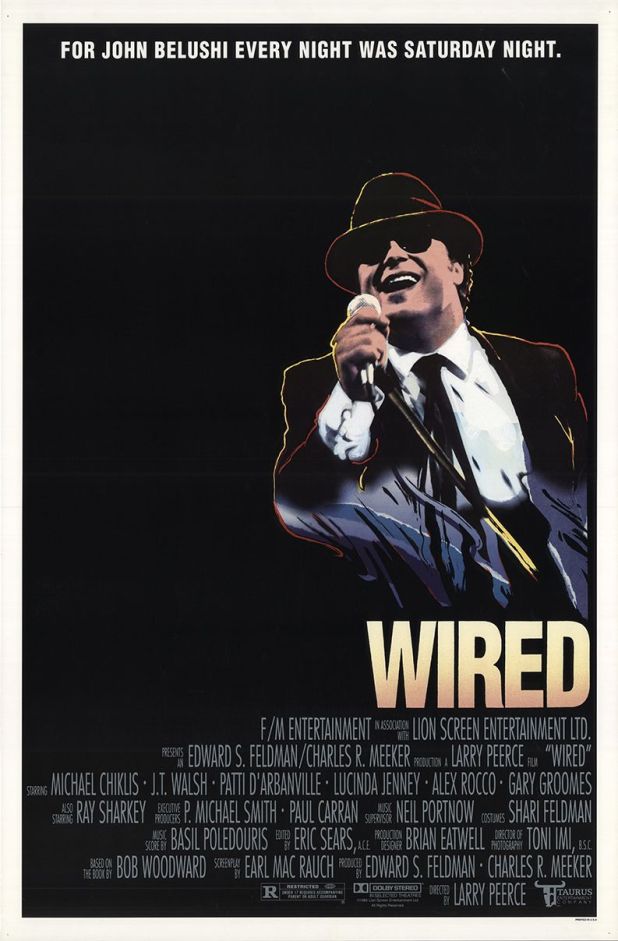
APRIL MOVIE THON DAY 30: Wired (1989)

Judith Belushi, the widow of comedian John, and his manager Bernie Brillstein asked Robert Woodward — the writer of All the President’s Men and the man who joined who Carl Bernstein to break the story of Watergate — to write a book about Belushi to counter the many rumors that had started after the comedian’s death on March 5, 1982.

I can remember that day. I was ten years old, came home from school and we heard the story on the radio on the way to dinner. I’d been a fan of Saturday Night Live since it started, even if in Pittsburgh we watched it on a different channel that the NBC affiliate as Chiller Theater was such a big deal.

Woodward and Belushi were from the same town in Illinois and had friends in common. Belushi was even a fan. But after the writer interviewed numerous people and wrote his book, he never showed it to John’s widow. What followed was Wired. a sensationalist book that painted exactly the picture that Judith and Brillstein wanted to never be known.

Tanner Colby, who had co-authored the 2005 book Belushi: A Biography with Judith, said of Woodward’s book: “It’s like someone wrote a biography of Michael Jordan in which all the stats and scores are correct, but you come away with the impression that Michael Jordan wasn’t very good at playing basketball.”

A major example that critics cite is that in the book, John Landis has to guide Belushi by the hand in how to perform the cafeteria scene in Animal House. Those there content that Belushi did the scene in one improvised take all on his own.

Belushi’s best friend and fellow Blues Brother Dan Aykroyd beyond hated the book and said that Woodward “spoke with me about an hour and a half, and you know there’s things in the book I don’t remember saying to him…”

He went on to say “He certainly has avoided the issue of what a funbag John was, what a great guy he was, what a warm, humorous, really, you know…concerned, and bright, educated, well-read individual this guy was. How did he get to be so successful? He was smart, you know, he wasn’t just given his break, and he had to work for what he had, and Woodward completely skirts that, and it’s a depressing, sordid, tragic book…and for my part I just think that it’s really depressing reading.”

Woodward wanted to sell the movie rights as soon as the book was published, but found no buyers. He said, “A large portion of Hollywood didn’t want this movie made because there’s too much truth in it.”

Producers Edward S. Feldman (the man who got both Hot Dog…the Movie and Hamburger the Motion Picture made; he also produced The HitcherThe Truman Show and Witness) and Charles R. Meeker were the folks brave enough to fund the film. It was written by Earl Mac Rauch — yes, the same writer of The Adventures of Buckaroo Banzai Across the 8th Dimension — and directed by Larry Peece, who also made AIP’s The Big T.N.T. Show, The Other Side of the Mountain and A Woman Named Jackie.

The movie makes a wild departure from the book by having Belushi be followed by a guardian angel (Ray Sharkey!) who is leading him to either Heaven or Hell. They had to do something, as they were given no rights to anything connected to Saturday Night Live. If that something was a The Seventh Seal pastiche with pinball instead of chess, that was what they did.

Wired had problems finding a distributor as many of the major studios refused to distribute it. Now was that because of the conspiracy that people didn’t want the public to know how bad drugs were or because the movie is so insufferably bad? The jury is out but leaning toward the latter.

Brillstein believed that the filmmakers made up the controversy to sell this movie like William Castle would, saying “The only thing that the producers have to hang on to is the image of Wired as “the movie that Hollywood tried to stop.” When it played Cannes, the reception was hostile, with reporters attacking Woodward with questions about why he was a character in the movie.

John Landis threatened to sue and he’s not even named in the movie but suggested. Then again, helicopter noises play when he appears to hammer home that this is the same person who killed Vic Morrow and two children on the set of The Twilight Zone: The Movie. And Aykroyd pulled no punches, saying “I have witches working now to jinx the thing. I hope it never gets seen and I am going to hurl all the negative energy I can and muster all my hell energies. My thunderbolts are out on this one, quite truthfully.” A year later, he got J.T. Walsh, who plays Woodward in this movie, fired from the movie Loose Cannons.

You know who got the worst out of this? Michael Chiklis, in one of his first roles, who isn’t horrible as Belushi. He was picked out of tons of actors for the role and it took years for his acting career to recover. That said, he personally apologized to Jim Belushi when they met and the two embraced, as Belushi was always under the impression Chiklis was deceived as well by the producers. For his part, Jim visited the office of Feldman and trashed his desk.

As for the film itself, it moves through Belushi’s life in a non-linear fashion, with made up sketches like “Samurai Baseball,” the Blues Brothers singing Wilson Pickett’s “634-5789” and Belushi as a bee singing Slim Harpo’s “I’m a King Bee” invented for the film — again due to Lorne Michaels refusing to allow the movie to use any of Saturday Night Live‘s IP — and then a close where Belushi sings Joe Cocker’s “You Are So Beautiful to Me” alongside the real Billy Preston, the only person from that era to be involved with this film.

It also totally takes a few pages from Sid and Nancy by having a cab ride symbolize the boat across the river Styx and having Joe Strummer’s song “Love Kills” play.

There’s a great story about the life and death of John Belushi, one of triumph and tragedy, intelligence and sadly, stupidity. But this? This will never be it.

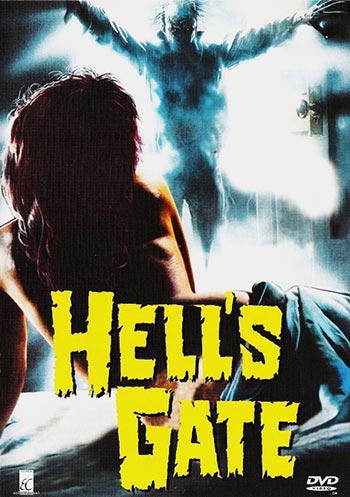
APRIL MOVIE THON DAY 14: Le porte dell’inferno (1989)

Dr. Johns (Giacomo Rossi-Stuart, Emanuelle in BangkokWar of the Planets) has spent 78 days in a hole and set a record, but now he’s claiming that everyone will die if they come down to rescue him.

Umberto Lenzi directed five movies in 1989 and of those, this is the weakest (in case you want to know, I’d rank the others in this order: Nightmare BeachHitcher In the DarkHouse of Witchcraft AKA Ghosthouse 4 and House of Lost Souls/AKA Ghosthouse 3). Maybe he was beyond busy, so busy that he thought no one would noticed if this movie was endless cave exploration and the end from Nightmare City.

Maybe he really loved his wife Olga Pehar and wanted to encourage her as this was her first script. She’d go on to write Hitcher In the DarkAfter the Condor, Karate RockBlack DemonsHunt for the Golden ScorpionNavigators of the Space and Karate Warrior 3 – 5.

I really wanted to love this movie. It has caves, it has gore, it has Lenzi. That said, he made some other movies that I’d totally recommend, such as OrgasmoSo Sweet…So Perverse, A Quiet Place to KillSpasmoGhosthouseCannibal FeroxSeven Blood-Stained Orchids and Oasis of Fear.