The Parent Trap II (1986)

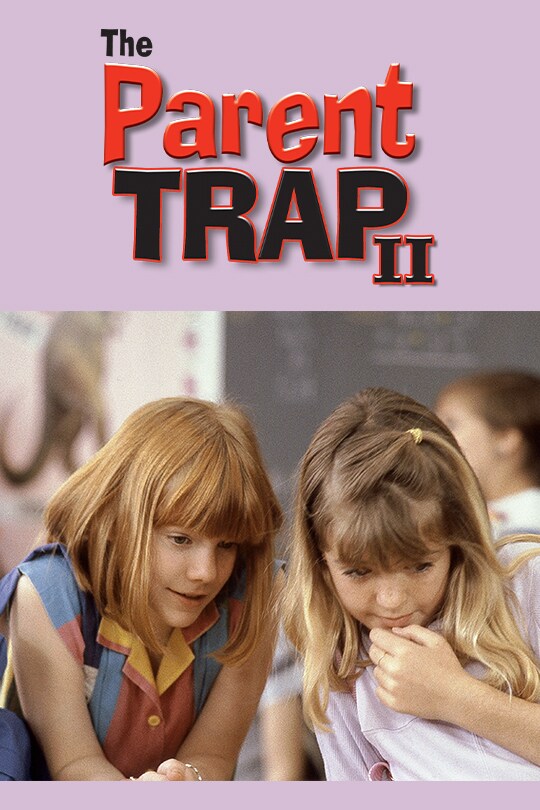
25 years after the first film, Sharon McKendrick Ferris (Hayley Mills) is a divorced single mother living in Tampa. Her daughter Nikki (Carrie Kei Heim) is a lot like her mom used to be: unhappy, sick of moving around and not wanting to attend an all-girls school.

As Nikki goes to summer school, she becomes friends with Mary Grand (Bridgette Andersen, who would go on to star in Cannon’s Too Much) and the two decide to fix up Mary’s dad Bill (Tom Skerritt) with Sharon and therefore get to see their parents happy and have their friendship not go long distance. When the first few dates don’t go well, the girls get Nikki’s aunt Susan Evers Carey (also Hayley Mills) involved.

Sharon figures it out and decides to go on a date with Susan’s husband Brian (Alex Harvey) and that seems like really taking things too far. Then again, Susan is on a date with Bill pretending to be Sharon, so who knows with these sisters who seem to swing.

Well, through the magic of tween trickery, Sharon and Bill get abandoned on a boat that goes out to sea and end up falling for one another. Oh Disney TV movies, how you twist, you turn and then you do things that make no sense after it seems like we’ve already reached the end of the movie.

If you’re a fan of Mills, the names Nikki Ferris and Mary Grand reference her parts in The Moon-Spinners and In Search of the Castaways.

Ronald F. Maxwell is an interesting pick for a Disney Channel director, seeing as how he made Little Darlings. This was written by Stu Krieger, who also was the scriptwriter for Where the Boys Are 84Zenon: Girl of the 21st Century and Phantom of the Megaplex.

There would be as long a wait until the next movie.

88 FILMS BLU RAY SET RELEASE: In the Line of Duty 2 AKA Royal Warriors (1986)

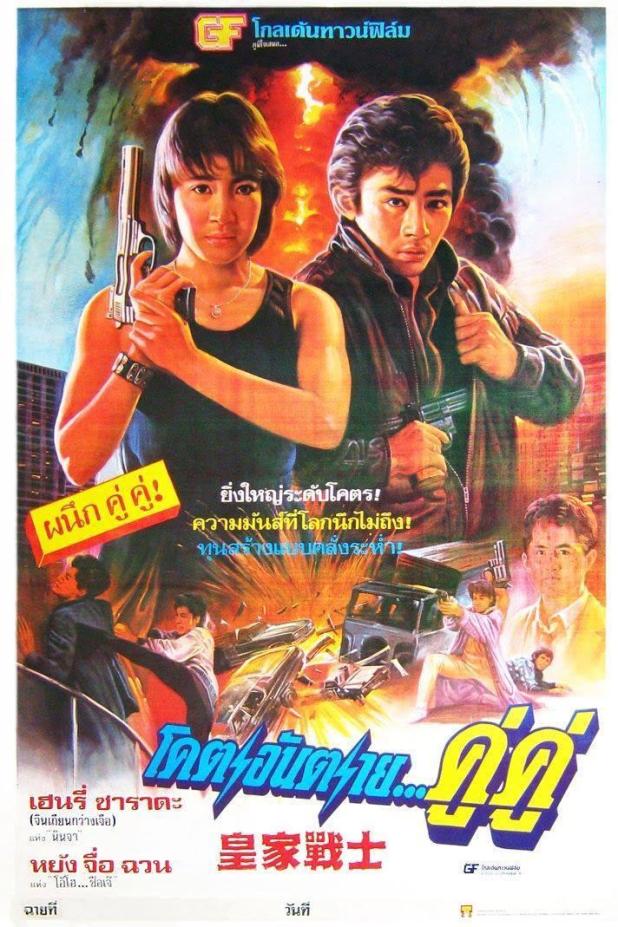
Directed by David Chung and written by Kan-Cheung Tsang, the second film in the In the Line of Duty series finds officer Michelle Yip (Michelle Yeoh) coming back to Hong Kong from a trip to Japan. Highjackers attempt to take the plane, but she stops them along with a security guard named Michael Wong (Michael Wong) and Interpol agent Peter Yamamoto (Hiroyuki Sanada). The bad news? Well, now they’re being targeted by the other members of the same mob family for revenge.

This movie blows away any action movie made yesterday or today, featuring an incredible nightclub assault, so much glass being broken I was wondering if it was sponsored by PPG, Michael’s family being wiped out by a car bomb, chase scenes that make you retroactively worry for the safety of everyone involved and an ending where Yip drives a futuristic tank into a trap laid by the big bad with him holding the body of her boyfriend on a crane.

In the Line of Duty 2 is filled with non-stop mayhem and violence, a downbeat tone and Yeoh embracing the opportunity to be the lead.

88 Films’ In the Line of Duty Series includes 1985’s Yes, Madam!, 1986’s Royal Warriors, 1988’s In the Line of Duty 3 and 1989’s In the Line of Duty 4. This film is available in Cantonese and two different English dubs and extras like new subtitles, commentary by Jong Kong film expert Frank Djeng, missing inserts and trailers. There’s also a gorgeous book and posters for each movie. You can buy the set from MVD.

SALEM HORROR FEST: The Hitcher (1986)

EDITOR’S NOTE: This movie was watched as part of Salem Horror Fest. You can still get a weekend pass for weekend two. Single tickets are also available. Here’s the program of what’s playing.

When I first saw The Hitcher, I was probably 14 years old and saw it as a straight-ahead story of violence on the highway. I probably cheered at the end when Jim Halsey (C. Thomas Howell) blew a hole into John Ryder (Rutger Hauer). But age and the miles wear on every man and now when I watch it, it does more than make me raise my fist in the air and shout. It makes me ruminate on the journeys life has taken me and how I’d rather be launched through a window and blasted down a hillside than live a slow, tedious and quiet death.

Halsey starts the film with the kind of confidence that someone at the end of their teens has. He picks up Ryder, who immediately confides to him that he’s killed someone else. But he says something else. Something we don’t expect. “I want you to stop me.”

That’s the whole point of this film. Ryder will transform Halsey into the empty man he is, whether through attrition or forcing him to blast him into oblivion. This road only goes one way.

What does it take to get Halsey to realize this isn’t a nightmare, but reality? Of course, it’s easy to think that this could all be a dream, in the same way that long stretches of drives with no one speaking seem to be visions that last and last. Sometimes, I wonder if I’m still driving and every moment up until here, up until this realization, is just me imagining my life and any moment now, I’m going to wake up with my fiancee asleep next to me.

For our hero, it takes seeing trucks plow into truck stops, station wagons filled with the blood of all American families and the typical movie love interest torn in half by two semis.

Halsey is stripped of his identity, not just because his license and keys — let’s face, the manhood of most red-blooded boys — have been taken away. Everything he may have believed was true — the goodness of giving someone a ride when they need it, that love can conquer fear, even that the role models and lawmakers that society sets up can protect us against one lone man who isn’t just unafraid to die but willingly chases it — is a lie.

Not even suicide can save our hero.

So who is at fault for all the crimes that come out of this spree? If Halsey just shot Ryder in the truck, while Nash (Jennifer Jason Lee, looking like the gorgeous girl who surely will survive all of this madness, right?) is tied between it and another, life would be different.

Look, when a killer says, “I want you to stop me,” you listen.

Eric Red wrote this story while traveling across America, wondering about the lyrics to The Doors “Riders On the Storm.” Pretty simple, really: “If ya give this man a ride, sweet memory will die. Killer on the road, yeah.”

Critics hated it. Both Siskel and Ebert gave it zero out of four stars, with Ebert even decrying the film by saying, “I could see that the film was meant as an allegory, not a documentary. But on its own terms, this movie is diseased and corrupt. I would have admired it more if it had found the courage to acknowledge the real relationship it was portraying between Howell and Rutger, but no: It prefers to disguise itself as a violent thriller, and on that level it is reprehensible.”

Whatever.

The end of this film, as Halsey stands against the sunset and smokes as we process what has just happened just attacks the viewer. The credits just stand there as we feel no celebration or victory. Maybe not even relief, because while it seems like this is over, there’s no way it is over.

The fact that this movie spawned a sequel and a Michael Bay remake are two things that I have added to the many things that I have tried to forget so that I can keep on living my life*. Kind of like how director Robert Harmon makes the Jesse Stone TV movies for Tom Selleck now instead of getting to create more movies like this (that said, I’ve heard good things about They, a movie he did with Wes Craven and I kind of don’t mind his Van Damme film Nowhere to Run). Red would move on to write a few other films that break the mold and are on my list of favorite films: Near Dark and Blue Steel.

The last thing that this movie makes me feel is loss. Rutger Hauer is such an essential part of my film nerd stable of actors, someone who always makes a movie way better than it seems like it will be just by his presence. Nighthawks is so intense because of him. Films like Wanted Dead or AliveThe Blood of Heroesand Buffy the Vampire Slayer (with Hauer getting to finally play the vampire lord that Anne Rice, who always wanted him as Lestat, saw him in) are actually great because of Hauer. And Blade Runner means nothing without him as Roy Batty.

Hauer astounded the stunt people in this movie, pulling off the car stunts by himself. And he also intimidated Howell, scaring him even when they weren’t acting. He even knocked out a tooth when he flew through the windshield himself. There is no one who could have played this character quite so well and stayed with me so long after the film was over.**

*The fact that René Cardona III made a Mexican version of this called Sendero Mortal does give me the energy to keep on living.  I’d also like to recommend the absolutely insane Umberto Lenzi in America  Hitcher In the Dark, which makes me wish that more Italian directors made their own versions of The Hitcher.

**Hauer said in his autobiography, All Those Moments, that Elliott “was so scary when he came in to audition that Edward S. Feldman was afraid to go out to his car afterward.”

APRIL MOVIE THON 2: Blue Velvet (1986)

April 27: Until You Call on the Dark — Pick a movie from the approved movies list of the Church of Satan. Here’s the list.

James Shelby Downard once said, “Never allow anyone the luxury of assuming that because the dead and deadening scenery of the American city-of-dreadful-night is so utterly devoid of mystery, so thoroughly flat-footed, sterile and infantile, so burdened with the illusory gloss of “baseball-hot dogs-apple-pie-and-Chevrolet” that it is somehow outside the psycho-sexual domain. The eternal pagan psychodrama is escalated under these “modern” conditions precisely because sorcery is not what 20th century man can accept as real.”

I’d like to think that Downard saw this movie, shook his head a bit and thought, “Well, they got some of it right.”

The Church of Satan film list says of Blue Velvet, “This neo-noir film by David Lynch is meant to be felt and experienced more than understood, Blue Velvet is about the hidden and unknown. It’s both terrifying and erotic simultaneously. The innocent outlook on life is stripped away to stark reality where predator and prey intermingle. 

The Satanic qualities presented are the exploration of the darker side of Human Nature, Lust, Fetishism, the Dominant and the Submissive, the Law of the Forbidden, Self Preservation, and Justice.”

Jeffrey Beaumont (Kyle MacLachlan) has come home to Lumberton, North Carolina — a town that has a radio station with the call letters WOOD and seems so normal that something has to be wrong — a place named after lumber on the Lumber River. He’s home because his father has had a seizure and on the way home from the hospital, Jeffrey finds a severed ear. He does what any normal boy would do: he takes it to a cop, Detective John Williams (George Dickerson). This allows him to meet the perfect girl next door, the man’s daughter Sandy (Laura Dern). She might always have the perfect boyfriend, football player Mike Shaw (Ken Stovitz), but Jeffrey is able to get into Sandy’s world by being dangerous and investigating someone connected to that ear: lounge singer Dorothy Vallens (Isabella Rossellini, who would appear in the perhaps just as strange Tough Guys Don’t Dance after this). He sneaks into her apartment appearing to be an exterminator, except she catches him and easily overpowers him thanks to her feminine power. As she’s on the verge of assaulting him, Frank Booth (Dennis Hopper) arrives, sending Jeffrey into a closet and Dorothy to the floor as Frank alternatively cries, screams, huffs gas and beats her into a submissive sexual state.

Yeah, this isn’t working out like Jeffrey planned.

Jeffrey still sees things like either a child or a character in a detective novel, giving people names like the well-dressed man or the Yellow Man. He becomes obsessed with Dorothy while still courting Sandy. He thinks he can save Dorothy’s husband and son Don and Don, but once he gives in to Dorothy’s pleas to hit her while they lie in bed, he’s lost. He’s in over his head. His fantasies that he’d write to True Detective — instead of Penthouse Forum — are consuming. Deadly, too. This isn’t some kind of jerk off dream that barely comes true. This is violent and bloody fucking that winds up with you trapped in a car with maniacs like Booth, visiting suave lounge singers like Ben (Dean Stockwell) and wondering if everyone in the world is against you and probably being right. It’s the kind of fantasy that gets you kissed all over by a lunatic and waking up almost dead in a field far from home.

Normal humanity didn’t react well to this movie. For example, the agency representing Rossellini immediately dropped her as a client after the test screenings and the nuns at the school that she went to in Rome called to say they were praying for her.

Hopper wasn’t cast originally, as Frank was written for Michael Ironside. The Last Movie director called Lynch and screamed, “I’ve got to play Frank! I am Frank!” Lynch also wanted Frank to inhale helium, but Hopper wanted it to be amyl nitrate. Lynch said that Hopper told him, “David, I know what’s in these different canisters.” And I said, “Thank God, Dennis, that you know that!” And he named all the gases!”

In Satan Speaks, Anton LaVey wrote about songs like “Telstar” and “Yes, We Have No Bananas” as Satanic songs.

“The word ‘occult’ simply means hidden or secret,” he says. “Go to the record store, to the corner where no one else is, where everything is dusty and nobody ever goes. Mussorgsky’s “Night on Bald Mountain” is mystical music, dramatic, Gothic, satanically programmed music. But it’s not occult music. “Yes, We Have No Bananas” would be an occult tune.

It’s occult because when you put that record on the turntable, it’s a lead-pipe cinch that there is not another person in the entire world who is listening to that record at that time. If there’s anything, any frequency, any power that exists anywhere in this cosmos, in this universe, you’re gonna stand out like a beacon! It truly makes you elite.”

Lynch understands that by using Roy Orbison’s “In Dreams” and Bobby Vinton’s “Blue Velvet” — he almost used “Song to the Siren” by This Mortal Coil, a song that was first played on the last episode of The Monkees by its writer Tom Buckley — in Blue Velvet. Orbison has always seemed like an alien to me, perhaps because of his look, his voice or because he voided the verse-chorus-verse-bridge-chorus structure. His songs feel like being in, well, a dream.

Frank finds great magic in the words “candy-colored clown” and it feels like Ben is about to break down when he sings “In dreams, you’re mine all of the time. We’re together in dreams, in dreams.” A lot of Roy Orbison made me feel like that when I was a child, like future nostalgia, the same feeling that made me listen to breakup songs over and over crying before I had ever had my heart broken, as if I were saving up for a time when I would finally be unrequited.

The art for this article comes from Unlovely Frankenstein.

April Ghouls Drive-In Monster-Rama Primer: Sorority House Massacre (1986)

April Ghouls Drive-In Monster-Rama is back at The Riverside Drive-In Theatre in Vandergrift, PA on April 28 and 29, 2022.

The features for Friday, April 28 are Silent Night, Deadly NightChopping MallSlumber Party Massacre 2 and Sorority House Massacre.

Saturday, April 29 has ManiacManiac CopThe Toolbox Murders and Silent Madness.

Admission is still only $15 per person each night (children 12 and under free with adult) and overnight camping is available (breakfast included) for an additional $15 per person. You can buy tickets at the show or use these links:

Sorority House Massacre (1986): The trailer for this film had appeared in a few compilations and every time Becca and I saw it, we thought, “That movie looks so much better than the title.” Well, we were sort of right.

Sorority House Massacre is the only film Carol Frank ever directed. Before this, she was the Assistant Director on 1982’s The Slumber Party Massacre. Both films are incredibly similar, with young women partying all alone in a house until their boyfriends — and an anonymous male killer — show up. They even barricade a door with a dressed in both films. The influence goes so deep that the characters in Sorority are watching Slumber Party as the film within the film.

Where this film really becomes a carbon copy is its near worship of Halloween and Halloween 2, down to our heroine, Beth, being stalked by her brother, Bobby. There’s an attempt at style here, with match shots and cuts between the two of them to show how they are linked. There’s a definite Elm Street vibe here, as 1986 was late for the slasher genre. But without the awesome look of The Shape, it’s boring. I was half waiting for the scene where Bobby is knocked out the window for them to look outside and his body to be gone with a music stinger.

If you like 80s fashion, then by all means, seek out this film. There’s a great scene where the richest girl leaves the house and everyone tries on her clothes. It’s a moment that gives the film some nudity for the producers, some horrible library music for those that love 80s schmaltz and plenty of sweet, sweet shoulderpads and pantsuits for those that like that sort of thing (Becca).

I felt like there was a movie in here yearning to break free, to reject the urge to copy and become a strange American giallo of its own. It gets close, but if you have the same wish as me, prepare to be frustrated. My theory is that there are two budgets in life: money and time. You can get this movie relatively inexpensively, but you’d be better off watching any number of better constructed slashers.

Here’s a drink recipe to go with this movie:

Sorority Girl

  • 4 oz. Hawaiian Punch
  • 2 oz. pineapple juice
  • 1 oz. grain alcohol
  • 1 oz. Malibu rum
  1. Mix everything in a glass with ice and stir.
  2. Drink until frat boys — or sorority girls — look good.

April Ghouls Drive-In Monster-Rama Primer: Chopping Mall (1986)

April Ghouls Drive-In Monster-Rama is back at The Riverside Drive-In Theatre in Vandergrift, PA on April 28 and 29, 2022.

The features for Friday, April 28 are Silent Night, Deadly NightChopping MallSlumber Party Massacre 2 and Sorority House Massacre.

Saturday, April 29 has ManiacManiac CopThe Toolbox Murders and Silent Madness.

Admission is still only $15 per person each night (children 12 and under free with adult) and overnight camping is available (breakfast included) for an additional $15 per person. You can buy tickets at the show or use these links:

Chopping Mall (1986): If you’re not from Pittsburgh, let me tell you about Century 3 Mall. At one point, it was the biggest, most modern mall in the area, dug into a former slag heap with 50 plus tons of concrete poured to ensure its three levels would stand. It had everything — Wicks ‘n’ Sticks, a food court, a cutlery store that sold throwing stars, a store called Heaven that had Japanese comic books and punk rock posters — even Richard Simmons showed up to precariously dangle from the third floor of the mall as everyone sweated to the oldies.

It was a magical time to be alive, but if you go to Century 3 Mall today, all that remains are 30 some odd stores from the heights that the mall had once reached —  five department stores and over 200 stores and services. It’s a sad blight today, with rainwater collecting in buckets all over the place, stained carpets and shuttered storefronts.

A sad Easter Bunny sits in what once was a bustling shopping center.

I tell you all of this to tell you that at one time, before the internet and social media, we went to the mall. My childhood mall was called Beaver Valley Mall and I remember our priest once yelling in a sermon that more kids thought BVM meant the mall than the name of our church — Purification Blessed Virgin Mary. This is also the same priest who told the story of the movie Alive once a month or so, with no meaning at the end, only discussing how they loved God, prayed and had to eat one another. This tale would always begin with, “The story is told…”

But I digress.

Chopping Mall is the second movie Jim Wynorski directed after The Lost Empire. Mentored by Roger Corman, it’s a cheap and quick little picture that still has moments of great entertainment quality. Kind of like a shopping mall.

Park Plaza Mall has had some theft issues, so they install the security team of the future: three robots programmed to take out thieves with tasers and tranquilizers. Of course, nothing could go wrong, right?

Rick (Russell Todd, Friday the 13th Part 2), Linda, Greg, Suzie (Barbara Crampton, We Are Still Here), Mike, Leslie, Ferdy and Allison (Kelli Maroney, Night of the Comet) have all stayed late after work and are partying in one of the furniture stores in the mall. These kids are super comfy with one another, because they’re basically soft swinging as they have sex on beds and couches right next to one another. Only Ferdy and Allison, the geeky kids, refuse to copulate.

Meanwhile, a lightning storm strikes the mall and reprograms the robots, which kill a technician (Gerrit Graham, Phantom of the ParadiseTerrorvision) and a janitor (Dick Miller, playing a character named Walter Paisley, a name he also used in A Bucket of BloodThe HowlingTwilight Zone: The Movie and Shake, Rattle and Rock!). Mike and Leslie are killed almost instantly, with her head blown to bits while the others all arm themselves with weapons to try and kill the robots.

Like Shakespeare, everyone dies…except for Ferdy and Allison. You’ll thrill to robots with treads rolling all over a mall, shooting lasers, beeping and booping and being like mini-RoboCops.

If the mall looks familiar, it’s because Commando, InnerspacePhantom of the Mall: Eric’s Revenge and Fast Times at Ridgemont High were also shot at the Sherman Oaks Galleria. It’s even mentioned in the song Valley Girl by Moon Unit Zappa! The exteriors in the movie are the Beverly Central Shopping Centre, where Scenes from a Mall was set (and Eraserhead was shot on the industrial wasteland that existed before the mall was built).

My favorite part of the entire movie is when the Blanks (Paul Bartel and Mary Woronov) show up, reprising their roles from Eating Raoul! It’s totally unexpected and such a weird left turn. It’s not like they’re well-known characters, but any time Bartel and Woronov — two of my favorites — show up in a film, I’m excited.

While this film was originally known as Killbots, that title failed at the box office and the movie was re-released months later with its new title, one suggested by a janitor!

Here’s a drink to go with this movie that comes from the mall:

Killer OJ (Orange Julius)

  • 2 oz. whipped or vanilla vodka
  • 1/2 oz. triple sec
  • 2/3 cup orange juice
  • 1/3 cup milk
  • 1 tbsp. vanilla extract
  1. Mix all the ingredients in a shaker with ice.
  2. Shake it like you’re in a furniture bed surrounded by your friends, then pour over ice and enjoy.

APRIL MOVIE THON 2: Las Amantes del Señor de la Noche (1986)

April 6: Viva Mexico — Pick a movie from Mexico and escribir acerca de por qué es tan increíble.

Lovers of the Lord of the Night was directed and written by one of its stars, Isela Vega. She’s probably best known for playing Elita in Sam Peckinpah’s Bring Me the Head of Alfredo Garcia. This was the only movie she directed, which is a shame, because this is the kind of movie that movie people should be celebrating, particularly with the reborn love for folk horror as of late. She wrote this movie with Hugo Argüelles.

Venusita (Elena de Haro) has fallen in love with the scion of a wealthy family of merchants named the Venustianos. Her lover’s mother and father want better for their son, so they decide to send him to the United States, far away from Venusita.

She turns to black magic, visiting a bruja named Saurina (Irma Serrano, known as La Tigresa de la Canción Ranchera (The Tigress of Ranchera Music) who once starred in a movie opposite El Santo, El Santo y La Tigresa). She casts a spell that brings her young man back to Mexico, but also kills his father.

This played in the U.S. for the first time last year at Mexico Maleficarum at The Academy Museum Of Motion Pictures. That event was made of movies that I’m obsessed by, including Alucarda (those two movies played the same night), Muñecos infernales, Hasta el viento tiene miedo, El escapulario,  Misterios de ultratumbaLa brujaSanta Sangre, El museo del horror, El barón del terror, El vampiro sangriento, La invasion de los vampiros, La nave de los monstruos, Las mujeres panterasLa maldición de la Llorona, Veneno para las hadas, El espejo de la bruja, El mundo de los muertos, El vampiro and Cronos.

The horror elements of this film come in with the idea that when you get what you want out of magic, you must always pay it back.

I figure people will pay attention to this once it gets a fancy slipcase and they don’t have to hunt it out on Russian darkweb sites.

MILL CREEK BLU RAY RELEASE: Peter Falk 4-Film Comedy Collection: Big Trouble (1986)

Big Trouble is the last movie that John Cassavetes would direct and it reunites Peter Falk and Alan Arkin, who starred in writer Andrew Bergman’s The In-Laws, but the wild thing is that without this movie, Back to the Future may not have come out from Universal.

That’s because it was so similar to Double Indemnity that Columbia Pictures requested that Universal Pictures give them the license to reuse the plot. Universal executive Frank Price used to be at Columbia and remembered the time travel script, so if they made the deal for Big Trouble, he would make the deal for the movie he wanted.

Bergman has been in some other strange studio deals in his career, like Blazing Saddles. His screenplay Tex X was what Mel Brooks started with and he’s listed as a co-writer. When Warner Bros. decided they wanted to keep the movie rights to make sequels, they did a sitcom pilot called Black Bart starring Louis Gossett Jr. It only aired one contractually obligated time in 1975. Bergman is the only creative listed.

Los Angeles-based insurance man Leonard Hoffman (Arkin) has a ticking timebomb of triplets all graduating at the same time and all going to Yale instead of a cheaper state school, as demanded by his wife Arlene (Valerie Curtin, who is Jane’s cousin). The solution might come from one of his clients, Steve Rickey (Falk), who has a week to live but according to his wife Blanche (Beverly D’Angelo), has let his insurance policy slip. If he were to die unexpectantly, the double indemnity clause would make her rich and could possibly pay for Leonard’s problems.

As for Cassavetes, as you can expect, he had issues with the studio bosses and didn’t have final cut. Bergman was originally directed and left a third through shooting. Falk asked Cassavetes to come on and he wasn’t used to making a movie from a script he didn’t write.

Bergman took some of the blame when he said, “That was a mess. I never fixed the ending and that was the problem. You’ve got to have it when you get it on the floor. You can’t say, “Later, we’ll get it straight.” It’s true in every medium. You’ve got to hit the ground running and we didn’t. I never had the ending straight.”

Bergman was able to get his name removed, which is why Warren Bogle is in the credits as the writer. There’s no producer credit as Bergman’s long-time producing partner Mike Lobell took his name off this.

That said, at least it has a good cast, including Robert Stack (and his wife Rosemarie, playing his wife), Richard Libertini, Paul Dooley and Charles Durning. It also turns out that the stories of how it was made and the movie that was made somewhere else because of it are more interesting than the film that it is, which doesn’t feel like a script by Bergman or a movie by Cassavetes.


Luv is part of the Peter Falk 4-Film Comedy Collection from Mill Creek Entertainment, along with The Cheap DetectiveLuv and Happy New Year. You can get it from Deep Discount.

ARROW BLU RAY RELEASE: Millionaires’ Express (1986)

Starting in Russia, we meet Ching Fong-tin (Sammo Hung, who directed and wrote this), who gets caught by Russian soldiers as he steals from them. They make him strip and dance for them, but then he throws their grenades into their cabin and blows them all up real good.

Ching’s hometown of Hon Sui Town doesn’t have the same luck that he does. Banks are being robbed and set on fire as everyone struggles to keep it together. But what if that new train that’s coming through town, filled with rich politicians and merchants, and if he works to derail it, everyone will have to spend their money and keep Hon Sui Town alive. And by that, I mean that he’s starting a new brothel and plans on getting rich. Yuen Biao is the fire chief, while Hwang Jang-lee, Yasuaki Kurata and Yukari Oshima are a trio of samurai with a map to the grave of the terracotta warriors and Richard Norton and Cynthia Rothrock show up as bandits dressed like U.S. calvary officers out to rob everyone on the train.

These are just facts. The reason to watch this is that it’s absolutely packed with action, like Sammo Hung found it his mission in life to entertain you and got everyone else on the same page and they were all like, “Let’s make the wildest Eastern Western movie of all time.” Then they called Bolo Yeung, Shih Kien from Enter the Dragon. Is that enough? Well, what if they got Jimmy Wang Yu and he was like, “Remember how awesome I was in One-Armed Boxer and Master of the Flying Guillotine and pretty much popularized unarmed combat? I’m here too!”

It also has a moment where Yuen Biao jumps out of a burning building two stories to the ground below and the camera never cuts as he starts delivering dialogue despite the fact that this stunt broke his leg. This kind of entertainment is dangerous, as in one scene, Hung kicked Biao Yuen so hard in the chest that the actor couldn’t breathe until he got assistance from Kar Lok Chin.

The Arrow Video blu ray set of this movie is just as devoted to being awesome as the movie itself. It has new 2K restorations by Fortune Star.

Restorations? That’s because there are four different cuts of the movie: the Hong Kong theatrical cut, an extended international version, the English export and a hybrid cut that unites every version for the most complete version of Millionaire’s Express. There’s also a double-sided fold-out poster featuring original and newly commissioned artwork by Sam Gilbey, an illustrated collectors’ booklet featuring new writing on the film by Jonathan Clements and David West and a reversible sleeve featuring original and new artwork by Sam Gilbey,

Extras include commentary on the theatrical cut by Frank Djeng; commentary on the extended version by Mike Leeder and Arne Venemam; select scene commentary from Cynthia Rothrock, moderated by Frank Djeng; three interviews with Rthrock; two with Hung; interviews with Yuen Biao and Yukari Oshima; alternate English opening and closing credits and a trailer gallery.

You can get this from MVD.

You can also stream this movie on the Arrow player. Visit ARROW to start your 30-day free trial. Subscriptions are available for $4.99 monthly or $49.99 yearly. ARROW is available in the US, Canada, the UK and Ireland on the following Apps/devices: Roku (all Roku sticks, boxes, devices, etc), Apple TV & iOS devices, Android TV and mobile devices, Fire TV (all Amazon Fire TV Sticks, boxes, etc), and on all web browsers at https://www.arrow-player.com.

JESS FRANCO MONTH: Fury In the Tropics (1986)

You know, most women in prison directors made one, sometimes two movies about jail and how it impacts the lives of ladies. Not Jess Franco, who just kept coming back, like Greg Dulli once sang, “I wanna go away, but honey, I just can’t stay. I keep coming back for a little more of your love.”

Marga (Lina Romay, who else?) and Rosalba fall for a freedom fighter and before you can say Barbed Wire Dolls, they’re in jail and under the thumb (amongst other body parts) of the female warden (Veronica Seeton) and dealing with an evil Colonel (Ricardo Palacios) who runs the whole country.

There are multiple versions of this and if you like Franco, you probably already knew that. There’s the regular one, an adult cut and Mujeres Accoraladas. I would assume that Antonio Mayans in is all three of them.

Jess made better prison movies and better movies period. I may sound like a broken record, but this is not the film to start your exploration of his work.