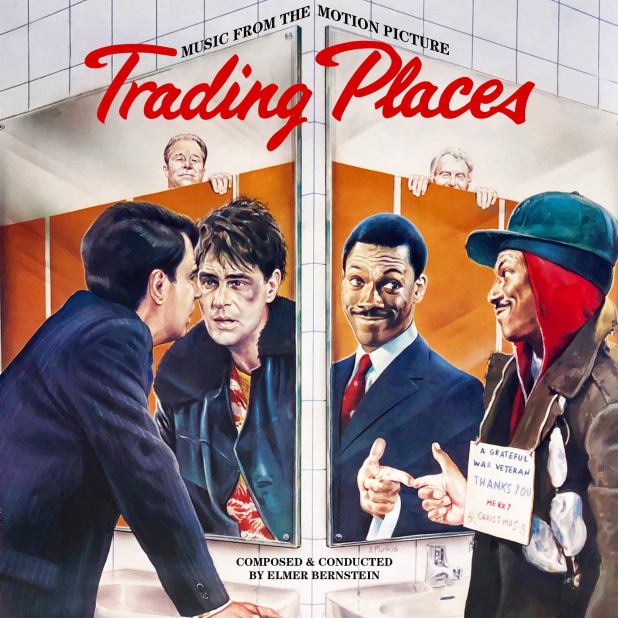
DISMEMBERCEMBER: Trading Places (1983)

EDITOR’S NOTE: This was originally on the site on December 22, 2017.

In Italy, Trading Places is shown on TV every Christmas Eve, becoming a classic everyone can love. Here, it’s not remembered as a holiday film. Yet it is — a parable about how much money really matters within a week or so of time within the lives of two very different men.

Louis Winthorpe III (Dan Aykroyd) has the benefits of a great upbringing and Ivy League education. Billy Ray Valentine (Eddie Murphy) is street smart from the wrong side of the tracks.

The Duke brothers, Randolph and Mortimer (Ralph Bellamy and Don Ameche), come from old money and have been on the stock exchange since it opened. They debate nature versus nurture and decide to switch the social roles of our two protagonists and bet on the results.

In less time than you’d expect, Valentine has easily accepted the upper crust lifestyle while showing class and manners that Louis lacked. And the richer of our heroes descends into petty theft and alcoholism — again all in the span of several hours. He also discovers what love is all about from Jamie Lee Curtis’ character Ophelia. And Denholm Elliot’s character, Coleman, goes from butler to accomplice to friend.

Along the way, the film has plenty of great character roles, too. Paul Gleason continues his career-long mastery of playing complete dicks. Jim Belushi shoes up at a party, Jamie Lee’s sister Kelly (who is also in Michele Soavi’s The Sect) shows up, as does Frank Oz, Bo Diddley and Al Franken, years before he’d go into politics and take inappropriate photos.

The leads work so well together that you wish they’d made several films together. It’s a natural, breezy film, one that continues to deliver on its basic premise. This movie is a success on every level, with Roger Ebert favorably comparing it to the comedies of Frank Capra and Preston Sturges. The only misstep it takes is in the backward 1980’s usage of homophobic slurs — they really take you out of the film.

Ralph Bellamy and Don Ameche are my favorite part of the film. Ameche had not made a movie in 13 years before this film! Their characters would return in 1988’s Coming to America when Prince Akeem gives them money to get off the streets.
John Landis really created something special here and it’s packed with subtle allusions to his past films as well as tiny easter eggs that appear in all of his films, like the ape that calls back to past Landis films Schlock and The Kentucky Fried Movie, Louis having the same prison number as Jake Blues from The Blues Brothers, and Murphy breaking the fourth wall.
While we may not celebrate this film as a holiday favorite in the U.S., I’d advise you buck the trend. It does so well what many movies of this era do: set up a basic premise and then let hijinks ensue.

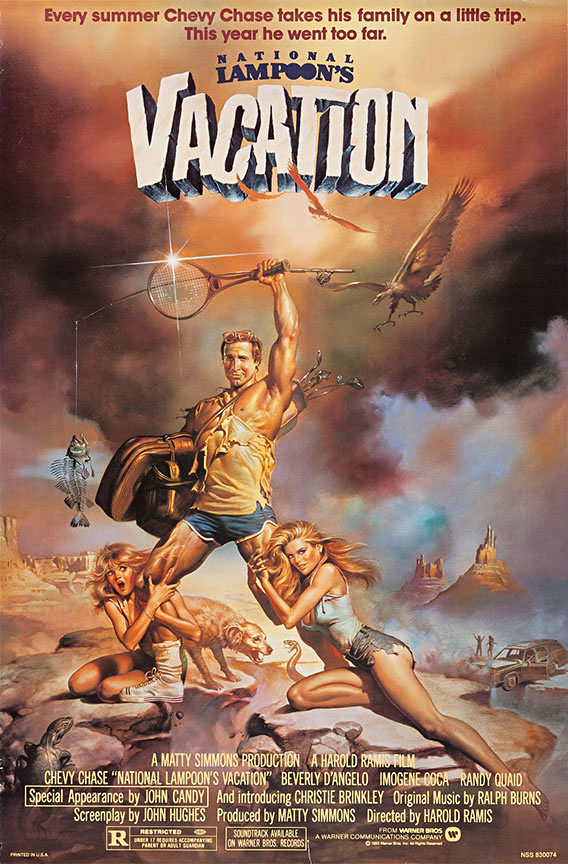
National Lampoon’s Vacation (1983)

There was a time before I worried about classism in John Hughes movies and how Chevy Chase became the kind of person Chevy Chase was doing a character schtick about and that was probably 1983 and every time I watch this movie, it reminds me of that simpler time to watch movies.

I saw Vacation at the drive-in which other than cable TV on a hungover Sunday or a drunken Saturday in the middle of the night would be the best way to see this film. At no time in my life have I ever been more excited than when John Candy showed up at the end, completely owning every scant second he gets. I was in the tailgate of my parent’s Astra and just jumping up and down in sheer movie joy.

Written during the Chicago Blizzard of 1979, Hughes drew on his childhood memories for the story Vacation ’58 for National Lampoon. After their film Animal House shocked Hollywood, everything in the magazine became filmable or so it seemed. Well, maybe not all the Hitler stuff, right?

Publisher Matty Simmons said, “When I brought it to Hollywood, the first guy I brought it to was Jeff Katzenberg who was at Paramount. He said it would never make a movie, it was too episodic, too consequential. I said, “Yeah, it’s a road trip. It’s supposed to be episodic. You go from town to town, place to place.” But he didn’t like it, so then my agent brought it to Warner Brothers, and I met with them. Most of them said the same thing, but there was one executive over there—a guy named Mark Canton—who really pulled for it and it got made.”

That’s why this movie works. It’s the perfect hijinks ensue movie. All it takes is a simple concept — family goes on vacation — and hijinks ensue. That’s all you need to know. The journey is more important than the destination, whenever you come into this movie and whenever you stop watching it.

Director Harold Ramis and Chevy Chase moved the story’s hero from son to father as Clark Griswold would become perhaps the character Chase would be known best as. He’s a food additives expert that  has just enough time — he’s planned it — to drive the Wagon Queen Family Truckster — designed by Chuck Barris — to “America’s Favorite Family Fun Park” Wally World. Of course, there may be time along the way to catch some other tourist attractions. This, not flying, will allow him to bond with his family — wife Ellen (Beverly D’Angelo), son Rusty (Anthony Michael Hall) and daughter Audrey (Dana Barron).

One of those stops is Coolidge, Kansas, where cousins Catherine (Miriam Flynn) and Eddie (Randy Quaid) live in squalor, along with Aunt Edna (Imogene Coca) who everyone is conned into taking to Phoenix. There’s also a wild west town, Kamp Komfort and a picnic with soggy sandwiches, all punctuated by Clark being flirted with at top speed by a girl in a Ferrari (Christie Brinkley).

It’s also a film packed with small roles that are beyond memorable, like Jane Krakowski as Eddie’s daughter Vicki, Eugene Levy as a car salesman, James Keach as the cop that finds a leash hanging from the back of the car, Eddie Bracken as Walt Disney analog Roy Walley and even Ramis as the voice of Walley Moose.

I can’t even count how many times I’ve watched this movie. It works because we’ve all lived it. We had a horrific vacation driving to Florida and back in a big van with extended family that nearly ended with my bad losing his mind at South of the Border when, after fixing that way too big brick of a car in the hundred degree parking lot, everyone started complaining that we had been there too long and my brother started begging for a bullwhip. It wasn’t pretty but it was hilarious.

The original ending of the film had the family going to the Hollywood home of Roy Walley after learning that the park is closed. Clark uses the BB gun to force everyone to sing songs from Walley cartoons before the police arrive. Brinkley’s character shows up and is Walley’s daughter and gets the family out of trouble, but on the way home, they take the wrong flight and Clark hijacks the plane.

Test audiences hated this and the John Candy ending was filmed. Chevy Chase claims to have this ending on videotape.

I can’t even think of this movie any other way. Just writing this makes me want to watch it again.
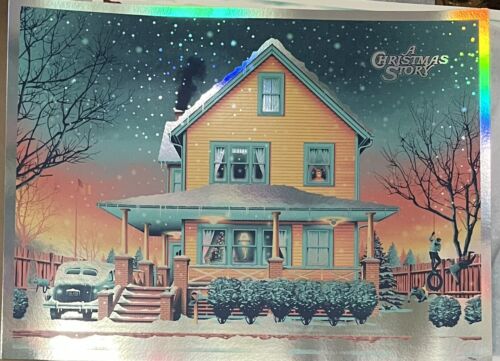
A CHRISTMAS STORY: A Christmas Story (1983)

According to LEIGH BROWN, CREATOR AND ENABLER The Lives and Love of an Arty Village Chick by Eugene B. Bergmann, “Leigh Brown, from the early 1960s through the late 1990s, was the steadfast, all-purpose, vital element in the life and art of the raconteur and wit, Jean Shepherd.” As early as 1972, she would tell people “If we can ever get A Christmas Story made as a movie using the Red Ryder BB gun tale, he will have it made. It would be the ultimate perennial Christmas movie like It’s a Wonderful Life.”

She was so right.

Shepherd took the stories that he told on the radio and wrote in books and worked with his wife Leigh and filmmaker Bob Clark to make the stories “Duel in the Snow, or Red Ryder Nails the Cleveland Street Kid,” “The Counterfeit Secret Circle Member Gets the Message, or The Asp Strikes Again,” “My Old Man and the Lascivious Special Award That Heralded the Birth of Pop Art” and “Grover Dill and the Tasmanian Devil,” as well as “The Grandstand Passion Play of Delbert and the Bumpus Hounds,” as well as the unpublished “Flick’s Tongue” into a movie.

Clark had first heard these stories on the radio in 1968 and worked for years to get this movie made.

What amazes me is that Clark made both the darkest holiday film of all time, the perfect Black Christmas, and this film, a movie that for many is the American Christmas film.

It wasn’t always that way.

The city of Cleveland wasn’t sure they wanted someone that made a seasonal slasher, much less Porky’s, to make a film in their town. Even the department store used for the film, Higbee’s, had a clause where vice president Bruce Campbell would be allowed to edit the script for cursing if they used his store. Ironically, the house used for a lot of this movie is on Cleveland Street, which is also the street name — in Hammond, Indiana — where Shepherd grew up.

It wasn’t an easy shoot. Clark had Shepherd banned from the set at one point for giving his young actor his own direction.

The movie did fine — $20.8 million on a $3.3 million budget — but then it went away. That’s what movies used to do.

But then, something small happened and grew.

Metro-Goldwyn-Mayer’s pre-1986 film library was bought by Ted Turner. He needed a holiday movie to show that they owned and didn’t have to pay the rights to. They started showing it in 1987 and at one point, showed it the entire day of Christmas. It became the holiday movie, replacing It’s a Wonderful Life, which ended its free run of being a public domain film in 1993 when Republic Pictures bought the rights to the original story it was based on, as well as the music in the film.

You may know the story of Ralphie, of the gun he wants, of the tongue on the flagpole, but maybe knowing all of the above will add to your holiday watch.

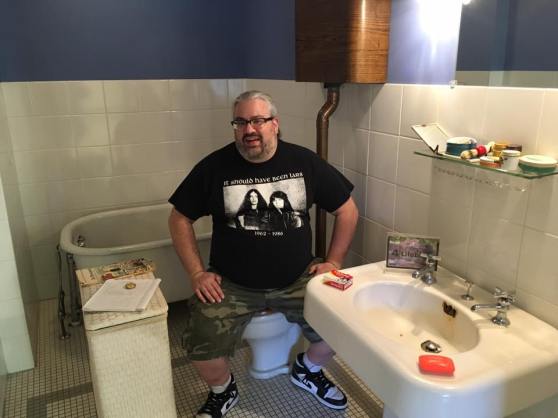
The author, about to get his mouth washed out with soap in the actual shooting location.

I shot my eye out immediately.

DISMEMBERCEMBER: Blood Beat (1983)

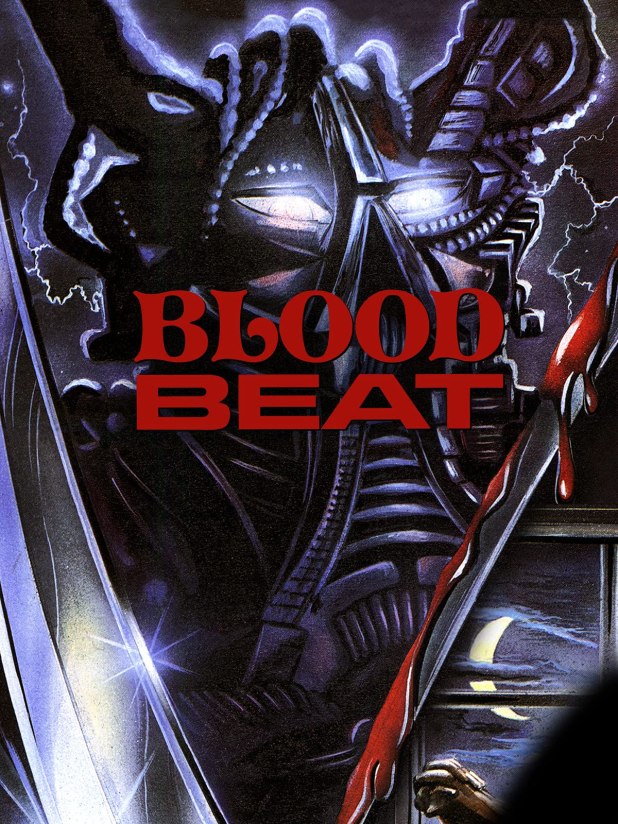
Blood Beat is one of those box covers you’d look at over and over again, trying to decide whether or not you should rent it. Then, when you finally sit down and take it in, it blows your mind and you try to describe it to your friends and they think you have to be making it all up. Ah, the pre-internet days. Well, now that we’re all online, I’d like to think of you as my friend. And I’m going to tell you all about this crazy movie.

Fabrice A. Zaphiratos has two directing credits to his name and this is one of them. That’s a shame — his direction here tends toward the strange and unexpected. There were moments here where I just yelled in glee at the TV, shocked at what was happening. It’s not the best movie you’ve ever seen, but it aspires to be one.

This feels like a regional horror movie made by a bunch of European art directors on too many drugs. It’s also the only Christmas horror movie I’ve ever seen that has a psychic samurai slasher. But it really isn’t even about Christmas. It’s also the only film I’ve ever seen that has a murder scene synched up with a girl’s orgasms. Also, the house the family lives in tries to kill everyone at one point, but no one decides to leave it.

This all starts with Cathy and Gary talking about how they’ll never get married, despite him wanting to be a father to her children. This scene feels like something out of a pure drama and not in a tacked on to a horror film way. I actually thought I had accidentally loaded up a student film or an attempt to film a 70’s hard and honest look at relationships. But soon enough, Dolly and Ted come home. Ted’s girlfriend Sarah is the cause of great concern, as Cathy’s psychic abilities warn her of the young girl. Surely, she’s seen her before. And when Sarah finds a samurai sword in her bedroom, things get strange.

As weird as the film gets, it never plays anything for laughs. It’s earnest and deadly serious. Unlike a modern film, it explains nothing. You’re open to explain for yourself why the mother and girlfriend have a psychic link. Why is the killer a samurai? Why are there strange video effects throughout? Why is the mom a painter? I’d love to discuss this film at a party with a roomful of people who have just watched it.

This movie is why I love movies. It feels like a discovery. I want to share it with you.

Vinegar Syndrome has put out what has to be the definitive release of this film. It’s packed with extras and an embossed slipcover. You can also watch this on Tubi.

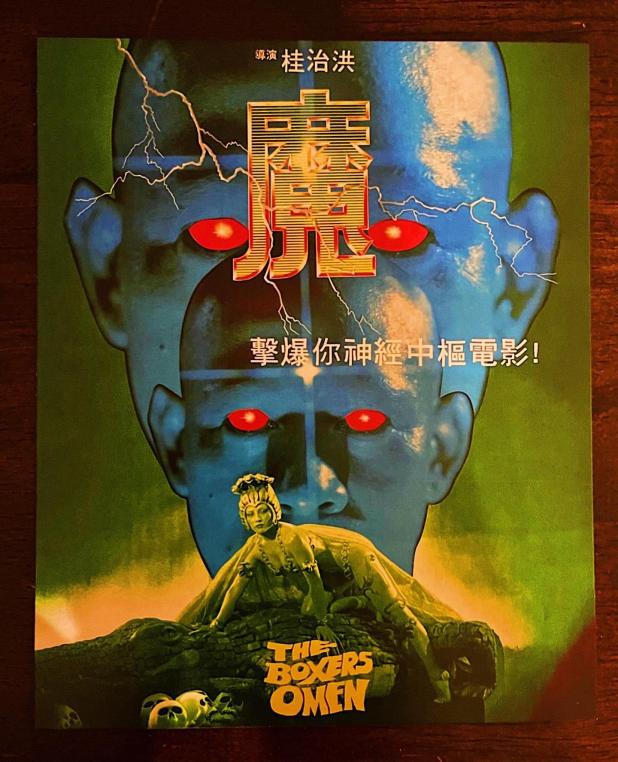
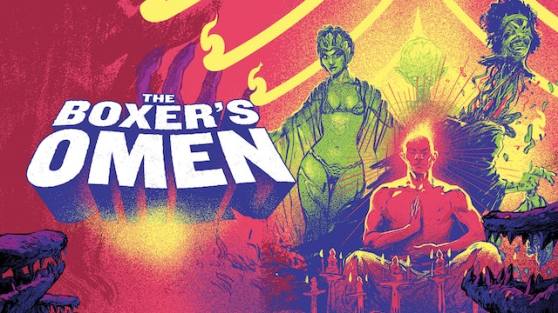
ARROW VIDEO SHAW SCOPE VOLUME 2 BOX SET: The Boxer’s Omen (1983)

Screw the Snyder Cut. Whatever drugs the Shaw Brothers had access to, release them to the rest of the world.

After being crippled in the ring, boxer Zhen Wei asks for his brother Zhen Xiong to avenge him, which will take finding the key necessary to release their family from a horrible curse.

Simple start, right?

Buckle up, because this is the kind of movie that will make your brain bleed. Seriously and without hyperbole, The Boxer’s Omen is a phantasmagorical thrill ride into how much insanity one can pack into 105 minutes.

Sure, your movie may have a crocodile in it, but does it have a reanimated corpse that’s been sewn into the mummified body of a dead crocodile? I don’t think so.

Then, let’s add in spiders drinking from people, demon bats, flying heads, goo, gore, gristle, black magic wizards, maggots, a sexy zombie, spiritual monk training montages, caterpillars, eels coming out of peoples’ mouths, neon magic, vomit magic, intestines and more.

You know when people use silly terms like fever dream and madness to describe a movie? They are only dreaming of a movie like this, one that takes you on a life-changing journey and repeatedly makes you wonder exactly what the hell you’re watching and just how they captured all of this on celluloid.

After making movies like this, Corpse Mania and Hex, director Kuei Chih-Hung quit the business, moved to America and started a pizza restaurant. He’s sadly no longer with us, but I have no doubt that his pizza was a messy, greasy, gooey and delicious dish that was most definitely spiked with all manner of Taoist magic and the most potent LSD known to man and demon.

The world is a better place for this movie being in it.

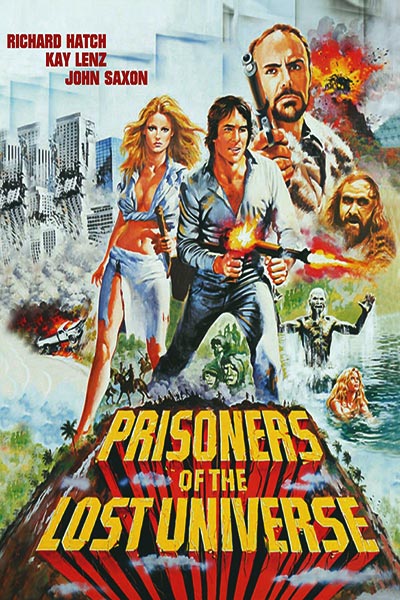
MILL CREEK NIGHTMARE WORLDS: Prisoners of the Lost Universe (1983)

Is there an actor that can save any movie for you? There is one for me: John Saxon. I have sat through many a piece of absolute shit only because Saxon shows up to be the hero of the day, even if he’s usually the villain.

TV reporter Carrie Madison (Kay Lenz, The Initiation of Sarah, House) is trying to meet with mad scientist Dr. Hartmann when she literally runs into Dan Roebuck’s (Richard Hatch, TV’s Battlestar Galactica) truck. Once they find the scientist, his machine causes them all to disappear to the parallel world of Vonya, which is populated by cavemen and the warlord Kleel (John Saxon, of course) who has plenty of Earth technology.

Director Terry Marcel also was behind the films Hawk the Slayer and Jane and the Lost City, so obviously sword, sorcery and science fiction was his bread and butter. Too bad that his bread and butter tastes so bad.

If you want to see John Saxon out act everyone around him — sadly I wish this were higher praise — and a ragtag group of aliens fight cavemen, I guess you should watch this. I can recommend several much better movies in this genre, though.

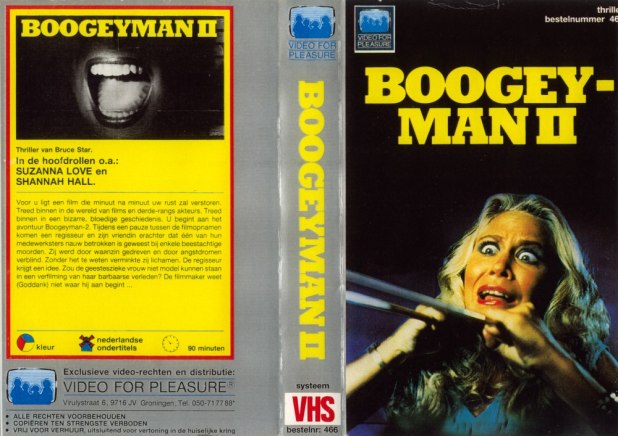
2022 Scarecrow Psychotronic Challenge Day 17: Boogeyman II (1983)

17. THE VIDEO NASTY: Watch one of the 72 banned in the UK. And we thought the PMRC was tough…

It’s been one of my goals to check off every single one of all three of the video nasty lists. You can check the progress at Letterboxd and write-ups on sections one, two and three.

Ulli Lommel loved the story of Boogeyman so much that he made it over and over again. In fact, a good chunk of this movie is a flashback to the first. So while John Carradine’s name might be high up in the credits, he’s all past footage. As for Lommel, he started as an actor, first appearing in Russ Meyer’s Fanny Hill, then acting in Fassbinder’s surreal western film Whitey (as well as several other of the director’s films). He moved to the U.S. and worked with Warhol in the films Cocaine Cowboys and Blank Generation. His wife at the time, Suzanna Love — a descendent of the creator of the Pratt Institute — helped write these movies and also appears in them as Lacey.

The story is told that Paramount wanted to pay for a big budget sequel and Lommel decided to make the sequel himself. In this, Lacey goes to Hollywood, along with a shard of that haunted mirror, and the filming the movie within a movie turns into a murderous affair. Also: the credits are hand-written and you can see hands holding the titles, which seems like anything but the movie Paramount would have paid for. Nor would be the first 25 minutes of this movie during which we see pretty much the entire first film all over again.

The funny thing is that the deaths in the new footage are not shot in a shocking — or easily visible, this thing is dark and poorly made — way. The reason this movie ended up on the video nasty list is all due to the footage taken from the first movie, which is also on the list. It’s like an artist being inducted into the Rock ‘n Roll Hall of Fame as a member of a group and a solo artist.

That said — someone does get killed by their mouth getting shoved onto a hot tail pipe.

So yeah. Nearly 85% of this movie is the movie you already saw. It’s made in Lommel’s house. It has him in the cast. And while Bruce Starr (Bruce Pearn) is listed as director, Lommel also has his hands all over this. A true cash-in if there ever was one, I guess you have to admire the sheer nuts on this man.


Di wu ying (1983)

Pearl Cheung Ling made Wolf Devil Woman which is a movie I could watch any time you want to watch it with me. This was the first movie that she directed. She also wrote and produced these films, which is a major thing for a martial arts film to be a female-owned production.

A remake of Shaw Brothers’ film The Black ButterflyDark Lady of Kung Fu also has her in the lead as the Butterly Bandit, a vigilante who wears a butterfly mask, big black hat and a winged cape. She’s at once Robin Hood and Fagin, as in her other identity she’s Monkey G, leading a team of children she calls the Monkeys. And everyone thinks she’s a man, which is an issue that a princess in this movie is also grappling with. Yes, Madam Kim Simon is a woman who wants to be a man, and at the end of the film, the Butterfly Bandit tells her to be happy to be him and just be pleased with whatever makes them happy.

This is a 1983 kung fu movie being this progressive.

It’s crazy because one moment, you’re getting sick of all the comic relief and then this movie shocks you with violence or an incredible fight scene. There’s also a cannon that fires gold coins and a tough guy named Shadow who doesn’t like it when people step on his. Also: the Close Encounters of the Third Kind theme song is in this.

You can watch this on YouTube.

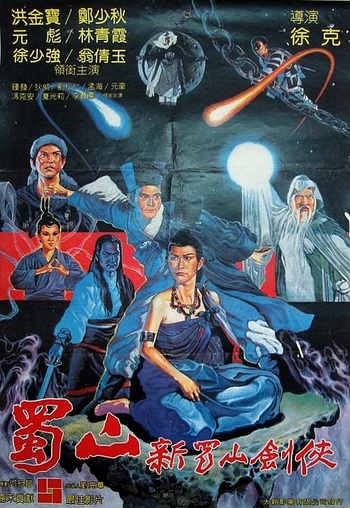
Shu Shan – Xin Shu shan jian ke (1983)

If Big Trouble In Little China is the movie equivalent of weed, Zu Warriors from the Magic Mountain is some kind of ancient herb found deep within the base of a tree that will get you high for life the moment you even taste it.

Based on Legend of the Swordsmen of the Mountains of Shu by Huanzhulouzhu, director Tsui Hark and writers Shui Chung-yuet and Sze-to Cheuk-hon made modern movie magic — special effects were created by a team of Western artists such as Robert Blalack, John Scheele, Peter Kuran and Arnie Wong — that still looks and feels as visually inventive as it did nearly forty years ago.

Dik Ming-kei (Yuen Biao) is rescued by Master Ding Yan (Adam Cheng) from the vampires that lurk near Zu mountain. They are soon joined by Siu Yu (Damian Lau) and his pupil Yat Jan (Mang Hoi) as they battle the Blood Devil, which will require a quest to find the Dual Swords.

Plus, there’s star power, with Sammo Hung as a Red Army soldier and the sorcerer Chang Mei, Brigitte Lin as the Ice Queen and Corey Yuen as the Devil Disciple Leader.

This is potentially one of the most important Hong Kong movies ever made, if not one of the most important movies ever created.

That said — there’s an international English language version, Zu Time Warriors, which has a 25-minute introduction with Yuen Biao as a fencing champ transported via coma dreams to the story of this film. It also doesn’t have the opening battle scene.

In 2001, Hark made Shu shan zheng zhuan or Zu Warriors, a sequel to this film. It was released in the U.S. by Miramax, who had picked up Shaolin Soccer and Hero after the success of Crouching Tiger, Hidden Dragon.

When you watch this film, just remember that when Hark came to America, the only movies e got to make — without much creative control — when Double Team and Knock Off, two Jean Claude Van Damme movies that co-starred Dennis Rodman and Rob Schneider.

Yes, the man who made this movie.

THE CHRISTOPHER LEE CENTENARY CELEBRATION PRIMER: House of the Long Shadows (1983)

EDITOR’S NOTE: This article was originally on the site on March 6, 2022. Now you can see it this weekend at the Drive-In Super Monster-Rama! Get more info at the official Drive-In Super Monster-Rama Facebook page and get your tickets at the Riverside Drive-In’s webpage.

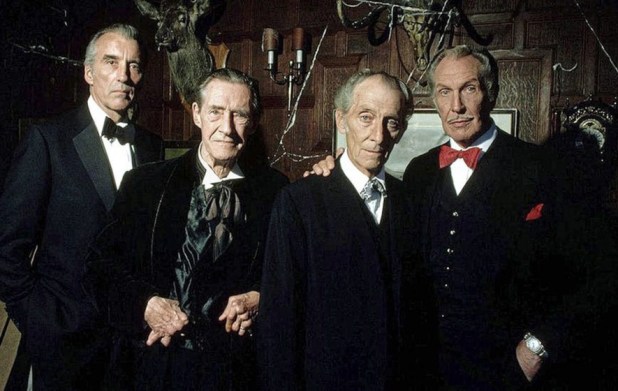
Vincent Price, Christopher Lee, Peter Cushing and John Carradine all in the same film? That’s the whole draw of Cannon’s House of Long Shadows, made by Pete Walker in one of the more chaste films of his career. He’d actually retired and was running a chain of theaters when Golan and Globus asked him to make a movie for them.

Taking cues from Seven Keys to Baldpate by Earl Derr Biggers, the Michael Armstrong (ScreamtimeMark of the Devil) script has writer Kenneth Magee (Desi Arnaz, Jr.) making a bet that he can write a great novel. To make it happen, he heads for the solitude of a deserted mansion that isn’t so deserted; after all, Lord Grisbane (Carradine) and his daughter Victoria (Sheila Keith, House of Whipcord) are living there.

By the end of the night, more guests — Grisbane’s sons Lionel (Price) and Sebastian (Cushing), Magee’s publisher’s secretary Mary Norton (Julie Peasgood), a buyer for the mansion by the name of Corrigan (Lee) and a young couple named Diana (Louise English) and Andrew (Richard Hunter) — all arrive.

The Grisbanes are really in the house to release their brother Roderick, who has been walled into his room for forty years after impregnating and murdering a local girl. But when they open his room, he’s already escaped, which gives Lord Grisbane a fatal heart attack. His demise is soon followed by Victoria being strangled, Diana washing her face with acid and Andrew being poisoned. Everyone’s tires are slashed, so they’re all stuck with a killer.

Roderick makes his way through everyone in the cast, leaving only Mary and Magee alive. But  of course, there’s a twist. Actually two of them. And no, I won’t spoil them.

As the only film in which Price, Lee, Cushing and Carradine appear together, this is a fun trifle. It was sold by Cannon as a straight horror movie when they should have leaned into its comedic side. Golan had dreamed of seeing these horror stars team up, so it’s great for us that he could make it happen, even if he had also wanted Bela Lugosi and Boris Karloff, both of whom were long gone.

You can learn more about House of Long Shadows in Austin Trunick’s The Cannon Film Guide Volume 1: 1980-1984.

You can listen to The Cannon Canon podcast about this movie here.