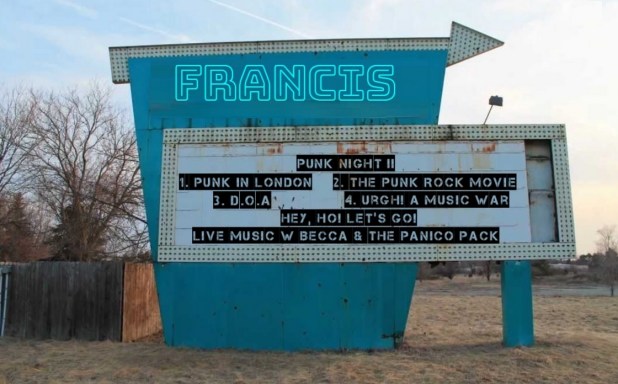
Drive In . . . Saturday?! Punk Night II

Rock ‘n’ Roll Week at B&S About Movies was a smashing success . . . one that can’t be contained in just one Drive In Friday* featurette! So, for this week only, we’ve opened up the Drive In for a special Saturday edition for you old punk codgers n’ sods. You know who you are . . . you were in middle school or high school during the advent of the cable TV boom and a fan of the USA Network’s “Night Flight” Friday night video programming block, channel surfing HBO and, later on, haunting the shelves of your local video store . . . so you’ll remember seeing these four punkumentaries. It’s been years since I’ve watched these gems myself, so this’ll be a fun night for all.

Oi! Hey, ho! Let’s go! All Aboard for Punk Night!

1. Punk In London (1977)

Director Wolfgang Büld bounced around the Germany film and TV industry since the early ’70s and made his English language debut with this German-produced documentary that accompanied the release of a coffee table book of the same name. The film features live performances — some of the footage and sound is of questionable quality — from some of the scene’s top bands, such as the Adverts, the Boomtown Rats, the Clash, the Lurkers, the Jam, Killjoys, the Sex Pistols, Sham 69, the Stranglers, and X-Ray Spex.

Büld followed up this document on the rise of punk rock with a sequel on “the fall” of punk rock, 1980’s Punk and Its Aftershocks, which featured the rise of the new, more commercial crop of ska, new wave, and mod bands that pushed out the punks, such as Madness, Secret Affair, Selector, and the Specials. As with any old VHS reissued to DVD, the reissues company had to tinker with the sequel and give it a new title (the lame “British Rock”) and edit out some footage from the original cut. Ugh!

The restored DVD digital rip of Punk in London currently streams on a variety of VOD platforms, but you can watch it for free on Flick Vaults’ You Tube channel. You can view a complete track listing of the bands and songs that appear in the film on Discogs.

Büld’s other punk documents include the hour-long 1980 TV document Women in Rock (leftovers not used in Punk In London), which centers on the German tours of British metalers Girlschool, along with Brit punkers the Slits, Siouxsie and the Banshees, and Nina Hagen (Cha Cha), along 1978’s with Reggae in Babylon centered on the career of English reggae pioneers Steel Pulse. Büld made his narrative, dramatic debut with the German language (dubbed into English) film debut of Nena (of “99 Luftballoons” fame) in Gib Gas – Ich will Spaß! (Hangin’ Out).

2. The Punk Rock Movie (1978)

And you thought the footage featured in Punk In London was rough . . . the grainy, shaky images and muddy sound of this debut film by British punk scenester and club DJ Don Letts makes Büld’s works look like award winners . . . but we thank Letts for gearing up that Super-8 camera to chronicle those 100 glorious days in 1977 when Neal Street’s fashionable disco The Roxy booked punk bands in the venue where Letts spun records.

The live acts and backstage interviews include Alternative TV, the Clash, Generation X (Billy Idol), Eater, Johnny Thunders and the Heartbreakers, the Sex Pistols, Siouxsie and the Banshees, Slaughter and the Dogs, the Slits, Subway Sect, and X-Ray Spex. So, regardless of its home movie quality, the film serves as a vital document of London’s then burgeoning punk rock scene.

Letts went onto form Big Audio Dynamite with Mick Jones (after his firing from the Clash) and directed a number of short-form music videos (the Clash’s “Rock the Casbah”) and long-form TV and DVD documentaries, such as 2005’s Punk: Attitude (Euro TV/U.S. DVD) and Westway to the World, his 2003 Grammy Award-winning documentary on the Clash.

The Punk Rock Movie is available on a few VOD streaming platforms, such as Amazon Prime (region dependent), but there’s a VHS rip available on You Tube. You can review the film’s full track listing on Discogs.

Intermission: Punktoons!

. . . And Back to the Show!

3. D.O.A (1980)

London-born Polish documentarian Lech Kowalski’s feature film debut (he made a few shorts and TV films) centers around the 16-mm footage he shot during the Sex Pistols’ 1978 seven-city club ‘n’ bars tour of the United States — their only U.S tour — that ended with the band’s demise. The behind-the-scenes interview footage features the now infamous “John and Yoko” bed-inspired interview of Sid Vicious and Nancy Spungen (You Tube). To fill out the short running time, Kowalski cut in performances and interviews with Iggy Pop, along with the Clash, the Dead Boys, Generation X, the Rich Kids (featuring ex-Pistols bassist Glen Matlock), Sham 69, and X-Ray Spex.

Lech’s other rock documents are 2002’s Hey! Is Dee Dee Home, about the life and times of Ramones bassist Dee Dee Ramone (1952-2002), and 1999’s Born to Loose: The Last Rock ‘n Roll Movie, concerned with the life and career of Johnny Thunders (1952-1991) of the New York Dolls and the Heartbreakers (the second, at one time featured, Richard Hell from Blank Generation). Meanwhile, footage from D.O.A appeared in Julien Temple’s 2000 Sex Pistols document The Filth and the Fury (which I went to see in a U.S art house theatre setting).

This one’s not streaming as VOD, but we found two VHS rips on You Tube HERE and HERE to enjoy. You can view the full track listing of the film on Discogs.

4. Urgh! A Music War (1981)

. . . And we saved the best-produced documentary for last: this one dispenses with the backstage tomfoolery and goes right to the stage with professionally-shot footage compiled from a variety of 1980-era shows held in England, France, and the United States. And there’s a couple of reasons why the Police spearhead Urgh! A Music War: Not only were they the most commercially radio-successful “new wave” band of the groups featured; Derek Burbidge, the director, helmed several videos (the famous “Roxanne”) for the Police (he also did Gary Numan’s “Cars”), while Miles Copeland, the brother of the Police’s drummer, Stewart Copeland, managed the Police and operated IRS Records, which produced the film. The film briefly appeared in U.S. theatres via Filmways Pictures (seen it in an art house theatre, natch), but gained its cult status due to its frequent airings on HBO and the USA Network’s “Night Flight” video block.

Beginning in 2009, Warner Archive (the successor-in-interest to Lorimar Pictures, who co-produced with IRS) released an official DVD-R of the movie — burned on a made-to-order basis. As result, this one’s not available as a cable PPV or VOD online stream and the freebie You Tube and Vimeo rips don’t last long. However, searching “Urgh! A Music War” on You Tube populates numerous concert clips from the film. The bands you know in those clips are the mainstream MTV video bands the Police, Devo, Echo & the Bunnymen, the Go-Go’s, Joan Jett, Gary Numan, Oingo Boingo, Wall of Voodoo, X, and XTC. The lesser known bands featured — that some know and most don’t — include L.A.’s the Alley Cats, the Dead Kennedys (Terminal City Ricochet), Magazine (off-shoot of the Buzzcocks), the Fleshtones (Peter Zaremba hosted IRS: The Cutting Edge for MTV), Orchestral Maneuvers in the Dark, 999, Pere Ubu, the Surf Punks, and Toyah Wilcox (Breaking Glass).

You can view the film’s full track listing on Discogs while you listen to the soundtrack in its entirety on You Tube: Side A/B and Side C/D.

All images of the ’80s original issue VHS covers — the cover arts I remember when I rented them — are courtesy of Discogs.

* Be sure to join us for Sam’s “Drive-In Friday: Movie Punks” featurette.

About the Author: You can learn more about the writings of R.D Francis on Facebook. He also writes for B&S About Movies.
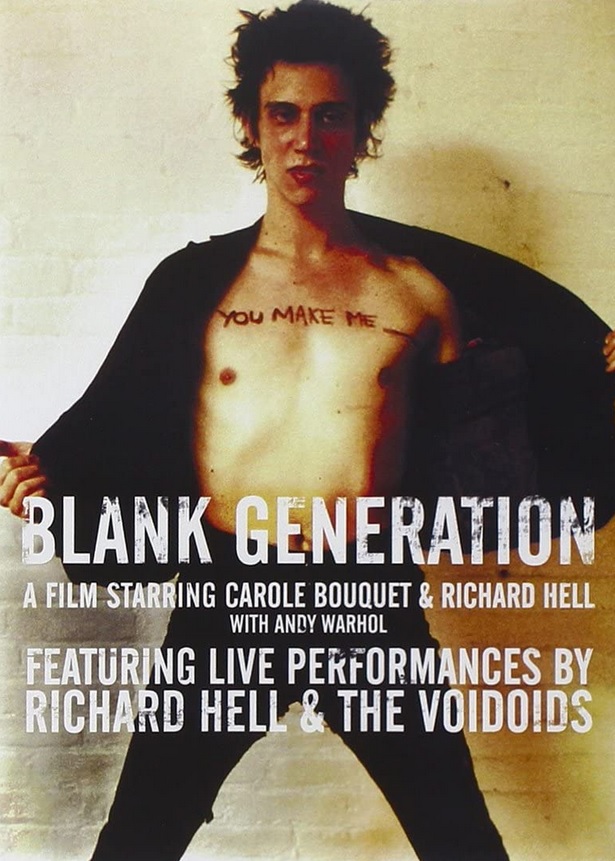
Blank Generation (1980)

Editor’s Update: In October 2021, Dark Force Entertainment announced their Blu-ray reissue of this punk classic. Learn more with their Facebook announcement.

Your willingness to slog through this punk-inspired drama — that is admittedly artsy and boring, rife with a lack of narrative clarity, bad acting, and an overall production incoherency courtesy of its failed Fellini-esque noodling (Warhol’s a great artist, but considered terrible at filmmaking in most quarters) — hinges on your fandom of Richard Hell, the music of the Voidoids, and nostalgia for the ’70s New York East Village punk scene spearheaded by the Bowery-based club CBGB’s.

Or perhaps that willingness hinges on your tolerance for the serial killer-obsessed oeuvre of direct-to-video German horror schlockmeister Ulli Lommel (Tenderness of the Wolves, The Boogey Man, BrainWaves, The Devonsville Terror) and, for the film buffs, Lommel’s connections to the works of Russ Meyer and Rainer Werner Fassbinder.

But as a piece of cultural history for music buffs (especially of punk music), while amateurish in places, this Ulli Lommel and Andy Warhol co-production (they previous worked together on 1979’s Cocaine Cowboys; a tale about a rock band subsidizing their lifestyle via drug running) won’t disappoint. (Here’s Andy’s scene, on You Tube).

Now, before we get started . . .

Let’s clear up the fact that there are two films carrying the title of the influential Richard Hell and the Voidoids’ tune (that inspired the Sex Pistols to write “Pretty Vacant”). The First, prefixed with the definite article: we picked up as a VHS bootleg tape set inside a black hard-clamshell case with a Xerox’d cover on the shelf of our local indie punk record store (tucked between a Hallmark gift n’ card store and a falafel joint). The Second: most of us watched it for the first time during an early ’80s late night viewing on the USA Network’s Friday night “Night Flight”* music video programming block (alongside Hell’s other starring role in Susan Seidelman’s 1982 punk chronicle, Smithereens).

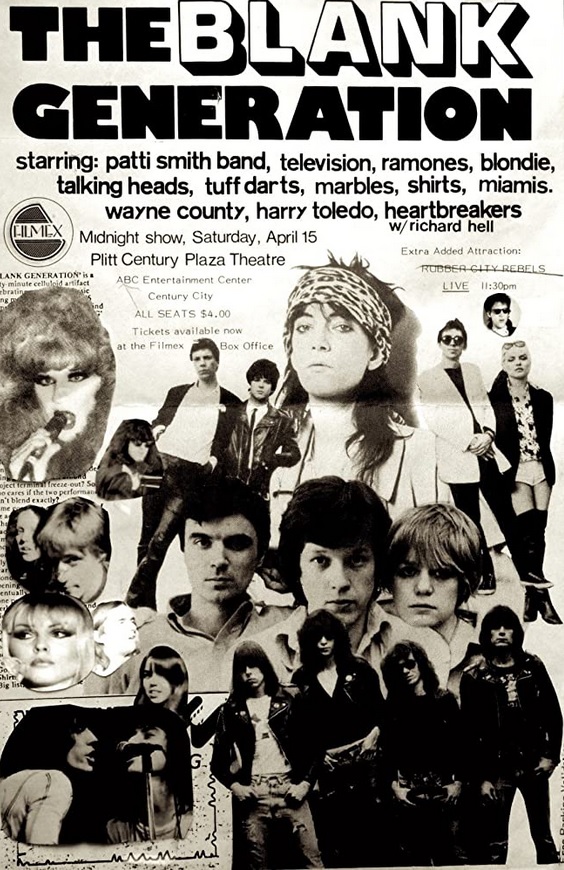
That first film, 1976’s The Blank Generation (again, carrying the grammatical article prefix), is a 16-mm black & white DIY documentary co-directed by Lydia Lunch and Patti Smith Group guitarist Ivan Kral and “No Wave” director Amos Poe (who went mainstream with 1984’s Alphabet City; starred Vincent Spano of Over the Edge, Matt Dillon’s first film). That film features grainy, live performances by Patti Smith, Blondie, Television, the Ramones, Talking Heads, the Heartbreakers, the Shirts (fronted by Annie Golden, later of Susan Seidelman’s 1985 Madonna-starring, Desperately Seeking Susan), Wayne County, and the Tuff Darts (featuring soon-gone original lead singer Robert Gordon) on the stage of CBGBs.

Original theatrical one-sheet **

The long since deleted ’80s VHS — copies are out there, if you want them, but run at $150.00

As for the narrative, dramatic version of the second film: Hell stars as Billy, an ascending musician and poet on New York’s local art scene that’s experiencing his first taste of fame across the pond; so Nada (Carole Bouquet, who starred as a “Bond Girl” in 1981’s For Your Eyes Only), a French filmmaker and journalist, comes to the States to interview him. Their journalist-subject relationship quickly progresses into a romantic triangle when Nada’s other lover, Hoffritz (Lommel), comes to New York to interview Andy Warhol (who cameos) — and Billy must choose between his career and love for Nada.

Uh, yeah. It’s a punk-tinged love story that’s more A Star is Born (1976; we reviewed the 2018 one) than a punk-rise-and-fall tale of the Breaking Glass variety. But what other film gives you the Voidoids (Robert Quine, Ivan Julian and Mark “Marky Ramone” Bell; later of Rock ‘n’ Roll High School) at the top of their game searing through “Liars Beware” and their punk anthems “Love Comes in Spurts” (featured in Christian Slater’s Pump Up the Volume) and “Blank Generation” from the stage of CBGBs?

None.

You can stream Blank Generation (1980) for the low, low price of $.99 on Amazon Prime Video, but guess what? We found a free stream over on You Tube, Midnight Pulp, and YuYu TV. As for The Blank Generation (1976): there’s no online streams or DVD reissues (official or grey market) in the online marketplace, but we found a free streaming copy on You Tube to enjoy. Uh, okay, that’s gone: try this one.

* Check out our “Drive-In Friday: USA’s Night Flight Night!” feature on those days of cable yore.

** B&S About Movies’ friend, Mike Delbusso, the proprietor of Michigan’s premiere rock art gallery, The Splatt Gallery, also talks about the film’s backstory and offers an alternate theatrical lobby card with this Facebook post. If you’re a fan of Detroit’s rocking past — or those ’60s and ’70s rocking days yore — spend some time with Mike amid the many wonderful posts at The Splatt Gallery, located in Walled Lake, Michigan.

About the Author: You can learn more about the writings of R.D Francis on Facebook. He also writes for B&S Movies.

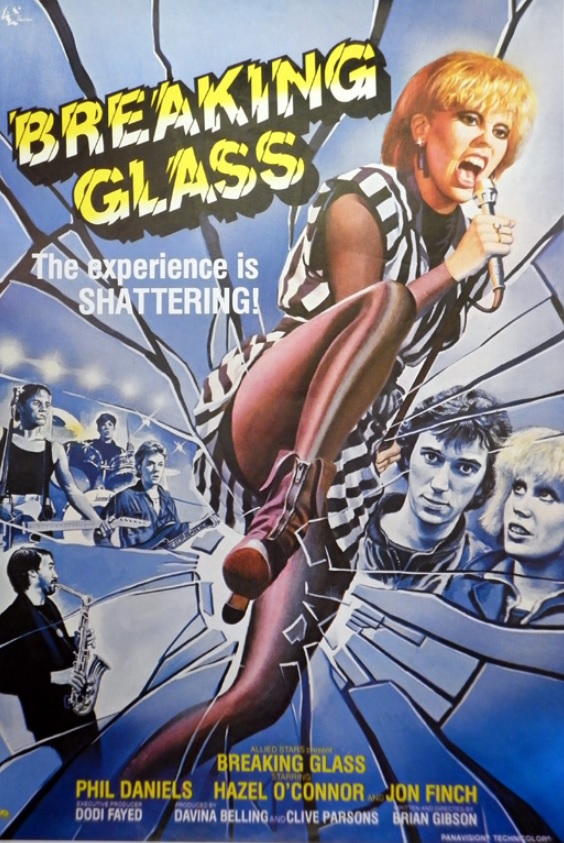
Breaking Glass (1980)

If you grew up in middle school or high school during the advent of a new cable TV channel called HBO in the early ’80s, chances are you caught at least one of the incessant airings (we watched it multiple times, of course!) of this British rock film — alongside the likes of the juvenile delinquency classic Over the Edge (starring Matt Dillon in his film debut) and Ladies and Gentleman: The Fabulous Stains. (Meanwhile, over on the USA Network’s “Night Flight” programming block, we watched Social Distortion in the punkumentary Another State of Mind and the Ramones in Rock ‘n’ Roll High School. Ah, those were the days. . . .)

Watch the trailer, listen to the soundtrack.

O’Connor got her start as an actress, with support roles in the British films Girls Come First (1975) and Double Exposure (1977). To launch her music career (with financial assistance by Princess Diana’s then lover, Dodi Fayed), O’Connor was teamed with Marc Bolan’s (T.Rex) and David Bowie’s longtime producer Tony Vinconti (he also worked with Iggy Pop and Thin Lizzy) to craft the songs for the film; Brian Gibson (later of several Styx videos, as well as the Tina Turner bioflick What’s Love Got to Do With It and the 1998 Brit rock flick Still Crazy) was hired to craft a film around the songs.

Fans of ’70s British new wave music and of Toyah, know that the unknown O’Connor beat out Toyah Willcox for the role. At the time, Willcox was high on the British charts with her debut album, 1979’s Sheep Farming in Barnet, which featured the hit singles “Neon Womb” and “Victims of the Riddle,” and “Leya” from 1980’s The Blue Meaning. (If you’re a fan of the image and music of Lene Lovich and Nena Hagan — from our previously reviewed Cha Cha — or Poly Styrene of X-Ray Spex and Siouxsie Sioux of Siouxsie and the Banshees, then you’ll enjoy the music of Toyah.)

As with the plot of most rock flicks, Gibson devised a story about the ubiquitous, meteoric rise and even quicker fall of Kate, a young and angry rock star lost in a world of drugs that’s compounded by managerial, record company, and media manipulation that leads to her eventual nervous breakdown. It’s a tale not far removed from the career trajectory of the faux bands chronicled in Slades In Flame, the 1982 Australian new wave comedy-drama Starstruck, 1980’s Times Square, and the aforementioned Ladies and Gentleman: The Fabluous Stains.

Astute British music fans will notice Phil Daniels from his starring role in Quadrophenia (brilliant as O’Connor’s talentless, bottom feeding street hustler-cum-manager), along with bassist Gary Tibbs from Adam and the Ants and Roxy Music as a band member (with equally decent acting chops). And keep your eyes open for ex-Animals keyboardist Zoot Money (You Tube) and Gary Holton of the Heavy Metal Kids (You Tube) in support roles. And yes, that is Jonathan Price as Ken, the band’s deaf and heroin-addicted saxophone player — on his way to his breakout roles in Something Wicked This Way Comes and Terry Gilliam’s Brazil.

Image courtesy of Good Reads. You can find used copies of the novelization on Amazon U.S.

Caveat Emptor #1: Sure, you can stream Breaking Glass on You Tube Movies and Amazon Prime U.S. But those are the American edits of the film that run at one hour thirty four minutes (94 minutes) with the film’s ending and other scenes (about 10 minutes) excised — you want to watch the original British version distributed in Europe that runs at 100 minutes. Alas, due to the usual legalese, that British version is not available on Amazon Prime in the U.K. — but the intrepid staff of B&S About Movies found the lone online copy of the British cut of the film on Vimeo (it’s been there for three years, but watch it while you can).

Caveat Emptor #2: The film was out-of-print for years and the recently released, mass marketed Blus and DVDs — which come from the choppy American print — have received poor reviews. The U.S online streams come from those un-restored Blus and DVD impresses. The way the reviews read, it seems we’d be better off with a grainy, taped-off-cable or VHS online rip of the film. The Blus and DVDs offer no menus or extras, booklets or the usual commentary tracks you’d expect from the re-release of such a classic, coveted film.

And just how influencial is this film?

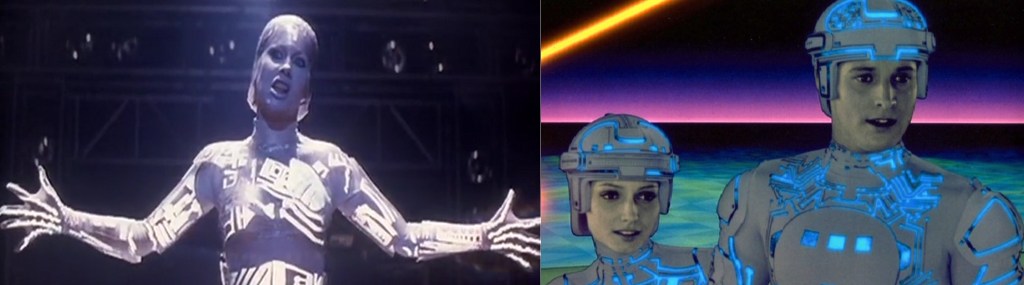
Well, we all know about the debated relationship between Jack Wood’s Equinox and Sam Raimi’s The Evil Dead, right? Well, check out this shot of Hazel O’Connor’s “robot” from the “Eighth Day” segment of Breaking Glass against an image of 1982’s TRON.

Then, there’s the striking similarities between the hair and makeup of O’Connor and Daryl Hannah’s Pris from Bladerunner.

You can listen to the full soundtrack — which hit # 5 on the British charts and earned a gold album status — on You Tube. You can also watch two scenes/songs/rock videos cut from the film of the soundtrack’s two Top Ten British singles, “Will You?” and “Eighth Day,” also on You Tube. “Give Me an Inch” became somewhat of new wave “hit” on U.S college radio stations at the time.

You are a programme! Programme! Programme!

About the Author: You can learn more about the writings of R.D Francis on Facebook. He also writes for B&S About Movies.

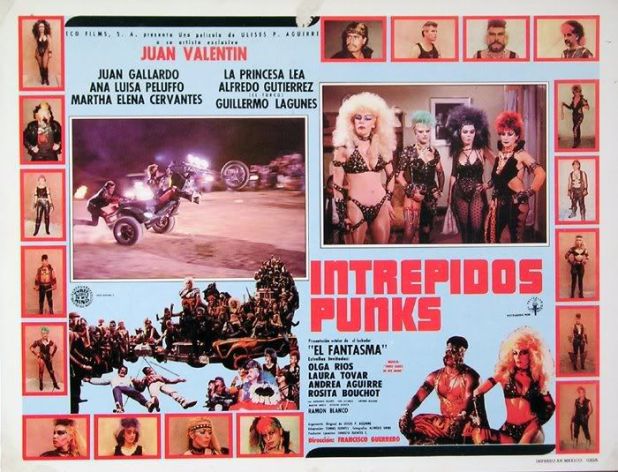
Intrepidos Punks (1980)

Folks kept making movies over the last 40 some odd years, but after Intrepidos Punks, why did they bother?

Imagine if you will. The best biker movie that you never saw in the late 1960’s, but instead of Bud Cardos or Russ Tamblyn, you have an army of punk rockers and luchadors that look like they emerged straight out of a 1980’s Capcom beat ’em up. Now, give them all the drugs, dress them like nuns while they rob a bank and watch as they play Russian roulette and have rough sex like there’s no tomorrow because there isn’t.

Everything the Satanic Panic feared has become true in this film, as these mowhawked and bemasked biker maniacs swear allegiance to every demon you can imagine when they’re not shooting off weapons, playing surf rock or assaulting the citizens of a small town before you know, setting them on fire.

Let me explain something about this movie. It’s not enough to kidnap the wives of every jail guard and abuse them. No, you have to cut off their hands and send it to their men, letting them know that you’re coming to kill them, too. Beast, the leader of the women, rescues Tarzen (El Fantasma, who was an awesome luchador and whose son is Santos Escobar in NXT now and he has a gang too) and takes off for a cave concert black mass orgy.

It’s that kind of movie.

There are two annoying cops and a mob association that the punks have to deal with, but thanks to their makeup heavy bedazzled forces, blasting around on trikes and dune buggies and predating even The Road Warrior and the post-apocalyptic cinematic magic of Italy and the Philippines, you know that they’ll win eventually.

They made another one of these — La Venganza de Los Punks — that’s just as good. If you ask me, they could keep making them until the world stops rolling around the sun.

Let me translate the lyrics to the theme song for you and explain why you need to watch this movie right now.

“On the roads and cities too / stealing from anyone they always break the law.

On motorcycles with their girls they go / Looking for adventures.

They worship Satan.

Sex, drugs, violence  / they always look for action.

Sex, drugs, violence and a lot of rock & roll.”

Princesa Lea, who plays Beast, was born in Montreal and made her way to Mexico via Miami, soon becoming Majestad de las Vedettes, a queen of cabaret, where she did acrobatic dance and appeared nude in a giant champagne glass. She’s a Russ Meyer-esque dream who isn’t afraid to be the toughest woman you’ve ever witnessed. She also appears in The Infernal RapistMidnight Dolls and 1981’s El Macho Bionico, an erotic film that dares to mix up The Six Million Dollar Man and The Incredible Hulk.

Vinegar Syndrome keeps tickling me with a feather promising this is coming out on blu ray. Until then, huff some paint and watch the scuzzy version of this — maybe that’s the best way to see this — on the Internet Archive.

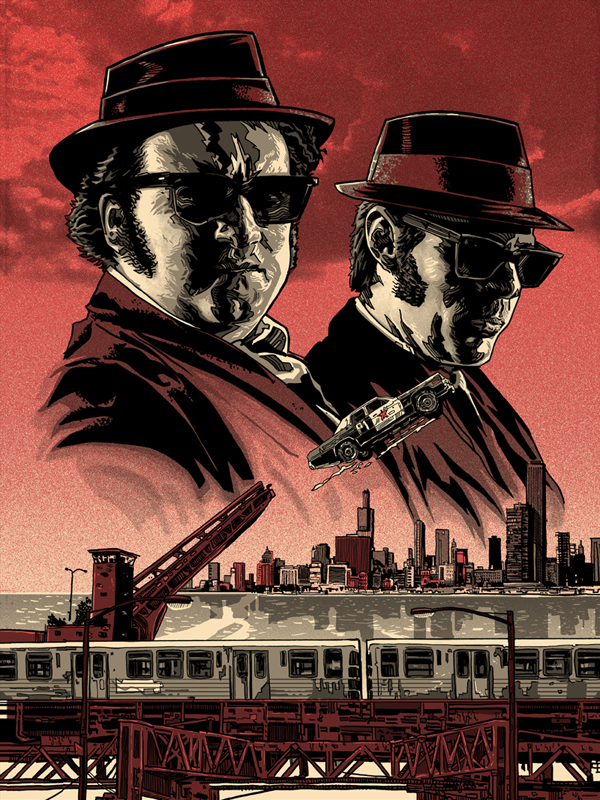
The Blues Brothers (1980)

Jake and Elwood Blues (John Belushi and Dan Aykroyd) went from a musical comedy sketch on Saturday Night Live to a $30 million budget mission from God as they careers of the Not Ready for Prime Players left New York City and set out for Hollywood.

There was a bidding war for this movie. After all, SNLAnimal House and The Blues Brothers album were all huge. Belushi was suddenly the star of the week’s top-grossing film, top-rated television show and singing on the number-one album all at the same time.

Universal won and what they got was a new writer in Aykroyd who wrote a long script that director John Landis was still writing and didn’t have a final budget until well after shooting started, at which point Belushi was already going wild in Chicago, drinking and drugging up a storm while cars were crashed everywhere and money was pretty much set ablaze.

It doesn’t matter. This movie is still remembered long after its star and all that money have gone away.

Raised in an orphanage and taught the blues by Curtis (Cab Calloway), the brothers became blood when they cut their middle fingers with a guitar string from Elmore James, the King of the Slide Guitar.

The past is important in this film, as Aykroyd demanded Calloway, James Brown, Ray Charles and Aretha Franklin to be cast and get musical numbers. Universal wanted younger acts and disco stars. They lost.

The story is simple. The brothers want to raise money to save their orphanage. That’s it. That’s the story. The rest is a road movie full of comedic scenes that you can basically come into any time that you want.

They could have filmed what happened during the making of the film and had just as great of a film. For example, there was an entire bar on set, The Bles Bar, staffed with drug dealers. And on one night shoot, Belushi disappeared. Aykroyd looked around and saw a single house with its lights on. He walked over and the owner of the house said, “You’re here for John Belushi, aren’t you?” He had walked into their home, asked if milk and a sandwich, and went to sleep. This is why he was nicknamed “America’s Guest.” Belushi was also called “The Black Hole” because he would lose his sunglasses after nearly every scene.

Beyond Paul Reuebens, Steven Spielberg and Carrie Fischer, there’s a secret Colleen Camp cameo. Look for her Colleen Camp’s Playboy poster on Ellwood’s hanging up in a scene.

I remember this movie running so many times on HBO in my youth and watching it nearly every time. I could watch it right now, even after watching it to write this.

The Babysitter (1980)

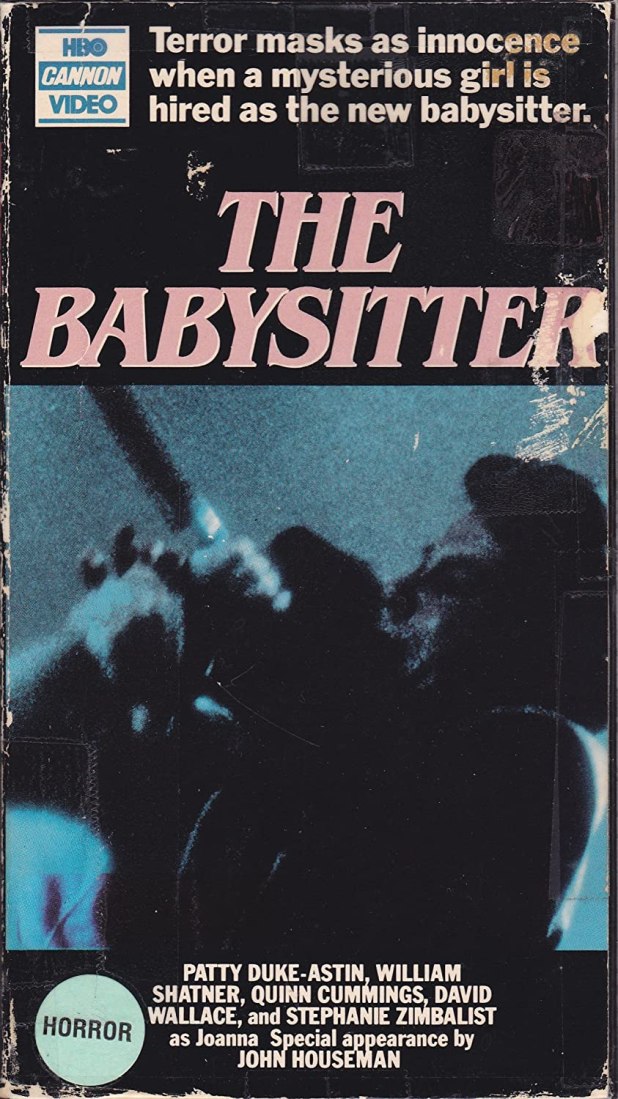
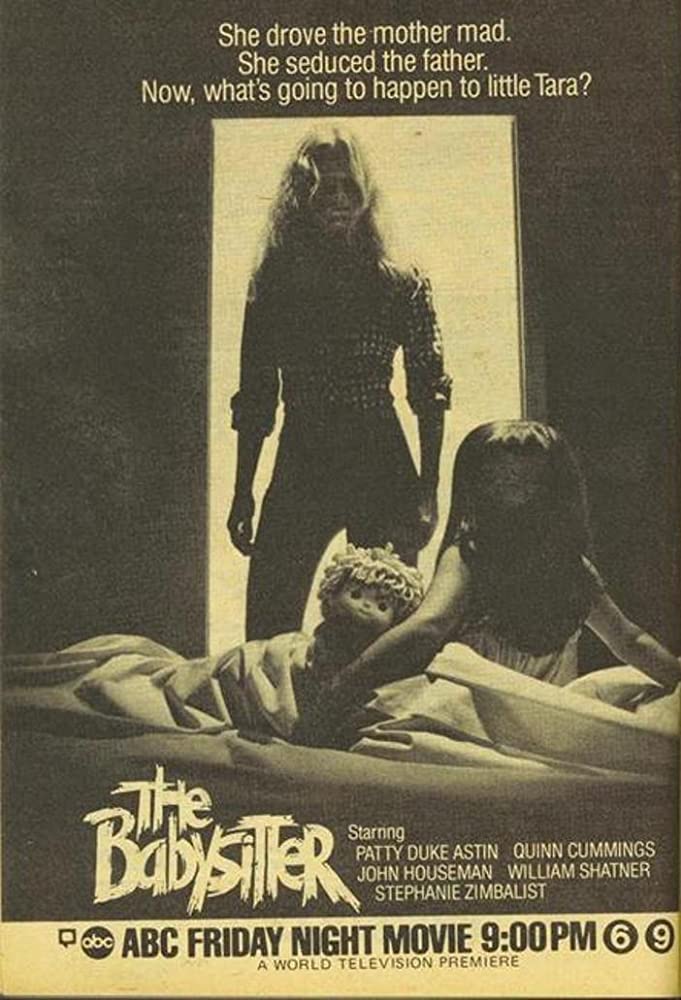
The ABC Friday Night Movie for November 28, 1980, The Babysitter was directed by Peter Medak, who was also in the chair for movies like The ChangelingCry for the StrangersZorro the Gay Blade, Romeo Is BleedingSpecies II and The Ruling Class. What an amazing lineup of films to have on your resume and such a disparate list of movies.

Dr. Jeff Benedict and his wife Liz (TV movie supercouple William Shatner and Patty Duke) have moved from Seattle to Chicago. Between their daughter Tara (Quinn Cummings, The Goodbye Girl) and the demands of housework, Liz isn’t doing so well. That means they bring in a live-in nanny named Joanna Redwine (Stephanie Zimbalist, before Remington Steele) and that’s when things go to seed.

Before you can say movie of the week, Joanna has Liz drinking again and convinced that Jeff has a mistress. While that game is afoot, she’s also trying to convince Jeff that loading his clown into her cannon while wifey is passed out is beyond a good idea

This is when you fire the babysitter. That said — if they did, we would not have the next hour and change of this movie.

Before it’s over, the bodies of the last family Joanna killed — wrapped in plastic a half decade before Laura Palmer — have showed up, she’s wearing Patty Duke’s lingerie and served up a dinner of raw beef tongue. The family is lucky that they know John Houseman, who saves them all.

I have a weakness for both made for TV movies and ones where babysitters slowly drive a family insane. This movie is at the center of this magnificent cycle and must be experienced. These TV movies are exploitation films, with small budgets and insane stories, that scream at you the entire time they are on the screen.

You can watch this on YouTube:

The Nude Bomb (1980)

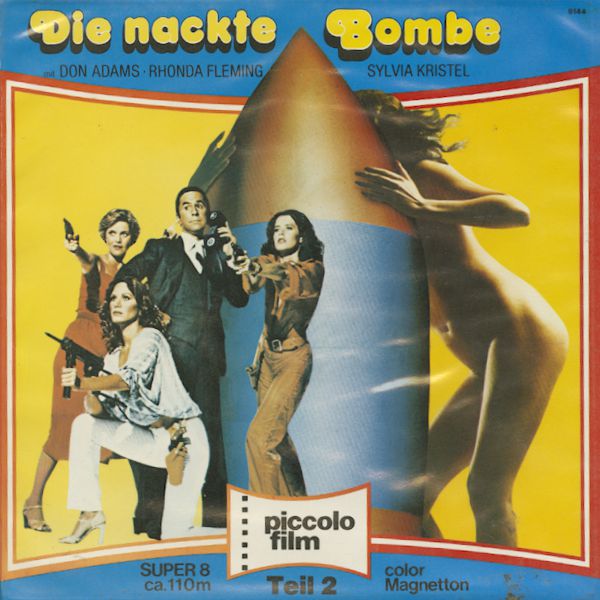
Sylvia Kristel — yes, she who was Mata Hari, Emmanuelle and Young Lady Chatterley — shows up in this movie as Agent 34. She had tried over and over to be in a Bond movie and it sadly never happened. That’s better than Barbara Felton got. She wasn’t even told they were making the movie.

So yeah. The Nude Bomb is somehow a PG movie, despite the promise of the title.

Agent Maxwell Smart (Don Adams) is called back into service in order to stop KAOS from firing off the bomb that knocks off clothing. Now, instead of CONTROL, he works for PITS, or Provisional Intelligence Tactical Service.

The main villain is Norman Saint-Sauvage, a KAOS fashion designer, who can also clone people. There are some new agents to help Smart, like Agent 36 (Pamela Hensley, Buck Rogers in the 25th CenturyMatt Houston), Agent 22 and Agent 13.

When this finally aired on TV, it had the title The Return of Maxwell Smart. While it was retconned out of existence by 1989’s Get Smart, Again! and Fox series — which did have Agent 99 — this is still fondly remembered by me. It was directed by Clive Donner, who also made Charlie Chan and the Curse of the Dragon Queen.

Don Adams pretty much hated this film and admitted he only did the movie for the money, because his wife was pregnant.

You can get this from Kino Lorber.

S*H*E* Security Hazards Expert (1980)

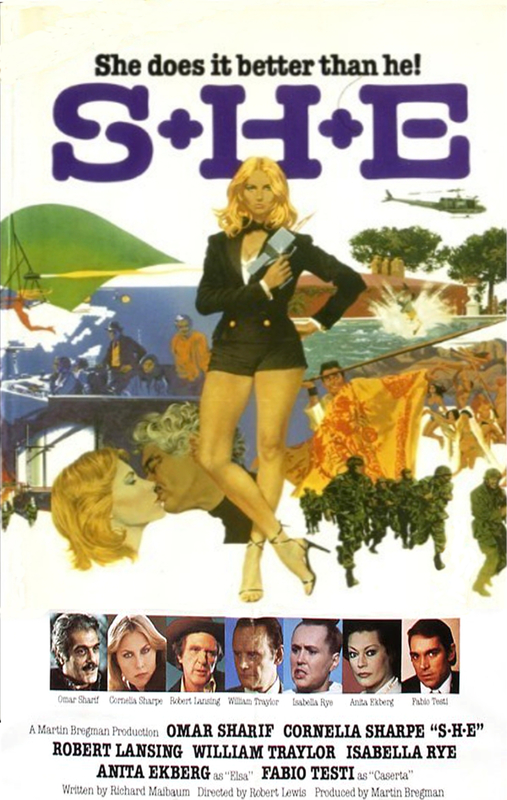
Lavinia Kean is S*H*E*, a secret agent in the early 80’s. Director Robert Lewis did the film because it let him spend three months in Rome on someone’s else’s money. He also claimed that Anita Ekberg was difficult with and he fired her, but brought her back when she told him that she would behave. He also had issues with Omar Sharif and lead actress Cornelia Sharp.

But hey! Fabio Testi (What Have You Done to Solange?Four of the Apocalypse and Contraband) is in this!

I really wanted to love this — the poster is great — but it really drags. There’s a reason why some lost movies remain lost, I guess.

Writer Richard Maibaum was the screenwriter for so many Bond films, from 1962’s Dr. No to 1989’s Licence to Kill. Thirteen in all — he missed a few, like Moonraker, but you’d think that experience would make for a better film. Ah well — you gotta watch everything to see if you can find something.

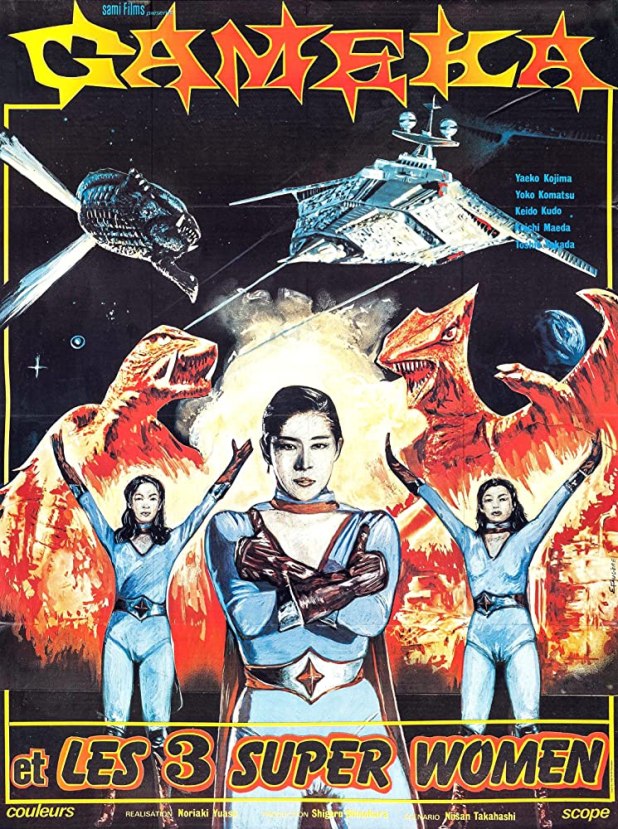
Gamera Super Monster (1980)

The first Gamera film in nine years — following Gamera vs. Zigra — this is somehow the strangest of all the movies. That’s an accomplishment.

This entire movie is made up of recycled footage from the entire Gamera film series, as well as Space Battleship Yamato and Galaxy Express 999. This was an attempt to help Daiei get out of financial trouble. Bad news: the film failed to succeed at the box office and Daiei still had to file for bankruptcy six months later.

So they did what the Japanese do best. They kill off Gamera at the end.

Yes, the alien Zanon has come to enslave Earth and even the three Spacewomen, Earth’s defenders, can’t stop him. You know who can? A little kid. As always.

By the way — Mach Fumiake, who portrays the Spacewoman Kilara, was a pro wrestler.

That kid has a connection to Gamera, so he takes us back in time through all the films, as Gamera battles Gyaos, Zigra, Viras, Jiger, Guiron and Barugon before sacrificing himself to save the Earth from Zanon.

Depressing? Yeah. I can’t tell you how many times I’ve watched a Japanese film that ends this way and I end up thinking about it for years.

There is a funny scene where Gamera smashes up a Godzilla billboard. But this is the end of the so-called Showa Gamera era and there would not be another film with the giant turtle for fourteen more years until Gamera: Guardian of the Universe was made.

It’s sad. There’s no Gamera theme song. Only two minutes of new Gamera footage. And yeah — Gamera dying. You don’t need to be depressed. But I still found the YouTube link for you.

Times Square (1980)

ABOUT THE AUTHOR: An American living in London, Jennifer Upton is a freelance writer for International publishers Story Terrace and others. In addition, she has a blog where she frequently writes about horror and sci-fi called Womanycom.

A cult classic about teenage rebellion, the medium of radio (and the importance of rock music) features throughout Times Square (1980.) In the plot, it’s the vehicle through which the two protagonists connect. Initially, to each other and eventually to the greater adolescent female population of 1980 New York City. 

Two girls, Nicky Marotta (Robin Johnson) and Pamela Pearl (Trini Alvarado) come from divergent backgrounds. One is a street kid with no family bounced from home to home and the other the motherless daughter of a wealthy politician gaining notoriety for cleaning up the area where Nicky lives. Times Square. The two meet in the hospital where each is being examined for perceived mental illness.  

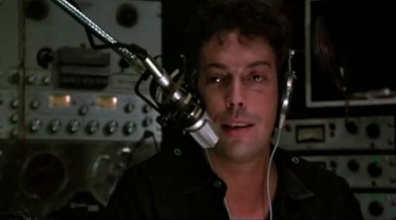
Despite their apparent differences, both are misunderstood by the adult establishment.  The girls connect through their love of music their shared fandom of an all-night radio show hosted by Johnny LaGuardia played by the velvety-voiced Tim Curry, who is excellent as always. Pam admires Nicky’s free spirit, and Nicky admires Pam’s intellect. The casting of the two leads is perfect. 

Following her discharge, Nicky goes back to break Pam out, wandering the hospital corridors, blasting The Ramones’ classic “I Wanna Be Sedated” on her boombox to entice her new friend to defiance. Together, they escape in a stolen ambulance and hole up in an abandoned warehouse by the east river. 

DJ Johnny picks up on the story and uses it to start a movement against Pam’s father, whom he despises for trying to gentrify his neighborhood. He puts the girls on the air and makes them famous. They become Icons for other disaffected young ladies itching to rebel against the “banality” and “boredom” of their everyday lives. They start a band called The Sleeze Sisters and begin spreading their message through their music all over the airwaves in graffiti throughout the city. Even when the girls engage in potentially dangerous hijinks–they throw televisions off of high-rise buildings onto busy sidewalks as a symbolic gesture against societal brainwashing–Johnny supports and protects them. 


Eventually Pam, who has been building up her self-confidence working as a stripper who “won’t dance nude” tires of Nicky’s high jinx and develops a crush on Johnny. Although it never explicitly says the two are lovers, their sleeping arrangements and Nicky’s jealous reaction to Pam’s wandering eye says it all. Nicky sets up an interview situation designed to prove to Pamela that Johnny is only in it for himself. He’s tired of his job on the night shift and sees this movement to boost his own brand and his show’s ratings. She suffers a mental breakdown and throws herself into the East River only to climb out asking herself, “What the fuck am I doing?” Johnny calls a doctor, who sedates her. Upon seeing this, Pam confronts Johnny angrily. She hates seeing her friend devoid of her usual fighting energy and inspires her to perform one last act of ultimate provocation. An illegal concert in Times Square. 

Full soundtrack recreated on You Tube.

Pam calls all the news outlets and announces the free gig to take place on top of a theatre marquee smack in the middle of Times Square. Johnny’s message on the radio brings girls from all over the five boroughs to see their hero perform, dressed for the occasion with their eyes blacked out “like a criminal.” The cops show up to shut them down, leaving Nicky one last chance to grand stand “about life” and to thank Pam for changing hers for the better. She knows Pam must go home. Her Dad is watching from below. As a duo, the girls have taken things as far as they can and now it’s time for them to walk their own individual paths, each armed with the determination and confidence inspired by the other. 

Screen Shot 2020-03-15 at 2.47.05 AM

As a final farewell, Nicky salutes the police and Pam and jumps into the crowd. They catch her and disappears into a sea of look-alikes. Pamela reunites with her Dad and the credits roll. Over a Bee Gee’s song. An odd, preternatural choice made by producer Robert Stigwood, who managed them at the time. They have no business being on a soundtrack with Patti Smith, The Ruts, David Johansen, Lou Reed,  XTC, and the Ramones. Moyle and star Johnson discuss this at length on the commentary track for Anchor Bay’s 2000 release. 

Along with being a fun ride, the film is also a beautiful snapshot of what Times Square was like in 1980. The real one. Before it became boring and banal. It’s magnificent in its corruption. You can almost smell the dried semen in the 42nd Street porn theatre the girls run through dodging law enforcement in the second act. It might be odd to say that I miss that time in New York’s history. As Nicky says in the film, “No sense makes sense.”