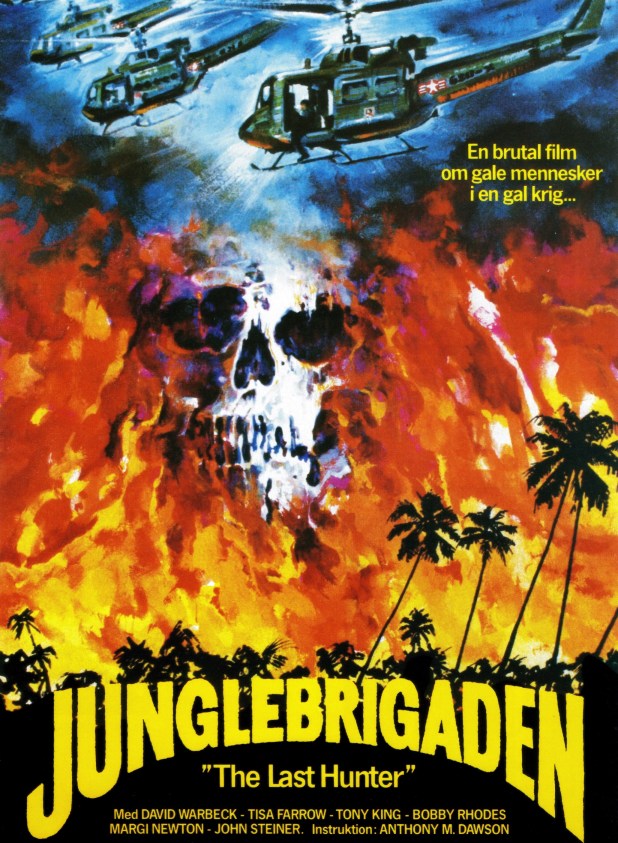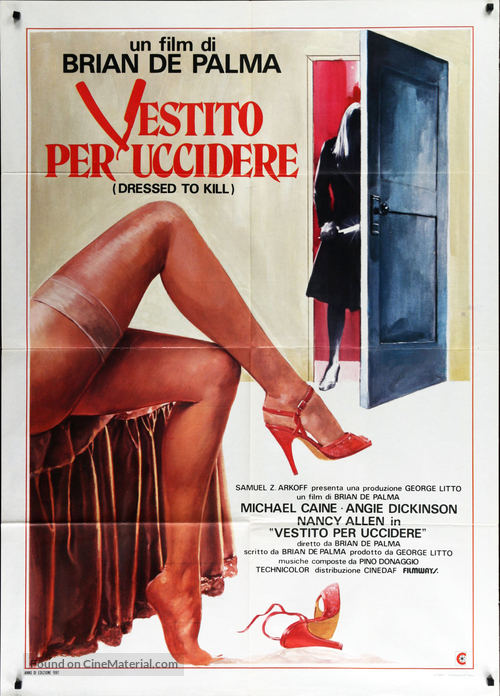
The Last Hunter (1980)

The Italian exploitation industry is one of the joys of my life because just when it feels like you’re running out of films from one genre, you find another one to fall in love with, often with many of the same directors, writers and actors. Can’t find any new poliziotteschi you love? Get back into giallo. Nothing in peplum for you? Dive into post-apocalyptic or Westerns or commedia sexy all’italiana.

Or how about a war movie, much less one influenced by what’s been happening in Hollywood, like The Deer Hunter and Apocalypse Now?

Antonio Margheriti (AKA Anthony Dawson) started his directing career making science fiction films like Space-Men and Battle of the Worlds before moving on to what was hot next. Peplum, with The Golden Arrow, The Fall of Rome and Giants of Rome made over the next three years. If there’s a genre, Margheriti worked in it, like horror (Castle of Blood, The Long Hair of Death, The Virgin of Nuremberg, The Unnaturals), Eurospy (Bob Fleming… Mission Casablanca, Operazione Goldman), Western (Take a Hard RideAnd God Said to Cain), more science fiction (Wild, Wild Planet; War of the Planets, Alien from the Abyss), giallo (The Young, the Evil and the SavageSeven Deaths in the Cat’s Eye), comic books (Mr. SuperinvisibleYor Hunter from the Future), cannibals (Cannibal Apocalypse) and even Raiders of the Lost Ark remake remix ripoffs (Hunters of the Golden CobraThe Ark of the Sun God).

If you could shoot it, Margheriti did it. He was quick, he was cheap and often, he’s pretty incredible. Not always, but more often than not.

And this is one of his war pictures.

Saigon isn’t a fun time to be alive for an American soldier. Captain Henry Morris (David Warbeck) is introduced in this film when he watches his friend shoot another soldier in a brother and then turn the gun on himself. After that, Captain Henry is given a mission. Fly into Cambodia and shut down a radicalized radio station broadcasting Viet Cong messages. He’ll have nearly no help other than a few soldiers. And after years at war, does he even care anymore?

The soldiers under his command include Sgt. George Washington (Tony King) and Carlos (Bobby Rhodes). They barely make it into the jungle when traps shred one of the men nearly in half and later, water snakes emerge and make a meal of another. Italian wartime isn’t pretty. That’s why this movie is on Section 3 of the video nasties list.

As the men make their way through the jungles of the Philippines, they’re joined by a photojournalist named Jane Foster, played by Tisa Farrow. Remember what I said earlier about finding people across genre? Ms. Farrow showed up in just a few Italian movies, but all are memorable and each is in its own genre: slasher (Antropophagus), zombies (Zombi), this war film and one that crosses into both giallo and the poliziotteschi (Strange Shadows In an Empty Room).

There are also some crazy moments along the way, including Major William Cash (John Steiner) having a secret cave base that has a full bar staffed by Luciano Pigozzi, as well as an array of porn mags and working pinball machines. Cash’s favorite music is the sound of gunfire and he barely stops his men from assaulting Foster when she tries to get a beer. His quick thinking is to send one of them across enemy lines to steal a coconut from a tree while being shot at.

There’s a reason for scenes like that. According to the documentary Margheriti and The Last Hunter, the man known in America as Anthony Dawson didn’t want to make a political film for or against the Vietnam War. He just wanted to make a movie that was 100% behind one thing: being entertaining.

In Italy, this was released as Cacciatore 2, as The Deer Hunter was called Il Cacciatore. The only thing this movie has in common with its inspiration is Vietnam and it’s more of a ripoff of Apocalypse Now as it was shot in the exact same locations and dealt with the same issues that Coppola dealt with except with a much, much smaller budget.

Throughout the movie, Morris keeps thinking back to New York City and that girl back home, who is played by Margie Newton (Aphrodite from The Adventures of Hercules, the painted-up Lia Rousseau from Mattei’s Hell of the Living Dead). As they get closer to that anti-American radio tower and the voice of the Tokyo Rose-style woman telling the U.S. soldiers just to lie down their arms as we hear easy listening tunes and Viet Cong kill the drugged out and hazed American boys, we come to realize that this love waiting at home and the one Morris has to kill are one and the same, which is an astounding coincidence but says a lot about the end of U.S. innocence in the 1970s.

Over the score by Franco Micalizzi, whose song “The Puzzle” will be familiar to fans of Curb Your Enthusiasm, we get a great ending, as Morris gets Foster on the last helicopter out of Hell and just kneels as the napalm starts to rain down, a visual similar to Platoon six years before that movie would be made.

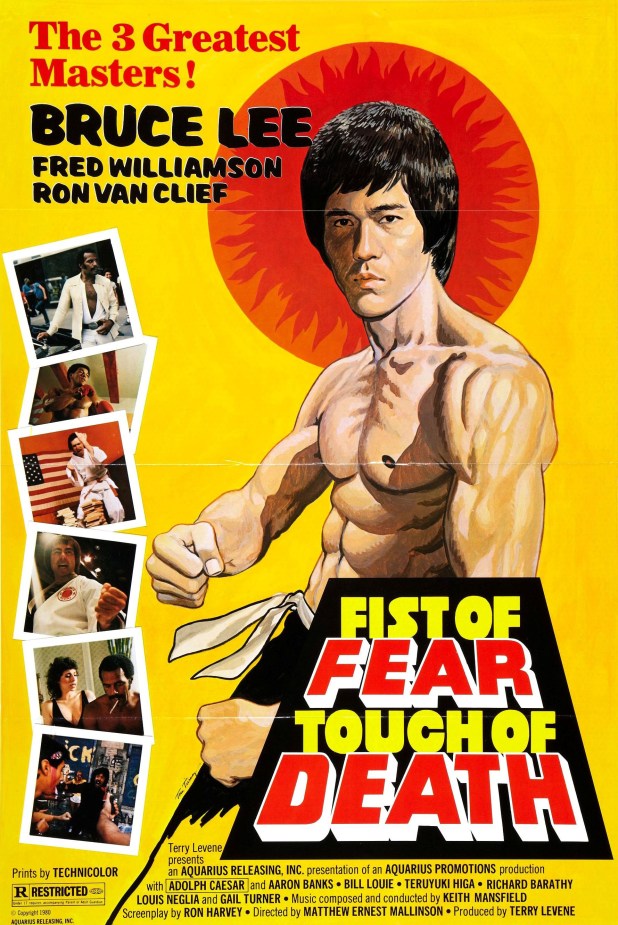
Junesploitation: Fist of Fear, Touch of Death (1980)

June 9: Junesploitation’s topic of the day — as suggested by F This Movie— is Fred Williamson! We’re excited to tackle a different genre every day, so check back and see what’s next.

Adolph Caesar — the man whose voice told us “A mind is a terrible thing to waste” and the trailer for Dawn of the Dead — is standing outside Madison Square Garden where a tournament has been set up to decide the new king of martial arts in the wake of the death of Bruce Lee. Never mind that Bruce died in 1973 and this is six years later.

This event is actually one of the Oriental World of Self Defense shows put on by Aaron Banks, who is all over this movie. Starting in 1966 as small shows on the east coast, the shows grew in popularity until they ran monthly at Madison Square Garden.

Banks also is given to saying some of the dumbest things ever in this movie, like how he knows that Bruce was killed by the “Touch of Death” which even got reported in Black Belt magazine years later, with them claiming that  Lee died from “a delayed reaction to a Dim Mak strike he received several weeks prior to his collapse.”

The quivering palm, as they also call it.

The same power that Count Dante claimed that he had.

Like the Five Point Palm Exploding Heart Technique.

Then they edit old Bruce Lee footage to make you think he agrees.

If you are offended by the truth being punched, kicked and chopped, you might not enjoy this movie. If you love the tabloid world of grindhouse pseudo-reality films, get on board.

After that, we see how hard it was for Fred Williamson to get to the show. He wakes up late — in bed with a gorgeous woman, as he should — before battling his way through traffic and people who think that he’s Harry Belafonte. That’s an easier way to MSG that Ron Van Clief has, as the star of The Black Dragon — and a man who fought Royce Gracie in a UFC match at the age of 51 — has to battle through four muggers.

Then it’s time for us to discover the story of Bruce Lee from this movie in a way that has never been told this way again. Using footage from a 1957 movie The Thunderstorm, we learn that a young Bruce was karate obsessed and wanted to live up to the samurai legacy of his great-grandfather. You may at this point wonder if the people who made this knew that samurai were from Japan.

Using footage from The Invincible Super Chan, we discover the life of that Chinese samurai before Bruce comes to America and becomes an actor despite the fact that he was in movies from his toddler years and was in 27 movies before The Big Boss in 1971. It ends with an actor named Bill Louie dressed up as Kato from the Green Hornet — Lee’s breakthrough in the U.S. — as he saves two women — one is Gail Turner, Patty from Don’t Go In the House — from being assaulted. Then he kills one of them with a shuriken.

Then we’re back in MSG and The Hammer tells us that the whole idea of a tournament to replace Bruce Lee is pretty stupid. Fred, you’re in the movie about it. You’re literally breaking kayfabe when you look at the camera and say, “Two guys fighting for Bruce Lee’s title that doesn’t even exist, I mean, that’s kind of absurd, isn’t it?”

Meanwhile, the karate match to determine the next martial arts superstar is really a boxing match. This is after a match where Bill Louie ripped out a man’s eyes and threw them to the crowd and suddenly in Italy, Lucio Fulci felt a twitch and wondered why he suddenly was interested in martial arts.

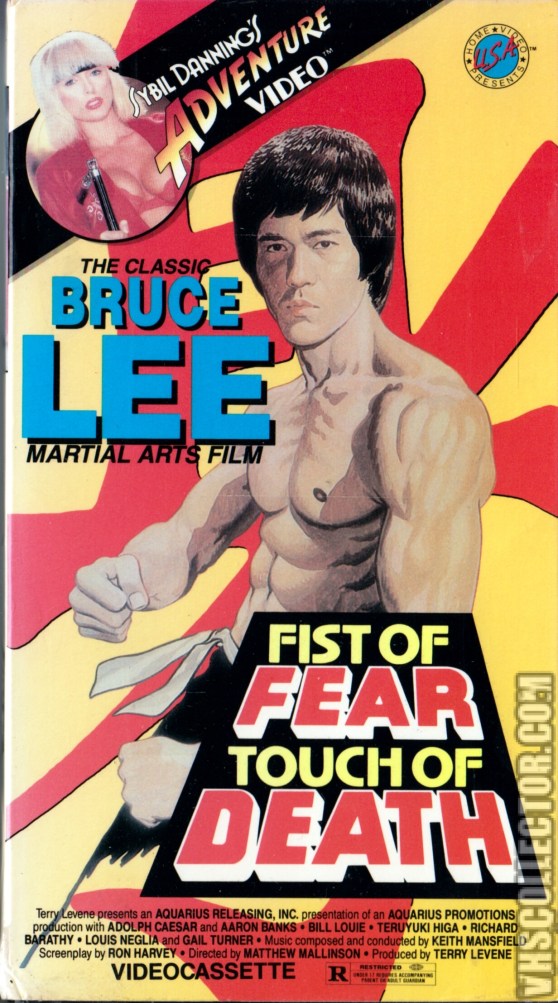
Also known as Dragon and the Cobra — perhaps to cash in on Williamson playing Black Cobra? —  this was released as a Sybil Danning’s Adventure Video title and man, that back title alone makes me lose consciousness. Maybe that’s Sybil using Dim Mak on me.

Matthew Mallinson only directed this film, but he also edited Tales of the Third DimensionUnmasked the IdolThe Order of the Black Idol and Caged Fury. It was written by Ron Harvey, who help turn Zombie Holocaust into Dr. Butcher M.D. There’s a connection between that movie and this film, as Terry Levene produced Fist of Fear Touch of Death and he was the man behind Aquarius Releasing, He also owned the rights to the movies torn apart for this. A movie this absolutely scummy could only come from Aquarius Releasing, I guess.

This is a movie with the sheer balls to end with this line describing Lee in a movie devoted to people dressed like him, the actor redubbed saying things that he never said and then going through his best Brucesploitation clones: “He was the prototype. Everything else is just an imitation.”

You can watch this on Tubi.

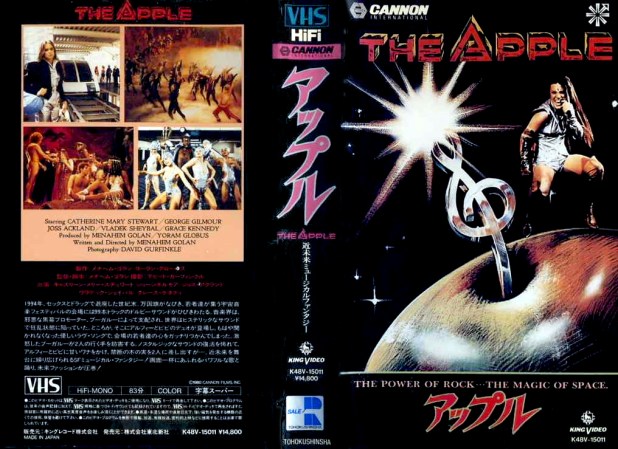
VIDEO ARCHIVES WEEK: The Apple (1980)

VIDEO ARCHIVES NOTES: This movie was discussed on the May 2, 2023 episode of the Video Archives podcast and can be found on their site here.

The first time I saw The Apple, I was in the throes of losing my job and starting a new company and feeling lost. This is the movie that not only made me feel like I could go on, but inspired me to start writing more about films and why they mattered to me.

You know how everyone thinks Cannon put out some completely crazy movies? If you haven’t seen The Apple (also known as Star Rock), you haven’t seen their full power. Directed by Menahem Golan, this slice of sheer madness is a movie I use to test the resolve of anyone brave enough to watch movies with me.

The genesis of this film begins in 1975. Israeli rock producer Coby Recht was signed to Barclay Records and began to feel distrustful of show business. He worked it into a story with his wife Iris Yotvat and brought it to the attention of his longtime friend Menahem. After hearing the demos for the songs, the producer/director instructed Recht to go to Los Angeles immediately. They were making the movie.

Yotvat said, “That was marvelous. That was just fantastic to think that it was going to be a movie all of the sudden. It was just amazing.”

It wasn’t going to stay that way.

Recht and Yotvat lived in a villa that Menahem provided, writing six screenplay drafts in three weeks. As those drafts progressed, the story became more comical and less Orwellian. Soon, things were getting corny, out of touch and out of date. If you’ve seen any of the movies that Golan was involved in, you can see how that might be true.

After auditioning thousands of hopefuls, Recht settled on Catherine Marie Stewart for the lead role of Bibi. Who is a singer. Not a dancer, like Stewart. He figured she could learn, but the producers decided to have her voice dubbed.

Tensions only got worse once filming began, as what started as a $4 million dollar movie turned into $10 million and then more. Editor Alain Jakubowicz claimed that Golan shot around a million feet of footage, with six cameras of coverage for every dance number, ending up with a four-hour rough cut.

The movie got way bigger than its scriptwriters intended. Shooting in West Berlin lasted forever, with a five-day shoot for the opening number, the song “Speed” being filmed at the Metropol nightclub (which held the world record for biggest indoor laser show) and some scenes were actually shot inside a gas chamber that had killed people during World War II.

Nigel Lythgoe, who later was a big part of American Idol, choreographed the film, saying that some days were “really, really depressing” and others “very, very stressful.” The cast and crew hated the script, but here they were, making the film.

Menahem and Recht’s battles soon got worse. The writer felt he should be in London mixing the songs (the sessions had more than 200 artists involved), but Menahem demanded that he show up at the shoot. The first day he was there, he witnessed the uncut version “Paradise Day” which featured fifteen dinosaurs and a tiger that broke free and escaped. This scene also contained elephants getting their trunks stuck in the set, actors collapsing while wearing a too hot brontosaurus costume and a set that made it near impossible for people to dance on and cameras to move around. Removing this scene makes the Biblical end of the movie come out of nowhere. That’s right. None of this is in the film.

Catherine Marie Stewart has stated that none of this rattled Menahem. In fact, he was convinced that The Apple was going to be embraced: “Menahem was very passionate about what he was doing. He had very lofty ideas about the project. He thought this was going to break him into the American film industry. It had, you know, all the elements that he thought were necessary at that time. It was the early eighties and there were a lot of musicals. And Menahem thought that was his ticket into the American film industry.”

So what happened?

The plot is basically Adam and Eve meets Faust. Bibi (Stewart) and Alphie (George Gilmour) are contestants in the 1994 Worldvision Song Festival. They’re talented but easily defeated by the machinations of Mr. Boogalow (Vladek Sheybal, Kronsteen in From Russian With Love) and BIM (Boogalow International Music).

The evil leader soon signs the duo but they soon fall victim to the darkness of show business. Bibi is caught up in the drugs and sex and glamour, while Alphie is beaten by cops and nearly dies to save her. He also lives with a woman who is either his mother or lover or landlady and no one ever explains it to us.

Eventually, they escape and live as hippies, having a child. Mr. Boogalow finds them and claims that Bibi owes him $10 million dollars, but soon God, known here as Mr. Topps (Joss Ackland, The House That Dripped BloodBill & Ted’s Bogus Journey) takes them away in his Rolls Royce and the Rapture occurs.

There are numerous scenes where people put stickers, called BIM Marks, all over their faces. Everyone has camel toe. And the movie is nearly 100% disco.

The movie premiered at the 1980 Montreal World Film Festival. To say it did not go well is an understatement.

Attendees hated the film so much that they launched giveaway records of the soundtrack at the screen. Menahem was so devastated that he almost jumped off his hotel balcony before being saved by his business partner, Yoram Globus. A similar scene happened at its second premiere at the Paramount Theater in Hollywood.

The director said, “It’s impossible that I’m so wrong about it. I cannot be that wrong about the movie. They just don’t understand what I was trying to do.”

I get it, Menahem. You were just trying to get people to understand the power of love and music and being hippies a full decade after any of that mattered. You didn’t care if anyone else got it. You had a vision. And we’re not talking about any of those critics today. No, we’re talking about you. We’re talking about The Apple.

This is a movie that wears its heart messily all over its spandex crotch. The songs are ridiculous. The dancing is, at times, poor. The story makes no sense at all. You’re lucky to sit and witness it. I can’t even tell you how many times I’ve watched it!

BONUS! You can hear Becca and me talk all about The Apple on our podcast.

VIDEO ARCHIVES WEEK: Little Darlings (1980)

VIDEO ARCHIVES NOTES: This movie was discussed on the January 3, 2023 episode of the Video Archives podcast and can be found on their site here.

One of the most popular posts on the site is about Ten movies that were never even released on DVD.

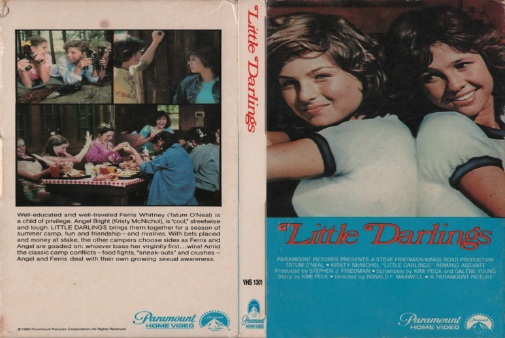
Little Darlings is one of those movies, one that has completely skipped disc home media. It’s been on TV hundreds of times and the original VHS release had all of the songs. That said, the second VHS release replaces John Lennon’s “Oh My Love,” Supertramp’s “School” and The Bellamy Brothers’ “Let Your Love Flow” with cover versions. Little Darlings sometimes shows up on iTunes and Amazon, but then goes down just as fast. Interestingly, Lionsgate announced that they would be releasing this on DVD and then canceled it.

Directed by Ronald F. Maxwell — who went from this movie, Kidco and The Parent Trap II to Gettysburg — and written by Kimi Peck and Dalene Young, this movie was an HBO favorite in my preteen days. It felt wrong, like I was too young to learn that girls wanted sex just as much as the boys.

The main girls in question are tough as nails poor girl Angel Bright (Kristy McNichol) — guess who my favorite is, of course) and romantic rich girl Ferris Whitney (Tatum O’Neal). Angel has her eyes on Randy (Matt Dillon), while Ferris wants older man Gary (Armand Assante). They make a bet to see who loses their virginity first over the summer.

As you can imagine from an 80s teen comedy, the girls have a lot to learn. Mostly, they learn from their differences, as well as what love and sex is all about. I always felt like this movie was more real, if you will, than the other teen sex comedies I was sneaking in at the time.

If you saw this on broadcast television, you saw a heavily edited version. All the sex is taken out and the bet is over which girl can make a guy fall in love with her. This was all done in editing and the director had nothing to do with it.

There was also a TV movie — written by Peck and Young, but directed by Joel Zwick — that had Pamela Adlon from Grease 2 as Angel and Tammy Lauren (Wishmaster) as Ferris.

VIDEO ARCHIVES WEEK: Dressed to Kill (1980)

VIDEO ARCHIVES NOTES: This movie was discussed on the October 11, 2022 episode of the Video Archives podcast and can be found on their site here.

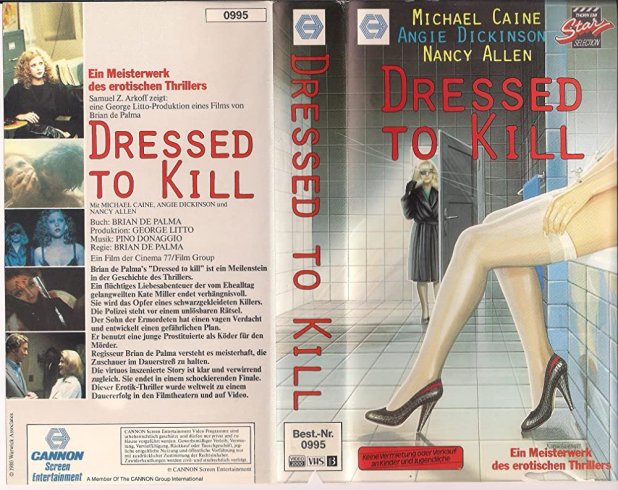
Let’s get this out of the way: Brian De Palma, much like Giallo, was heavily influenced by Hitchcock. In fact, when an interviewer asked Hitchcock if he saw the film as an homage, he replied, “You mean fromage.” That said — Hitchcock died three months before the film was released, so that story could be apocryphal (it’s been said that the famous director made this comment to either a reporter or John Landis).

What is true is the interview that De Palma did after Dressed to Kill (Rolling Stone, October 16, 1980).  The director claimed, “My style is very different from Hitchcock’s. I am dealing with surrealistic, erotic imagery. Hitchcock never got into that too much. Psycho is basically about a heist. A girl steals money for her boyfriend so they can get married. Dressed to Kill is about a woman’s secret erotic life. If anything, Dressed to Kill has more of a Buñuel feeling.”

However, I’d argue that this film has more in common with Giallo than anything the “Master of Suspense” directly created. That’s because—to agree with DePalma above—this film does not exist in our reality. Much like Argento’s The Bird with the Crystal Plumage, it exists in its dream reality, where the way we perceive time can shift and change based on the storyteller’s whims.

Yet what of DePalma being dismissive of Argento in interviews, claiming that while he saw the director as having talent, he’d only seen one of his films? Or should we believe his ex-muse/wife Nancy Allen, who claims that when she told DePalma that she was auditioning for Argento’s Inferno, he said, “Oh, he’s goooood.”

Contrast that with this very simple fact (and spoilers ahead, for those of you who worry about that sort of thing, but face facts, this movie is 37 years old): DePalma rips off one of Hitchcock’s best tricks from Psycho: he kills his main character off early in the film, forcing us to suddenly choose who we see as the new lead, placing the killer several steps ahead of not just our protagonists, but the audience itself.

And yet there are so many other giallo staples within this film: fashion is at the forefront, with a fetishistic devotion to gloves, dresses, spiked high heels, and lingerie being displayed and removed and lying in piles all over an apartment or doctor’s office. This is the kind of film that makes you stop and notice an outfit, such as what Kate Miller (Angie Dickinson, Big Bad Mama, TV’s Police Woman) wears to the Metropolitan Museum of Art or the blue coat that Liz Blake (Nancy Allen, CarrieStrange Invaders) wears to meet Dr. Robert Elliot (Michael Caine, how could we pick any movie other than Jaws 4: The Revenge).

Then there are the music cues from Pino Donaggio, who also scored Don’t Look Now, Fulci’s The Black Cat, and Argento’s Do You Like Hitchcock? The film not only looks the part, but it has intense sound, too.

We also have characters trying to prove their innocence, investigating ahead of the police. Or the son of the murder victim who wants to discover why his mother really died. Or her doctor, who has an insane patient named Bobbi who has stolen his straight razor and demands that she give him more time than the rest of her patients. All of them could be the killer. Giallo gives us no assurances that just because we see someone as the protagonist, there’s no reason they couldn’t also be the antagonist.

Let’s toss in a little moral ambiguity here, too. Kate is a woman who is bored with her life. She’s raised a son and seen her marriage lose any hope of sexual frisson. Liz is a prostitute — no slut shaming here, she’s a strong businesswoman more than anything  — but she’s also a practiced liar, as a scene shows her deftly manipulating several people via phone to get the money she needs to buy stock based off an insider tip she receives from a client. Dr. Elliot is obviously attracted to Kate but claims that his marriage prevents him from having sex with her. Yet it seems like he has secrets beyond informing the police of the threats of his obviously unbalanced patient, Bobbi. And then there’s Peter, Kate’s son, who has no issues using his surveillance equipment to spy on the police or Liz. If this character seems the most sympathetic, remember that he is the closest to the heart of DePalma, whose mother once asked him to follow and record his father to prove that he was cheating on her.

Finally, we have the color palette of Bava’s takes on giallo mixed with extreme zooms, split screens and attention to the eyes of our characters. The blood cannot be redder.

The film opens with Kate in the shower. While the producers asked Dickinson to claim that it’s her body, it’s really Victoria Johnson (Grizzly) as a body double. Her husband comes into the shower to make love to her, but she finds it robotic and not the passion she feels she deserves. Directly after, she tells Dr. Elliot that she’s frustrated and attempts to seduce him, but he rejects her.

More depressed than before the appointment started, she heads to the Metropolitan Museum of Art. Despite being surrounded by inspiration, such as the statue of Diana by Saint-Guadens, West Interior by Alex Katz and Reclining Nude by Tom Palmore (a tip of the hat to the amazing I Talk You Bored blog for an insightful take on the film and the research as to what each work of art is), she absentmindedly writes entries in her schedule. Planning the holiday meal gets her through the mindlessness of her life, flowing penmanship reminding her to “pick up turkey” instead of slowing down and appreciating not just the artwork around her but the people. There’s a young couple in lust if not love. There’s a young family. And then, a man with dark glasses catches her eye before brazenly sitting down next to her.

We are used to male characters chasing after female characters who aren’t defined by anything other than being sex objects. Instead, we have Kate pursuing the man, making the first, second, and even third moves until we realize that she was just following the man’s breadcrumbs.

Of note here is that color plays an essential role in the scene, as do expected manners. Kate is a wife and mother. She is who society expects to have virtue, and she is clad in all white, but her intentions are anything but pure. She finally has what she wants—the thrilling sex life that she may have only read about in trashy paperbacks.

This scene is a master class in pacing and movement. Imagine, if you will, the words on the page: Kate follows a mystery man through the museum. And yet, those are just eight words. We get nearly nine minutes of wordless pursuit, yet it never grows dull.

Finally, Kate follows the man out of the museum, but she loses him until she looks up and sees her glove dangled from a taxi. But blink, and you miss death in the background as Bobbi blurs past the camera.

When we catch up with Kate, it’s hours for her but seconds for us because this movie is a dream universe. She wakes up in bed with a stranger. There’s a gorgeous camera move here as DePalma moves the camera backward, an inverse of how a lesser director would have treated this scene. Instead of showing the two lovers tumbling through the apartment and removing clothes at every turn, we see Kate reassembling herself to move from her fantasy world to reality and toward her real world, which will soon become a nightmare. The camera slides slowly backward as she gets dressed, remembering via split-screen and sly smile how she doesn’t even remember where her panties have gone. She’s still wearing white, but under it all, she’s bare, her garments lost in a strange man’s house. A man whose name she doesn’t even know.

So now, as she emerges from realizing her sexual fantasies, she feels that she must make sense of it. She wants to write a note to say goodbye but doesn’t want to overthink it. Maybe she doesn’t even want it to happen again. And then she learns more about the man. It starts with his name and then becomes more than she ever wished to find out: his health report shows that he has multiple STDs.

Kate leaves the apartment and makes her way to the elevator, where she tries to avoid anyone’s eyes. In the background, we see an ominous red light, ala Bava. Bobbi—death and punishment for sin—is coming.

The death scene — I hold fast to my claim that The New York Ripper is close to this film but made by a director who doesn’t have the sense to cut away from violence — DePalma stages his version of the shower scene. But more than Psycho, we’ve come to identify with Kate. She’s a woman fast approaching middle age who wants a thrill, and yet, she’s punished by disease and death. She didn’t deserve this, and her eyes pleaded not to the killer as much as they did to the camera. And to us.

Here’s where we have to wonder aloud about DePalma’s long-discussed misogyny. This film was protested by women’s groups, who stated in this leaflet that “FROM THE INSIDIOUS COMBINATION OF VIOLENCE AND SEXUALITY IN ITS PROMOTIONAL MATERIAL TO SCENE AFTER SCENE OF WOMEN RAPED, KILLED, OR NEARLY KILLED, DRESSED TO KILL IS A MASTER WORK OF MISOGYNY.” Is DePalma guilty of the slasher film trope of “you fuck, and you die?” Maybe. Perhaps if she had remembered her marriage, at best, she wouldn’t be here. At worst, she wouldn’t have forgotten her ring in the stranger’s apartment and would have survived.

The way I see it, the death of Kate allows us to make the transition from past protagonist to new heroine, as the doors open post-murder to reveal a grisly scene to Liz and her john. The older man runs while Liz reaches out to Kate, their eyes meeting and fingers nearly touching. Kate’s white purity has been decimated by the razor slashes of Bobbi, the killer. As their transference is almost complete, Liz notices Bobbi in the mirror. Remember that we’re in a dream state? Time completely stops here, so we get an extreme zoom of both the mirror and Liz’s face. She escapes just in time, grasping the murder weapon and standing in the hallway, blood on her hands as a woman screams in the background, figuring her for the killer.

At this point, the film switches its protagonist. Unlike the films of David Lynch, like Mulholland Drive, this transference is not a changed version of the main character, but her exact opposite. Kate wore white, was older, and had a marriage and child, yet she slowly came to feel like an object to the men in her life. Liz wore black, was young and single, but was wise to the games of sex and power. She isn’t manipulated, turning the tables on men by using their needs for personal gain. Kate may have seen sexual fantasy as her greatest need, but for Liz, it’s just a means to an end.

Kate and Liz are as different as can be. For example, Kate goes to the museum to find inspiration. Liz only sees art as commerce, and she spends plenty of time explaining to Peter how much money she could make by acquiring a painting.

Dr. Elliott discovers a message from Bobbi on his answering machine (these machines and the narrative devices they enable must seem quaint and perhaps even anachronistic to today’s moviegoers). Once, Bobbi was his patient, but he refused to sign the paperwork for their (as the pronoun hasn’t been defined, so I’ll use they/their) sex change. In fact, Dr. Elliot has gone so far as to convince Bobbi’s new doctor that they are a danger to herself and others.

The police, however, have arrested Liz, and Detective Marino (Dennis Franz, TV’s Hill Street Blues and NYPD Blue) doesn’t believe a word she has to say. There’s a great moment here where Liz goes from wide-eyed ingenue to knowing cynic in the face of Marino’s misogynistic tone. Meanwhile, Kate’s son Peter (Keith Gordon, Jaws 2Christine) uses his listening devices in the station to learn more about his mother’s death than the police are willing to let on.

He begins tracking Liz, obsessively noting the times that she comes and goes from her apartment. He’s doing the same to Elliot’s office. But he’s not the only one tracking people. Bobbi has been stalking Liz, including a sequence where our heroine goes from being chased by a gang of black men to talking with an unbelieving police officer to Peter saving her from Bobbi with a spray of mace.

Because Peter has seen Bobbi also emerging from Dr. Elliott’s office, so he joins forces with Liz to discover who she is. That means that Liz uses her chief weapon — sex — to distract the doctor long enough to discover Bobbi’s real name and information. We learn that Liz’s mental sex game is as strong as her physical attributes here — she says that she must be good to be paid as well as she is. She knows precisely the fantasy Dr. Elliott wants to hear. But perhaps she also knows the fantasy that the mainly male slasher/giallo viewer wants: the woman submitting to the killer holding the knife.

Peter watches outside in the rain when a tall blonde pulls him away. Has he been taken by Bobbi? No — Liz returns to have sex with Dr. Elliott; he has been replaced by the killer. Bobbi lifts the razor as Liz helplessly crosses her arms in front of her face for protection. But at the last minute, the blonde who grabbed Peter outside is revealed to be a police officer, as she shoots Bobbi through the glass. That shattered pane also breaks Bobbi’s illusion and mask, revealing that Dr. Elliott is the man under the makeup and clothes.

The killer is arrested and goes into an insane asylum; Dr. Levy explains that while the Bobbi side of his personality wanted to be free, the Dr. Elliott side would not allow them to become a true woman. Therefore, whenever a woman broke through and aroused the male side of the persona, the female side would emerge and kill the offending female.

Inside the mental asylum, a buxom nurse attends to the male patients. The room is bathed in blue light, a cool lighting scheme that echoes Mario Bava’s films. The movie has moved from a dream version of reality to a pure dream sequence. It intrigues me that Carrie and Dressed to Kill both start with a shower scene and end with a dream threat to the surviving secondary heroine.

Within the asylum, Dr. Elliott overcomes the nurse and slowly, methodically, folds her clothing over her nude form. As he begins to either dress in her clothes — or worse, molest her dead body — the camera slowly moves upward as we realize that there is a gallery of other patients all watching and screaming. This scene reminds me of the gallery of residents watching a doctor perform surgery, yet inverted (have you caught this theme yet?) and perverted.

Bobbi emerges once again, and because she is dead, she cannot be stopped. Liz is bare and helpless in the shower, and nothing can protect her from being slashed and sliced and murdered — except that none of this is real. She awakens, screaming in bed, and Peter rushes in to protect her. And for the first time in the film (again, thanks to I Talk You Bored for noticing), she is wearing white.

Many find this a hard movie to stomach due to its misogyny. I’ll see you that and tell you it’s a misanthropic film that presents all of humanity, male and female, negatively. The men in this film are actually treated the way women usually are in films, as either silent sex objects (Warren Lockman), sexless enemies (Kate’s husband), shrill harpies that need to be defeated (Detective Marino) or sexless best friends who provide the hero with the tools they need to save the day (Peter). Seriously, in another film, one would think Peter would have a sexual interest in Liz, but despite her double entendres and come-ons, he remains more concerned with schedules and numbers and evidence.

Bobbi, the combination of male and female, comes across as a puritan punisher of females who benefit from sex, either emotionally or monetarily. Or perhaps they are just destroying the sex objects that they know that the male side of their brain will never allow them to become. Interestingly, Bobbi’s voice doesn’t come from Michael Caine but from De Palma regular William Finley (The Phantom of Phantom of the Paradise).

What else makes this a giallo? The police seem either unwilling to help at best or ineffectual at worst until they tie things up neatly at the end. And the conclusion, when the hand emerges not from the doorway — but the medicine cabinet — to slash Liz echoes the more fantastic films in the genre, such as SuspiriaAll the Colors of the Dark and Stagefright, where reality just ceases to exist. At the end of all three films, the heroine has confronted the fantastic and may never be the same.

In the first, Suzy narrowly escapes from hell on earth and emerges laughing in the rain. Is she happy that she survived? Has she achieved a break from reality? Is she breaking the fourth wall and laughing at how insane the film has become, pleased that the torture is finally over?

In the final scene of All the Colors of the Dark, the fantasy world is all a ruse, yet our heroine, Jane, is now trapped in the dream world. She can tell what will happen before it does; she knows that her husband has both slept with and killed her sister, but he has saved her from a fate worse than death. Yet all she can do is shout, “I’m scared of not being myself anymore. Help me!”

In Stagefright, the final girl walks out of the scene and out of reality as she defeats the killer. She has transcended being an actress to removing herself from fiction.

In all these films, the characters are not unchanged by their experiences with the dream world. In Dressed to Kill, the final dream sequence renders Liz truly frightened for the first time in the film. It’s the only time we see her as vulnerable — even when faced with an entire gang of criminals on the subway, she retains her edge. As Peter reaches out to comfort her — the only sexless male in the film and not just a sublimated one like Dr. Elliott — she recoils from his touch before giving in to his protective embrace.

In the same way, the film changes us. It has thrilled us, made us think, or even made us angry. True cinema—true art, really—makes us confront what we find most uncomfortable. Sure, we can deride and decry many of this film’s choices, but the fact that I’ve devoted days of writing and over three thousand words to it speaks to its potency. Thanks for reading if you’ve made it this far.
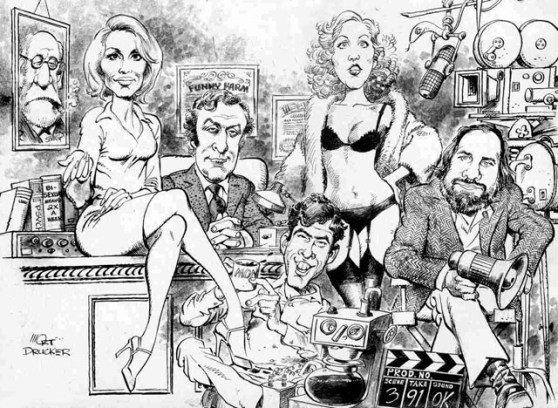
PS—I’ve often discussed—in person and on podcasts—that I experienced so many R-rated movies for the first time via Mad Magazine. I’m delighted I could find the Mort Drucker illustration for his skewering of Dressed to Kill.
VIDEO ARCHIVES WEEK: Hostages (1980)

VIDEO ARCHIVES NOTES: This movie was discussed on the December 6, 2022 episode of the Video Archives podcast and can be found on their site here.

Rene Cardona Jr. made some great movies — TintoreraThe Bermuda TriangleGuyana: Crime of the Century — and this film, which was also called Under Siege.

An organized crime gang attacks several casinos all at the same time, killing people left and right, and as they go their separate ways, the cops — hey there’s Hugo Stiglitz and Stuart Whitman as the law — get on their trail just in time for some of those criminals to break into a wealthy man’s house and take his entire family hostage.

This thing has car chases, bus chases, plenty of gun battles and even an airplane chase before it all ends. There’s also a bad guy that gets knocked off a bus and their guts go everywhere. This is like the United Nations of exploitation as its a coproduction between Mexico, Italy, Spain and Venezuela.

I also love that this has a class war inside it, as you may not feel all that bad for the rich family that gets taken by the mob. The way they waste wine and mistreats the hired help, your loyalties may not evebe all that divided.

You know why I really watched this movie? Marisa Mell has to land the airplane.

You can watch this on YouTube.

VIDEO ARCHIVES WEEK: Cafe Express (1980)

VIDEO ARCHIVES NOTES: This movie was discussed on the August 16, 2022 episode of the Video Archives podcast and can be found on their site here.

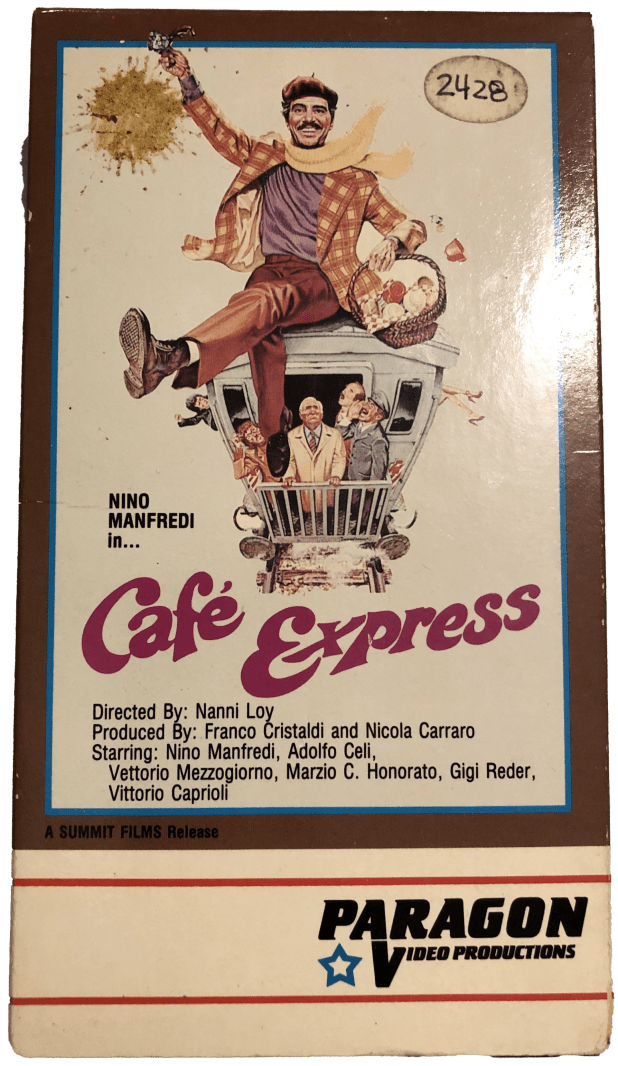
One of the things that I love about the 80s mom and pop video store explosion was that there was such a need for content — unmatched until the era of streaming — that everything, it seems, came out on video. Like this Italian tragicomedy, directed by Nanni Loy and written by Loy, Elvio Porta and Nino Manfredi.

Manfredi, who stars in this as Michele Abbagnano, was one of the most prominent Italian actors in the commedia all’italiana genre. He was an incredibly popular actor — described as one of the few truly complete actors in Italian cinema — and is still remembered decades after his death.

Michele makes a living on the night trains between Naples and Vallo della Lucania — I wonder if he ever ran into Macha Méril — selling coffee and cappuccino from the thermos and stolen sugar packets he keeps hidden from the railroad workers. He provides a service that the trains do not — becoming whoever each passenger wants him to be, whether that’s a concert piano player or soldier missing an arm from war or a freezing winter — such as waking them before their stops or keeping their secrets.

Why does he work so hard, keeping so many pleased, long into the night, every night? It’s all to keep his son Cazzillo (Giovanni Piscopo) alive. He suffers from a heart defect and he must remain in the hospital while Michele makes money for his surgery.

On this night, Michele is chased by three conductors — Giuseppe (Silvio Spaccesi), Nicola (Gerardo Scala) and Vigorito(Luigi Basagaluppi) — as he conducts his illegal business, but none more powerful than chief inspector Ramacci-Pisanelli (Adolfo Celi, still playing the villain, even if this isn’t a Eurospy or giallo). If they catch him, he’ll be arrested and he’ll lose the one chance to save his son, who unknown to him has left the hospital and is wandering the night trains himself.

Loy was inspired to do this movie after he worked on a hidden camera show, Viaggio in Seconda Classe, on the night trains. The movie uses that half awake setting to present a series of characters and stories that exist in their own midnight world.

I love that everyone — I admit, I discovered it in the same way — that found this movie on the Video Archives podcast is complaining about the video quality of the version of this movie on Amazon Prime. Perhaps these people — listening to a podcast about a video store’s library of films — never rented from an actual video store, where tracking issues would show up and you got whatever prints some smaller labels would get. Yes, we live in a world of pristine 4K UHD releases — yes, I have more than my share — but for someone who grew up in an era where we took what we could get, sometimes you need to appreciate the actual film more than the media that delivers it to you.

April Ghouls Drive-In Monster-Rama Primer: Maniac (1980)

April Ghouls Drive-In Monster-Rama is back at The Riverside Drive-In Theatre in Vandergrift, PA on April 28 and 29, 2022.

The features for Friday, April 28 are Silent Night, Deadly NightChopping MallSlumber Party Massacre 2 and Sorority House Massacre.

Saturday, April 29 has ManiacManiac CopThe Toolbox Murders and Silent Madness.

Admission is still only $15 per person each night (children 12 and under free with adult) and overnight camping is available (breakfast included) for an additional $15 per person. You can buy tickets at the show or use these links:

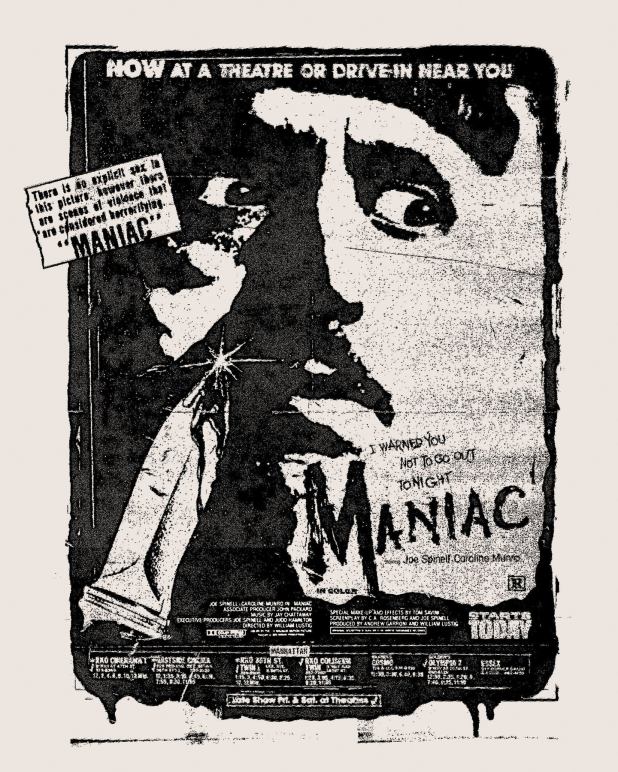
Maniac (1980): William Lustig took the profits from 1977’s Hot Honey to make this guerilla shot piece of sleazy, slimy slasher brilliance. The other money came from half of star Joe Spinell’s salary from Nighthawks and British producer Judd Hamilton came up with the rest of the money (around $200,000) with one condition: his then-wife Caroline Munro would be the heroine.

Originally, her role was to be played by Daria Nicolodi, but she was unable to go to New York for filming because she was still filming her scenes for Inferno in Italy. Supposedly, Susan Tyrrell and Jason Miller were both going to be in the movie too.

Just to give you an idea of how outlaw this movie was, for the scene where Frank Zito — the film’s titular maniac — kills Tom Savini in a scene inspired by the Son of Sam, Savini had a cast waiting filled with blood and leftover food. He blasted it with a live shotgun, threw it in the trunk of assistant Luke Walter’s car and they all drove off. No permits. No asking for permission. No prisoners.

PS — That body that gets its head blown off? Its name was Boris and it also shows up in Dawn of the Dead. After this movie, According to Savini, it was locked in the trunk of the car used in the shotgun scene and both were sunk in the East River.

Maniac is nothing without Spinell, whose rantings and maniacal look lend this movie its soul, as gross and covered with muck as it may be. He was abused by his prostitute mother and has turned his rage into a need to destroy women. He does so in all manner of ways, always ending up by scalping them and placing their hair on the mannequins he keeps in his squalid apartment.

This movie is everything horrible that everyone ever told you that horror movies were. It has no redeeming qualities or pretentions to art. It’s as rough as it gets, like Pieces if that movie wasn’t so funny.

Believe it or not — this is a positive review.

I’ve always held off from watching this movie but I’m glad I did. Spinell was nothing short of brilliant in everything I’ve ever seen him in and this one just keeps that trend going. I love him in CruisingNighthawks and the Rocky films.

The only strange thing to me is how Anna (Caroline Munro!) is willing to be in the same orbit as Zito. It’s a small point. After all, they did three movies together (Starcrash and The Last Horror Film are the other two).

Abigail Clayton, who plays a victim named Rita, was an adult actress who successfully moved into mainstream roles. Sharon Mitchell also shows up as a nurse, as does Carol Henry (Bloodsucking Freaks), Hyla Marrow (also in Lustig’s Vigilante), Rita Montone (who was in Bloodsucking Freaks and The Children) and Kelly Piper (Rawhead Rex and Vice Squad),.

Maniac was a green movie, as it recycled two big things from past films: you can spot the headless corpse of Betsy Palmer from Friday the 13th in Zito’s hovel and the helicopter shots were taken from Argento’s Inferno.

This was remade in 2012, but I still haven’t seen that yet. I kind of don’t want to ruin the power of this movie, a film so strange that it’s not even sure of the fate of its main character even as the film draws to a close.

SALEM HORROR FEST: The Fog (1981)

EDITOR’S NOTE: This was originally on the site on April 21, 2018The Fog also played this weekend at Salem HorrorFest. You can still get a weekend pass for weekend one or weekend two. Single tickets are also available. Here’s the program of what’s playing.

As the town of Antonio Bay is about to celebrate its 100th anniversary, the stroke of midnight brings chaos. It all starts with an old sailor (John Houseman, in a scene shot after the initial filming was done to add more of an overall scary feel) freaking some kids out with the tale of the Elizabeth Dane. At the same time, Father Malone (Hal Holbrook, adding some star power) drunkenly finds his grandfather’s diary from a century ago, when the founders of the town deliberately sank and plundered a ship full of lepers in order to build the town and the church.

Things get even crazier when a fog rolls in, bringing back the ghost of the Elizabeth Dane and its crew members, who kill the entire ship full of men. And then there’s Nick Castle (Tom Atkins!), who finds a young hitchhiker named Elizabeth Solley (Jamie Lee Curtis!). And oh yeah, DJ Stevie Wayne (Adrienne Barbeau!) is given a piece of the Elizabeth Dane by her son. The entire town flips out overnight, with windows breaking, car alarms going off and dogs barking at the sea.

It doesn’t get any better the next day. The driftwood that Stevie was given mysteriously changes words from DANE to 6 MUST DIE and leaks all over her equipment, making a tape player read part of “The Rime of the Ancient Mariner.”  Nick and Elizabeth seek out his missing fishermen friend and find the body of Nick Baxter with his eyes torn out. It gets worse. The corpse gets off a table and tries to attack her before carving out the number 3. And Kathy Williams (Jamie Lee’s mom Janet Leigh!) chooses to ignore the priest’s warnings that everyone is doomed while worrying about her husband being lost at sea.

Local weatherman Dan (Charles Cyphers from Halloween) has been flirting with Stevie the whole time, but he gets attacked by the fog in a scene that feels like it was lit by Mario Bava. And the fog rolls toward her and her home, where Nick saves her son at the last minute. Finally, the crew of the Elizabeth Dane comes into the town’s church, seeking the gold cross made from their stolen riches. Blake (special effects master Rob Bottin), their leader, grabs it as the crew disappears.

At the end, the priest wonders why they didn’t take him when they promised to kill six. He doesn’t wonder long as the fog rolls back in and he’s beheaded.

This was the first movie Carpenter would direct after Halloween and was inspired by The Trollenberg Terror, a movie where monsters hid in the cloud. It also had a real-life moment that spurred it forward — when promoting Assault on Precinct 13 with his then-girlfriend, producer Debra Hill, Carpenter noticed a strange fog move quickly past Stonehenge.

This was part one of Carpenter’s two-picture deal with AVCO-Embassy (Escape from New York would be the next movie) and was a low budget film with a $1 million dollar budget. That said, Carpenter and Dean Cundey shot it in the anamorphic 2.35:1 format, so it looks amazing. The scenery b-roll that plays as the fog grows closer looks otherworldly and anywhere but California. It’s gorgeous.

After viewing the rough cut, Carpenter felt that the film was terrible and didn’t work. He added the campfire scene at the beginning and several new scenes while reshooting others to be more horror and gore-filled. The budget only went up $100,000, but nearly one-third of the film was reshot.

The Fog is packed with references to other films. Charles Cyphers’ character is named for screenwriter Dan O’Bannon, who made Dark Star with Carpenter. Tom Atkins’ character, Nick Castle, is named for the actor who played Michael Myers in Halloween (he’d later co-write Escape from New York and direct The Last Starfighter), the babysitter’s name is taken from Richard Kobritz, the producer of Carpenter’s TV movie Someone’s Watching Me! And George “Buck” Flower plays Tommy Wallace, named for Carpenter’s art director and the future director of Halloween 3: Season of the Witch and the original It TV movie.

There’s more! John Houseman’s character is named after horror writer Arthur Machen, an Arkham Reef is mentioned as a shoutout to Lovecraft and the town’s coroner is Dr. Phibes. Bodega Bay, the setting of The Birds, is also mentioned.

There’s some great acting in here, particularly the speech Atkins gives about his father almost dying on the ocean. And Barbeau is great as she channels famous New York City DJ Alison Steele, The Nightbird. And Carpenter is in the film as the assistant Bennett who is named after a friend from USC, Bennett Tramer. If that name sounds familiar, Carpenter also used it for Laurie Strode’s potential love interest (and victim of mistaken identity in Halloween 2) Ben Tramer in Halloween. Even Stevie’s car is a reference to another film Carpenter loves: it’s a Volkswagen Thing (her last line, “Look for the fog,” echoes the last line in that movie’s “Watch the skies”).

At one point, John Carpenter mentioned creating an anthology series for TV that would have The Fog create supernatural events in other cities before connective ties to the original film would be shown. Sadly, this series never happened and in 2005, a remake was produced. The less said about that, the better.

APRIL MOVIE THON 2: Tanya’s Island (1980)

April 3: Rock and role — A film that stars a rock star.

D. D. Winters is, as you can tell, Vanity, the same singer who brought us “Nasty Girl” and starred in Action Jackson. But here, you can call her D. D. Winters.

And yes, that Alfred Sole who directed this is the same person who made perhaps the best American gialloAlice Sweet Alice.

She’s Tanya, a woman in love with Lobo (Richard Sargent), a violent artist. She dreams of a tropical island where she falls for Blue (Don McLeod in the suit made by Rick Baker, Rob Bottin and Steve Johnson, voiced by Donny Burns), who is a gorilla. Or maybe it’s really happening. Or maybe it’s all a dream. Or maybe it’s art.

McLeod was also T.C. Quist in The Howling and often shows up in strange roles, like the gorilla in Trading Places — I wonder if it was the same suit — as well as the oldest living Conehead in Coneheads, Zamora the ape in Mom, Can I Keep Her?, a gorilla — typecasting? — in the Sheena TV series and a statue in the recent Guardians of the Galaxy: Holiday Special. He was also the famous ape that destroyed luggage in the American Tourister commercial.

Writer Pierre Brousseau was the PR guy and music coordinator for Visiting Hours. He also wrote Après-ski, which also has Mariette Lévesque in it, who is in this.

Sole also made Pandemonium and then one more TV movie, Cheeseball Presents, before giving up on directing and being a production designer. I always loved seeing his name pop up on Disney Channel movies and in episodes of Veronica Mars and Castle. Sadly, he died a little over a year ago, but he left behind a few great movies and some at least strange ones like this.

There’s nothing else like Tanya’s Island.