Malabimba (1979)

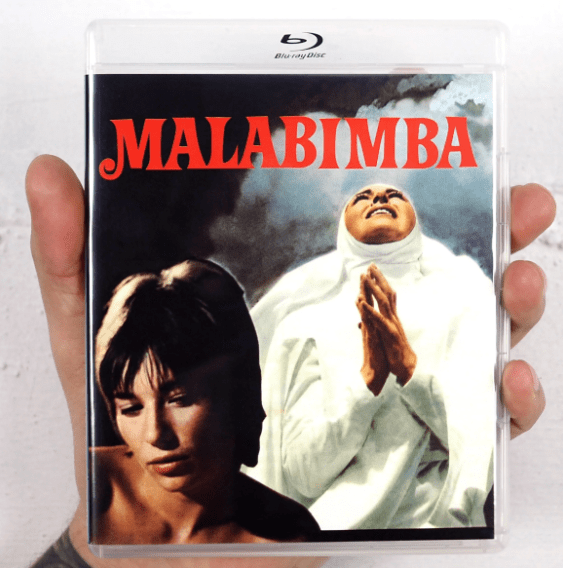
Andrea Bianchi, you lunatic. You made Burial Ground: The Nights of Terror and for some directors, that would be enough. But you also made Cry of a Prostitute and Strip Nude for Your Killer, so I know that you aren’t kidding. You really have your heart in the wrong place. And I love you for it.

A seance has been held to contact the spirit of a murdered woman but instead, it calls forth the spirit of Lucrezia who possesses the quiet and restrained Bimba (Katell Laennec), who is the daughter of master of the house Andrea (Enzo Fisichella) and the woman who has just been killed. The spirit within her wills the young girl to sexual mania and exposes the many affairs within her family. And oh yeah, going down on her invalid uncle Adolfo (Giuseppe Marrocu) and throwing furniture around like she’s Regan.

They hope that Sister Sofia (Mariangela Giordano, who Bianchi would abuse in Burial Ground; she was dating producer Gabriele Crisanti and also appeared in his movies Giallo In Venice and Patrick Still Lives, later saying, “I shouldn’t have done them. But I was in love with Gabriele, I would have done anything for him.”)  can tame the flames of passion that are inside Bimba. The opposite comes true, as women become lovers and decimate the entire house.

Malabimba was remade as the even more sexually themed — is that possible? — La bimba di Satana.

You can get this from Vinegar Syndrome’s dirty older brother Mélusine.

The House By the Edge of the Lake (1979)

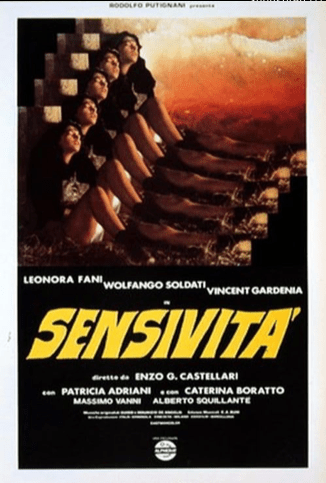
Enzo G. Castellari wasn’t too happy with how this movie was made or how it ended up.

According to Robert Curti’s Italian Gothic Horror Films, 1970-1979, he had become friends with a young writer named Jose Sanchez, who he was mentoring and had hired as an assistant. The script for this film was being produced in Spain and if they used Castellari’s name, there was a better chance the film would be made. However, in the credits, Jose Maria Nunes is the credited writer and Sanchez is an actor. But who are we to test the memory of the man who made Great White?

Castellari said, “Distributor Rodolfo Putignani and his associate Curti finished it their own way. But my name as director stayed.” They changed the name to Sensivita and it was released as Diabla in Spain. But they weren’t done. Seven years later, Alfonso Brescia was brought in to shoot new scenes, which Castellari saw years later at a horror convention. He laughed it off, saying, “After six minutes I walked out of the theater, horrified.” That new edit was released under the title Kyra – The Lady of the Lake.

Whatever the end result is, you know that I’m going to get excited by a movie that starts with a bloody hand that rises from a lake and drowns a woman, much less one about the occult secrets of a home being investigated by Lilian (Leonora Fani, Hotel Fear) who wanders the lake where her mother drowned and then finds a toad in her bed.

There’s also her sister — well, spoiler warning, sorry — Lilith (Patricia Adriani) who is a witch who lives in a cave that is constantly studying all of the symbols all over the area. She’s also connected to her sister in the way that all Italian exploitation films connect people. Yes, it’s sex. As Lillian makes love to a man, Lilith feels what she feels. They both pass out from a movie orgasm while the man drives off and immediately dies in a car crash. This is cinema.

Lilith can also speak to the woman inside the lake, who is named Kyra. There’s also a little blind girl who has more headless dolls than she knows what to do with, an axe murderer, Vincent Gardenia as a painter, a village filled with people in giant masks and Antonio Mayans shows up in a non-Jess Franco movie. I was beside myself with sheer happiness and that’s before the ending where the two leads have a clothes-destroying girl-on-girl fight to the death.

Why has this not yet been placed on blu ray and upgraded and presented with scholarly commentary tracks that pretend that it’s art instead of lurid Italian exploitation filmmaking — which is art, so this is a double positive and hey, physical media companies, I will totally record that commentary track — and man, I’ve been super down as of late and then a movie like this crosses my path and I have to think, “I live in a world where the cosmic coincidences or simulation that created my reality eventually led to thousands of years of evolution which eventually produced this, a film of staggering achievement that literally ones of people are obsessed over.”

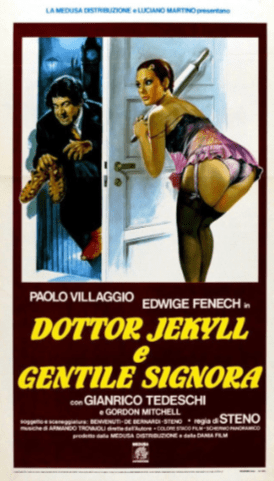
Dr. Jekyll Likes Them Hot (1979)

Dr. Jekyll (Paolo Villaggio) is the director of the powerful multinational food company PANTAC. He’s unleashed so many harmful products on the world, but when he drinks the serum of good, he becomes the much nicer Mr. Hyde.

Directed by noted Italian comedy director Steno, who wrote the script with Leonardo Benvenuti, Piero De Bernardi, Giovanni Manganelli, Franco Castellano and Giuseppe Moccia, this finds the doctor telling his servant Pretorius (Gordon Mitchell) that he secretly wants to be good. Well, it just so turns out that the real Dr. Jekyll lives in the basement and can turn him into a good version of himself, the one that his secretary Barbara (Edwige Fenech) falls for.

The commedia sexy all’italiana movies seem strange and maybe not funny to American audiences, but you know, Edwige Fenech is in it and isn’t that good enough? It’s good enough.

As for the film, well, it never really gets going past that major twist of having Hyde become good.

You can watch this on YouTube.

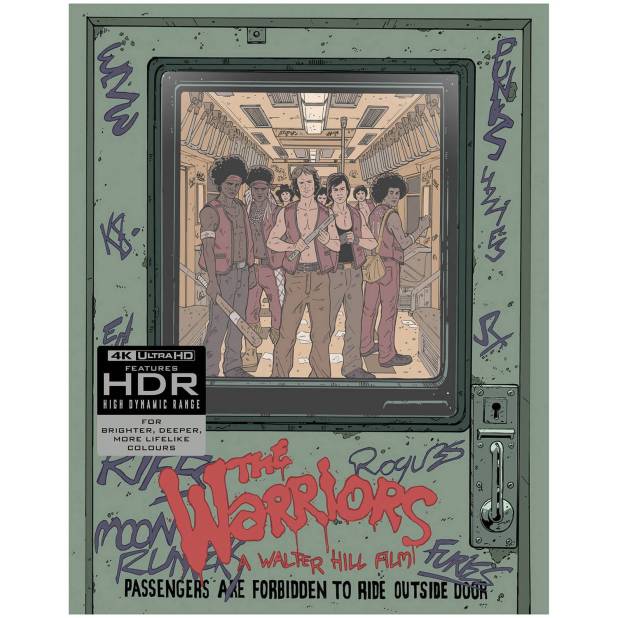
ARROW 4K UHD AND BLU RAY RELEASE: The Warriors (1979)

As a seven-year-old in a small Western Pennsylvania town, my only window into New York City was the noon news on WOR. And NYC seemed like the end of the world, like The New York Ripper and Maniac in real life.

The Warriors goes even further, never telling us that it takes place after the end of the world but it sure doesn’t have to.

This is a movie so violent that Paramount Pictures temporarily halted their advertising campaign and released theater owners from their obligation to show the film. In 1979, it frightened people. Today, it’s a beloved cult hit.

Cyrus (Roger Hill), leader of the Gramercy Riffs has asked each of the five hundred gangs of the city to send nine unarmed people to Van Cortlandt Park. He asks for a truce among the gangs. Since they outnumber the cops three to one, he believes that they can run the city.

The Warriors, a gang from Coney Island, include leader Cleon (Dorsey Wright), his second-in-command Swan (Michael Beck), Fox (Thomas G. Waites), graffiti artist Rembrandt (Marcelino Sánchez), Snow (Brian Tyler), Cowboy (Tom McKitterick), Cochise (David Harris), Ajax (James Remar) and Vermin (Terry Michos).

As they listen to Cyrus, a shot rings out. It’s fired by Luther (David Patrick Kelly), the insane leader of the Rogues. He blames the Warriors, as Vermin watches him fire that killing bullet, and the entire city of New York City is suddenly against the Warriors, who must fight the whole way back to Coney Island. Cleon is killed and the gang doesn’t even know how much trouble they’re in.

On the way home, they encounter the Turnbull ACs, the Orphans — their member Mercy (Deborah Van Valkenburgh) sees something in Swan and leaves — as well as the Baseball Furies, the Lizzies and the Punks. The gang is separated and some of them are arrested and injured, but everyone makes it back home, just in time to have to battle the Rogues, just as the Riffs arrive, having learned that the Warriors weren’t the ones to blame. Cue “In the City” and a walk down the beach.

Sounds simple, but it isn’t. The Warriors transcends gang movie formula of the past and presents the gangs not as a social problem but as a belief and protection system. The book that it’s based on — Sol Yurick’s The Warriors, which was based on Xenophon’s Anabasis — almost was an AIP movie in 1969. I can only imagine how incredible that would have been.

Director Walter Hill, who wrote this with David Shaber, wanted this movie to be a living and breathing comic book with splash pages introducing each scene. The budget wasn’t there for that but unlike so many comic book movies, this film understands the spare narrative of comics. The subway scene, where rich kids get on and sit across from Swan and Mercy and he makes her stop fixing her hair…that’s incredible. It says everything, that he has pride and finally accepts her and wants her to have it as well.

What I love most is the influence this movie has had on Italian films, from the DJ that voices the action in Zombie 3 to the near-sequels of Enzo Castellari, 1990: The Bronx Warriors and Escape the Bronx. Often, those movies are seen as post-apocalyptic films but in truth, they recapture the look and feel of The Warriors1990 was even shot in New York and has some of the same energy on an even smaller budget.

The Arrow Video 4K UHD and blu ray releases of The Warriors are overflowing with extras that will add to your love of this movie. You get exclusive new 4K remasters of both the Theatrical Cut and the 2005 Alternate Version of the film sourced from the original camera negative, supervised by Arrow Films and approved by director Walter Hill. In fact, the theatrical cut has never been in the correct aspect ratio before.

Inside limited edition packaging with a reversible sleeve featuring original and newly commissioned artwork by Laurie Greasley, you get a double-sided poster of that art, six postcard-sized reproduction ar tcards, gang logo stickers and a 100-page perfect-bound collector’s book containing new writing by film critic Dennis Cozzalio.

There’s new audio commentary for the theatrical cut by film critic Walter Chaw, author of A Walter Hill Film, a new interview with Hill in which he’s quite honest about the film and how much others contributed, a roundtable discussion between Josh Olson (A History of Violence), Lexi Alexander (Green Street) and Robert D. Kryzkowski (The Man Who Killed Hitler and then Bigfoot) discuss their love of The Warriors and the work of director Walter Hill, new interviews with editor Billy Weber and costume designer Bobbie Mannix — which is worth the price of this set, as she explains how she outfitted all of the gangs, as well as another feature that shows all of the actual work — as well as an appreciate of the score, that score isolated from sound design, a new look at the film locations and archival extras.

If you love film, you owe it to yourself to own this.

You can get the 4K UHD and blu ray from MVD.

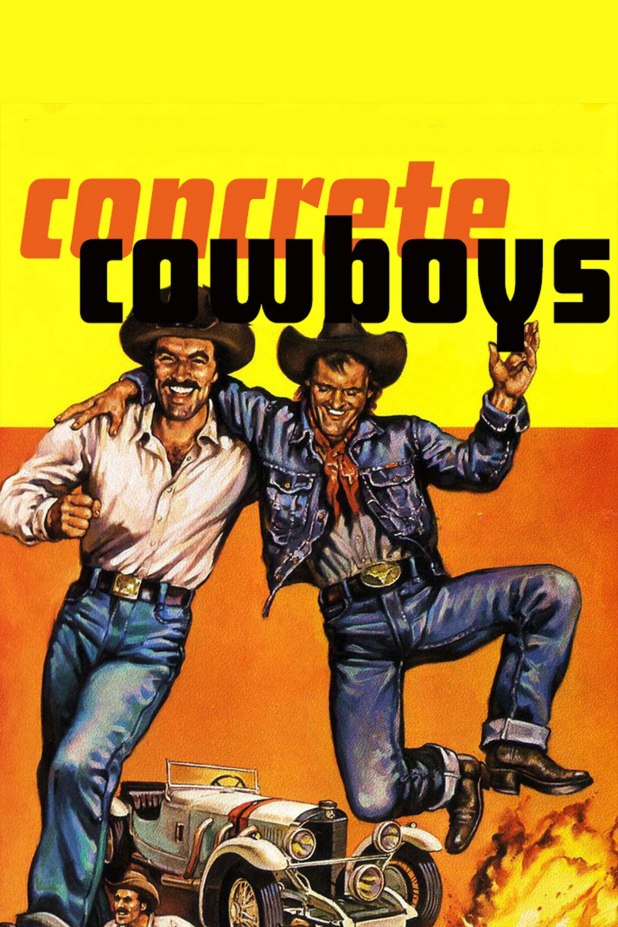
MILL CREEK THE SWINGIN’ SEVENTIES: Concrete Cowboys (1979)

This movie is very much something I would have watched as a kid on TV.

It was a pilot for a TV series that was actually on the air from February 7 to March 21, 1981 for seven episodes, with Jerry Reed playing J.D. Reed and Geoffrey Scott taking over Tom Selleck’s role as Will Eubanks. The movie itself was released as a film in other countries with titles such as Highway Action, Nashville Detective and Ramblin’ Man. 

Reed and Eubanks are two friends who constantly get on each one another’s nerves in the best of ways. Reed is devoted to gambling while Eubanks always has a book in hand. They leave a rigged card game by destroying the gas station that it was in and hop a train for Hollywood but end up in Nashville. There, they stay in the home of their friend Lonnie (Randy Powell) and get caught up in a scheme that involves Kate (Morgan Fairchild) looking for her lost singer sister Carla (also Fairchild), which brings them into the orbit of Ray Stevens, Roy Acuff and Barbara Mandrell, all playing themselves. There’s also famous country star Woody Stone (Claude Akins), a sheriff played by Elvis’ bodyguard Red West, a madame played by Lucille Benson (Mrs. Elrod, who is a major star here) and it’s all written by Hammer writer Jimmy Sangster. Huh? How is this possible? What if I told you that Grace Zabriskie (Sarah Palmer, of course) is also in this?

It’s directed by Burt Kennedy (Support Your Local Sheriff!All the Kind Strangers, Suburban Commando) who was also a noted writer of Westerns and a fencing stunt double. He was in vaudeville at the age of four and received the Silver Star, Bronze Star,and Purple Heart with oak leaf cluster for his bravery in World War II.

I love that each chapter has paintings by Jaroslav Gebr. It gives the show a Western feel while showcasing his great art. Gebr also worked on The StingBuck Rogers In the 25th CenturyBattlestar Galactica, XanaduThe Blues Brothers and so many more TV shows. You can learn more about his art at the official website.

Don’t have the box set? You can watch this on Tubi.

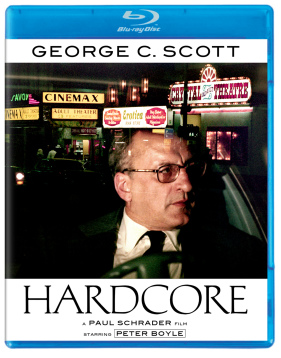
KINO LORBER BLU RAY RELEASE: Hardcore (1979)

I’ve been thinking about Hardcore since I watched it.

The weird thing is, I can honestly say that I disliked nearly everyone in this movie except for one character yet I am still a fan of this movie.

Director and writer Paul Schrader partly based the story on his own experience growing up in the Calvinist church in Grand Rapids, Michigan, where he studied theology at Calvin College. Calvinism is a Protestant faith that follows the theological tradition and forms of Christian practice set down by John Calvin and is steadfast in the belief of the sovereignty of God and the authority of the Bible.

As explained in the movie — and with help from Learn Religions — Calvin based his theology on the Bible alone. The five points that the church lives by is summarized by the world TULIP, which means T- Total Depravity, U – Unconditional Election, L – Limited Atonement, I – Irresistible Grace and P – Persistence of the Saints. In short, sin pervades all areas of life and human existence. People cannot independently choose God or save themselves. Only God can intervene and do all the work. God also chooses who will be saved. Those are the Elect, who God has selected not on merit, but out of his kindness and sovereign will. It also means that election for salvation is not based on God’s foreknowledge of who would come to faith in the future. Since some are chosen for salvation, others are not. Those not chosen are the damned to Hell for all eternity. And when Jesus died, he didn’t die for all of mankind but just foe the Elect (there are four point Calvinism that believes that Jesus did die for all men). Finally, Calvinism teaches that the Elect cannot lose their salvation.

You have to understand that or at least get your head around it to understand some of this.

Back to Pauil Schrader.

After writing Taxi Driver, he worked with executive producer John Milius at Warner Bros. until Warren Beatty came on. He clashed with Schrader, as he wanted the story to change so that he was searching for his girlfriend and not a daughter. Warren Beatty couldn’t be old.

George C. Scott could be.

He played Jake Van Dorn, a businessman from Grand Rapids, Michigan — you can spot Schrader’s childhood school and parents in these scenes — who is a Calvinist. When his daughter Kristen (lah Davis) goes missing at Knott’s Berry Farm, he gets help from Andy Mast (Peter Boyle), a private detective in Los Angeles, to find her after she’s been missing for several weeks.

Five weeks later, Mast brings him some news. Calling him Pilgrim, he has rented an adult theater to show Jake a loop of his daughter in an adult film called Slave of Love. Now calling herself Joanne, it appears that Jake has lost his little girl.

But he won’t let her go easily.

Following Mast to Los Angeles and throwing him out of the home he’s been paying for, Jake pretends that he’s a porn producer, beating everyone he finds nearly to death. Everyone except Niki (Season Hubley), a sex worker and adult star who promises to help him. Their relationship is strange. She listens intently while he discusses religion but compares it to being sold on bestiality by a client. Yet it’s intriguing that she’s the first person he can open up to about his wife leaving and she feels safe around a man that doesn’t see her just for sex. She says that he doesn’t see any need for sex so it’s not a big deal while she can have sex with anyone and it’s not a big deal, so they have something in common.

He says they have nothing in common.

By the end of the movie, Jake has gone deep into the underworld of pornography which, predictably, has snuff movies and has his daughter dating the creator of those movies. There’s a gun battle and Jake finds his daughter who tells her she did everything on her own and no one forced her to do anything. She refuses to go home with him and he breaks down, which changes her mind. I found the end of this movie really artificial in that she gives in so easily. No one has learned anything, as Jake had to basically beat Niki to get what he wanted from her. But he’s saved. She won’t ever be.

I was mad, at the end, because she felt like he would be the person to take her away from all this. There’s a look between them and she’s smarter than anyone else in the film. She realizes she’s been lied to again, lied to by religion that she almost believed in and she walks away. Jake wonders if there was some way he could pay her. But if he got his daughter back, he lost the faith of perhaps the one honest person in this entire film.

Also, her Rorer 714 shirt is incredible.

The story originally had Scott’s character discover that his daughter has been killed in a totally unrelated car crash. He feels like this choice messed up the ending.

This is one of those movies that exposes porn and yet has no idea what the industry is. Marilyn Chambers auditioned and the casting director said she was too wholesome to be cast as a porn queen. 99 44/100% pure, right? They were looking for something fake, not the reality of what existed.

Speaking of real life, George C. Scott and Schrader did not get along, so much that at one point Scott refused to come out of his trailer and threatened to quit the film. Scott told Schrader that he was a good writer, a terrible director and “this movie is a piece of shit.” Supposedly, he only agreed to come out after forcing Schrader to promise that he would never direct again.

The first meeting between the director and his star should have let him know what he was in for. Scott never showed up but he was found in a bar. Schrader said, “George came out, and he was just wearing his undershorts, and he saw me in the distance and says “Where’s that cocksucker who thinks he can direct?” At which point I said “That would be me George.””

The Kino Lorber blu ray release of this movie has two commentaries, one by director and writer Paul Schrader and the other by film historians Eddy Friedfeld, Lee Pfeiffer and Paul Scrabo. You can get it from Kino Lorber.
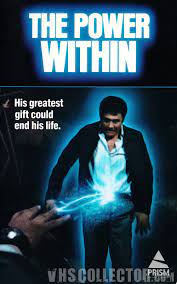
THE IMPORTANT CINEMA CLUB’S SUPER SCARY MOVIE CHALLENGE DAY 23: The Power Within (1979)

October 23: A Horror Film That Features Someone That Has Lightning Powers

Directed by John Llewellyn Moxey and written by William Clark and Edward J. Lakso, The Power Within is about Chris Darrow (Art Hindle), a pilot who is struck by lightning and gains the ability to shoot it out of his fingers. In order to get a handle on his powers, he turns to his father, General Tom Darrow (Edward Binns) and learns that he has to recharge those powers when he uses them or he’ll die.

This was a pilot for a series that never happened. Back then, comic book movies just took ideas from comics and made them their own. This is very Green Lantern mixed with the opening of The Hulk TV origin. I’m sure if I had seen this as a kid, I’d still be drawing scenes from this movie.

You can watch this on YouTube.

UNSUNG HORRORS HORROR GIVES BACK 2023: The Gang That Sold America (1979)

Each October, the Unsung Horrors podcast does a month of themed movies. This year they will once again be setting up a fundraiser to benefit Best Friends, which is working to save the lives of cats and dogs all across America, giving pets second chances and happy homes.

Today’s theme: A movie with a Goblin soundtrack

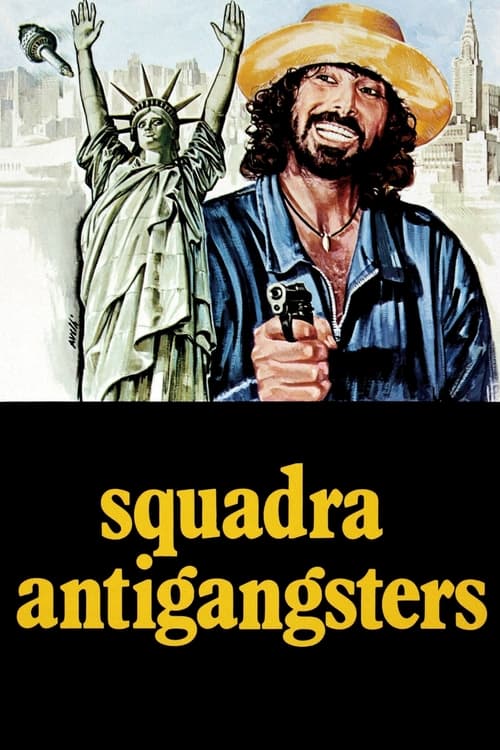
From 1976 to 1984, Tomas Milan starred in eleven movies in the Squadra antiscippo series. Starting with The Cop in Blue Jeans, these films include Hit SquadSquadra antitruffaLittle ItalyAssassino sul TevereDelitto a Porta Romana, Crime at the Chinese Restaurant, Delitto sull’autostrada, Crime in Formula One, Cop in Drag and this movie.

In each of these movies, Milan plays Nico “Il Pirata” Giraldi, progressively goes from a tough Italian movie cop to a cop with a Chiense twin, one that becomes a race car driver and finally investigating Rome’s gay community to investigate a murder.

Producewr Galliano Juso got the idea when he and director Bruno Corbucci were filming Il trafficone. Juso had his purse stolen by thieves on Kawasaki motorcycles, which make him wondered what would happen if the cops had an anti-snatch and grab team.

The fifth film in the series, The Gang Who Sold America has Giraldi now an Interpol agent in America. He meets the mob family from the last movie — Little Italy — including Salvatore (Enzo Cannavale) with his family and Giarra (Margherita Fumero, whose character is so close to Edith Prickley in both voice and dress that i wonder what came first; SCTV started airing in 1976, so it could go both ways), who is in love with him. Eli Walach, who played Don Girolamo Giarra, did not come back for this.

Giraldi puts two mob bosses against each other but this movie is mostly about broad comedy and action scenes, including air boats and plenty of fistfights. The beginning may be the best part, as Milan is dressed in a military jacket with a straw hat and a scarf, carrying a boombox and dancing to disco down 42nd Street. There’s also a great scene where Indian singer Asha Puthli sings “The Whip” and fights criminals with Milan. Her name is Fiona Strike in this movie which is such a perfect Italian movie name.

Salvatore Baccaro, who is always an ogre in films. But the real reason I watched this?

The Goblin soundtrack. It’s great, embracing full disco. Boomkat said, “The film is set in the United States, and the soundtrack sounds very American, starting from the first two songs, interpreted by the warm voice of Asha Puthli, an Indian singer who is also an actress in this movie, “The Whip” and “The Sound of Money” seem to belong to one of the many Stax productions of those years, only that they’re played by… Goblin! The Roman band, whose line-up consisted of Claudio Simonetti (keyboards), Agostino Marangolo (drums), Fabio Pignatelli (bass) and Carlo Pennisi (guitar) was in those years nothing less than hyper-productive, but this did not prevent them from producing high-quality works. In fact, the album songs go through various genres (disco music, country, funky, soul, samba) with little concessions to some typical “Goblinian” moments.”

You can get it from Mondo.


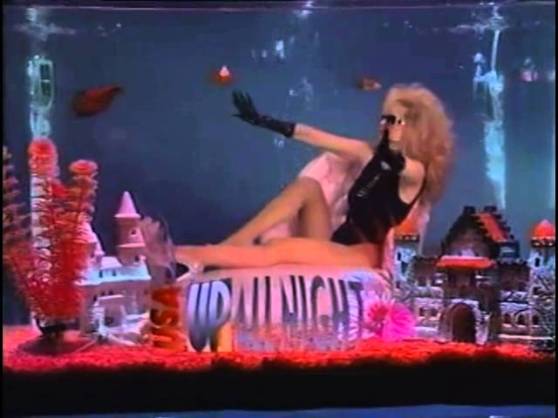
USA UP ALL NIGHT MONTH: Cheerleaders Wild Weekend (1979)

EDITOR’S NOTE: Cheerleader’s Wild Weekend was on USA Up All Night on August 1, 1992; January 8 and August 28, 1993 and February 25, 1994.

ABOUT THE AUTHOR: Mike Justice is the only illegitimate offspring born of a short-lived union between a frustrated English horror movie star and an American film festival groupie. His legacy, therefore, is to obsessively pursue a litany of ill-defined ambitions in the industry (editor, director, actor) while also falling hard and fast for anything with an accent and/or mutton chops. Fortunately, he’s pretty good at distilling his various fizzles, faux pas, and let-downs into uproariously absurd, snarky tales filled with wit, wisdom, and (sometimes) redemption. You can follow Mike on Facebook

Something traumatic happened the summer between seventh and eighth grade: the USA Network canceled Commander USA’s Groovie Movies, my favorite Saturday afternoon monster-movie showcase. There was to be no more Video Vault, no more wacky characters, no more Commander USA, himself—soaring superhero and retired Legion of Decency officer—to introduce me to enduring classics like Mausoleum and House of Psychotic Women. He didn’t even get a proper sendoff—he just walked out the door one day and never came back—like Richie Cunningham’s older brother, or my dad that time he left to buy stamps. It took weeks of crestfallen Saturdays to ultimately accept that I’d been ghosted by the Commander.

Naturally, I turned to delinquency; in this case, that meant immediately taking up with a rebound show: USA’s newly launched, more “mature” late-night B-movie series, USA Up All Night. I’d been collecting Elvira’s Thriller Video cassettes for years, and I was already an avid viewer of Saturday Nightmares—so staying up late past The Hitchhiker and Alfred Hitchcock Presents to watch racy comedians host heavily censored sex comedies felt like the next natural step to adulthood. And what an adulthood it promised to be.

USA Up All Night hit at precisely the right age when I was too young to drive, but too jaded for the TGIF lineup, and just beginning to fantasize about what being an independent adult with my own apartment, car, job, and (gasp) love life would be like. If Commander USA had been a weekend Fred Rogers with a fondness for Filipino creature features, then Rhonda Shear, Gilbert Gottfried and company were a cocktail party at the grown-ups table with foot-fetish gags and Vice Academy playing in the background. Every weekend, that VERY 90’s show opener beamed me from my lonely house in the sticks to somewhere infinitely cooler. It all felt so urban (and urbane), like the opening credits to Friday the 13th Part VIII: Jason Takes Manhattan, or that Michelob ad with Steve Winwood. I was sure my upcoming adult life was to be a hazy blur of neon, sax solos, palm trees, and guitar riffs. In fact, this whole USA Network era had me thinking I’d most likely grow up to live in a black lacquer-furnished condo with a skyline view, work some ill-defined but highly successful job in some posh office where I’d sport pastel neckties and flirt with my boss, and in my free time I’d call a LOT of chat lines and hang out in night clubs with Sally Kirkland or grocery stores with Linnea Quigley. (The fact that my life really did turn out something like this might possibly be USA’s fault, but I digress).

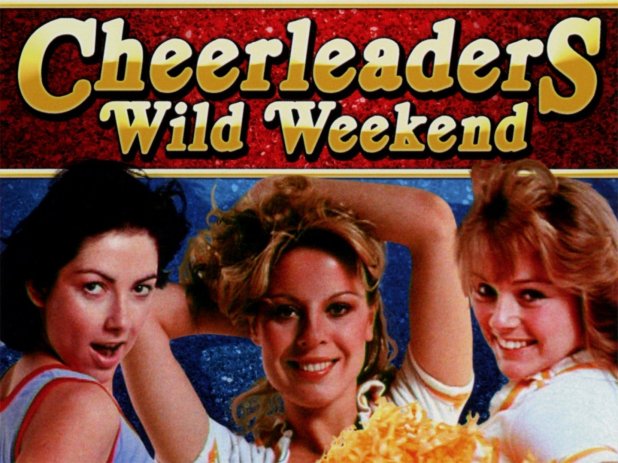
I devoured the good (Young Frankenstein, Eating Raoul, Fast Times at Ridgemont High), the not-so-good (Hot Chili, Meatballs 3, Hot Times at Montclair High) and everything in between (H.O.T.S., Summer School Teachers, Troma, Cannon, Chuck Vincent, Andy Sidaris, David DeCocteau, New World). One of my favorites was Cheerleaders Wild Weekend (1979) AKA The Great American Girl Robbery. It opens with a Vestron Video logo followed by the Dimension Pictures emblem, so you know it’s class. It was also the producing debut of Chuck Russell (yes, THE Chuck Russell) working with Bill Osco (that dude who was married to Jackie Kong and made Flesh Gordon and Alice in Wonderland: an X-Rated Musical Fantasy). Along for the ride are Osco alums Kristine DeBell (Meatballs) and Jason Williams (Flesh Gordon, himself). Leon Isaac Kennedy (Penitentiary), the exquisite Marilyn Joi (The Kentucky Fried Movie), and The Hills Have Eyes’ own Robert Houston round out the cast—along with a bunch of other actresses any fan of 1970’s T&A will recognize. Speaking of The Hills Have Eyes the movie also boasts a cute actress named Janet Blythe for whom this was her sole credit (subsequently run out of Hollywood by Janus Blythe, no doubt).

The plot is simple: three rival squads of catty, twenty-something “high school” cheerleaders headed for the California state tournament are abducted off a school bus by a small coalition of ex-football players and one random lesbian calling themselves the National American Army of Freedom. The girls are corralled into a cabin in the woods where they’re forced to sit on pillows and bicker amongst themselves. Eventually, the kidnappers get too rapey, so the cheerleaders put their differences aside to mount a daring escape using quaaludes, their panties, and a cigarette lighter. Meanwhile, Flesh Gordon and Bobby from The Hills Have Eyes are off collecting a ransom for the girls in a fun sequence that’s a lot more entertaining and expertly directed than it has any right to be.

Cheerleaders Wild Weekend is a little darker than advertised (not to the extent that, say, Malibu High was, but it does feel like the most Crown International-y non-Crown International film ever). Sold as a hot-and-heavy summertime make-out comedy, it’s really more of a kidnapping adventure/heist thriller with bouts of slapstick, peek-a-boo nudity, and girl fights shoehorned in. As far as summer feels go, it’s more The Final Terror than Little Darlings. Only in the 1970s would producers think it’s cute to slap together a sexy farce based loosely on the Chowchilla School Bus Kidnapping where teenage hostages stage a striptease contest to kill time (it WAS the decade when Benji the dog’s girlfriend got kicked, after all).

USA UP ALL NIGHT MONTH: Thirst (1979)

EDITOR’S NOTE: Thirst aired on USA Up All Night on March 17, 1990 and March 30 and October 25, 1991.

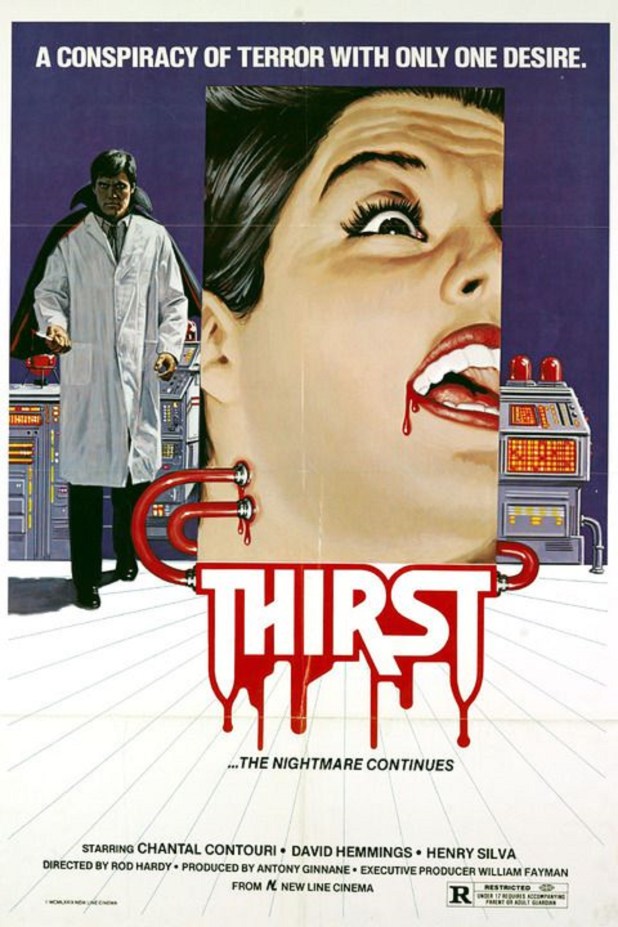
What happens when you mix Soylent Green with Elizabeth Bathory and throw in the end of the world pre-millennial tension and madness that was 1979 in one movie? Then you get this Australian freakout, which I really want more film lovers to discover.

Director Rod Hardy had the literal balls to remake High Noon in 2000. He also made the Hasselhoff-starring Nick Fury movie, which is a really crazy directorial doubleshot, huh?

The Brotherhood has taken Kate Davis (Chantal Contouri) captive, as they feel that she could be a direct descendant of Elizabeth Bathory. They use fake silver fangs and brainwashing with hallucinogenic drugs — Henry Silva, being evil as always — to bring her into their fold, a practice that Dr. Fraser (David Hemmings, who made some awesome movies in Australia at this time, including the also-somewhat unknown Harlequin) does not agree with.

When she leaves, she thinks it was all a dream until she wakes up draining another woman of her blood. She’s trapped in a nightmare. I mean, did you see the tagline on the poster? “This woman is doomed to feel the awful, ancient hunger of the damned!”

There’s a crazy scene that double steals from Hitchcock, putting the shower scene from Psycho up against Marnie’s fear of the color red to create a blood shower that featured prominently in the film’s ads.

I love that this movie juxtaposes the clean metallic future that we in 1979 thought was coming, along with the dehumanization of mankind as cattle for the elite that couldn’t possibly ever come true. Right?

You can watch this on Tubi.