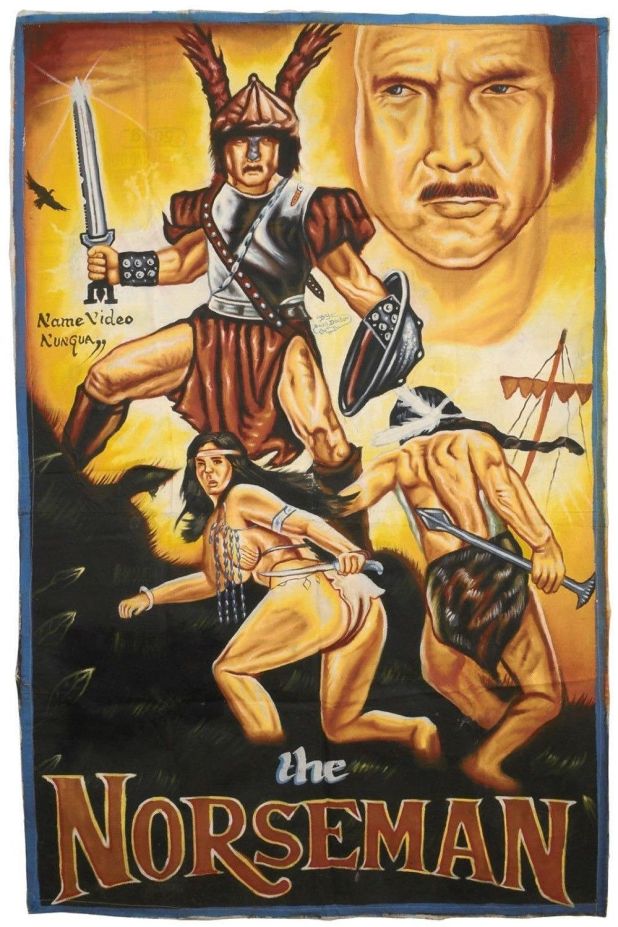
Look, I can hear you laughing. An 11th-century Viking prince — played by Lee Majors of all people — sets sails for North America to find his missing father, who has been captured by Native Americans. Yes, it’s ridiculous. But it’s also directed by Charles B. Pierce, who brought us The Town That Dreaded Sundown, The Bootleggers, and The Legend of Boggy Creek.
Along with Majors, the film also boasts a packed cast: Cornel Wilde (Gargoyles), Mel Ferrer, Jack Elam, Christopher Connelly (Hot Dog from 1990: The Bronx Warriors), NFL Hall of Famer Deacon Jones, former Tarzan Denny Miller and Kathleen Freeman (Sister Mary Stigmata from The Blues Brothers). Well, in my world it’s a star-studded cast!
It also features Jimmy Clem as Olif. In addition to being in nearly every one of Pierce’s films, he was also famous for owning and breeding one of the most respected and revered Brahman cattle herds in the world.
The major highlight of this film is the wacky mask that Lee Majors wears, along with his little mustache. It’s really quite breathtaking. Really, this movie is beyond ridiculous and it’s kind of shocking that it ever made it to the screen. That doesn’t mean that I didn’t love it and won’t try to put it on if you ever visit my house, dear reader. It’s the perfect movie to be enjoyed alongside all manner of mind-altering substances!
Shout! Factory released this movie on a double disk with The Barbarians. You can get it right here.
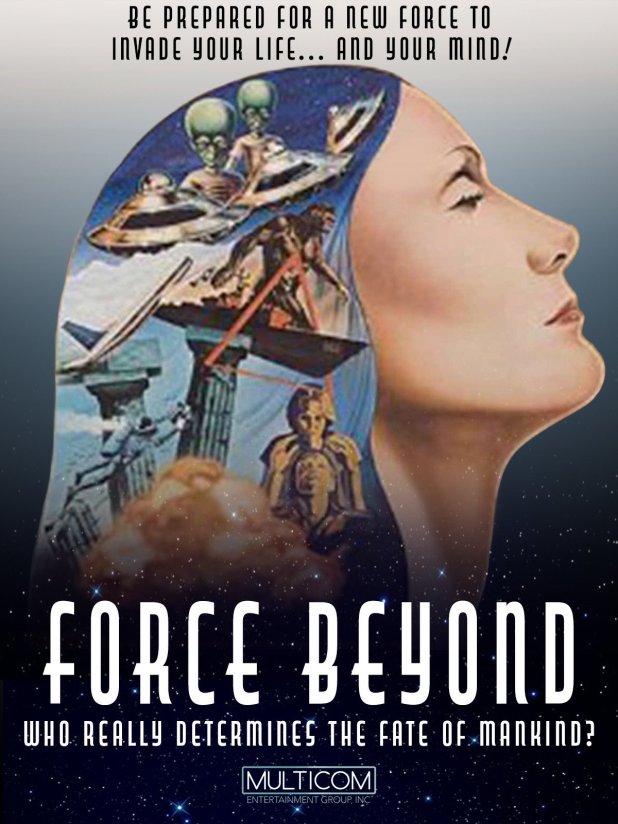
The Weekly World News was launched in 1979 by The National Enquirer publisher Generoso Pope, Jr. as a means to keep using the black-and-white press that when that higher profile tabloid went to full color. Unlike any of the other rags you’d get at the supermarket, The Weekly World News was unafraid to wildly speculate on aliens, monsters and Elvis. It also introduced Batboy to the world and has been sadly lamented since it ceased publication in 2007 (although you can still read it online).
The Force Beyond is like watching an issue of that long lost tabloid without the smell of the pulp or getting black ink all over your fingers.
Producer Donn Davison did it all. He was a yo-yo master and a professional magician, while also a producer for Film Ventures International. He was a huckster who voiced the pitch to buy how-to sex manuals in roadshows and he ran the Dragon Art Theater in California, all before he did the voiceovers for The Crawling Thing and Creature Of Evil. Now, he’s our host, presenting the words of his wife, Barbara Morris Davison, who also was behind the movie Honey Britches. Whew!
Guess who else brought this movie your way? William Sachs, who also directed The Incredible Melting Man. Strap in. This movie is a non-stop deluge of info, where things are just thrown at you with no set order or reason. Grown men trying to make their own UFOs? Yeah, but did I tell you about the barn in Bangor that just suddenly disappeared?
Meanwhile, the soundtrack is a combination of Moog and chopped and screwed interpretations of Christian music made years before anyone knew who DJ Screw was.
My favorite part of this movie is that it’s voiced by Emperor Rosko, the son of Hollywood mogul Joe Pasternak. He started his career in 1964 on Radio Caroline, a pirate radio station broadcasting from a ship off the coast of Britain. He was joined on the air by his pet bird Alfie and would nearly rap his American-style music intros. He was also the inspiration for the character that Philip Seymour Hoffman played in Pirate Radio. He sounds like a verifiable maniac in this movie.
Honestly: this movie is one of the most ridiculous films I’ve ever witnessed, a whiplash tour through everything from Cayce to Bigfoot, Atlantis and MUFON. It’s the visual version of open calls back when Art Bell was still alive and people would call from Area 51 or the Antichrist would call in. Say it with me: “West of the Rockies, you’re now on Coast to Coast AM with Art Bell!”
You should read the above paragraph as me jumping up and down telling you that you should call off work, cancel any plans and watch this as soon as possible.
This movie crushed me as a child. I had always loved Bud Abbott and Lou Costello, watching their thirty-six films on Sunday mornings, right after Ma and Pa Kettle films. Seriously, weekends in Pittsburgh in the 70s and 80s were amazing. You stayed up all night watching Chiller Theater and then woke up late and took in some Abbott and Costello. Ah, memories.
That said, when this aired on November 15, 1978, I excitedly watched it from my parent’s black and white kitchen TV, ready to have fun reliving my favorite memories of the comedy duo. I wasn’t ready to learn how much they hated one another and their foibles. Cut me some slack — I was six.
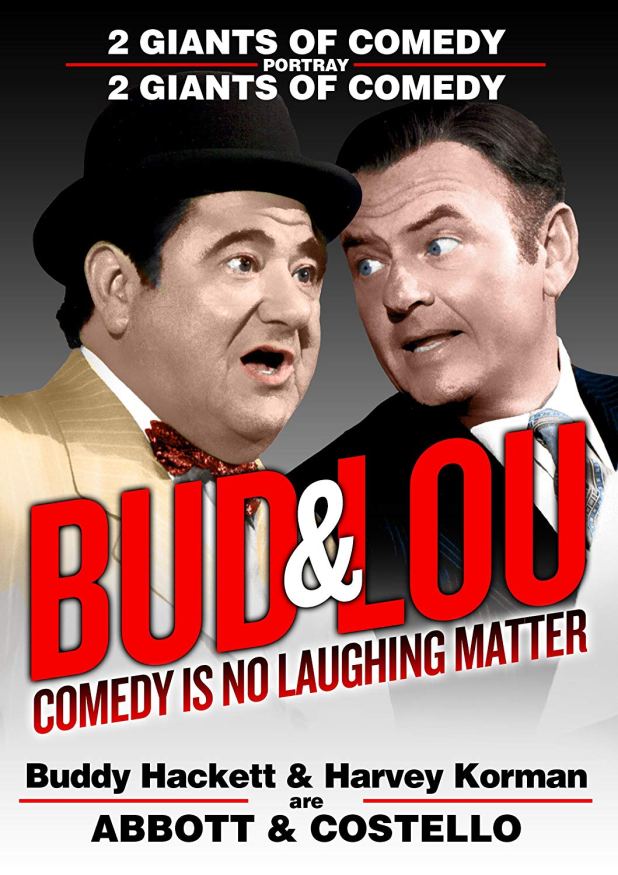
Abbott and Costello are played by Buddy Hackett and Harvey Korman. Interestingly, Hackett and Hugh O’Brian replaced the team when Costello’s health forced them to drop out of 1954’s Fireman Save My Child.
The team came together when Abbott’s original partner was ill and it gelled pretty quickly. The film hints that Bud used to date Lou’s wife — this is unproven — but as we’ve learned from tabloid-style films, facts are rarely important. For example, while they did debut on The Kate Smith Hour on February 3, 1938, they didn’t do the “Who’s On First?” routine until a month later and they had developed their distinctive voices (audiences initially thought they sounded alike until Costello came up with his high-pitched, childish affect).
They debuted their own show, The Abbott and Costello Show, as Fred Allen’s summer replacement in 1940 before joining Edgar Bergen and Charlie McCarthy on The Chase and Sanborn Hour in 1941. That was also the year that their first two films — Buck Privates and Hold That Ghost — debuted (they made their actual first film appearance in 1940’s One Night in the Tropics, essentially playing their greatest hits from burlesque on screen).
By 1942, they were the top box office stars in the country, earning over $789,000 ($12 million in today’s money) that year alone. To show how big of stars they were, a 35-day War Bonds tour in the summer of 1942 earned $85 million dollars ($1,299,767,105 today!) in war bonds purchases. This is important — because soon, the government would come calling for this money and forget all about this. That’s a major part of the film.
Here come the bad parts. Abbott had epilepsy, which in the film just means you have to sit down every once in a while, as well as drink way too much. Costello got rheumatic fever from a military base tour and was bedridden for the rest of 1942 and into ’43, when he returned to radio after a year layoff. That very same day, his infant son drowned in the family’s pool and the comedian was never the same. He was quick to anger and constantly vindictive to the point that a major rift happened when In 1945 a rift developed when Abbott hired a servant who Costello had fired. That led to Costello refusing to speak to his partner except when performing. From them on, they would play separate characters in films, rather than be a team. This led to their loss in popularity when faced with other teams like Martin and Lewis.
Abbott resolved the rift when he suggested naming Costello’s charity the “Lou Costello Jr. Youth Foundation.” Finally some good news — this charity still helps underprivileged youth in the Boyle Heights district of Los Angeles.
Despite their dip in popularity, they still starred in several films with the Universal monsters and hosted The Colgate Comedy Hour. From 1952 to 54, Costello created, owned and syndicated The Abbott and Costello Show, paying Abbott a salary, a point this movie hammers home as proof that any reconciliation was only on one man’s part. That said, the movie totally ignores that this show was a success and aired in reruns for a long time.
The film never gets into the point that the duo was overexposed and worried about creating new material, which is one of the reasons why Universal couldn’t reach a contract with them. They were forced to sell all of their assets to the IRS to pay taxes, a point the movie definitely makes.
After one last film, Dance with Me, Henry and Lou appearing on This Is Your Life, the duo split for good in 1957. Errol Flynn claimed in his autobiography that he was the reason. At a party he had invited Bud, Lou and their families to, he showed hardcore pornography and Bud and Lou both blamed the other. This is skipped by the movie, because how would you explain that on TV in 1978?
The movie makes it seem that Costello died quickly after the pair split, but he lived until 1959, after ten appearances on The Steve Allen Show doing old routines without his partner. He died shortly after finishing his last film, The 30 Foot Bride of Candy Rock.
In 1960, Abbott formed a team with Candy Candido, a voice actor in Disney films. He also did his own voice for the Hanna-Barbera Abbott and Costello cartoons. He died of cancer in 1974.
Let’s go back to me being a kid. I always thought that Lou was the nice one, with Bud being the mean adult, always grumpy with him. Little did I know the truth — or what passes for it in this movie. I remember crying my eyes out during the last scene where Lou dies.
This whole movie is based on the book by Hollywood correspondent Bob Thomas and trust me, it’s as over the top and ridiculous as you hope it is. It’s been said that Thomas got most of his gossip from Eddie Sherman, Abbott and Costello’s longtime manager who had been fired by the duo, so obviously there was a reason why it’s so venomous. It’s also remarkably unfunny in the comedy segments, which is weird when you consider who is starring in it. Arte Johnson and Robert Reed also show up, just to remind you this is a made for TV movie.
Both the book and movie upset Lou’s daughter Chris so much that she wrote the book Lou’s on First to refute many of its claims.
I’m not the only one obsessed by this film. On his podcast, Gilbert Gottfried has brought the death scene at the end up several times. I wasn’t the only one shattered by it, I guess.
I guess if you want to catch up on memories, you should skip TV movies and go right back to the real movies. But as you may have learned by now, I love junk.
EDITOR’S NOTE: Bud and Lou was on the CBS Late Movie on December 25, 1984 (Merry Christmas!) and June 3, 1987.
This movie crushed me as a child. I had always loved Bud Abbott and Lou Costello, watching their thirty-six films on Sunday mornings after Ma and Pa Kettle films. Seriously, weekends in Pittsburgh in the 70s and 80s were amazing. You stayed up all Night watching Chiller Theater, then woke up late and took in some Abbott and Costello. Ah, memories.
That said, when this aired on November 15, 1978, I excitedly watched it from my parent’s black and white kitchen TV, ready to have fun reliving my favorite memories of the comedy duo. I wasn’t prepared to learn how much they hated one another and their foibles. Cut me some slack — I was six.
Buddy Hackett and Harvey Korman play Abbott and Costello. Interestingly, Hackett and Hugh O’Brian replaced the team when Costello’s health forced them to drop out of 1954’s Fireman Save My Child.
The team came together when Abbott’s original partner was ill, and it gelled pretty quickly. The film hints that Bud used to date Lou’s wife — this is unproven — but as we’ve learned from tabloid-style films, facts are rarely necessary. For example, while they did debut on The Kate Smith Hour on February 3, 1938, they didn’t do the “Who’s On First?” routine until a month later, and they had developed their distinctive voices (audiences initially thought they sounded alike until Costello came up with his high-pitched, childish effect).
They debuted The Abbott and Costello Show as Fred Allen’s summer replacement in 1940 before joining Edgar Bergen and Charlie McCarthy on The Chase and Sanborn Hour in 1941. That was also the year that their first two films — Buck Privates and Hold That Ghost — debuted (they made their first film appearance in 1940’s One Night in the Tropics, essentially playing their greatest hits from burlesque on screen).
By 1942, they were the top box office stars in the country, earning over $789,000 ($12 million in today’s money) that year alone. A 35-day War Bonds tour in the summer of 1942 earned $85 million ($1,299,767,105 today!) in war bond purchases to show how big of a star they were. This is important because the government would soon call for this money and forget all about it. That’s a significant part of the film.
Here come the bad parts. Abbott had epilepsy, which in the film means you have to sit down every once in a while, as well as drink way too much. Costello got rheumatic fever from a military base tour and was bedridden for the rest of 1942 and into ’43 when he returned to radio after a year layoff. That very same day, his infant son drowned in the family’s pool, and the comedian was never the same. He was quick to anger and constantly vindictive to the point that a significant rift happened.
In 1945, Abbott hired a servant whom Costello had fired. That led to Costello refusing to speak to his partner except when performing. Then, they would play separate characters in films rather than work together, which led to their loss of popularity when faced with other teams like Martin and Lewis.
Abbott resolved the rift by suggesting naming Costello’s charity the Lou Costello Jr. Youth Foundation. Finally, some good news: this charity still helps underprivileged youth in the Boyle Heights district of Los Angeles.
Despite their dip in popularity, they still starred in several films with the Universal Monsters and hosted The Colgate Comedy Hour. From 1952 to 54, Costello created, owned and syndicated The Abbott and Costello Show, paying Abbott a salary, a point this movie hammers home as proof that any reconciliation was only on one man’s part. That said, the film ignores that this show was successful and aired in reruns for a long time.
The film never gets to the point that the duo is overexposed and worried about creating new material, which is one reason Universal couldn’t reach a contract with them. The movie definitely makes the point that they were forced to sell all their assets to the IRS to pay taxes.
After one last film, Dance with Me, Henry, and Lou appeared on This Is Your Life, the duo split for good in 1957. Errol Flynn claimed in his autobiography that he was the reason. At a party he had invited Bud, Lou and their families to, he showed hardcore pornography and Bud and Lou both blamed the other. The movie skipped this because how would you explain that on TV in 1978?
The movie makes it seem that Costello died quickly after the pair split, but he lived until 1959 after ten appearances on The Steve Allen Show doing old routines without his partner. He died shortly after finishing his last film, The 30-Foot Bride of Candy Rock.
In 1960, Abbott formed a team with Candy Candido, a voice actor in Disney films. He also did his voice for the Hanna-Barbera Abbott and Costello cartoons. He died of cancer in 1974.
Let’s go back to when I was a kid. I always thought Lou was the nice one, and Bud was the mean adult who was always grumpy with him. Little did I know the truth—or what passes for it in this movie. I remember crying my eyes out during the last scene when Lou dies.
This movie is based on the book by Hollywood correspondent Bob Thomas, and trust me, it’s as over the top and ridiculous as you hope it is. It’s been said that Thomas got most of his gossip from Eddie Sherman, Abbott and Costello’s longtime manager, who the duo had fired, so obviously, there was a reason why it’s so venomous. It’s also remarkably unfunny in the comedy segments, which is weird when considering who is starring. Arte Johnson and Robert Reed also showed up; to remind you, this is a made-for-TV movie.
The book and movie upset Lou’s daughter, Chris, so much that she wrote Lou’s On First to refute many of its claims.
I’m not the only one obsessed with this film. Gilbert Gottfried repeatedly mentions the death scene at the end of his podcast, and I wasn’t the only one shattered by it.
I watched this movie at 6 AM on a Saturday night/Sunday morning with my ears buzzing from a Sleep concert, cotton-mouthed from being at said Sleep concert and eating cereal half awake with I watched it in Spanish with no subtitles. I think that may be the best way to experience any movie.
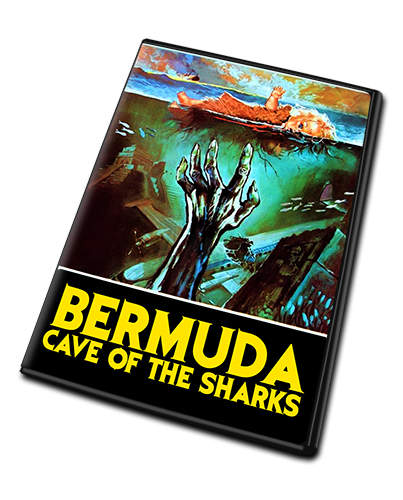
Director Tonino Ricci must have loved the ocean, because he also made Encounters in the Deepand Night of the Sharks. Here, real-life scuba instructor turned macho actor Andrés García (seriously, the dude produced a reality show to find a woman for his son Leonardo and ended up making out with several of the contestant, which caused his son to leave the program) plays a scuba instructor who disappeared for six months and has been brought back to health by his wife Angelica (Janet Agren, who Ricci also conned into being in his film Panic).
Germane to my interests, Cinzia Monreale shows up as a mysterious girl, something she did so well in Fulci’s The Beyond. She appears in a group of people who sit around and listen to a guy play guitar and sing. She takes her weird doll and throws it into the ocean, where she disappears and blood flows from the doll. Then all these sharks show up and watch these hippies drown themselves. I have no idea what this has to do with the rest of the movie.
There’s also an undersea city with an advanced race that can control the Bermuda Triangle and sharks, which all sleep inside a cave. Also, it has a total seventies downer ending, which seems pretty much right on.
Seriously, if Fulci made a Jaws clone, this would be pretty much the path he’d take. He was a million times better than Ricci (who was his assistant director on the White Fang movies), so I would have loved to have seen him make a movie where a shark slowly eats someone’s face and takes even more time savoring their eyeball.
Between this and Bermuda Triangle, made the same year, you really have to wonder about the Italian fascination with strange dolls and the dangers of the ocean.
If you want to see this seriously deranged film, allow me to point you to the fine folks at Cult Action, who are devoted to taking my paycheck for films that I can’t find anywhere else.
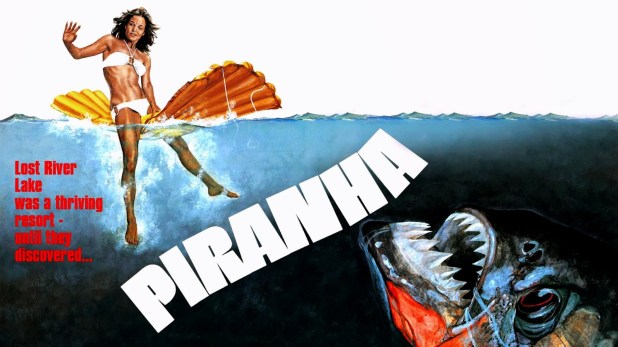
Piranha almost never made it to the theater. Universal Studios had considered obtaining an injunction to prevent it from being released, particularly as they had Jaws 2 out that year, but the lawsuit was called off after Steven Spielberg himself gave the film a positive comment (he also called the film the “best of the Jaws ripoffs”).
Joe Dante is my favorite type of filmmaker. Even when you think you know what to expect, he zigs and zags, giving you genuine surprises and fun at every turn.
The action starts with two teens swimming in the waters of an abandoned military base — as you do. Of course, they’re instantly obliterated by an unseen creature.
Skiptracer Maggie McKeown (Heather Menzies, who beyond being the wife of Robert Urich was Louisa Con Trapp in The Sound of Music and even appeared in an August 1973 Playboy pictorial entitled “Tender Trapp”) is looking for those missing teens and she’s hired Paul Grogran (Bradford Dillman, who battled many an ecological horror in Bug, The Swarm and Lords of the Deep) for help. He’s a drunk and surly mountain man, which in the 1970’s makes you a sex symbol.
Why is Grogan so multi-layered? It turns out that Bradford Dillman wasn’t pleased with how flat his character originally was, so he asked writer John Sayles why. The response was that producer Roger Corman never hired good actors, so he rarely wrote nuanced characters. However, Dillman offered Sayles the opportunity to do something deeper, if you’ll pardon the pun.
They discover the abandoned compound where the teens died and discover that it’s a militarized fish hatchery. Maggie drains the outside pool and discovers too late that she’s released Operation: Razorteeth, a strain of piranha made to survive the cold North Vietnamese rivers and win the war in Southeast Asia.
That’s when Grogan realizes that if the local dam is somehow opened, the piranha will attack the Lost River water park and the camp where his daughter is spending the summer. Everybody pays the price for the piranha, like their now crazed creator Dr. Robert Hoak (Kevin McCarthy from Invasion of the Body Snatchers). Soon, the military is involved and our heroes are on the run, trying to warn the media and anyone that will listen that these killer fish are on their way. Nothing will stop them, not even the poison that Colonel Waxman and Dr. Mengers (Barbara Steele!) think will do the job.
Of course, the fish survive and attack the summer camp, wiping out nearly everyone but Suzie thanks to her fear of water. Now, they’re on their way to Buck Gordon’s (Dick Miller, perfect as always) waterpark, where they end up killing Waxman.
Grogan and Maggie come up with a totally ridiculous plan: to use the hazardous waste from the smelting plant to kill off the fish before they spread into the ocean. Our hero, such as he is, must go deep underwater to make this happen and he barely survives, left in a catatonic state at the end of the film.
Dr. Mengers gives the government side of the story, downplaying the danger of the piranha and saying there’s nothing left to fear, but as we see another beach, we now hear the sound of the deadly school of fish.
Beyond Dick Miller, this film features plenty of actors that Dante would work with again and again, like Belinda Balaski, the film’s writer John Sayles and the always welcome Paul Bartel. Plus, Francis Xavier Aloysius James Jeremiah Keenan Wynn shows up, but we all know him better as his stage name, Keenan Wynn. And another Invasion of the Body Snatchers alum, Richard Deacon, is here as well.
Piranha is the rarest of films — one that rises above being a simple ripoff and comes close to eclipsing the source material. It’s quick, bloody and fun as hell, with awesome effects from Phil Tippett and the debuting Rob Bottin, who was only 17 at the time.
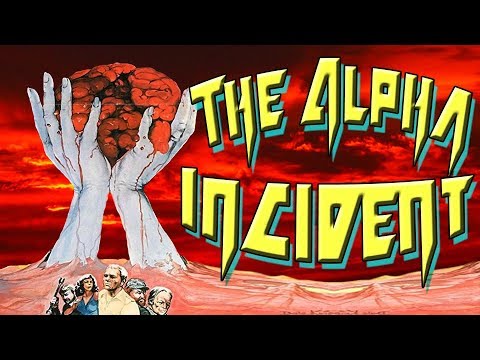
The first Bill Rebane movie I saw was the berserk Tiny Tim vehicle Blood Harvest. Once I realized that The Alpha Mission — one of his older efforts — is on the Chilling Classics box set — I jumped on it.
Much like Night of the Living Dead, a space probe has returned, this time from Mars. It’s brought back an organism that can kill all life on Earth. As it’s being transported by train, an employee accidentally releases it and the entire station is quarantined and must wait endless hours for the government to find the cure. There’s only one problem — if they fall asleep, the organism will kill them.
Basically, this is a movie about a bunch of people drinking coffee. doing amphetamines and making horrible decisions. Ralph Meeker (Without Warning) stars here, bringing along several unknowns and George “Buck” Flower (who shows up in nearly every John Carpenter film). It’s basically a movie where people stand around, upset one another and stand around some more.
With a better team of actors, this could be a much better film. That said, it’s enough to keep me interested. My disclaimer is that I’m exactly the kind of person who loves watching horrible movies with bad transfers from a $9 box set with fifty movies on it.
“What year is this from? Is this foreign?” asked Becca. No, this movie is magically made in this country, unless Wisconsin is really a foreign country. “Is this the end of the movie?” she also asked. Yep, that’s the kind of film this is.
Paul Andolina, whose writes the site Wrestling with Film, is in charge today. Beyond loving wrestling, he also knows a ton about Russian and lucha films (and he even speaks pretty good Spanish, so we hear!).
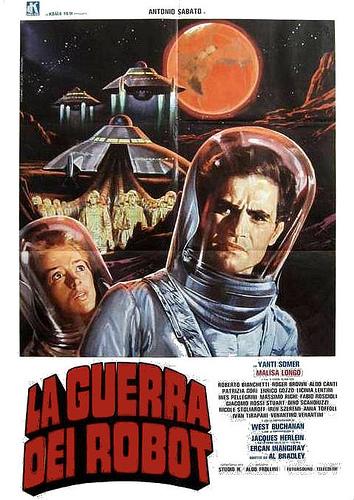
War of the Robots — originally titled La Guerra dei Robot — is an Italian science fiction film released in 1978 most likely to cash in on the franchises of both Star Trek and Star Wars. I’d like to imagine this film came about when Alfonso Brecia and Aldo Crudo were as high as cucuzzi (Italian squash) are long which just so happens to be extremely.
I could not ask for a more crazy colored sci-fi romp than what this film offers. Female scientist Lois and male professor Carr are on the cusp of something extraordinary; they soon will be able to create any creature they want and make the first immortal man! However, their plans are cut short when a mysterious group of gold-clad humanoids attack and abduct them. It’s up to Lois’ lover Captain Boyd and crew to rescue them from their captors.
War of the Robots has a lot of twists and turns during its hour and thirty-nine minute runtime. There also is a cut of the film that is four minutes longer but the cut included on the Chilling Classics set is the shorter one.
When the crew finally gets to Lois and Dr. Carr it turns out nothing is what it seems at all. Louis is now an empress and Carr is mad with power over the gold-clad humanoids who turn out to be androids.The inhabitants of the planet Louis and Carr are taken to also happen to be wrinkly old monster folks. The latter half of the movie turns into a whole scale war. Battle is waged in caves, palaces, command decks and even in starship space battles.
This movie has a bit of everything; it’s got phasers, it’s got laser swords, it’s got mutants who live on irradiated asteroids but most importantly it has West Buchanan! West Buchanan is an American actor who starred in his fair share of Italian genre films. It just so happens that West Buchanan looks like he could be Harley Race’s twin brother. Harley Race is a wrestler who has worked for NWA, WWE, and WCW. I was really surprised how similar they look. Now the reason I bring that up is that I’m a collector and avid watcher of films that star professional wrestlers. That’s not the sole reason I enjoy this film so much it’s not the greatest film by any means but those who like campy science fiction films should find plenty to enjoy. I think most folks will especially like the scenes where androids are sliced in half by laser swords.
I must also point out the amazing score is by Marcello Giombini who also scored some of the Emmanuelle films, Sabata and even Antropophagus. If you have the chance to watch this I do recommend it. Apparently it is part of a series of science fiction films by director Alfonso Brecia, The films that precede it are War of the Planets, Battle of the Stars and it is followed by Star Odyssey. I hope I stumble across the other films as I truly did enjoy this film.
You can watch this one of the many uploads of War of the Robots on You Tube.
Never say never, but I think this will be the only movie we ever feature on this site that has a love theme by Barbara Streisand in it. I could be wrong, but I just get the feeling that there aren’t going to be many more crossovers quite like this one.
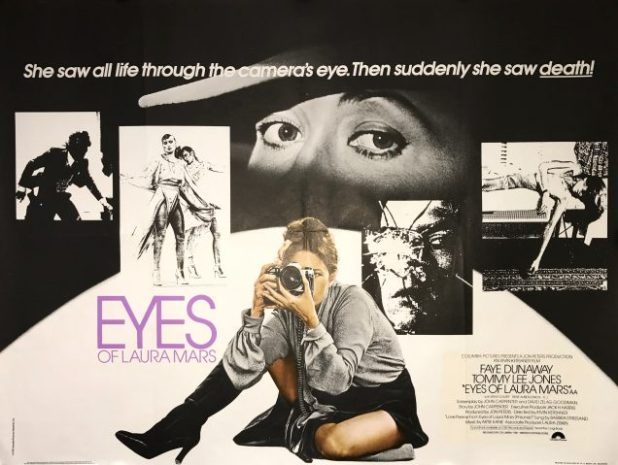
Eyes of Laura Mars was adapted from a spec script titled Eyes, written by John Carpenter; making this Carpenter’s first major studio film. Producer Jon Peters, the beau of Barbra Streisand in this era, bought the screenplay as a vehicle for her, but Babs felt that it was too “kinky” and passed. However, she felt that “Prisoner,” the song that she lent to the film, would be a great single. She wasn’t wrong — it peaked at #21 on the Billboard Hot 100.
Instead of Ms. Streisand, we get Faye Dunaway, who had just won an Oscar for Network and had not yet become Mommie Dearest. She plays Laura Mars, a fashion photographer whose Chris Von Wangenheim by way of Helmut Newton-style photos (Newton and Rebecca Blake supplied the actual photos for the film) glamorize violence. As she’s due to release the first coffee table collection of her work, she begins seeing the murders of her friends and co-workers through the eyes of the killer. I love how until now, she’s only been detached and seen things through the eye of a camera.
John Neville (Tommy Lee Jones) is the cop in charge. After she rushes to a murder scene exclaiming that she saw who did it blocks away, the cops keep her in custody, showing her numerous unpublished crime scene photos that match her new fashion photos perfectly. Throughout the film, Larua and Neville fall in love as her visions — and the murders — increase in intensity and violence.
This is a great example of an American giallo filled with the twists, turns and red herrings of the genre. It’s done with a much higher budget and way better locations than you’re used to. And it gets closer to the psychosexual elements, but as great a director as Irvin Kershner is, he isn’t a maniac like Argento and his ilk. It’s also packed with talent, like Raul Julia, Battle Beyond the Stars‘ Darlanne Fluegel, Rene Auberjonois and Chucky himself, Brad Dourif.
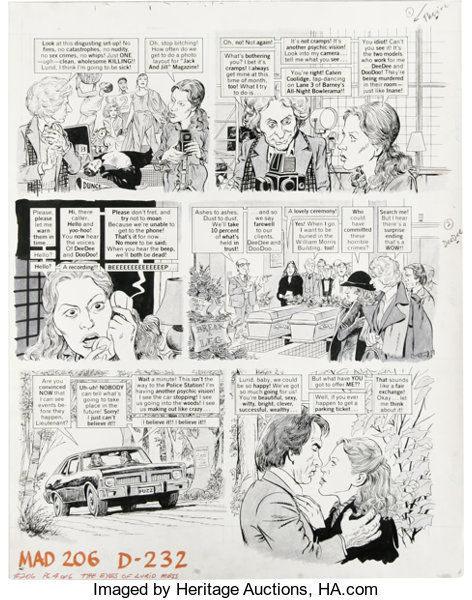
The Eyes of Laura Mars would be parodied as The Eyes of Lurid Mess in MAD Magazine #206, with art by Angelo Torres. As was often the case with R rated movies when I was six years old, I first experienced this movie through the black and white ink lens of MAD.
Want to see it for yourself? It’s free with an Amazon Prime subscription.
Thanks to the British Film Institute, there’s a list of films that played Scala. To celebrate the release of Severin’s new documentary, I’ll share a few of these movies every day. You can see the whole list on Letterboxd.
The Scarecrow Psychotronic Challenge for today is 7. HELL ON EARTH. Watch a post-apocalypse movie. Bonus if it has punks (see the Destroy All Movies definition of punk) in it. We’ve watched so many post-apocalyptic movies that it was hard to find one that we hadn’t had on the site. And punks made it an even bigger challenge. That said, we’re all about trying to find movies no one else is talking about. And that leads us to 1977’s Jubilee.
Queen Elizabeth I (Jenny Runacre, Son of Dracula, The Witches) asks her occultist John Dee (Richard O’Brien of Rocky Horror fame) — an advocate of British imperialism that spent the last thirty years of his life learning the secret language of angels — and Ariel from Shakespeare’s The Tempest (David Brandon, Delirium, Stagefright) to show her the future.
That future? The no future of the punk rock era, a place where Queen Elizabeth II was killed in a mugging and a gang of punk rock survivors, including Amyl Nitrate (Jordan, the model who was of the creators of W10 London punk look), Bod (Runacre in a second role), Chaos (French singer, writer and tightrope walker Hermine Demoriane), Mad (singer Toyah Willcox) and Crabs (Little Nell from Rocky Horror, who even gets in the line “Don’t dream it, be it.”). When they’re not talking about boys or music, they’re talking about how history can be manipulated. And then Amyl Nitrite says that her heroine has always been Myra Hindley (Hindley and Ian Brady were responsible for the Moors Murders, which occurred in and around Manchester between mid-1963 and late-1965, claiming five child victims and inspiring the song “Suffer Little Children” by The Smiths).
Things making too much sense? There’s also Borgia Ginz, who shares a house with Hitler, runs the world and has transformed Buckingham Palace into a recording studio and Westminster Cathedral into a disco where Jesus performs.
Beyond the nihilism and lack of hope in this film, there’s also plenty of punk rock stars, like Adam Ant and Wayne County along for the ride and gamely performing songs, as well as blink and you miss it moments for Siouxie and the Banshees and the Slits. And hey — the music is by Ol’ Sourpuss himself, Brian Eno.
Director Derek Jarman may have based this movie in punk rock, but he was against the scene’s fascism fetish, as well as its love of stupidity and violence. Many punks weren’t pleased with the film, such as fashion designer Vivienne Westwood, who created an open letter T-shirt that denounced the film because of how she felt it misrepresented punk.
Jubilee is definitely a time capsule of Thatcher-era England. It’s loud, obnoxious and strange, which are all wonderful things to be. I’m glad that I didn’t watch something easy like Cy-Warrior and chose this movie.
Stephanie Rothman was studying at UC Berkeley when The Seventh Seal made her want to become a filmmaker. She was the first woman to be awarded the Directors Guild of America fellowship, which was one of the reasons why Roger Corman hired her as his assistant (selecting her over another applicant, the woman who became his wife Julie).
She directed It’s a Bikini World, which was not the kind of movie she wanted to do and was semi-retired until working on the film Gas-s-s-s. She then directed The Student Nurses, an exploitation film that she was not aware was an exploitation film, as she had carte blanche to explore political and social issues in the film that interested her.
She said, “I went and did some research to find out exactly what exploitation films were, their history and so forth, and then I knew that’s what I was doing, because I was making low-budget films that were transgressive in that they showed more extreme things than what would be shown in a studio film, and whose success depended on their advertising, because they had no stars in them. It was dismaying to me, but at the same time I decided to make the best exploitation films I could. If that was going to be my lot, then that’s what I was going to try and do with it.”
She wasn’t interested in making a sequel to The Student Nursesor making The Big Doll House, but her next movie was The Velvet Vampire. Moving to Dimension Pictures, she directed Terminal Island, The Working Girls and Group Marriage.
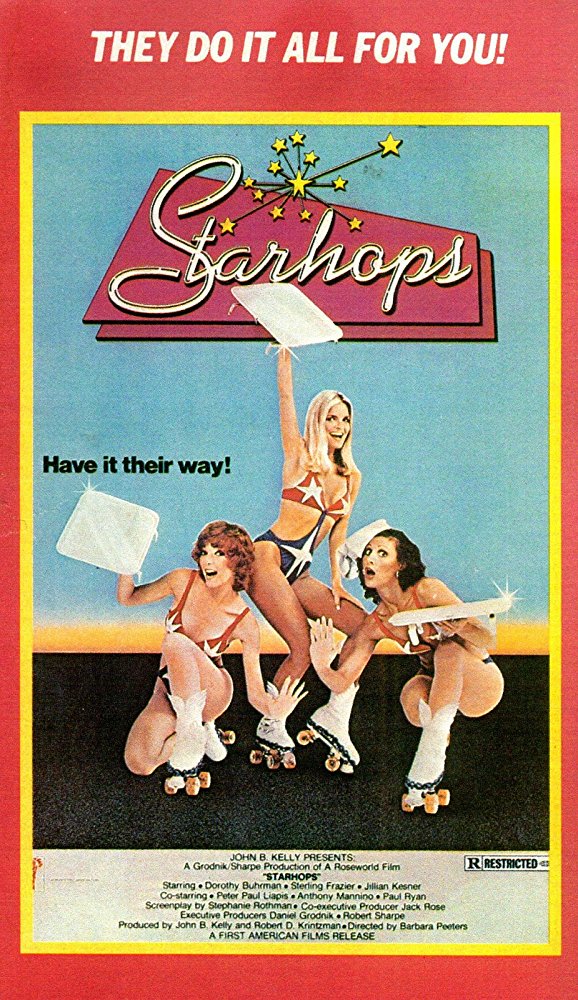
However, attempts to go mainstream were stigmatized by the films that she had made. Before ending her movie-making career, the rumor was that she reshot some scenes in Ruby and definitely wrote Starhops before taking her name off it, as it was not the film she wanted it to be.
It is, however, directed by Barbara Peeters, the only other female director from New World Pictures. She famously warred with Corman over the additions to Humanoids from the Deepand directed favorites like Bury Me an Angel and the TV series The Powers of Matthew Star.
But what about the movie itself? Well, it’s a trifle, about three waitresses, Danielle, Cupcake and Angel, who all work together to stop their fast food restaurant from going broke. Of course, Dick Miller shows up, as this is a Roger Corman-associated film.
What’s interesting about Angel is that she’s played by Jillian Kesner-Graver, who was not only Fonzie’s girlfriend Lorraine on Happy Days, but worked with her husband Gary to preserve the films and legacy of Orson Welles.
Starhops isn’t really funny. Or sexy. It’s just kind of there. But sometimes, you watch a bad movie and learn about some interesting people.




 B&S About Movies
You must be logged in to post a comment.