Editor’s Note: This is part of our week-long tribute to the films of Sylvester Stallone. You’ll find links to several more reviews of his films, within. If you don’t see your favorite mentioned, enter the title into the search box to your left; chances are, we reviewed it.
Okay. Let’s get this out of the way: F.I.S.T is not a boxing film and the title is an acronym for a fictional, blue-collar labor union based on the International Brotherhood of Teamsters (stylized as “Teamsters Union”), known as the “Federation of Interstate Truckers.” Stallone’s eventually casting as the Jimmy Hoffa-inspired Johnny Kovak was purely coincidental and not intended to dovetail the film’s marketing into Stallone’s previous, leading man debut of Rocky.
Kovak is a regular blue-collar guy working the loading docks for a trucking company who, fed up with the abusive treatment of his fellow workers, becomes a social activist whose organization of protests and riots transforms into a full-fledged labor union. As the labor union’s membership and influence grows, along with gaining political power, Kovak’s initially honorable intentions are corrupted by organized crime influences. When he tries to break the union free from its mafia ties, he and his family lose their lives.
Written by Joe Eszterhas (Flashdance and Basic Instinct), Stallone, as is his custom for most of the films he acts in, rewrote the script alongside Norman Jewison (Fiddler on the Roof and Rollerball). The film is produced by the younger brother of Roger Corman (Night of the Blood Beast; part of B&S About Movies upcoming reviews of Mill Creek’s Pure Terror 50 Film Box Set) and shot by Laszlo Kovacs (Hells Angels on Wheels, The Savage Seven, Psych-Out, Blood of Dracula’s Castle, and Easy Rider. I can go on and on with Mr. Kovacs’s resume).
Outside of Stallone, the names of Gene Corman, Joe Eszterhas, and Laszlo Kovacs may mean nothing to you. But for this film geek, I see it as one of the oddest quartets in film that you don’t see very often collaborating on a film. And it worked. They made one hell of an entertaining film.
If you’ve seen the Danny DeVito-directed biographical crime drama Hoffa starring Jack Nicholson, then you’re up to speed on what to expect from F.I.S.T with its homage to one of America’s most infamous organized crime figures. And while it all seems a bit The Godfather-familiar, only with trucks and loading docks instead of mobsters and gambling, many will say that analogy stretches the threads of story and characterization.
While F.I.S.T may not be on the shortlist alongside The Godfather, Goodfellas and Scarface—the cream of the gangster film crop—F.I.S.T is certainly better than the MTV-styled mobster tropes Carlito’s Way (1993) and Mobsters (2001)—and is just as good as Hoffa. In the Hoffa-portrayal sweepstakes, Stallone matches Jack Nicholson toe-to-toe and blow-by-blow. Sadly, the film received a lukewarm critical and box office reception. Then, Sly’s follow-up, Paradise Alley, stalled at the box office . . . so he made another Rocky and First Blood and moved into action films and sequel work.
If F.I.S.T and Paradise Alley had achieved critical and box office success on par with Rocky, it’s possible Stallone’s career would have taken a different path—a dramatic path. Perhaps he would have starred as Jimmy Hoffa instead of Nicholson in Hoffa? What might have been.
Editor’s Note: This is part of our week-long tribute to the films of Sylvester Stallone. You’ll find links to several more reviews of his films, within. If you don’t see your favorite mentioned, enter the title into the search box to your left; chances are, we reviewed it.
Sylvester Stallone has made a lot of movies—59 in fact. Okay, 57—if we forget about the two movies he’d rather forget: The Party at Kitty and Stud’s (1970) and No Place to Hide (1973). (Well, even less if we cross off his recent forays into animation voice work.)
Sorry Sly. This is your week and B&S Movies champions the underground, the obscure and the trashy. We can’t resist taking a peek in your celluloid closet.
In the wake of Rocky’s success, The Party at Kitty and Stud’s—Sly’s feature film debut—was reimaged using his faux-boxing nom de plume, Italian Stallion, for its grindhouse and Drive-In reissue, and eventually, its VHS “backroom” release.
Budgeted at $5,000 and clocking at a measly 71 minutes, it’s a plotless, soft-core sex romp about a “free-spirited woman,” Kitty, and her rough-edged boyfriend, Stud (Stallone) who throws a “sex party” and . . . that’s it for the plot and character development. According to reviews over the years, the film—just as we now look back on Midnight Cowboy and Shampoo and wonder what all the fuss was about—was rated with an “X” upon release, but would pass as a PG-13 by today’s social standards. You’ve seen worse in a Lifetime channel damsel-in-distress flick.
Stallone, however, fared better with this second film, No Place to Hide. As with Kitty, his post-Rocky stardom triggered a re-release under the title, Rebel. While some critics tagged the film as a soft-core flick, it’s actually one of the many lackluster, counterculture-hippy thrillers concerned with politically-driven students of the ‘60s engaged in propaganda and violence to promote their political beliefs.
Okay. That takes care of the pre-Rocky backstory on Sly.
When you’re dealing with an iconic actor’s career chronicled by a 40-plus year IMBb page, everyone has their favorite films by that actor. When it comes to Stallone, some will tip their hat to Tango & Cash (which tried—and failed—to repeat that Lethal Weapon buddy-cop vibe), others will cite the late Rutger Hauer’s American film debut as a terrorist alongside Stallone in Nighthawks. Others believe, rightfully so, that Sly’s Rocky series of films are the best boxing films ever made. Sam, the proprietor of B&S About Movies, swears by the Sammy Hagar themed-song-fronted arm wrestling flick, Over the Top. We both love The Expendables series. And while I never cared much for either, my cousin loves Demolition Man and Judge Dredd.
As for me: I always come back to Sly’s second post-Rocky film—after F.I.S.T (his “Godfather” if you will)—Paradise Alley, which he wrote; the film also served as his directing debut.
Where Rocky was about a down-and-out pug trying to escape a bleak, early ‘70s Philadelphia, Paradise Alley is a 1940s period piece about the three Carboni brothers: Cosmo (Stallone), a fast-on-his-feet street hustler, and Lenny (the always reliable Armand Assante in his leading man role; he starred in Prophecy, next), a bitter war hero. Out of greed and desperation, they bully their less-street wise, dumb-hulk of a younger brother, Victor (Lee Canalito, who vanished from acting after a bit role in a Magnum P.I episode), into becoming a professional wrestler—dubbed Kid Salami. Those plans to use wrestling as a way out of Hell’s Kitchen begin to unravel as Cosmo and Victor enter into a battle of wills over guilt vs. greed in their manipulating—and possibly permanently injuring—Victor.
Ironically, Stallone didn’t write Paradise Alley in the wake of Rocky—and traded wrestling for boxing as many critically derided. He wrote Paradise Alley, first, as a novel, and then adapted it into a screenplay. During the course of auditioning for Rocky’s producer, Irwin Winkler (some say the audition was for a role in Winkler’s Breakout starring Charles Bronson), Stallone pitched Paradise Alley, but was unable to sell the work due to legal issues with another producer. So with Winkler and his partner, Robert Chartoff, willing to read his work, Stallone banged out Rocky. The rest is history.
Paradise Alley is one of the few instances where you’re better off finding and watching the TV version of the film, which is slightly closer to Stallone’s original vision. He stated his initial theatrical cut of the film was almost two and a half-hours long; Universal Studios forced almost 50 scenes to be cut; 10 of which Stallone added back for the extended television version that offers greater atmosphere and character development.
If you read critical and fan reviews for Paradise Alley, it’s derided as a “self-indulgent mess” and that Stallone was in way over his head and made his move to the director’s chair too soon. I’ve watched the film several times over the years (both the theatrical/VHS and the TV version) and I fail to see any quality issues with the film. Perhaps my youthful nostalgia for Paradise Alley blinds me to Stallone’s critically-implied ineptitude as a first time director. Regardless, it’s obvious Stallone was paying attention on the sets of his pre-Rocky films The Lords of Flatbush (1974), Capone, Death Race 2000 (as Joe “Machine Gun” Viterbo!) and Farewell, My Lovely(all 1975), and picked up tips on the set of F.I.S.T from director Norman Jewish (Rollerball).
Also adding to my love of Paradise Alley was that all of my wrestling heroes from my weekend, late night ‘70s wrestling binges on WIIC-TV Pittsburgh and WOR-TV out of New York appeared in the film: Terry Funk, Ted DiBiase, Dory Funk, Jr. and Dick Murdoch. Yes! Badass Dick Murdoch and Dusty Rhodes “The American Dream” as The Texas Outlaws, and Murdoch’s tag team years with The Junkyard Dog. Awesome times! The only thing missing from Paradise Alley was Adrian Adonis and The Tonga Kid.
Yeah, Paradise Alley is my paradise in the Stallone canons.
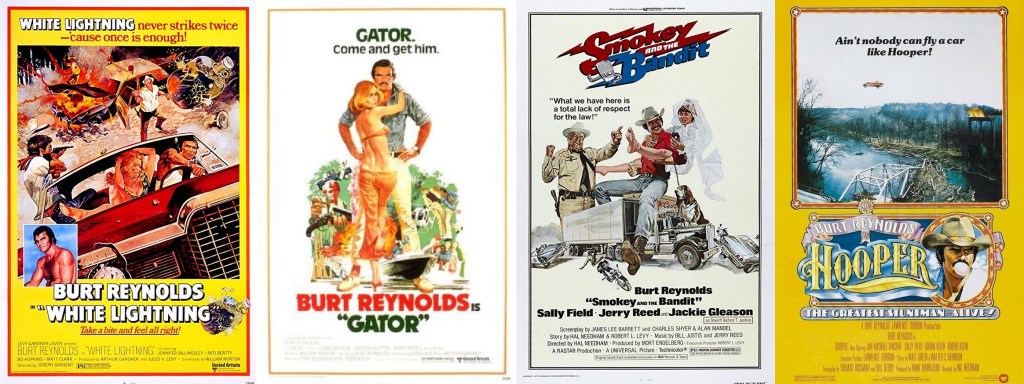
Imagine if Jimmy McNichol’s Roscoe Wilton from Smokey Bites the Dust was a musician in search of a recording contract. . . . Wait, even better. How about Burt Reynolds’s Bo “Bandit” Darville from Smokey and the Bandit having aspirations to make it as a singer on the stage of the Grand Ol’ Opry?
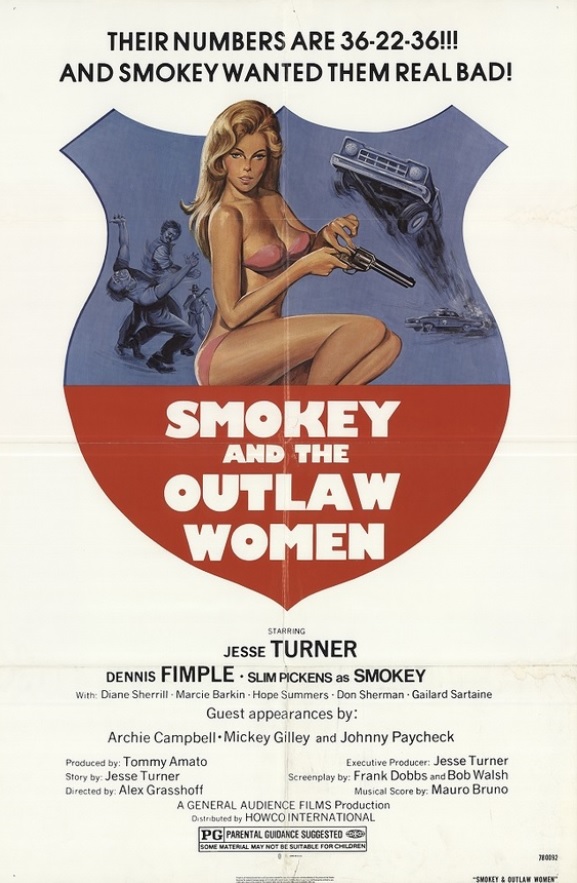
Yuuuuup! Yer now up to speed on this deep-hicksploitation obscurity that’s worth watching solely for Slim Pickens’s hilarious turn as the obligatory Sheriff Buford T. Justice-clone in this octane-fueled BBQ’d adventure. Somewhat reminiscent of Jerry Reed’s later written-produced-directed-acted country music comedy, What Comes Around (1985), ‘60s country singer Jesse Lee Turner serves as the executive producer and screenwriter, composer and star of this entry in the hicksploitation canons concerned with pitfalls and pratfalls of the country music industry—with a few car chases and crashes added for good measure.
Turner, who made it into the Top 20 on the Billboard Hot 100 chart with his 1959 debut single, “Little Space Girl b/w Shake, Baby Shake” (the B-Side is pure Elvis-rockabilly awesomeness), was unable to repeat that initial success with subsequent singles for various labels throughout the remainder of the ‘60s; he finalized his career with a 1975 singles-deal with MCA Records. Turner then incorporated a successful crop-dusting business (he was a long-time certified pilot) and came to own restaurants, a cattle ranch, a small community airport, and a few oil wells.
It was after Robert Altman released his comedic satire on the country music industry, Nashville (1975), that Turner decided to start a new business: a film production company, General Audience Films, to counter the negative light many in the country and gospel music communities felt Altman’s film cast on the industry. In addition to writing the script, Turner wrote four of the eight songs he performs in the film (the rest are written by respected country songsmiths Larry Hart and Ben Peters), including “Make It on My Own, “I’d Like to Be in Nashville,” “Road to Nashville,” and “Made It to Nashville.”
To direct his country-road comedy, Turner hired Alex Grasshoff (of the papier-mâché dinosaur romp—complete with Richard Boone manning a drilling mini-sub!—The Last Dinosaur). As a sidekick to his J.D character, Turner cast veteran television character actor and B-Movie stalwart Dennis Fimple (TV’s B.J and the Bear; the films The Bootleggers, The Creature from Black Lake, Stay Hungry, Truck Stop Women, White House Madness . . . yes, we love Dennis!) as the Salt Flat Kid (which proved to be Fimple’s only leading man role in a feature film). The musician-duo, who end up spending the night in jail after a gig, meet a flim-flamin’ impresario (country-comedian Archie Campbell of TV’s Hee Haw) who claims he can take them all the way to Nashville. Let’s go, boys!
You have to keep stokin’ that Bandit BBQ-smoky flavor, so we have another Sally “Frog” Field bailing out of a wedding to hook up with J.D’s “Bandit,” courtesy of Nashville singer Dianne Sherrill (who appeared in Nashville 99, ashort-lived 1977 TV series starring Jerry Reed and Claude Atkins). And you know the rest of the story: Gailard Sartain (a southern-fried comedic actor best known as the put-a-upon police office in The Hollywood Knights and The Big Bopper in The Buddy Holly Story) is the jilted bridegroom who calls his Texas-hating uncle, Tennessee Sheriff Ledy (Slim Pickens), into action to bring back his lady love.
Hey, there’s Clara Edwards (Hope Summers) from The Andy Griffith Show and Mayberry R.F.D . . . and country music legend Mickey Gilley as a stock car racer . . . and Epic Recording Artist Johnny Paycheck . . . and Polydor’s Johnny Russell . . . and the legendary George Jones showing up for a few tunes. Hey, that’s music agent Eddie Gibbs (Sully Boyar) from The Jazz Singer (1978), and Dog Day Afternoon (1975) and Car Wash (1978).
Yep, this good ol’ boy comedy is a BBQ treat brimming with all the B-Movie and exploitation character actors I love. It’s awesome to see Dennis “Grandpa Hugo” Fimple from Rob Zombie’s House of 1000 Corpses in a leading-man role.
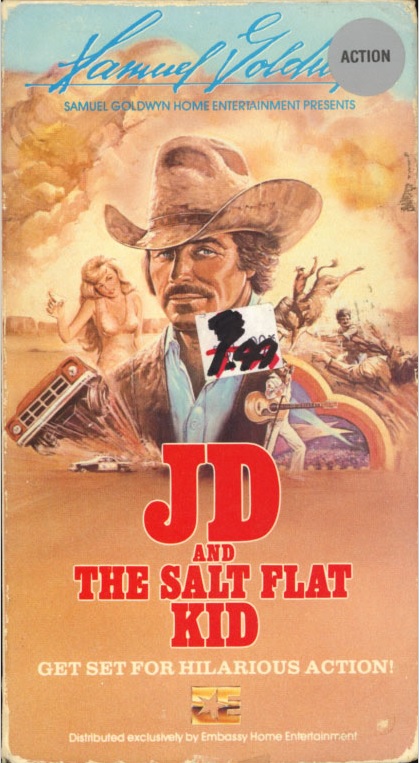
You’ll notice the artwork on the VHS box (below) utilizes the film’s original title: J.D and the Salt Flat Kid. That artwork, as well as the theatrical one-sheets, went to great lengths to illustrate Burt Reynolds and Jerry Reed-styled characters bearing zero resemblance to Jesse Lee Turner and Dennis Fimple.
Another Drive-In reboot one-sheet, left; the “Burt Reynolds” VHS reboot artwork, right.
The clever exploitation marketing featuring a pseudo-nude chick loading a gun under the Smokey and the Outlaw Women banner comes courtesy of producer-distributor J.N Houck, Jr., the Drive-In huckster-guru of Howco International Pictures. Howco was the driving force behind numerous exploiters from the ‘50s through ‘70s, including Night of Bloody Horror (reviewed as part of our October unpack of the Mill Creek Pure Terror 50-film box set) and the previously-linked Creature from Black Lake, starring Dennis Fimple alongside Jack Elam and Bill Thurman (‘Gator Bait).
In addition to becoming an ordained evangelist with a Christian-rock music ministry, Jesse Turner worked as a set designer and as a camera and electrical grip in film and television productions.
About the Author: You can read the music and film reviews of R.D Francis on Medium and learn more about his work on Facebook. He also writes for B&S About Movies.
Michael Brandon (Four Flies on Grey Velvet) stars as Jeff Dugan, the ultra-cool program director at Q-SKY Radio, LA’s number one rock station. Never mind the fact that the station has the frequency 71.1, which is impossible in the US as the FCC frequency range goes from 87.8 to 108.0. Also, in the US, there are no radio stations with “Q” prefixes: East of the Mississippi, all stations begin with “W,” while stations west of the Mississippi start “K.” There’s only one major exception — KDKA in Pittsburgh. In Canada, stations use “C,” while “X” is utilized for stations in Mexico.
Q-SKY has all manner of crazy on-air personalities, like Mother, who sounds a lot like Alison Steele, the Nightbird, who also inspired Stevie in The Fog (others have said she’s based on Mary “The Burner” Turner from KMET). She’s played by Eileen Brennan from The Last Picture Show. There’s also The Prince of Darkness (Cleavon Little, who beyond Blazing Saddles, Surf II and Once Bitten also played the DJ Super Soul in the movie that inspired Tarantino’s Death Proof, Vanishing Point), low rated Doc Holliday (former Detroit Lion Alex Karras), his replacement Laura Coe (Cassie Yates, The Evil) and Eric Swan (Martin Mull!) who is obsessed with being a success in show business and with women.
Despite Jeff getting the station to number one in the number two market in the country, his corporate bosses only want him to sell more advertising time. Then, sales manager Regis Lamar gets him a deal to advertise for the Army, he refuses. His bosses order him to run the ads so he quits. The remaining DJs protest by locking themselves in and even physically battling the police.
Everything works out — the station’s owner (Norman Lloyd, Jaws of Satan and Amityville 4: The Evil Escapes) is inspired by the DJs and fires the sales staff. Meanwhile, dumped by his true love and fired by his manager, Eric Swan has a mental breakdown while on the air.
Director John A. Alonzo, then noted as a cinematographer on Vanishing Point, Chinatown, Black Sunday and — after this film — Scarface, made his directorial debut with FM.
Screenwriter Ezra Sacks worked at Los Angeles’ fabled FM station KMET in the early 70’s when AOR — Album Oriented Rock — was in its infancy and being created by KMET program director Mike Herrington. The Army commercial incident depicted by Sacks in the film is based on an actual on-air incident in which KMET’s top-rated nighttime DJ, Jim Ladd (On the Air Live with Captain Midnight) ran an anti-army commentary on the air after running an army spot. The incident is chronicled in Ladd’s autobiography, Radio Waves: Life and Evolution on the FM Dial.
The head of MCA Irving Azoff participated in the making of the film as executive producer, but he disowned it before release and asked that his name be removed from the credits, as he felt that the film was “not an authentic representation of the music business” and that the studio didn’t give him creative control over the film, particularly when it came to the music. Then again, nearly every band in this movie was on MCA. You know — a movie all about rock and roll and rebellion with Jimmy Buffett in it. A negative soundtrack review by Rolling Stone magazine pointed out the music was heavily biased towards “commercial” musicians who Irving Azoff managed — in conflict with the so-called rebellious, progressive-underground rock format practiced by the very stations on which FM’s faux-station was based.
Another funny point of contention is that AM stations made their own edit of the movie’s theme song, Steely Dan’s “FM (No Static at All),” by clumsily interjecting the letter A in the title from the song “Aja” so that the song became “AM” on their channels.
Finally, while some claim that the TV show WKRP in Cincinnati was based on FM — an easy mistake, with so many characters seeming so similar (WKRP’s “Venus Flytrap” vs. FM’s “Prince of Darkness” in particular) — WKRP series creator Hugh Wilson has claimed that the sitcom was already in development and I’ve also read that a pilot had already been shot. Seeing as how the show debuted in September and this movie came out in April, that was a real worry. But by the time the show aired on CBS, many had forgotten this movie.
For years, this has been a difficult release. The soundtrack gave the film issues when it was released, with multiple versions being released due to the lack of clearing music rights. In fact, this movie was originally on our list of movies that have never been on released on DVD until Arrow made the announcement that they were releasing it.
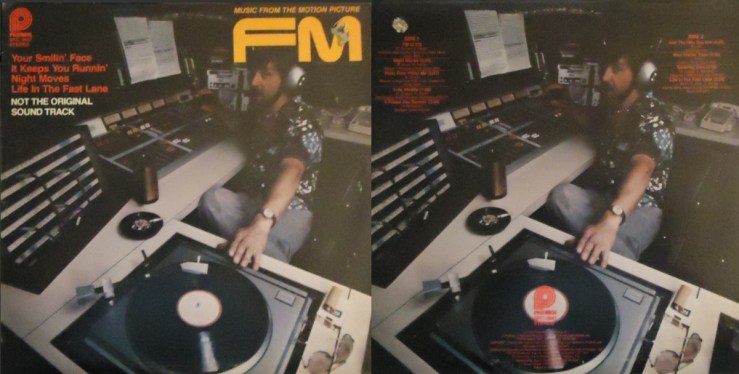
The film includes “acting” appearances by Tom Petty and REO Speedwagon, along with live performances by Linda Ronstadt and Jimmy Buffett (who recite a few lines of dialog in the process); Steely Dan performs the title theme, which became a real-life radio hit. The Eagles, James Taylor, Bob Seger, Dan Fogelberg, Billy Joel, and Queen were also featured on the Platinum-plus soundtrack album. While the soundtrack became more popular than the actual film it promoted and there was a need to repress copies, it was stymied by clearance rights; it was remedied by having a group of session musicians — Studio 78 — cut an all-covers version for bargain label, Pickwick.
In addition to a high definition 1080p presentation of the film — transferred from original film elements — this blu ray also includes new interviews with the movie’s star Michael Brandon, its writer Ezra Stacks and a video appreciation of the era of FM radio and the soundtrack of the film by Glenn Kenny.
An American soldier — on his way home from the Vietnam War — is left for dead and is saved by a pair of Japanese stragglers from WWII, who train him in the way of the samurai. This movie is also known as Deadly Force, The Force and The Black Samurai, as well as several other titles. It’s a compound of blaxsploitation and the kung fu genres, with some social commentary mixed in along the way.
I’ve always been fascinated by the Japanese soldiers who didn’t surrender after World War II. Here, they help our hero Doug — James Iglehart, who was Randy Black from Beyond the Valley of the Dolls — learn the ancient fighting skills he’ll never to make it back home.
Turns out that Doug and his buddies — McGee (Leon Isaac Kennedy, Too Sweet from the Penitentary) and Morelli (Carmen Argenziano, Grave of the Vampire) — have stolen gold on the way back from Vietnam for a crime boss. On the way back, they stab our hero, slash his throat and dump him off the boar. Luckily, those aforementioned Japanese soldiers are ready to teach him that violence really does solve issues.
McGee really wants Doug’s wife Maria, who is played by Jayne Kennedy, who appeared on the cover of Plaboy and was selected by Coca Cola USA as the Most Admired Black Woman in America. She was married to the actor playing McGee — Leon Isaac Kennedy — in real life. And back in the days before the internet, the two appeared in a sex tape so infamous, it’s referenced in a Mr. Show sketch (it’s at the beginning of the “Show Me Your Weenis!” episode where Wyckyd Sceptre gets caught on tape).
I just posted the screencap so that the review itself doesn’t get flagged on Amazon.
The soldiers that help our hero are played by Joe Mari Avellana, who was the Scourge in Wheels of Fire, and Joonee Gamboa, whose characters constantly bicker back and forth.
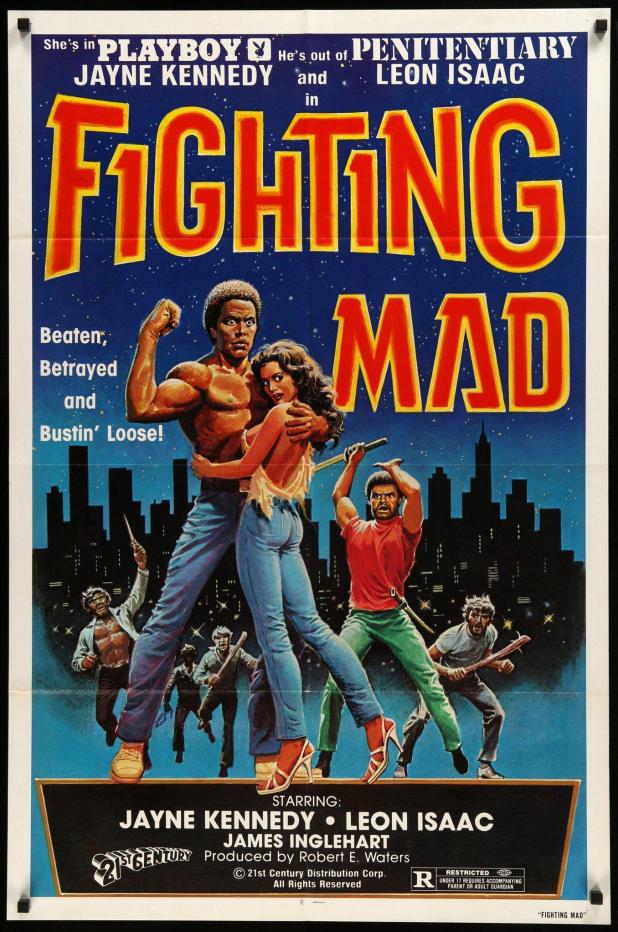
This movie has an amazing tagline: “She’s inPlayboy. He’s out of Penitentary. Jayne Kennedy and Leon Isaac in Fighting Mad.” A bit misleading, as he’s the villain, but what can you do?
Cirio H. Santiago is to blame — or praise — for this. He made more movies than we’ve probably reviewed on this site like Wheels of Fire, Demon of Paradise and Stryker.
You can get Fighting Mad on Mill Creek’s new Soul Team Six blu ray/DVD collection, along with five other films. It’s also available under the title Vengeance Is Mine on a double disc with Vampire Hookers from Vinegar Syndrome. Or you can watch it on Amazon Prime. There’s a free stream on You Tube.
DISCLAIMER: Mill Creek sent us this set, but we were planning on buying it anyway. It has no bearing on this review.
This is a film that could have only been made in 1978, approved with a signature in blood and a mountain of sweet, sweet cocaine. This was the time when the music would never end, when the buttons couldn’t be unbuttoned any lower, when shag carpeting was everywhere and AIDS was years away. A magical time, lost to us forever, that for so many was only experienced on the silver screen through protagonists like Tony Manero and this movie’s hero, Desmond.
Desmond is played by Fabian, who at one point in the late 50’s and early 60’s was a huge deal as a singer for young girls. Plucked out of Philadelphia obscurity while in a hospital visiting his father — who had just had a heart attack — Fabian had a $30 week allowance while learning to sing after already becoming a chart-topper.
Fabian’s introduction was a marvel of early marketing, with ads that exclaimed “Fabian Is Coming”, then asked “Who is Fabian?” before letting the nation know that “Fabian is Here.” After a big run of successes — and testifying during the payola scandal that his voice was electronically altered — Fabian spent $65,000 (about $336,000 today) to get out of his contract. He felt like a puppet that wanted to be free.
The star also went into acting, appearing with Stuart Whitman in 1957’s Hound-Dog Man, as well as High Time with Bing Crosby and North to Alaska with John Wayne. Fabian felt that acting suited him much better than singing. While he spent most of the 1960’s making films for 20th Century Fox, the major failure of Cleopatra let to them letting many contracts expire. No matter. American-International Pictures soon came calling.
There, Fabian appeared in everything possible for the studio — car racing films opposite Annette Funicello and Frankie Avalon (Fireball 500), as a schoolteacher battling marijuana (Maryjane), in a rip-off of The Dirty Dozen (The Dirty 8) and even taking over Avalon’s role as he battled Vincent Price under the direction of Mario Bava (yes, I could never make up Dr. Goldfoot and the Girl Bombs).
But by the late 60’s, he’d started drinking, posed naked on a motorcycle for Playgirl, was arrested for a public argument with his wife, then he started playing Vegas until he went bankrupt. Obviously, his life has been a wild ride up until this point. Fabian retired, only to suddenly return in the mid-70’s.
Oh yeah — he also was in a major car crash in a celebrity race at the famous Watkins Glen. And then he put on a cigarette on a plane flight after being asked to extinguish it. Except he put it out directly into the body of that passenger. And that passenger ended up being a district attorney. Whew! Fabian’s life got even crazier when his former manager was the consultant for 1980’s The Idolmaker, a thinly veiled story where a young and handsome singer named Caesare doesn’t deal well with his whirlwind success. After a lawsuit, Fabian and his wife received a personal apology and his manager’s 7.5% interest in the film.
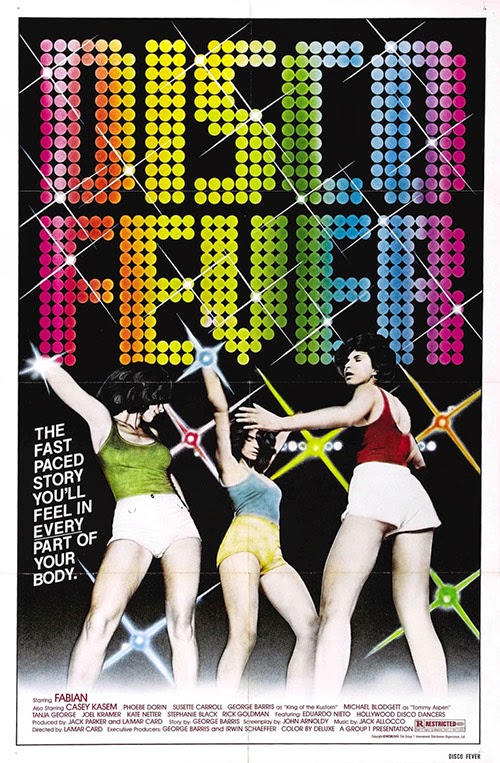
Which brings us — in the most roundabout way possible — to Disco Fever.
Originally known as Jukebox, Fabian is pretty much playing himself, as a once-famous singer who only wants to sing his own songs. The trouble is, most of these songs aren’t all that great, with Fabian possessing a warbling voice that would have done well with some AutoTune, had it existed in 1978. He’s also covered his matinee idol looks up with a beard, looking a bit like Eddie Rabbit.
Even when he tries to unwind at Cybil’s disco, one of the girls there mentions seeing him on TV in Rio Bravo (he corrects her, it’s North to Alaska) as well as Beach Blanket Bingo (that’s not him, it’s Frankie Avalon). All he really wants to do is stay home and write new music while pining after the next too young girl who broke his heart.
However, his manager Brian Parker has different ideas. He’s played by Casey Kasem, which may seem bonkers to those who only knew Casey as the voice of America’s Top 40 and Shaggy from Scooby-Doo. But before all that, Casey was an actor, appearing in several biker films like The Glory Stompers, Wild Wheels and The Cycle Savages. He’s also in The Incredible 2-Headed Transplant, The Dark and well as voices for Battle of the Planets and several of the Transformers like Bluestreak and Cliffjumper before he left that show over its depictions of Arabic stereotypes.
None of this knowledge — nor knowing that his frozen corpse would spend over a year being shuffled all over the world in a battle between his children and his second wife — will prepare you for the sights of Casey Kasem begging women for sex and falling all over a carpet trying to do the blow that’s spilled all over it.
Parker wants Desmond to get signed by Cybil (Phoebe Dorrin, Antoinette from TV’s The Wild, Wild West), who is the biggest power going in disco, what with having her own club and now an airplane that she’s converted in a flying disco. Yes, really.
The goal is to use Desmond’s old name power but force him to use his old songs in a convoluted revenge scheme because he spurned her years ago. Her real goal is to push the new voice of disco — Tommy Aspen, played by Michael Blodgett, Lance Rocke from Beyond the Valley of the Dolls — who just likes to sneer and do coke.
There are plenty of music numbers where we simply watch people not involved in the story dance, which are still pretty fun. You can glimpse breakdancer Shabba-Doo as well as Elizabeth E.G. Daily as one of those dancers years before she was Dottie in Pee-Wee’s Big Adventure. Also — did you know she was once married to Rick Salomon, the same man who was married to Pamela Anderson and Shannen Doherty, as well as appearing in a stolen sex tape with a young Paris Hilton. You think with luck like that, God would smite him somehow, but he won $2.84 million at last year’s World Series of Poker. Meanwhile, E.G. Daily won our hearts in roles in One Dark Night; Ladies and Gentlemen, The Fabulous Stains; Valley Girl; Better Off Dead and Bad Dreams, as well as providing Tommy Pickles voice on Rugrats.
This whole mess comes to us from the team behind Supervan: writer John Arnoldy and director Lamar Card. They’re joined by George Barris. Yes, the very same George Barris who made the Batmobile and Dragula for The Munsters. Yes, he was part of Supervan, but what that has to do with disco — and why he and his wife show up playing themselves at a tennis club — I can only chalk up to the 1970’s and some big flakes of Peruvian powder. In fact, I can only imagine that this movie was really just a reality movie shot of the lives of a briefly single Kasem, a down and out Fabian and the Barris family as they lived it up under the sun in ’78 before reality came crashing down.
This film isn’t on Blu-ray. It isn’t even on DVD. That needs fixed so that it can mess with the minds of others, too. I can’t even believe that it exists and wish that disco airplanes were still a thing, because only in 70’s exploitation film can such a magical thing occur.
Update: February 2021: We just discovered a DVD version of Disco Fever on Mod Cinema.com. We are not familiar with the seller and can’t attest for them, so shop smart. But at least there’s an option to acquire your own copy of this long-out-print obscurity. While you are at it, complete the ’60s teen idol trifecta and get a copy of Frankie Avalon’s Blood Song (the flute movie!), and Fabian, once again, in Kiss Daddy Goodbye, for nothing beats ’60s teen idols doing ’80s slasher films.
We originally wrote about this movie back in October of last year, but recently had the chance to revisit it thanks to the Mill Creek blu-ray reissue that comes out on May 14.
We’re big fans of Good Bad Flicks on YouTube and are often inspired to either check out a movie or revisit one after Cecil dissects it. That was the case here and the fact that Mill Creek was re-releasing it — Indicator had put out a limited edition and all we had was a very old DVD — seemed like the perfect opportunity to go back and savor this film.
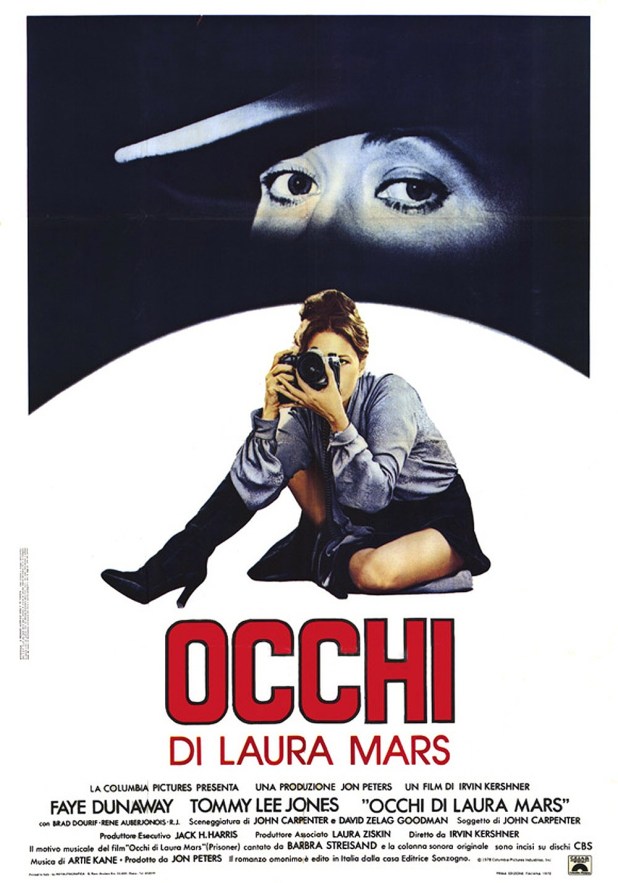
When seen through the lens of the giallo form, The Eyes of Laura Mars reminds me of post-Deep Red era Argento — taking the basics of the detective form and grafting on one supernatural element. Here, it’s the fact that Laura Mars (Faye Dunaway), a high glam fashion photographer, can see the violent deaths of people as she takes photos. The images that they inspire lead her to great success and controversy, creating an intriguing narrative of the violent and at times bloody battle of inspiration for artists. I’m also struck by how detached Mars is from the art and fashion world in which she lives, until she’s in the midst of shooting. Then, she finally opens not just herself up, but her posture. She spreads low to the ground, sexualizing herself when she’s often covered by clothing throughout the film that hides her body from the world.
Going from an independent picture produced by Jack H. Harris to big studio affair by Jon Peters (who dreamed of then-girlfriend Barbara Streisand in the lead), The Eyes of Laura Mars struggled with a new writer being brought in to adjust John Carpenter’s script (the auteur said “The original script was very good, I thought. But it got shat upon.”) and the production lasted 7 long months, including a 4 day shoot in the middle of New York City to capture a major fashion shoot with models, wrecked cars and fire everywhere.
It has assured direction by Irvin Kershner (whose commentary track is on this new release), which led to him being hired for The Empire Strikes Back. After watching so much giallo, I’ve noticed that the America versions of the form are very much like Laura Mars herself: detached, cold and not all that interested in the murder as art that native Italian creators like the aforementioned Argento immerse themselves in. This film is made in hues of black and white when their world is neon and always the most red possible.
Upon a new view of this film, I was also struck by just how great the cast is. Tommy Lee Jones is perfectly cast, with his final speech near-perfect. In truth, he wrote that ending monologue, but credited it to Tommy Lee Jones actually wrote his own monologue, crediting it to Kershner, unbeknownst to the Writers’ Guild. Brad Dourif is routinely amazing in movies and his small role here is still a stand-out, as is the acting of Rene Auberjonois and Raul Julia.
This movie also features one of my favorite settings: New York City at the end of the 1970’s, which I feel is the closest place to Hell on Earth that has ever existed. As a child, I watched WOR Channel 9 news from the safety of being a few hundred miles away in Pittsburgh and wondered who would ever want to live in this city. You can almost smell the garbage and desperation in the air here, which is in sharp contrast to the cold, metallic and not so real world of fashion and art.
If you’ve seen this, it’s worth a rewatch. If you haven’t, by all means, grab this new re-release and discover it for yourself.
DISCLAIMER: Thanks to Mill Creek for sending this our way.
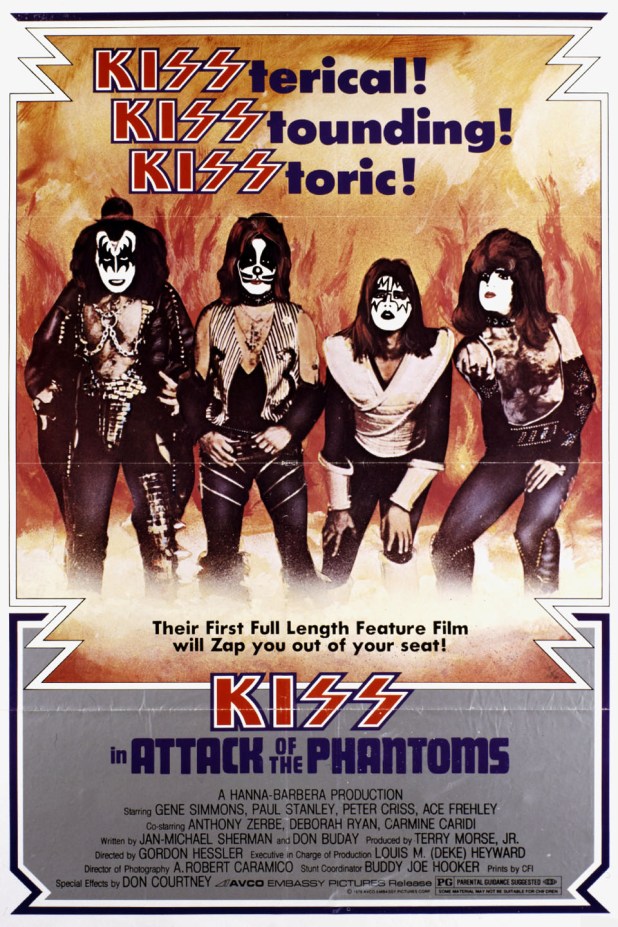
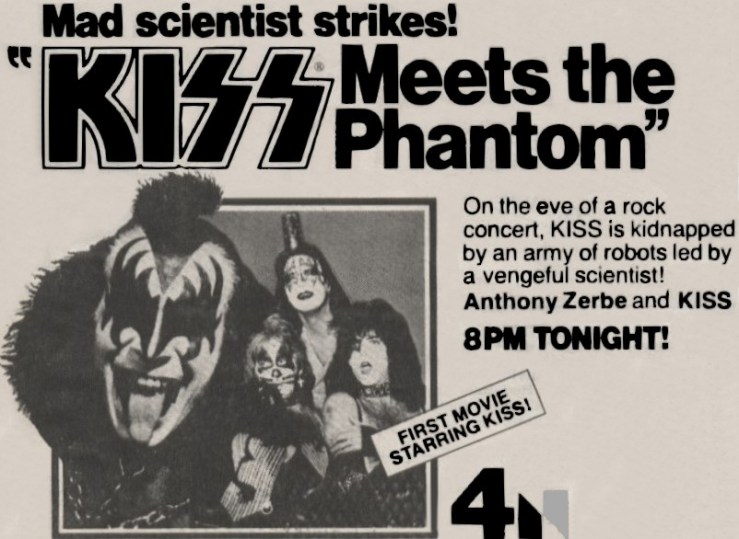
Known as Attack of the Phantoms in Europe and Kiss Phantoms in Italy, this movie has been an embarrassment to Kiss the band and their fans, the Kiss Army, for years. As a six-year-old in 1978, I was certainly aware of the band, as many of my friends had the toys and their older brothers and sisters had the records. But they always seemed strange to me — I was always wondering why they weren’t heavier. It wasn’t until I moved past their 1980’s work and started to enjoy the first few albums that I learned just how much fun Kiss could be.
That’s probably why this movie doesn’t upset me at all. In fact, I kind of love it.
In 1977, Kiss had an income of more than ten million dollars. Their manager Bill Aucoin believed that the traditional cycle of album releases and touring had taken Kiss as far as they could go. So what was the next level? Kiss would become superheroes. Seeing that band boss and bassist Gene Simmons was a huge comic fan, this move made perfect sense.
Round one was a Marvel comic, with the band mixing their blood into the ink for the cover. Round two was this, a Hanna-Barbera produced movie that was a rush job, with all four band members given a crash course in how to act that didn’t really take for anyone but Simmons, who would go on to menace Tom Selleck in Runaway and John Stamos in Never Too Young to Die.
Screenwriters Jan Michael Sherman and Don Buday spent time with each Kiss member so that they could properly learn their characters. “Space Ace” Ace Frehely was known to be pretty strange, frequently saying “Ack!” The writers decided that he would be like Harpo Marx and that would be the only word he would say. Ace responded by demanding more lines or he would quit the film.
Both Frehley and “Catman” Peter Criss hated the long downtime that comes with movie making. They were both dealing with substance abuse issues at the time, too. Nearly none of Criss’ dialogue is his voice. It’s Michael Bell other than when he sings “Beth.” In fact, Frehley got in a fight with director Gordon Hessler (Scream, Pretty Peggy) and left, so for one scene you can clearly see his stunt double taking his place. How can you tell? Well, Ace isn’t black but his double is.
Much of Kiss’ acting in this film is them performing in the parking lot of Magic Mountain in front of 8,000 fans. Those fans were drawn by free tickets from local station KTNQ and DJ “The Real” Don Steele, who shows up here, as well as in plenty of Roger Corman alma mater films like Gremlins, Death Race 2000, Rock ‘n Roll High School and Eating Raoul. In 1970, he was so famous that a “Super Summer Spectacular” spot Don Steele contest led to two teenagers trying to track down the DJ accidentally ramming a car into a highway divider, killing a man. The case that came out of it made it the whole way to the Supreme Court of California and Weirum v. RKO General, Inc., 15 Cal.3d 40 is still studied in American law schools in regards to the subject of foreseeability in torts law.
Within Six Flags Magic Mountain, Abner Devereaux (Anthony Zerbe, The Omega Man) is upset that his animatronics are playing second banana to an appearance by Kiss. That may be because his creations have been eating up park revenue. Devereaux is a real piece of work, enslaving Sam Farrell and other employees and a gang of punks (one of them, Dirty Dee, is played by Lisa Jane Persky, who was an early CBGB audience member and girlfriend of Blondie bass player Gary Valentine, who write “(I’m Always Touched by Your) Presence, Dear” for her. She has gone on to appear on Quantum Leap and in multiple projects with Divine. Another punk, Chopper, has a vest with a Satan’s Mothers patch, the exact same logo that would be used again the next year for Walter Hill’s The Warriors).
As Sam’s girlfriend Melissa searches for him as the mad scientist of the park is fired and Kiss plays their concert. After the show, we realize that Kiss are nearly ascetic magicians given to magical pronouncements and superpowers, particularly “Demon” Gene Simmons whose voice rumbles whenever he speaks and “Starchild” Paul Stanley who can read minds.
Devereaux eventually steals the mystical talismans that give Kiss their powers and replaces them with evil robotic duplicates. Of course, Kiss gets their powers back and wins over the crowd and saves the park.
Before the movie aired on TV, a private screening was arranged for Kiss. While their management and hangers-on loved it, the band was incensed and refused to allow anyone to speak of the movie in their presence.
This is quite literally a Scooby-Doo movie, only topped by the 2015 cartoon Scooby-Doo! and Kiss: Rock and Roll Mystery, where Kiss wrote a song all about Fred, “Don’t Touch My Ascot.”
Ironically, soon after this film, Gene Simmons and Paul Stanley would replace the increasingly unreliable and out of control Ace and Peter with an endless series of duplicates who had no ownership or voice in the band’s future. So you can kind of watch this film as a precursor to the very behavior that band would embody in the future. Perhaps the robotic Gene is now the real Gene? The mind boggles.
If I ever met Simmons — my brother has, he gave a keynote speech at a Major League Baseball annual retreat, something I find inordinately hilarious — I hope he looks at me and roars like a lion before intoning, “No gratitude need be voiced. Your mind speaks to us!”
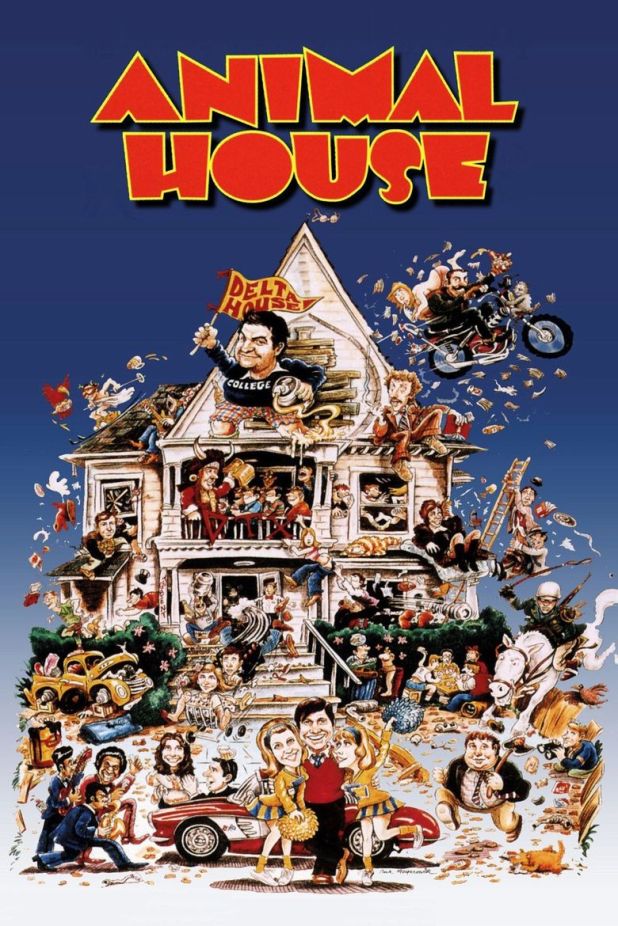
It’s impossible to explain to anyone who wasn’t around when this movie came out what its impact was. It changed comedy.
It came directly from the minds at the National Lampoon. In 1973’s National Lampoon’s High School Yearbook, writer Doug Kenney created the characters of Larry Kroger, Mandy Pepperidge, and Vernon Wormer, who by and large appear exactly the same in this film. Several of the stories of Lampoon writer Chris Miller also inspired this movie.
With an original script that was basically page after page of vomit, director John Landis was selected on the basis of his film The Kentucky Fried Movie. He added the idea that there had to be good guys and bad guys.
Originally, the cast was going to be Chevy Chase as Otter, Bill Murray as Boon, Brian Doyle-Murray as Hoover, Dan Aykroyd as D-Day (which makes sense, as the motorcycle-loving character is pretty much Aykroyd) and John Belushi as Bluto. Only Belushi would end up being in the film. At one point, Jack Webb was going to be Dean Wormer with Kim Novak as his wife, but he backed out.
At the time of filming, Belushi was only a star on Saturday Night Live and the studio wanted another star. Luckily, Landis was friends with Donald Sutherland and often babysat his son Kiefer. Thinking the film wouldn’t be a success, he did it for a day rate versus points, which cost the actor around $14 million dollars.
That said, without Sutherland, the movie wouldn’t have been made.
Much like the best of comedies — you will see this as a thread in most of my explorations of them — this is more of a series of vignettes than an overall narrative. The main story, though, concerns College Dean Vernon Wormer (John Vernon) and his battles against the sloppy and silly Delta Tau Chi fraternity.
My favorite part of this movie is something that was taken and used so many times by so many other lesser films: the final fates of many of the characters are revealed via text before the credits roll. For example, Babs becomes a tour guide at Universal Studios. Many of the films of John Landis have an ad for Universal Studios that ends by saying, “Ask for Babs”. That was a secret joke that for a while would give lucky visitors a discount or even a free ticket.
Sadly, National Lampoon writer and editor P.J. O’Rourke blamed this movie for magazine’s death. After Animal House‘s success, Hollywood came with money in hand, paying the writers more than they’d ever make at the magazine. But then, none of their scripts would be all that great, which hurt their careers and the reputation of the Lampoon.
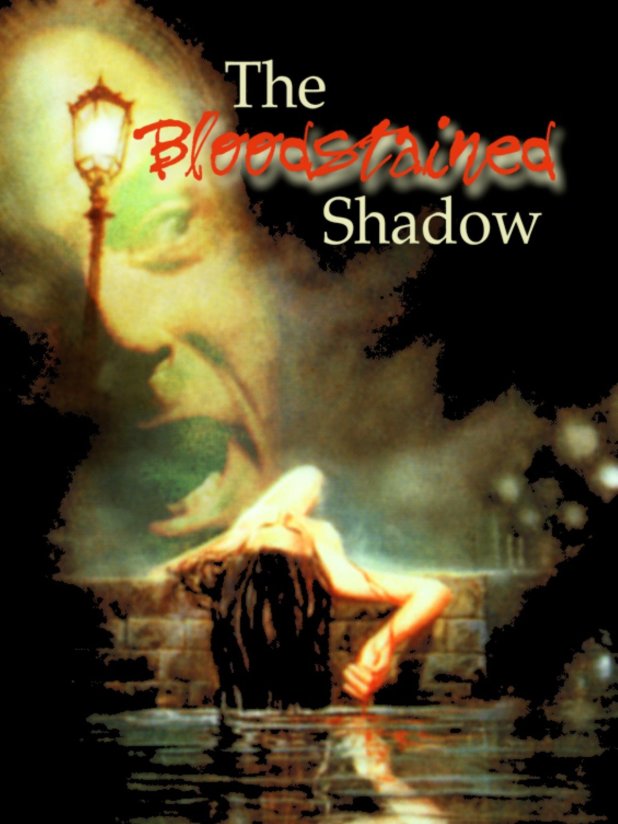
One of my favorite things about giallo are the alternate titles. As if The Bloodstained Shadow isn’t a great name, this movie also goes by Solamente Nero (Only Blackness), which is a way better title. The other thing I love about this genre is that just when I think I’ve seen every good one, I find another to enjoy.
This is the kind of movie that tells you exactly where it stands in the first minutes, as a killer strangles a girl in a field before the credits even start. That murder has never been solved. Years later, a college professor named Stefano has a nervous breakdown. To recover, he comes home to visit his brother Don Paolo, who has become a priest that hates all of the immorality in their small town.
Oh what immorality — there’s a gambler, a psychic, a combination atheist/pedophile and an illegal abortionist with a mentally challenged son who lives in a shack top the list, along with your typical sex and drinking that happens in any town.
Meanwhile, murders have been piling up and whoever is behind it, they’re leaving notes to the priest, warning him that if he reveals who the killer is, he’ll be next. That’s because on Stefano’s first night back home, Don Paolo saw the killer murder the town psychic in the courtyard.
Stefania Casini (Suspiria) also appears as the love interest, Sandra, who helps Stefano come back to normalcy. Well, as normal as a town filled with murder can be. I’m kind of amazed that she wears a belly chain all day. When you get to the love scene, you’ll know what I mean.
There’s also some amazing religious imagery in this one, like a skinned and bloody animal that has been placed in the sacristy to warn the priest that he’s getting too close, or the communion scene that reveals who the real killer is.
Finally, Goblin plays some great music in here, created by composer Stelvio Cipriani. It’s really a great package, thanks to director Antonio Bido, who directed one other giallo, Watch Me When I Kill. I love how the past childhood trauma that the brothers endured continues to permeate their lives as they try to grow up. This is a very adult giallo and by that, I mean that it doesn’t need nudity and gore to tell its tale.






 B&S About Movies
You must be logged in to post a comment.