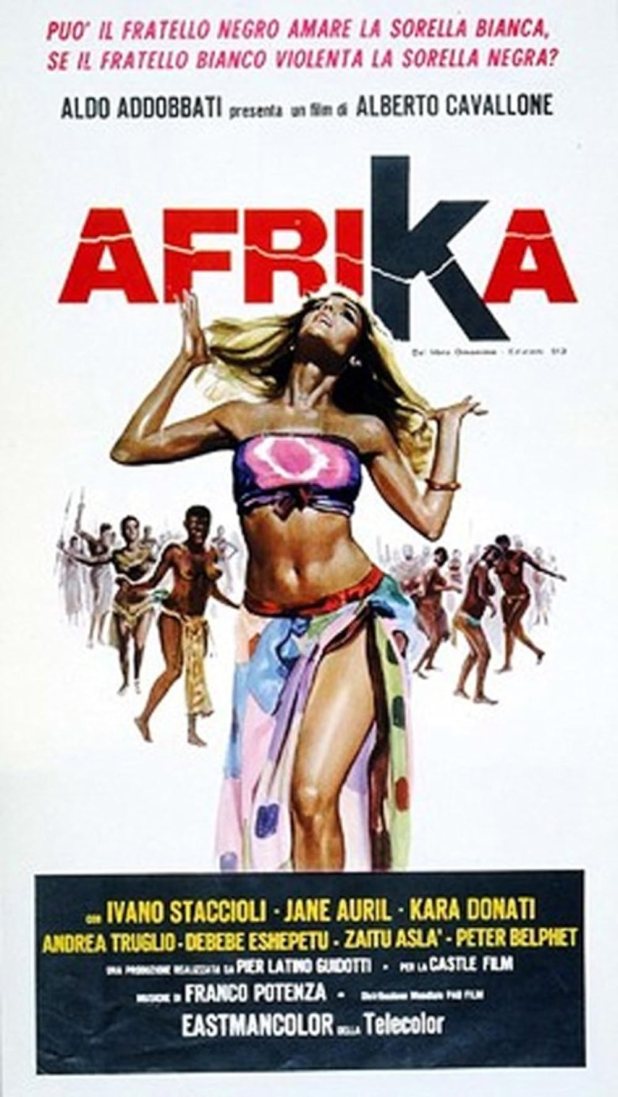
Afrika (1973)

Afrika is a rarely discussed giallo directed and written by Alberto Cavallone (Soffio Erotico) and one of the few where homosexuality is explored outside of a comedy character.

Professor Philippe Stone (Ivano Staccioli) is in the middle of being in love with his wife (Jane Avril) and his attraction to young men like his secretary Frank (Andrea Traglia), who he has made a part of his family. Frank even becomes a woman, but Stone ends up cutting him out of his life, which causes the now her to kill herself with the help of his sister (Kara Donati). You feel for Frank because of he/she lived a life filled with horrible moments, like being assaulted by two men and a woman when he was just a teenager. He’s just looking for love from the older European, but much like how the white man colonized Africa but really stripped it for its resources, that’s what is happening to him/her.

At the end, the police simply say, “Let’s close this squalid story as the suicide of an abandoned woman. We don’t say a word about everything else.”

Cavallone said, “It wasn’t a film that the public could like… and in fact it didn’t like it.” He also said in another interview, “I wanted to talk about Africa and homosexuality. I was interested in exploring the problem, trying to make people understand this type of relationship, which was seen at the time as a taboo relationship. And above all I was interested in making an African story in which Africa could be a backdrop to bring the characters closer together. The whites in an Africa that had now decolonized were the soldiers of General Custer.”

Finally, a word on how the movie was horrific to make: “Working in Ethiopia was a nightmare, my operator and I were put in a security cell several times. “

To make Italian male audiences not feel so weird about this confrontation with male love, there are numerous scenes of Avril nude, including her dancing with an African tribe. To remind us all this is an Italian movie, there is a scene of soldiers killing two women and real footage of cattle being slaughtered.

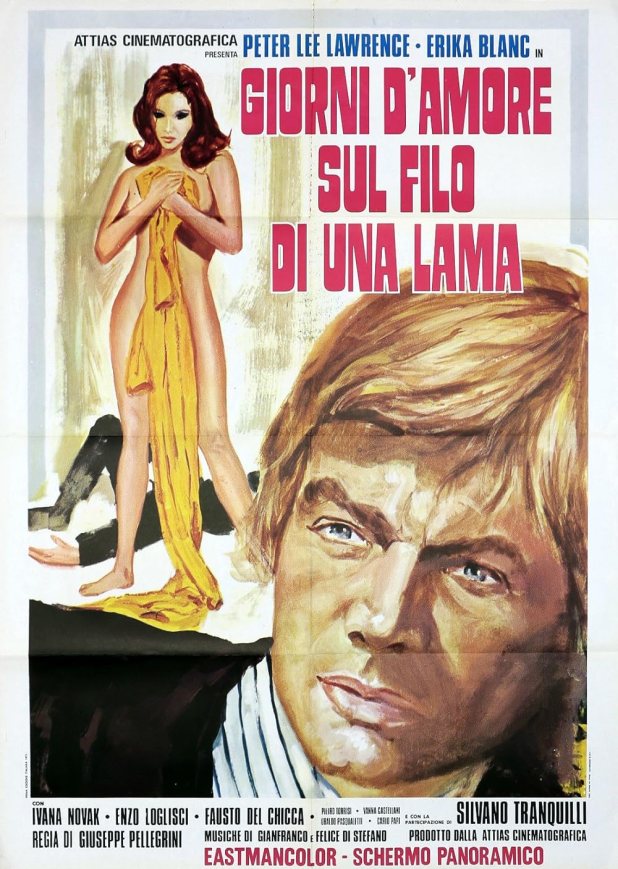
Giorni damore sul fil de una Lama (1973)

Love and Death on the Edge of a Razor is the tale of Stefano Bruni (Peter Lee Lawrence), who is in Venice to meet with his father who wants him to marry Giovanna Selva (Ivana Novak), the daughter of a wealthy entrepreneur. This arranged marriage would help the Bruni family business. As for Stefano, he is in love with Lidia Caselli (Erika Blanc), but when he goes overseas, he learns from his father that she has died in a car accident.

Stefano begins to date Giovanna but he can’t get over the loss of his true love. He even sees her, despite the woman named Renata Pavanne who claims that she’s a journalist and has no idea who he is. He’s warned off of her by a mobster named Gianni Massara (Fausto Del Chicca). Yet he refuses to give up and the journalist admits that not only is she Lidia, but that she’s trapped by Gianni and part of his crimes.

Lawrence and Blanc had already worked together (Love and Death In the Garden of the GodsThe Long Arm of the GodfatherHell In Normandy) and were close friends. Lawrence died just a few years after this film and according to his wife, Cristina Galbo, he did not commit suicide but instead died of a brain tumor at the way too young age of thirty. In just nine years, he made thirty movies.

The end of this movie is left open to you, the viewer, as Lidia is shot by Gianni and taken to an operating room. It makes you wonder if the world of the movie lives on beyond what we see in the fleeting time we get to know these people.

The film was directed by Giuseppe Pellegrini, who wrote the script with assistant director Dante Cesaretti and production manager Camillo Fantacci. This is the only movie that Pellegrini directed, but he wrote both The Vampire and the Ballerina and The Monster of the Opera.

You can watch this on YouTube.

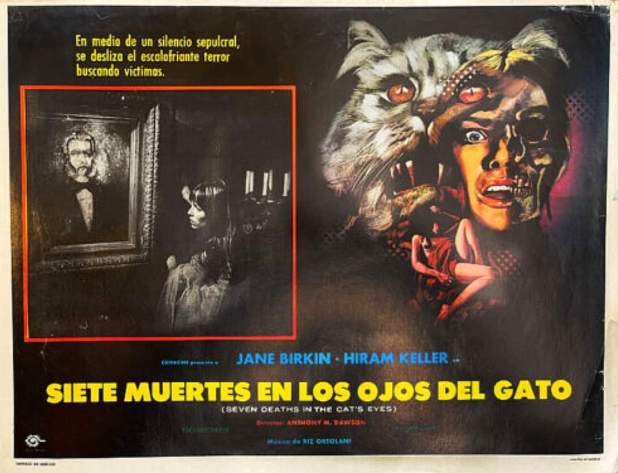
Seven Deaths in the Cat’s Eye (1973)

Forget the claim that this was based on a story by Peter Bryan. No, this is director Antonio Margheriti and writer Giovanni Simonelli coming together to make a giallo in the wake of the animal films of Argento but getting to having an orangutan get involved way before Dario did that (yes, I get that this movie has a gorilla suit, but the dialogue calls it an orangutan).

Dragonstone Castle is a crazy place filled with crazy people and that’s just the way I want it to be. It’s also where Corringa (Jane Birkin, who was in Blowup and Kaleidoscope but may be best known for her marriage and work with Serge Gainsbourg, including the song “Je t’aime… moi non plus,” a song written for Brigitte Bardot, whose husband Gunter Sachs demanded that the version she sang on not be released. Gainsbourg claimed it was an “anti-fuck” song about the desperation and impossibility of physical love, but it sure sounds like — and it was rumored — that Gainsbourg and Birkin are making love while recording lyrics which include phrases such as, “Je vais et je viens, entre tes reins” or “I go and I come, between your loins” and “Tu es la vague, moi l’île nue” or “You are the wave, me the naked island.”) has just arrived, seemingly moments after someone has been killed by a black-gloved killer with a razor.

Corringa used to spend summers there with her mother, Lady Alicia (Dana Ghia). She reunites with her and her aunt, Lady Mary MacGrieff (Françoise Christophe), who is rich in title only, having lost much of her money, as many aristocrats did in the late 60s. There’s also a priest (Venantino Venatni), Dr. Franz (Anton Diffring), a French teacher named Suzanna (Doris Kunstmann) and Lord James MacGrieff (Hiram Keller) who has the same name as the orangutan, which is not confusing at all.

And oh yes, an orange cat who likes to watch people die.

Mere seconds after her first dinner in the house, Corringa finds that her mother has been suffocated, possibly by Lord James, who she finds in a passage under the castle after following the orange cat. If that’s not enough, the cat also jumps on her mother’s coffin during her funeral, a sign that someone is a vampire, and to make that even more true, the legend says that if one MacGrieff kills another, they become a fanged blood drinking undead killing machine.

If you’re wondering when Luciano Pigozzi shows up in this Antonio Margheriti film, that would be now, but he’s soon killed by the razor-using madman. Or woman, right? Corringa now dreams of that her mother is a vampire and the cat wakes her at night. She’s soon sleeping with James — oh Italian horror families — and someone unlocks the simian beast from his cage. Also, the priest and the French teacher are sleeping together, but he’s soon also slashed. And Lady Alicia’s coffin is empty.

Ah, so many twists and turns. That’s why Margheriti is so good at movies like this, which flirt with horror and the gothic as well as giallo. Plus Serge Gainsbourg shows up as a police officer.

The Riz Ortolani soundtrack is almost a greatest hits of Margheriti’s horror films. You can hear bits of The Virgin of Nuremberg and Castle of Blood.

Cinematic Void January Giallo 2024: Torso (1973)

EDITOR’S NOTE: Cinematic Void will be playing this on January 19 at 11:59 CT at The Belcourt Theatre in Nashville, TN (tickets here), January 20 at 7 PM PT at the Egyptian Theatre in Los Angeles with The Strange Vice of Mrs. Wardh and Sergio Martino in person and January 22 at 7 PM CT the Music Box Theatre in Chicago with Sergio Martino in person (tickets here). For more information, visit Cinematic Void.

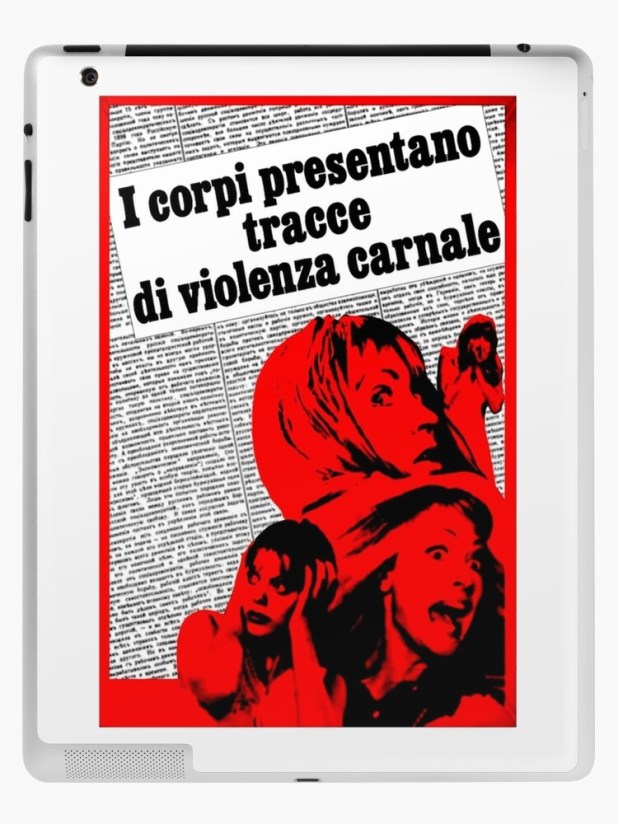
Torso is such a simple title. I’d rather call this film by its Italian name: I Corpi Presentano Tracce di Violenza Carnale, or The Bodies Bear Traces of Carnal Violence. Either way, it was directed by Sergio Martino and features none of the cast that he had come to use in his past films like George Hilton, Ivan Rassimov or Edwige Fenech.

It does, however, star Brtish actress Suzy Kendall, who played the lead role of Julia in Dario Argento’s seminal The Bird with the Crystal Plumage. She’s so associated with giallo that she appeared as the main character’s mother in 2012’s ode to the genre, Berberian Sound Studio.

This is a film that wastes no time being strange. Or salacious. A photographer is shooting a soft focus lovemaking session between three women amongst creepy, eyeless baby dolls. By the time we register what is happening, we’re now in a classroom, where swooping pans and zooms refer us to the main cast of the film as we overhear a lecture and later a discussion about Pietro Perugino’s painting of Saint Sebastian. Did he believe in God? Or was he just trying to sell sentimentality? Could an atheist find himself able to translate religion to those with faith?

We cut to a couple making out in a car as a figure stalks them through the eye of the camera, making us complicit in the act of the killer. Quick cuts reveal the white-masked face of this maniac. The man runs after him while the girl doesn’t even care that they had a voyeur watching. As she waits for him to return to the car, but grows impatient. The headlights of the car cast her shadow large across the columns of a bridge. And their light is quickly extinguished by black-gloved hands. The camerawork here is really striking, keeping us watching for the killer, as we’re no longer behind his eyes. His attack is swift and ruthless, juxtaposed against the images of fingers penetrating the eyes of a doll.

The art professor (John Richardson, Black Sunday, The Church) and Jane (Kendall) meet by chance at a church where she challenges him to change his views on Perugino. As she returns from their somewhat romantic afternoon, Jane spies her friend Carol arguing in the car with a man who she believes is married.

Meanwhile, ladies of the evening walk the street, ending up with Stefano, a student who has been stalking Julie. He has trouble performing and the prostitute he’s with tells him that all the men with hang-ups always come her way. That said — even if he’s queer, he better pay the money. He flips out and attacks her, but she makes her escape.

We’re then taken to a hippy party that looks like it’s taking place inside Edward Lionheart’s Theater of Blood. There’s weed, there are acoustic guitars, there are bongos, there are dudes with neckerchiefs, there are motorcycles. Truly, there’s something for everyone. But after leading on two men, Carol just walks out into the mud. They try and chase her, but she makes her escape into the foggy night. We hear her footsteps through the swamp as she walks, exhausted and covered in mud. What better time for our white-masked killer to return? We see glimpses of him through the fog and then he is gone. Whereas in past films Martino ignored the murder scenes instead of story, here the violence is extended, placing the killer and his actions in full view. After killing the girl, he rubs mud all over her body before stabbing her eyes — again intercut with the baby doll imagery. Her blood leaks into the mud as the score dies down.

This scene really feels like what the first two Friday the 13th movies were trying to achieve, but of course several years before they were made.

A police detective is in front of the art class, showing images not of art, but of the crime scene. A piece of cloth has been found under the fingernails of one of the murdered students, Flo. And that same scarf was found on Carol’s body. It’s their duty to report seeing anyone who wore this scarf to the police, who want to cooperate with the students who normally riot and throw rocks at them.

Two of the men in the class — Peter and George — were the last two people to be seen with Carol, the ones who she turned down at the party. Meanwhile, Stefano continues to stalk Jane. The music in this film is so forward-leaning — tones play when the killer shows or during moments of tension.

A man calls Daniela and tells her that if she ever tells where she saw the red and black scarf, she’s dead. Fearing for her life, she tells her uncle, who lends his country home to her and her friends so that they can get away from the city while the killer is at large.

Oh yeah — I forgot the pervy scarf salesman, who the police are leaning on. Right after talking to the police inspector, he calls someone and asks for money to buy his silence. Whoever it is, they bought the scarf from him and wouldn’t want anyone else to know. They’ll also get out of town and head to the country. Coincidence? I think not!

Stefano is all over Dani, telling her that he needs her. She wants nothing to do with him. When she stares at him, she remembers seeing him wear the red scarf. She escapes — slamming the door in his face. She tells Jane that she remembers seeing him wear the scarf — and never again — the day Flo died. The whole time, the creepy uncle is watching the two girls. Jane offers to speak to Stefano, then meet the girls at the vacation home.

The street vendor is flush with cash, creeping along in the dark. A car starts to follow him. We see the black-gloved hands again as the car hits its victim again and again, bright red gore pouring all over the screen.

Jane goes to speak to Stefano, finding only strange baby dolls and letters to Dani asking her to love him and remember the promise that she made as a little girl. Jane is surprised by Stefano’s grandmother, who tells her that he left town.

The other girls are asleep on the train as someone watches them. A strange man enters their train car and sits down.

The camerawork in this movie feels as predatory as the perverts and killers that exist within it. Speaking of pervs, when the girls arrive in the countryside, the local men pretty much lose their minds, particularly over Ursula (Carla Brait, the man wrestling dancer from The Case of the Bloody Iris). She and Katia make out as a peeping tom watches, only for the killer to show up and off the leering man. There’s an amazing scene of the killer dumping the pervert into a well, shot underwater and staring upward as the body falls toward the lens.

Man, every man in this movie is scum. They’re either frightened boys or perverts wanting one chance to knock up a woman or scarred from past sexual encounters. None of them are positive, as even the uncle who gives Dani the villa seems way too interested in her. Every man is a predator at worst and a leering pervert at best.

Jane hurts her ankle when she gets overly excited about breakfast. A doctor arrives — the mysterious man from the train — and he gives her a pill, which knocks her out.

The girls go sunbathing while Jane recovers. Dani thinks she sees Stefano — complete with the red scarf — watching them. They return home and drink champagne, which Jane uses to wash down her sleeping pills.

A few minutes later, the door rings. It’s Stefano — the girls all scream — but he’s dead — the girls scream again — and the killer is behind him, holding the red scarf — now scream even louder! Instead of showing us the murders, Martino switches form, cutting to a ringing bell and Stefano being buried.

Jane wakes up, asking where her breakfast is. She’s obviously slept late as a result of the pills. She walks around the apartment, looking for Dani, Ursula and Katia, only to find a mess. Tossed chairs, bottles of beer and every single one of her friends murdered. Suzy Kendall is amazing in this scene, caught between fear and nausea. Unlike so many wooden giallo performances, she’s actually believable.

She hides as the killer comes back, forced to stay quiet and watch as he saws her friends into pieces. Even the ordinary world routine of the milkman arriving cannot stop the butchering of her friends, with her trapped just feet away.

This final act is completely unexpected, as up until now, the film had played by the rules of the giallo, the large number of victims versus a large number of red herrings.

In fact, this film is so packed with red herrings, even the cast had no idea who the killer was. Martino wouldn’t tell them who it was, so each of the actresses had her own theory as to who the killer was. And in the original script, the killer survived.

Now, instead of that traditional giallo structure as I mentioned above, it is the last survivor — a near prototype for the final girl — against a killer. Throw in that Julie can’t move well due to her leg and Martino has set up quite the suspenseful coda.

Trapped in the house, Julie tries to signal with a mirror, using Morse code. But it totally misses the heroic doctor’s sight. He places a call, but it doesn’t seem like it’s to Julie. She looks out the window and sees the killer coming back.

It turns out that the killer was the professor, who saw a childhood friend die trying to reach for a doll. He compares the other kills to dolls, with only Julie as a flesh and blood person. Everyone else was a bitch or played games with him or blackmailed him. He hacked Ursula and Katia to pieces like dolls as a result. Dani saw him. Carol may have seen him. And he killed Stefano when he saw him in the village. Death, he says, is the best keeper of secrets and then he sees Julie as a doll and tries to hang her. She’s saved at the last second by the doctor.

They battle into a farmhouse, across the yard and to a similar rock where we saw the younger professor watch his friend die. We hear a screen and have no idea who has been killed — but luckily for Jane, the doctor survives.  He discusses whether fate or providence had kept him in town, where he could save her. Perhaps it was written in the stars. Julie replies that Franz, the professor, would have been a realist and called it a necessity. Franz is dead and the dreamers live on.

The more times that I’ve watched this film, the more that I appreciate it and how it flips the genre conventions on their head and moves toward more of a slasher, with many of the giallo elements feeling tacked on somewhat to stay within the expected pieces of the form. A real clue that it’s really a slasher? The killings are more important than who the killer is.
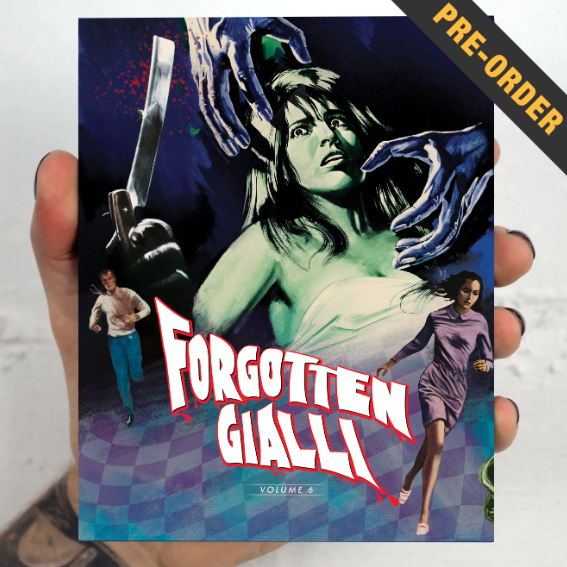
VINEGAR SYNDROME BLU RAY RELEASE: Forgotten Gialli: Volume Six

Vinegar Syndrome has released five Forgotten Gialli sets. You can check out my articles on the others here:

This box set has the following movies:

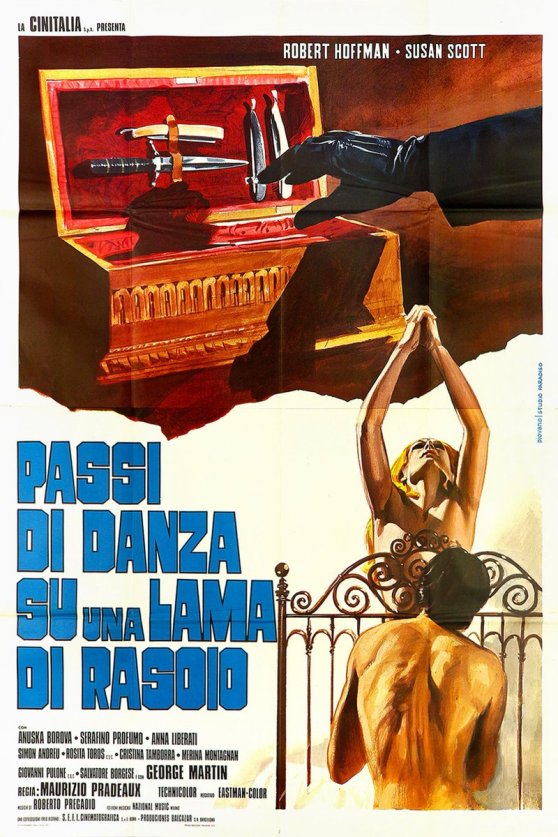
Death Carries a Cane (1973): If death carries a cane, isn’t it weak? With that thinking, aren’t the alternate titles — Dance Steps on the Edge of a RazorManiac At Large, The Night of the Rolling Heads and Devil Blade — so much cooler?

Well, that’s because whoever the killer is, he or she has a limp. That’s what Kitty (Nieves Navarro, billed here under her boring Americanized nom de plume Susan Scott) sees when she watches a murder through a coin-operated telescope. That’s just the first of many killings and it just might be her boyfriend Alberto, who has the misfortune of having a limp and a cane when that’s what’s being profiled. I’ve said it before and I’ve said it again, defund the giallo police.

Navarro also made two other similarly titled movies, Death Walks at Midnight and Death Walks On High Heels, so if you’re confused, well, this doesn’t have Nieves Navarro in it.

Director Maurizio Pradeaux also made another Grim Reaper referencing giallo, Death Steps in the Dark, which has a scene where the protagonist has to wear drag to escape the police.

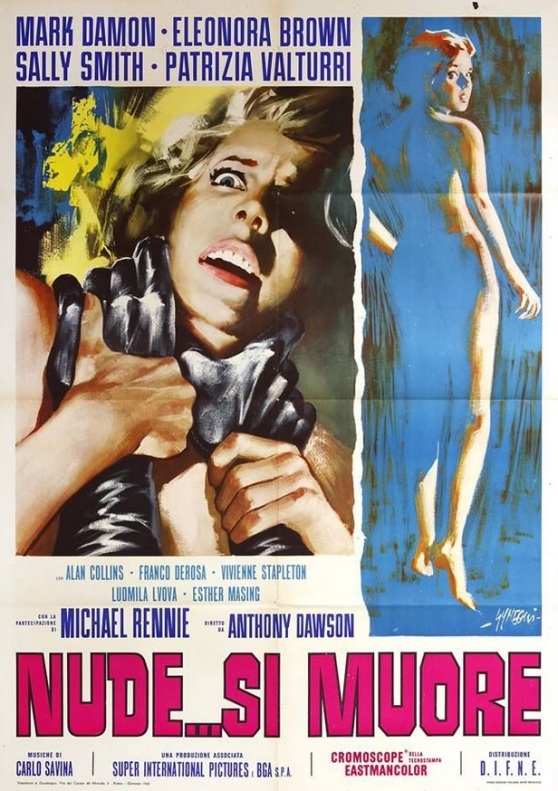
Naked You Die (1968): Naked…You Die (AKA The Young, the Evil and the Savage) is a pretty fun early giallo with good direction by Antonio Margheriti.

Yet it was very nearly was a Mario Bava movie.

According to Tim Lucas’ Mario Bava: All the Colors of the Dark, Bava was hired by Lawrence Woolner — the distributor of Hercules in the Haunted World and Blood and Black Lace in America — to direct a movie about a killer stalking a school. Cry Nightmare was going to be the title and Bava wrote the script with Brian Degas and Tudor Gates (BarbarellaDanger: Diabolik).

Lamberto Bava told Lucas that “Just a short time before the filming was to begin, Mario Bava had an argument with the producers and he abandoned the film.” As for Margheriti, who met Woolner when he distributed Castle of Blood, he said “I think Mario was busy at that time, working on Diabolik or something.”

Either way, locations were already secured, cast and crew had been hired and a theme song had already been recorded.

The drowned body of a woman is placed in a truck going to St. Hilda College. There, only seven students, two teachers — Mrs. Clay (Ludmilla Lvova) and Mr. Barrett (Mark Damon — Headmistress Transfield (Vivian Stapleton) and gardener La Foret (Luciano Pigozzi) are present.

Soon, the killing begins with Betty Ann being strangled and found by Lucille (Eleonora Brown in her last film until coming out of retirement in 2018), who is having an affair with Barrett. When she tells him to come see the body, it’s already gone, so they decide to leave the school.

The killings kick into gear with Cynthia (Malisa Longo, Ricco the Mean Machine) being killed in front of the gardener, who is soon killed as well and Denise (Patrizia Valturri) too. There’s also amateur detective Gillie (Sally Smith) on the case and Inspector Durand (Michael Renne from The Day the Earth Stood Still) trying to stop the killings.

All the girls wear similar uniforms — and outfits that change scene by scene — and nobody wonders why an older teacher can play Big Bad Wolf with Little Red Riding Hood and get away with it.

The aforementioned theme song “Nightmare” by Powell and Savina (Don Powell, who played Emanuelle’s father in Black Emanuelle 2 and did that film’s soundtrack, along with Carlo Savina, who composed the music for The Killer Reserved Nine SeatsLisa and the DevilFangs of the Living Dead and so many more) and performed by Rose Brennan owes royalties to Neal Hefti.

Perhaps even wilder is the fact that the movie informs us that Gillie may be the daughter of James Bond.

Giallo would change in a few years to be bloody, sleazier and stranger. That said, this is a great example of an early version of this style of movie.

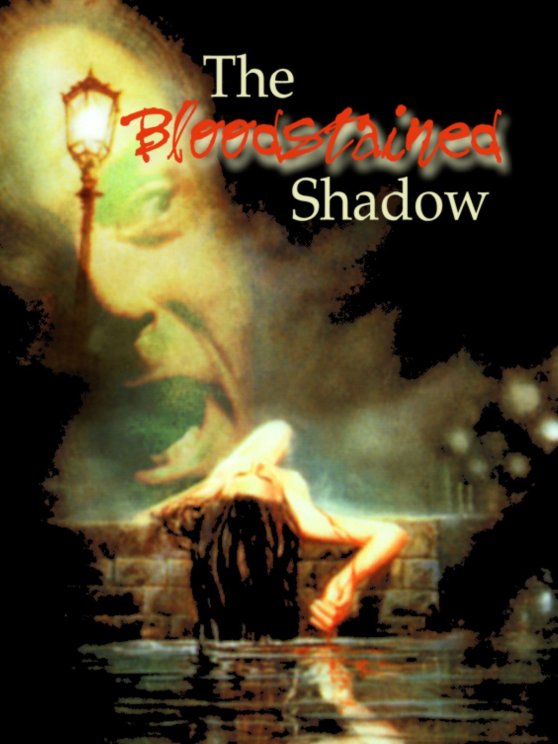
The Bloodstained Shadow (1978): One of my favorite things about giallo are the alternate titles. As if The Bloodstained Shadow isn’t a great name, this movie also goes by Solamente Nero (Only Blackness), which is a way better title. The other thing I love about this genre is that just when I think I’ve seen every good one, I find another to enjoy.

This is the kind of movie that tells you exactly where it stands in the first minutes, as a killer strangles a girl in a field before the credits even start. That murder has never been solved. Years later, a college professor named Stefano has a nervous breakdown. To recover, he comes home to visit his brother Don Paolo, who has become a priest that hates all of the immorality in their small town.

Oh what immorality — there’s a gambler, a psychic, a combination atheist/pedophile and an illegal abortionist with a mentally challenged son who lives in a shack top the list, along with your typical sex and drinking that happens in any town.

Meanwhile, murders have been piling up and whoever is behind it, they’re leaving notes to the priest, warning him that if he reveals who the killer is, he’ll be next. That’s because on Stefano’s first night back home, Don Paolo saw the killer murder the town psychic in the courtyard.

Stefania Casini (Suspiria) also appears as the love interest, Sandra, who helps Stefano come back to normalcy. Well, as normal as a town filled with murder can be. I’m kind of amazed that she wears a belly chain all day. When you get to the love scene, you’ll know what I mean.

There’s also some amazing religious imagery in this one, like a skinned and bloody animal that has been placed in the sacristy to warn the priest that he’s getting too close, or the communion scene that reveals who the real killer is.

Finally, Goblin plays some great music in here, created by composer Stelvio Cipriani. It’s really a great package, thanks to director Antonio Bido, who directed one other giallo, Watch Me When I Kill. I love how the past childhood trauma that the brothers endured continues to permeate their lives as they try to grow up. This is a very adult giallo and by that, I mean that it doesn’t need nudity and gore to tell its tale.

You can get this set from Vinegar Syndrome.

THE MOVIES OF AL ADAMSON: Naughty Stewardesses (1973)

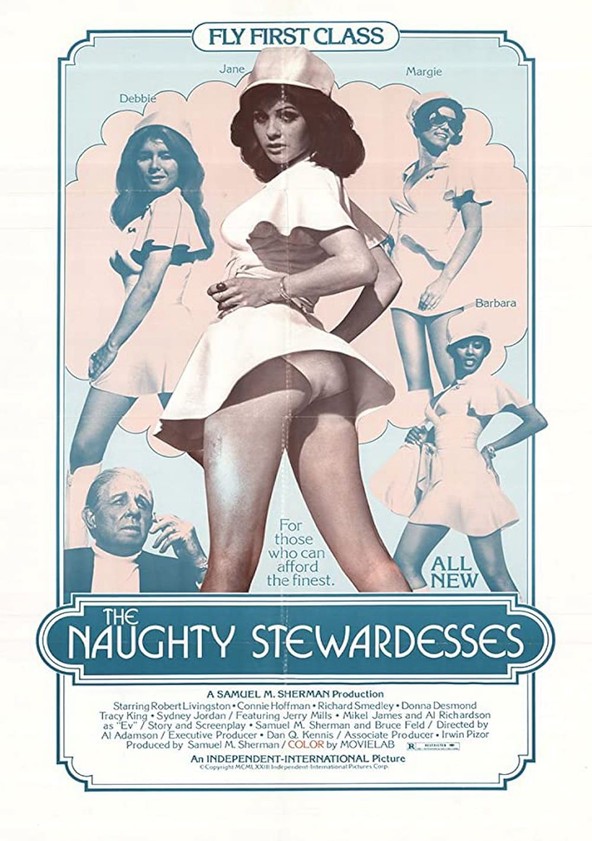
Al Adamson made two movies about air hostesses in the same year, this one along with Blazing Stewardesses. It follows the Roger Corman nurse style and was inspired by movie that Hemisphere had, The Swinging Stewardesses, which was making big business. Sam Sherman couldn’t find another so they made their own.

Debbie Stewart (Connie Hoffman) is a new stewardess from Kansas City who rents a room with three other stewardesses. She’s dating several people, including Cal (Richard Smedley, whose wife Lana Wood angrily came to the set thinking he was making an adult movie) and the much older Brewster (Robert Livingston).

Shot by Gary Graver, the girls include Barbara Watson (Marilyn Joi, Cleopatra Schwartz from The Kentucky Fried Movie and someone who was in one of the real Corman nurses movies, appearing as a topless dancer under her other name Tracy Ann King in The Student Teachers), Margie (Donna Young, who shows up in Blacksnake and The Black Gestapo), Jane (Sydney Jordan, whose only other role is in the documentary White Buffalo: An American Prophecy) and Diane (Sandy Carey, using the name Mikel James; she’s also in Cries of Ecstasy, Blows of DeathDeep JawsWam Bam Thank You Spaceman and plenty of adult). There are also roles for Susie Ewing (who also used the name Susan McIver for movies like Girls for Rent and her appearance as Hot Pants in Smokey and the Bandit) and, of course Al Adamson’s wife Regina Carrol, here playing a plane passenger with a dog. That’s also Gary Graver’s Sean as a young perv on the airplane.

THE MOVIES OF AL ADAMSON: Mean Mother (1973)

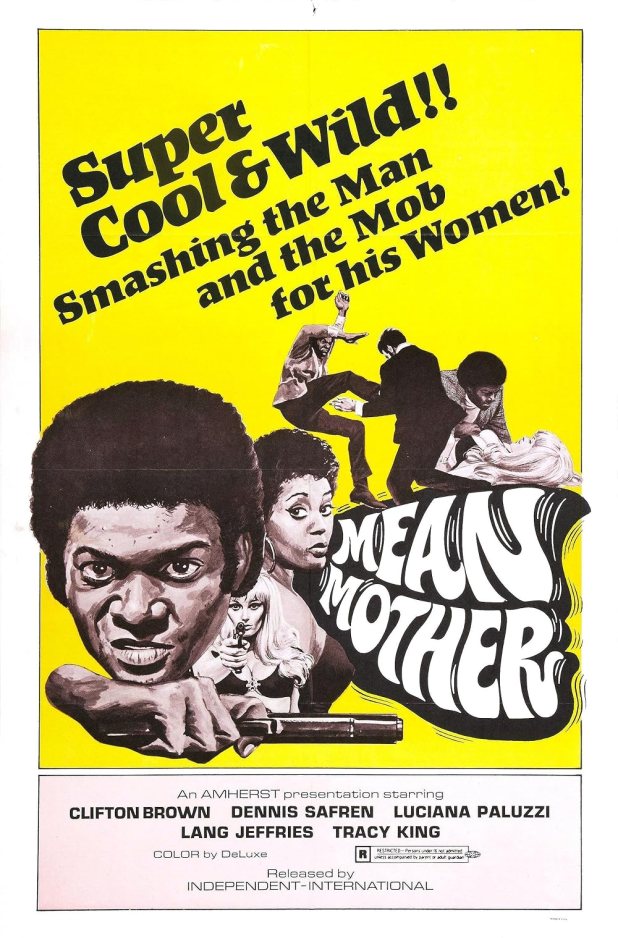
A movie that unites directors Al Adamson and León Klimovsky, Mean Mother actually is a mash-up, as Adamson takes footage from Klimovsky’s El Hombre que Vino del Odio and adds in his own blaxploitation movie and makes something new.

Beauregard Jones (Clifton Brown, who is really singer Dobie Gray) and Joe (Dennis Safren) run away from Vietnam. Jones gets to Spain while Joe ends up in Rome. They both get into crime — and some ladies — before meeting back up in Canada.

To say this movie makes no sense is senseless. It’s two movies that in no way work together forced to work together, a slow European crime movie and a quick American cash-in on black-fronted films. The fact that it even attempts — and that people were, well, hoodwinked into seeing it — is why I keep coming back to the films of Al Adamson.

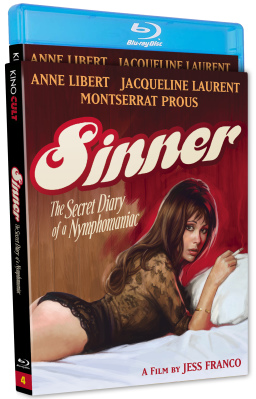
KINO CULT BLU RAY RELEASE: Sinner: The Secret Diary of a Nymphomaniac (1973)

Linda Vargas (Montserrat Prous) works a showgirl number with Maria Toledano (Kali Hansa, The Night of the Sorcerers) before picking up Ortiz (Manuel Pereiro), seducing him, calling the cops and killing herself by slicing her own throat, which implicates him in her murder.

His wife, Rosa (Jacqueline Laurent) attempts to learn the truth and discovers from Countess Anna de Monterey (Anne Libert, The DemonsA Virgin Among the Living Dead) that her husband assaulted Linda when she was just a young girl, going from drugs to, well, the title is Sinner: The Secret Diary of a Nymphomaniac, so you can guess the rest.

Made after the death of Soledad Miranda and before Franco would fall for Lina Romay, this comes from the more serious side of Jess Franco, feeling like it was inspired by the structure of Citizen Kane, which makes sense more than the absolutely formless movies he’d make later in his career.

The worst thing is that Jacqueline Laurent was fired from her position as a drama teacher at a private high school because of this film. Her students learned that she had appeared nude in this film — made 39 years before — and the school’s administration claimed that this and other erotic thrillers she made in the sixties and seventies posed a distraction.

The Kino Cult release of this film has a new commentary track by Tim Lucas, interviews with Jacqueline Laurent, Anne Libert and editor Gérard Kikoïne. It has English and French language options with English subtitles. You can get it from Kino Lorber.

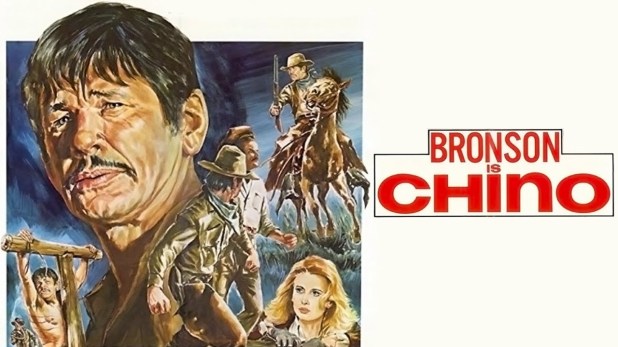
Spagvemberfest 2023: Chino (1973)

I guess picking Chino for a month of Italian Westerns is a cheat, even if this is an Italian/Spanish production.

Based on the book The Valdez Horses by Lee Hoffman, it was released in Italy as Valdez, il mezzosangue (Valdez the Half Breed). It was directed by John Sturges (The Magnificent SevenBad Day at Black RockThe Great Escape) and Duilio Coletti, who producer Dino Laurentiis hired to do inserts and reshoots. Sturges was unhappy with the film, feeling that casting Jill Ireland as the love interest was a mistake. That said, once Bronson and Ireland got together, she was often his on-screen lover.

Chino Valdez (Bronson) is a horse breeder who suddenly has Jamie Wagner (Vincent Van Patten) in his life, an orphan who needs raising as much as the horses of Maral (Marcel Bozzuffi) need broken in. He also falls for the rich man’s sister Catherine (Ireland), a forbidden relationship between an entitled white woman and a half-breed poor horsebreeder.

European film lovers will enjoy seeing Fausto Tozzi (Cry of a Prostitute), Corrado Gaipa (the Italian voice of Obi-Wan Kenobi), Melissa Chimenti (Papaya, Love Goddess of the Cannibals), Diana Lorys (Blue Eyes of the Broken Doll) and Annamaria Clementi (Emanuelle and the Last Cannibals).

I was struck in this movie by the Spanish countryside, as well as the fact that despite being an expert on horses, Chino has no idea that Catherine would never leave her rich life to live with him in a shack with no money in the middle of nowhere. His idea of love — and even making love — are basic ones that he’s taken from being raised in a harsh world of taming animals and surviving on your own instead being taken care of. He can make love to her, but he can never truly provide for all the other things she truly needs. Jamie understands that, even if he’s barely a man.

At the end, after it all goes wrong, Chino realizes that if he can’t have the life he wants, no one can have his work. He releases his horses into the wild instead of letting anyone else take them. Even his enemy Maral recognizes and respects that.

You can watch this on Tubi.

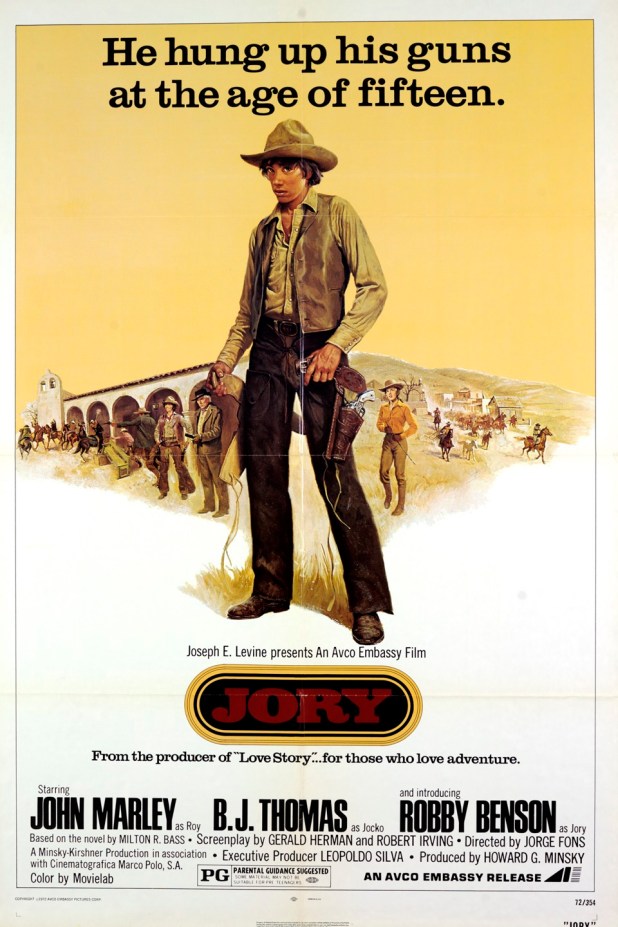
MILL CREEK THE SWINGIN’ SEVENTIES: Jory (1973)

Robby Benson is Jory in a movie about a kid in the West. Yes, he’s a fifteen-year-old boy who joins a horse drive after his father Ethan (Claudio Brook) is killed by a drunk who is killed by Jory. What a happy little film!

The young man gets hired by Roy Starr (John Marley), has a bad influence in Jocko (B.J. Thomas), becomes friends with saloon girl Dora (Anne Lockhart) and falls in love with Amy (Linda Purl). Did the get B.J. Thomas in this because he sang “Raindrops Keep Fallin’ on My Head” in the soundtrack for Butch Cassidy and the Sundance Kid? And hey — Howard Hesseman is in this very quickly as a bartender.

Based on the book by Milton R. Bass, this was directed by Jorge Fons, who would go on to make Red Dawn. The 1990 one, not the one you’ve seen! It was written by Gerald Helman and Robert Irving.

Don’t have the box set? You can watch this on Tubi.