FVI WEEK: Family Killer (1973)

NOTE: I have this in my notes as an early Cannon movie, but some lists online have it being distributed by Film Ventures International. I can’t even find a poster! Anyone have any ideas on this?

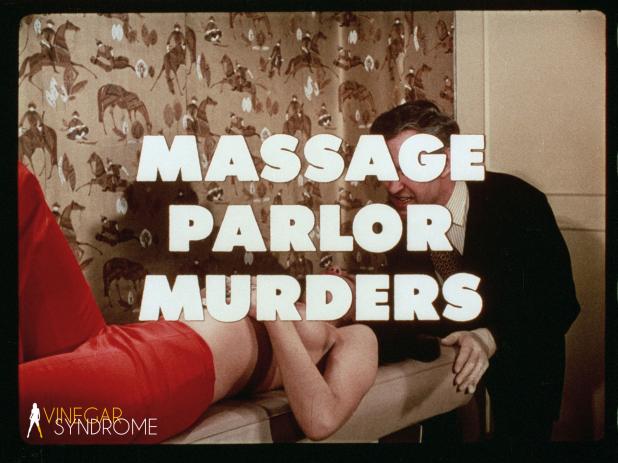
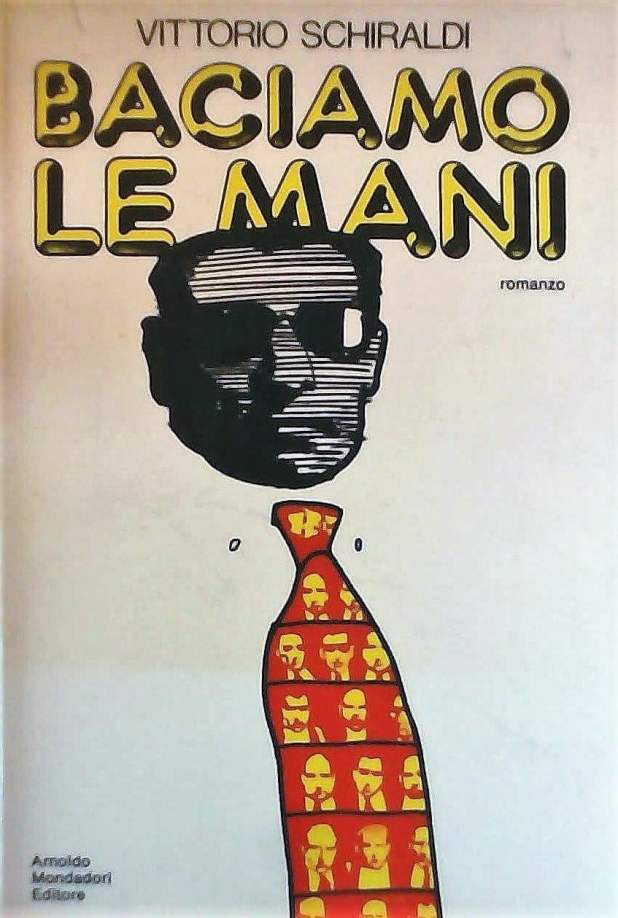
Directed and written by Vittorio Schiraldi (who also wrote Watch Me When I Kill), this was based on a novel that Schiraldi wrote.

Stefano (Joshua Sinclair), the son of Don Angelino Ferrante (Arthur Kennedy) has been shot in the back by the brutal Gaspare Ardizzone (John Saxon) — who is the start of a more violent and ruthless breed of criminal — for refusing to sell him land. Ferrante sends for a killer from America hoping for revenge.

The death of Stefano leaves behind a widow, Mariuccia (Agostina Belli), who is both protected and impregnated by a bodyguard named Massimo (Pino Colizzi). Meanwhile, Ardizzone goes to America and starts wiping out the New York bosses too and Don Ferrante still refuses to put a hit on him. Will his family and way of life survive?

Pretty much The Godfather with a different cast and some subtle changes, Family Killer still boasts an amazing Saxon performance as a total psychopath.

FVI WEEK: The Legend of Blood Castle (1973)

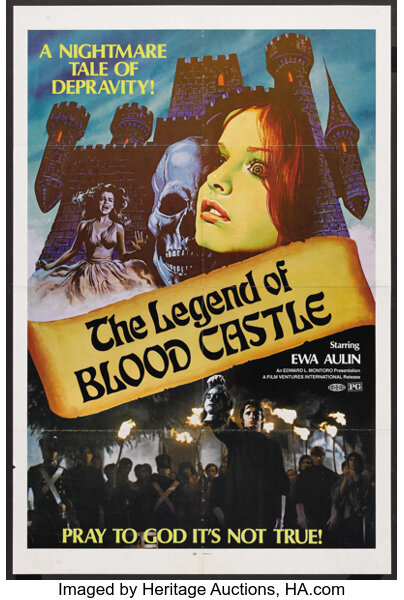
Also known as Blood CeremonyThe Female ButcherThe Bloody Countess and Ceremonia Sangrienta, this Jorge Grau-directed (The Living Dead at Manchester Morgue) Eurohorror film is a real classic.

The people of 19th century Europe aren’t ready to let go of their fear of vampires just yet, so they head out into the night and conduct trials over the graves over those who have recently died and are rumored to the undead.

As for Countess Erzebeth Bathory (Lucia Bosè, Fellini’s Satyricon), all she cares about is her quickly fading beauty and her husband’s lack of attention. But there are methods to bring her looks back and him back to bed which involve the dark practices of the ancestor she shares a name with. Blood is the secret and shockingly, her husband is only too willing to get it for her.

Where you’d expect a film awash in blood and gore, this is a movie more about how women deal with aging and men that only see beauty in youth. And yes, there’s still plenty of bloodbathing along the way.

Ewa Aulin (CandyDeath Laid an Egg) is also in this. Sadly, Aulin didn’t enjoy acting and was done by the age of 23.

FVI WEEK: Rico (1973)

I get it. This movie isn’t a giallo. But what is it, really? It was sold under so many titles, from the more horror-centric Cauldron of Death (complete with completely insane poster) to the more crime-oriented Gangland, the great Italian title Un Tipo Con una Faccia Strana ti Cerca per Ucciderti (A Guy With a Strange Face Is Looking for You to Kill You), The Dirty MobMean Machine and even O Exolothreftis (The Terminator) in Greece.

It was written by Jose Gutierrez Maesso, who wrote Django and was an uncredited writer for the magical Pensione Paura. He’s joined by Santiago Moncada, who wrote A Bell from HellHatchet for the Honeymoon and The Corruption of Chris Miller, along with Mario di Nardo (The Fifth CordFive Dolls for an August Moon). Directing all of this mayhem is Tulio Demichelli, who made the utterly insane Assignment Terror, as well as The Two Faces of Fear Espionage in Lisbon and the well-named There Is Someone Behind the Door.

Make no mistake — this is a movie awash with exploitation, gore, aberrant behavior and no real heroes. In short, it’s exactly the kind of movie you come to this site to read about.

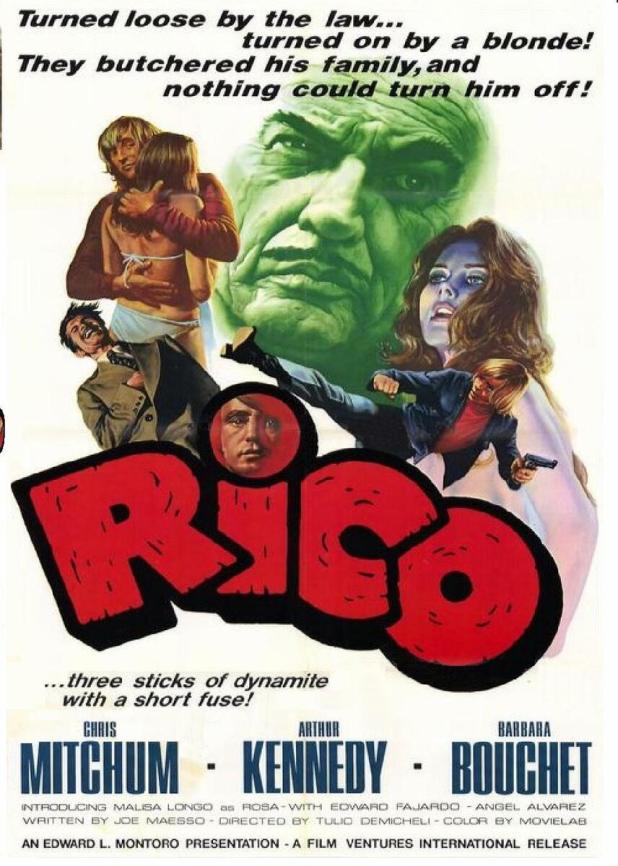
Rico Aversi (Chris Mitchum) has just got out of jail, two years after Don Vito (Arthur Kennedy, the inspector from The Living Dead at Manchester Morgue) killed his father. Everyone wants Rico — notice that his named is spelled completely unlike the title of the movie — to kill the boss off, but Rico just wants to enjoy life outside of prison.

Malisa Longo (Cat in the Brain) plays his girlfriend — and who used to love Rico’s woman — and she enjoys sleeping with the hired help, which gets one unlucky member of the workstaff castrated in shocking detail. Then, his John Thomas gets shoved in his mouth and he’s dipped into acid and turned into soap. This movie is not interested in being unoffensive. Plus, you get Paola Senatore (Eaten Alive!) as Rico’s sister, whose death sets him finally on the path to revenge.

Robert Mitchum is one of my favorite actors ever, so it kind of pains me to admit this his son kind of slumbers through this leading role. But then again, everyone else in this movie is going to seem boring next to Barbara Bouchet, who pretty much sets the screen on fire, dances on the flames and sets it ablaze all over again in this movie. Anyone could show some leg to get the attention of some criminals. Bouchet goes all in, dancing nude on the roof of a car, covered in fog, giving her all no matter how grimy this scumfest gets. Without her, this movie would be passable. With her, it’s transcendent.

So yeah. It’s not a giallo. But man, if you’re coming in looking for bad behavior, gorgeous women and great clothes, it has all of that covered.

FVI WEEK: Stranded In Space (1973)

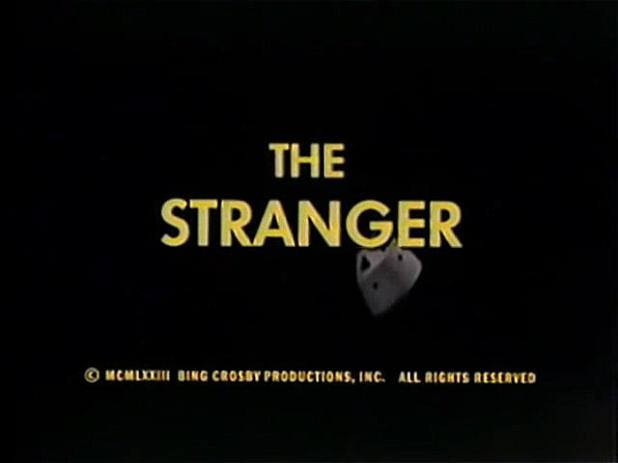
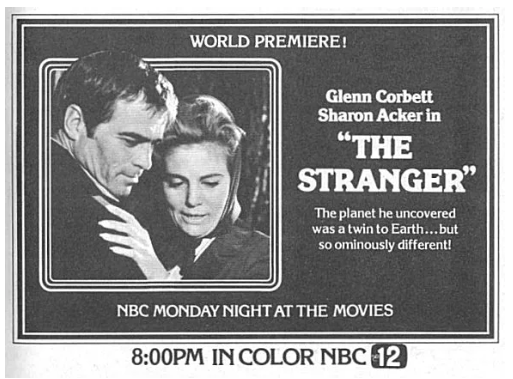
Another of the movies that Film Ventures International redid for TV, this uses footage from Prisoners of the Lost Universe as its opening credits and renamed The Stranger to become Stranded In Space.

Astronaut Neil Stryker (Glenn Corbett) is the only survivor of his mission. He is held in quarantine for such a length that he starts to suspect the government. It turns out that Dr. Revere (Tim O’Connor) and a operative by the name of Benedict (Cameron Mitchell) are pumping him full of drugs and interrogating him. It turns out that Stryker has landed on another version of our world named Terra and is being studied.

On this other world, a war destroyed most of the population and those that remain follow the Perfect Order, a one world government that keeps individual thought out of peoples’ minds. With the help of Dr. Bettina Cooke (Sharon Acker) and Professor Dylan MacAuley (Lew Ayres), Stryker is trying to get on a spaceship and fly it back to our reality.

This aired as the NBC Monday Night Movie on February 26, 1973.

You can watch this on YouTube.

Una vita lunga un giorno (1973)

I read a great article, “A Genealogy of Italian Popular Cinema: the Filone,” on Offscreen in which Donato Totaro explained that the filone is not easily categorized. We can see the term to mean not just a genre, but if you will, a body of water that flows into other streams. To quote the article, “…the filone is more flexible than genre or subgenre, taking in the idea of cycles, trends, currents, and traditions.”

It also breaks down the main years of the Giallo as 1962-1982 and the Poliziottesco as 1968-1978. Of course, movies in these filone were made after — if not before — and there are different versions of both.

This is all to explain that 1973’s Long Lasting Days fits into the time periods of both of the above genre and can have a little of both, a combo plate, if you will.

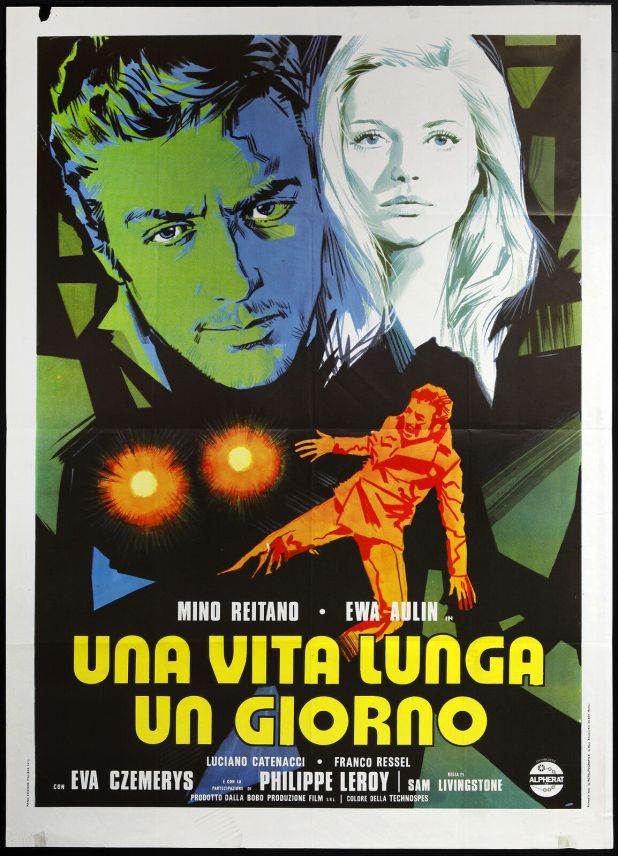
Andrea Rispoli (Mino Reitano, whose bands with his family, Benjamin & His Brothers, played the Star-Club in Hamburg with The Beatles) has fallen in love with a woman he’s met at the boarding house where they both live named Anna Andersson (Ewa Aulin, Miss Teen Sweden 1965 and Miss Teen International 1966, who turned that early fame into an acting career which found her appearing in Col cuore in golaLa morte ha fatto l’uovoThe Legend of Blood CastleDeath Smiles on a Murderer and the movie she made with her husband John Shadow, Microscopic Liquid Subway to Oblivion; this is the last movie she made before going to college and becoming a school teacher). She has a heart condition that could end her life at any time — and learns this after being assaulted and surviving by jumping through a glass window in case you wondered if this was an Italian movie — so Andrea decides to put his life on the line by allowing a group of rich people — led by Philippe (Philippe Leroy) and his wife (Eva Czemerys) — to hunt him. If he survives, he will make enough money to potentially save Anna.

Directed and written by Ferdinando Baldi (Texas AdiosComing at Ya!), this pits a poor man enraptured by love against a group of bored rich society types who want to hunt the wold’s most dangerous game. They will be allowed to attack Andrea five times as he tries to get through the entire city, using a knife, a rifle, a vehicle, fire and brass knuckles which hang over a dance floor at a wild party that can only exist in Italian exploitation movies.

For someone known as a singer, Mino Reitano is pretty good in this, a man forced to abandon his dispassionate sailor ways to be in love and care for someone. Does he become too trusting too fast? That’s for you to find out.

You can watch this on YouTube.

Tarot (1973)

I’m going to get it out of my system so this entire article isn’t about me gushing about Sue Lyon, but I am not made of stone. With only two previous acting roles, she was cast in the lead of Stanley Kubrick’s Lolita at just 14 years old. The book’s writer, Vladmir Nabokov, who also wrote the screenplay and said that she was the “perfect nymphet.” Compounding his cringe was that he wanted the 12-year-old Catherine Demongeot to play the role. Man, dudes were weird about this movie — Otto Preminger would not permit Jill Haworth to take the lead nor would Walt Disney let Hayley Mills, even not allowing her to see the movie — and I would like to think things are different, but no, they aren’t.

Now back to me waxing on and on about Sue Lyon.

After winning the Golden Globe Award for Most Promising Newcomer—Female and releasing a single on MGM — “Lolita Ya Ya” which was written by Nelson Riddle — Lyon would later say that her life fell apart early: “My destruction as a person dates from that movie. Lolita exposed me to temptations no girl of that age should undergo. I defy any pretty girl who is rocketed to stardom at 14 in a sex nymphet role to stay on a level path thereafter.”

She signed a seven-year professional services contract to Kubrick, producer James B. Harris and production company Seven Arts Productions, making The Night of the Iguana7 WomenThe Flim-Flam Man and Tony Rome before being released from her deal. She went to Italy in 1970 to make Four Rode Out and Evel Knievel before two of her marriages — the first to African American football player Roland Harrison in 1971 just four years after interracial marriage was passed by the Supreme Court and another in 1973 to imprisoned murderer Cotton Adamson — ruined her box office appeal, at least to people in the U.S.

At this point, she started making Spanish genre movies like this and Murder in a Blue World, a wild ripoff of A Clockwork Orange starring a Kubrick ingenue. She also made the TV movie Smash-Up on Interstate 5 and Charles Band films such as Crash! and End of the World as well as the baffling The Astral Factor and the last movie she’d make, Alligator.

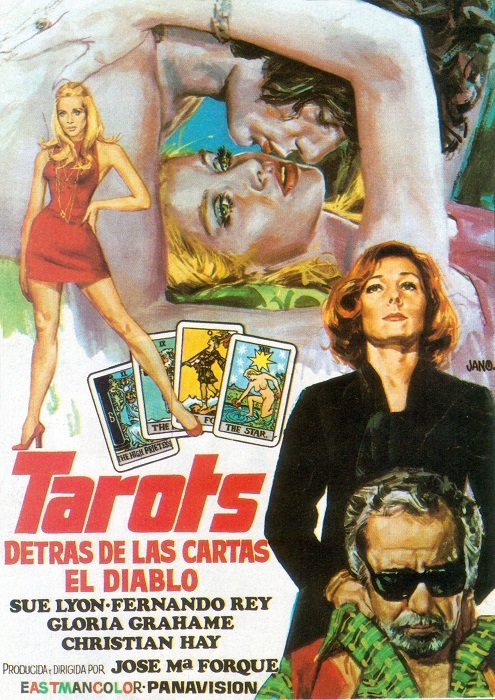
In this film, Lyon draws on her sex appeal as she plays Angela, a woman who has married a rich older blind man named Arthur (Fernando Rey) for his money. It’s a pretty good deal because she gets a life of luxury and also gets to take advantage of the attractive young hired help in Marc (Christian Hay), who actually set the whole thing up.

You know who isn’t happy with this motorcycle-riding, tarot-dealing blonde American taking her man Marc? One of the other servants, Natalie (Gloria Grahame, Mansion of the Doomed).

Also known as Autopsy — no, not that Autopsy — as well as Game of Murder, Angela and The Magician, this was directed by José María Forqué (he also wrote Un omicidio perfetto a termine di legge and directed It’s Nothing Mama, Just a Game), who wrote the story with James M. Fox (Stoney) and Rafael Azcona.

Lest you think that this is all high class, inserts with Claudine Beccarie were added to the French version. And hey, when else can you see a classic film noir actress like Grahame act in a quasi-giallo with Anne Libert, the Queen of the Night from A Virgin Among the Living Dead?

La porta sul buio: La bambola (1973)

The third episode of Doorway to Darkness was directed by Mario Foglietti (who wrote the original story for Four Flies On Grey Velvet) and Luigi Cozzi and was written by Foglietti and Marcella Elsberger.

Argento informs us, in his introduction, that someone has escaped from a sanitarium, saying “…a sick mind wandering a small town, apparently normal, in matter of fact incandescent… Its aim: to kill.” That sick mind may be Robert Hoffman, who has checked into a hotel with an attache case before wandering the streets. One redhead is already killed when he meets Daniela Moreschi (Mara Venier) and follows her back home.

This feels like ten minutes of story shoved into an hour and sadly doesn’t work. But hey — Erika Blanc is in it and if the worst thing you do is watch a giallo with her in it, your day isn’t all that bad. Foglietti gets the look of Argento but doesn’t have the same ability to make art out of a flawed script.

You can watch this on YouTube.

La porta sul buio: Testimone oculare (1973)

Directed by Roberto Pariante (who was the assistant director for Argento on The Bird With the Crystal PlumageThe Cat o’Nine Tails and Four Flies On Grey Velvet) and Dario Argento, who wrote the script with Luigi Cozzi, Testimone oculare is my favor episode of Doorway to Darkness. It’s so simple and yet succeeds as an example of giallo.

Roberta Leoni (Marilù Tolo, Las trompetas del apocalipsis) is driving on a dark and rainy night when she sees a woman dive in front of her. She doesn’t hit her, but does find her dead body. She’s been shot in the back. That’s when she sees the glint of a gun and runs through the storm to a diner where she breaks down. The police, led by Inspector Rocchi (Glauco Onorato), take her back to the crime scene but there’s no body and no blood.

Everyone treats Roberta like a hysterical woman, including her husband Guido (Riccardo Salvino), even after someone breaks into their house while they’re out for their anniversary and the next day when someone tries to shove his wife into traffic. Then the phone calls start and never seem to stop.

One night, while all alone, the killer calls and says that they will finally kill Roberta. Guido comes home just in time and says that instead of leaving — the killer cut the phone line — they are going to wait for them and he will shoot whoever is after her. As you can imagine, this isn’t the way things end up happening.

Sometimes, a simply told mystery is exactly what you need. That’s what this episode gave me. Supposedly Argento disliked the work that Pariante did and went back and filmed a lot of this himself — the tracking of the killer by footsteps is definitely him — and then not putting his name on it.

You can watch this on YouTube.

La porta sul buio: Il tram (1973)

For the second episode of Doorway to Darkness, Dario Argento himself would direct and write. Il Tram (The Train) under the name Sirio Bernadotte (thanks to the incredible Italo Cinema).

A young woman is murdered on a train in the seconds that the lights go out and before they return. The murder baffles everyone except for Commisario Giordani (Enzo Cerusico) who seeks to solve it. He thinks that it has to be ticket taker Roberto Magli (Pierluigi Aprà), except that he’s never satisfied. It seems too simple. That’s when he brings his girlfriend Giulia (Paola Tedesco) to ride the train and try to lure out the true murderer.

A very Hitchcock-influenced story, this moment was originally going to be part of The Bird With the Crystal Plumage but it took away from the story. Argento would return to the dark mystery of a train and how frightening it can be in probably the best sequence of his post-Opera films in Sleepless. This may not have the insane energy and madness of his usual style, but the story is well-told and I loved how the hero must overcome his own shortcomings — he’s too cocky, which may be because of his youth — if he wants to save his lover and solve the mystery.

There’s also a striking scene where the killer chases Giulia through the train and into a station and down an immense hallway, all POV, all with her staring back at us. It’s incredible.

You can watch this on YouTube.

La porta sul buio: Il vicino di casa (1973)

In 1973, Dario Argento was invited to RAI television and delivered Door Into Darkness, a show that he would host and even guide some of the episodes. Argento says, at the start of one of the episodes (translated into English) “As for Door Into Darkness, which is the title of the series, you will wonder what it means. Well, it means many things: opening a door to the unknown, to what we don’t know and which therefore disturbs us, scares us. But for me it also means other things. It can happen, and it has happened once, even just once in a person’s life, to close a door behind them and find themselves in a dark room… looking for the light switch and not finding it… trying to open the door and not being able to Do. And having to stay there, in the dark… alone… forever. Well, some of the protagonists of our stories have closed this fatal door behind them.”

The first episode, Il vicino de casa (The Neighbor) was the second directing job for Luigi Cozzi, who had debuted with Il tunnel sotto il mondo (The Tunnel Under the World). It’s the tale of a young couple by the names of Luca (Aldo Reggiani) and Stefania (Laura Belli). They arrive at their new home late at night with their infant child and barely meet anyone, other than knowing they have a neighbor (Mimmo Palmara) but otherwise, they live in a very isolated neighborhood.

On one of the first evenings they are there, as they watch Abbott and Costello Meet Frankenstein, they start to see a stain in the corner of the ceiling that starts to leak from upstairs. What is it? And should they tell the neighbor they have never met? When they go up there, no one is home. However, they soon find the dead body of their neighbor’s wife just in time for him to come back and tie them up.

This story was also written by Cozzi and it has plenty of tension, such as the couple hiding in the dark and then realizing that the husband has dropped his lighter in the killer’s room. It also has a dark non-ending that doesn’t give you much hope, as well as an Argento cameo as a hitchhiker.