Gorehouse Greats: Stanley (1972)

Welcome to Mill Creek Month! As you know, we love those Mill Creek sets, so we’re doing an entire month of these films. The first set we got into was B-Movie Blast, which has — as is par for the course with these bricks of films — a crazy gaggle of films. We originally reviewed this movie on November 23, 2020, as part of our William Gréfe week, then again on February 1, 2020, for the B-Movie Blast set.

Well, it’s back again — with a new, second take — as it’s also part of Mill Creek’s Gorehouse Greats 12-Pack.

Does it deserve two takes? Nope. But we are celluloid masochists. And this movie supports animal abuse to get a movie made. You’ve been warned.
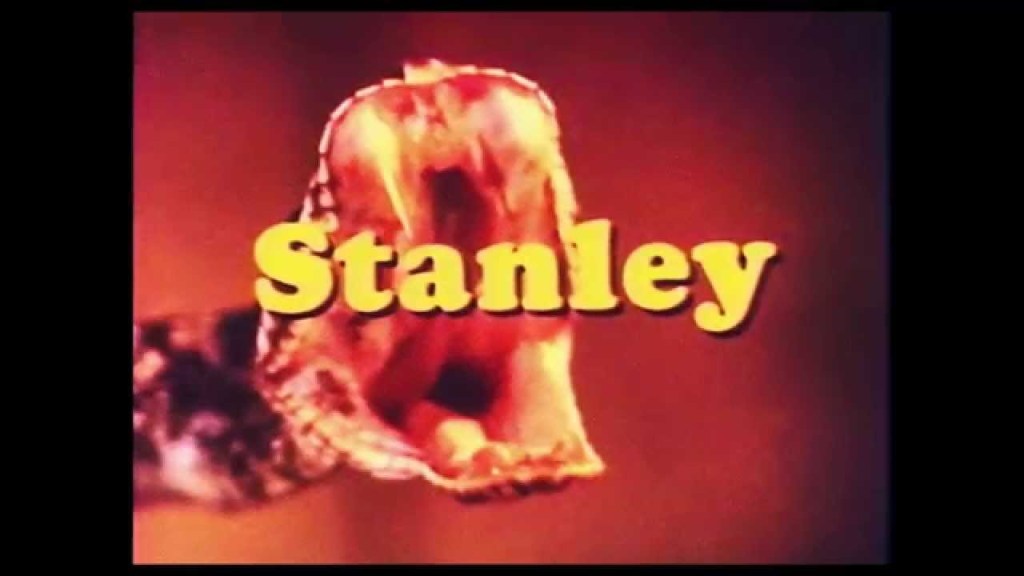
If you wanted to know what writer, director, and star Christopher Robinson did before his vanity run for box office gold with The Intruder (1975), welcome to the pre-Jaws when-animals-attack mayhem that is Stanley. Did you see Rattlers in 1976? Okay, so this is the first snake movie. (No, not the Scorpio killer from Dirty Harry (1971), that’s Andrew Robinson; not related.)

Robinson is Tim Ochopee, an f-up Seminole war vet back from Vietnam who wants to just be left alone with his best friend, the snake Stanley, in Everglades seclusion. Not if Richard Thomkins (Alex Rocco; who excels at character actor dickdom), an expert tanner (a maker of leather goods) who is “mobbed up” and kills Tim’s pop.

Remember Willard (1971). Yeah, it’s like that. Only with a pet snake instead of a rat.

Yep. William Grefe seen the box office gold of Willard and decided the world needed a guy with an ESP link to his pet snakes — led by Stanley the snake instead of Ben and Socrates. But it’s a Grefe flick: Sandra Locke didn’t bite the head off a rat and let the blood run down her fleshy breasts. But a stripper dancing on stage does that with a snake, here. And Bruce Davison didn’t kidnap his lady love: Tim kidnaps Rocco’s daughter Susie to to that end.

While this movie piles on the violence, the horrors the snakes endured was worse. So much for a Florida regional horror shot-on-the-fly in the Everglades outside of the eyes of Hollywood execs and PETA. Grefe had snakes defanged. He had the mouths sewn shot on others. When you hear this — even though it is snakes, still — you end up hating Grefe and never watch another one of his films. Ever. Again. Which is why I am not a rabid a Grefe fan as others are. It gets worse: Grefe had Stanley, the lead snake, killed. Then made it into a wallet.

Fuck you, Grefe. You deserved to have a bottom-of-the-barrel career of shit movies than never rose out of Z-moviedom. I can’t believe you got a box set retrospective. Animal killer.

There was talk of a sequel, Stanley in Miami. It never happened, thank god, as the lives of snakes were saved. Sorry, you just don’t mistreat and kill animals for the sake of a friggin’ movie. And a sucky-ass one at that. I can’t recommend this. Find your own freebie streaming links or online store DVDs and Blus.

About the Author: You can learn more about the writings of R.D Francis on Facebook. He also writes for B&S About Movies.
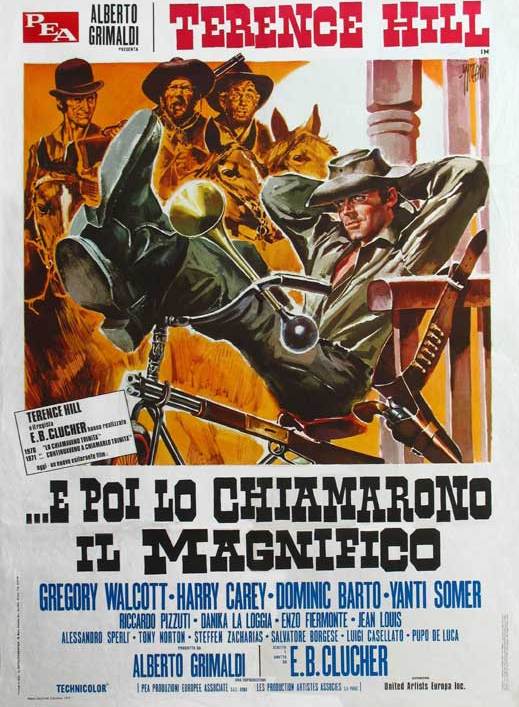
E Poi Lo Chiamarono il Magnifico (1972)

Man of the East is a vehicle for Terence Hill, directed by Enzo Barboni and written by E.B. Clucher*. Barboni had tremendous success parodying the Italian western genre, starting with They Call Me Trinity and then following that with the even bigger Trinity Is STILL My Name!

These movies follow a pretty simple formula of Hill and Bud Spencer as a comedy duo. Every once in a while, they’d make solo films, which this one being a good example.

It’s really close to the story “The Tenderfoot” from the Lucky Luke comic. Hill would go on to direct and star in an adaption of the overall comic, so this may be no accident.

Sir Thomas Fitzpatrick Phillip Moore (Hill) has come from England at the request of his father, who had to leave the country behind after an affair got him in trouble. His father wants him to see the country he had come to love, which brings our hero into the orbit of his dad’s associates, stagecoach robbers Monkey Smith (Dominic Barto, Jungle Warriors), Holy Joe (Harry Carey Jr., a John Ford company actor) and Bull Smith (Gregory Walcott, Plan 9 from Outer Space).

Thomas’ father — known as the Englishman — wants his hapless gang to turn his son into a man, as his head is in the clouds. He’d rather ride a bike than a horse and refuses to skip baths. However, he’s great with the ladies, as he quickly woos Candida Olsen (Yanti Somer, Star Odyssey) with his knowledge of Lord Byron.

This puts him into conflict with her rich father Frank (Enzo Fiermonte, War of the Planets), who doesn’t think he’s good enough for her, and Morton Clayton (Riccardo Pizzuti, the creature in Lady Frankenstein), one of their ranch hands who has his eyes set on Candida.

The gang teaches Thomas how to fight, shoot and spit tobacco, which he takes to quite well and ends up winning the day. That’s to be expected. What isn’t is the sadness underpinning this movie, which sees the gang facing the progress of technology and realizing that soon, the west that they know will no longer exist.

Another odd thing to watch out for is the opening credits and subsequent transition shots are B-roll from Support Your Local Gunfighter.

You can get this from Kino Lorber on a new blu ray, which looks gorgeous. Here’s to them releasing more little known Italian westerns!

*E.B. Clucher is…Enzo Barboni. Just look at the initials.

REPOST: Stanley (1972)

EDITOR’S NOTE: Welcome to Mill Creek Month! As you know, we love those Mill Creek sets, so we’re doing an entire month of these films. The first set we’re getting into is B-Movie Blast, which has — as is par for the course with these bricks of films — a real mashup of movie mayhem. We originally reviewed this movie on November 23, 2020 as part of our William Gréfe week.

Tim Ochopee (Chris Robinson, who would write, direct and star in 1975’s The Intruder) is a war damaged Seminole just back from Vietnam that wants to live out the rest of his life in the Everglades with his snake Stanley. He didn’t count on Richard Thomkins (Alex Rocco), a maker of leather goods with mob ties, killing his father. Now, all the snakes that Tim has lived with will be the death of everyone who has done him wrong.

Only Grefe could take a ripoff of Willard and somehow make it more disturbing than you’d expect. Yes, this is a movie packed with snakes doing all manner of damage to people and people doing just as horrible things to them, including an exotic dancer playing a geek and biting the head off one on stage as she dances seductively with blood all over her bare chest.

Of course, Tim has to kill everyone in the way and kidnap Thomkin’s daughter Susie (Susan Caroll), but any hope of true love kind of goes the way that you’d expect in a Florida regional horror film that doesn’t stop with just stealing from one film and moves into being a reptile-obsessed Billy Jack.

That said — for a movie so much about protecting snakes, the actual snakes in this movie were defanged and some had their mouths sewn shut. There’s enough human on snake violence in this that you’d expect that it was made in Italy. Grefe still owns the wallet that they made out of the skin of the main snake that played Stanley, which is pretty weird when you dwell on it as much as I have.

Gary Crutcher wanted to do a sequel called Stanley in Miami, but it didn’t happen. He wrote this on two days under the influence of amphetamines, which is the most Florida thing you can say about a movie that is the most Sunshine State movie I’ve seen.

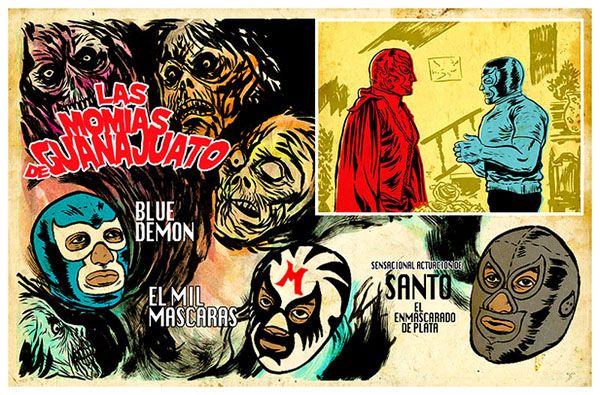
Las Momias de Guanajuato (1972)

The Mummies of Guanajuato are real and are the naturally mummified remains of a number of people who died from cholera in 1833.  They were disinterred between 1870 and 1958 as relatives of these people could not afford the yearly tax for their burial and the bodies were mixed to a nearby building. For some reason, the climate of Guanajuato oftebn leads to a type of natural mummification, which led to these bodies — 59 or so are still on display — being shown in El Museo de las Momias (The Museum of the Mummies).

In 1970, El Santo battled these mummies, returned from the dead, in Santo contra Las Momias de Guanajuato and would return one year later to battle the trio of Superzan, Tinieblas and Blue Angel in El Castillo de Las Momias de Guanajuato.

Here and now, this movie seems to be a vehicle for Blue Demon and Mil Mascaras, who have so often played second banana to El Santo. The team is in town to defend their tag belts — and for Mil to see his girlfriend Lina (Elsa Cárdenas, who was also in Madame Death) — when one of the mummies named Satan (played by Tinieblas!) awakens from his sleep and remembers that a hundred years ago, the ancestor of El Santo defeated him for his title and put him and these mummies to sleep. Right off the bat, we learn that the Santo we’ve known all along is a legacy hero like The Phantom!

The bad guys go wild while Blue Demon pish poshes the notion that Santo is needed. Soon, he’s kidnapped and an imposter Blue Demon is ruining his good name. That’s when the man in the silver mask gets the call, showing up in his sportscar and telling Mil, “Hey, I think I have a flamethrower or three in my glovebox.” Yes, after ten minutes of Blue Demon and Mil armdragging and chopping mummies, Santo just happens to have the solution.

What follows is astounding: a miniature flamethrower being shot repeatedly at live actors. If you watch that scene and don’t love this movie with all your heart, I have no idea why you’re on our site.

Director Federico Curiel made the Nostradamus vampire movies and plenty of luchador films, so he knows exactly what you want out of this movie. No fluff, no filler, just luchador on monster action. Viva El Enmascarado De Plata! Viva Leyenda de Azul ! Viva Mil Mascaras!

You can download this from the Internet Archive.

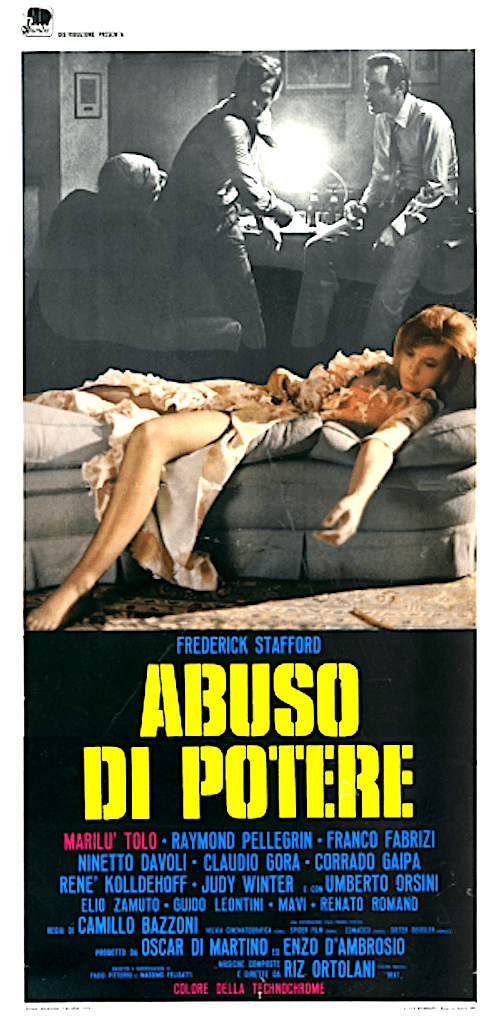
Abuso di Potere (1972)

Translated as Abuse of Power and released internationally under the vastly improved title Shadows Unseen, this movie has an awesome poster and a great title that both say giallo, but the movie says poliziotteschi.

It all starts with a journalist who forks over a ton of cash for a ring, then leaves a bar with a mysterious woman before getting jumped and eventually shot. The cops assign Commissioner Luca Miceli (Frederick Stafford, Special KillersWerewolf Woman and, if he hadn’t been tied up making the movie Topaz, perhaps a James Bond) to solve the mystery.

Marilù Tolo plays Simona, who falls for Luca and gets caught between him and the underworld. She was also in Django Kill, Bava’s Roy Colt and Winchester Jack and My Dear Killer. Spoilers — her death is really upsetting, even for the man who orders it.

Everything from that moment on is as tense as it gets, with a car chase that’s absolutely white hot in its intensity. The downer ending is totally expected as well, as I don’t think any film ended happily in 1972.

Director Camillo Bazzoni didn’t make many movies (the last Steve Reeves movie I Live for Your Death, the Aldo Ray war movie Suicide Commandos and Those Who Kill are a few others), but this is filled with enough twists and turns to make it interesting. The slight giallo elements help get it there, as does the score by Riz Ortolani.

You can watch this on YouTube.

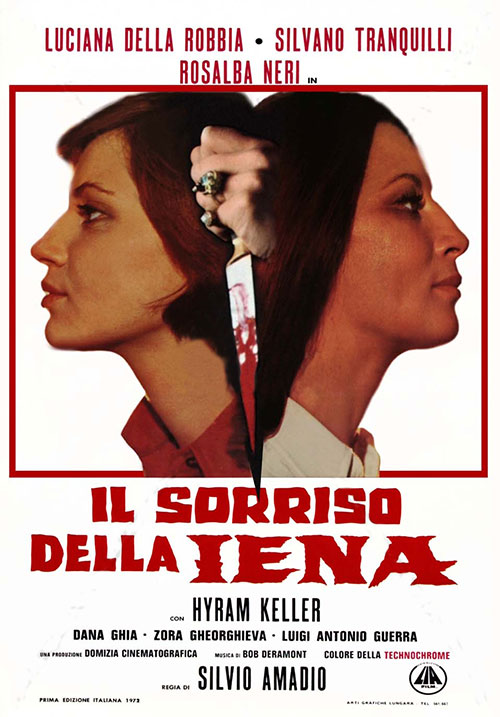
Il Sorriso Della Iena (1972)

Smile Before Death* was a revelation to me. I came in expecting nothing and was rewarded with a film that has multiple antagonists and a continually twisting close, a near race to the finish to see who will end up on top.

Marco (Silvano Tranquilli, Black Belly of the TarantulaSo Sweet, So Dead) and Dorothy are trapped in an open marriage that feels incredibly confining. To make things worse, her best friend Gianna (Rosalba Neri, Lady FrankensteinThe French Sex Murders) is his mistress.

Is it any surprise that Dorothy gets killed and it looks like a suicide and that Marco did it? Soon, he’s in charge of her estate until her daughter Nancy (Jenny Tamburi**, The PsychicThe Suspicious Death of a Minor) turns twenty. So Marco retires and lives a life of leisure with his mistress until Nancy returns home.

That’s when everyone starts playing each other, with Gianna trying to get Marco to kill his stepdaughter, Nancy seducing him and — spoiler warning — Gianna falling for her as well.

Silvio Amadio also made Amuck! Much like that film, this one also proves that Silvio was perhaps more interested in filming gorgeous women misbehaving as he was showing the kills when it came to giallo. No matter. This movie has plenty of plot to go around and I was genuinely surprised by the conclusion of this caper.

Roberto Predagio’s theme song — with plenty of scat singing by Edda Dell’Orso — will be burned into your mind by the end of this.

I’d be shocked if this didn’t end up on Forgotten Gialli Volume 3.

*The translation for the Italian title is The Smile of the Hyena. I have no idea what that means in relation to the film’s story and blame the animal-themed demand for post-The Bird with the Crystal Plumage giallo titles.

**Tamburi won the femme fatale role of Graziella in La Seduzione because Ornella Muti, the original actress, was considered too attractive.

You can watch this on YouTube.

A.A.A. Masseuse, Good-Looking, Offers Her Services (1972)

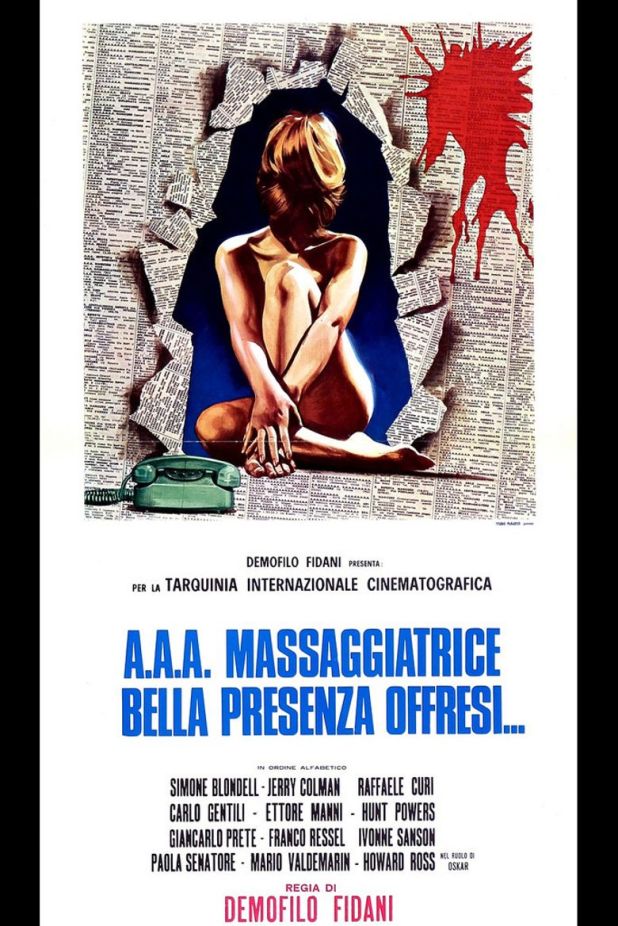
Cristina (Paola Senatore*, Emanuelle in AmericaRicco the Mean Machine) is a call girl and for that, every man that has ever partaken of her services must pay, in some sort of role reversal for every other giallo and slasher.

Much like how his leading lady was known for westerns, so was director Demofilo Fidani, who made movies like Coffin Full of Dollars (how’s that for a title?), Django and Sartana Are Coming… It’s the EndOne Damned Day at Dawn…Django Meets Sartana!His Name Was Pot… But They Called Him Allegria and His Name Was Sam Walbash, But They Call Him Amen. As you can tell, many of his films were titled and treated like either sequels or — let’s be fair — ripoffs of better-known characters and movies.

So when everyone else started making giallo, Fidani was sure to follow.

You know how people on Twitter like to use the term problematic? Well, they’d lose their brains all over those, which presents leaving home to enter the sex industry to be a loveable lark, even when your clients get their throats slit the minute they leave her flat. It’s also a film that wants its cake — Vitelli is gorgeous and frequently involved in increasingly kinkier situations — and eat it too, as the whole moral of the story is that the world is falling into decay because of all this sex. So let’s show some more sex! And violence!

Also known as Caresses à domicile (Caresses at Home), the funny thing is that her life gets better when she leaves her father’s house — well, despite the fact that her daddy gave her everything that she ever wanted — to live with a friend, Paola (Simonetta Vitelli, who is the daughter of the director). So there’s not really any drama here, other than you know, all the murder.

*Sadly, she became addicted to heroin late in her career. After making two softcore films for Joe D’Amato, she made her one and only hardcore film, Non stop… sempre buio in sala. She was then arrested for drug smuggling, went to prison and disappeared.

You can watch this on YouTube.

The Killer Is On the Phone (1972)

Man, two Alberto De Martino giallo movies in one week? You know it.

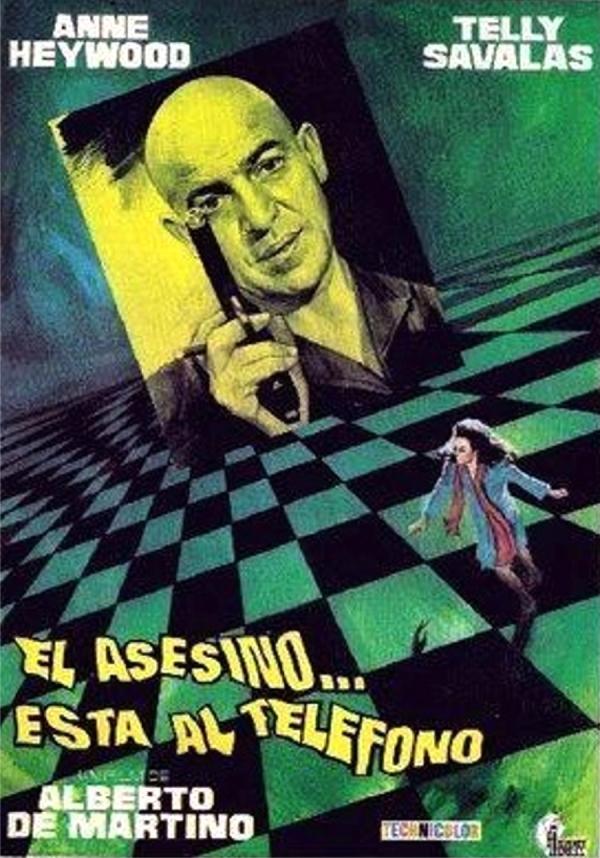
I’ll be honest right off the bat. I’d watch a movie where Telly Savalas just sat there and read a menu for two hours, so I’m not going to be objective about this movie at all.

Telly plays Ranko Drasovic, a silent knife-wielding assassin dispatched to kill a UN ambassador trying to stop the oil crisis, which is pretty forward thinking way back in 1972. He also is trying to fulfill another assignment, because one of the few people who has ever seen his face is actress Eleonor Loraine (Anne Heywood, The Fox), as Ranko had killed her lover five years before.

Now, she’s a mess, her head filled with flashbacks which might not be true and lovers she may have never slept with. All she sees is the face of Ranko, a man constantly in the shadows, always one step away from taking her life.

I actually liked this movie more than most critics, as unlike many giallo, it ends with the female lead taking agency over her fragmented life, destroying her many enemies and reclaiming her sanity. It’s a rare positive ending for a giallo heroine, you know?

That said, the direction is just good where it could be great, but any time women appear on screen, the camera seems to perk up and the shots end up getting more inventive. That’s because Aristide Massaccesi is the cinematographer, the man who would one day be Joe D’Amato. And David Hills. And Michael Wotruba. And Raf Donato. And Robert Yip. And…

The alternate title, Scenes from a Murder, isn’t as evocative, but makes plenty more sense. Ranko never calls anyone. He does spend plenty of time buying tin soldiers, which also makes no sense.

Hey — giallo aren’t supposed to make sense. Remember that, love every scene Telly is in and you’ll be fine. Who loves you baby?

Le Seuil Du Vide (1972)

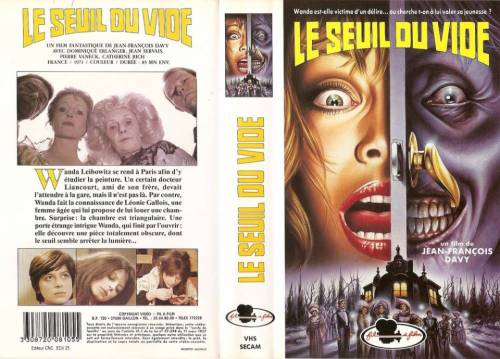
Threshold of the Void is all about an artist named Wanda Leibovitz who comes to Paris to escape heartbreak, only to find a room for rent — once kept for the dead sister of her landlord, now containing a forbidden door — that will dominate her life.

Of course, Wanda is told that she can’t ever open that door, but she does, and once she experiences the  exquisite unending blackness of that room, she learns that she can paint better than she ever has in her life. That said, she now feels like she’s dying and that all of the people in her life — like her landlady and her brother’s friend Dr. Liancourt — are not what they seem.

When Michel Lemoine (he directed and starred in Seven Women for Satan and also appears in Castle of the Creeping Flesh) is in a movie, nothing normal is about to happen. This is kind of 70’s slow creeping burn — think Rosemary’s Baby and Don’t Look Now — and proves to me that that decade was the most downer ten years of all time.

Director Jean-François Davy’s career is mostly in adult, with movies like Wife Swapping: French Style and Infidélités to his credit. But this one, well, he’s making an art film that I guess you could call a giallo just because it really doesn’t fit any other category.

Based on an André Ruellan’s novel — the author also wrote the script — this is the kind of forgotten movie that once it comes out on blu ray will blow people’s minds.

Al Tropico del Cancro (1972)

Anita Strindberg is in Your Vice Is a Locked Room and Only I Have the KeyA Lizard in a Woman’s SkinThe Case of the Scorpion’s TailWho Saw Her Die?, The Two Faces of Fear, L’uomo Senza Memoria and Murder Obsession, but is never mentioned with the same devotion as Edwige Fenech or Barbara Bouchet. Well, she’s great in this and in nearly everything else I’ve seen her in.

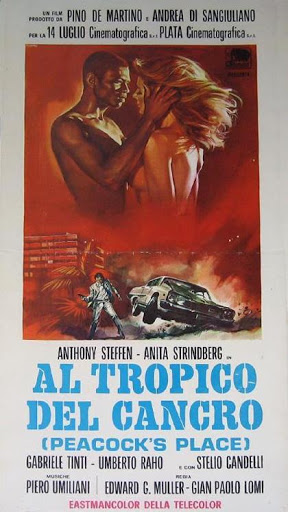
In this film, she plays Grace, the wife of Fred (Gabriele Tinti, Endgame) and their vacation has led them to Haiti and Dr. Williams (Anthony Steffen, who mostly is known for Italian westerns, but also appeared in The Night Evelyn Came Out of Her GraveEvil Eye and An Angel for Satan), who has invented a new drug that can change the world. It’s so astounding that everyone from drug cartels to drug companies — which are really close to one another, when you really think about it — will kill for its formula.

There’s also a scene where the doctor takes our heroes to watch a voodoo ritual, all so this movie can have a bit of mondo* within it. Because it’s an Italian film, that means we’re about to watch a real bull really get killed and then lose its scrotum in gorgeous living color. The film then tops this with actual cows being slaughtered, so if you’re upset by the side of Italian cinema that doesn’t shy away from putting animal butchery right in your face, make a mark to avoid.

This movie leaves me with so many questions. What kind of doctor is Williams? He says he’s a veterinarian, then he makes a magical anti-venom drug and oh yeah, he’s also a meat packing inspector. And just what kind of wonder drug has he made? And did the filmmakers realize that the Tropic of Cancer is nowhere near Haiti?**

So yeah — most of the movie is spent wondering whether or not Grace is going to succumb to the lure of the native men***. And the best character in it is Peacock (Alfio Nicolosi, who was also in Goodbye Uncle Tom), who pretty much runs the island. Also, the murders in this go from high tech to voodoo-based death and faces getting melted right off, which is different for a giallo****.

And hey — that Piero Umiliani (Orgasmo, Baba Yaga) score is perfect!

It’s not a great giallo, but it certainly is weird, and sometimes, that’s good enough.

*One of the directors of this film, Giampaolo Lomi, was the production manager for perhaps one of the most notorious mondo films, Goodbye Uncle Tom. The other, Edoardo Mulargia, directed Escape from Hell, which was edited into the Linda Blair movie Savage Island. So with backgrounds like those, the scummy mondo nature of this film makes a bit more sense.

*Of course, we can assume that with the Henry Miller novel being such a big deal getting banned and causing controversy that the title itself seemed like a good idea to get curious folks into the theater. Better than Death In HaitiPeacock’s Place or Inferno Under the Hot Sun.

***The flower that poisons her takes her on an insane erotic fever dream that we all get to watch and the movie is better for this scene.

****There’s just as much — if not more — male than female nudity, too.