2022 Scarecrow Psychotronic Challenge Day 13: Revenge! (1972)

13. MAD(E) FOR TV: Any 70’s feature length that was made specifically for television.

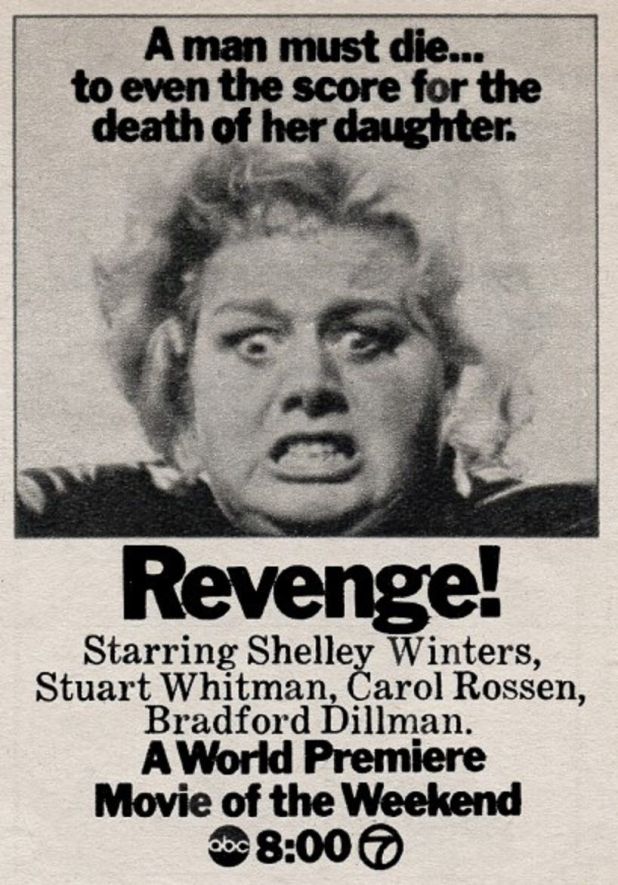
Amanda Hilton (Shelley Winters) is lost. Her daughter committed suicide after an affair come wrong and the only happiness she can find lies in torturing Frank Klaner (Bradford Dillman), a man who she thinks is behind the death of her child, a man who she now has inside a cage in her basement.

Based on the novel There Was an Old Woman by Elizabeth Davis, this made for TV movie was directed by Jud Taylor and written by Joseph Stefano, who wrote the screenplay for Psycho. The same novel was made into Inn of the Frightened People, which has Joan Collins in it.

Frank’s wife Dianne (Carol Eve Rossen)has hired Mark Hembric (Stuart Whitman), who may be a psychic. He may not. Hey, Frank may be guilty of the crime, too. You know how the 70s work. Things are quite ambiguous. But guess what? Dianne really does have mental powers!

Look — the world needs more movies where Shelley Winters serves drug-filled peanut butter and jelly sandwiches and threatens businessmen with an axe while screaming at the highest of registers.

It’s 71 minutes long. It would have been three hours on the CBS Late Night Movie.

You can watch this on YouTube.

THE IMPORTANT CINEMA CLUB’S SUPER SCARY MOVIE CHALLENGE 12: The Stone Tape (1972)

12. A Horror Film Written by Nigel Keale.

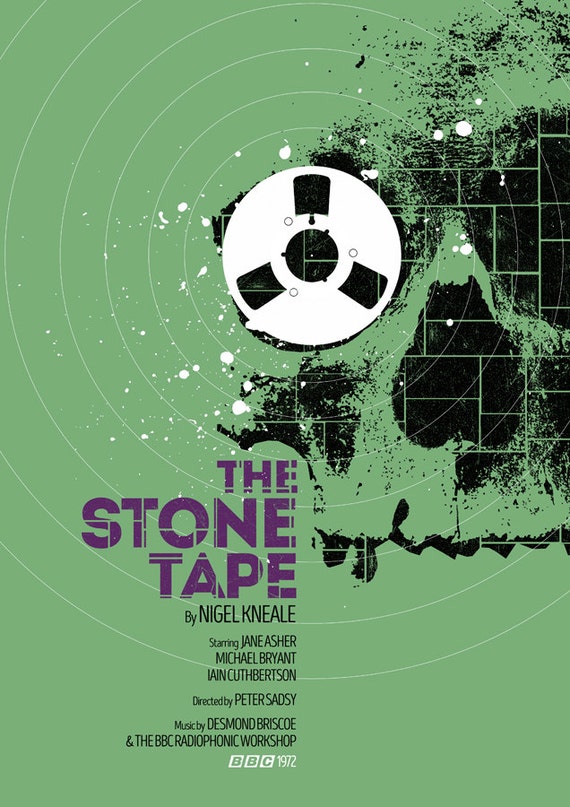
Nigel Keale exists at the center of two lines, between horror and science fiction, finding ancient evil with modern technology, placing learned men in the howling maw of ancient occult terror. Also: this movie has informed so much of my own theories on hauntings. We aren’t seeing ghosts. Reality is like a videotape that has been taped over so many times that some things, often the worst things, keep reappearing through the new footage.

Peter Brock leads a team at Ryan Electrics that is trying to create a new recording media to get ahead of the Japanese. Instead of an office, they all move into an old Victorian mansion with one room no one will ever finish, because the builders claim that this place has been haunted since it was built some time in the time of the Saxons.

When they go into the room, they hear a woman screaming and one of the team, Jill, claims she has a vision of a woman falling to her death. Instead of working on their real mission, the team starts digging up the past, like how a maid killed herself here and there had been an exorcism inside the walls of the building.

Peter belives that the ancient stone that forms the room can act as a recoding device for memories and emotions. He wants to exploit this but no one experiences the stone the same way. They fail to replicate the recording and are soon forced to share the space with a team seeking to create a better washing machine. Peter cruelly sends Jill away and refuses to let her share the theory that the past recording has now been erased. She’s right, as the room overpowers her, recording her last moments, screaming for Peter.

England being England, this aired as a ghost story over the holidays. It ended up influencing several filmmakers in America. Just a few moments of watching this and you can see that Prince of Darkness starts as nearly the same movie and then Carpenter decides to stop paying homage to Keale and switches channels to Italian horror.

Director Peter Sasdy also made Taste the Blood of DraculaHands of the RipperCountess DraculaNothing but the NightWelcome to Blood City and, perhaps most essentially, The Lonely Lady.

SLASHER MONTH: The Gore Gore Girls (1972)

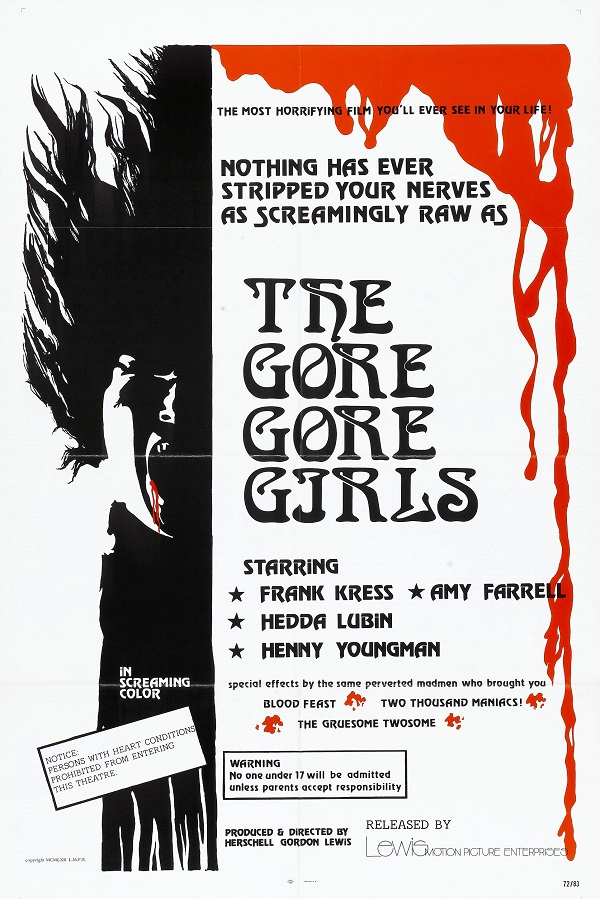
This was a parody of everything that had come before in the gory and sleazy Herschell Gordon Lewis and if anything, goes even further than all that had been done in the past.

Reporter Nancy Weston (Amy Farrell) has offered detective Abraham Gentry (Frank Kress) $50,000 if he can solve the murder of Suzie Cream Puff (Jackie Kroeger), as long as she gets the exclusive. Following him on his investigation, other food-themed dancers like Candy Cane and Pickles get killed with evidence that points to a man named Grout (Ray Sager), a Vietnam vet that misses smashing the heads of dead people during war and finds vegetables a poor substitute. Or maybe its the feminists who are protesting all the male gaze in the go go club. Oh yeah — Henny Youngman also shows up as Mr. Marzdone Mobilie, a man who owns plenty of jack shacks and strip clubs.

Gentry keeps Weston drunk most of the time or gets her onstage to dance in an amateur contest but he’s just really trying to lure the killer into his clutches. He’s a horrible person and in fact, nearly everyone in this movie is completely despicable, some kind of alternate world where everyone is absolute scum. I say this with beaming happiness.

The only movie that Lewis ever sent to the MPAA — it got an X, so no surprises there — this is the kind of movie where a woman’s breasts are cut over with scissors to drink chocolate milk out of them, but it can still have themes of PTSD from Vietnam in 1972, years before any other filmmakers were articulating this issue.

But at heart (and guts and brains), this is a movie where a woman’s butt is beaten with a tenderizing hammer and then seasoned with salt and pepper. Or a bubble gum chewing dancer dying as her bubble is filled with blood? Then somehow there’s a level-headed appearance by the feminist group in the movie that pretty much has them saying everything that Lewis probably knew he was guilty of. Literally exploitation and education at once, but lost on everyone who just loved a director who often had characters just play with entrails for long stretches while he zoomed in. And then he invented direct mail.

You can watch this on Tubi.

Feng lei mo jing (1972)

The Devil’s Mirror is the story of the Jiuxian Witch and her Bloody Ghouls Clan battle two other clans who both possess magic mirrors known as the Wind and Thunder Magic Mirrors. If the three-eyed witch can get both of those mirrors, she can break down the walls of the tomb of Emperor Wu, take the Fish Intestine sword and the Thousand Year Ganoderma and, one surmises, take over everything. Well, the sword is for invincibility and the herb will allow her to live forever.

The elders of the clans, Golden Lion Chief Wen and the awesome Chief Bai who can fight harder than anyone despite only having one leg, can’t get along. So it will have to be their youngest clan devotees, Wen Jianfeng (Lau Dan) and Bai Xiaofeng (Shu Pei-Pei), who will keep the witch from winning it all, even if she has a spell that turns even the toughest fighters’ faces into wormy scabs and forces them to join her side for the cure.

This movie is also not afraid to spray blood all over the place and features a geyser-spraying beheading. There’s so much blood that it fills up an entire pool. And the witch is horny, I mean, she’ll tell you throughout. In fact, were I a martial arts witch of great power that could fly and had three eyes, I’d be worked up all the time as well.

If you watch one movie where a large martial artist kicks ass while having a spiked peg leg, well, honestly I can’t think of another film that has that.

The first movie that Sun Chung directed for Shaw Brothers, he would go on to make Human Lanterns which is a movie that you must watch and if you’ve already watched it, go ahead and see it again.

Deathmaster (1972)

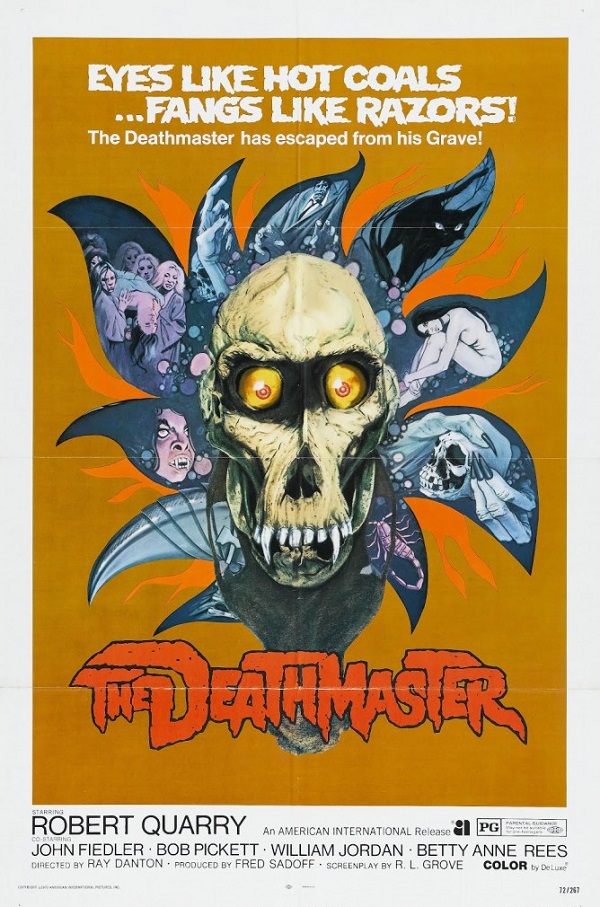
Khorda (Robert Quarry) may look like Count Yorga and use a line from the ads for one of his two movies, but he is not him. I know, he’s even wearing the same prop fangs, but I have been assured that this is not Count Yorga.

This vampire’s coffin floats onto the beach from Invasion of the Crab Monsters and before you can say Manson Family, he has an entire army of impressionable hippies answering his orders like the flute-playing Barbado (LaSesne Hilton) who kills a surfer as simply as I would write about a movie and Bobby Pickett — yes, Boris “Monster Mash” Pickett — playing some folk songs while everyone tunes in and drops out.

There’s also the union of biker couple Monk Reynolds and Esslin (William Jordan and Berry Anne Rees) with hippie kung fu practitioner Pico (Bill Ewing) and his lady Rona (Brenda Dickson) who get help evading the cops from a guy who sells ponchos and other counterculture stuff, Pop (John Fiedler, the voice of Piglet). When Pop’s puppy gets bit by a vampire, it’s time to breach the walls of Khorda’s castle.

All the Yorga movies — yes, I know, I said this wasn’t one — have bummer endings and this is no different. I guess I respect that it has counterculture cults with the least nudity one of those gatherings ever had. The hero is also a complete moron so you’ll probably cheer on Khorda.

Beware! The Blob (1972)

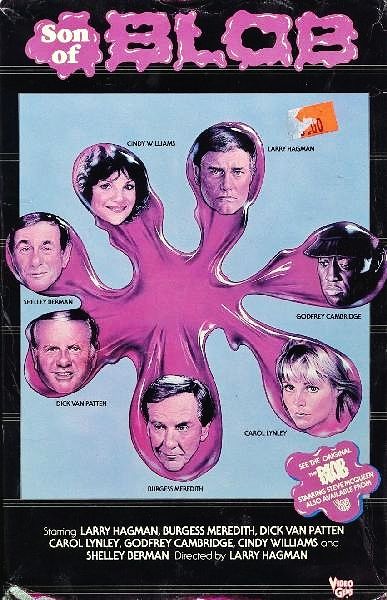
Beware! The Blob or Son of the Blob is a big idea to get your head around. While the original was presented as horror, this film pretty much leans in to how ridiculous it all is. Written by Anthony Harris and Jack Woods from a story by Richard Clair and Jack H. Harris, a lot of this was improvised on set and the script — even though it took all those people — was mostly ignored.

Harris was also the producer and Anthony was his college graduate son. They were next door neighbors with Larry Hagman — who had previously directed episodes of I Dream of Jeannie and The Good Life — who had never seen The Blob. Harris screened his print for the actor/director, who loved it and said that he could get a lot of his Hollywood friends to show up and get blobbed, as long as he could direct.

Fifteen years after the original Blob destroyed parts of Pennsylvania, Chester (Godfrey Cambridge) has brought a piece of that creature from its frozen grave in the North Pole, where he does the sensible thing and puts it in the fridge. It grows in size as it eats a fly, a kitten, then his wife Marianne (Marlene Clark) and finally, while Chester watches The Blob on TV, it eats him too just in time for Lisa (Gwynne Gilford) to watch him get claimed by the creature.

As she tries to get her boyfriend Bobby (Robert Walker Jr.). to believe what she’s seen, the red jelly eats its way through Los Angeles, claiming the lives of two hippies (Randy Stonehill and Cindy Williams) in a storm drain — were they looking for Simon? — as well as officer Sid Haig, chickens, horses, a bar, a gas station, Scoutmaster Dick Van Patten, a barber (Shelley Berman) and even some home-displaced folks (Hagman, Burgess Meredith and Del Close, who is wearing an eyepatch as his cornea was scratched by a cat previous to filming; he’d return with a similar look as Reverend Meeker in perhaps the best horror remake of all time, 1988’s The Blob).

It takes an ice rink — which was torn down shortly after filming — to stop the monster — maybe — this time. As for the bowling alley in this movie, it’s Jack Rabbit Slims from Pulp Fiction.

In the first movie, the Blob was made of silicone and dyed red. It had to be stirred throughout the movie to keep its color. This Blob was made from a red-dyed powder blended with water, as well as a big red plastic balloon, red plastic sheeting and a red drum of hard red silicone spun in front of the camera. Tim Baar and Conrad Rothmann created these effects and beyond working on second unit camera, Dean Cundey helped, years before he’d become such a force in filmmaking.

In 1982, when Hagman was on Dallas and the shooting of his character J.R. Ewing was the biggest moment in pop culture, this was re-released with the headline “The film that J.R. shot!”

THE CHRISTOPHER LEE CENTENARY CELEBRATION PRIMER: Horror Express (1972)

EDITOR’S NOTE: This article was originally on the site on November 6, 2018 and is written by Bill Van Ryn. Now you can see it this weekend at the Drive-In Super Monster-Rama! Get more info at the official Drive-In Super Monster-Rama Facebook page and get your tickets at the Riverside Drive-In’s webpage.

There was something great about growing up in the 70s as a monster kid. With VHS still a distant promise waiting over the horizon, TV was the only way you could access movies once they passed through your local theaters–and if you were a kid, seeing them theatrically usually meant pleading your case with an adult who was totally disinterested. TV was the last stand. Fortunately, local stations desperate for programming often filled their lineup with syndicated packages of older films. Horror movies often turned up as time-fillers on local TV, usually in late night slots meant for insomniacs and people who worked graveyard shift.  What this meant for us monster kids was, we scoured the TV Guide looking for movies noted “THRILLER”, and then you had to make a decision about whether or not it was worth staying up until 3am to watch.

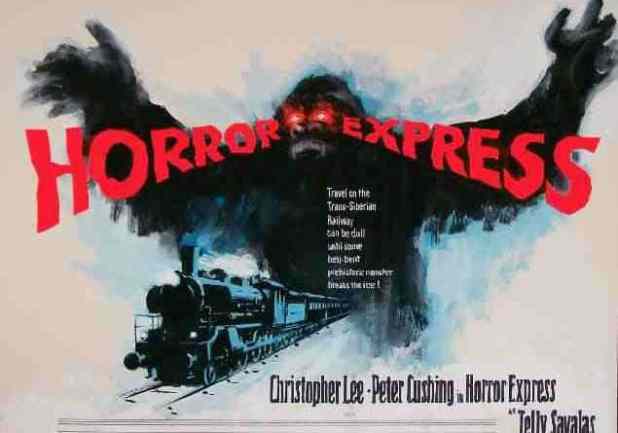
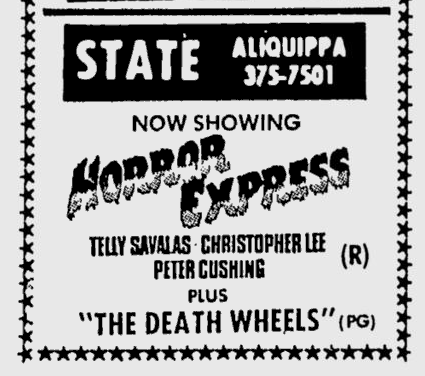
1972’s Horror Express was one of those flicks that I *never* missed, no matter what. Not only does it star Christopher Lee and Peter Cushing, Telly Savalas shows up about halfway through the film as a Russian cossack (!), and it’s got a series of simple but gruesome attack scenes that were some of the goriest things I’d seen up until that point. The story is set in the early 1900s, and Lee plays an anthropologist who discovers a hairy ape-like fossil in the Himalayas. Believing it to be the missing link, he crates it and hurriedly books passage on the Trans-Siberian Express in order to return to England with it as quickly as possible. Cushing is a colleague of his who is also on board, and immediately senses that Lee is up to something noteworthy. Unbeknownst to anyone, the creature is actually the last vessel of an extraterrestrial intelligence that has the ability to lock eyes with its victims and drain their brains of all information contained therein. It gets out of the crate and starts absorbing people. Its victims die gruesomely in the process, bleeding profusely from the eyes, which turn white like a boiled fish. This alien presence can also transfer itself to another host in this way, allowing it to jump from body to body if necessary.

Horror Express is a British/Spanish coproduction directed by Eugenio Martin, who had just made the movie Pancho Villa starring Telly Savalas. Martin used the same train set from that previous film, and each different “car” of the train was actually the same set redressed for each new part of the train. That meant that the entire film had to be shot out of order, with every scene taking place in the corresponding car being completed before the set was taken down and redressed. The movie was shot silent, with the entire soundtrack dubbed in later, although Lee, Cushing, and Savalas all did their own dubbing, so their familiar voices are all present.

Most importantly, the story is engaging and clever, with the mystery of the creature being slowly unraveled by the protagonists using clues left behind. One of the more outlandish moments has Cushing obtaining the eyeball of the now dead fossil and extracting fluid from it — fluid that somehow contains actual images that the host observed, now visible under a microscope! This is how they determine that it was from outer space and had been on Earth since prehistoric times. Hey, it’s as good an explanation as anything, right?

Although not a Hammer production, this movie definitely feels like one, especially since we have Lee and Cushing together in the same film. It was perfect for late night television, and it was hard for me to forget those bleeding white eyeballs after I saw this movie. You’ve probably already noticed the similarities to the story Who Goes There? by John W. Campbell, the basis for “The Thing”, and I always loved the way this movie sets up the hairy fossil as if it’s the villain. Eventually you realize that whatever the fossil was, it was just a shell, another victim of the real monster. Although we’re talking about the Chilling Classics public domain version of Horror Express, there exists a fabulous blu ray transfer from Severin Films, definitely worthy of your hard earned dollars.
 

Frogs (1972)

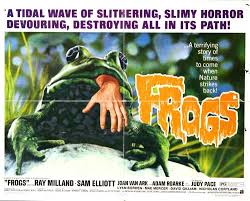
The Crockett family, led by Jason (Ray Milland), may have great power and influence, but nature in no way cares about those things. Snakes, birds, geckos, alligators, turtles, butterflies and, yes, frogs, are prepared to end their lives for daring to abuse the ecosystem with pesticides.

Wildlife shutterbug Pickett Smith (Sam Elliot) picked the wrong holiday weekend to be in their Florida mansion.

Directed by George McCowan, whose career often found himself working in episodic television, and written by Robert Hutchison and Robert Blees (Whoever Slew Auntie Roo?Dr. Phibes Rises Again), I am sad that I will never live the life of drive-in aficionados of 1972 who got to see this with Godzilla vs. the Smog Monster.

I have no idea if the animals are turning on all of humanity — I mean, Jason’s dog remains loyal — or if it’s just this family, but I love the swampy world that this movie makes, one that makes nearly every creature in the world outside the Crockett home into a killer ready to work together and wipe out rich folks.

This also has tons of stock footage of animals which is how you make a low budget movie about a whole bunch of animals. As it was, the hotel everyone was staying in was adamant that no animals were allowed to stay in the actor’s rooms, as if that would be a thing.

CANNON MONTH 2: Sweet Sugar (1972)

EDITOR’S NOTE: As I finish out Cannon month, I’m looking into the films of 21st Century before Menahem Golan took it over.

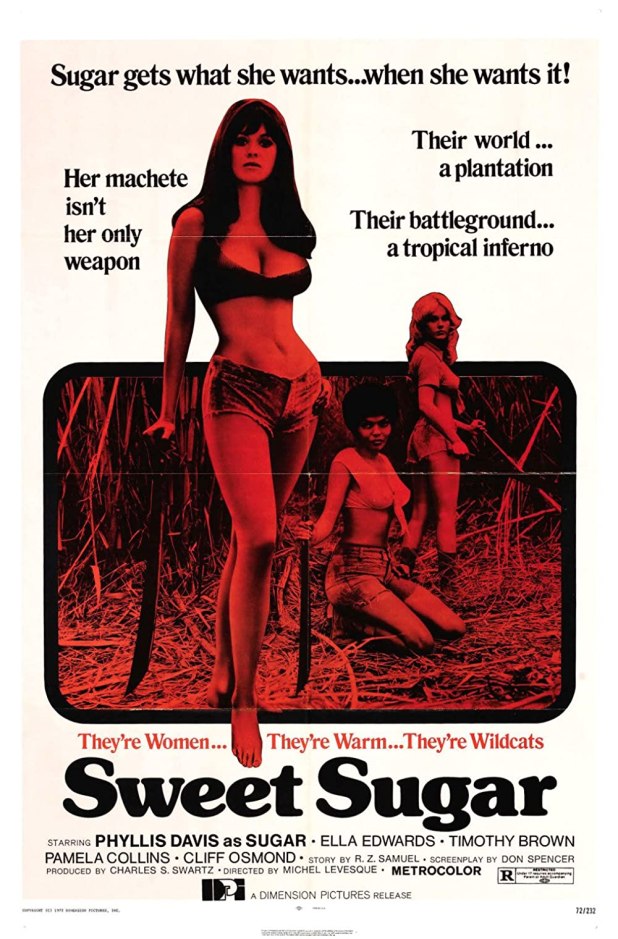
Sugar Bowman (Phyllis Davis, who was Susan Lake in Beyond the Valley of the Dolls) has taken a deal to serve two years working on Dr. John’s (Angus Duncan) sugarcane plantation rather than be in prison for a crime she didn’t commit. When she’s not out in the fields cutting crops with a machete all day, she and the other inmates get drugs tested on them by Dr. John who also is into assaulting the younger of his prisoners.

The female inmates have this scam where they are hiding Simone’s man, Mojo, but the guards catch and kill him by burning him at the stake. The women respond by setting the fields on fire and teaming up with the guards to escape. Dr. John claims to be immortal, so Simmone tests this theory by blowing up her jeep, killing both of them so Sugar can escape.

Director Michel Levesque was an art director on Russ Meyer’s Up!Supervixens and Beneath the Valley of the Ultravixens, as well as The Incredible Melting Man, Ilsa, Harem Keeper of the Oil Sheiks and Savage Journey. He also did the same for Silk Stalkings, so if that show seemed kind of filthy, well, there you go. He also directed Werewolves on Wheels. It was written by Don Spencer (The Big Doll House) and R.Z. Samuel.

I can’t think of a WIP film that has orgasm-inducing drugs or voodoo, so for that, Sweet Sugar is more than worth a watch.

You can get this from Vinegar Syndrome.

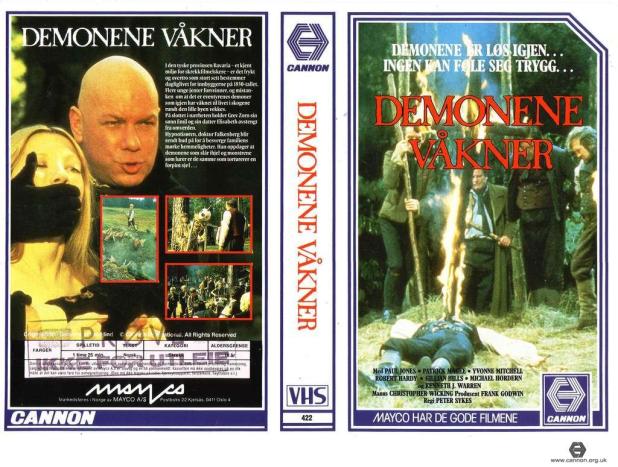
CANNON MONTH 2: Demons of the Mind (1972)

EDITOR’S NOTE: Cannon did not produce this movie but released it on video in Denmark on the Cannon/Mayco label.

Between VenomTo the Devil a Daughter and this movie, Peter Sykes is an unappreciated creator of early 70s scummy horror. Written by Christopher Wicking (Cry of the BansheeScream and Scream Again), this movie combines insanity, mesmerism, religious fervor, incest, Satanic possession and just plain British weirdness to make the kind of movie that we watch on a rainy Sunday.

Baron Friedrich Zorn (Robert Hardy) keeps his children Emil (Shane Briant) and Elizabeth (Gillian Hills) locked up and away from one another, lest they make sweet sweet brother and sister love in the name of the devil. After all, his own wife had a madness like theirs that led to her suicide in front of both of them — or maybe he just wouldn’t sleep with her any longer and she got so upset at the loss of getting some of little Friedrich that she offed herself — so they both must be constantly treated to the bloodletting that takes out the evil flowing through their bodies.

Meanwhile — if that’s not enough –women s are being murdered in the woods and covered with rose petals. The townspeople think demons are to blame and by the end of the movie, they go absolutely beyond wild and try to wipe out the cause. There’s also Doctor Falkenberg (Patrick Magee) who has a carny method of curing the evil out of the Zorn progeny; he intends to get a village woman named Inge (Virginia Wetherell) to portray their dead mother in a strange roleplaying exercise while another young local named Carl (Paul Jones, who once sang for Manfred Mann) falls for Elizabeth. And oh yeah — maybe the Baron is more to blame than anyone.

Gillian Hills was a last minute replacement for Marianne Faithful, but the early 70s were not a good time for her, as she lost her son and was dealing with heroin addiction, anorexia and living on the streets. She wasn’t able to be insured for this movie.

I’m a lover of late period Hammer, as they move away from the classics and start to make their own weird little movies. Of course, they’re often filled with lots of nudity, madness and Satanic forces, so…look, I’m weak and I love what I love.