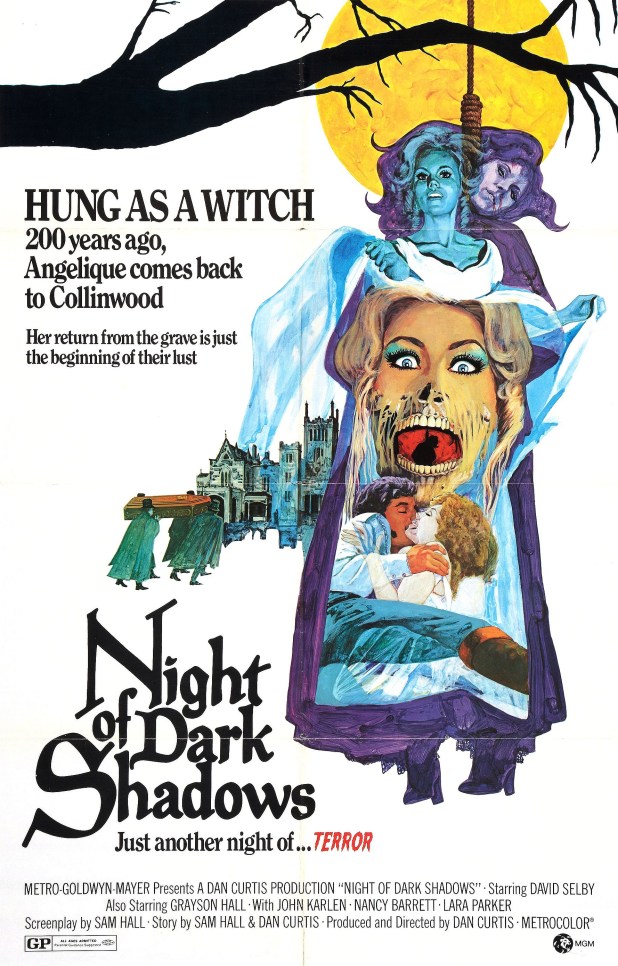
After the success of 1970’s House of Dark Shadows, MGM wanted a sequel. The show was off the air and Curtis thought that this would be the perfect time to bring back Barnabas Collins, but Johnathan Frid was fearful of being typecast.
To his credit, Curtis didn’t recast the role and worked on an all-new story, originally called Curse of Dark Shadows. They even hired spiritualist Hans Holzer — yes, the guy who wrote one of the Amityville books — to be on set and loosely followed the parallel world sequence of the show, focusing on the popular Quentin Collins.
With just 24 hours notice, MGM forced Curtis to cut over 35 minutes from the movie, which makes it pretty incoherent. The film that was to be was much darker and more intense.
While this movie did fine, it didn’t have the magic or box office of the last one. Which is a real shame, because I love it.
Quentin Collins (David Selby, also of the Dark Shadows TV show) has arrived at Collinwood with his wife Tracy (Kate Jackson) and is mesmerized by the portrait of Angelique (Lara Parker, also reprising her role from the show).
John Karlen and Nancy Barrett show up as Alex and Claire Jenkins, two horror novelists who have moved into one of the guest houses. They’re about to learn just how crazy Collinwood can get, what with the housekeeper Carlotta (Grayson Hall, who played several Dark Shadows characters, but foremost amongst them Dr. Julia Hoffman) revealing that nearly everyone here is reincarnated from the past of the house, with herself as Sarah Castle and Quentin as Charles Collins, who once was the love of, yes, Angelique, who was hung as a witch. Seeing as how Charles was having an affair with her — the wife of his brother, no less — he was buried alive next to her corpse.
Hijinks, as they say, ensue. Hijinks like murder, possession, women hung in the trees and a girl holding a doll.
You also get Dark Shadows regulars Jim Storm as Gerard Stiles, Diana Millay (whose role as the phoenix-like Laura Collins was the first supernatural character on the show), Christopher Pennock as Gabriel Collins, Thayer David (who again, played many characters on the show) and Clarice Blackburn, who missed the last Dark Shadows film.
I spent years hunting this down on DVD and it was worth the effort. Perhaps the best viewing I’ve enjoyed of this film was in a rainy and foggy drive-in, late into the night. Does life get any better than that?
During B&S About Movies’ “Radio Week,” you’ll notice we’ve reviewed a few Lifetime broadcast “radio psycho” films and mention this modest directorial debut by Clint Eastwood in passing. This tale about a womanizing DJ hooking up with the wrong fan is where the “genre” began. Oh, yes: Jessica Walters goes-for-broke in her portrayal of the troubled Evelyn Draper.
The script was conceived by Jo Heims, whose career dates back to working behind the scenes as a production secretary on 1958’s Missile to the Moon*; her earliest screenwriting credits included 1960’s The Girl in Lover’s Lane, 1961’s The Devil’s Hand and Elvis Presley’s Double Trouble. Coming to know Eastwood through their mutual employer, Universal Studios, Heims co-wrote Eastwood’s influential breakout role: 1971’s Dirty Harry. She also wrote Clint’s follow up to Play Misty for Me, the little-seen romantic drama, Breezy (1973) (he also directed High Plains Drifter that same year). Heims other works you’ve seen are the great John Llewellyn Moxey’s Nightmare in Badham County and the utterly bonkers Death Game (1977; received a Grindhouse Releasing Blu-ray bow in 2022).
The convincing “production values” on the radio station are courtesy of Play Misty for Me not being shot on a set, but as result of being shot inside an actual radio station: Carmel, California’s KRML 1410 AM. Also adding to the realism of the station’s jazz format was the shooting of additional scenes at the September 1970 Monterey Jazz Festival featuring appearances by Cannonbally Adderley and Johnny Otis.
A “live” DJ, carts, turntables, reel-to-reel decks, and rotary pot audio boards? That’s audio heaven.
While the studio initially wanted to go with the title “The Slasher” and market Eastwood’s directorial debut as a horror film, he got the title changed when he obtained the rights to Erroll Garner’s 1954 song “Misty” after he saw the jazz icon perform at the 1970 Concord Music Festival. He then acquired the rights for Roberta Flack’s “The First Time Ever I Saw Your Face” for $2,000; a popular British folk standard originally released in 1957 (You Tube), the song was written by British political singer/songwriter Ewan MacColl and sung by his American folkie wife Peggy Seger. Another song purchased for use in the film was Duke Ellington’s “Just Squeeze Me (But Please Don’t Tease Me).”
Yeah, Dirty Harry Callahan knows his jazz. Punk.
Now for the backstory and the runaway success on Flack’s other hit, “Killing Me Softly with His Song,” originally recorded by Lori Lieberman. (No: it’s not in the movie. We know.)
An early seventies confessional folk-pop singer in the mode of hit makers Joni Mitchell, Judy Collins, and Janis Ian, Lori Lieberman signed a production, recording and publishing deal with the songwriting partnership of Charles Fox and Norman Gimbel who, in turn, signed their own production deal with Capitol Records.
As with most of the forgotten musical acts of late sixties and early seventies during the burgeoning American FM radio era, the Internet exhumed Lieberman’s career frustrations in the wake of her 1971 debut single, “Killing Me Softly with His Song,” when it became a 1997 Grammy Award-winning single for the American Hip-Hop group, the Fugees—remade under the truncated title of “Killing Me Softly,” from the Fugees’ 1996 album, The Score.
From the time the song became one of the biggest-selling number one singles of 1973, as remade by R&B artist Roberta Flack, credits and royalties for the song became a point of contention for Lieberman, as she long claimed she contributed to the song’s lyrics. While the writing team of Fox and Gimbel scored another 1973 Top Ten hit with Jim Croce’s “I Got a Name,” and composed the television theme songs for the ABC-TV Network’s Happy Days and Laverne & Shirley, Lieberman floundered with three more albums for Capitol in the United States. Those albums, however, found a receptive audience in Europe (a country rife with voracious music connoisseurs), which resulted in a top-selling, Euro-only release of a 1976 greatest hits package, The Best of Lori Lieberman.
Lieberman recently released her 17th and 18th albums, Ready for the Storm and The Girl and The Cat, produced by Bob Clearmountain, known for his work with Bruce Springsteen, the Rolling Stones, and Bon Jovi.
Back to Play Misty for Me.
The most awesome aspect of this film is that Universal didn’t have much faith in turning over a film to Eastwood. So he waved his usual acting fee and was paid only as a director. To say Eastwood “showed them” is an understatement. He wrapped the film five days ahead of schedule and made it $50,000 short of its $950,000 budget. Play Misty for Me went on to gross $11 million in its initial release and, when it became a VHS rental in the ‘80s, earned another $6 million.
The influences of Clint Eastwood’s directing debut can’t be denied, as a female DJ-cum-radio psychologist taunted by a killer became familiar damsel-in-distress fodder for the Lifetime cable network, which aired the similarly-plotted The Night Caller (1998), Requiem for Murder (1999; Molly Ringwald), A Lover’s Revenge (2005; Alexandra Paul), and Radio Silence (2021). To a lesser extent, one can place the radio murder-mysteries Night Rhythms (1992), Night Owl (1993), director Fred Walton’s superb noir-slanted Dead Air (2009), and the direct-to-video renter, Shattered Illusions (1998), on the “radio psychos” list.
* You can catch up with more pre-Star Wars sci-fi films, such as Missile to the Moon, with our Exploring: Before StarWars feature.
Update November 2020 : Kino Lorber has just re-released Play Misty for Me as a Special edition Blu-ray in a new 2K transfer. The disc includes commentary by film historian Tim Lucas and a video essay with film historian Howard S. Berger. While Donna Mills appears in an all-new interview, Siegel and Eastwood appear in an “about” featurette. Writer-director Adam Rifkin (The Dark Backward, Detroit Rock City) offers his insights via his “Trailers from Hell” segment (You Tube). And . . . if you’re a Clint Eastwood completist: Kino Lorber has also re-issued Clint’s films The Beguiled and The Eiger Sanction to Blu. You can learn more about Kino Lorber’s complete roster of films at their official website and Facebook, and watch the related film trailers on You Tube.
As result of the Kino Lorber reissue, Sam takes another, new look at the film, here.
Now, the question is: When will Kino Lorber re-release the fellow radio flick A Matter of Degrees to DVD and Blu?
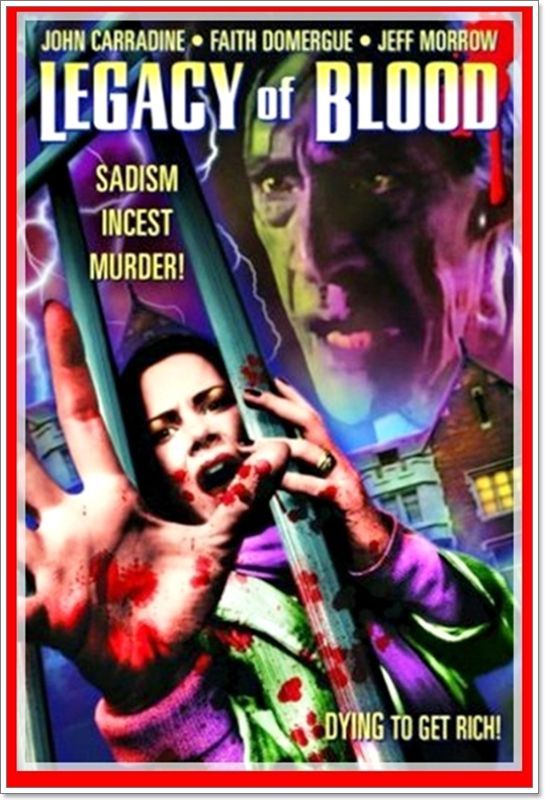
Whatever you call it, this 1971 film has a plot as old as movies themselves — a patriarch gathers his family to hear his will. Carl Monson, who wrote The Acid Eaters and also directed Please Don’t Eat My Mother was behind this.
This is the last movie for Rodolfo Acosta, who either played Mexicans or Native Americans in Westerns usually. John Carradine is also in this — of course, this movie was made for him — and Richard Davalos (Blind Dick from Cool Hand Luke and the cover image for The Smiths albums “Strangeways, Here We Come” and two of their greatest hits collections), Faith Domergue (Perversion Story), former pro wrestler Buck Kartalian, Jeff Morrow (The Creature Walks Among Us) and John Russell, who replaced James Doogan on the second season of Jason of Star Command.
Yes, the outside of the house is also the same mansion that was used for Wayne Manor. You haven’t gone completely bats yet.
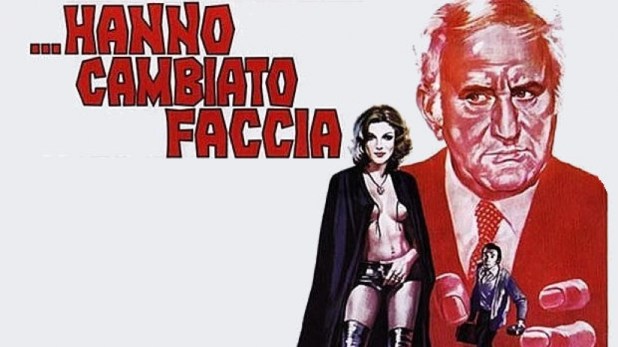
Corrado Farina was once a copywriter in advertising before he began to direct his own commercials. He moved on to direct documentaries as well as two feature films — Baba Yaga and this strange campire film. After this, he mainly worked on documentaries and wrote novels. That’s a shame, because both movies are pretty good.
Farina referred to this as a conceptual movie. It concerns a man who is given a promotion at the car company that he works for. However, that promotion comes from a place and a person that he didn’t expect.
This film was influenced by German philosopher Herbert Marcuse and his critique of capitalism and communism One-Dimensional Man. In story, consumerism is a form of social control, just like vampirism. Nosferantu is still out there, sucking blood, but now he’s being much more polite about it — he’s Adolfo Celi playing Giovanni Nosferatu and not Max Schreck.
In the modern world, the vampires use advertising — a subject that Farina obviously knew plenty about — and business to control their victims. There’s even Harkers and Van Helsings on the Nosferantu payroll now. And instead of draining blood from their necks, Giovanni derives pleasure from shooting targets that moan with each shot.
Co-writer Giulio Berruti would go on to direct Killer Nunif you’re interested in playing seven degrees of giallo and Italian genre filmmaking with me. Let’s keep the game moving — Geraldine Hooper, who plays Nosferantu’s androgynous secretary, was also in Deep Red and Emmanuelle in Soho.
You have to love a movie where business meetings take on the sinister trappings of the occult ritual. The symbols may have become logos and the mantras may have become concept statements, but the intent is so much the same.
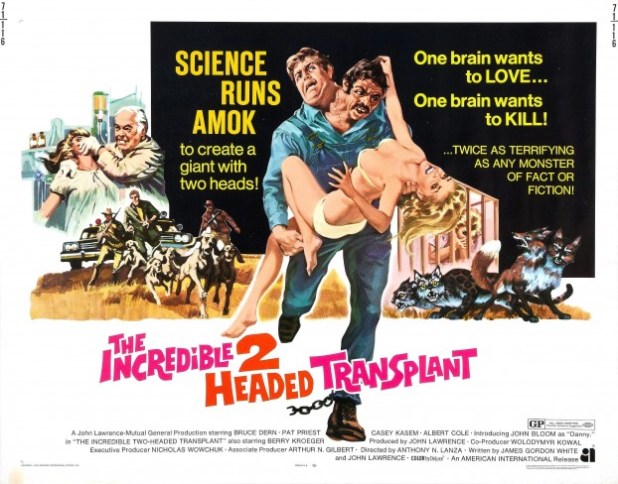
There is no better companion film for The Thing with Two Heads than this, a movie that’s pretty much the same idea: Dr. Roger Girard (Bruce Dern!) is a scientist experimenting with head transplantation who finally gets the chance to do the experiment that everyone says shouldn’t happen. Hijinks, as they say, ensue.
Girard had a caretaker who was killed. That man’s son Danny (John Bloom, The Dark, The Hills Have Eyes Part II, Brain of Blood) is a giant with great strength and the mild of a child. Manuel Cass is an escaped mental patient who is critically injured after killing Danny’s dad. So you know — why not transplant their heads on the same body? What can go wrong?
Larry Vincent, one of the first film riffers as horror host Seymour on Los Angeles’ Fright Night on KHJ-TV and Seymour’s Monster Rally on KTLA, shows up, as does Pat Priest (the second Marilyn Munster, of course), Casey Kasem (I really need to do a Letterboxd list on the films of Casey because, well, I’m a maniac) and stuntman Gary Kent (who the film Danger Godwas about).
Once, on The Tonight Show with Johnny Carson, Dern revealed he was not paid for acting in this movie. He was given a check for $1,700 that bounced and when he returned to the set for the next day of filming, it had already been shut down.
It certainly made money, as American International Pictures paired this with the Amicus movie Scream and Scream Again.
You can watch this for free on Tubi with and without commentary by Rifftrax.
Oh Ted Post. You made Beneath the Planet of the Apes. You directed Magnum Force. On TV, you were in the director’s chair for episodes of Gunsmoke, Perry Mason, Wagon Train, Rawhide, TheTwilight Zone, Combat!, Columbo, 178 episodes of Peyton Place and the TV movie that launched Cagney and Lacey.
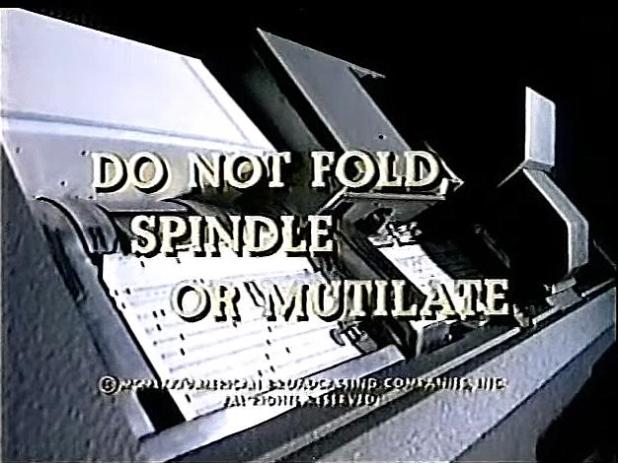
If that alone didn’t make us adore you, you also brought together four grand dames — Helen Hayes, Myrna Loy, Mildred Natwick and Sylvia Sidney — and gave us some hagsploitation fun on free TV. These four silver-haired troublemakers invent a woman for the new world of computer dating and jazz up their meet-ups by discussing the fictional world that their invented modern girl lives in.
Of course, their fictional girl has raised the ire or a serial killer named Mal, played by Vince Edwards. Yes, the very same man who was once the kindly Ben Casey. Now he’s figured out that our plucky foursome is behind his mystery woman and all the gin fizzes and old fashioneds won’t save them.
A year after this movie aired (original air date: November 9, 1971) NBC brought back Hayes and Natwick as The Snoop Sisters, a two-hour television film about two aged sisters who write mysteries as well as solve crimes.
This is based on a novel by Doris Miles Disney, whose book Family Skeleton became the 1950 movie Stella.
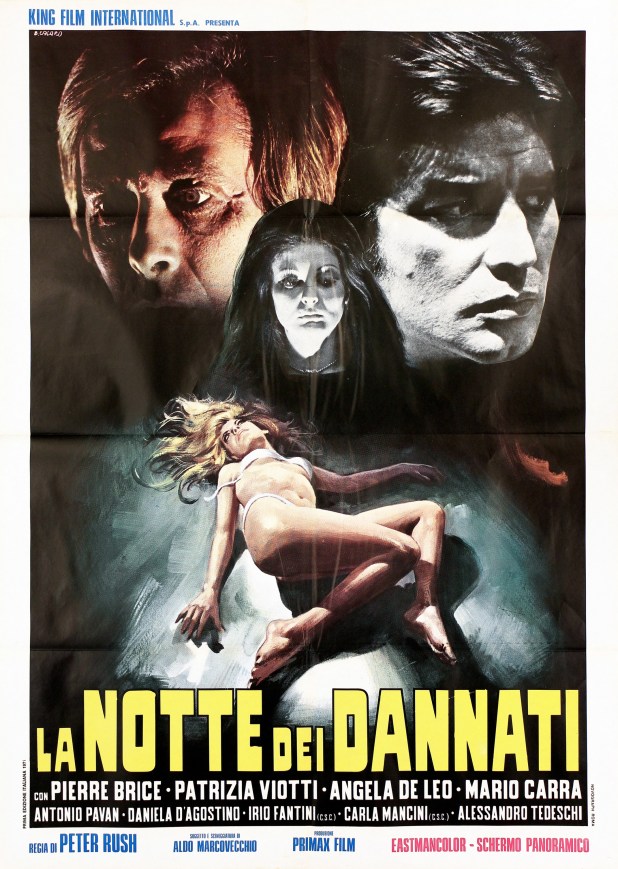
This is Filippo Walter Ratti’s last movie, but man, just from the opening, where a couple hides and strange faces show up amongst flames while a woman screams a James Bond-like song? This makes me want to stay up even later than 3:14 AM, which I figure is probably the best time to watch Satan-themed Italian horror movies.
When this was released in France as Les Nuits Sexuelles, it had plenty more sex and skin. Just a warning, if you find that version.
Jean (Pierre Brice, who played Winnetou in a series of spaghetti westerns) and Danielle Duprey (Patrizia Viotti, Amuck) love solving mysteries. Well, they get one right away, as Jean get a letter from Guillaume de Saint Lambert that arrives in the form of a riddle that references the book Les Fleurs du mal by Charles Baudelaire. This leads them to the prince’s castle, where Jean’s old friend is dying from a disease that impacts everyone in his family over the age of thirty-five. It’s lasted for three generations and the doctors can’t help him.
Then there’s a painting of a man dying at the stake and Danielle starts dreaming about it. And oh yeah — it turns out that the prince’s wife is a witch that his family had burned at the stake. It’s not worth falling in love in an Italian gothic horror romance.
I was wondering — how can a movie called Night Of The Sexual Demons be this slow? Then I saw a review that said to try and hang on past the first thirty minutes. And then I thought, well, this does have a pretty great poster, so I held on for a little more. Luckily, I was rewarded with exactly the kind of movie I was hoping for, complete with a killer that has razor-sharp claws that he or she uses to eviscerate nude victims, as well as an attempted sacrifice. Thank, well, whomever in the nine circles who made that finally happen.
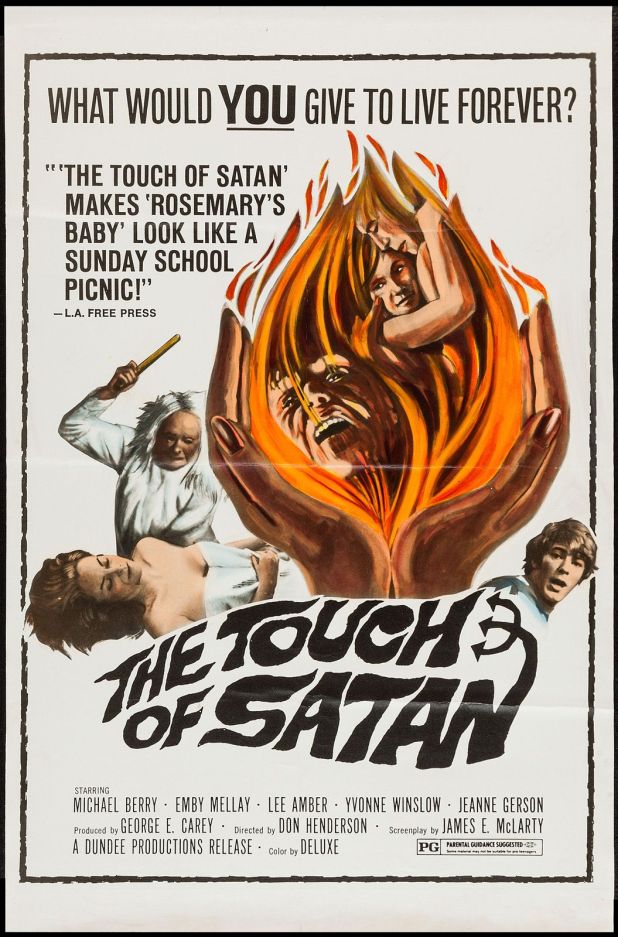
Shot between 1968 and 1970 in the Santa Ynez, California area, Touch of Satan was a regionally released drive-in and grindhouse film that wasn’t well-known until it appeared on a 1998 episode of Mystery Science Theater 3000.
There was a rumor that this movie was directed by Tom Laughlin, who made the Billy Jack filmns and used the pseudonym Don Henderson as the producer of The Born Losers and the editor of Like Father, Like Son. The director of this movie really as Don Henderson, who only made two other films: The Babysitter and Weekend with the Babysitter. While not actually connected, the second film is a spiritual sequel to the first. George E. Carey wrote, produced, and starred in both films — but played different characters. Yet they both share the idea of an older man having a fling with the babysitter of his children, named Candy Wilson in both movies, but played by two different actresses, Patricia Wymer and Susan Romen.
This movie begins with a farmer being repeatedly pitchforked by an elderly woman who has a burned up face. She goes scorched earth and sets his barn on fire too, while she’s at it. As she literally falls through the screen door when she gets back home, an older couple and a young woman begin arguing about how to handle things, adding that she’s done things like this in the past. Please note: this family lives on a walnut ranch.
Meanwhile, Jodie Thompson comes to town, as part of his vision quest as he decides whether or not he wants to be a lawyer like his father. He falls for Melissa, the girl we’ve just met with the insane grandmother, who is really her sister because our girl Melissa is a witch.
Cue the Mercyful Fate!
“Melissa, you were mine
Melissa, you were the light
She was a witch
Why did they take you away?”
Believe it or not, this movie takes plenty of dialogue from the H.P. Lovecraft story “The Horror at Red Hook.”
While this was originally going to be called Pitchfork, it has an amazing Italian title: L’Ossessa: i raccapriccianti delitti di Monroe Park, which translates as The Obsession: The Horrific Crimes of Monroe Park. That said — there’s no location named Monroe Park in the film. There is, however, that one amazing bit of dialogue when Melissa says, “This is where the fish lives.”
You can watch this on Amazon Prime with and without commentary from Mystery Science Theater 3000. The riffed version is also on Tubi.
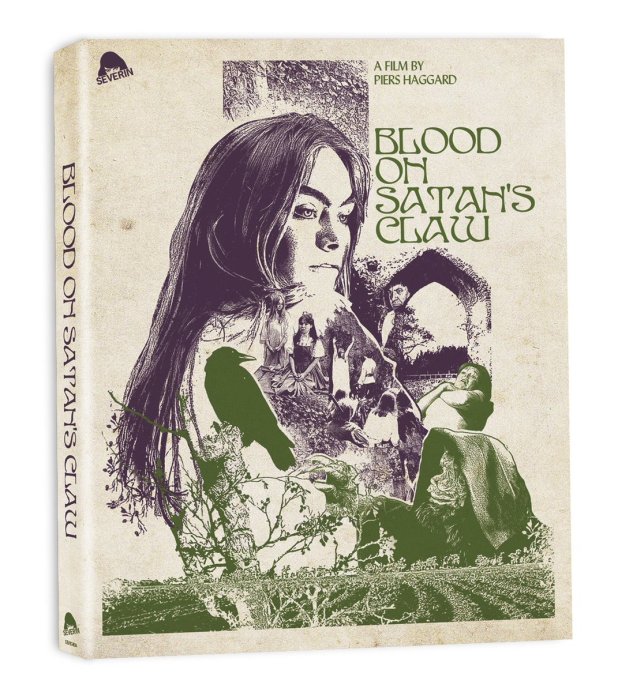
In his BBC documentary series A History of Horror, Mark Gatiss referred to this film, along with Witchfinder Generaland The Wicker Man, as the prime example of a short-lived subgenre he called folk horror.
It’s directed by Piers Haggard, who also was behind The Quatermass Conclusion, The Fiendish Plot of Dr. Fu Manchu and Venom. He’s also the great-great-nephew of H. Rider Haggard, the creator of Allan Quartermain.
Robert Wynne-Simmons was hired to write the story, which was inspired by the modern-day Manson Family and Mary Bell child murders.
In the early 18th century, Ralph Gower (Barry Andrews, Dracula Has Risen from His Grave) uncovers a one-eyed skill covered with fur while plowing his fields. He asks the judge (Patrick Wymark, Dr. Syn, Alias the Scarecrow) to look at it, but it’s gone missing, and his fears are ridiculous.
Peter Edmonton brings his fiancee, Rosalind Barton (Tamara Ustinov, Blood from the Mummy’s Tomb), to meet his aunt, Mistress Banham. Banham disapproves of the coupling and demands that Rosalind sleep in an attic room. After screaming throughout the night, she soon gets ill, and the judge commits her. As she’s led away, Peter discovers she has a claw instead of a hand.
Claws show up all over this — hidden in fields to be found by children and attacking Peter inside the cursed room, causing him to sever his hand. The judge leaves behind the town for London but promises to return. He places Squire Middleton (James Hayter, The 39 Steps) in charge.
One of the children who found the claw, Mark, is lured out by his classmates and killed in a ritual game by the leader of a new cult, Angel Blake (Linda Hayden, Madhouse, Queen Kong). She even tries to seduce Fallowfield (Anthony Ainley, the Master from Dr. Who) and tells him that Mark had the devil inside him, which needed to be cut out. Her group also has a Black Mass inside a ruined church where they attack Mark’s sister Cathy (Wendy Padbury, companion Zoe on Dr. Who). They ritualistically assault and murder her before tearing the fur from her skin.
Of course, it’s not long before all hell quite literally breaks loose, with insane children raising Satan himself from the Great Beyond and Ralph growing fur on his leg, marking him for death. This movie is…well, there’s nothing else quite like it. I can see why it had a limited audience for years; it’s so dark and unforgiving.
“It never made much money,” said Haggard. “It wasn’t a hit. From the very beginning, it had a minority appeal. A few people absolutely loved it, but the audiences didn’t turn out for it.”
While Satan’s Skin was the original title, you must give it to American International Pictures’ Samuel Z. Arkoff, who created the film’s title.
Eddie Romero directing and John Ashley starring? That was all I really needed to know. Man, anything remotely connected with these two — like the Blood Island films — and I’m ready to go.
This was also the first release for Roger Corman’s distribution company New World Pictures. After successfully distributing Beast of Blood in 1970, Kane W. Lynn’s Hemisphere Pictures tried to get the distribution rights to this, but got cut out of the deal.
Ashley’s new company, Four Associates Ltd. went on to produce The Twilight People, The Woman Hunt and Ebony, Ivory & Jade. As for Lynn, he worked with Sam Sherman to make Brain of Blood. Me? I’m happy all around at whatever these maniacs decided to make.
While Ashley would say that this was the most cerebral of the Philippines-based horror movies he made — and its success led to Corman making more movies there like The Big Doll House — Eddie Romero would say, “We really tried for quality. I don’t think it did very well. They prefer out and out gore.”
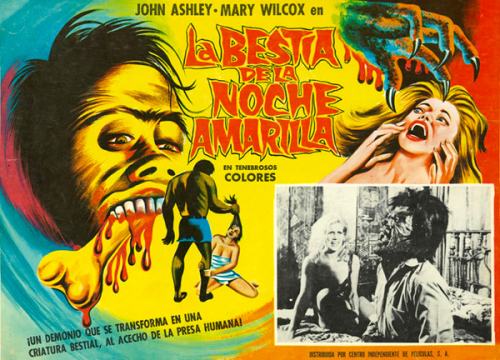
As World War II ends, Satan himself — Vic Diaz from Night of the Cobra Woman — spares Joseph Landgon’s (Ashley) life if he becomes his disciple. So over the next 25 years, Langdon possessed people and forces them to do the bidding of his dark master.
However, he wants to free himself from the Lord of the Flies, but instead becomes a hairy monster who could pretty much be a werewolf. He’s in the body of Phillip Rogers now and that man’s wife tries to save him. An old blind bandit named Sabasas finally saves him, asking him to pray for his soul just as an inspector catches up to him and shoots our — well, I guess he isn’t the hero — turning him into an ancient corpse.
Mary Charlotte Wilcox, who plays the wife, is also in the absolutely bonkers film, Love Me Deadly, which I love me dearly. She also shows up in Psychic Killer, Black Oak Conspiracy, Strange Brew and was a cast member of SCTV and Maniac Mansion.
Once he moved back to America, Ashley produced The A-Team. In one episode, he plays a movie producer trying to get a movie made. That movie? Beast of the Yellow Night.
You can watch this on Amazon Prime or with Rifftrax making fun of it on Tubi.


 B&S About Movies
You must be logged in to post a comment.