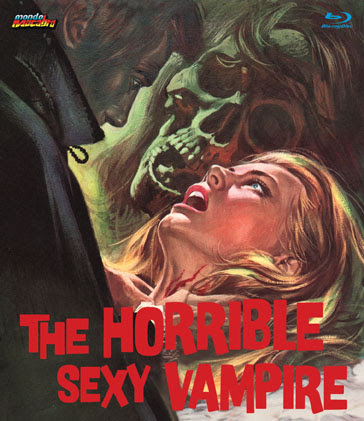
MONDO MACABRO BLU RAY RELEASE: The Horrible Sexy Vampire (1971)

El vampiro de la autopista has Jess Franco favorite Wal Davis playing both a ghostly baron and that baron’s grandson, so in effect both victimizer and victim. It’s a Spanish film made in snowy Germany and it embraces its Eurohorror vibes by having nudity — and yes, too much talking — every few minutes.

There are so many rules when it comes to inheriting the home of the basement and all of them start with don’t and yes, one of them is don’t go in the basement. There’s also a vampire who doesn’t bite necks but just gently strangles women, often after they’ve taken a bath. I mean, if you have a bathing fetish — I wonder about you sometimes dear reader — this would be the movie for you to savor.

Director and writer José Luis Madrid also directed and wrote Seven Murders for Scotland Yard; this film has an amazing title, great artwork and impeccable scenery. I wish it had more, but sometimes, we must meditate on what we get and just savor pale Spanish vampires and their murder-filled business.

You can get this from Mondo Macabro (at Diabolik DVD) or watch it on Tubi.

MILL CREEK NIGHTMARE WORLDS: Beast of the Yellow Night (1971)

EDITOR’S NOTE: This was originally on the site on January 17, 2020.

Eddie Romero directing and John Ashley starring? That was all I really needed to know. Man, anything remotely connected with these two — like the Blood Island films — and I’m ready to go.

This was also the first release for Roger Corman’s distribution company New World Pictures. After successfully distributing Beast of Blood in 1970, Kane W. Lynn’s Hemisphere Pictures tried to get the distribution rights to this, but got cut out of the deal.

Ashley’s new company, Four Associates Ltd. went on to produce The Twilight People, The Woman Hunt and Ebony, Ivory & Jade. As for Lynn, he worked with Sam Sherman to make Brain of Blood. Me? I’m happy all around at whatever these maniacs decided to make.

While Ashley would say that this was the most cerebral of the Philippines-based horror movies he made — and its success led to Corman making more movies there like The Big Doll House — Eddie Romero would say, “We really tried for quality. I don’t think it did very well. They prefer out and out gore.”

As World War II ends, Satan himself — Vic Diaz from Night of the Cobra Woman — spares Joseph Landgon’s (Ashley) life if he becomes his disciple. So over the next 25 years, Langdon possessed people and forces them to do the bidding of his dark master.

However, he wants to free himself from the Lord of the Flies, but instead becomes a hairy monster who could pretty much be a werewolf. He’s in the body of Phillip Rogers now and that man’s wife tries to save him. An old blind bandit named Sabasas finally saves him, asking him to pray for his soul just as an inspector catches up to him and shoots our — well, I guess he isn’t the hero — turning him into an ancient corpse.

Mary Charlotte Wilcox, who plays the wife, is also in the absolutely bonkers film, Love Me Deadly, which I love me dearly. She also shows up in Psychic KillerBlack Oak ConspiracyStrange Brew and was a cast member of SCTV and Maniac Mansion.

Once he moved back to America, Ashley produced The A-Team. In one episode, he plays a movie producer trying to get a movie made. That movie? Beast of the Yellow Night.

You can watch this on Amazon Prime or with Rifftrax making fun of it on Tubi.

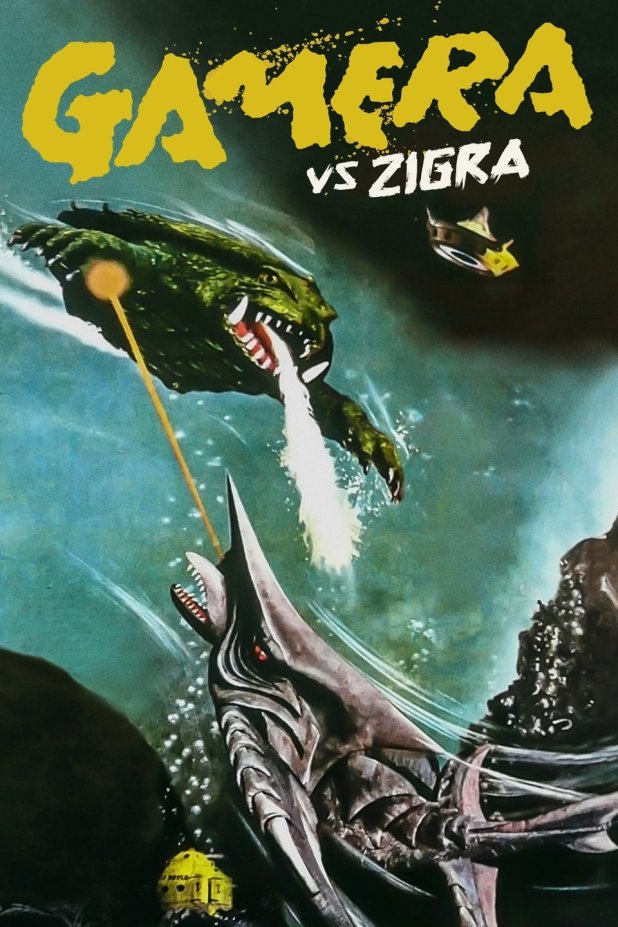
FANTASTIC FEST: Gamera vs. Zigra (1971)

EDITOR’S NOTE: This was first on the site on March 30, 2020. It played live at Fantastic Fest.

Shortly after Gamera vs. Zigra was completed, the film’s production studio, Daiei Film, went bankrupt. As a result, the film was distributed by another company called Dainichi Eihai. It only cost around $97,000, which is pretty amazing (Around $621,000 in today’s money).

This time, Earth is under attack by aliens. Well, we’re under attack by aliens again.

The Zigrans have enslaved a female astronaut to do their bidding and have a monster named Zigra which can stop the cellular activity of Gamera, who sinks to the bottom of the ocean. Luckily, the children, some dolphins and a bathysphere come to the rescue.

This movie has one of my all-time favorite Gamera moments, as the giant turtle uses a giant rock to play his theme song on the fins of Zigra before setting the beast on fire, because as we have all learned, Gamera does not play.

This would be the last Gamera movie for nine years, which is a shame. I knew none of this as a child, as I began watching these movies probably in 1977 and had no idea of their history. I wouldn’t have seen this one anyway, as it’s the only original Gamera film to not be released in the U.S. It wouldn’t come over here until the VHS era.

You can watch this on Tubi.

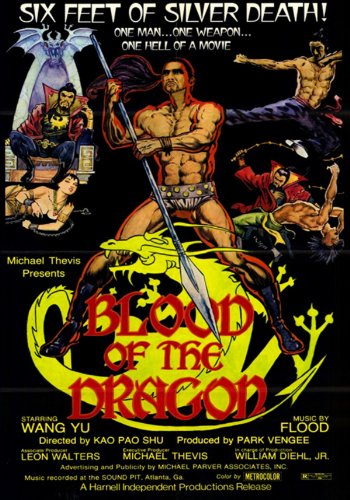
Zhui ming qiang (1971)

The Mongols have taken over China but White Dragon (Jimmy Wang Yu) and his huge spear stand in their way. Two rebels die to give a young thief named Kenny a tube with a secret message and White Dragon agrees to protect him as they journey to deliver that information to the Prince, who hates White Dragon as he once defeated his father in a duel and ruined the man’s life.

That tube contains a secret list of rebel leaders that the Prince can use to save China, even if he hates White Dragon, who is selfless and still wants to return it to him, even if the Prince had no honor and stabbed him with a secret dagger hidden inside his Magic Sword.

This all leads up to a twenty-minute long final battle that seems like a contest between White Dragon and the Prince to see how many soldiers they can kill. The final boss, General Tai (Yi Yuan) has one of those amazing martial arts movie weapons, a sword that turns into a whip. I have no idea how a weapon like that would work in real life, but who cares? This is the world of unreal weapons and even more fantastic warriors using them to unleash their fighting skill.

It’s intriguing that this was directed and written by a female filmmaker, Kao Pao Shu, which doesn’t happen too often in martial arts cinema. She would direct herself in The Female Fugitive and also make The Master Strikes.

You can watch this on Tubi.

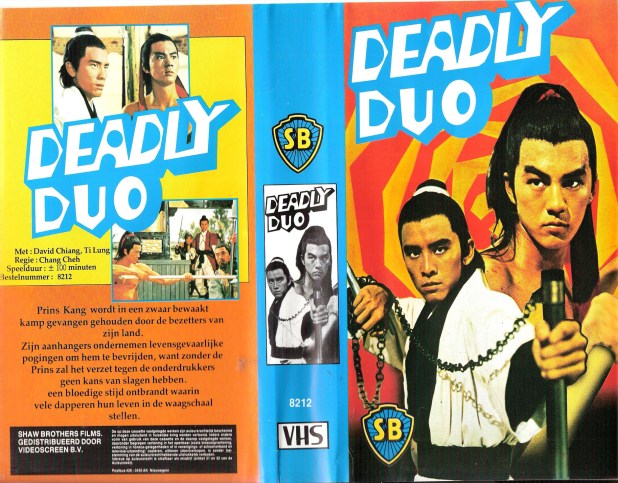
Shuang xia (1971)

Deadly Duo has Ti Lung and David Chiang as Bao Ting Tien and Little Bat and they must fight the Five Elements Great Fighters, who are River Dragon (Bolo Yeung), Golden Demon, Fire Demon Lui (Yeung Chak-lam), Leopard (Wong Pau-gei) and Mole (Lau Kar-wing) to rescue Sung Prince Kang.

Directed by Chang Cheh — with Godfrey Ho as the first assistant director (!) and Lau Kar-leung (!) directing the action scenes — this is a movie based as much around the heroics of its leads as it is a series of astounding weapons, including the typical swords and spears, as well as cymbals and a weapon that literally spits fire.

Chang Cheh made six movies in 1971 (King EagleThe New One-Armed SwordsmanDuel of the Iron FistThe Anonymous HeroesDuel of Fists and this movie) and man, how did he do it? He’s throwing in underwater action here too! I mean, it’s not like he slowed down in 1972, a year in which he made eight movies, including The Boxer from Shantung.

These Shaw Brothers epics just keep me alive. I may not always be able to follow every beat of the story but they’re just so relentlessly entertaining that I can’t stop watching.

You can watch this on Tubi.

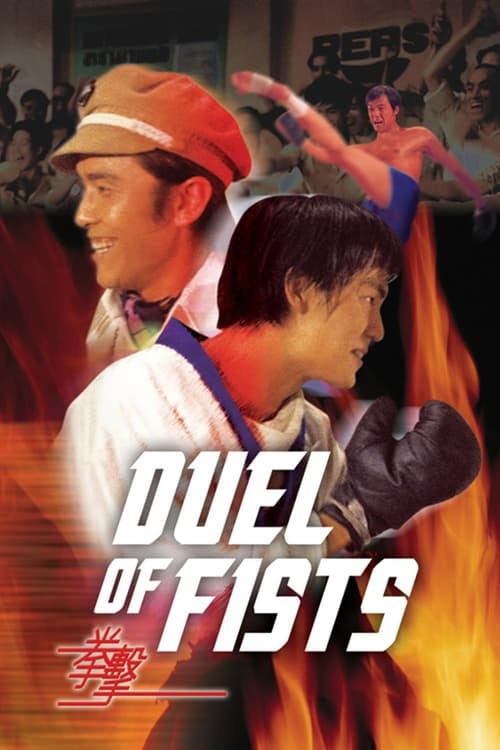
Duel of Fists (1971)

ABOUT THE AUTHOR: Jennifer Upton is an American (non-werewolf) writer/editor in London. She currently works as a freelance ghostwriter of personal memoirs and writes for several blogs on topics as diverse as film history, punk rock, women’s issues, and international politics. For links to her work, please visit https://www.jennuptonwriter.com or send her a Tweet @Jennxldn

In Duel of Fists, a Hong Kong engineer must travel to Thailand to find his long-lost professional boxer brother who is having problems with the mob. David Chiang is Hong Kong engineer cum kung fu expert Fan Ke. His dying father tells Ke that he has an older half-brother in Thailand. He knows nothing of him other than that he is a professional kick-boxer. He departs immediately for Thailand.

Meanwhile, half-brother Wen Lieh (Ti Lung) is being forced to box for some Bangkok gangsters because he needs the money for a life-saving operation for his mother. He must fight Cannon, a boxer notorious for killing men in the ring.

After meeting, and becoming friends, the two charismatic men finally discover they are brothers and band together to fight the evil cookie-cutter gangsters.

Shot mostly on location in Thailand, Duel of Fists is not among Chang Cheh’s best work. The story is predictable and the fights in the ring, although well-choreographed, are long and drawn out but packed with very little drama when compared to other Chang Cheh pairings with David and Ti. Even the showdown between Cannon and Wen Lieh lacks spirit. There is some improvement during the finale when the dynamic duo pair up against the gangsters, owing mostly to the loud ‘70s pimp clothing that David Chiang sports.

Now. Let’s talk about the girlfriends of our heroes. Wen Lieh’s ladylove Yulan (Ching Li) does nothing but stand around and worry for her man’s fate. Fan Ke meets a nice Thai girl named Meidai (Parwarna Liu Lan Ying) who dresses just as goofy as he does and does nothing but look doe-eyed in every scene.

Last, there are entire scenes that serve no purpose other than to promote the fact that they shot Duel of Fists on location in Thailand. There are plenty of glamour shots of Ti Lung riding a motorcycle through the streets of Bangkok and David Chiang’s character even has time to sightsee at some temples while looking for his brother. Viewers who are really into Thai kick boxing may find this film interesting and it’s nice to see Lung and Chiang in a modern setting with modern clothes and haircuts, but for the rest of us, it’s much less than a worthy effort from the team of Cheh, Chiang and Lung who brought us some of the greatest Shaw Bros. epics ever made. Watch those instead!

ARROW BOX SET RELEASE: The Count Yorga Collection: The Return of Count Yorga (1971)

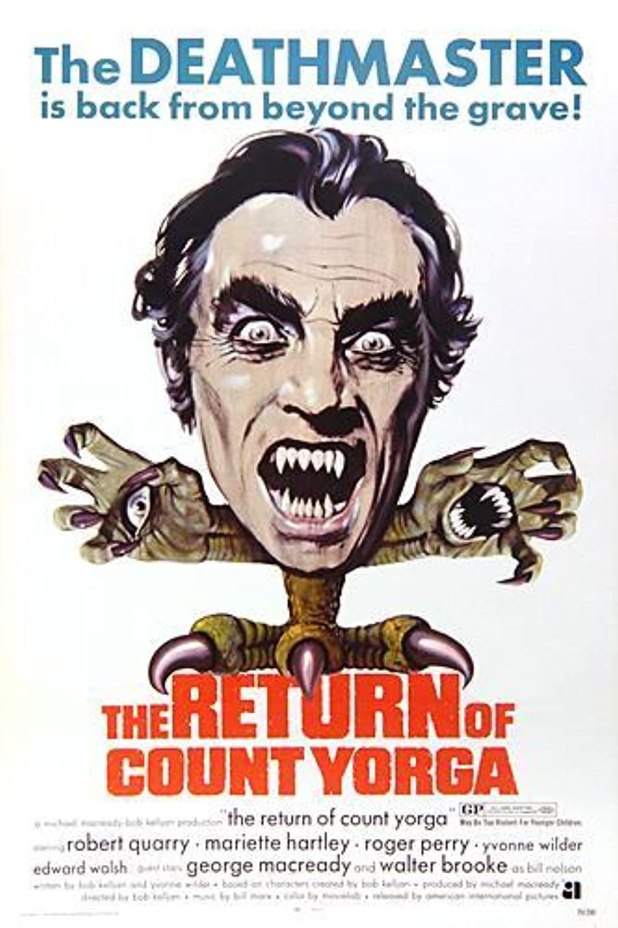
Count Yorga and  his servant Brudah have been revived by the supernatural Santa Ana winds. Sure, I mean, whatever it takes to get more of Yorga facing off with early 70s hippies, right?

This time around, Yorga is going after not just adults, but the children of an orphanage and their teacher Cynthia Nelson (Mariette Hartley). One of the students, Tommy, even watches as the brides of Yorga rise from a graveyard.

How bad does Yorga want her for his bride? Well, he sens is undead army after her entire family, tearing them apart and hypnotizing her into thinking they’ve left her in his care. Also, Yorga now doesn’t just have the disigured Brudah helping him, he also has a witch who can tell the future. And she believes that unless Cynthia isn’t killed or turned soon, she’ll be the death of her master.

This one is, if possible, even more bleak than the first film but still finds moments of humor, like Yorga watching The Vampire Lovers.

The ads for this film refer to Yorga as the Deathmaster. That would be the name of another Quarry-starring vampire movie, The Deathmaster, but it is not a Yorga sequel. There was a plan to make a third film in which Yorga would live in Los Angeles’s sewers with an army of undead homeless people.

American-International Pictures also considered a movie that would have had Count Yorga face Dr. Phibes. Instead, Quarry would play Phibes’ adversary in Dr. Phibes Rises Again. As it was, Quarry was pretty much Price’s enemy nearly every time they were in a movie together, just as much off-screen as on-screen. It was mainly because Quarry was AIP’s new horror star and Price’s contract was nearly up.

I love that this movie ends with nearly every character either dead or turned into a vampire; the hero has become the villain, the children are about to be consumed and Yorga’s curse keeps unliving.

Arrow Video’s The Count Yorga Collection has brand new 2K restorations of Count Yorga, Vampire and The Return of Count Yorga from new 4K scans of the original 35mm camera negatives. Plus, you get an illustrated perfect bound collector’s book featuring new writing by film critic Kat Ellinger and horror author Stephen Laws, plus archive contributions by critic Frank Collins and filmmaker Tim Sullivan. The limited edition packaging has reversible sleeves featuring original and newly commissioned artwork by Heather Vaughan, fold-out double-sided posters for both films featuring original and newly commissioned artwork by Heather Vaughan, twelve double-sided, postcard-sized lobby card reproduction artcards and a reproduction pressbook for Count Yorga, Vampire.

The Return of Count Yorga has new audio commentary by film critic Stephen R. Bissette;  audio commentary by David Del Valle and  C. Courtney Joyner; The Count and the Counterculture, a brand new interview with film critic Maitland McDonagh; Chamber-music of Horrors, a brand new interview with David Huckvale about the scores for both films; an archival interview with film critic Kim Newman; the trailer; radio spots and an image gallery.

You can get it from MVD.
CANNON MONTH 2: Lunatic (1971)

EDITOR’S NOTE: Although released by 21st Century as Lunatic in 1981, this is really a re-release of  The Night Visitor, which was on the site on April 10, 2022.

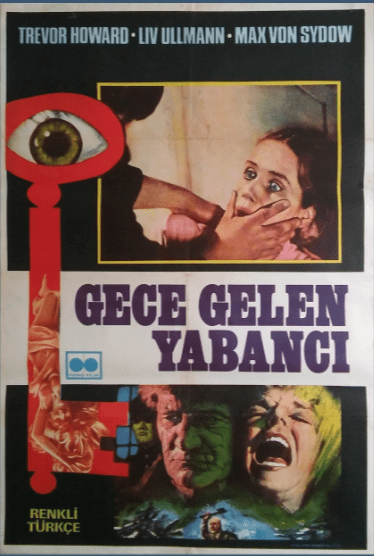
Salem (Max Von Sydow) has escaped a near-inescapable insane asylum, a place where he’s been trapped since being wrongly charged with killing a farmhand. Now he truly is deranged and is out for revenge on those he believes are guilty: his younger sisters Emma (Hanne Bork) and Ester (Liv Ullmann) and her husband Dr. Anton Jenks (Per Oscarsson), the man who accused Salem of the murder.

Beyond the fact that the villain is actually the hero of this, it has an incredible score by Henry Mancini that was made for synthesizer, 12 woodwinds, organ, two pianos and two harpsichords — with one tuned to be flat and add dissonance.

Originally entitled Salem Came to Supper and released again ten years later by 21st Century Film Corporation as Lunatic (before that company was bought and rebranded by Menahem Golan after the breakup of Cannon), this was directed by Laslo Benedek (who made the 1951 Death of a Salesman) and written by Guy Elmes, who adapted several Italian films for Western audiences.

CANNON MONTH 2: Straw Dogs (1971)

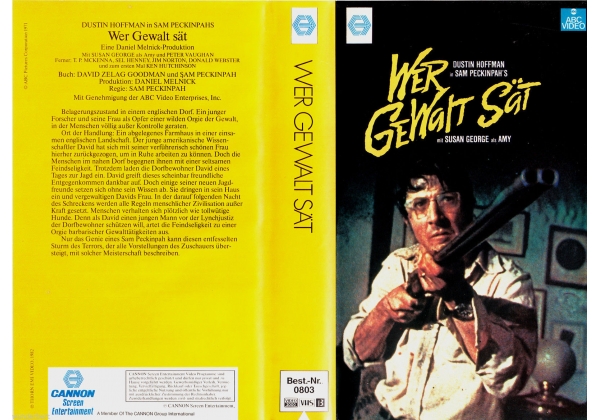
EDITOR’S NOTE: Straw Dogs was not produced by Cannon. It was, however, released on video in Germany by Cannon Screen Entertainment.

I know they made a remake of Straw Dogs in 2011, but there’s no way I can imagine people not being beyond upset with this movie. The violence probably wouldn’t upset all that many people, but the two graphic assaults of Susan George — much less the quick flash that she may not have been all that upset by the first — would be greeted by a procession of anger the likes of which no movie made today would be able to create. I mean, would director Sam Peckinpah have been able to make movies in today’s world? One could argue that he struggled to do it in the 70s.

Based on The Siege of Trencher’s Farm by Gordon M. Williams and written by David Zelag Goodman and Peckinpah, the story begins with David Sumner (Dustin Hoffman) moving his wife Amy (George) back to her hometown of Wakely. Her ex, Charlie Venner (Del Henney), has a gang of horrible townsfolk like Norman Scutt (Ken Hutchison), Chris Cawsey (Jim Norton) and Phil Riddawa (Donald Webster) and each of them resents the meek academic American making love to one of their own.

David and Amy have moved into her father’s house, Trenchers Farm, and hired the four men to fix it up. As the house improves, their marriage falls apart, as she claims he left America because he was a coward afraid of conflict and that he treats her in a condescending manner. He withdraws into his study of stellar structures while she teases the workmen with her body.

Despite the men killing their cat, David still goes hunting with them. They pull the snipe hunting trick and abandon him, heading back to his home so that Venner can attack his wife. That coupling seems a bit too much like lovemaking by the end and as she holds her ex-lover, Scutt comes in with a gun and forces Venner to hold her down. By the time David returns, Amy says nothing.

The next day, David fires the men and Amy has a breakdown in church when she sees them. Things get worse — a local boy named Henry Niles (David Warner) ends up being seduced by a relative of Venner named Janice Hedden (Sally Thomsett). When the men chase them down, he accidentally kills her and goes on the run. After David accidentally hits him with his car, he takes the boy home, which brings the foursome back to begin invading the home.

Then David says, “I will not allow violence against this house.”

What follows is a Hoffman descending into the kind of barbaric behavior one expects in a Stanley Peckinpah movie.

Straw Dogs is older than I am and still packs such infernal power. We see ourselves cheering for David to finally rise up, but is too much well, too much? I guess not from the same man who made The Wild Bunch. I’ve been thinking this film over and over in my head and trying to figure out how I feel about it. It’s not ambivalence. I’m just seeking an answer.

CANNON MONTH 2: The Butterfly Affair (1971)

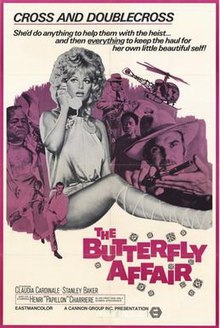
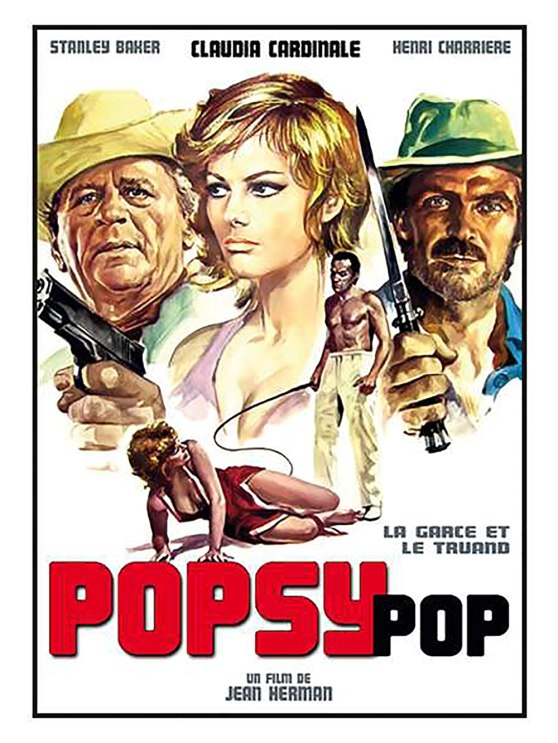
Inspector Silva (Stanley Baker, A Lizard in a Woman’s Skin) is a former private eye and now a surveyor and guard for the interests of a diamond company  Vista Alegra, Venezuela. This is a town where diamonds come right out of the mud. It’s also where French singer Popsy Pop (Claudia Cardinale, Once Upon a Time in the West) has come — on tour? on vacation? why does she travel with a giant Alice In Wonderland book and doll? — along with gangsters led by Marcou (Henri Charrière, the writer of Papillon, the story of his time in a penal colony and his later escape). They want to steal at least $2 million dollars of diamonds.

The heist goes down and only Popsy escapes. The men — except for Marcou — are all killed, with Silva making a deal with the elder criminal: He will help the detective search for Popsy and the diamonds. In exchange, Marcou is to get Popsy, whom he is in love with and he will receive 15 percent of the diamonds.

The two men soon realize that Popsy is able to get into their heads and hearts, which makes her dangerous. Who will get the diamonds? More to the point, who gets the girl?

Directed and written by Jean Vautrin (along with J.B. Beellsolell), this was also released as The 21 Carat Snatch.