EDITOR’S NOTE: This was originally on the site on May 19, 2020.
Along with What’s the Matter With Helen?, this movie is one of the two collaborations between writer Henry Farrell and director Curtis Harrington. It was the ABC Movie of the Week on September 22, 1970 and has stood the test of time as one of the better TV movies. And there’s some stiff competition for that.
Shot in just 12 days, it stars Anthony Perkins as Allan Colleigh, who has psychosomatic blindness after an accident — he left paint cans too close to a fire — that killed his abusive father and scarred his sister Katharine (Julie Harris from the 1963 version of The Haunting).
After Allan returns to their home after time in a mental hospital, he’s convinced that everyone is out to get him, including a new boarder with speaks in a hoarse whisper and one of his sister’s ex-boyfriends on the phone.
Joan Hackett — who was in two great TV movies, Dead of Night and The Possessed— appears as Allan’s former girlfriend. She gets caught up in his mania as rooms of the house explode into flames and he’s kidnapped by that mysterious ex.
How Awful About Allan has plenty of actors as comfortable on the stage as they were on the big or small screen. Perkins agreed to wear special contacts that completely made him blind so that his performance would be more realistic.
This didn’t get great reviews when it came out, but do the movie we love ever do?
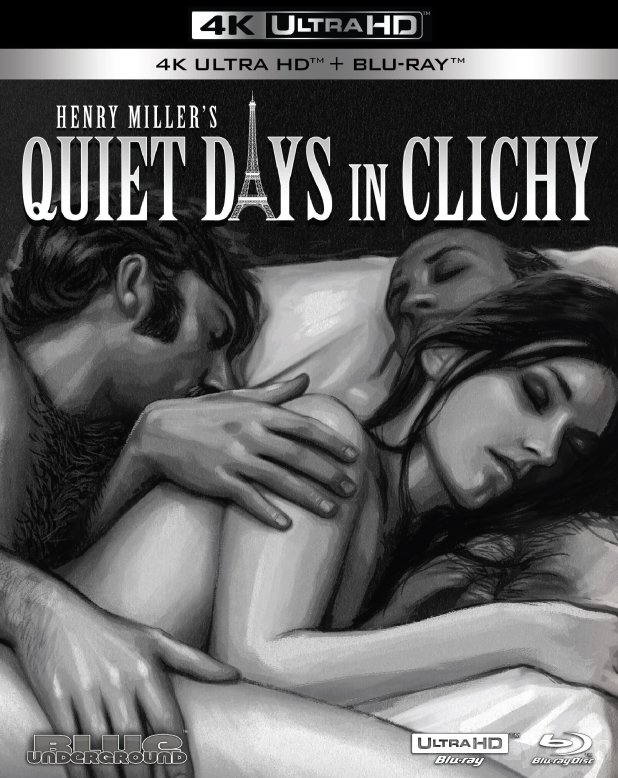
Based upon the long-banned novel by Henry Miller and featuring a soundtrack by Country Joe McDonald, Quiet Days In Clichy is considered to be the most daring film adaptation ever of one of the most controversial authors in history.
In May of 1970, the United States Government seized the only English-language prints of this movie on charges of obscenity. It was ultimately cleared in Federal Court, but the film mysteriously disappeared shortly after its release. Now more than 50 years later, a restoration has appeared from Blue Underground.
Joey (Paul Valjean) is an American writer. Carl (Joey Wayne Rodda) is his European friend. Most of the film is about their lack of money yet easy availability of women of all ages and situations, from sex workers to underage girls and married women who have lost their husbands.
Directed by Jens Jorgen Thorsen — who courted controversy over sex much in the same way as Miller — this is a gorgeous black and white film that while not outright pornography has the same story beats, as it moves from one sex scene to another. It’s definitely something worth seeing, but by no means expect gorgeous looking lovemaking. It’s down and dirty real life with all the mess that means.
I did really enjoy how Miller’s words were literally written all over the film at points.
The Blue Underground 4K UHD release of Quiet Days In Clincy has both ultra HD blu ray (2160p) and HD blu ray (1080p) widescreen 1.66:1 feature presentations. It has extras including interviews with Country Joe McDonald and Henry Miller’s editor and publisher Barney Rosset, a Midnight Blue appearance by Rosset, a deleted scene, a trailer, a gallery of posters, stills and book covers, and court documents. You can get it from MVD.
I have seen too many slashers because I also watched this last year.
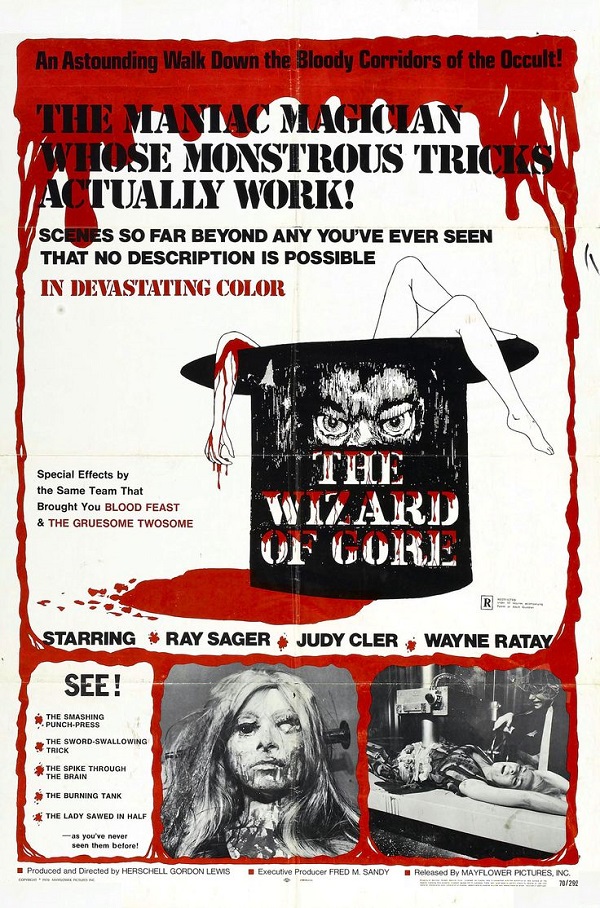
This movie is a miracle, because so much went wrong. The actor playing the monstrous Montag the Magnificent walked off the set following a confrontation with Fred Sandy and crew member Ray Sager had to take over the role. And as for the effects, they were basically two dead sheep soaked in PineSol. I can’t even imagine how much everything stunk, like the smell of an adult bookstore before they started making couples friendly places. Handling all those sheep organs was director Herschell Gordon Lewis’ son Robert.
Yes, it’s amazing that a movie with such primitive effects and non-trained actors works so well, but that’s just the weirdness that are the films of Lewis, movies that seem to exist inside vacuums of non-action punctuated by blasts of nausea-imbuing viscera.
Every night, Montag takes the stage and has long-winded speeches about the nature of reality before murdering a woman in front of an audience, then showing that it was all a trick. Then, the same woman dies the same way later that night. Reporters Sherry Carson (Judy Cler) and Greg (Phil Laurenson), along with her boyfriend Jack (Wayne Ratay), know that Montag is behind all of this. They just need to prove it.
The end of this movie breaks from what we expect and goes full psychotic. As they sit on the couch, Jack peels off his own face and reveals Montag before shoving his hands into the stomach of Sherry, who laughs in his face and disputes the illusions and the very nature of Montag’s reality, sending the entire movie back to the very beginning of this movie, creating a loop of reality as Sherry turns to her man and says, “You know what I think? I think he’s a phony.”
This movie was still playing drive-ins twelve years after it was made on several five movie bills. It was known as House of Torture but there had to be maniacs yelling at the screen, astounded to see a movie they had seen many times before. Man, what a magic time.
13. A Horror Film That Takes Place at a Fair, Carnival or Amusement Park.
Leonard Kirtman mostly directed adult, churning out titles like The Seduction of Cindy, Up Desiree Lane and Confessions of a Candy Striper, often using the name Leon Gucci. This is one of the few movies he made without penetration yet it has all the feel of a New York City-made porn from 1970.
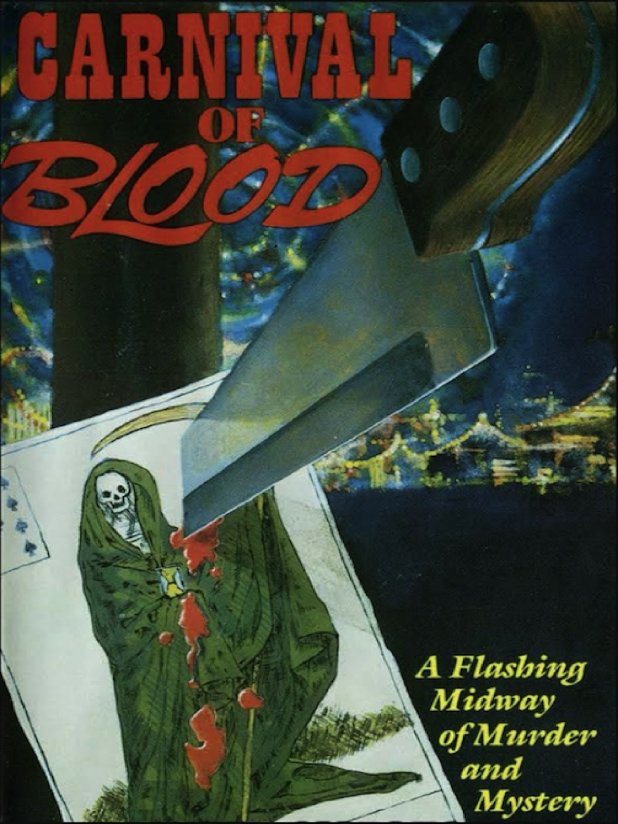
Shot in Coney Island — I would not be surprised if there were no permits and no one had any idea they were even filming — this movie revolves around the people who are killed after winning a teddy bear at the booth of Tom (Earle Edgerton) and his hunchback-heaving assistant Gimpy (John Harris, the stage name for Burt Young!).
There’s a district attorney called Dan (Martin Barolsky) who gets called down to investigate, but he’s so dumb that he brings his fiancee Laura (Judith Resnick) along to the carnival and man, defund the slasher police.
No set dialogue. Scuzzy looking footage. Gore from the Herschell Gordon Lewis school of pause on the guts. A great moment where a tunnel of love ends with a screaming survivor and a headless blood spraying victim. So much repetition. Sound effects out of nowhere. Folk music. Cool jazz. A drunken sailor. Bad relationships. Death is everywhere.
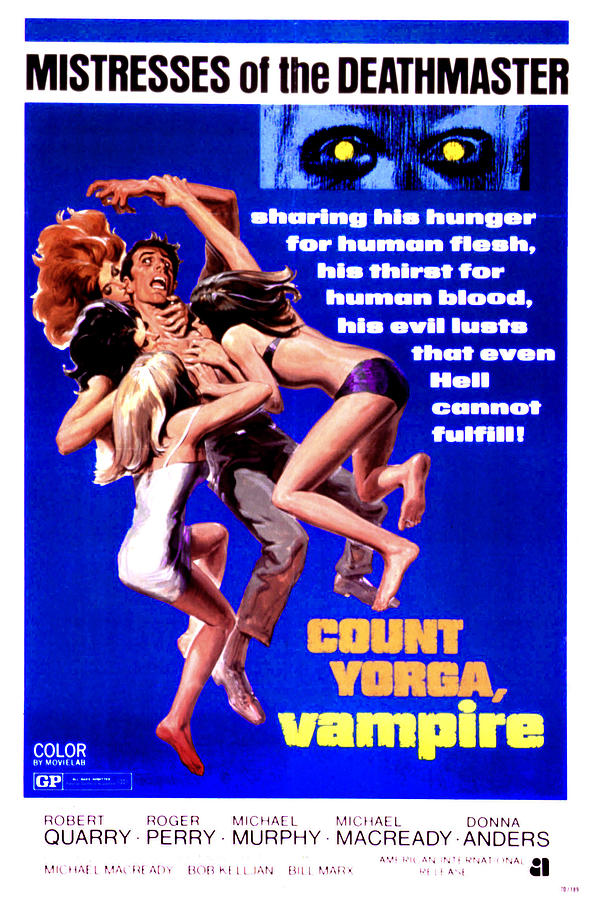
Directed and written by Bob Kelljan, Count Yorga, Vampire was originally going to be soft core porn movie, The Loves of Count Iorga. In fact, some prints have that title. Robert Quarry, the man who would be Yorga, told producer Michael Macready that he would play the vampire if they turned the story into a non-sexual horror movie.
Donna (Donna Anders) is trying to contact her recently deceased mother via séance by Count Yorga, a mystic who has recently moved to America. Donna becomes hysterical and needs to be calmed by Yorga; afterward she reveals to her friends that Yorga was her mother’s last over and when she died, he demanded that she be buried and not creamated.
Yorga then conducts a campaign of terror, biting Erica (Judy Lang), who goes from party girl to vampire eating her own kitten — don’t worry, it’s just a kitten covered in lasagna — in a matter of hours. Oh yeah — Donna’s mom (Marsa Jordan) is now one of Yorga’s brides and it’s the swinging seventies, so he commands her to make love to one of his other undead women on a cold cemetery slab.
By the end of the film, Yorga and his brides have wiped out just about every one of Donna’s friends and strengthened his hold over her, which extends potentially beyond the grave. Again, it’s the seventies and life is cruel and cheap and happy endings aren’t often found after the New Hollywood. The count is also self aware and watches Countess Dracula.
Arrow Video’s The Count Yorga Collection has brand new 2K restorations of Count Yorga, Vampire and The Return of Count Yorga from new 4K scans of the original 35mm camera negatives. Plus, you get an illustrated perfect bound collector’s book featuring new writing by film critic Kat Ellinger and horror author Stephen Laws, plus archive contributions by critic Frank Collins and filmmaker Tim Sullivan. The limited edition packaging has reversible sleeves featuring original and newly commissioned artwork by Heather Vaughan, fold-out double-sided posters for both films featuring original and newly commissioned artwork by Heather Vaughan, twelve double-sided, postcard-sized lobby card reproduction artcards and a reproduction pressbook for Count Yorga, Vampire.
Count Yorga, Vampire has new audio commentary by film critic Tim Lucas; archival audio commentary by film critics David Del Valle and C. Courtney Joyner; The Count in California, a brand new appreciation by Heather Drain and Chris O’Neill; I Remember Yorga, a brand new interview with Frank Darabont in which the award-winning filmmaker talks about his love for Count Yorga, Vampire, a new interview with Michael Murphy; Fangirl Radio Tribute to Robert Quarry, which has host Jessica Dwyer in conversation with Tim Sullivan, who is a filmmaker, Yorga fan and friend of Robert Quarry; the trailer, radio spots and an image gallery.
EDITOR’S NOTE: This article was originally on the site on February 28, 2022. Now you can see it this weekend at the Drive-In Super Monster-Rama! Get more info at the official Drive-In Super Monster-Rama Facebook page and get your tickets at the Riverside Drive-In’s webpage.
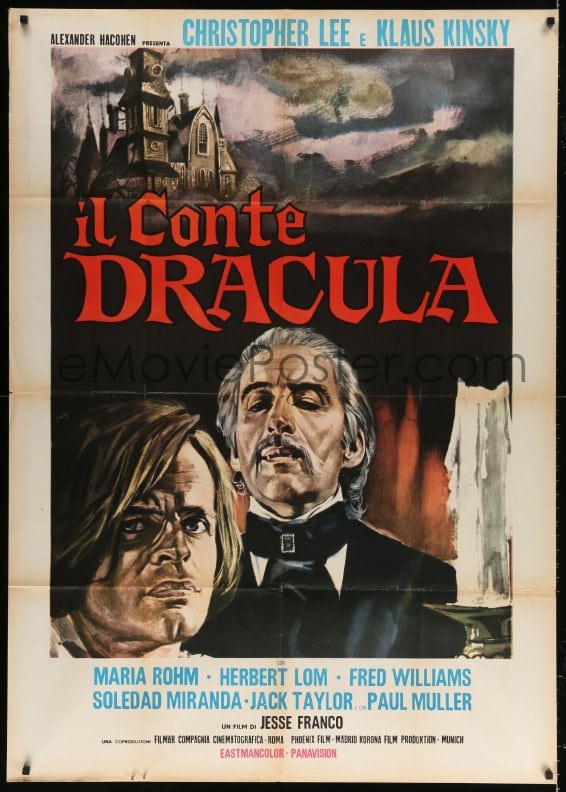
After years of being in Hammer Dracula movies, Christopher Lee starred in this Harry Alan Towers produced, Jess Franco directed version of Bram Stoker’s novel.
There’s a great cast and by that, I mean the kind of cast that I look for in movies. Klaus Kinski, (before he played Dracula in Nosferatu the Vampyre and Nosferatu In Venice) is Renfield, Herbert Lom is Van Helsing, Frederick Williams (A Bridge Too Far) is Jonathan Harker, Maria Rohn (Venus In Furs) is Maria, Paul Muller is Jack Seward, Jack Taylor is Quincey Morris (he had vampire hunting experience after being in the Mexican Nostradamusfilms) and Soledad Miranda — and who else, really? — is Lucy.
This could have had an even wilder cast, as both Vincent Price — sadly under his American-International Picture exclusive contract — and Dennis Price were both selected to play Val Helsing.
At the same time that this was being made, so was Cuadecuc, vampire, which was shot on the same sets with the same actors by the experimental director — and a senator elected in Spain’s first democratic elections who participated in the writing of the Spanish Constitution — Pere Portabella.
As for Franco’s film, it’s one of the first attempts at being faithful to the novel, with Dracula starting as an old man and gradually gaining in vitality as the movie goes on. Lee* was supposedly tired of playing Dracula and was only convinced to join the cast only after being promised that this movie would be faithful to Stoker. It still plays fast and loose; oddly enough Towers has claimed he tricked Kinski into being in this with a fake script. Franco has said that that wasn’t true, but what was is that Kinski ate real flies.
I wouldn’t expect the Franco madness that most associate with him, but this is the first extended time he’d work with Miranda before the films they’d be known for making together (she was an uncredited dancer at just eight years old in Franco’s Queen of the Tabarin Club). But there’s a great Bruno Nicolai score, Lee is super into everything he’s doing, the sparse sets work and Bruno Mattei was one of the editors.
There’s always been a contingent of people who claim this movie is boring, but look, any movie with Soledad Miranda in it is worthwhile.
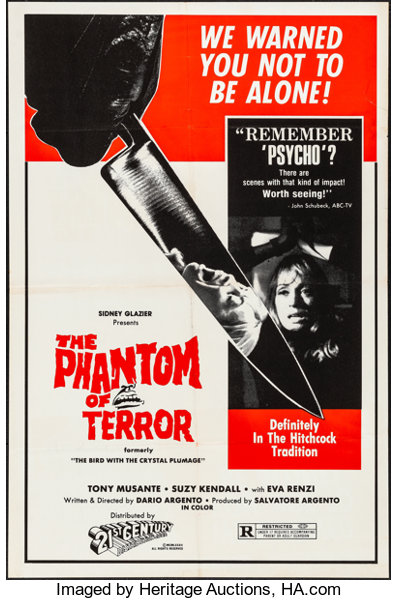
EDITOR’S NOTE: If you look at the poster for the 21st Century release of The Phantom of Terror and wonder where you’ve seen it before, well, it’s been on the site at least three times with the last appearance being September 16, 2021. That’s right — it’s The Bird with the Crystal Plumage. 21st Century re-released it in 1982 and you have to image that people had seen it before twelve years ago and didn’t think it was a new slasher, right?
Other than the films of Mario Bava (Blood and Black Lace, The Girl Who Knew Too Much), there’s no other film that has no influenced the giallo. In fact, the most well-known version of the form starts right here with Dario Argento’s 1970 directorial debut. Until this movie, he’d been a journalist and had helped write Leone’s Once Upon a Time in the West.
Sam Dalmas (Tony Musante) is an American writer suffering from an inability to write. He’s gone to Rome to recover, along with his British model girlfriend (yes, everyone in giallo can score a gorgeous girl like Suzy Kendall). Just as he decides to return home, he witnesses a black-gloved man attacking a girl inside an art gallery. Desperate to save her, he can only watch, helpless and trapped between two mechanical doors as she wordlessly begs for help.
The woman is Monica Ranier and she’s gallery owner’s wife. She survives the attack, but the police think Sam may have had something to do with the crime, so they keep his passport so he can’t leave the country. What they’re not letting on is that a serial killer has been wiping out young women for weeks and that Sam is the only witness. That said — he’s haunted by what he’s survived and his memory isn’t working well, meaning that he’s missing a vital clue that could solve the crime.
As you can see, the foreign stranger who must become a detective, the missing pieces of memory, the black-clad killer — it’s everything that every post-1970 giallo would pay tribute to (perhaps rip off is the better term).
Another Argento trope shows up here for the first time. It’s the idea that art itself can cause violence. In this film, it’s a painting that shows a raincoat-clad man murdering a woman.
Soon, Sam is getting menacing calls from the killer and Julia is attacked by the black-clad maniac. The police isolate a sound in the background of the killer’s conversations, the call of a rare Siberian “bird with the crystal plumage.” There’s only one in Rome, which gets the police closer to the identity of who is wearing those black gloves (in truth, it’s Argento’s hands). It’s worth noting that the species of bird the film refers to as “Hornitus Nevalis” doesn’t really exist. The bird in the film is actually a Grey Crowned Crane.
Alberto, Monica’s art gallery husband, tries to kill her, finally revealing that he has been behind the attacks. Ah — but this is a giallo. Mistaken identity is the main trick of its trade. And even though this film was made nearly fifty years ago, I’d rather you get the opportunity to learn for yourself who the killer really is.
I may have mentioned before that my parents saw this movie before I was born and hated it to a degree that any time a movie didn’t make any sense, they would always bring up “that weird movie with the bird that makes the noises.” Who knew I would grow up to love Argento so much? It’s one of those cruel ironies that would show up in his movies. I really wonder if my obsession with giallo and movies that are difficult to understand is really me just rebelling.
An uncredited adaptation of Fredric Brown’s novel The Screaming Mimi, this film was thought of as career suicide by actress Eva Renzi. And the producer of the film wanted to remove Argento as the director. However, when Argento’s father Salvatore Argento went to speak to the man, he noticed that the executive’s secretary was all shaken up. He asked her what was wrong and she mentioned that she was still terrified from watching the film. Salvatore asked her to tell her boss why she was so upset and that’s what convinced the man to keep Dario on board.
The results of all this toil and worry? A movie that played for three and a half years in one Milan theater and led to copycats (and lizards and spiders and flies and ducklings and butterflies and so on) for decades. Argento would go on to film the rest of his so-called Animal Trilogy with The Cat O’Nine Tails and Four Flies on Grey Velvet, then Deep Red before moving into more supernatural films like Suspiria and Inferno.
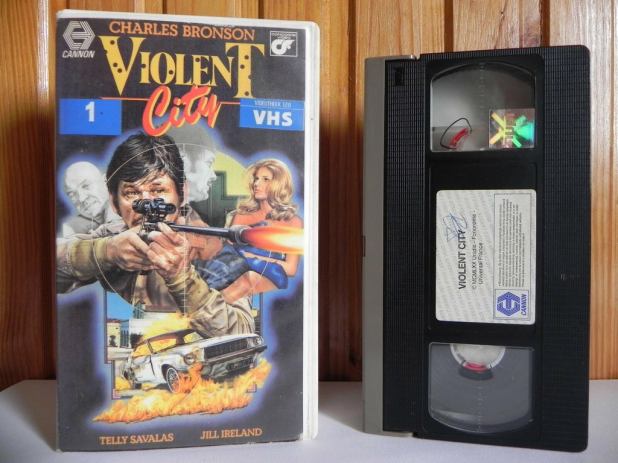
EDITOR’S NOTE: This was first on the site on May 30, 2022. It wasn’t produced by Cannon but was released on VHS in the Netherlands by Cannon Screen Entertainment.
Director Sergio Sollima is mainly known for westerns such as Run Man Run, Face to Face and The Big Gundown, the Eurospy movies Agent 3S3: Passport to Hell, Agent 3S3: Massacre In the Sun and Requiem for a Secret Agent and the pirate movies Sandokan, La tigre è ancora viva: Sandokan alla riscossa! and The Black Corsair.
With Violent City, co-written with Swept Away director Lina Wertmüller, he was originally upset that it was going to be a traditional gangster story. He did, however, say that “we had the chance to shoot in the U.S., and I would do whatever it took to do that.” So he worked with Wertmüller to create the non-linear way that the story would be told. He also worked with Telly Savalas, who plays the main villain in a movie of bad people, to bring out the humor in his role. As for Bronson, he found him uncommunicative while his wife Jill Ireland was the exact opposite, which is probably why they worked so well together.
He said that in the end, the movie was a lot like his westerns and all about “the encounter and struggle between the individual and the society which is all around him, and the way he reacts to it.”
During a vacation, Jeff Heston (Bronson) and his lover Vanessa (Ireland) are attacked by killers sent by an old business associate who Vanessa has seemingly left Jeff for. He’s jailed and refuses to name her, even if he receives a lower sentence. As soon as he’s released, crime lord Al Weber (Savalas) wants him to work for him, but he claims he’s retired, which is a lie, as he kills the man who set him up in the very next scene.
Of course, Vanessa has been married to Weber all along and even though Jeff wants revenge on her, he can’t kill her. Weber even tells him that his love for her will be his undoing, that she’s the one pulling the strings, but Jeff’s critical flaw is in thinking that she can’t be such a person.
The movie had two major American releases, with the first distributed as Violent City by International Co-Productions and the second wide release distributed by United Artists as The Family, complete with a logo using the same font as The Godfather and a tagline that shouted “The Godfather Gave You an Offer You Couldn’t Refuse. The Family Gives You No Alternative.”
If this was to be strictly an Italian film, Tony Musante and Florinda Bolkan would have been the leads. There was also an attempt to make the movie with Jon Voight and Sharon Tate.
This is a moody and dark film that predates the poliziotteschi films while boasting a strong soundtrack by the master, Ennio Morricone. It also has a stark ending that I’ve been thinking over again and again in the days since I’ve watched the film.
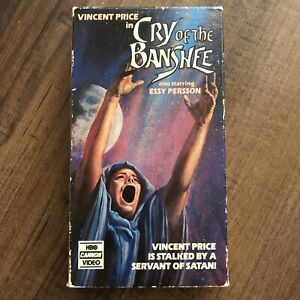
EDITOR’S NOTE: This originally appeared on July 8, 2021. Cry of the Banshee was not produced by Cannon but was released on video by HBO/Cannon Video.
“Who spurs the beast the corpse will ride?
Who cries the cry that kills?
When Satan questioned, who replied?
Whence blows this wind that chills?
Who walks amongst these empty graves
And seeks a place to lie?
‘Tis something God ne’er had planned,
A thing that ne’er had learned to die.”
That poem is Edgar Allan Poe’s “The Bells,” which sets the tone for this unique movie, the last of the American-International Pictures Poe movies. Directed by Gordon Hessler, this film, unlike its predecessors, had nothing to do with the Baltimorean author, offering a fresh take on the horror genre.
According to Peter Fuller on Spooky Isles, AIP promoted this movie as the hundredth film that its star, Vincent Price, was in. The truth is that it was probably his seventy-sixth. Undaunted, AIP did the same publicity for his next movie, The Abominable Dr. Phibes.
This movie is a visual treat — it was shot in the Grim’s Dyke House, the same location as Curse of the Crimson Altar and The Devil Rides Out. The film opens with an incredibly excellent animation by Terry Gilliam, a visual masterpiece that, unfortunately, was cut from the American print, leaving the audience captivated from the start.
If you enjoyed Vincent Price’s portrayal as a witch hunter in Witchfinder General, you’re in for a treat! In this film, he plays the role of Lord Edward Whitman, a character who has taken it upon himself to rid England of every witch. His relentless pursuit leads to the disruption of Black Masses and the death of many witches, until one of them, Oona, possesses his loyal servant Roderick, complicating his mission.
The movie also inspired a band to name themselves Siouxie and the Banshees. Perhaps you’ve heard of them?
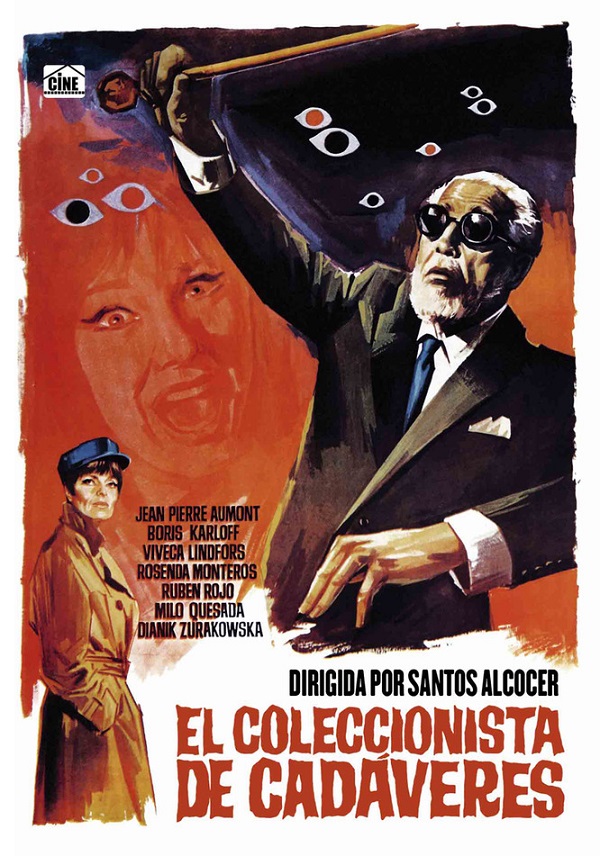
Originally filmed — in Spain — as El Coleccionista de cadáveres (The Corpse Collector), this was directed by Santos Alcocer, who some credit as Edward Mann. They’re definitely two different people — Alcocer also made Only a Coffin and wrote several other movies while Mann directed Hallucination Generation. He also wrote Island of Terror, The Freakmaker and Seizure, while directing Hot Pants Holiday, Who Says I Can’t Ride a Rainbow! and Hooch. He also contributed the song “There’s a Certain Kind of Woman” to this movie, co-founded New York City’s Circle in the Square, was a syndicated cartoonist on Andy Gump, Dixie Dugan and Joe Palooka before doing his own strip Blade Winters and was a creative force who worked to make Woodstock, NY an artier place to live. He also co-wrote this movie along with John Melson and José Luis Bayonas.
Franz Badulescu (Boris Karloff) has been using skeletons in his sculptures for years; it’s only recently that the bones have come from the victims of his homocidal wife Tania (Viveca Lindfors). She’s already hobbled Franz with a car wreck; now it seems that she wants to take him off the table.
Journalist Claude Marchand (Jean-Pierre Aumont) is in town to interview Franz and fall in love with Valerie (Rosenda Monteros) just in time for Tania and her lover Shanghai (Milo Quesada) to select her as their next victim.
Cannon released this on a double bill with Crucible of Horrorwhich seems like a fine pair. Thanks to DVD Drive-In, I learned that Karloff replaced Claude Rains in this film and had been in Spain to shoot an episode of I-Spy — “Mainly on the Plains” — that also has Paul Naschy in it.
Fitting in with the art as murder genre — House of Wax, A Bucket of Blood, Blood Bath, Color Me Blood Red — this has a great ending centered around a vat of acid and an awesome psychedelic freakout opening credits sequence. This isn’t a well-considered movie yet I found myself really enjoying it, particularly the dream sequences that Lindfors endures of her being beaten and dressing as a German soldier before waking up to take out her worries on the staff.
If the music seems like you’ve heard it before, that’s because Filmation used it for their Shazam! and Star Trek series.


 B&S About Movies
You must be logged in to post a comment.