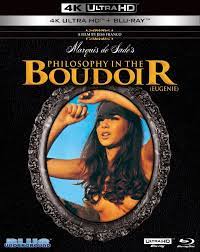
BLUE UNDERGROUND 4K RELEASE: Marquis de Sade’s Philosophy In The Boudoir (1970)

EDITOR’S NOTE: This was first on the site on February 6, 2022 and is posted again as Blue Underground has released a 4K UHD of this movie, which looks gorgeous.

It features Ultra HD Blu-ray and HD Blu-ray Widescreen feature presentations of the film. Extras include new audio commentary from film historians Nathaniel Thompson and Troy Howarth; interviews with Jess Franco, Harry Alan Towers, Marie Liljedahl and Christopher Lee; Stephen Thrower discussing the film, a Jack Taylor interview, a trailer and a newly expanded poster and still gallery.

You can order it from MVD.

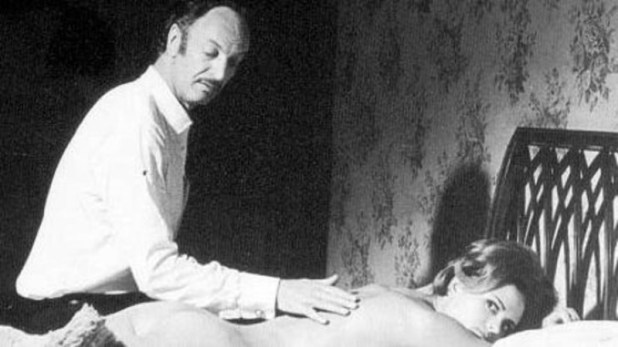
An adaptation and modern-day update of Marquis de Sade’s Philosophy in the Bedroom, this was the second de Sade film made by Jess Franco*, but by no means the last. In fact, it’s not even the last movie called Eugenie that he would make. While this one is Eugenie… The Story of Her Journey into Perversion (or De Sade 70 or Marquis de Sade’s Philosophy in the Boudoir), there’s also the better-known — and Soledad Miranda-starring — Eugenie de Sade.

Eugenie (Marie Liljedahl, IngaDorian Gray) has spent her entire life in a convent and despite an exterior that drives men and women wild with list, she’s inexperienced in the ways of the world. Her father (Paul Muller, NanaBarbed Wire Dolls) wants to bed Madame Saint Ange (Maria Rohm, the wife of producer Harry Alan Towers who appears in 99 Women, Venus In Furs and The Bloody Judge amongst other movies; don’t judge her being in this as nepotism, because she’s amazing in this movie), who agrees as long as she can take Eugenie to her secluded island mansion, where she and her step-brother Mirvel (Jack Taylor, whose career in exploitation movies took him all over the world) can seduce her and probably each other and definitely everyone and play the kind of strange incestual games that only the super rich seem to play.

Sir Christopher Lee also shows up as the narrator for all this wallowing and also as Dolmance, the leader of a cult of fiends that drug young women and beat them with whips and yeah, Sir Christopher claims he had no idea what kind of movie he was in, which I find hilarious, because this wouldn’t be the last time he’d work with Franco. Providing his own wardrobe — the smoking jacket he wore in Sherlock Holmes and the Deadly Necklace — Lee claimed that he was unaware there was a nude woman on the sacrificial altar behind him, as Franco and crew had wrapped drapery over her that they’d yank off as soon as the camera started and would then recover her when he was done with his scene. I mean, I love Jess, but sometimes he can barely focus the camera. One wonders how he’d ever had the chicanery and ability to pull one over on a man that was once quite literally a secret agent.

This movie feels like a dream. I’ve said that of other Franco movies, but trust me, a much better realized and better shot dream, with a score by Bruno Nicolai that makes it seem way classier than it is.

There’s a scene where Jack Taylor won’t stop messing with the blinds, the camera goes way out of focus for an extended period and Maria Rohm is near Satanic. David Sodergren on Letterboxd said that Franco’s films seem better when he’s working under the threat of Spanish censorship. It forces his films to not show you everything while at once feeling packed with sinful moments that worm their way into your brain. They are more erotic for their hard work in the face of opression with no need for Franco’s later obsessive need to show you every inch of his female cast.

*The first is Marquis de Sade: Justine.
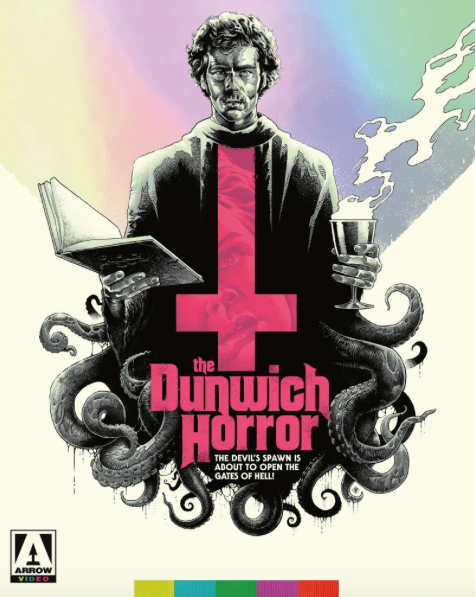
ARROW BLU RAY RELEASE: The Dunwich Horror (1970)

Following the triumph of the Poe movies, Roger Corman and American International Pictures embarked on a series of films inspired by H.P. Lovecraft. The announcement of The Dunwich Horror in 1963, set to be filmed in Italy by Mario Bava and starring Boris Karloff and Christopher Lee, sparked immense anticipation. However, a setback occurred when Dr. Goldfoot and the Girl Bombs failed, causing a delay in the production of this movie.

It took several years to make this movie happen—probably Rosemary’s Baby’s success is one reason why occult movies really started to come out in the early 1970s—and when it was made, Daniel Haller was hired to direct.

Daniel Haller, who started his career as an art director and designed the sets for Corman’s House of Usher and The Pit and the Pendulum, was a perfect fit for the director role. His first movie, Die, Monster, Die!, was based on Lovecraft’s The Colour Out of Space, further solidifying his suitability for this project.

At the Miskatonic University in Arkham, Massachusetts, a setting often used in Lovecraft’s stories, Dr. Henry Armitage (Ed Begley) gives a rare copy of Necronomicon to his student Nancy Wagner (Sandra Dee, breaking her Universal Pictures contract and making her first “adult” movie, so to speak) to return to the library. She’s followed by Wilbur Whateley (Dean Stockwell), a man who hypnotizes her to sneak a glance at the dreaded grimoire. Unlike everyone else in Arkham, Nancy is kind to the man and gives him a ride despite him, you know, staring into her soul.

I mean, maybe she should have because he soon drugs her and convinces her to stay the night inside the horrifying home of his ancestors.

It turns out that within the home, Wilbur’s twin brother from a demon father is waiting and will soon be let loose in town. Wilbur also lives up to all of the townsfolks’ fears as he attempts to sacrifice Nancy to the Old Ones. This leads to a dramatic spellcasting battle between him and Dr. Armitage, a scene heightened by a violent thunderstorm.

This was written by Ronald Silkosky, Henry Rosenbaum (Get Crazy) and Curtis Hanson, who, in addition to writing Sweet Kill and The Silent Partner, would go on to direct 8 MileL.A. ConfidentialEvil Town, and The Hand That Rocks the Cradle, so it wasn’t all Oscar-winning efforts!

One can only wonder what Lovecraft would think of the psychedelic treatment of his story in this film.

The Arrow Video blu ray release of The Dunwich Horror looks great. That’s because it has a new 2K restoration by Arrow Films from the original camera negative. There’s also an audio commentary by Guy Adams and Alexandra Benedict, creators of the audio drama Arkham County. Other features include The Door into Dunwich, a new conversation between film historian Stephen R. Bissette and horror author Stephen Laws in which they discuss The Dunwich Horror, Lovecraft and their memories of seeing the film on release; After Summer After Winter, a new interview with science fiction and fantasy writer Ruthanna Emrys, author of The Innsmouth Legacy series; The Sound of Cosmic Terror, a new interview with music historian David Huckvale in which he takes a closer look at Les Baxter’s score for The Dunwich Horror; a trailer, an image gallery, a reversible sleeve featuring original and newly commissioned artwork by Luke Preece and an illustrated collector’s booklet featuring new writing by film critics Johnny Mains and Jack Sargeant. You can get it from MVD.

JESS FRANCO MONTH: Juliette (1970) / De Sade’s Juliette (1975)

Ah, welcome to the part of watching Jess Franco movies where there are just rumors and hints of films unfinished or finished, screening once and never showing up again. Then again, with as many movies as Franco was part of and the fact that things keep showing up, I know that so much of his lost work won’t stay that way.

Juliette from 1970 is a 40-minute film and that’s because that’s all that was filmed before Soledad Miranda, Franco’s muse and the actress playing Juliette, was killed in a car crash. The story had her seducing and killing men, then confessing in church, a place where one of the devout falls for her.

Franco had the existing footage and often discussed using it to make a tribute to Miranda. With his death, that won’t happen.

De Sade’s Juliette (1975) is just as intriguing, as this story about the BDSM relationship between a young woman (Lina Romay) and a poet (Alain Petit), plus murder, Lina fellating a hanged man and her ending the film by shooting herself between the thighs. They even took the time to make an English dub of this yet it was unreleased, other than in Italy, where Joe D’Amato heavily re-edited the existing footage to create Justine and the Whip (also sold as Justine; this has nothing to do with Franco’s 1969 movie Marquis de Sade: Justine), also using Franco’s Midnight Party and Shining Sex and taking the music from Nico Fidenco’s Black Emanuelle theme. How confusing can Italian — and Spanish — exploitation get? I think the answer is in this article.

This is also a good place to sneak in Entre pitos anda el juego (Between Dicks Is Where the Game Is). This 1986 Franco adult film has Lina — I mean Candy Coster, as she does have her blonde wig on. In this story, her husband Evaristo has no interest in making love to her any longer, even when she wakes up in the middle of the night bareassed and begging and man, Evaristo, what gives? She decides to play the field and if you ever wanted to watch Lina between two men giving a combination soliloquy and siphoning the swimmers in stereo, well, this would be the movie for you to watch. It’s also an opportunity for you to see Lina with her friend Lola before winning her husband over and then a scene with the entire cast.

Maybe I’m strange, but I prefer the softer side of Jess and not the need to see it all, but then again, I end up feeling like Evelyn Quince. I go from “Oh, it’s high rrrribaldry at its best!” to “Oh, I don’t like this! This is becoming less randy and more sexually explicit at every moment! Our once bawdy tale is turning into a tawdry tale of pornography!”

But then I realize that when I said I’d watch every Jess Franco movie, I meant it.

I also realize that someday my weird brain is going to make me do the same with Joe D’Amato.

JESS FRANCO MONTH: Sex Charade (1970)

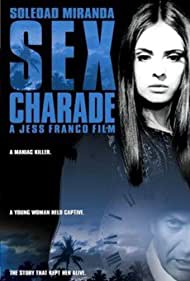
Sex Charade is the kind of lost film that will push a Jess Franco fan to the brink. I mean, just look at the cast: Diana Lorys (Blue Eyes of the Broken DollFangs of the Living Dead), Maria Rohm (Venus In Furs99 Women) and, perhaps most essentially, Franco’s obsession Soledad Miranda (Vampyros LesbosShe Killed In Ecstasy).

Shot in Liechtenstein at the same time as Nightmares Come at Night and Eugenie de Sade, this is about Anne, a woman who is being held hostage and forced to play Scheherazade and tell stories, including one about a gorgeous young woman kept prisoner by savages.

According to the Lost Media Archive, Sex Charade “…apparently had a short theatrical run in France and was partially released in Belgium as a bizarre collage featuring footage from other films.” When Nightmares Come at Night was supposed to be released on DVD, this was going to be part of a box set along with it, except that the print was missing.

From what I can find at Italo-Cinemathis movie is an anthology with four stories with the same main actors — Lorys, Rohm, Jack Taylor and Howard Vernon — who play the same character types in each story. Beyond the jungle story mentioned above, there is also a de Sade-influenced nightclub, a party thrown by a cult on the night of a ritual and a spy adventure. There’s also a theory that this was Franco paying homage to movie serials, so I look forward to the day that this gets found. The rumor is that Eurocine has a print with no audio.

End Zone 2 (1970)

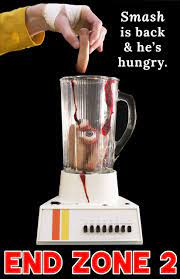
Whatever side you’re on when it comes to the controversy between whether Mikey Smash or William Mouth played Smash Mouth in the sequel to Warren Q. Harolds’ 1965 slasher End Zone, you can say quite simply that they’re both better than Snead Crump when it comes to menacing Angela Smazmoth (Julie Kane). Now that there’s a restored version of this never-released to the public slasher, well, now we can all fight that same fight all over again.

And hey — whatever happened to that final half hour of this movie? Have you seen it? Did you check it out when it played with The Curse of the Mummy’s Tomb and The Evil Eye?

Put together from six partial prints and a partial Italian internegative — that explains why the language changes — this is the film that didn’t just give birth to the American slasher, it also influenced movies like Let’s Scare Jessica to Death.

Shh…I like keeping up the premise that this is a lost movie, so don’t tell anyone that it works because it’s just as rough and ramshackle as those pre-78 slashers that we love so much like My Brother Has Bad Dreams and Scream Bloody Murder (which ironically nearly shared a title). I also think it’s kind of wild that in the same year we’ve had two double features based around slasher movies of the past based around football (this pairs with The Once and Future Smash; the other entry is The Third Saturday In October and The Third Saturday In October V).

JEAN ROLLIN-UARY: La Vampire Nue (1970)

EDITOR’S NOTE: This was originally posted January 9, 2022.

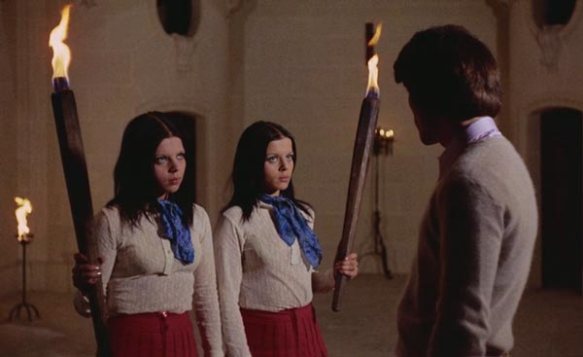
Either you get into the druggy vibe of Jean Rollin or you think it’s the most boring filmmaking ever. But me, well, I’m nodding off and living inside the languid pace of his films and looking for those moments when masked maniacs wander the streets and indiscriminately murder people and the film doesn’t really feel like cluing you into what’s going on because why should it? You have to earn it.

I mean, what if you went to a party where a woman’s photo is projected on a screen and she kills herself in front of the guests so that a strange woman in an orange nightgown can drink her blood and then your photo comes up next?

None of these things will ever happen to any of us. We’ll never have days where we don’t see the sunlight and realize we’re the first humans to be immortal. At least I don’t think we will. I mean, wouldn’t it be great? But then I wonder, would my acid reflux get bothered by certain types of blood?

I mean, the basic description of this movie says: “Wealthy and decadent industrialist Georges Radamante rules over a strange secret suicide cult and wants to achieve immortality by figuring out a way to share the biochemistry of a young mute orphaned vampire woman.”

If you don’t want to watch that, well, I don’t know what hope there is for you to experience magic.

You can watch this on Kino Cult.

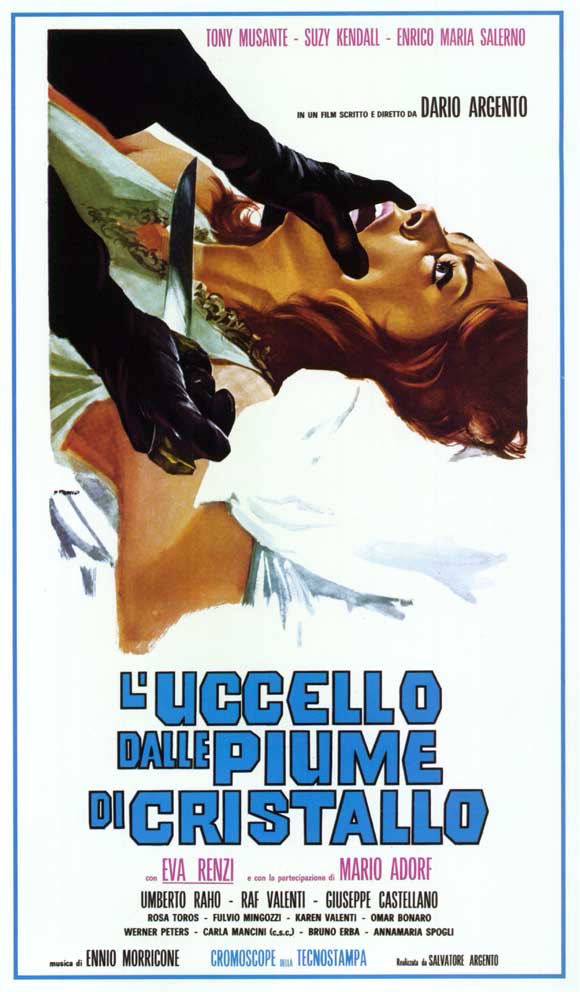
Cinematic Void January Giallo 2023: The Bird with the Crystal Plumage (1970)

EDITOR’S NOTE: Cinematic Void will be playing this on Thursday, January 5 at 7:30 PM at The Little Theatre in Rochester, NY (35mm print with tickets here) and Thursday, January 12 at Central Cinema in Knoxville, TN. For more information, visit Cinematic Void. If you can’t get there, I recommend the Arrow Video UHD edition.

Other than the films of Mario Bava (Blood and Black LaceThe Girl Who Knew Too Much), there’s no other film that has no influenced the giallo. In fact, the most well-known version of the form starts right here with Dario Argento’s 1970 directorial debut. Until this movie, he’d been a journalist and had helped write Leone’s Once Upon a Time in the West.

Sam Dalmas (Tony Musante) is an American writer suffering from an inability to write. He’s gone to Rome to recover, along with his British model girlfriend (yes, everyone in giallo can score a gorgeous girl like Suzy Kendall). Just as he decides to return home, he witnesses a black-gloved man attacking a girl inside an art gallery. Desperate to save her, he can only watch, helpless and trapped between two mechanical doors as she wordlessly begs for help.

The woman is Monica Ranier and she’s gallery owner’s wife. She survives the attack, but the police think Sam may have had something to do with the crime, so they keep his passport so he can’t leave the country. What they’re not letting on is that a serial killer has been wiping out young women for weeks and that Sam is the only witness. That said — he’s haunted by what he’s survived and his memory isn’t working well, meaning that he’s missing a vital clue that could solve the crime.

As you can see, the foreign stranger who must become a detective, the missing pieces of memory, the black-clad killer — it’s everything that every post-1970 giallo would pay tribute to (perhaps rip off is the better term).

Another Argento trope shows up here for the first time. It’s the idea that art itself can cause violence. In this film, it’s a painting that shows a raincoat-clad man murdering a woman.

Soon, Sam is getting menacing calls from the killer and Julia is attacked by the black-clad maniac. The police isolate a sound in the background of the killer’s conversations, the call of a rare Siberian “bird with the crystal plumage.” There’s only one in Rome, which gets the police closer to the identity of who is wearing those black gloves (in truth, it’s Argento’s hands). It’s worth noting that the species of bird the film refers to as “Hornitus Nevalis” doesn’t really exist. The bird in the film is actually a Grey Crowned Crane.

Alberto, Monica’s art gallery husband, tries to kill her, finally revealing that he has been behind the attacks. Ah — but this is a giallo. Mistaken identity is the main trick of its trade. And even though this film was made nearly fifty years ago, I’d rather you get the opportunity to learn for yourself who the killer really is.

I may have mentioned before that my parents saw this movie before I was born and hated it to a degree that any time a movie didn’t make any sense, they would always bring up “that weird movie with the bird that makes the noises.” Who knew I would grow up to love Argento so much? It’s one of those cruel ironies that would show up in his movies. I really wonder if my obsession with giallo and movies that are difficult to understand is really me just rebelling.

An uncredited adaptation of Fredric Brown’s novel The Screaming Mimi, this film was thought of as career suicide by actress Eva Renzi. And the producer of the film wanted to remove Argento as the director. However, when Argento’s father Salvatore Argento went to speak to the man, he noticed that the executive’s secretary was all shaken up. He asked her what was wrong and she mentioned that she was still terrified from watching the film. Salvatore asked her to tell her boss why she was so upset and that’s what convinced the man to keep Dario on board.

The results of all this toil and worry? A movie that played for three and a half years in one Milan theater and led to copycats (and lizards and spiders and flies and ducklings and butterflies and so on) for decades. Argento would go on to film the rest of his so-called Animal Trilogy with The Cat O’Nine Tails and Four Flies on Grey Velvet, then Deep Red before moving into more supernatural films like Suspiria and Inferno.

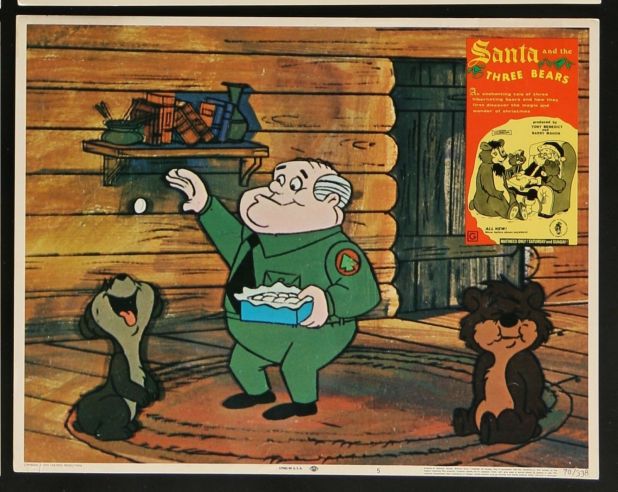
DISMEMBERCEMBER: Santa and the Three Bears (1970)

EDITOR’S NOTE: Barry Mahon! This was first on the site on March 27, 2021.

Yes, the same man who made The Sex Killer and Run Swinger Run also made an animated kids movie. Look, it’s all exploitation. In the 50’s, Barry Mahon was exploiting fears of Communism and then went from nudie-cuties to roughies in the 60’s and in the 70’s, he realized that the kids of the raincoater crowd could add some money into his pockets, too.

Mahon’s parts of the movie only ran in the theatrical version of this, in which a grandfather and his two young grandchildren sit and talk for four minutes before we see some toys, decorations and for some reason, a kitten. So yes, Barry is known for movies where women in states of undress sit and talk about nothing in particular. This is the kid version of his signature directorial move.

This is also not the only Barry Mahon Christmas or children’s movie I’ve endured. There’s also a cartoon about two little bears who believe in Santa and all their mom — voiced by Jean Vander Pyl, who was Wilma and Pebbles Flintstone and Rosie the Robot’s voice — wants is for them to settle down and hibernate. I get it. I used to wake up at 3 AM on Christmas morning and these days, I feel like apologizing to my parents for the horrific holidays of me being a toy-obsessed maniac child.

You can watch this on Tubi.

Night Gallery episode 2: Room with a View/The Little Black Bag/The Nature of the Enemy

Originally airing on December 23, 1970, Night Gallery expanded to three stories for this episode.

“Room with a View” was directed by Jerrold Freedman (A Cold Night’s Death) and written by Hal Dresner (The Eiger Sanction) and it’s all about a bedridden man named Jacob Bauman (Joseph Wiseman, Dr. No) who learns that his wife Lila (Angel Tompkins, Murphy’s Law) is sleeping with someone else. His revenge scheme involves the young nurse (an unbelievably young Diane Keaton) who is there day and night with him.

“The Little Black Bag” is directed by Jeannot Szwarc (Jaws 2, making that two Jaws directors who worked on Night Gallery) and written by Rod Serling from a story by C.M. Kornbluth. It tells the tale of William Fall (Burgess Meredith) finding the medical bag of Gillings (George Furth), a doctor from the future. This same story was also adapted on the show Tales of Tomorrow with Charles S. Dubin directing.

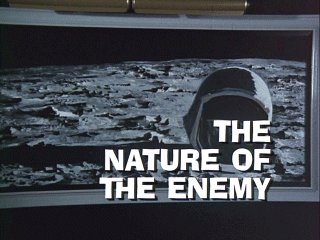
“The Nature of the Enemy” is directed by Allen Reisner and written by Serling from a story by Cyril M. Kornbluth, a science fiction writer who died way too young. The director of NASA (Joseph Campanella) tries to keep control after life is found on the surface of the moon.

The second episode of this series — much like the first — doesn’t live up to the promise of the pilot. Soon, though, this would get much better.

Night Gallery episode 1: The Dead Man/The Housekeeper

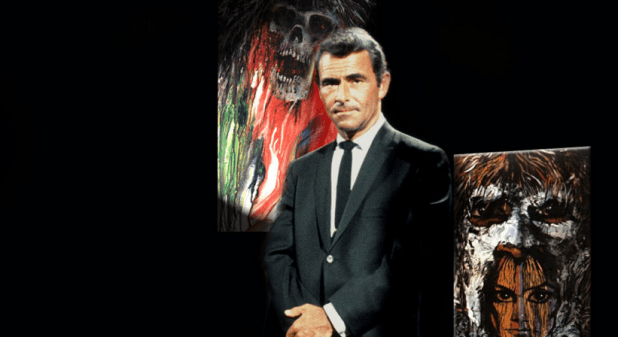
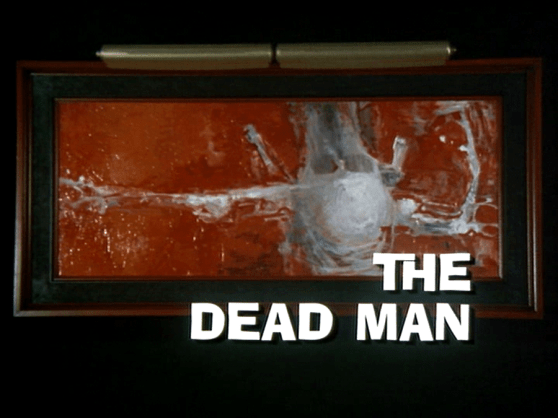
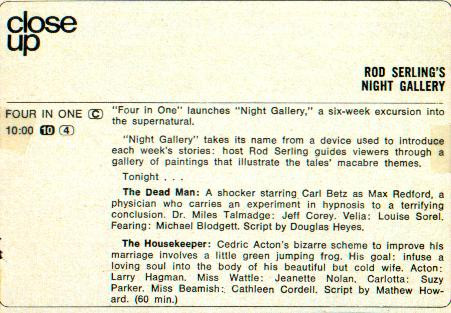
Originally airing on December 16, 1970, Night Gallery returned from its pilot a year later with two new stories, starting with Serling walking out of a floating gallery and saying, “Good evening, and welcome to a private showing of three paintings, displayed here for the first time. Each is a collector’s item in its own way—not because of any special artistic quality, but because each captures on a canvas, suspended in time and space, a frozen moment of a nightmare.”

The first story, “The Dead Man,” was written and directed by Douglas Heyes (Kitten With a Whip). Based on the short story by Fritz Leiber, it’s a very Amicus-style story of Dr. Max Redford (Carl Betz) and Dr. Miles Talmadge (Jeff Corey) discussing a medical technique in which different taps can make a person sick or well. One of those patients, John Fearing (Michael Blodgett), has come back numerous times sick from a variety of afflictions despite looking like the picture of health. Meanwhile, Reford’s young wife Velia (Louise Sorel) is falling for this paranormal patient. Of course, the doctor ends up causing the death of his patient and the mental collapse of his wife.

“The Housekeeper” was directed by John Meredyth Lucas and written by Heyes. Cedric Acton (Larry Hagman) is married to Carlotta (Suzy Parker), a rich woman who is cruel to him. He hopes to move the brain of his new housekeeper Miss Wattle (Jeanette Nolan) into the body of his gorgeous young wife. It’s a comedic instead of a frightening story — Night Gallery would suffer from more of this in the second season — but Hagman is good, just coming off his run on I Dream of Jeannie.