APRIL MOVIE THON 2: Bloody Mama (1970)

April 5: Roger Corman’s birthday — Whether he produced or directed the movie, share a movie for Corman’s birthday.

PS: Thanks to Joe Sherlock for pointing out that — like always — I confused Bloody Mama with Crazy Mama.

Gene Siskel gave Bloody Mama 1 star and said that it was “92 minutes of sado-masochism, incest, satyrism and voyeurism woven into a disgraceful screenplay. In fact, the whole treatment might be called embarrassed Bonnie and Clyde.”

Whatever.

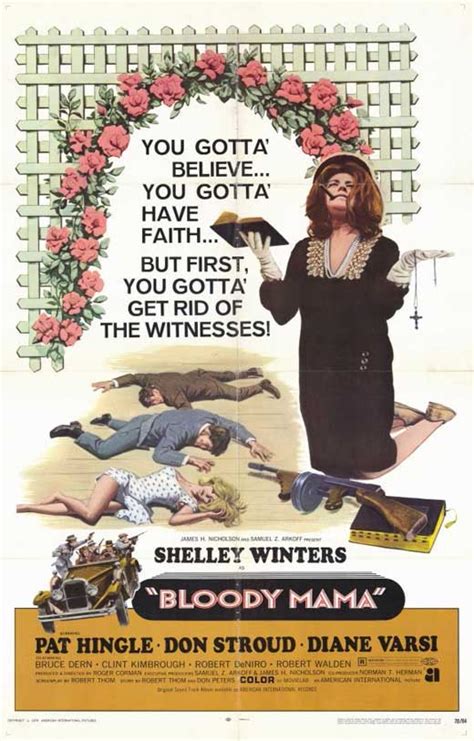
As far as a hero in this movie, I guess it would be Ma Barker (Shelley Winters), a woman so damaged by the constant assaults of her brothers and father that she’s emerged as a woman constantly in demand of new lovers and attacking everyone around her. She leaves her husband George (Alex Nicol) and takes her sons Lloyd (Robert De Niro), Arthur (Clint Kimbrough), Herman (Don Stroud) and Fred (Robert Walden) on a murder-filled crime spree across America.

Herman and Fred get busted, so the gang adds gunman — and new lover for Ma — Kevin Dirkman (Bruce Dern) and prostitute Mona Gibson (Diane Varsi). But Kevin and Fred were once in a prison relationship, so this makes him resent his mom. Lloyd starts feeling the same way after a girl he’s fallen for — and by fallen for, I mean raped several times — named Rembrandt (Pamela Dunlap) gets drowned in a tub by Ma. Things get even worse when the boys see Sam Pendlebury (Pat Hingle) — a millionaire they’ve kidnapped — as their father figure and when they release him, Herman takes over, punching Ma in the face.

Stroud punched Winters so hard that he put her in the hospital for a day.

As the family makes its way to the Everglades, Lloyd overdoses, Mona runs and the remaining gang shoot an alligator with a tommy gun, which brings everyone and anyone the law has their way. Spoiler. No gang member makes it out alive, with Herman horrifyingly blowing his brains out with a machine gun and Ma dying on the porch, screaming and shooting and taking as many cops with her as she can.

The credits say that any similarity to anyone living or dead is coincidental, but the final title says that any similarity to Kate Barker is intentional. Was Ma Barker really in charge of her gang? J. Edgar Hoover stated that she was “the most vicious, dangerous, and resourceful criminal brain of the last decade.” Others claim that he said that because his agents went wild when capturing the gang and killed them all, even their innocent mother.

In the book John Dillinger Slept Here: A Crooks’ Tour of Crime and Corruption in St. Paul, 1920–1936, it’s stated that “Her age and apparent respectability permitted the gang to hide out disguised as a family. As Mrs. Hunter and Mrs. Anderson, she rented houses, paid bills, shopped and did household errands. Alvin Karpis was probably the real leader of the gang, and he later said that Ma was just “an old-fashioned homebody from the Ozarks.” She was superstitious, gullible, simple, cantankerous and, well, generally law-abiding.”

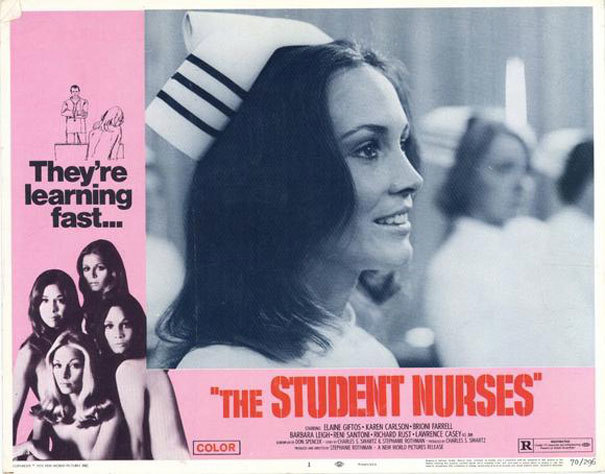
NEW WORLD PICTURES MONTH: The Student Nurses (1970)

When Roger Corman got New World Pictures running, he hired Stephanie Rothman — who started working for him since 1964 as his assistant — to write and direct its second film. Rothman had no idea what an exploitation movie was until she saw a review that called her movie one.

She said to Interview, “I had never heard that term before. Roger never used it. So that’s how I learned that I had made an exploitation film. Then I went and did some research to find out exactly what exploitation films were, their history and so forth, and then I knew that’s what I was doing, because I was making low-budget films that were transgressive in that they showed more extreme things than what would be shown in a studio film, and whose success depended on their advertising, because they had no stars in them. It was dismaying to me, but at the same time I decided to make the best exploitation films I could. If that was going to be my lot, then that’s what I was going to try and do with it.”

The genius of Rothman is that she could take the expected — men have fantasies over nurses — and make a movie that sure, has all the nudity that the exploitation tag demands, but also challenge viewers and make them see more than just breasts.

In an interview with Henry Jenkins, she said, “…we were free to develop the story of the nurses as we wished, as long as there was enough nudity and violence distributed throughout it. Please notice, I did not say sex, I said nudity. This freedom, once I paid my debt to the requirements of the genre, allowed me to address what interested me… political and social conflicts and the changes they produce. It allowed me to have a dramatized discussion about issues that were then being ignored in big-budget major studio films: for example, a discussion about the economic problems of poor Mexican immigrants… and their unhappy, restive children; and a discussion about a woman’s right to have a safe and legal abortion when, at the time, abortion was still illegal in America. I have always wondered why the major studios were not making films about these topics. What kind of constraints were at work on them? My guess is that it was nothing but the over-privileged lives, limited curiosity and narrow minds of the men, and in those days they were always men, who decided which films would be made.”

Keep in mind, Rothman made this in 1970, when women were still fighting to be seen as equal.

There are four student nurses, all sharing the same house as they navigate the adult world for the first time. Phred (Karen Carlson) is in love with Dr. Jim (Lawrence P. Casey) but accidentally ends up in his roomate’s bed. Sharon (Elaine Giftos) loses her objectivity when helping a terminally ill boy try and live. Lynn (Xenia Gratsos) decides that hospitals aren’t really treating people that really need it, so she starts a free clinic with a revolutionary named Victor Charlie (Reni Santoni). Priscilla (Barbara Leigh, who didn’t just date Elvis and Steve McQueen, but was the first live model to wear the Vampirella costume on the cover of the magazine) is the free spirit that ends up in the arms of a drug dealing biker who knocks her up and drives away, leaving her all alone to get an abortion from Dr. Jim, Lynn and Sharon in a brutal scene that Rothman juxtaposes with tender lovemaking moment.

It’s all very Valley of the Dolls but with a message and not sheer insanity inside. And it moves, let me tell you, it flies. Acid trips, love, loss, pain, growing into who you will be. There are a lot of big messages in here. And yes, lots of breasts. But those are the prerequisites for Rothman to tell her story. Corman asked her to direct a sequel to either this or The Big Doll House, but she turned both down. After The Velvet Vampire, she left for Dimension Pictures. After nearly a decade of trying to make movies her way, she quit around 1978. She told the Austin Chronicle, “For a few years I ran a small proto-union for a group of University of California professors, doing their lobbying and writing a political newsletter about labor issues of concern to them. Then, starting with a small inheritance, I began to invest in commercial real estate.”

She’s said she looked back on her career with both satisfaction and regret, never making the movies she really wanted to make. Even then, she made something out of nothing.

As for Corman, he nearly owned the market on young girls doing jobs in a sexy way after this, including more nurses (The Young Nurses, Private Duty Nurses, Candy Strip Nurses and Night Call Nurses), models (Cover Girl Models), stewardesses (Fly Me) and teachers (Summer School Teachers and The Student Teachers).  They’re good, but not this good.

You can watch this on Tubi.

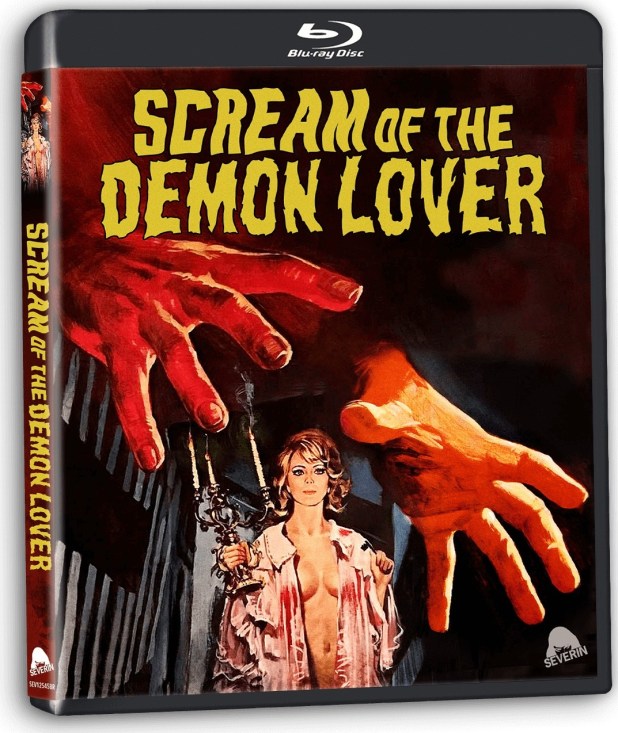
NEW WORLD PICTURES MONTH: Scream of the Demon Lover (1970)

Scream of the Demon Lover goes by many names. Blood CastleIl castello dalle porte di fuoco (The Castle With Doors of Fire). El Castillo de FrankensteinKillers of the Castle of BloodAltar of BloodEl asesino del castillo sangriento (The Bloody Castle Killer). Scream of the Demon LoverLe monstre du château (The Castle Monster). Murhaaja kauhujen linnassa (The Murderer In the Castle of Horrors, what a title!). Ivanna: El castillo de la puerta de fuego (Ivanna: The Castle With the Doors of Fire). Mördaren i skäcken hus (The Killer In the House of Horrors). Das Geheimnis von Schloß Monte Christo (The Mystery of Castle Monte Cristo).

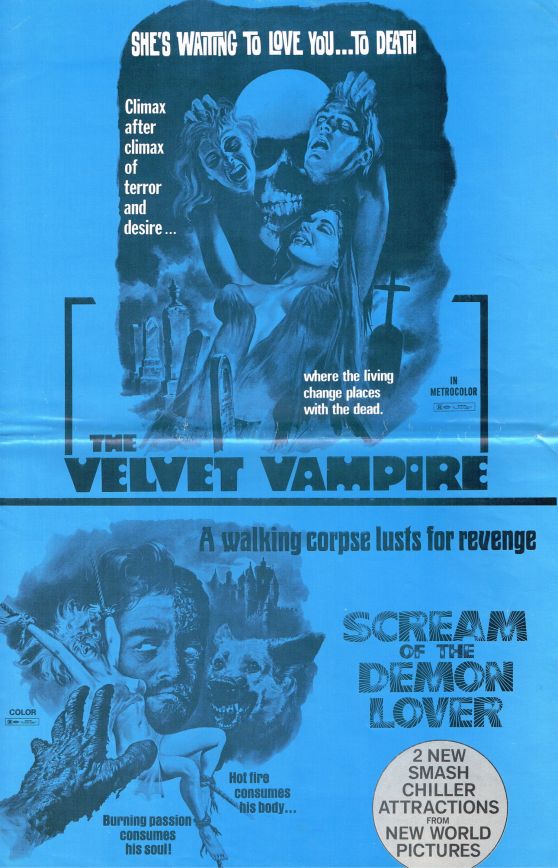
In the U.S., New World Pictures cut it down to 78 minutes so it could fit on a double feature with The Velvet Vampire. It was also syndicated for television with all of the nudity missing, of course.

Biochemist Dr. Ivana Rakowsky (Erna Schurer, Strip Nude for Your KillerDeported Women of the SS Special Section) is a very rare thing: a woman in an Italian gothic horror film who is capable and not just a damsel in distress — well, she is at times, but work with me here — but a capable scientist who travels to the castle of Baron Janos Dalmar (Carlos Quiney, who played Zorro in three films, Zorro’s Latest Adventure; Zorro, Rider of Vengeance and Zorro the Invincible) to assist him in his experiments. She has some problems getting there. The only person that will give her a ride to the castle, Fedor (Ezio Sancrotti), tells her that she’ll die in there and then tries to assault her.

The Baron isn’t very kind to her either. Not at first, as he believes no woman can be a scientist. She shows him that she can handle it, even if his housekeeper Olga (Cristiana Galloni) has issues with her. Also, seeing as how this is an early 70s Italian/Spanish horror movie, there are also plenty of psychosexual moments. You see, Dr. Ivana sleeps in the nude and she has dreams where a scarred man visits her bedside and tortures her. Somehow, in the midst of all this, these two mismatched leads fall in love after science fonds them.

Castle Xenia has many secrets. After all, Igor Dalmar, the last owner, blew himself up real good and the Baron is his brother. Igor’s body is in a milk bath and he wants Dr. Ivana to help him bring Igor back to life. Olga, in case you didn’t guess, used to be with the Baron. And the new maid, Cristiana (Agostina Belli, who somehow went from being in movies like this and The Eroticist to being in the original Scent of a Woman), seems to want the lady doctor more than any man in this movie that still has his skin on.

As you can imagine from the town in the open of the film, young women are dying and everyone thinks it’s the Baron. The man who keeps torturing the good doctor with a red hot poker and fumes while whispering, “Stay pure,” hints that these girls have all died because they weren’t virgins. And even more to the case of whodunit, each of these young ladies has lost their innocence to the Baron before they were killed. So who is it? Olga, who hates every women who gets near her forever lost lover? Cristiana? Or is Igor perhaps not so bereft of life? And why does the Baron have a library of werewolf and occult books that rivals Danzig’s?

Director José Luis Merino also made the Paul Naschy movie The Hanging Woman, another movie with a ton of other titles but I prefer Beyond the Living Dead.

This movie hits all my buttons. Foggy castle. Strange science. Gorgeous young scientists with diaphanous see-through gowns carrying candelabras through a cobwebbed castle. Gnarled up monsters sneaking their way through the countryside with dogs howling in the Bava-esque moonlight. Man, I’ve been thinking about this since I watched it and every review I read that says that it’s a boring dubbed Italian piece of schlock makes me want to conduct sinister experiments in the night and get this thing up to a higher rating on IMDB while unleashing my hound — a five-pound chihuahua — on anyone with the bad taste to dislike this epic.

This movie is part of Severin‘s Danza Macabra box set along with The Monster of the OperaThe Seventh Grave and Lady Frankenstein. It’s exciting to be able to get the full version, uncensored, with the kind of quality that Severin delivers for this movie.

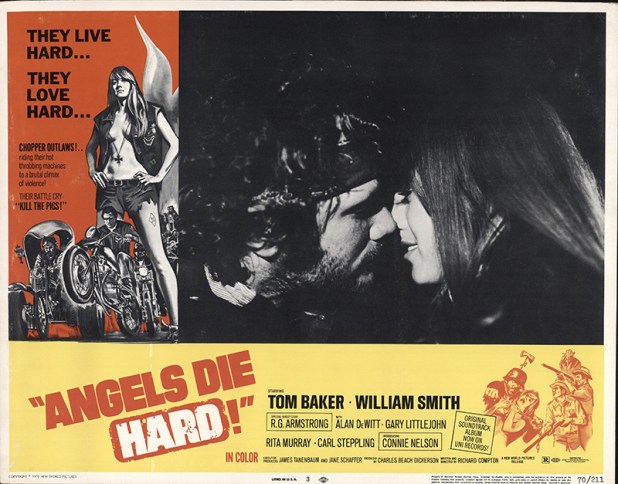
NEW WORLD PICTURES MONTH: Angels Die Hard (1970)

The first film that New World would distribute, Angels Die Hard knows what works: bikers, sex and action. It’s directed and written by Richard Compton, who also made Macon County Line and Return to Macon County. With a tagline that shouts right in your face, “CHOPPER OUTLAWS!..riding their hot throbbing machines to a brutal climax of violence!” you know exactly what this movie has to offer.

Blair (Tom Baker, not the Time Lord) and Tim (William Smith!) share top billing, but come on. You know who I think is the star of this movie. After all, William Smith makes every movie better. There’s literally no real plot, as the film follows the biker gang — look for Dan Haggerty riding an iron horse — as they go from town to town, fighting, drinking, drugging and, well, making unsweet love to anyone they can get their hands on.

When one of The Angels named Seed gets killed — probably by the fuzz, right? — and the guys are still treated poorly despite saving a little boy from a collapsed mine, the small town and the cops still hate them and man, no biker movie ends without a rumble against the law and sheer sadness for the gang, except for She-Devils on Wheels but that movie is set in an alternate universe where female biker gangs rule the world.

The town of Whiskey Flats is an America we never will see again, a place where carnivals just randomly pop up, where people hang out in the diner and no one feels bad about being born and dying in the same dusty town. The Angels roar in as filthy animals, lawbreakers who don’t want to stay in one place and dream of the open road that extends out forever. The town’s undertaker Farragut (Alan DeWitt) ends up following them as a silent observer, not stopping any of their stomping on convention or laws or morals but watching, just watching, even when they send Seed to the great highway up above by unloading their bladders all over his coffin.

It might seem like this movie meanders all over the place and yeah, it does. But it’s meant to be seen at the drive-in, probably in the back of a car or standing next to your bike and in no way would you be sober or straight for it. Seen through the bottom of a glass or filled with pharmaceuticals, it takes on the air that it should, reminding one of when bikers didn’t ride for sociopathic real estate mogul reality show charlatans and instead were truly free. That is, if any of us could be.

BLUE UNDERGROUND 4K RELEASE: Marquis de Sade’s Philosophy In The Boudoir (1970)

EDITOR’S NOTE: This was first on the site on February 6, 2022 and is posted again as Blue Underground has released a 4K UHD of this movie, which looks gorgeous.

It features Ultra HD Blu-ray and HD Blu-ray Widescreen feature presentations of the film. Extras include new audio commentary from film historians Nathaniel Thompson and Troy Howarth; interviews with Jess Franco, Harry Alan Towers, Marie Liljedahl and Christopher Lee; Stephen Thrower discussing the film, a Jack Taylor interview, a trailer and a newly expanded poster and still gallery.

You can order it from MVD.

An adaptation and modern-day update of Marquis de Sade’s Philosophy in the Bedroom, this was the second de Sade film made by Jess Franco*, but by no means the last. In fact, it’s not even the last movie called Eugenie that he would make. While this one is Eugenie… The Story of Her Journey into Perversion (or De Sade 70 or Marquis de Sade’s Philosophy in the Boudoir), there’s also the better-known — and Soledad Miranda-starring — Eugenie de Sade.

Eugenie (Marie Liljedahl, IngaDorian Gray) has spent her entire life in a convent and despite an exterior that drives men and women wild with list, she’s inexperienced in the ways of the world. Her father (Paul Muller, NanaBarbed Wire Dolls) wants to bed Madame Saint Ange (Maria Rohm, the wife of producer Harry Alan Towers who appears in 99 Women, Venus In Furs and The Bloody Judge amongst other movies; don’t judge her being in this as nepotism, because she’s amazing in this movie), who agrees as long as she can take Eugenie to her secluded island mansion, where she and her step-brother Mirvel (Jack Taylor, whose career in exploitation movies took him all over the world) can seduce her and probably each other and definitely everyone and play the kind of strange incestual games that only the super rich seem to play.

Sir Christopher Lee also shows up as the narrator for all this wallowing and also as Dolmance, the leader of a cult of fiends that drug young women and beat them with whips and yeah, Sir Christopher claims he had no idea what kind of movie he was in, which I find hilarious, because this wouldn’t be the last time he’d work with Franco. Providing his own wardrobe — the smoking jacket he wore in Sherlock Holmes and the Deadly Necklace — Lee claimed that he was unaware there was a nude woman on the sacrificial altar behind him, as Franco and crew had wrapped drapery over her that they’d yank off as soon as the camera started and would then recover her when he was done with his scene. I mean, I love Jess, but sometimes he can barely focus the camera. One wonders how he’d ever had the chicanery and ability to pull one over on a man that was once quite literally a secret agent.

This movie feels like a dream. I’ve said that of other Franco movies, but trust me, a much better realized and better shot dream, with a score by Bruno Nicolai that makes it seem way classier than it is.

There’s a scene where Jack Taylor won’t stop messing with the blinds, the camera goes way out of focus for an extended period and Maria Rohm is near Satanic. David Sodergren on Letterboxd said that Franco’s films seem better when he’s working under the threat of Spanish censorship. It forces his films to not show you everything while at once feeling packed with sinful moments that worm their way into your brain. They are more erotic for their hard work in the face of opression with no need for Franco’s later obsessive need to show you every inch of his female cast.

*The first is Marquis de Sade: Justine.

ARROW BLU RAY RELEASE: The Dunwich Horror (1970)

Following the triumph of the Poe movies, Roger Corman and American International Pictures embarked on a series of films inspired by H.P. Lovecraft. The announcement of The Dunwich Horror in 1963, set to be filmed in Italy by Mario Bava and starring Boris Karloff and Christopher Lee, sparked immense anticipation. However, a setback occurred when Dr. Goldfoot and the Girl Bombs failed, causing a delay in the production of this movie.

It took several years to make this movie happen—probably Rosemary’s Baby’s success is one reason why occult movies really started to come out in the early 1970s—and when it was made, Daniel Haller was hired to direct.

Daniel Haller, who started his career as an art director and designed the sets for Corman’s House of Usher and The Pit and the Pendulum, was a perfect fit for the director role. His first movie, Die, Monster, Die!, was based on Lovecraft’s The Colour Out of Space, further solidifying his suitability for this project.

At the Miskatonic University in Arkham, Massachusetts, a setting often used in Lovecraft’s stories, Dr. Henry Armitage (Ed Begley) gives a rare copy of Necronomicon to his student Nancy Wagner (Sandra Dee, breaking her Universal Pictures contract and making her first “adult” movie, so to speak) to return to the library. She’s followed by Wilbur Whateley (Dean Stockwell), a man who hypnotizes her to sneak a glance at the dreaded grimoire. Unlike everyone else in Arkham, Nancy is kind to the man and gives him a ride despite him, you know, staring into her soul.

I mean, maybe she should have because he soon drugs her and convinces her to stay the night inside the horrifying home of his ancestors.

It turns out that within the home, Wilbur’s twin brother from a demon father is waiting and will soon be let loose in town. Wilbur also lives up to all of the townsfolks’ fears as he attempts to sacrifice Nancy to the Old Ones. This leads to a dramatic spellcasting battle between him and Dr. Armitage, a scene heightened by a violent thunderstorm.

This was written by Ronald Silkosky, Henry Rosenbaum (Get Crazy) and Curtis Hanson, who, in addition to writing Sweet Kill and The Silent Partner, would go on to direct 8 MileL.A. ConfidentialEvil Town, and The Hand That Rocks the Cradle, so it wasn’t all Oscar-winning efforts!

One can only wonder what Lovecraft would think of the psychedelic treatment of his story in this film.

The Arrow Video blu ray release of The Dunwich Horror looks great. That’s because it has a new 2K restoration by Arrow Films from the original camera negative. There’s also an audio commentary by Guy Adams and Alexandra Benedict, creators of the audio drama Arkham County. Other features include The Door into Dunwich, a new conversation between film historian Stephen R. Bissette and horror author Stephen Laws in which they discuss The Dunwich Horror, Lovecraft and their memories of seeing the film on release; After Summer After Winter, a new interview with science fiction and fantasy writer Ruthanna Emrys, author of The Innsmouth Legacy series; The Sound of Cosmic Terror, a new interview with music historian David Huckvale in which he takes a closer look at Les Baxter’s score for The Dunwich Horror; a trailer, an image gallery, a reversible sleeve featuring original and newly commissioned artwork by Luke Preece and an illustrated collector’s booklet featuring new writing by film critics Johnny Mains and Jack Sargeant. You can get it from MVD.

JESS FRANCO MONTH: Juliette (1970) / De Sade’s Juliette (1975)

Ah, welcome to the part of watching Jess Franco movies where there are just rumors and hints of films unfinished or finished, screening once and never showing up again. Then again, with as many movies as Franco was part of and the fact that things keep showing up, I know that so much of his lost work won’t stay that way.

Juliette from 1970 is a 40-minute film and that’s because that’s all that was filmed before Soledad Miranda, Franco’s muse and the actress playing Juliette, was killed in a car crash. The story had her seducing and killing men, then confessing in church, a place where one of the devout falls for her.

Franco had the existing footage and often discussed using it to make a tribute to Miranda. With his death, that won’t happen.

De Sade’s Juliette (1975) is just as intriguing, as this story about the BDSM relationship between a young woman (Lina Romay) and a poet (Alain Petit), plus murder, Lina fellating a hanged man and her ending the film by shooting herself between the thighs. They even took the time to make an English dub of this yet it was unreleased, other than in Italy, where Joe D’Amato heavily re-edited the existing footage to create Justine and the Whip (also sold as Justine; this has nothing to do with Franco’s 1969 movie Marquis de Sade: Justine), also using Franco’s Midnight Party and Shining Sex and taking the music from Nico Fidenco’s Black Emanuelle theme. How confusing can Italian — and Spanish — exploitation get? I think the answer is in this article.

This is also a good place to sneak in Entre pitos anda el juego (Between Dicks Is Where the Game Is). This 1986 Franco adult film has Lina — I mean Candy Coster, as she does have her blonde wig on. In this story, her husband Evaristo has no interest in making love to her any longer, even when she wakes up in the middle of the night bareassed and begging and man, Evaristo, what gives? She decides to play the field and if you ever wanted to watch Lina between two men giving a combination soliloquy and siphoning the swimmers in stereo, well, this would be the movie for you to watch. It’s also an opportunity for you to see Lina with her friend Lola before winning her husband over and then a scene with the entire cast.

Maybe I’m strange, but I prefer the softer side of Jess and not the need to see it all, but then again, I end up feeling like Evelyn Quince. I go from “Oh, it’s high rrrribaldry at its best!” to “Oh, I don’t like this! This is becoming less randy and more sexually explicit at every moment! Our once bawdy tale is turning into a tawdry tale of pornography!”

But then I realize that when I said I’d watch every Jess Franco movie, I meant it.

I also realize that someday my weird brain is going to make me do the same with Joe D’Amato.

JESS FRANCO MONTH: Sex Charade (1970)

Sex Charade is the kind of lost film that will push a Jess Franco fan to the brink. I mean, just look at the cast: Diana Lorys (Blue Eyes of the Broken DollFangs of the Living Dead), Maria Rohm (Venus In Furs99 Women) and, perhaps most essentially, Franco’s obsession Soledad Miranda (Vampyros LesbosShe Killed In Ecstasy).

Shot in Liechtenstein at the same time as Nightmares Come at Night and Eugenie de Sade, this is about Anne, a woman who is being held hostage and forced to play Scheherazade and tell stories, including one about a gorgeous young woman kept prisoner by savages.

According to the Lost Media Archive, Sex Charade “…apparently had a short theatrical run in France and was partially released in Belgium as a bizarre collage featuring footage from other films.” When Nightmares Come at Night was supposed to be released on DVD, this was going to be part of a box set along with it, except that the print was missing.

From what I can find at Italo-Cinemathis movie is an anthology with four stories with the same main actors — Lorys, Rohm, Jack Taylor and Howard Vernon — who play the same character types in each story. Beyond the jungle story mentioned above, there is also a de Sade-influenced nightclub, a party thrown by a cult on the night of a ritual and a spy adventure. There’s also a theory that this was Franco paying homage to movie serials, so I look forward to the day that this gets found. The rumor is that Eurocine has a print with no audio.

End Zone 2 (1970)

Whatever side you’re on when it comes to the controversy between whether Mikey Smash or William Mouth played Smash Mouth in the sequel to Warren Q. Harolds’ 1965 slasher End Zone, you can say quite simply that they’re both better than Snead Crump when it comes to menacing Angela Smazmoth (Julie Kane). Now that there’s a restored version of this never-released to the public slasher, well, now we can all fight that same fight all over again.

And hey — whatever happened to that final half hour of this movie? Have you seen it? Did you check it out when it played with The Curse of the Mummy’s Tomb and The Evil Eye?

Put together from six partial prints and a partial Italian internegative — that explains why the language changes — this is the film that didn’t just give birth to the American slasher, it also influenced movies like Let’s Scare Jessica to Death.

Shh…I like keeping up the premise that this is a lost movie, so don’t tell anyone that it works because it’s just as rough and ramshackle as those pre-78 slashers that we love so much like My Brother Has Bad Dreams and Scream Bloody Murder (which ironically nearly shared a title). I also think it’s kind of wild that in the same year we’ve had two double features based around slasher movies of the past based around football (this pairs with The Once and Future Smash; the other entry is The Third Saturday In October and The Third Saturday In October V).

JEAN ROLLIN-UARY: La Vampire Nue (1970)

EDITOR’S NOTE: This was originally posted January 9, 2022.

Either you get into the druggy vibe of Jean Rollin or you think it’s the most boring filmmaking ever. But me, well, I’m nodding off and living inside the languid pace of his films and looking for those moments when masked maniacs wander the streets and indiscriminately murder people and the film doesn’t really feel like cluing you into what’s going on because why should it? You have to earn it.

I mean, what if you went to a party where a woman’s photo is projected on a screen and she kills herself in front of the guests so that a strange woman in an orange nightgown can drink her blood and then your photo comes up next?

None of these things will ever happen to any of us. We’ll never have days where we don’t see the sunlight and realize we’re the first humans to be immortal. At least I don’t think we will. I mean, wouldn’t it be great? But then I wonder, would my acid reflux get bothered by certain types of blood?

I mean, the basic description of this movie says: “Wealthy and decadent industrialist Georges Radamante rules over a strange secret suicide cult and wants to achieve immortality by figuring out a way to share the biochemistry of a young mute orphaned vampire woman.”

If you don’t want to watch that, well, I don’t know what hope there is for you to experience magic.

You can watch this on Kino Cult.