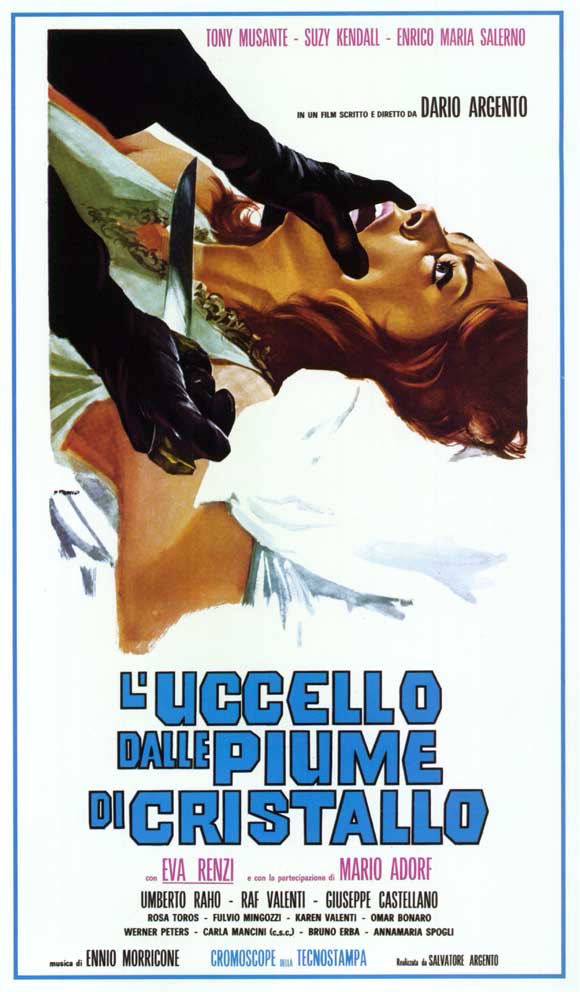
Cinematic Void January Giallo 2023: The Bird with the Crystal Plumage (1970)

EDITOR’S NOTE: Cinematic Void will be playing this on Thursday, January 5 at 7:30 PM at The Little Theatre in Rochester, NY (35mm print with tickets here) and Thursday, January 12 at Central Cinema in Knoxville, TN. For more information, visit Cinematic Void. If you can’t get there, I recommend the Arrow Video UHD edition.

Other than the films of Mario Bava (Blood and Black LaceThe Girl Who Knew Too Much), there’s no other film that has no influenced the giallo. In fact, the most well-known version of the form starts right here with Dario Argento’s 1970 directorial debut. Until this movie, he’d been a journalist and had helped write Leone’s Once Upon a Time in the West.

Sam Dalmas (Tony Musante) is an American writer suffering from an inability to write. He’s gone to Rome to recover, along with his British model girlfriend (yes, everyone in giallo can score a gorgeous girl like Suzy Kendall). Just as he decides to return home, he witnesses a black-gloved man attacking a girl inside an art gallery. Desperate to save her, he can only watch, helpless and trapped between two mechanical doors as she wordlessly begs for help.

The woman is Monica Ranier and she’s gallery owner’s wife. She survives the attack, but the police think Sam may have had something to do with the crime, so they keep his passport so he can’t leave the country. What they’re not letting on is that a serial killer has been wiping out young women for weeks and that Sam is the only witness. That said — he’s haunted by what he’s survived and his memory isn’t working well, meaning that he’s missing a vital clue that could solve the crime.

As you can see, the foreign stranger who must become a detective, the missing pieces of memory, the black-clad killer — it’s everything that every post-1970 giallo would pay tribute to (perhaps rip off is the better term).

Another Argento trope shows up here for the first time. It’s the idea that art itself can cause violence. In this film, it’s a painting that shows a raincoat-clad man murdering a woman.

Soon, Sam is getting menacing calls from the killer and Julia is attacked by the black-clad maniac. The police isolate a sound in the background of the killer’s conversations, the call of a rare Siberian “bird with the crystal plumage.” There’s only one in Rome, which gets the police closer to the identity of who is wearing those black gloves (in truth, it’s Argento’s hands). It’s worth noting that the species of bird the film refers to as “Hornitus Nevalis” doesn’t really exist. The bird in the film is actually a Grey Crowned Crane.

Alberto, Monica’s art gallery husband, tries to kill her, finally revealing that he has been behind the attacks. Ah — but this is a giallo. Mistaken identity is the main trick of its trade. And even though this film was made nearly fifty years ago, I’d rather you get the opportunity to learn for yourself who the killer really is.

I may have mentioned before that my parents saw this movie before I was born and hated it to a degree that any time a movie didn’t make any sense, they would always bring up “that weird movie with the bird that makes the noises.” Who knew I would grow up to love Argento so much? It’s one of those cruel ironies that would show up in his movies. I really wonder if my obsession with giallo and movies that are difficult to understand is really me just rebelling.

An uncredited adaptation of Fredric Brown’s novel The Screaming Mimi, this film was thought of as career suicide by actress Eva Renzi. And the producer of the film wanted to remove Argento as the director. However, when Argento’s father Salvatore Argento went to speak to the man, he noticed that the executive’s secretary was all shaken up. He asked her what was wrong and she mentioned that she was still terrified from watching the film. Salvatore asked her to tell her boss why she was so upset and that’s what convinced the man to keep Dario on board.

The results of all this toil and worry? A movie that played for three and a half years in one Milan theater and led to copycats (and lizards and spiders and flies and ducklings and butterflies and so on) for decades. Argento would go on to film the rest of his so-called Animal Trilogy with The Cat O’Nine Tails and Four Flies on Grey Velvet, then Deep Red before moving into more supernatural films like Suspiria and Inferno.
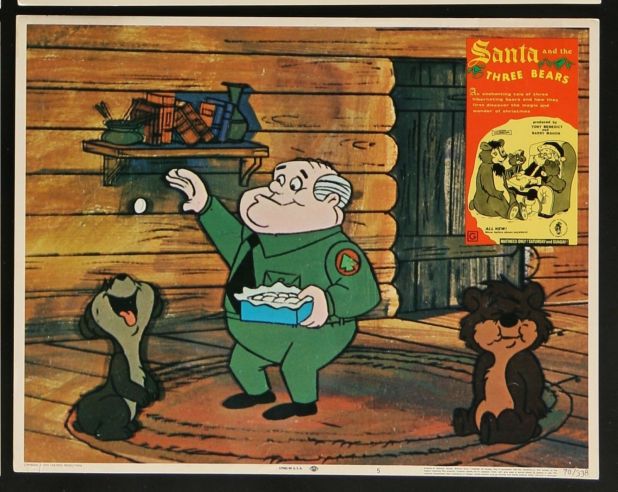
DISMEMBERCEMBER: Santa and the Three Bears (1970)

EDITOR’S NOTE: Barry Mahon! This was first on the site on March 27, 2021.

Yes, the same man who made The Sex Killer and Run Swinger Run also made an animated kids movie. Look, it’s all exploitation. In the 50’s, Barry Mahon was exploiting fears of Communism and then went from nudie-cuties to roughies in the 60’s and in the 70’s, he realized that the kids of the raincoater crowd could add some money into his pockets, too.

Mahon’s parts of the movie only ran in the theatrical version of this, in which a grandfather and his two young grandchildren sit and talk for four minutes before we see some toys, decorations and for some reason, a kitten. So yes, Barry is known for movies where women in states of undress sit and talk about nothing in particular. This is the kid version of his signature directorial move.

This is also not the only Barry Mahon Christmas or children’s movie I’ve endured. There’s also a cartoon about two little bears who believe in Santa and all their mom — voiced by Jean Vander Pyl, who was Wilma and Pebbles Flintstone and Rosie the Robot’s voice — wants is for them to settle down and hibernate. I get it. I used to wake up at 3 AM on Christmas morning and these days, I feel like apologizing to my parents for the horrific holidays of me being a toy-obsessed maniac child.

You can watch this on Tubi.

Night Gallery episode 2: Room with a View/The Little Black Bag/The Nature of the Enemy

Originally airing on December 23, 1970, Night Gallery expanded to three stories for this episode.

“Room with a View” was directed by Jerrold Freedman (A Cold Night’s Death) and written by Hal Dresner (The Eiger Sanction) and it’s all about a bedridden man named Jacob Bauman (Joseph Wiseman, Dr. No) who learns that his wife Lila (Angel Tompkins, Murphy’s Law) is sleeping with someone else. His revenge scheme involves the young nurse (an unbelievably young Diane Keaton) who is there day and night with him.

“The Little Black Bag” is directed by Jeannot Szwarc (Jaws 2, making that two Jaws directors who worked on Night Gallery) and written by Rod Serling from a story by C.M. Kornbluth. It tells the tale of William Fall (Burgess Meredith) finding the medical bag of Gillings (George Furth), a doctor from the future. This same story was also adapted on the show Tales of Tomorrow with Charles S. Dubin directing.

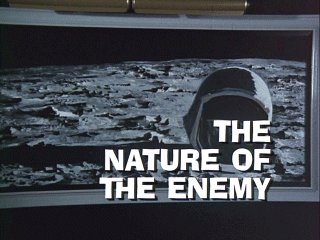
“The Nature of the Enemy” is directed by Allen Reisner and written by Serling from a story by Cyril M. Kornbluth, a science fiction writer who died way too young. The director of NASA (Joseph Campanella) tries to keep control after life is found on the surface of the moon.

The second episode of this series — much like the first — doesn’t live up to the promise of the pilot. Soon, though, this would get much better.

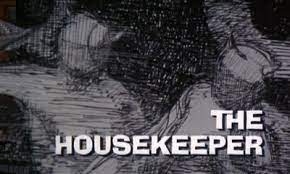
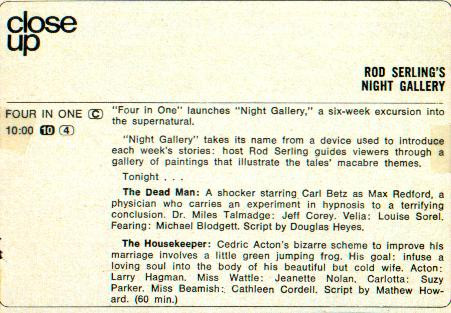
Night Gallery episode 1: The Dead Man/The Housekeeper

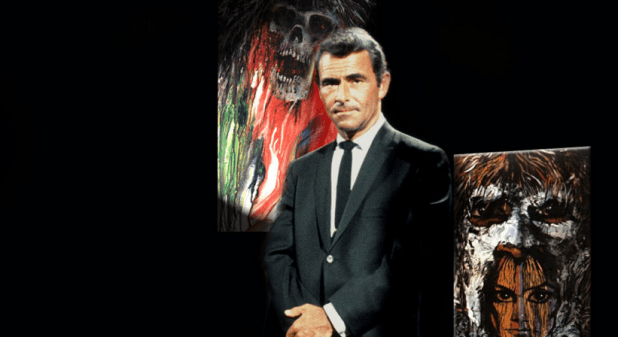
Originally airing on December 16, 1970, Night Gallery returned from its pilot a year later with two new stories, starting with Serling walking out of a floating gallery and saying, “Good evening, and welcome to a private showing of three paintings, displayed here for the first time. Each is a collector’s item in its own way—not because of any special artistic quality, but because each captures on a canvas, suspended in time and space, a frozen moment of a nightmare.”

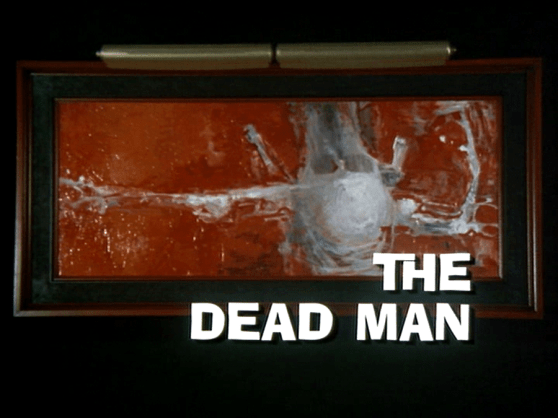
The first story, “The Dead Man,” was written and directed by Douglas Heyes (Kitten With a Whip). Based on the short story by Fritz Leiber, it’s a very Amicus-style story of Dr. Max Redford (Carl Betz) and Dr. Miles Talmadge (Jeff Corey) discussing a medical technique in which different taps can make a person sick or well. One of those patients, John Fearing (Michael Blodgett), has come back numerous times sick from a variety of afflictions despite looking like the picture of health. Meanwhile, Reford’s young wife Velia (Louise Sorel) is falling for this paranormal patient. Of course, the doctor ends up causing the death of his patient and the mental collapse of his wife.

“The Housekeeper” was directed by John Meredyth Lucas and written by Heyes. Cedric Acton (Larry Hagman) is married to Carlotta (Suzy Parker), a rich woman who is cruel to him. He hopes to move the brain of his new housekeeper Miss Wattle (Jeanette Nolan) into the body of his gorgeous young wife. It’s a comedic instead of a frightening story — Night Gallery would suffer from more of this in the second season — but Hagman is good, just coming off his run on I Dream of Jeannie.

MILL CREEK NIGHTMARE WORLDS: How Awful About Allan (1970)

EDITOR’S NOTE: This was originally on the site on May 19, 2020.

Along with What’s the Matter With Helen?, this movie is one of the two collaborations between writer Henry Farrell and director Curtis Harrington.  It was the ABC Movie of the Week on September 22, 1970 and has stood the test of time as one of the better TV movies. And there’s some stiff competition for that.

Shot in just 12 days, it stars Anthony Perkins as Allan Colleigh, who has psychosomatic blindness after an accident — he left paint cans too close to a fire — that killed his abusive father and scarred his sister Katharine (Julie Harris from the 1963 version of The Haunting).

After Allan returns to their home after time in a mental hospital, he’s convinced that everyone is out to get him, including a new boarder with speaks in a hoarse whisper and one of his sister’s ex-boyfriends on the phone.

Joan Hackett — who was in two great TV movies, Dead of Night and The Possessed — appears as Allan’s former girlfriend. She gets caught up in his mania as rooms of the house explode into flames and he’s kidnapped by that mysterious ex.

How Awful About Allan has plenty of actors as comfortable on the stage as they were on the big or small screen. Perkins agreed to wear special contacts that completely made him blind so that his performance would be more realistic.

This didn’t get great reviews when it came out, but do the movie we love ever do?

You can download this on the Internet Archive, watch it on Amazon Prime or just use this YouTube link:

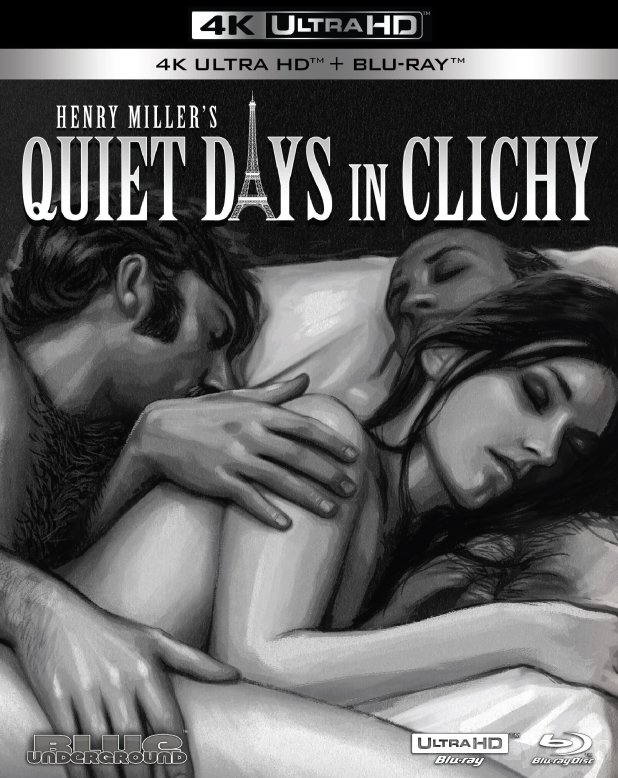
BLUE UNDERGROUND 4K UHD RELEASE: Quiet Days In Clichy (1970)

Based upon the long-banned novel by Henry Miller and featuring a soundtrack by Country Joe McDonald, Quiet Days In Clichy is considered to be the most daring film adaptation ever of one of the most controversial authors in history.

In May of 1970, the United States Government seized the only English-language prints of this movie on charges of obscenity. It was ultimately cleared in Federal Court, but the film mysteriously disappeared shortly after its release. Now more than 50 years later, a restoration has appeared from Blue Underground.

Joey (Paul Valjean) is an American writer. Carl (Joey Wayne Rodda) is his European friend. Most of the film is about their lack of money yet easy availability of women of all ages and situations, from sex workers to underage girls and married women who have lost their husbands.

Directed by Jens Jorgen Thorsen — who courted controversy over sex much in the same way as Miller — this is a gorgeous black and white film that while not outright pornography has the same story beats, as it moves from one sex scene to another. It’s definitely something worth seeing, but by no means expect gorgeous looking lovemaking. It’s down and dirty real life with all the mess that means.

I did really enjoy how Miller’s words were literally written all over the film at points.

The Blue Underground 4K UHD release of Quiet Days In Clincy has both ultra HD blu ray (2160p) and HD blu ray (1080p) widescreen 1.66:1 feature presentations. It has extras including interviews with Country Joe McDonald and Henry Miller’s editor and publisher Barney Rosset, a Midnight Blue appearance by Rosset, a deleted scene, a trailer, a gallery of posters, stills and book covers, and court documents. You can get it from MVD.

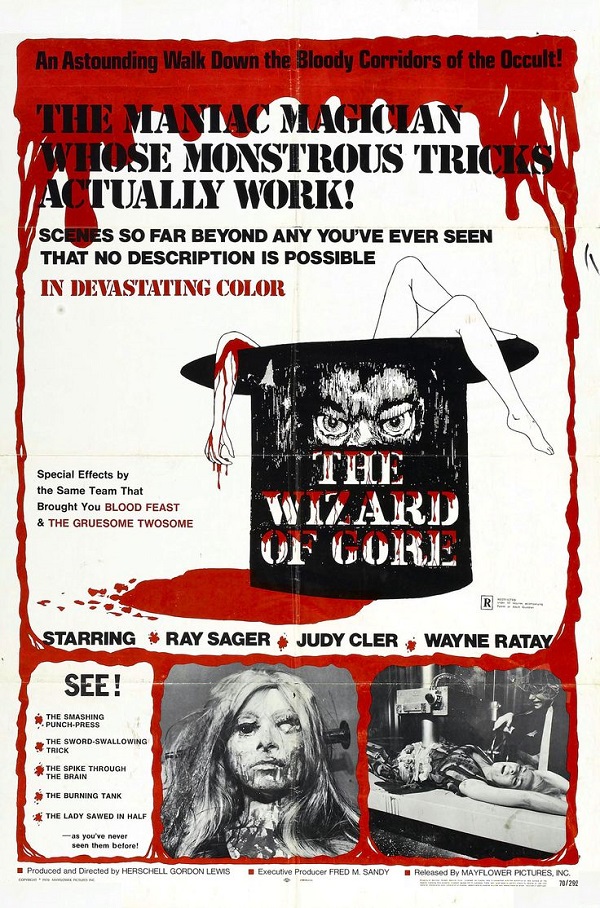
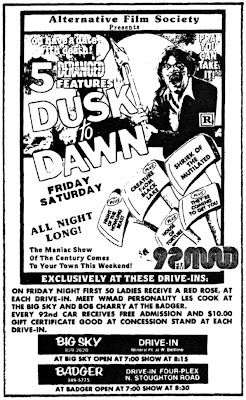
SLASHER MONTH: The Wizard of Gore (1970)

I have seen too many slashers because I also watched this last year.

This movie is a miracle, because so much went wrong. The actor playing the monstrous Montag the Magnificent walked off the set following a confrontation with Fred Sandy and crew member Ray Sager had to take over the role. And as for the effects, they were basically two dead sheep soaked in PineSol. I can’t even imagine how much everything stunk, like the smell of an adult bookstore before they started making couples friendly places. Handling all those sheep organs was director Herschell Gordon Lewis’ son Robert.

Yes, it’s amazing that a movie with such primitive effects and non-trained actors works so well, but that’s just the weirdness that are the films of Lewis, movies that seem to exist inside vacuums of non-action punctuated by blasts of nausea-imbuing viscera.

Every night, Montag takes the stage and has long-winded speeches about the nature of reality before murdering a woman in front of an audience, then showing that it was all a trick. Then, the same woman dies the same way later that night. Reporters Sherry Carson (Judy Cler) and Greg (Phil Laurenson), along with her boyfriend Jack (Wayne Ratay), know that Montag is behind all of this. They just need to prove it.

The end of this movie breaks from what we expect and goes full psychotic. As they sit on the couch, Jack peels off his own face and reveals Montag before shoving his hands into the stomach of Sherry, who laughs in his face and disputes the illusions and the very nature of Montag’s reality, sending the entire movie back to the very beginning of this movie, creating a loop of reality as Sherry turns to her man and says, “You know what I think? I think he’s a phony.”

This movie was still playing drive-ins twelve years after it was made on several five movie bills. It was known as House of Torture but there had to be maniacs yelling at the screen, astounded to see a movie they had seen many times before. Man, what a magic time.

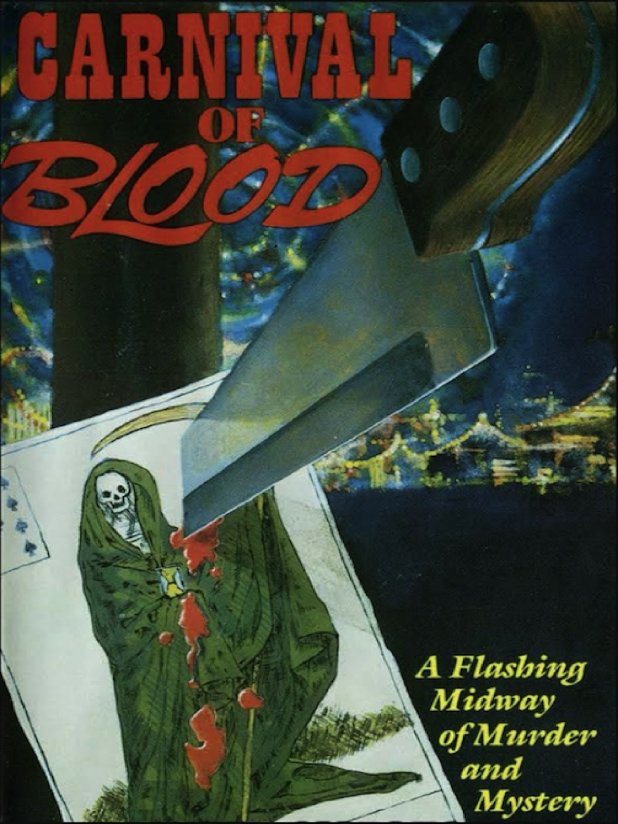
THE IMPORTANT CINEMA CLUB’S SUPER SCARY MOVIE CHALLENGE 13: Carnival of Blood (1970)

13. A Horror Film That Takes Place at a Fair, Carnival or Amusement Park.

Leonard Kirtman mostly directed adult, churning out titles like The Seduction of CindyUp Desiree Lane and Confessions of a Candy Striper, often using the name Leon Gucci. This is one of the few movies he made without penetration yet it has all the feel of a New York City-made porn from 1970.

Shot in Coney Island — I would not be surprised if there were no permits and no one had any idea they were even filming — this movie revolves around the people who are killed after winning a teddy bear at the booth of Tom (Earle Edgerton) and his hunchback-heaving assistant Gimpy (John Harris, the stage name for Burt Young!).

There’s a district attorney called Dan (Martin Barolsky) who gets called down to investigate, but he’s so dumb that he brings his fiancee Laura (Judith Resnick) along to the carnival and man, defund the slasher police.

No set dialogue. Scuzzy looking footage. Gore from the Herschell Gordon Lewis school of pause on the guts. A great moment where a tunnel of love ends with a screaming survivor and a headless blood spraying victim. So much repetition. Sound effects out of nowhere. Folk music. Cool jazz. A drunken sailor. Bad relationships. Death is everywhere.

ARROW BOX SET RELEASE: The Count Yorga Collection: Count Yorga, Vampire (1970)

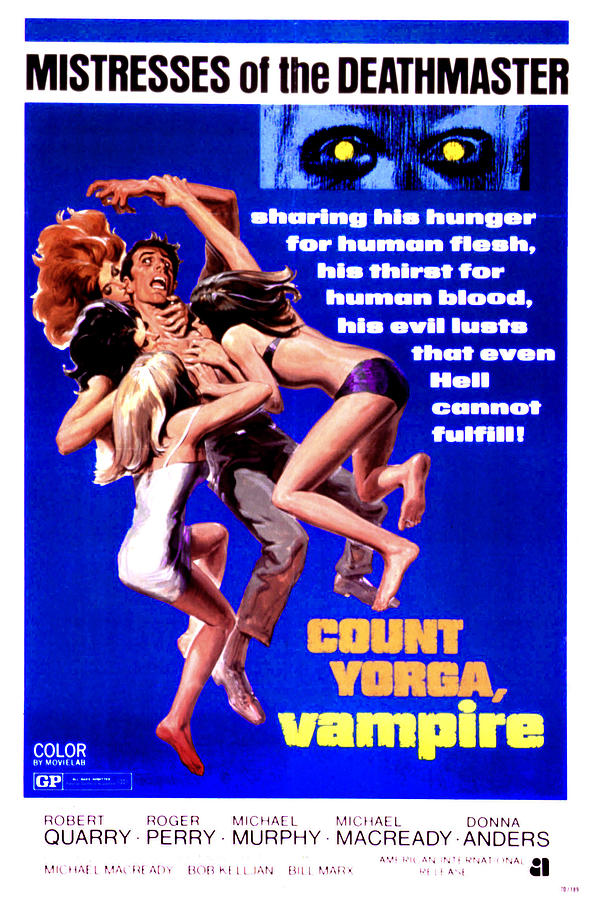
Directed and written by Bob Kelljan, Count Yorga, Vampire was originally going to be soft core porn movie, The Loves of Count Iorga. In fact, some prints have that title. Robert Quarry, the man who would be Yorga, told producer Michael Macready that he would play the vampire if they turned the story into a non-sexual horror movie.

Donna (Donna Anders) is trying to contact her recently deceased mother via séance by Count Yorga, a mystic who has recently moved to America. Donna becomes hysterical and needs to be calmed by Yorga; afterward she reveals to her friends that Yorga was her mother’s last over and when she died, he demanded that she be buried and not creamated.

Yorga then conducts a campaign of terror, biting Erica (Judy Lang), who goes from party girl to vampire eating her own kitten — don’t worry, it’s just a kitten covered in lasagna — in a matter of hours. Oh yeah — Donna’s mom (Marsa Jordan) is now one of Yorga’s brides and it’s the swinging seventies, so he commands her to make love to one of his other undead women on a cold cemetery slab.

By the end of the film, Yorga and his brides have wiped out just about every one of Donna’s friends and strengthened his hold over her, which extends potentially beyond the grave. Again, it’s the seventies and life is cruel and cheap and happy endings aren’t often found after the New Hollywood. The count is also self aware and watches Countess Dracula.

Arrow Video’s The Count Yorga Collection has brand new 2K restorations of Count Yorga, Vampire and The Return of Count Yorga from new 4K scans of the original 35mm camera negatives. Plus, you get an illustrated perfect bound collector’s book featuring new writing by film critic Kat Ellinger and horror author Stephen Laws, plus archive contributions by critic Frank Collins and filmmaker Tim Sullivan. The limited edition packaging has reversible sleeves featuring original and newly commissioned artwork by Heather Vaughan, fold-out double-sided posters for both films featuring original and newly commissioned artwork by Heather Vaughan, twelve double-sided, postcard-sized lobby card reproduction artcards and a reproduction pressbook for Count Yorga, Vampire.

Count Yorga, Vampire has new audio commentary by film critic Tim Lucas; archival audio commentary by film critics David Del Valle and C. Courtney Joyner; The Count in California, a brand new appreciation by Heather Drain and Chris O’Neill; I Remember Yorga, a brand new interview with Frank Darabont in which the award-winning filmmaker talks about his love for Count Yorga, Vampire, a new interview with Michael Murphy; Fangirl Radio Tribute to Robert Quarry, which has host Jessica Dwyer in conversation with Tim Sullivan, who is a filmmaker, Yorga fan and friend of Robert Quarry; the trailer, radio spots and an image gallery.

You can get it from MVD.

THE CHRISTOPHER LEE CENTENARY CELEBRATION PRIMER: Count Dracula (1970)

EDITOR’S NOTE: This article was originally on the site on February 28, 2022. Now you can see it this weekend at the Drive-In Super Monster-Rama! Get more info at the official Drive-In Super Monster-Rama Facebook page and get your tickets at the Riverside Drive-In’s webpage.

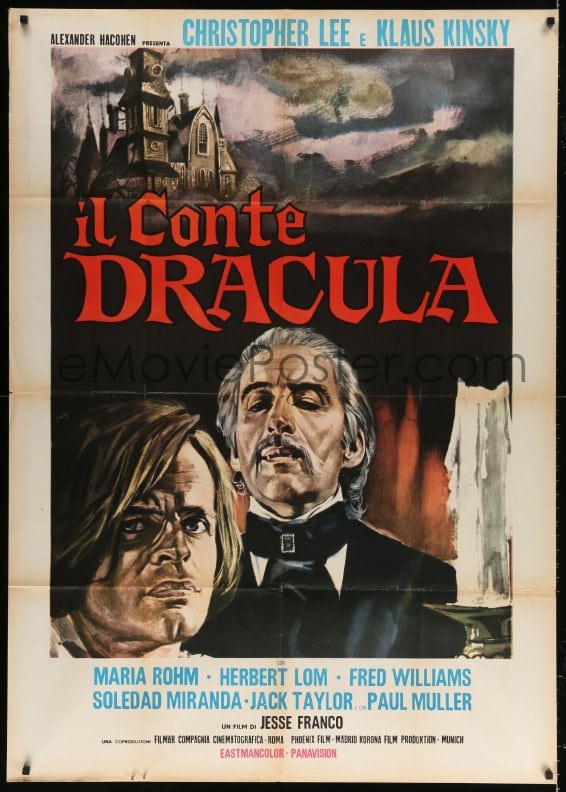
After years of being in Hammer Dracula movies, Christopher Lee starred in this Harry Alan Towers produced, Jess Franco directed version of Bram Stoker’s novel.

There’s a great cast and by that, I mean the kind of cast that I look for in movies. Klaus Kinski, (before he played Dracula in Nosferatu the Vampyre and Nosferatu In Venice) is Renfield, Herbert Lom is Van Helsing, Frederick Williams (A Bridge Too Far) is Jonathan Harker, Maria Rohn (Venus In Furs) is Maria, Paul Muller is Jack Seward, Jack Taylor is Quincey Morris (he had vampire hunting experience after being in the Mexican Nostradamus films) and Soledad Miranda — and who else, really? — is Lucy.

This could have had an even wilder cast, as both Vincent Price — sadly under his American-International Picture exclusive contract — and Dennis Price were both selected to play Val Helsing.

At the same time that this was being made, so was Cuadecuc, vampire, which was shot on the same sets with the same actors by the experimental director — and a senator elected in Spain’s first democratic elections who participated in the writing of the Spanish Constitution — Pere Portabella.

As for Franco’s film, it’s one of the first attempts at being faithful to the novel, with Dracula starting as an old man and gradually gaining in vitality as the movie goes on. Lee* was supposedly tired of playing Dracula and was only convinced to join the cast only after being promised that this movie would be faithful to Stoker. It still plays fast and loose; oddly enough Towers has claimed he tricked Kinski into being in this with a fake script. Franco has said that that wasn’t true, but what was is that Kinski ate real flies.

I wouldn’t expect the Franco madness that most associate with him, but this is the first extended time he’d work with Miranda before the films they’d be known for making together (she was an uncredited dancer at just eight years old in Franco’s Queen of the Tabarin Club). But there’s a great Bruno Nicolai score, Lee is super into everything he’s doing, the sparse sets work and Bruno Mattei was one of the editors.

There’s always been a contingent of people who claim this movie is boring, but look, any movie with Soledad Miranda in it is worthwhile.

You can watch this on Tubi.

*To be fair, Lee played the role three other times in 1970: in One More TimeTaste the Blood of Dracula and Scars of Dracula.