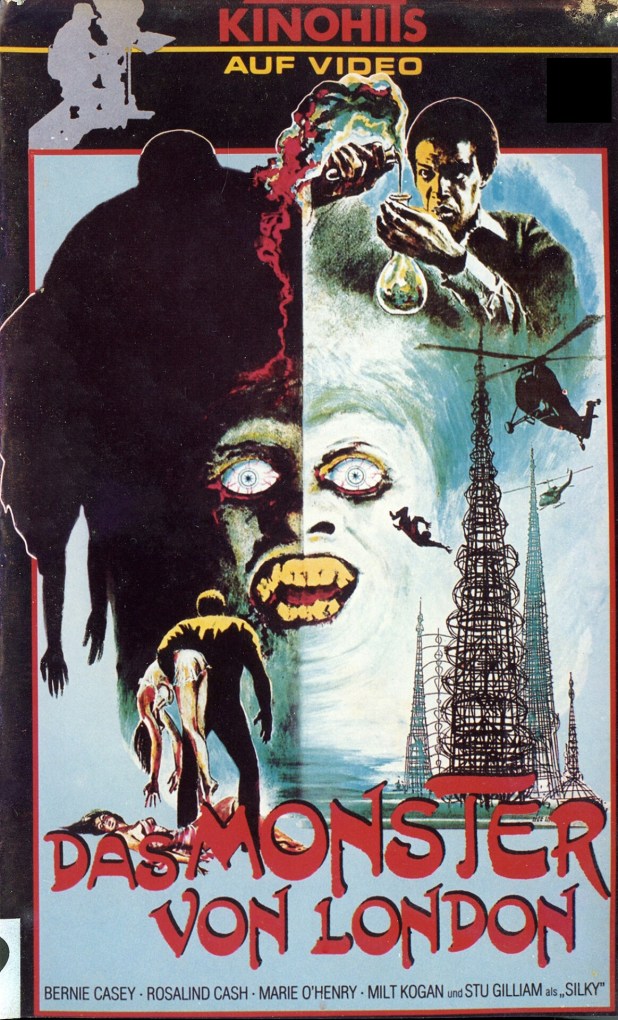
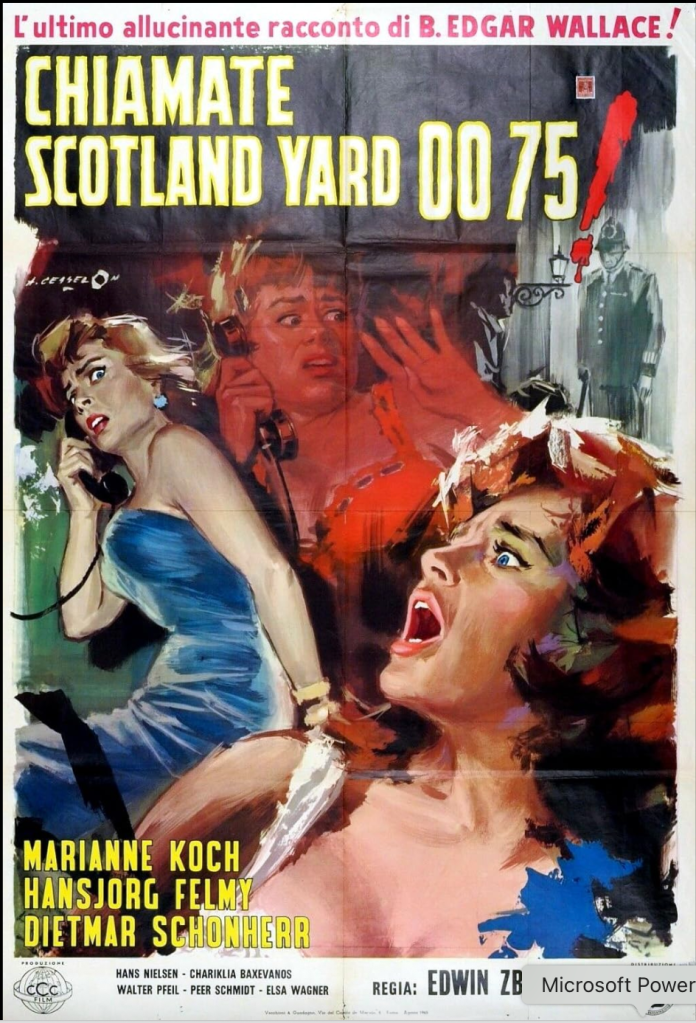
Who would have thought that a series of Jack the Ripper-style murders would happen at the same time as a new play about the infamous Whitechapel murderer was playing on the London stage? And what if the actor, Richard Sand (Hansjörg Felmy), who plays Jack becomes a suspect in an example of the ultimate in Method acting?
Director Edwin Zbonek and writer Robert A. Stemmle have adapted another Bryan Edgar Wallace story, this reveals to us thatthe actor may have been insane and an alcoholic in the past, but does that make him a killer? Isn’t he trying to settle down with Ann Morlay (Marianne Koch)? I mean, who wouldn’t want to? So why is he maybe killing sex workers?
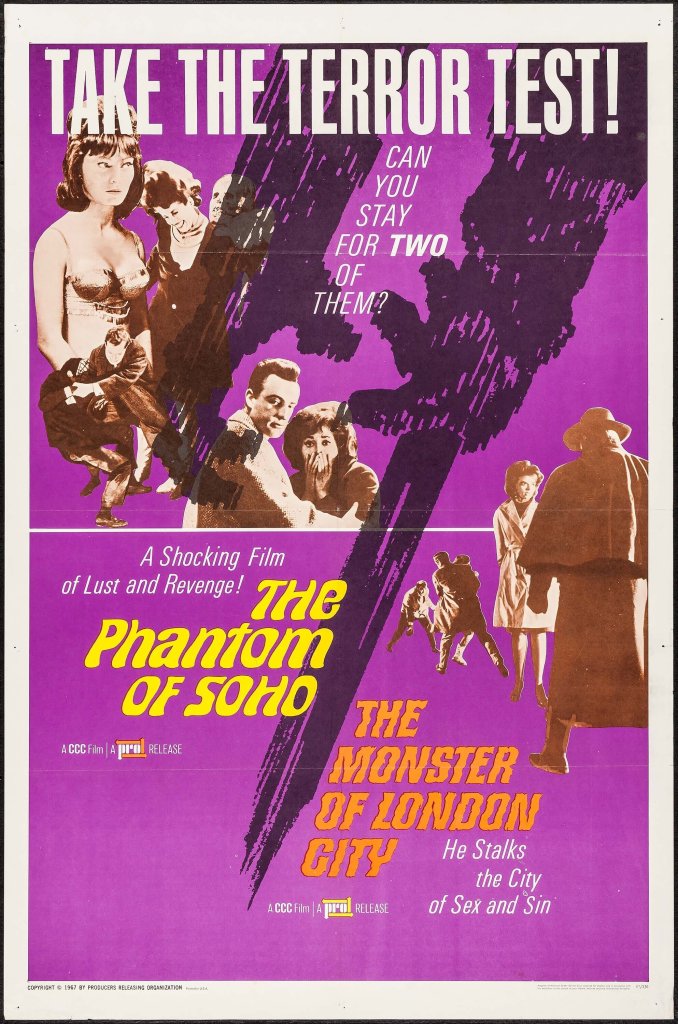
Producers Releasing Corporation released this in the U.S. along with The Phantom of Soho. There’s not just a great poster, I’ve also found the pressbook.
This comes at the time when the Krimi and the Giallo were trading back and forth. You can see the influence of Blood and Black Lace, as well as the exploitation film expectation that there had to be nude female flesh. Regardless, it works and creates quite the picture, which has a great killer reveal at the end.
This is part of the Terror In the Fog box set and has extras including a new introduction by genre film expert and Video Watchdog founder Tim Lucas and audio commentary by Kim Newman and Stephen Jones. You can get it from MVD.
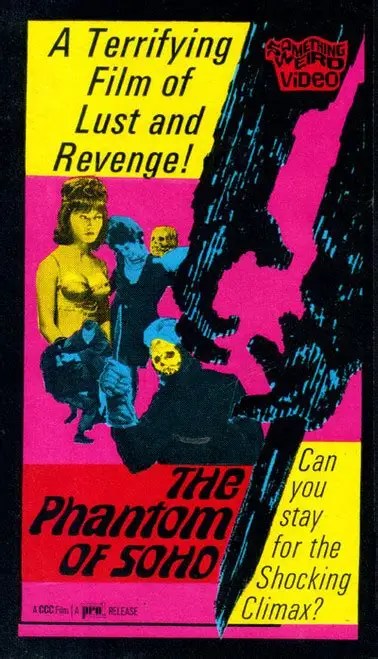
Based on a novel by Bryan Edgar Wallace, this Franz Josef Gottlieb-directed and Ladislas Fodor-written movie takes place in a sex den in Soho, the Sanisbar, which is ruled over by wheelchair — and not just for respect — bound crime domme Joanna Filiati (Elisabeth Flickenschildt). There are a bunch of murders by someone in glittery gold gloves — this isn’t a Giallo! — and a skull mask, so Joanna is trying to hush it up and keep Scotland Yard off the case, as it will bring people running to arrest her.
Chief Inspector Hugh Patton (Dieter Borsche) and would-be Jessica Fletcher Clarinda Smith (Barbara Rütting) are on the case. This has film noir, jazzy clubs, plenty of fog and feels like London twenty years earlier more than Germany. There’s also a great camera move as the viewer is forced to spin along with the girl on a knife thower’s wheel. It might make you throw up your spätzle! This is what happens when a yacht called the Yolanda sinks and the survivors think they get away! Even better, this played in the U.S.!
This is part of the Terror In the Fog box set and has extras including a new introduction by genre film expert and Video Watchdog founder Tim Lucas and audio commentary by Kim Newman and Barry Forshaw. You can get it from MVD.
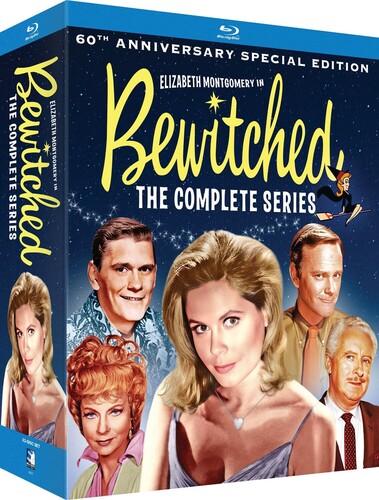
Bewitched aired throughout the most tumultuous time in modern history — hyperbole, that could also be today, but true, as rehearsals for this show’s first episode were on the day Kennedy was shot and the episode “I Confess” was interuppted by Martin Luther King Jr.’s death — from September 17, 1964, to March 25, 1972. The #2 show in the country for its first season and remaining in the top ten until its fifth season, it presents a sanitized and fictional world that at the time may have seemed contrary and fake to the simmering 60s, but today feels like the balm I need and an escape.
Within the home on 1164 Morning Glory Circle, Samantha (Elizabeth Montgomery) and Darrin Stephens (Dick York, later Dick Sargent) have just had a whirlwind romance and ended up as husband and wife. At some point, she had to tell him that she was a witch, a fact that he disapproved of, and that she should be a normal housewife instead of using her powers. Yet she often must solve their problems — usually caused by her family, such as her mother Endora (Agnes Moorehead) — with a twitch of her nose.
Creator Sol Saks was inspired by I Married a Witch and Bell, Book and Candle, which luckily were owned by Columbia, the same studio that owned Screen Gems, which produced this show. You could use either of those movies as a prologue for this, which starts in media res — I like that I can use such a highbrow term to talk of sitcoms — with our loving couple already settling into the suburbs.
Author Walter Metz claims in his book Bewitched that the first episode, narrated by José Ferrer, is about “the occult destabilization of the conformist life of an upwardly mobile advertising man.” As someone who has spent most of his life in marketing, maybe I should look deeply into the TV I watched as a child. Bewitched was there all the time in my life, wallpaper that I perhaps never considered.
Head writer Danny Arnold, who led the show for its first season, considered the show about a mixed marriage. Gradually, as director and producer William Asher (also Montgomery’s husband at the time) took more control of the show, the magical elements became more prevalent. What I also find intriguing is that with the length of this show’s run, it had to deal with the deaths of its actors and York’s increasing back issues, which finally forced him to leave the show and another Dick, Dick Sargent, stepping in as Darren, a fact that we were to just accept.
That long run, the end of Montgomery and Asher’s marriage and slipping ratings led to the end of the show, despite ABC saying they would do two more seasons. Instead, Asher produced The Paul Lynde Show, using the sets and much of the supporting cast of this show. He also produced Temperatures Rising, which was the last show on his ABC contract, which ended in 1974.
Feminist Betty Friedan’s two-part essay “Television and the Feminine Mystique” for TV Guide asked why so many sitcoms presented insecure women as the heads of households. None of this has changed much, as the majority of sitcoms typically feature attractive women and funny but large husbands, a theme created by The Honeymooners, and the battles between spouses. I always think of I Dream of Jeannie, a show where a powerful magical being is subservient to, well, a jerk. At least on Bewitched, Samantha is a powerful, in-control woman with a mother who critiques the housewife paradigm.
Plus, unlike so many other couples on TV at the time, they slept in the same bed.
Bewitched‘s influence stretched beyond the movie remake. The show has had local versions in Japan, Russia, India, Argentina and the UK, while daughter Tabitha had a spin-off. There was even a Flintstones crossover episode!
Plus, WandaVision takes its central conceit — a witch hiding in the suburbs — from this show. And Dr. Bombay was on Passions!
This is the kind of show that has always been — and will always be — in our lives. Despite my dislike of Darren’s wedding vows of no magic, there’s still, well, some magic in this show. Just look at how late in its run it went on location to Salem for a multi-episode arc, something unthought of in other sitcoms.
You can watch this just for the show itself, to see the differences between the two Darrens and when Dick York had to film episodes in special chairs because of his back pain, when the show did tricks like have Montgomery (using the name Pandora Spocks) playing Samantha’s cousin Serena to do episodes without York or just imagine that the world was changing outside. Yet, magic and laughter were always there on the show, throughout the lives, divorces and deaths of its principals and supporting cast.
The Mill Creek box set is an excellent, high-quality way to just sit back, twitch your nose and get away from it all. This 22-disc set has everything you’d want on Bewitched, including extras like Bewitched: Behind the Magic, an all-new documentary about the making of Bewitched, featuring special guest appearances by actor David Mandel (Adam Stephens), Steve Olim (who worked in the make-up department at Columbia), Bewitched historian Herbie J Pilato, film and television historian Robert S. Ray, Bewitched guest star Eric Scott (later of The Waltons) and Chris York, son of D. York (the first Darrin). There are also sixteen new episodic audio commentaries, moderated by Herbie J Pilato that include behind-the-scenes conversations with Peter Ackerman (son of Bewitched executive producer Harry Ackerman), David Mandel, Bewitched guest star Janee Michelle (from “Sisters at Heart”), Steve Olim, Robert S. Ray, former child TV actors and Bewitched guest stars Ricky Powell (The Smith Family), Eric Scott (The Waltons), and Johnny Whitaker (Family Affair and Sigmund and the Sea Monsters) and Chris York (son of D. York). There’s also an exclusive 36-page booklet featuring pieces by Bewitched historian Herbie J. Pilato, as well as an episode guide. You can order it from Deep Discount.
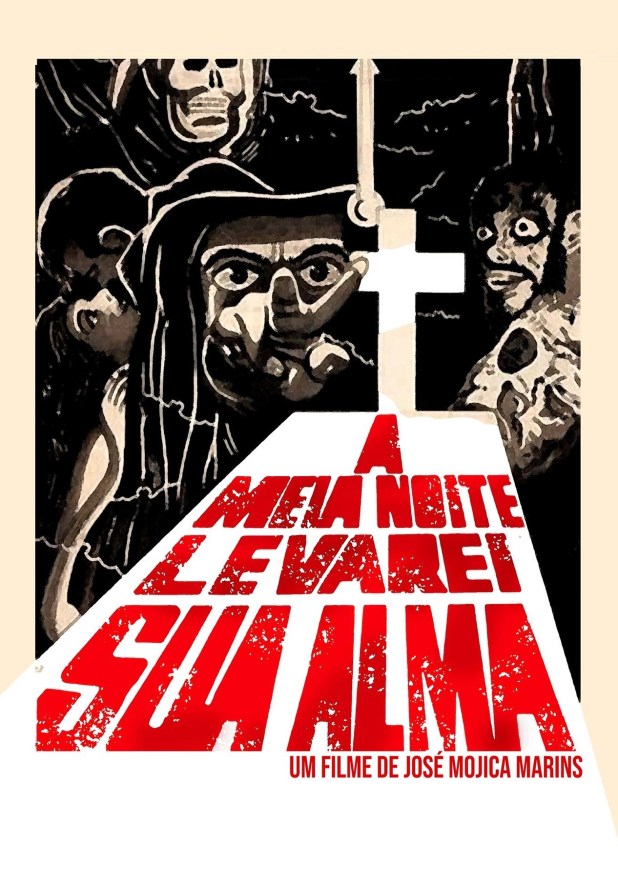
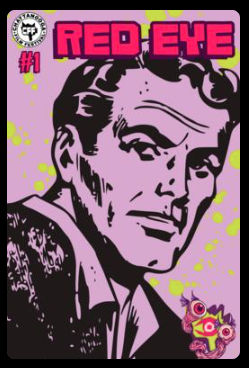
All hail David Dastmalchian! He picked the last Red Eye of the Chattanooga Film Festival, and man, he did it right! Coffin Joe! Also: How amazing is it that this movie was made in 1964? It had to scare the hell out of people.
How badass is Zé do Caixão, or as we know him, Coffin Joe?
Can you imagine the audacity to not just create this character but to become him in the midst of a country where more than 60% of the population is Catholic?
Can you even comprehend how upset people were when José Mojica Marins became the long-fingernail-wearing amoral undertaker driven to continue his bloodline by having a son with the perfect woman while murdering and ruining everyone in his wake? How did they deal with a boogeyman who filled their head with double-talk and Nietzschean statements?
As Coffin Joe would yell, “I challenge your power! I deny your existence! Nothing exists, but life.”
The first appearance of Coffin Joe is in this movie, a film in which the evil undertaker searches for his perfect woman who will bear him the child that will make him immoral. After all, his wife is infertile, so he decides to murder her with a spider. And not just on any day. On a Catholic Holy Day. And then he decides to break another Commandment, coveting Terezinha, the fiancée of his friend Antonio.
Joe and Antonio visit a gypsy who foretells that a tragedy will keep Antonio and Terezinha from being married. This causes Joe to scream at the woman about how the supernatural is a lie, then he makes her warning come true by strangling his friend before drowning him. The very next day, he starts to court Terezinha by giving her a canary. When she resists his advances, he beats her and then assaults her. She curses him and reveals that she will kill herself — one of the gravest sins in the Catholic Church — and come back to pull him into Hell. He laughs, but the next day, she has hung herself.
The police just can’t seem to figure out why all these deaths are happening in this small village, but Dr. Rodolfo does. Coffin Joe responds by tearing out his eyes with his long fingernails and setting him on fire. Problem solved. He remains unpunished and even starts to fall for another woman, Marta. On their date, he sees the gypsy who warns him that he will be punished. That night, as he walks home, the cemetery calls him, the place where all of his victims are burning. He opens the grave of Antonio and Terezinha, and they begin to open their eyes as their mouths are filled with worms and insects. Coffin Joe starts to scream, as he is trapped between life and death, finally paying for his crimes as the church bells ring at midnight.
This is just the start of how strange these movies would become. If you liked the last ten minutes of this, just get ready. It gets really good from here.
You can watch this and many other films at CFF by buying a pass on their website. Over the next few days, I’ll be posting reviews and articles, as well as updating my Letterboxd list of watched films.
I love the CFF Red Eye movies and honestly, they’re the start of my summer. This is a perfect movie for the weather that is heating up, a film that won’t make too many demands on your brain and goes well with, well, drugs.
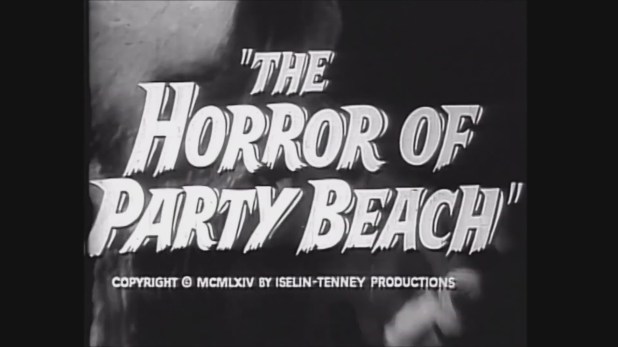
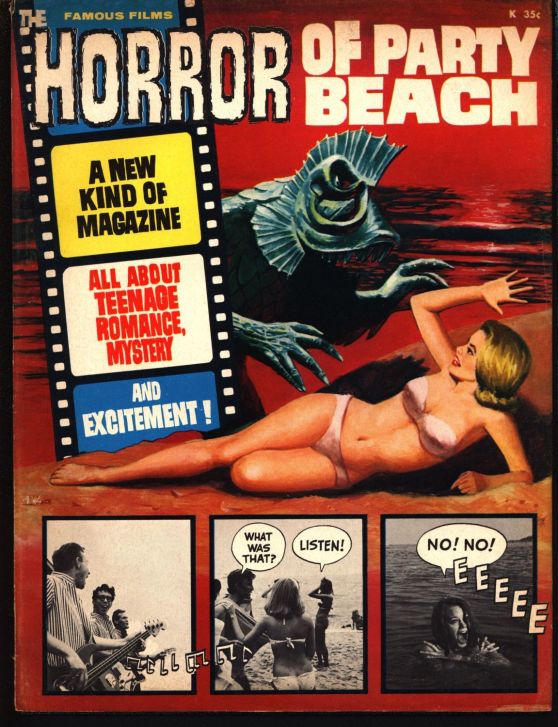
Shot in two weeks for $50,000 outside Stamford, Connecticut by local producer/director Del Tenney, The Horror of Party Beach was advertised as “The First Horror-Monster Musical.” Tenney would also direct I Eat Your Skin, a movie that we all know as the much worse half of the famous double bill with the utterly astounding I Drink Your Blood.
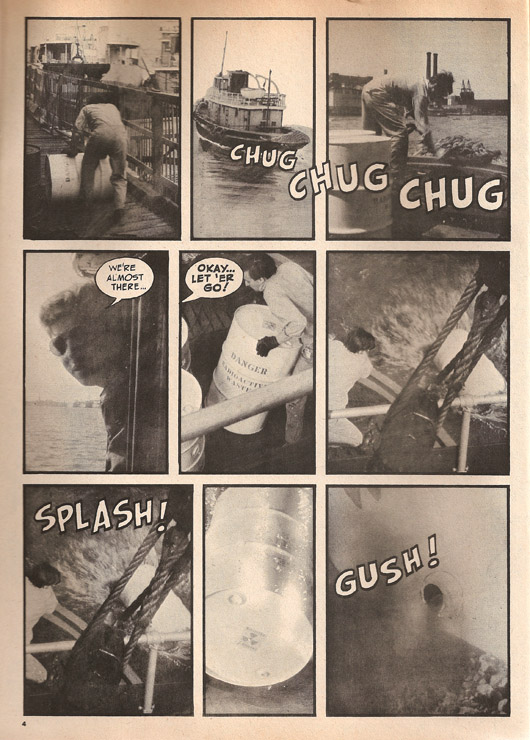
The Del-Aires just want to play a party on the beach for the kids, but radioactive waste transforms a skeleton into a shambling monster. Hank Green just wants to get with Tina, but she’s drunk and wants to hook up with a biker. A fight ensues, but dudes are dudes and get along and end up shaking hands. So The Del-Aires play “The Zombie Stomp” and everyone has a swell time until that monster — remember him? — kills Tina and her bloody body washes up at the party.
Meanwhile, Dr. Gavin and the cops are on the case, but the doctor is more on Hank’s case, but he just knows that his assistant is the object of his older daughter’s affection. And then there’s some voodoo, because you know, why not. And then there’s a slumber party, because that’s what girls do when they’re in their early twenties. But never mind, the monster has found friends and they decide to wipe out all of these nubile young somnambulists.
Through some buffoonery, we learn that sodium can kill these monsters. There are also many, many more songs by The Del-Aires, who can’t seem to grasp the fact that monsters are rising up and mostly killing attractive women. Perhaps they could put their guitars down, pick up some table salt and get to work wiping out whatever the hell these creatures are?
This movie even got a photo comic book tie-in from Warren Publishing, the home of Famous Monsters, Eerie and Creepy. Wally Wood and Russ Jones worked on it and it’s a great collectors’ item.
Beyond all those groovy tunes by The Del-Aires, Edward Earle Marsh composed the soundtrack. You may know him better as Zebedy Colt, who started his career in Laurel and Hardy’s Babes In Toyland before releasing a series of gay cabaret songs before embarking on a career in pornography which would lead him to being in movies like Barbara Broadcast and directing films like The Devil Inside Her, which has nothing to do with the Joan Collins film of the same name.
You can watch this for free on Tubi or buy the Severin blu ray to get the best possible experience.
You can watch this and many other films at CFF by buying a pass on their website. Over the next few days, I’ll be posting reviews and articles and updating my Letterboxd list of watches.
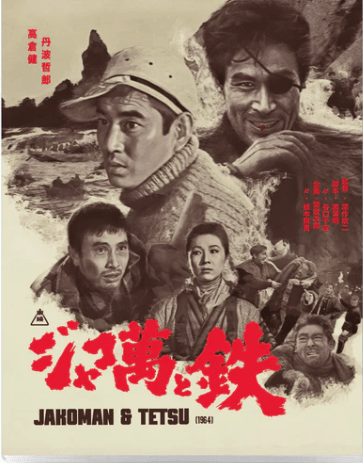
Directed by Kinji Fukasaku, based on an earlier screenplay by Akira Kurosawa — previously filmed by director Senkichi Taniguchi in 1949 and based on the novel Nishin gyogyo by Keizo Kajino — Jakoman & Tetsu, as Kyubei (Isao Yamagata) and his son-in-law Sotaro (Shiro Osaka), borrow money to buy a herring net and hire migrant workers in the hopes of finally making money. However, a one-eyed sailor named Jakoman (Tetsuro Tamba) arrives to make life horrible for everyone…until Kyubei’s long-dead son Testu (Ken Takakura) comes to stop him.
Toshiro Mifune played the role of Tetsu in the original film. Takakura wanted to go all out, so instead of wearing rubber pants like many fishermen did and who warned him to not go in without them, he got into the water in just a loincloth. The water temperature? Three degrees Fahrenheit. He was so sick that he slept for three days.
Jakoman claims that the father left him marooned and near-death years ago. Is it true? You’ll learn the answer and whether the son can do better than the man who raised him.
Kinji Fukasaku went on to make The Threat, Battles Without Honor or Humanity, Battle Royale, and many more films.
The 88 Films Blu-ray of Jakoman & Testu has an introduction by Mark Schilling, commentary by Tom Mes and Jasper Sharp, a gallery of stills, an essay by Chris D. and original and newly commissioned artwork by Sean Longmore. You can get it from MVD.
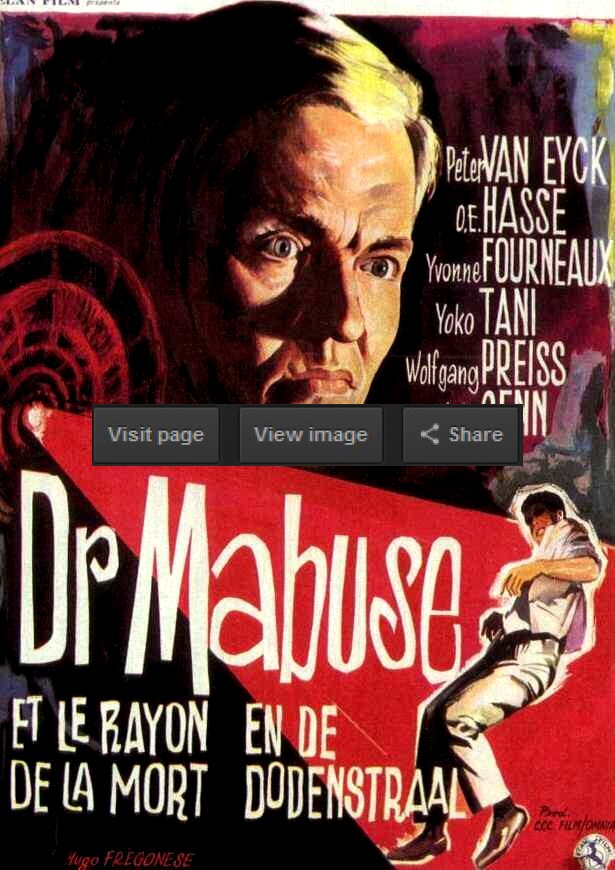
A co-production between France, Italy and West Germany, this is also known as The Secret of Dr. Mabuse. Maj. Bob Anders (Peter van Eyck, who despite his character’s name keeps coming back to fight Dr. Mabuse; here he’s renamed so they don’t have to pay Bryan Edgar Wallace again) is investigating a death ray created by Prof. Larsen (O.E. Hasse), but he’s not the only one interested. Mabuse (Wolfgang Preiss has his name in the credits, but he isn’t in this) remains alive, somehow.
Directed by Argentine director Hugo Fregone — who also made Los Monstruos del Terror — and Victor De Santis, and written by Ladislas Fodor, this gets ahead of Bond by having a spy boss named Admiral Quency (Leo Genn) — kind of Q, I guess, right? — who has a burned face, an eyepatch, a wooden arm, and a team of scuba troopers way before Thunderball. Four years after the new Dr. Mabuse started, worried about the paranoia of the post-war era, we’re suddenly in Eurospy territory. There are also three gorgeous women — Gilda Larsen (Yvonne Fourneaux), Judy (Rika Dialina) and Mercedes (Yoko Tani) — to flirt, fight and/or be saved by the hero, who everyone knows is a spy and he’s clueless to figure out why.
The Italian version, I raggi mortali del Dr. Mabuse, is 17 minutes longer yet seemingly moves faster. It also has an alternate edit. Choose that version when you watch this.
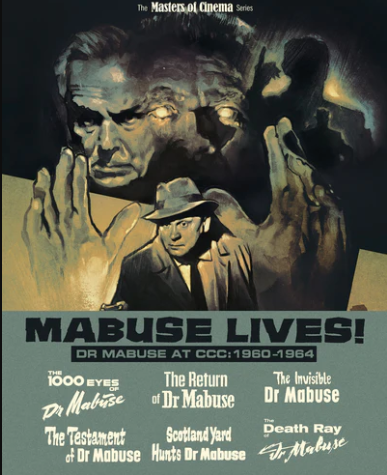
The Eureka box set Mabuse Lives! includes this movie, an introduction by genre film expert and Video Watchdog founder Tim Lucas, a new 1080p presentation from a 2K restoration of the original film elements undertaken by CCC, a commentary track by film historian and author David Kalat, and an alternate ending. You can get it from MVD.
April 25: Bava Forever — Bava died on this day 43 years ago. Let’s watch his movies.
ABOUT THE AUTHOR: Jennifer Upton is an American (non-werewolf) writer/editor in London. She currently works as a freelance ghostwriter of personal memoirs and writes for several blogs on topics as diverse as film history, punk rock, women’s issues, and international politics. For links to her work, please visit https://www.jennuptonwriter.com or send her a Tweet @Jennxldn
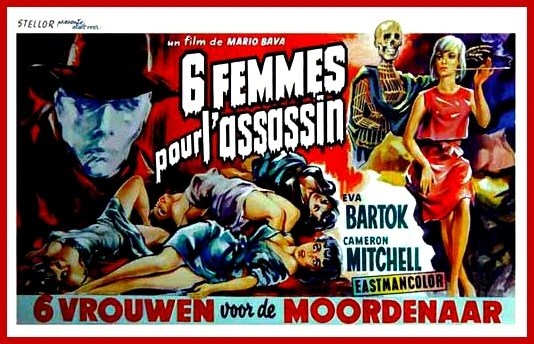
There’s been so much written about this early giallo that I almost didn’t want to take this one on. But after seeing a digital screening at London’s Prince Charles Cinema in March of 2025, I felt I needed to share the experience of watching the brutal murders of European models in a 1960’s Roman fashion house with a much younger audience. Would they be as enraptured by the mystery as I was when I first saw this movie in the early ‘90s on video?
Many of the patrons that night had never seen the film and yet it was sold out. Initially, this filled my Bava-loving heart with joy. “A whole new generation will be introduced to Mario Bava’s creamy purple, green, and blue gels!”, I thought. My joy was quickly doused sounds of the young audience’s laughter. Most of the little pricks found the film hilarious and outdated.
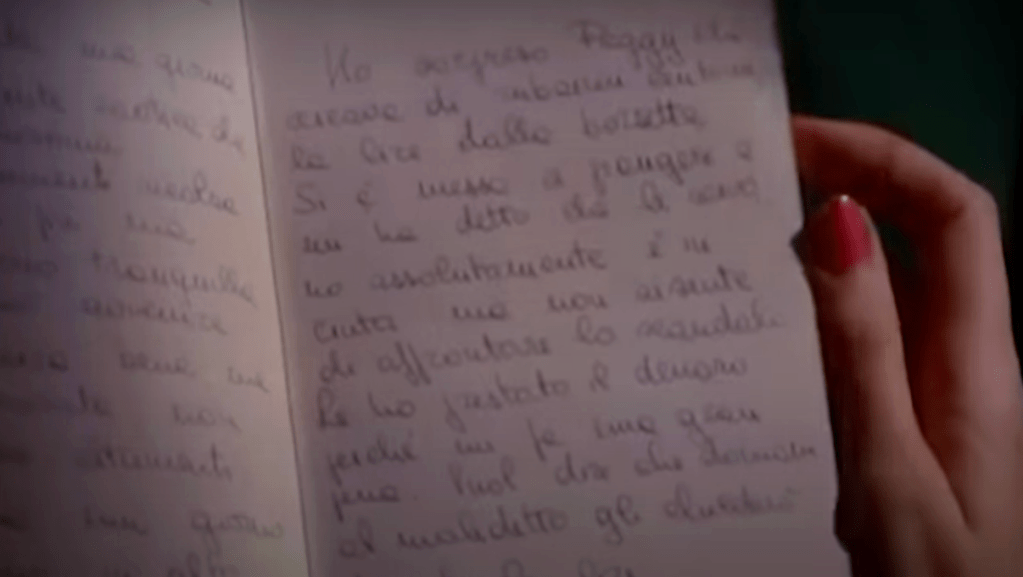
Yes, the film is old. Yes, it’s filled with meme-able moments where the camera zooms in to a close-up on a possible suspect’s gaze, accompanied by a classic Carlo Rusticelli music sting. Little did they know, it’s precisely because of films like this one that we know this to be a cliché in 2025. Yes, Cameron Mitchell is delightfully smarmy, and yes, the use of cocaine is over-dramatized. The moment that got the biggest laugh? The close-up of German text written in Isabella’s diary.
This last point was apparently so confounding to one couple, they were still trying to figure it out in the lobby after the screening. That this was their focus was disappointing. The whole point of the diary isn’t what language it’s written in. The diary is the object that drives the murderer and makes every main character look guilty. Everyone wants to know whether Isabella wrote something about them in her diary as they each have skeletons in their closets next to their mink coats. Or perhaps even, wearing the coat. It gets chilly when you’re a skeleton.
Here’s the Italian version:
I walked out into the cool, early March night air hoping that this couple would look up the film and read a bit more about the film’s international co-production between companies in France, West Germany and Italy following Bava’s departure from Galatea Films. “Maybe…” I thought, “they liked it enough to seek out Bava’s other works, too.”
I’m still trying to move past my disdain for that night’s group of morons and hold onto my gratefulness to the Prince Charles for screening the film in the first place. I’m happy they made money that night. Whether or not the brain-dead among that night’s audience liked it is not my nor their concern.
This film is gorgeous on the big screen. Every murder is staged to perfection, with each shadow and highlight revealing only the details Bava wants us to see. Every trumpet note on the theme song is perfectly placed, accentuated with cues used in Bava’s 1963 supernatural thriller The Whip and The Body, creating a sultry soundscape for the beautiful actors and actresses to sway in and out of the lush backgrounds.
In terms of story, I’ll not bother going over it again. If you’re here, you likely already know it. It’s the prototype for the Italian giallo, mixing elements of the German Krimis with the Agatha Christie novels, peppered with black-gloved killers, gorgeous, flawed, horny protagonists who literally and figuratively stab each other in the back the first chance they get until the final twist leads us to a downer ending.
To those who laughed during the screening, I can only say, “Fuck You.”
Blood and BlackLace is the base of the giallo pyramid, on which stands everything that came after it. Perhaps someday, someone will write a giallo about a group of shallow, disrespectful audience members who get murdered one by one after a screening of one of the greatest giallos ever made.
In the meantime, you can watch the entire film here:
Editor’s note: Cinematic Void will be playing this movie on January 6 at 7:00 p.m. at the Music Box Theater in Chicago, IL. You can get tickets here. It is also playing January 18 at 7:30 PM ET at The Sie Film Center in Denver and will be hosted by Theresa Mercado of Scream Screen. You can get tickets here. For more information, visit Cinematic Void.
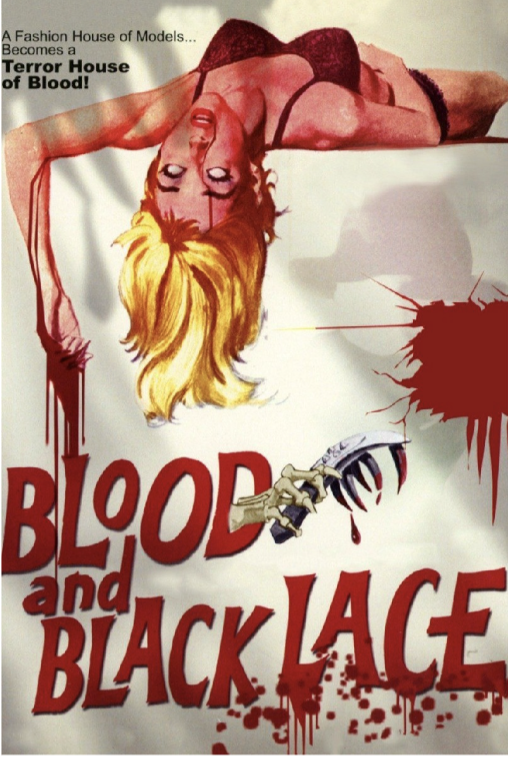
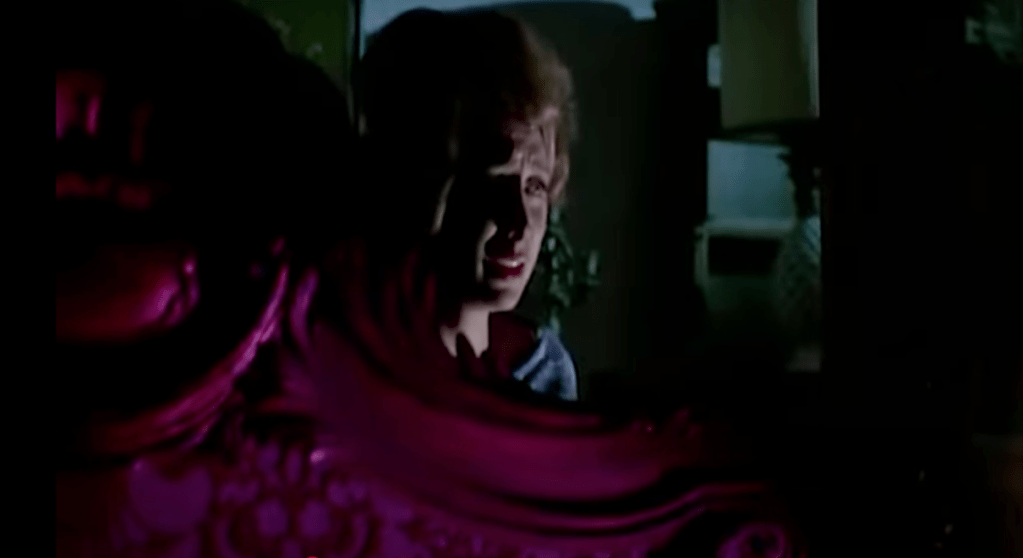
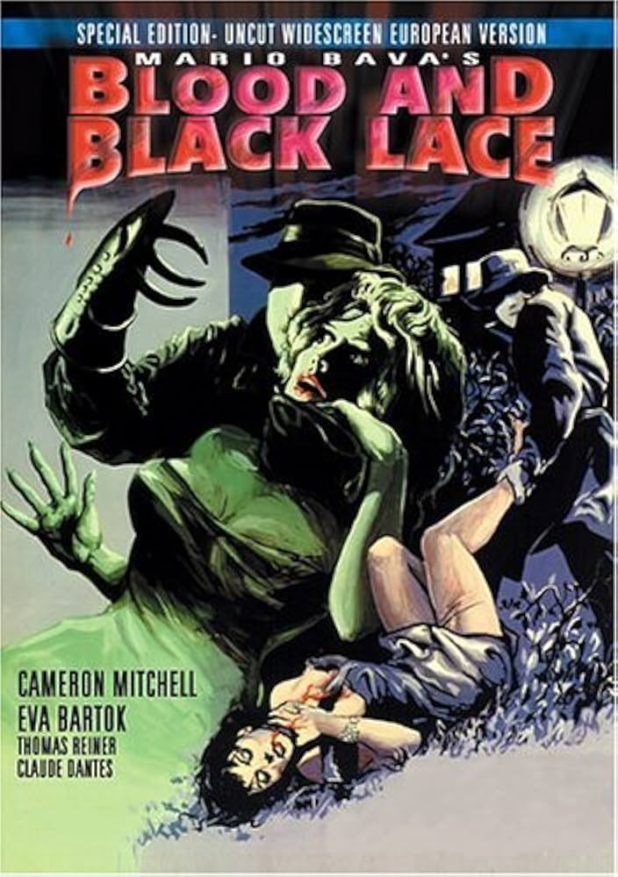
There’s no way to calculate the influence of Blood and Black Lace. It takes the giallo from where Bava started with The Girl Who Knew Too Much and adds what was missing: high fashion, shocking gore and plenty of sex. The results are dizzying; it’s as if Bava’s move from black and white to color has pushed his camera lens to the brink of insanity.
Isabella is an untouchably gorgeous model, pure perfection on human legs. But that doesn’t save her as she walks through the grounds of the fashion house and is brutally murdered by a killer in a white mask.
Police Inspector Sylvester takes the case and interviews Max Morlan (Cameron Mitchell!), who co-manages the salon with his recently widowed lover, Countess Christina Como. Soon, our police hero discovers that the fashion house is a den of sin, what with all the corruption, sex, blackmail, drugs and abortions going on under its roof. Isabella was murdered because she had kept a diary of all the infractions against God that happened inside these four walls.
Nicole finds the diary and tells the police she will deliver it, but it’s stolen by Peggy. As she arrives at the antique store her boyfriend Frank owns, the killer appears and kills her with a spiked glove to the face. The killing is shocking. Brutal. And definitely the forerunner to the slasher genre.
Even after the cops arrest everyone in the fashion house, the murders keep on piling up. Peggy claims that she burned the diary, so the killer burns her face until she dies. Greta is smothered to death. And Tilde is killed in the bathtub, then her wrists are slit open, spraying red into the water and marking her as a suicide.
So who is it? Come on. You’re going to have to watch it for yourself.
The success of Black Sunday and Black Sabbath had allowed Bava to do anything he wanted. His producers thought this movie would be a Krimi film, like an Edgar Wallace adaption. Instead, Bava gave more importance to the killings than the detective work, emphasizing sex, violence and horror more than any film in this form had quite before.
Blood and Black Lace was a failure in Italy and only a minor success in West Germany, the home of Edgar Wallace. And in America, AIP passed on the film due to its combination of sex and brutality. Instead, it was released by the Woolner Brothers with a new animated opening.
Today, Blood and Black Lace is seen as a forerunner of body-count murder movies and the excesses of later Giallo films. It’s a classic film, filled with Bava’s camera wizardry and love of color. There is everything perfect about movies.
Thanks to the British Film Institute, there’s a list of films that played Scala. To celebrate the release of Severin’s new documentary, I’ll share a few of these movies every day. You can see the whole list on Letterboxd.
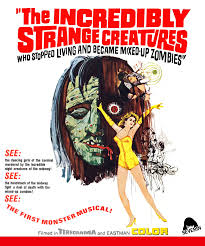
Made for $38,000, this film beat The Horror of Party Beach as the first monster musical by just a few months. It was the brainchild of the man known as Sven Christian, Sven Hellstrom, Harry Nixon, Wolfgang Schmidt, Cindy Lou Steckler, R.D. Steckler, Michael J. Rogers, Michel J. Rogers, Ray Steckler, Cindy Lou Sutters and, of course, Ray Dennis Steckler.
Before he became a B movie director, supposedly Steckler worked at Universal, where he bumped into an A-frame and dropped it onto Alfred Hitchcock. This ignominious exit would soon lead him to a world where he’d make baffling films like The Thrill Killers, Rat Pfink a Boo Boo and The Hollywood Strangler Meets the Skid Row Slasher. His adult film titles read like the kind of movies that exist only in my dreams, such as Sexual Satanic Awareness and Sexorcist Devil.
Jerry (Cash Flagg, another name for Steckler, auteuring it up by starring in his own movie), Angela and Harold decide to head out to the carnival, where they watch Marge (Carolyn Brandt, Steckler’s wife; their station wagon is also in the film) dance.
Marge is spooked by a black cat, which leads her to consult with Estrella, a fortune-teller who is throwing acid in peoples’ faces and making them zombies under her control. She predicts death for Marge, as well as a death near water for someone Angela knows.
Jerry falls in with the carnies because Estrella’s sister Carmelita stares him down and does her bad girl dancing to hypnotize him into acts of murder. You know how it goes. Of course, the zombies soon break loose, nearly everyone dies and Jerry is shot on the beach in front of his one true love, making that earlier prediction come true.
Also — dance numbers!
Steckler was a real showman, taking this movie on the road and constantly retitling it with outlandish names like The Incredibly Mixed-Up Zombie, Diabolical Dr. Voodoo and The Teenage Psycho Meets Bloody Mary. The posters proclaimed that the movie was made in Hallucinogenic Hypnovision, which really meant that at some point, maniacs in rubber masks would run around the theater. If you guessed that Steckler was one of those maniacs, you’d be right.
It was shot at The Film Center Studios, a former Masonic lodge owned by Rock Hudson — yes, I realize that this sounds like the start of a conspiracy story.
Perhaps most strangely — incredible strangely? — the cinematography and camera operating crew included three men who would go on to become major figures in the field.
Joseph V. Mascelli, who also worked on The Thrill Killers and Wild Guitar, wrote The Five Cs of Cinematography. Laszlo Kovacs would work on movies as disparate as A Smell of Honey, a Swallow of Brine and Easy Rider; he was considered a guiding light in the American New Wave. And then there’s Vilmos Zsigmond, whose work on Close Encounters of the Third Kind would win an Oscar (he also worked on The Deer Hunter and Heaven’s Gate).
In his 1987 book Psychotic Reactions and Carburetor Dung, Lester Bangs wrote an essay called “The Incredibly Strange Creatures Who Stopped Living and Became Mixed-Up Zombies, or, The Day The Airwaves Erupted.” Within, he’d state, “…this flick doesn’t just rebel against, or even disregard, standards of taste and art. In the universe inhabited by The Incredibly Strange Creatures Who Stopped Living and Became Mixed-Up Zombies, such things as standards and responsibility have never been heard of. It is this lunar purity which largely imparts to the film its classic stature. Like Beyond the Valley of the Dolls and a very few others, it will remain as an artifact in years to come to which scholars and searchers for truth can turn and say, “This was trash!”
Even more astounding, Columbia Pictures threatened to sue over this movie’s original title, The Incredibly Strange Creature: Or Why I Stopped Living and Became a Mixed-up Zombie. Supposedly the title was too close to the Kubrick film Dr. Strangelove or: How I Learned to Stop Worrying and Love the Bomb. Steckler called the studio and demanded to speak to Kubrick, a crazy move, and of course, Kubrick answered and agreed to the new title and the lawsuit was dropped. This whole story feels so insane that it has to be true.
The Severin blu ray release of this film has three hours of bonus features, including an introduction by Joe Bob Briggs, two commentaries (one by Ray Dennis Steckler and the other by Joe Bob), an interbiew with Carolyn Brandt, deleted scenes, a VHS trailer and a re-release trailer and a radio ad for Teenage Psycho Meets Bloody Mary. You can get this from Severin.

 B&S About Movies
You must be logged in to post a comment.