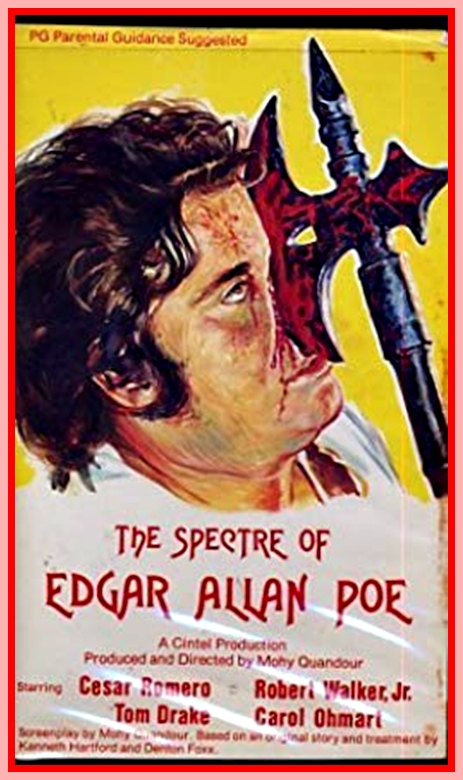
EDITOR’S NOTE: The Spectre of Edgar Allan Poe was first on Chiller Theater on Saturday, October 22, 1977 at 11:30 p.m. It also aired on July 3, 1982.
Edgar Allan Poe’s (Robert Walker Jr., Evil Town, Hex) love Lenore (Mary Grover) was nearly buried alive after a coma made it appear as if she were dead and now, she’s insane. Poe’s friend Dr. Forrest (Tom Drake) advises him that Dr. Grimaldi (Cesar Romero) will take proper care of her, but then Poe starts to worry. That place should be strange but it seems truly odd.
There’s someone who thinks that they are a werewold, an axe murderer and a watery tomb filled with snakes that you just know that Poe will get stuck in. Plus, you also get Dennis Fimple and Carol Ohmart.
It all looks as cheap as possible and that’s why I love it, as Mohy Quandour was the director, writer and producer and tried to do all he could with the limited cash he had on hand. He also made the movie Yanco, which is one of the 95 films on the Church of Satan film list.
I hope that lots of schoolkids who watched this movie tried to use it for their book reports.
October 16: A Horror Film That Involves a Killer House Pet
John Lafia also made The Blue Iguana and co-wrote Child’s Play and directed the sequel. He also made The Rats, the American made-for-TV movie adaptation of the books of James Herbert.
It starts with the death of Judy Sanders (Robin Frates), an employee of the EMAX genetic research facility. She has been talking to television personality and animal activist Lori Tanner (Ally Sheedy) about the abuse she’s seen at her lab. Before Lori can get to their meeting, an animal under the control of the company’s owner, Dr. Jarret (Lance Henriksen). Nonetheless, Lori and her camerawoman Annie (Trula M. Marcus) break in and free one of the dogs, Max.
Max becomes Lori’s protector — he goes a bit far, chasing down and killing a mugger — and the nemesis of her boyfriend Perry (Fredric Lehne).
Jarret tells the cops that Max is a genetically altered dog that has the DNA of big cats, snakes, chameleons and birds of prey. He’s also given to berserk freakouts, which means that he needs to be on drugs that he hasn’t received in some time. Max is, however, super rad. He does all sorts of insane things like bite through Perry’s brake lines, kill a mailman, eat a parakeet and make sweet love to a collie, knocking her up with the puppy that Lori will adopt when this is all over.
He also gets sold out because Perry wants her to get rid of him. She finds who she thinks is a kind junkyard guy (William Sanderson) but that weirdo is soon hitting Max with shovels and burning his face with a blowtorch. Max does what you hope he does. He decimates that guy and then comes back home to a new dog taking his place. He responds by pissing acidic urine all over Perry.
Max forgives Lori and comes to rescue her from Jarret, giving up his life in the process. I hate this. I am all for Max and none of the humans in this movie. He’s a good boy all the way to the end, even if he does eat a cat.
16. OZPLOITATION: Maximize your wander with some thunder from down yonder.
Director and writer Ian Barry made this Australian film that has a lot of the cast and crew from Mad Max, including Mel Gibson appearing as a blink and you miss him mechanic* and George Miller serving as associate producer and filming the car chase scenes. They didn’t hide that this movie had ties to that film as the tagline was “Mad Max meets The China Syndrome.”
An earthquake causes a dangerous leak at a nuclear waste plant known as WALDO (Western Atomic Longterm Dumping Organisation). Heinrich Schmidt (Ross Thompson), an engineer near-death after the incident, is trying to warn people that the groundwater will be contaminated. He’s rescued by a married couple on vacation, Larry (Steve Bisley, Jim Goose from Mad Max) and Carmel Stilson (Arna-Maria Winchester).
Toss in an electronic score by Andrew Thomas Wilson and bad guy costumes that look like they came from The Crazies and you have an Australian film perfect for the drive-in.
*Hugh Keays-Byrne, Roger Ward, Tim Burns and David Bracks are also in this.
Each October, the Unsung Horrors podcast does a month of themed movies. This year they will once again be setting up a fundraiser to benefit Best Friends, which is working to save the lives of cats and dogs all across America, giving pets second chances and happy homes.
Today’s theme: The undead
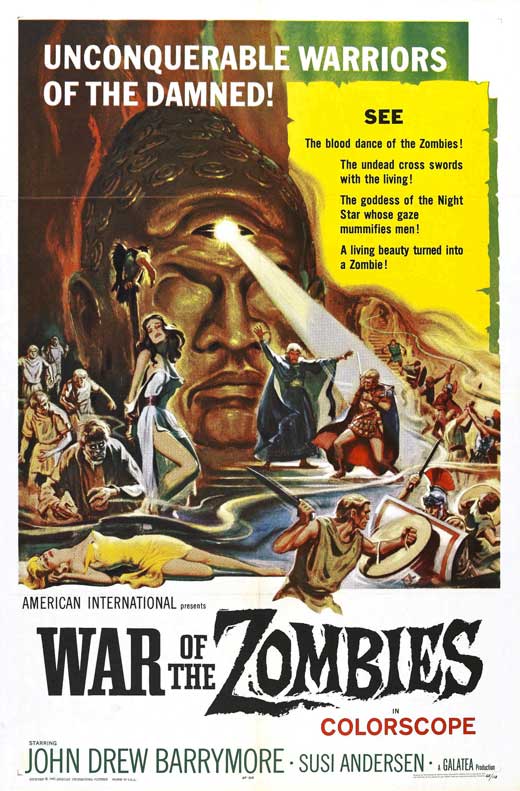
Also known as War of the Zombies, Rome Against Rome was the second to last film from the Galatea production company (some of their other films include Black Sunday, Black Sabbath, Mill of the Stone Women and Ghosts of Rome). It was directed by Giuseppe Vari, who used the name Joseph Warren, and also made The Last Killer, Shoot the Living and Pray for the Dead, Who Killed the Prosecutor and Why?, Sister Emanuelle and Urban Warriors. Its story came from Ferruccio De Martino (who usually was a production manager) and Massimo De Rita (Violent City, The Valachi Papers, Street Law) with a script from Piero Pierotti (who directed Hercules Against Rome and Marco Polo) and Marcello Sartarelli.
In a remote part of the Roman Empire, cult leader Aderbad (John Drew Barrymore, Drew’s father) is working with the governor to create their own land using the corpses of Roman soldiers brought back from the dead. Centurion Gaius (Ettore Manni) is sent to protect the interests of the senate.
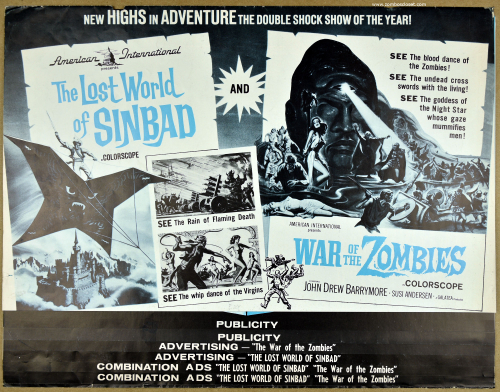
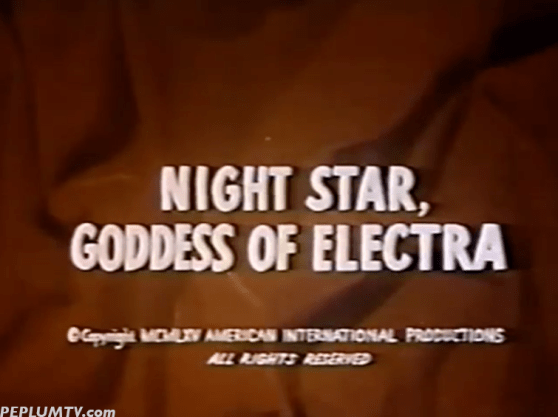
American-International Pictures played this movie as a double feature with Senkichi Taniguchi’s Samurai Pirate, which they named The Lost World of Sinbad. When it was time for Rome Against Rome to air on TV, it was renamed the completely incredible title Night Star: Goddess of Electra.
I wish that there was more to recommend this movie than just as a curiosity. Peplum was giving way to the western, so anything was being tried at this point. According to Mondo Esoterica, two other horror and sandal hybrids are Goliath and the Vampires and, of course, Hercules in the Haunted World.
EDITOR’S NOTE: Kronoswas on Chiller Theater on Sunday, September 29, 1963 at 11:10 p.m. It also aired on April 18 and August 16, 1964; December 30, 1972; September 28, 1974 and November 1, 1975.
A glowing bit of energy is launched from a UAP from deep space. The energy lands on our planet and takes over the brain of a man somewhere in the Southwest and sends him to a research facility where scientists have been tracking the object.
It soon takes over Dr. Hubbell Eliot as astrophysicist Dr. Leslie Gaskell and Dr. Arnold Culver track the UAP. They fire three nuclear missiles at it, because that’s what humans do, and it survives the attack. They leave for Mexico, along with Gaskell’s girlfriend Vera Hunter to see Kronos, an energy accumulator that is going to take everything we have and bring it back to its planet. That’s why when the U.S. military drops an atomic bomb on it, Kronos gets even bigger.
Dr. Eliot breaks out of alien control and kills himself to keep them from learning more from him. At the last minute, Gaskell reverses the polarity and drops nuclear ions on the robot and saves the day.
Director Kurt Neumann also was the man who made She Devil, the movie that this played double features with. Kronos was written by Lawrence L. Goldman and Irving Block. Block was an effects man who also wrote the story for Forbidden Planet.
It’s also the first movie for Richard Harrison. The same man who Godfrey Ho would use in movie after movie, often the same footage, until it seems like he was in twenty or more ninja films.
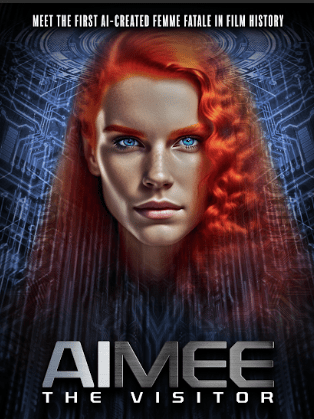
The press information for director Charles Band’s AIMEE: The Visitor proclaims that “This is the first film in history to feature a character not portrayed by an actor or designed using digital special effects, but entirely created using modern A.I. technology.” With the Hollywood strikes occurring partially because of studios considering replacing writers and actors with AI, the film drops at an interesting time.
The core of this cautionary fable is nothing new: computer technology becomes self-aware and attempts to destroy the life of the person(s) using it. In this case, Scott Keyes (Dallas Schaefer) is a supposedly high-end computer programmer who makes a lot of money from corporate espionage, yet he is holed up in the type of questionable apartment for which cinematic hackers are known and stays inside watching porn and eating fast food when not doing his shady work. He rents out space in the building to brother-and-sister hacker duo Hunter (Felix Merback) and Gazelle (Faith West), who help him in his nefarious deeds. And for some reason, Gazelle is crushed out on the misanthropic Scott.
Enter AIMEE, a beautiful (of course) AI creation who can help Scott however he wishes — professionally or personally, which leads to a fantasy three-way sex scene and a jealous rivalry between AIMEE and Gazelle. All manner of deadly hijinks ensue, with FBI agents and a pet dog involved in the mix along with our main three human protagonists.
As a Full Moon Feature, the special effects are on the low budget side of things, and the AIMEE effects should relieve most human actors of any worries about AI taking their places soon. The performances are fine, with the main cast members not treading into scenery-chewing territory.
If you’re in the mood for a The Twilight Zone, The Outer Limits, or Black Mirror style of “beware technology” science fiction tale combined with erotic thriller elements, AIMEE: The Visitor should have what you crave.
A mysterious older woman seeks revenge on the corrupt legal guardian who destroyed her life.
London/Toronto/Tallinn, October 13: THE G, from writer/director Karl R. Hearne and 3Buck Productions, starring Dale Dickey (Hell or High Water, Winter’s Bone, True Blood) has been Officially Selected for the Tallinn Black Nights Film Festival. In competition, it will celebrate its World Premiere on November 11th.
In further news, levelFILM has acquired all rights for Canadian distribution with a release date scheduled for 2024.
Ann Hunter (aka “The G”, played by Dale Dickey) and her husband retired to an unnamed American suburb 10 years ago to be near his family. But one day out of the blue they are snatched from their home by a corrupt legal guardian who believes they have hidden wealth. Their home and assets are legally stripped from them and they are put in a prison-like “eldercare facility,” victims of an exploding old age industry. Trapped in a corrupt and terrifying system, THE G begins to show her true mettle as she and her loyal granddaughter fight to get them out… and get revenge on the people who did this.
A “winter-noir” based on real events/inspired by the filmmaker’s own family experience, THE G is an original portrait of a fierce older woman in the kind of role that a woman is rarely cast in. A highly atmospheric blend of suspense, dark humor, and moving human relationships that confronts age-related issues head on, THE G is driven by one astonishing main character, rivetingly portrayed by Dale Dickey, “One of Hollywood’s Great Scene-Stealers” (Vanity Fair, Fall 2022).
THE G also stars Romane Denis (True North, Slut in a Good Way), Roc Lafortune (Beastly, I’m Not There, Pluto Nash), Bruce Ramsay (Alive, Collateral Damage) and Jonathan Koensgen (FUBAR, Reacher).
The film is line-produced by José Lacelle (Enter The Void, Racer), edited by Arthur Tarnowski (Bestsellers, The Sacrifice Game) with music by Philippe Brault (The Fireflies are Gone, Maria Chapdelaine) and sound design by Pierre-Jules Audet (Arrival).
Writer/director Karl R. Hearne says, “This film is a “winter-noir” based on real-world elder scams, and inspired by my own grandmother’s story and character. It’s about a woman who- regardless of her age or situation- refuses to accept that her life is over. In a world where the elderly are frequently marginalised, neglected or abused, I think of this film as a revenge story against old age itself… old age being a condition that my grandmother once said she “would not tolerate.”
“At levelFILM, we strive to partner with talented creators and share their stories like this one to ensure they find their Canadian (and beyond!) audiences,” said Olivier Gauthier-Mercier, VP of Distribution at levelFILM. “THE G speaks to an unfortunately all-too-common human experience through incredible performances driven with heart.”
THE G will celebrate its World Premiere at Tallinn Black Nights Film Festival on November 11
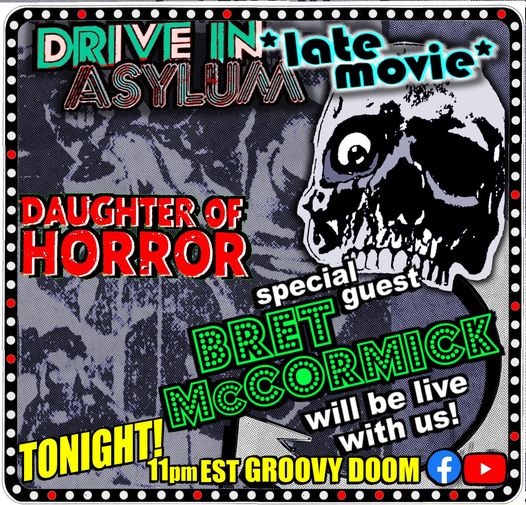
This week, we were joined by Bret McCormick, director of The Abomination and Repligator. We watched 1956 Freudian madness in movie form Daughter of Horror (which you can watch on YouTube and the Internet Archive) and learned so much about how Bret made his films, some surprising movies he worked on and the history of Texas independent horror.
To learn more, check out this interview I did with Bret. You can also get a signed copy of Texas Schlock, Bret’s book on Texas films, right here. To see all of Bret’s books, check out his Amazon page.
Perhaps most importantly, don’t forget to grab his movies from Visual Vengeance.
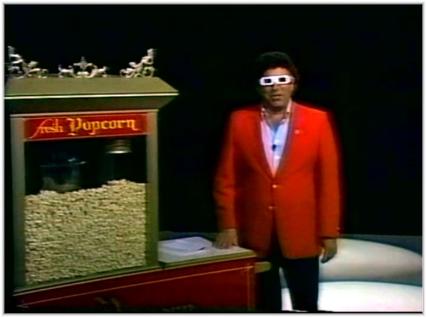
EDITOR’S NOTE: Dynasty was on a special Chiller Theater on Friday, July 16, 1982. It was on the Money Movie set instead of inside the castle.
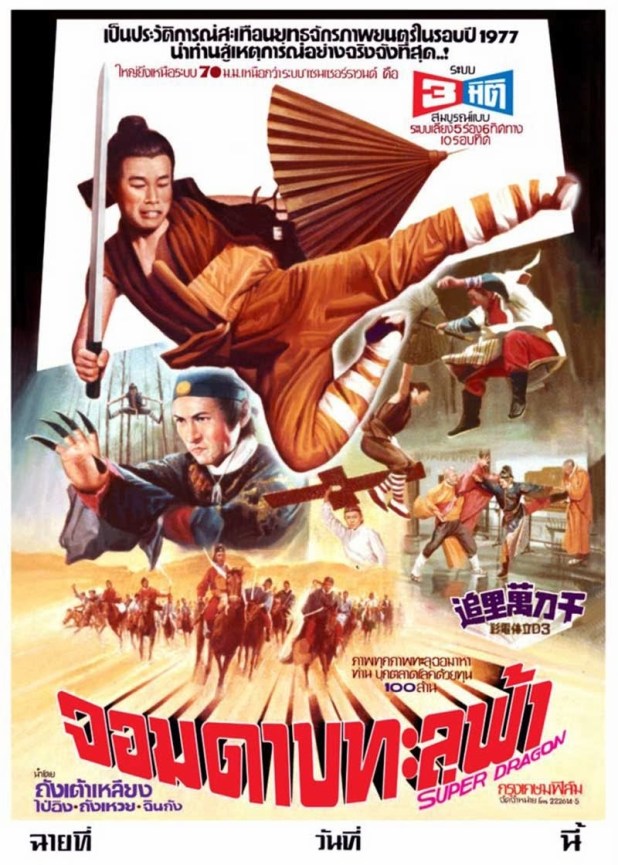
Qian Dao Wan li Zhu AKA Super Dragon AKA Dynasty was the first Hong Kong/Taiwan 3D film, as well as using the Sensurround 8-track stereophonic sound system. That way, the things you’ve come to expect from martial arts films — punches, kicks, swords and flying guillotines — mix up with things you will in no way expect — flying heads, crushed skulls, metal umbrellas as weapons and even a man battling with his amputated knubs — while flying directly at your face.
The prince of the Emperor is accused of treason against the throne by an evil eunuch and his sword-wielding henchman and must fight for his life, which is all the set-up you need for 94 non-stop minutes of fighting. It’s not the best martial arts you’ve ever seen, but it is one of the few that made it into the third dimension.
Director Mei-Chun Chang*also made Young Dragons: Kung Fu Kids and understood that we want to see 3D bust our eyeballs. And serving as the 3D advisor on this? Michael Findlay. Yeah, the very same.
Kino Lorber has released a special edition blu ray of this film, working alongside the 3-D Film Archive to create something that be viewed with either BD3D polarized or traditional red and blue glasses (it comes with one pair). That’s because this blu ray was made with Adaptive Multi-Band Anaglyphic Encoding, which they claim is a vast improvement over any previously used process for red/cyan 3D imaging. I’ll be honest, in my trial of this, it worked perfectly. The disk also features a restored comic book, some 3D slideshows and a 3D music video.
EDITOR’S NOTE: The Horrible Dr. Hichcockwas first on Chiller Theater on Saturday, March 17, 1973 at 1 a.m. It also aired on October 19, 1974; June 5, 1976 and April 8, 1978.
Producer Luigi Carpentieri wanted writer Ernesto Gastaldi to write a movie based on a giallo novel Spectral, which Gastaldi did and wrote his own treatment called Raptus. That script wasn’t filled with necrophilia — my Italian people go hard even back in 1962 — but Gastaldi told Robert Curdi that maybe someone had asked for something more macabre and he went for the throat.
When producer Ermanno Donati gave Ricardo Freda the script, he said, “Let’s see if you have the balls to shoot this stuff, it’s about corpses!” Freda didn’t even look at it and said, “As long as I get paid, I’m shooting even the phone book.”
Actor Robert Flemyng tried to get out of his contract when he learned about the corpse romance and even tried to get actress Harriet Medin to conspire with him to act so badly that the movie wouldn’t be released.
Three crews were shooting all at the same time with Freda shooting most of the more suggestive Italian cut and Marcello Avallone (Spettri, Maya) directing the more sexualized foreign scenes. Those rougher scenes are lost, as far as I’ve been able to research.
Raptus: The Secret of Dr. Hichcock was shown to American-International Pictures but was too rough for general audiences. It was released as The Horrible Dr. Hitchcock by Sigma III Corporation as a double feature with The Awful Dr. Orloff.
Dr. Bernard Hichcock (Robert Flemyng) likes to drug his wife Margaretha (Maria Teresa Vianello) so that she is near death and then makes love to her. When she overdoses, he thinks he’s killed her. He buries her and flies to London where he eventually marries Cynthia (Barbara Steele).
Thirteen years later, they come back to the ancient and decaying mansion where Margaretha begins to haunt Cynthia. She soon learns that her husband is down with some pretty wild sexual games and when she wakes up feeling dead with him romancing her, well, she realizes that she’s not living a dream life. It also is revealed that Hichcock wants to kill her and use her blood to give his wife back her past glamour.
Barbara Steele is perfect in this, a woman trapped in a horrific life that she struggles to escape. She’s my favorite horror queen, her huge eyes staring out into howling rains and endless darkness. Ah, my heart.








 B&S About Movies
You must be logged in to post a comment.