CHILLER THEATER MONTH: The Witch’s Mirror (1960)

EDITOR’S NOTE: The Witch’s Mirror was on Chiller Theater on Saturday. January 13, 1968 at 1:00 a.m.

The Witch’s Mirror is why I love 1960s Mexican horror. Some movies of that era only hint at witchcraft and the occult, and this one goes all in, showing rituals and all manner of Satanic mayhem. Ah, Mexico. Long may your movies live on.

It’s directed by Chano Urueta, who also made the confoundingly wonderful El Baron del Terror and the Blue Demon films.

If you’re going to steal, I always say to steal big. Chanto draws from numerous sources here — Edgar Allen Poe, Hitchcock’s RebeccaEyes Without a Face — while somehow synthesizing them into his own unique narrative.

Deborah (Rosita Arenas, distinct from the Aztec Mummy movies) is the new wife of Dr. Eduardo Ramos (Armando Calvo), but she has no idea that years ago, he poisoned her. Still, she was the first wife, Elena (Dina de Marco).

The thing is, Elena may be dead, but her spirit will not rest. She calls out to her aunt, a witch named Sara (Isabela Corona), whose spells and incantations place Deborah directly in the path of revenge, starting with her face being burned in a fire.

Luckily — or maybe not — Dr. Ramos ends up being somewhat of a mad scientist, so he starts stealing dead bodies to take their skin and attempt to give his new bride her beauty back.

Somehow, in all of this, the witch comes off the best of all of them. This movie is nightmarish in ways that movies made outside of Mexico just can’t pull off because I get the idea that the filmmakers have one foot in believing that everything in this movie is possible.

THE IMPORTANT CINEMA CLUB’S SUPER SCARY MOVIE CHALLENGE DAY 12: Hit the Road Running (1983)

October 12: A 3D Horror Film that you watch with red and blue glasses

I had a lot of 3D movies to pick from, but when a poster promises “The funniest, wackiest 3-D movie ever,” I know which one to pick!

One of six 3D movies made by Earl Owensby’s crew — Rottweiler: Dogs of HellHot HeirHyperspace, Chain Gang and Tales of the Third Dimension in 3-D are the others — this has Beau Jim Donner (Owensby) coming home to deal with Sam Grady (Rudy Thompson), who is buying up the small town. Uncle Rusty (Jack Payne) refuses to sell his business, so he’s crippled. Beau Jim starts working for the cops but is really messing up Grady’s schemes; he becomes a hero to the people thanks to DJ Freight Train Fremont (Dee Barton in his only acting role; he did the music for Every Which Way You CanPlay Misty for MeHigh Plains DrifterDeath Screams and most of the Owensby films).

Barton also did the music for this, along with narrator David Allan Coe. So yes, if you think, “This sounds a lot like The Dukes of Hazzard,” you’re totally right. Except this is in 3D. And you pay for it.

Director Worth Keeter was on so many Owensby films, like the two Ginger Alden-starring movies Lady Grey and Living Legend: The King of Rock and Roll, as well as The Order of the Black EagleUnmasking the IdolSnapdragon, and many more movies. Writer Thom McIntyre was right there with him and also directed Tales of the Third Dimension in 3-D and The Rutherford County Line.

I was so happy to find this online. Not many people care about the Owensby back catalogue, and now that the company’s website is down, finding the movies is nearly impossible, except for some of the releases that Severin and Vinegar Syndrome have put out. I think I might be the one person who needs to see Hot Heir, a 3D balloon race movie.

You can watch this on YouTube.

2025 Scarecrow Psychotronic Challenge Day 12: Anemia (1986)

12. MOROSE CODE: Nestle into your favorite dark place to view a Gothic horror piece.

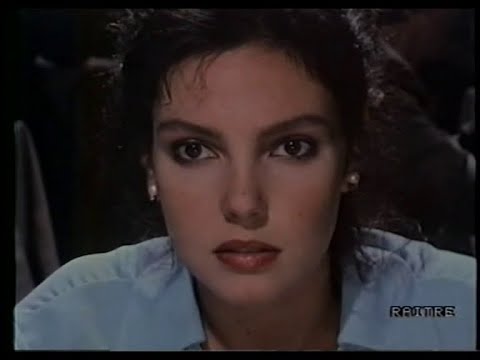
Directed and written by Alberto Abruzzese and Achille Pisanti, this was described by Abruzzese as a “hypersensible journey among the literary and cinematic genres…a game of displacements.” Based on the Abruzzese novel Anemia Storia di un vampiro comunista, it was first shown on Rai Tre television on October 27, 1990.

Umberto (Hanns Zischler) is a high-ranking Communist Party official who learns that he has become a vampire. He leaves behind the real world and goes to the house of his grandfather, which is all a comment on how the Italian Communists became the Democratic Party of the Left.

It’s more cerebral than Italian horror, but hey, Gioia Scola (Obsession: A Taste for Fear) is in it.

I’m trying to watch every Italian Gothic Horror movie ever — here’s the Letterboxd list — and sometimes, you get to watch The Vampire and the Ballerina or Kill, Baby, Kill. And other times, you watch this.

You can watch this on YouTube.

UNSUNG HORRORS HORROR GIVES BACK 2025: Bugged (1997)

Each October, the Unsung Horrors podcast does a month of themed movies. This year, they will once again be setting up a fundraiser to benefit Best Friends, which works to save the lives of cats and dogs across America, giving pets second chances and providing them with happy homes.

Today’s theme: Animal Attack

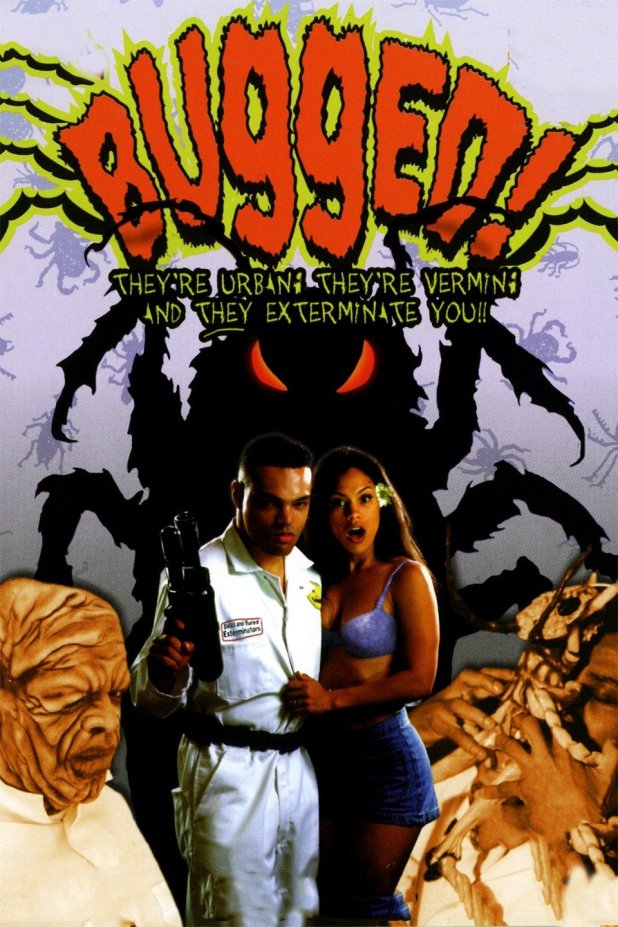
“They’re urban, they’re vermin, and THEY exterminate YOU!”

Ignore the Troma logo at the beginning of Ronald K. Armstrong’s directed, written, produced and starred in insect film and prepare for something great.

Dr. Craig (John Kilgore)’s chemicals have replaced the bug-killing pesticides in the Bugbusters supply room with one that makes the bugs bigger. After all, Dr. Craig did what you never should and pulled a Goldblum. That’s correct — he tested those drugs on himself, turned into a giant bug and then got shot in the face by his lab assistant. Now, bugs are everywhere in the city, and just being an exterminator puts Dave (Armstrong) into danger’s maw — mandible? — as he tries to defest the home and win the heart of Priscilla Basque). Dave’s partner, Steve (Jeff Lee), may screw things up for both his goals before that.

This has an all-black cast, body melting moments, cartoony aspects like how Steve gets flattened at one point, effects that look like they came from the clearance aisle, a rat puppet, evil bugs with human eyes and way more action — and romance! — than this budget would seem to indicate. In fact, every review of this movie — nearly, let’s not get hyperbolic — seemed to make fun of how cheap this looked. Maybe they should look past that and see that this has heart, brains and, well, guts.

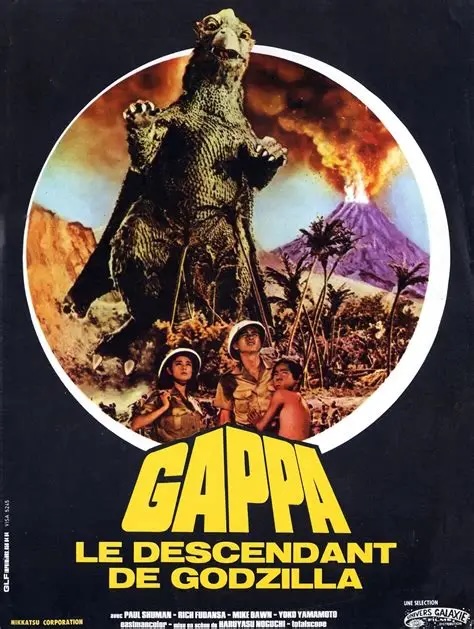
CHILLER THEATER MONTH: Gappa, The Triphibian Monster (1967)

EDITOR’S NOTE: Gappa, The Triphibian Monster was on Chiller Theater on Saturday, February 24, 1968 at 1:00 a.m., Saturday, March 15, 1969 at 11:30 p.m. and Saturday, April 25, 1970 at 1:00 a.m. It played as Monster from a Prehistoric Planet.

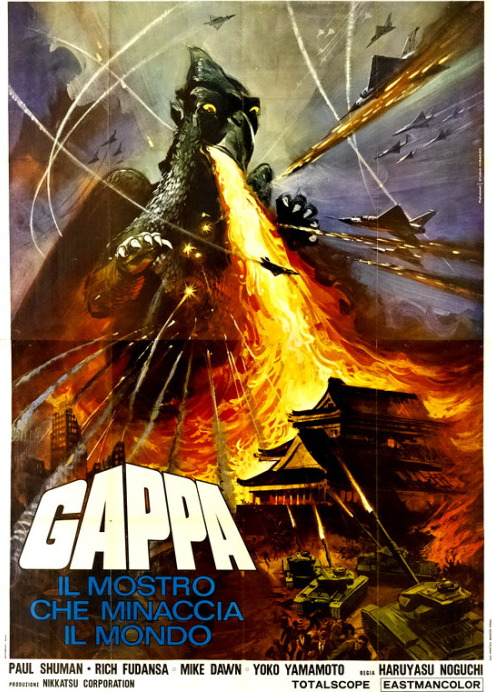
Gappa: The Triphibian Monster, initially released in the U.S. as Monster from a Prehistoric Planet, is essentially Gorgo with monsters drawn from Japanese legend. That’s totally fine with me, because this movie is absolutely gorgeous.

Remarkably, this was the only giant monster movie the Nikkatsu studio produced. After this, it’s all Roman Porno and pinky violence.

An expedition from Tokyo heads to Obelisk Island — you know, just like Skull Island — where the president of Playmate Magazine, Mr. Funazu, wants to make a resort. The natives welcome them warmly until the forbidden zone is breached and the expedition takes a gappa egg with them. They plead that the egg’s parents will do anything to get it, and you know how humans act in Japanese kaiju films. That means that before you know it, we have two giant bird/turtle/lizard monsters going wild all over Japan to get their baby back.

This is a movie that could never be made today, because all of the natives of Obelisk Island are basically Japanese actors in blackface. Plus, the actions of the civilized people can additionally cause the Gappas to ignite the volcano and destroy every single villager except Sa, killing the men painted brown.

Speaking of racism, there was an urban legend that Nikkatsu’s international English translation had the line, “The monsters are attacking Tokyo. Fortunately, they are attacking the Negro section of town.” This is not true.

Akira Watanabe left Toho to work on the special effects for this movie. He’s known for finishing the designs of Baragon and King Ghidorah. There must not have been any bad blood, because he returned to serve as the art director for movies like King Kong EscapesSon of Godzilla, and Prophecies of Nostradamus.

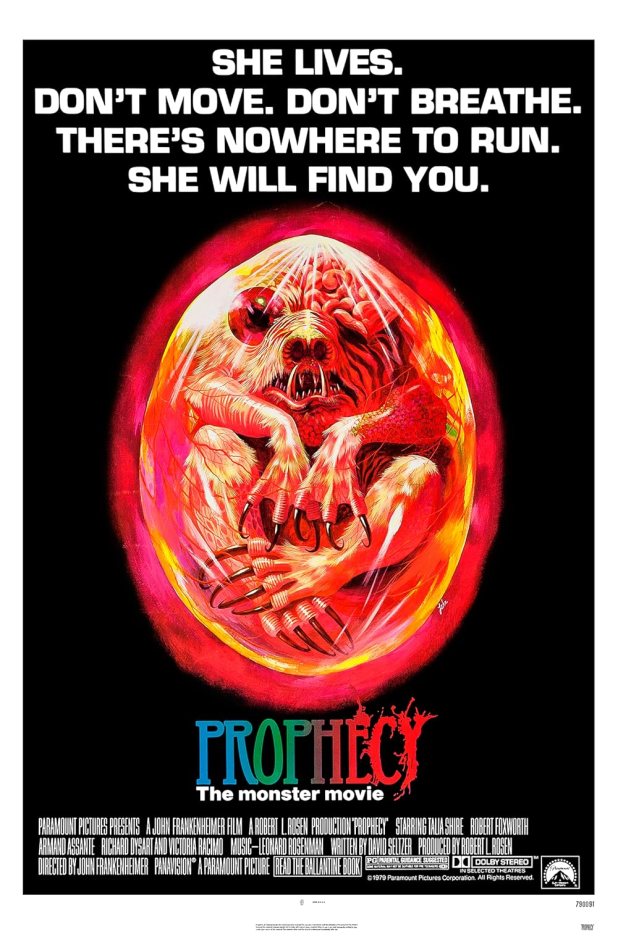
UNSUNG HORRORS HORROR GIVES BACK 2025: Prophecy (1979)

Each October, the Unsung Horrors podcast does a month of themed movies. This year, they will once again be setting up a fundraiser to benefit Best Friends, which works to save the lives of cats and dogs across America, giving pets second chances and providing them with happy homes.

Today’s theme: Animals Attack!

ABOUT THE AUTHOR: Adam Hursey is a pharmacist specializing in health informatics by day, but his true passion is cinema. His current favorite films are Back to the FutureStop Making Sense, and In the Mood for Love. He has written articles for Film East and The Physical Media Advocate, primarily examining older films through the lens of contemporary perspectives. He is usually found on Letterboxd, where he mainly writes about horror and exploitation films. You can follow him on Letterboxd or Instagram at ashursey.

Ecology horror boomed in the 1970s. The reason is clear. Environmentalism was becoming a major political talking point. Companies were disposing of their toxic waste without proper regulations. In 1969, the Cuyahoga River in Ohio caught fire due to the amount of chemicals in the waterway. By 1970, Earth Day was established to bring awareness to the fragility of the Earth and its resources. And the Environmental Protection Agency (EPA) was established as a government agency via an executive order by Richard Nixon, later ratified by Congress. You mean there was a time when Republicans cared about the environment and the future of our planet? 

There are of course many films that base its plot around animals running amok, perhaps seeking revenge on the neglect or outright disdain humans have for the environment. Frogs. Bug. Squirm. One word really sums it up.

You can add John Frankenheimer’s Prophecy to that list. His film takes the next step, though. Not only is the improper waste management of a capitalistic corporation to blame for the mayhem that ensues, the encroachment of indigenous land plays a major part in the mutation of a bear out for righteous revenge. Although, in retrospect, perhaps casting Armand Assante as the leader of the Native American resistance was not ideal. You have to take social change in cinema one bite at a time, I suppose.

Unfortunately, despite the importance of the story, the film itself is a bit bland, perhaps focusing a bit too hard on the relationship between ecologist Robert Verne (Robert Foxworth) and his cellist wife Maggie (Talia Shire). Maggie recently found out she is pregnant, and Robert is not interested in bringing a child into such a broken world. She has not broken the news to Robert, though, when they go to the area of dispute between the evil corporation and the Native Americans. The situation gets dicier when she realizes she may have exposed her unborn child to the environment that mutated the bear. As much as I love melodrama in my horror film, this story left me underwhelmed.

What left me properly whelmed, though, is the sleeping bag child kill! Is it wrong that I literally laughed out loud when it happened? If laughing at kids getting demolished in movies is wrong, I don’t wanna be right.

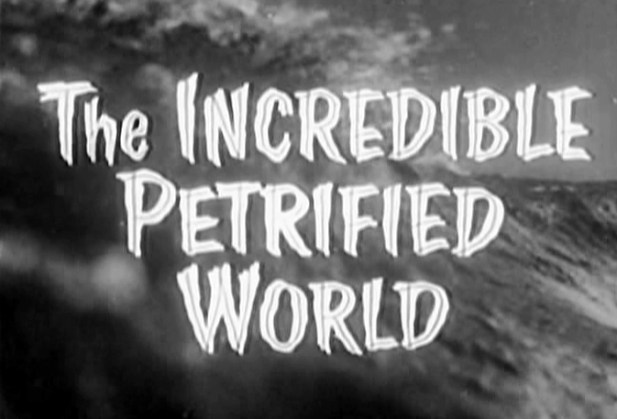
CHILLER THEATER MONTH: The Incredible Petrified World (1959)

EDITOR’S NOTE: The Incredible Petrified World was on Chiller Theater on Saturday, October 22, 1966, at 11:20 p.m. and Saturday, August 8, 1970, at 11:30 p.m.12, 1967 at 1:00 a.m.

Jerry Warren sat on this movie for two years before playing it with Teenage Zombies. Shot in Colossal Cave in Tucson, Arizona, the monster costume looked so bad that Warren didn’t use it. Let’s think about that for a minute. An effect so bad that Jerry Warren wouldn’t use it.

Professor Millard Wyman (John Carradine) has sent Paul Whitmore (Allen Windsor), Craig Randall (Robert Clarke), Lauri Talbott (Sheila Noonan) and Dale Marshall (Phyllis Coates) to the bottom of the ocean, but their vehicle becomes lost. They swim — in scuba suits at crushing depths — into a cave where only Matheny (George Skaff), an old sailor, is still alive.

Professor Wyman’s brother, Jim (Joe Maierhauser), has luckily built another vehicle, because Matheny is looking at the ladies like a man who has been in a cave for more than a decade and suddenly has a gypsy girl from” Beast from the Haunted Cave” and Lois Lane right within staring distance. Before he can say, “You know, I killed a man,” a volcano goes live, he dies under some rocks, and all the white scientists celebrate their good fortune above the surface, and no one gets the bends.

Warren sold this with “A Nightmare of Terror in the Center of the Earth with Forgotten Men, Monsters, Earthquakes and Boiling Volcanoes!” I mean, yes, it has those things, but it’s…maybe not as exciting as the ads make it sound. The petrified world is the movie itself.

You can watch this on Tubi.

THE IMPORTANT CINEMA CLUB’S SUPER SCARY MOVIE CHALLENGE DAY 11: Closed for the Season (2010)

October 11: A Horror Film That Features a Roller Coaster

Kristy (Aimee Brooks, Critters 3) and James (Damian Maffei, Haunt) try to get over their fear of amusement parks through immersion therapy, but end up fighting an evil clown and learning that they must experience all of the urban legends of the park and ride all of the rides before they can leave.

Shot at the abandoned Chippewa Lake Amusement Park in Medina, Ohio before it was demolished, this at least was made somewhere filled with urban legends, like a crocodile that escape in 1800s, a monkey escaping in the 1940s, residual hauntings including big band music playing in the middle of the night and nature growing over the rides, it was quite the set for the movie. Joe Unger, who plays The Carny, claims that his father was a carny and may have actually worked at the park.

I really liked the flashbacks in this and how they reveal the stories of all of the people trapped here; that said, I prefer director and writer Jay Woelfel’s Beyond Dreams Door. This seems to go on way longer than its nearly two-hour length. The acting isn’t bad, and there are some ideas here. I just wish they were a little tighter. Still, it’s rather ambitious.

You can watch this on Tubi.

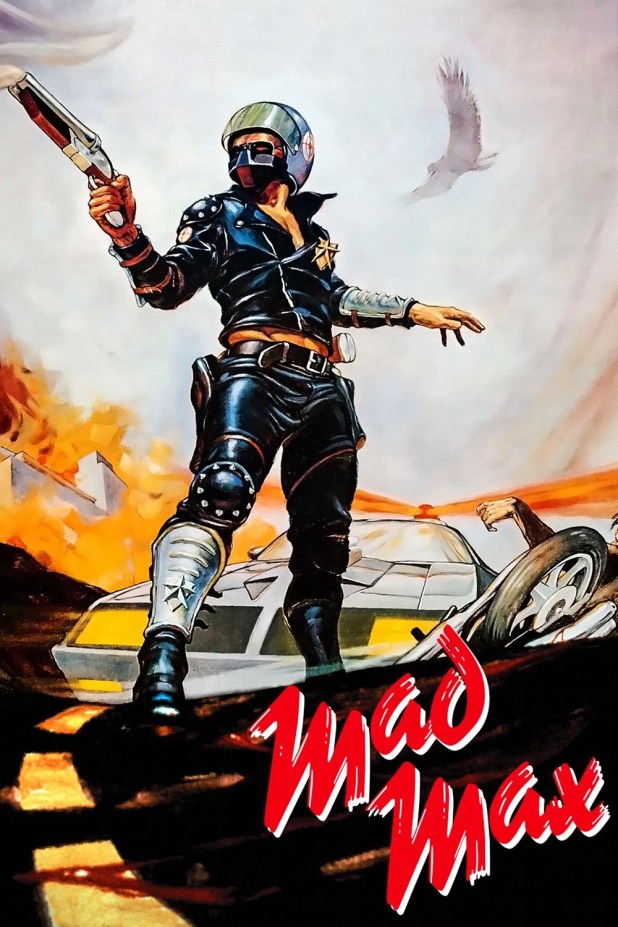
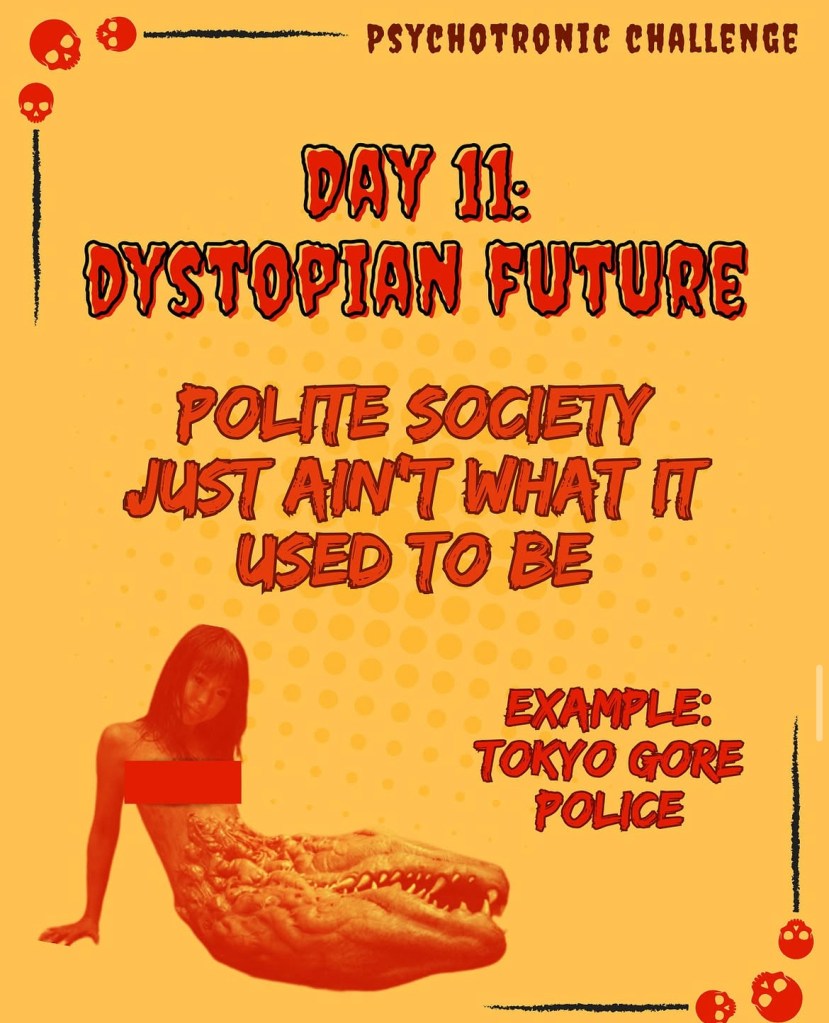
2025 Scarecrow Psychotronic Challenge Day 11: Mad Max (1979)

11. DYSTOPIAN FUTURE: Polite society just ain’t what it used to be.

George Miller was a medical doctor in Sydney before he made this, his first directing work. He’d worked in an ER and saw so many vehicular accidents and even lost three friends to car crashes as a teenager. So why not take the telekinetic violence of autos and people colliding and make a movie?

The Main Force Patrol (MFP) is barely keeping order in Australia as the world slides into the end times. Max Rockatansky (Mel Gibson) is exhausted and sick of being on the force, but they bribe him with a new cruiser, a V8-powered monster of a muscle car. After Max kills Nightrider (Vincent Gil) and his girlfriend, the entire gang — Toecutter (Hugh Keays-Byrne), Johnny (Tim Burns) and Bubba Zanetti (Geoff Parry) — run wild, killing almost everyone in their path. The cops try to do their jobs, but the legal system is too lenient on criminals, and soon, they’re back on the streets all over again.

This isn’t a post-apocalyptic film so much as a revenge film. The gang kills Max’s partner, Goose (Steve Bisley), his wife (Joanne Samuel) and their child. He tries to get away, but we know that he can’t keep the thoughts of killing every single one of them out of his mind.

One of the last movies released by American International Pictures, this was redubbed for the U.S. It didn’t do well. In fact, The Road Warrior, the follow-up, is the movie that many point to as having started the trend of end-of-the-world films. That shouldn’t take away from just how good this is.

James Wan and Leigh Whannell credit the film’s final scene — Max handcuffs Johnny’s ankle to an overturned car and gives him a hacksaw to cut off either the handcuffs or his own foot, then blows him up — as the inspiration for Saw.

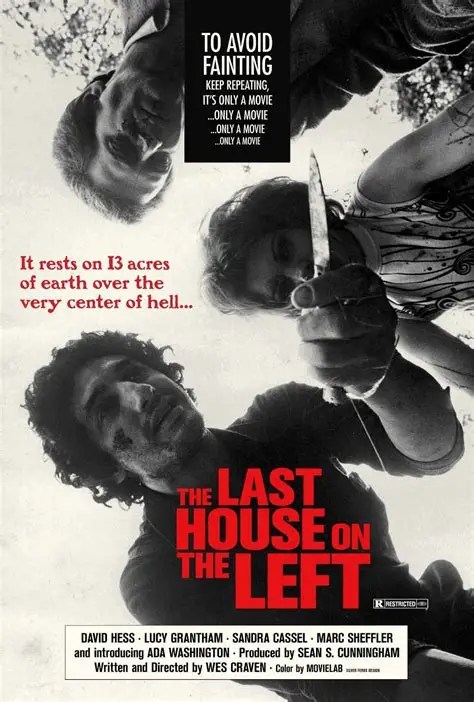
UNSUNG HORRORS HORROR GIVES BACK 2025: The Last House On the Left (1972)

Each October, the Unsung Horrors podcast does a month of themed movies. This year, they will once again be setting up a fundraiser to benefit Best Friends, which works to save the lives of cats and dogs across America, giving pets second chances and happy homes.

Today’s theme: 1970s

Sure, my pick for today’s 1970s theme isn’t groundbreaking. But it’s a blind spot.

Sure, I’ve seen every movie that stole its poster design from this film. I’m wearing a The House That Vanished shirt as I write this. I love that Bay of Blood is also called Last House on the Left – Part IILast House – Part II and New House on the Left.

I’ve seen the movies inspired by it: Last Stop on the Night Train, House On the Edge of the ParkLast House On Dead End Street, The House by the Lake, Hitch-HikeThe Last House On the BeachMadness…I have seen all of them.

I even watched the remake!

There’s no explanation why I have this huge blind spot. So let’s fix that.

Maybe it’s because I am ambivalent, at best, about Wes Craven. But I’ve tried to separate those feelings and experience this as a new movie. And you know what? I get it.

Even the parts people hate, like the wacky music and the goofy cops. It’s ramshackle and kind of all over the place, but it just plain works. When it gets into its meanness —which was unexpected at the time, but now he’s in it today, making you just wait for it— it goes for it in a way that few movies do.

Sean Cunningham made his directorial debut with The Art of Marriage, which came to the attention of Hallmark Releasing. His next film, Together, was an improved take on his first. Wes Craven worked on the film, and he and Cunningham had the opportunity to discuss making movies. They were given a bigger budget to make this, and it was intended to be a hardcore roughie of sorts. Before filming, it was decided to abandon that idea and just make a movie that could play in regular theaters.

We think of elevated horror as a new thing, but Craven wanted to base this on the Swedish ballad “Töres döttrar i Wänge,” which inspired Ingmar Bergman’s The Virgin Spring. This sounds good for the press, you know?

Other than Eleanor Shaw and Sandra Peabody, no one was a professional actor. Well, Fred Lincoln did adult. But maybe that also worked in this film’s favor. Peabody said, “I was upset because I’m an emotional person, and I reacted to what was going on as if it were real. I had a tough time with some of the scenes because I had come out of American Playhouse, where it was all about preparation, and everything had to be real. I ended up doing a horrible job in the film. I was distraught, and I felt like I should have channeled that, but I couldn’t… I was a young actress, and I was still learning to balance any emotions I had from outside of the film into my scene work.” Like a real-life Effects, Peabody was convinced that David Hess was an actual maniac.

As for Hess, he was a musician who also wrote most of the music for this movie with Stephen Chapin. Yes, the man who is Krug — named for a bully of Craven’s, just like Freddy Krueger — wrote music, including “All Shook Up” for Elvis, “Your Hand, Your Heart, Your Love” for Andy Williams and “Speedy Gonzales” for Pat Boone. And then you see him in this, and he’s an absolute lunatic.

Mari Collingwood (Sandra Peabody, who went from movies like this and Massage Parlor Murders! to producing children’s television) and Phyllis Stone (Lucy Grantham) go to a concert and try to score; Junior (Marc Sheffler) brings them back to meet his father Krug (Hess), Sadie (Jeramie Rain, who claimed that she was once picked up by Manson and Tex Watson) and Fred “Weasel” Podowski (Lincoln). While Mari’s parents set up a surprise party, Krug and his family annihilate them, first forcing Phyliss to urinate all over herself (supposedly objectivel) and make love to one another before stabbing them, ending with Krug carving his name into Mari’s chest, raping her and shooting her as she staggers into a lake.

They make the biggest mistake ever by heading to Mari’s parents’ house, where the parents soon realize who they are. The suburban married couple can be just as vicious as Krug, as mom (Eleanor Shaw) bites off Weasel’s cock, Krug gets chainsawed, Junior kills himself, and Sadie is killed in the pool, just as the police arrive.

Newspaper ads screamed, “You will hate the people who perpetrate these outrages—and you should! But if a movie—and it is only a movie—can arouse you to such extreme emotion, then the film director has succeeded … The movie makes a plea for an end to all the senseless violence and inhuman cruelty that has become so much a part of the times in which we live.” It became a video nasty ten years after it was made; there were cuts made by the filmmakers that would have made things much worse, such as more of the forced lesbian sex, Sadie raping Mari, and Mari living long enough for her parents to find her.

Siskell said “My objection to The Last House on the Left is not an objection to the graphic representations of violence per se, but to the fact that the movie celebrates violent acts, particularly adult male abuse of young women … I felt a professional obligation to stick around to see if there was any socially redeeming value in the remainder of the movie and found none.” Ebert, on the other hand, said that it was “about four times as good as you’d expect.”

Watching it for the first time, I was struck by how brutal this film is from the first few moments, as even a kind mailman comments on Mari’s sexuality when we expect that he’s just a nice old man. Everything from then on is a trap; we know that Mari and Phyliss are trapped in a death march, endlessly repeating their demise as this is watched repeatedly. Other than Junior, Krug and his family see them as just something to do, something to throw away, something to destroy. There’s no pressure release like most slashers — well, the cops — but instead, a reminder that to everyone but the parents, these two girls are just as meaningless as they are to the killers.