I love the description for Nan yang tang ren jie on IMDB: “Fantastic fighting sequences mark this kung fu action film.”
No shit.
That said, despite its title, this has nothing to do with Bruce Lee at all.
Bruce Li is in it, sure, but he’s the sidekick!
Oh man, I love that this was released under a misleading name that caused me to watch it nearly half a century later.
Cheng (Michael Chan Wai Man) is kicked out of a martial arts school and sent back home to Malaysia where he claims he will change his ways. By change his ways, he means to become a crime lord and cuck every man he meets. The fighting teachers send their best fighers — including Bruce Li — to teach him how to behave and somehow, that involves fighting men dressed as apes and Native Americans. I have no idea what it means but who cares? Sometimes nothing has to make sense any more.
I do know that this has a karate man hit a gorilla so hard that its eyeball pops right out. That’s enough, in my world, to give this all the Oscars and cancel future awards shows.
All of them.
Cheng has taken a liking to Wai Sin and when he isn’t running a casino and yes, also sleeping with all of his men’s wives, he’s kidnapped her. That’s another reason for the Shaolin Temple fighters to visit, with one being her cousin and I guess cousins doesn’t mean anything to martial arts masters, unless incest is the 37th chamber of the Wu Tang.
I love — again — that this is a Bruce Lee ripoff with Bruce Lee but the credits don’t even hide the true fact that his name is really Ho Chung-Dao. This also has the title Bruce Li the Invincible Chinatown Connection but come on, Bruce Lee the Invincible is shorter, sweeter and a better lie.
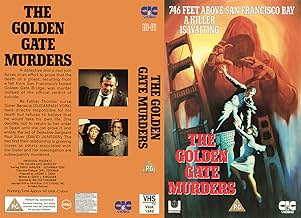
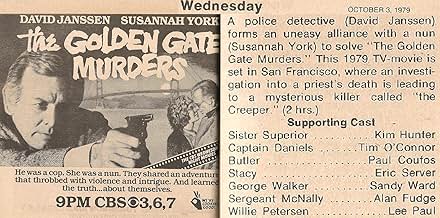
Detective Sergeant Paul Silver (David Janssen) and Sister Benecia (Susannah York) are on the case when Father John Thomas (Regis Cordic) jumps off the Golden Gate Bridge. That’s not unique, as at least thirty people a year do that. The difference? He was a priest and she claims that as part of his Catholic faith, he’d never commit suicide.
Filmed as Specter on the Bridge, which was also the name it played at in other countries as a theatrical release, this feels like it could have been the pilot for a series. Directed by Walter Grauman (The Old Man Who Cried Wolf) and written by TV veteran David J. Kinghorn, this has Janssen being his crusty self, but also teaching the young nun how to make a sandwich with bagels and taking her grocery shopping, which surprise is mostly him buying booze. He also has a cat named Dirty Harry, which is cute, and oh yeah, they nearly forget that they have to catch the killer, who is given the krimi name The Creeper.
This is familiar and comfy TV watching. In fact, Tim O’Connor and Richard Bull play a homicide bureau captain named Capt. Dan Bradley and deputy coroner who are very similar to their roles as Lt. Roy Devitt and Harry the coroner on The Streets of San Francisco. Plus, Zira herself, Kim Hunter, is the Mother Superior. This is the kind of movie that would randomly come on in the middle of a snow day or a late night and I’d just zone out as a kid and love every twist and turn.
ABOUT THE AUTHOR: Jennifer Upton is an American (non-werewolf) writer/editor in London. She currently works as a freelance ghostwriter of personal memoirs and writes for several blogs on topics as diverse as film history, punk rock, women’s issues, and international politics. For links to her work, please visit https://www.jennuptonwriter.com or send her a Tweet @Jennxldn
Spoiler warning!
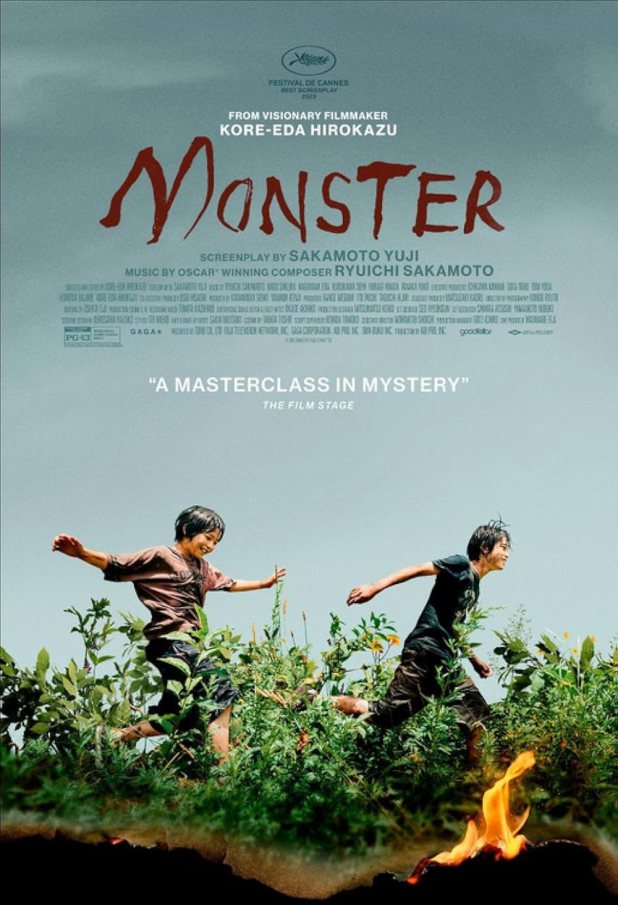
Acclaimed Japanese filmmaker Hirokazu Kore-eda is universally known for making absorbing films dealing with children who have either lost one or both their parents or have a parent who excels at selfishness, neglect and abuse.
His 2023 film Monster is no exception.
The film is a modern variation of Akira Kurosawa’s seminal Rashomon in that it chronicles a series of events from different perspectives. It cuts together almost like an anthology, using summertime Kagoshima and its surrounding as a romantic backdrop. The first telling of the events, which begins with a fire in a tower block, comes from the point of view of Saori (Sakura Ando), a supportive, if overprotective single mother raising her 5th grader son Minato (Soya Kurokawa) alone following the death of her husband. Minato is a child who seems to have a lot of secrets, frequently riding his bike off into the mountains and returning home sullen with only one shoe.
Once his overprotective mother begins to suspect her son is being bullied by his teacher, Hori Sensei (Eita Nagayama), all bets are off. Saori confronts the school with one goal in mind – to get them to admit Hori’s wrong-doings. Of course, the administrators will do everything in their power to protect the school’s reputation.
The film then switches to Hori’s POV where we find out, shockingly, that Hori never abused Minato. From his point of view, he is the victim. It’s Minato who is the villain, falsely accusing him. Hori loses his job and his girlfriend, all the while trying to protect a smaller boy in the class from Minato’s bullying.
We then switch to Minato’s POV, where it turns out Hori was wrong about him, too.
Minato and his perceived victim, Yori (Hinata Hiiragi) are secretly best friends, spending all their time together in the nearby mountains, creating their own world in an abandoned rail car.
Neither of these boys “fits in” with the other kids at school. Yori is the brunt of the entire class’s pranks, and they constantly tease him for being quiet and different.
While getting to know each other, the two boys find they have a lot in common. They’re both at the age where they are becoming aware that they are gay. Minato’s father is dead and Yori’s mother has abandoned him, leaving him alone with his alcoholic, homophobic physically abusive father. The father is the one true “monster” in the piece. An angry drunk who tells anyone who will listen that his son has the brain of a pig and that the boy must be “cured” of his “disease” of not being “a man.”
Yori lashes out secretly, setting the fire from the beginning of the film where his father frequents the hostess bar in the block.
The best parts of the film are Hori’s story and the growing relationship between the two boys, delicately portrayed by the film’s excellent child actors. It perfectly captures what it was like to be 11 years old, not yet fully sexually aware, but with a growing awareness of pre-pubescent feelings.
There’s also a subplot dealing with the principal at the school, who accidentally backed up over her grandson, killing him. We never find out if she did it on purpose, but we do that she has let her husband take the fall for her actions. We also see her deliberately trip a young child in the supermarket. Is she also a monster? Just when you think you’ve got her figured out, Kore-eda gives us a heartwarming scene between her and Minato in the music room at school where she tries to guide him through the difficulties of his emotions through making a lot of silly noise with brass band instruments.
In the end, everyone realizes they were wrong. Hori and Saori come together to find the boys who have gone missing in a typhoon having run away together to protect Yori from his increasingly violent father.
Sadly, the boys both die in a mudslide when their “safe” railway car is crushed in a mudslide. We never get to see the emotional impact of their deaths for any of the adults in the film, rather we are gifted with the final bittersweet image of the boys, running off together into the sunny afterlife, free to be their authentic selves.
Ultimately, the film is about perspective, assumptions, and misunderstandings. As a ghostwriter of autobiographies, I deal with this concept every single day. Monster perfectly illustrates the idea that everyone is a hero in their own story, and the villain in someone else’s.
Children? They don’t worry about it. They just get through their school day, have fun and explore their worlds, inside and out. Adults should give them a support system that allows them the freedom to grow up to be their authentic selves. but as Kore-eda has shown us time and again in films like Nobody Knows (2004), adults are very often huge jerks, even when they don’t mean to be, and the only remedy is for kids to build their own chosen families.
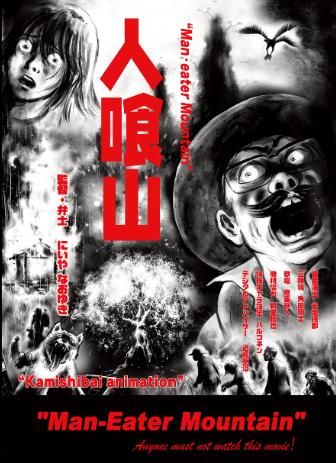
This is a kamishibai film, which is similar to the paper theater in Japanese street theater. The kamishibaiya or narrator uses a set of illustrated cards to tell the story. This form of theater is where Ōgon Bat started.
In this short film, instead of a stage that was used to shift the cards, camera moves do pans across the artwork and there is sound design.
Written, produced, painted and narrated by Naoyuki Niiya, this is an examination of the murders of women near Hitokui-Yama, which is the Man-Eater Mountain. A police officer investigating these crimes, Haido, meets and falls in love with a young girl outside the village named Haruko. Yet with a mountain named in this way, you know that things will not be good. “Made to swallow slugs and worms, a yam shoved in my ass,” go just some of the lyrics to the song that is sung in this — an old traditional song from the village! — and once you hear a woman sing that, I mean, you have to realize that you’re probably going to be murdered. I don’t know, I’m not a character in a Japanese folk horror and perhaps I can see things with a bit more perspective.
Spoilers from here on in, but if you walk into a cave that’s shaped like a woman’s anatomy and hear demons laughing the entire way up a mountain, do not be startled when you walk right into a demonic orgy and you get turned out on top of a mountain of skulls by a giant bear while zombies eat feces all around you and get drunk on fermented blood.
Man-Eater Mountain is part of the new Severin box set, All the Haunts Be Ours Volume 2.
Directed by Damien Ounouri, who wrote the story with Adila Bendimerad (who stars as Nfissa), this is a dark tale of what can happen at the beach. This movie is from Algeria and one of the first I’ve seen from there.
Nfissa is a young mother who is violently sexually harassed before she is drowned by several young men. After all, all she did was swim among them. At the same time, her family is wondering where she is, as no one else seems to care that she is gone.
Many people have died on this beach, enough that the dead who come back are well-known by the locals, and now Nfissa can breath under the water, which means that she will certainly get her revenge on the men who so easily threw her away.
The cops are about as solid as the ones in a giallo, so when one tells Nfissa’s husband, “I’ve never seen a woman become a jellyfish without reason,” you may wonder what he means. A jellyfish is what they call these zombies. Yet to me, the true horror of this is that she must be lured by her husband back to these uncaring police and destroyed all over again, because that’s what happens in this world.
You can watch this and pretend that it’s just a movie or that it’s set in another country but the sad truth is that things like this — look, I know women don’t transform into zombies every day, allow me my soapbox — happen every single day and we’ve become so desensitized to violence against everyone because we have the news looking for fresh meat for their 24/7 endless charnel house and we turn to murder TV for pleasure now, staring as people ask for a break and cry and the cameras just keep rolling.
I don’t know the answer. Maybe we deserve the zombies.
Kindil is part of the new Severin box set, All the Haunts Be Ours Volume 2.
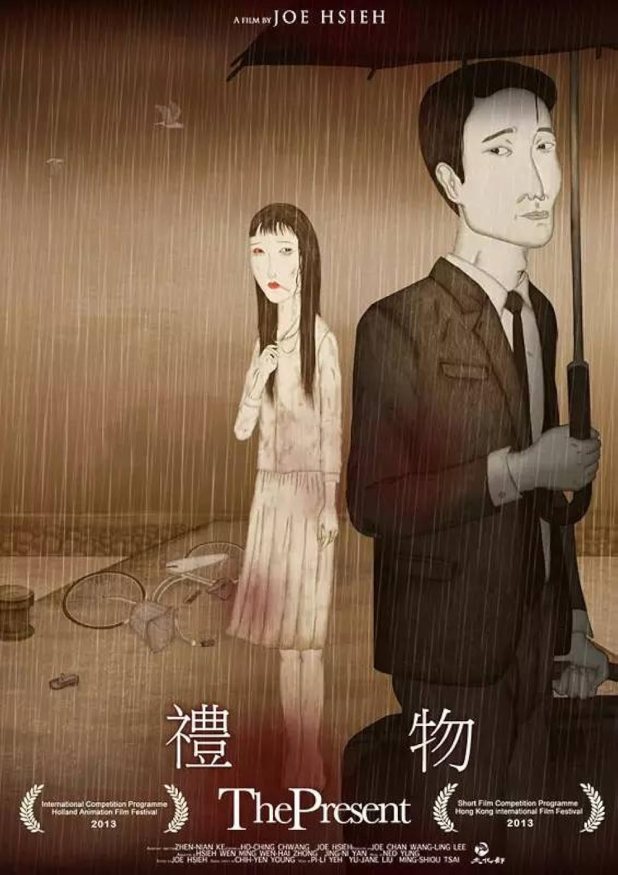
Directed by Wen-Ming “Joe” Hsieh, the look of this film feels like a strange sketchbook come to life. A businessman is stuck in a small town after the last ferry has left, so he walks to a hotel. There are no vacancies, but the manager feels badly and allows him to sleep in a storage closet that has a bed. He’s warned not to disturb the person in the next room.
That person is the manager’s daughter, who overnight falls in love with the man, who simply wants to make love and go back to his wife. When I was younger, I used to read Penthouse Forum and wonder how these things happened to the writers of the letters, which I know today are untrue. That’s because they’re all written without the actual reality of emotions. People can fall in love instantly and often, those people will seek supernatural revenge on you, so the moments are carnal bliss that you quickly pumped away will end up with you dead on the bottom of a river. Or at least coming close, but then as you may know — I hope only from folk horror films — that someone isn’t going to give up on getting their revenge just because you got away once.
This was amazing.
The Present is part of the new Severin box set, All the Haunts Be Ours Volume 2.
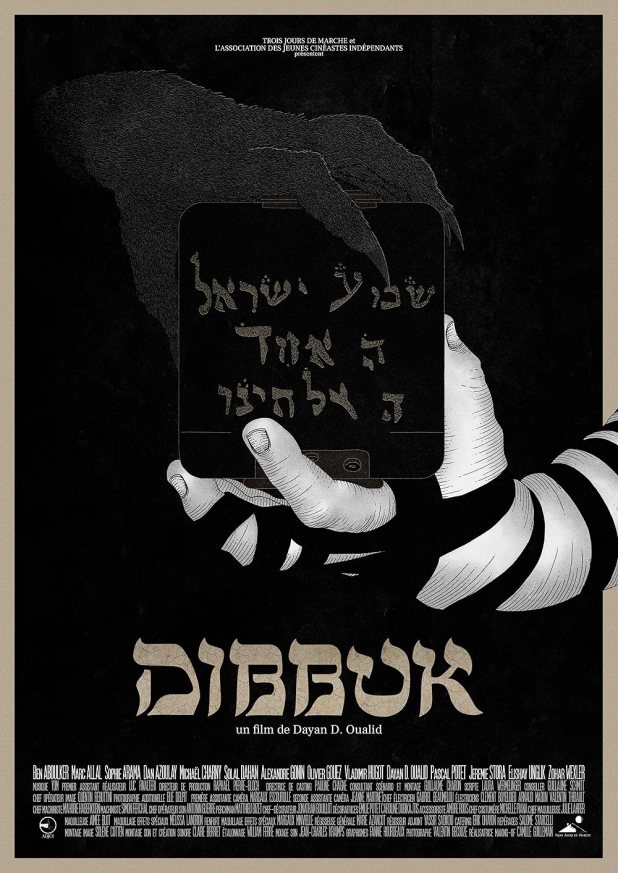
Directed, written by and starring Dayan D. Oualid, this short explores Dan (Oualid), who studies scripture all day, but has been asked by Sarah (Sophie Arama) to help her husband Eli (Michael Charny), who seems not himself. He’s possessed, but what follows isn’t what we’ve come to expect from Western films. He gathers a minyan, a quorum of ten Jewish adults required for certain religious obligations which in this case is casting out a demon.
They get ready like Rambo, but their weapons are verses on their arms, prayer wraps and a small horn. The ritual they go through seems exhausting, much more than any modern exorcism movie with all the crazy ghost traps and night vision. This doesn’t need herky jerky demons and strobing effects to be powerful and terrifying.
The end of the film, as Dan stands surrounded by the boxes that hold these demons and just lets out a scream as he’s made it through again, is so powerful and emotional, as is the ideal music that forms the score. I wish that there was more of this.
Dibbuk is part of the new Severin box set, All the Haunts Be Ours Volume 2.
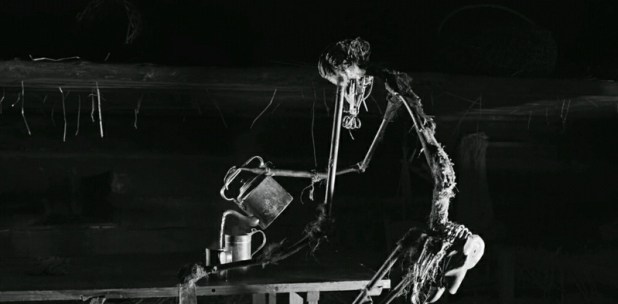
Directed by Dennison Ramalho, who wrote Embodiment of Evil, this is the tale of Filho (Everaldo Pontes), a man caught between his love for his pious mother and his overwhelming lust for Formosa (Débora Muniz), who has given her soul to Satan and wants him to join her as she leaves behind their small town. If only his mother would let him date. Or die. Probably just die, if Formosa has her wish.
She ends up lying with another man while another watches, so Filho busts in with a machete. Instead of killing her, she goes full possessed and demands the heart of his mother. As you can see from Ramalho having worked with Coffin Joe, he knows how to get to the filthy bloody beating balls and heart of Brazilian horror. Nudity, demons, gore, all shot on film, all making me wish that this was longer than it is. Now I have to hunt down more of his films. This was totally up my alley and I want Severin to just release whatever else this man has made.
Love from Mother Only is part of the new Severin box set, All the Haunts Be Ours Volume 2.
These three films appear along with Novemberon the All the Haunts Be Ours Volume 2 set.
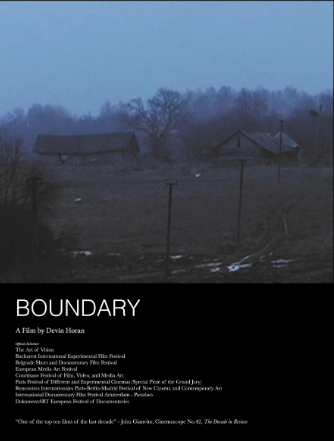
Boundary (2009): Set among an isolated community in a remote landscape near the Russian border, Boundary offers the sound of wind, images of spaces and a general feeling of a chill. According to its mission statement, it “evokes a space of ambiguity, a psychogeography, an absence of personal histories. It is the first installment in a tetralogy of films based on a statement by Sadeq Hedavat: “In life it is possible to become angelic, human, or animal. I have become none of these things.””
Perhaps this would be good to watch before November when viewing this set instead of an extra. Consider programming these films yourself to get in the mood for the coldness and wide open regions that you will soon be watching.
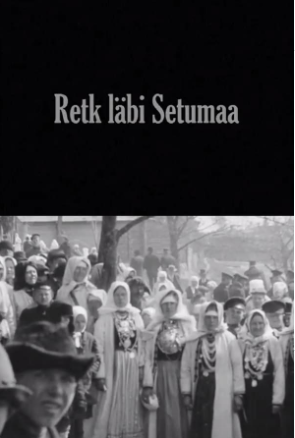
Journey Through Setomaa (1913): Estonia’s first ethnographic film, this was made by Johannes Pääsuke n his expedition to Setomaa, a South-Eastern region in Estonia. You get to see how the town celebrates its customs, as well as farming, but perhaps the most interesting thing is that the subjects are fixated on the new technology that is capturing them.
I’m always wondering what it was like when these cultures were exposed to what today is the smallest bit of technology in the phones that we all carry. Here I am, over a hundred years later, watching these people who are all gone and they look vibrant and alive, like the twinkling of stars that we see after their light has reached us long after they have been extinguished.
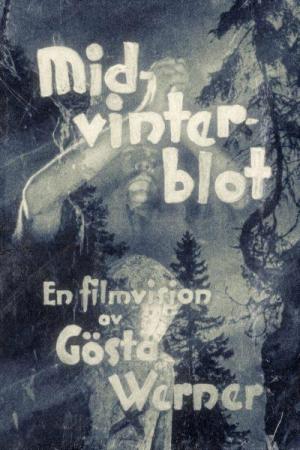
Midvinterblot (1946): Directed and written by Gösta Werner, this presents a Norse blood sacrifice meant to end the darkness and cold of winter and usher in the return of the sun and warmth. Also, the man under the hood is Gunnar Björnstrand, who would go to be one of Ingmar Bergman’s collaborators from 1941 to 1968, then made Fanny and Alexander with him before he died.
This is mainly a series of images — the man abut to die, the ones killing him, those that watch — all illuminated by the flames as they carry out this ritual. It looks absolutely gorgeous in its two tone simplicity and I’m shocked more metal bands haven’t just started using this behind their songs. Sweden is the home of so much wonderful metal, after all — At the Gates, Ghost, Bathory, Candlemass, Craft, Watain…
The sun is going to come out tomorrow. Of course, someone is going to have to get stabbed for that to happen. But there will be sun.
These short films are part of the new Severin box set, All the Haunts Be Ours Volume 2.
These two short films appear with Born of Fire on Severin’s All the Haunts Be Ours Vol. 2 set.
Towers of Silence (1975): Directed and written by Jamil Dehlavi, this is the life of a Pakistani boy’s and how his obsession with death starts after he watches the Zoroastrian rituals of purification and regeneration. It’s a black and white semi-autobiographical movie about the gulf between faiths and how someone attempts to become a man caught between them.
The tower of silence is a circular, raised structure that is used to expose human corpses to the elements and help them decompose without contaminating the soil. As the bodies are left to the elements, vultures consume them, then what is left is gathered into a pit where further weathering and continued breakdown happens.
This allows the nasu, or unclean, dead bodies to be kept from contact with earth, water or fire, all three of which are considered sacred in the Zoroastrian religion.
I loved getting to see this, as Born of Fire was such an incredible piece of film. Seeing where its creator came from made me even more fascinated by it.
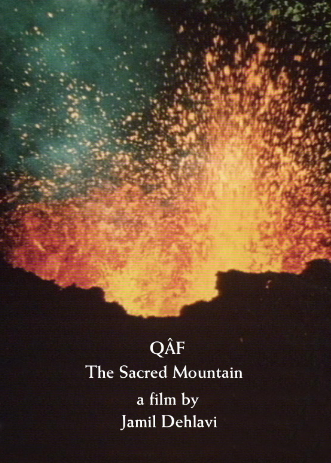
Qâf (1985): Another short by Jamil Dehlavi, this is totally what I’m looking for, a wordless exploration of a volcano exploding set to the music of Popol Vuh and Tangerine Dream. I mean, can it be more perfect? Just images of explosions and lava flowing down, shot while he was making Born of Fire. As strange and multilayered as that movie is, this is so simple. So mesmerizing. This may end up being something that I play when I need to write and just lose myself in music and motion. For something that I wondered why it was on the Severin box set, I have to say that this has become one of my favorite parts of it.
These short films are part of the new Severin box set, All the Haunts Be Ours Volume 2.






 B&S About Movies
You must be logged in to post a comment.