Despite being approached several times with New York Times reporter Gerald Walker’s 1970 novel Cruising, William Friedkin (The Exorcist, Sorcerer and perhaps not as successfully, Jade) wasn’t interested. He changed his mind after an unsolved series of murders in New York’s leather bars.
Articles by Village Voice journalist Arthur Bell and NYPD officer Randy Jurgensen helped inform this film. The latter went into the same deep cover as this film’s protagonist, Steve Burns. Then, Friedkin learned that Paul Bateson, a doctor’s assistant who appeared in The Exorcist, had been implicated in the crimes while serving a sentence for another murder.
Friedkin did some of his research for the film by attending gay bars dressed in only a jockstrap, but by the time the movie began filming, he had been barred from two of the most oversized bars, the Mine Shaft and Eagle’s Nest, due to the controversy surrounding the movie.
Much like The New York Ripper and God Told Me To, this movie feels like one set at the end of the world — New York City near the close of the 20th century. Someone is picking up gay men, murdering them and leaving their body parts in the Hudson.
Officer Steve Burns (Al Pacino)—exactly the type of man the killer has been after—is on the case. Captain Edelson (Paul Sorvino) has assigned him to infiltrate the foreign world of S&M and leather bars. However, as the case progresses, he loses himself and his relationship with Nancy (Karen Allen).
Soon, he learns of just how brutal the NYPD is to gay men — even if they’re just suspects. And he finds himself growing closer to his neighbor Ted (Don Scardino, Squirm).
By the end, nothing is truly clear. While the killer may be Stuart Richards, a schizophrenic who attacks Burns with a knife in Morningside Park, it could also be Ted’s angry boyfriend Gregory (James Remar). After all, Ted’s mutilated body is discovered while Stuart is in custody. Or the real killer is still out there — perhaps he’s even a patrol cop (Joe Spinell). The truth is never told.
Spinell is incredible in this, which is no surprise. He used his real life for inspiration, as there’s a line about his wife, Jean Jennings, leaving him and moving to Florida with his daughter. His wife had just done exactly that before this movie was shot.
The actual version of this movie may never be released. Friedkin claims it took fifty rounds to get the MPAA to award the film an R rating. Over 40 minutes of footage was cut, which consisted of time spent in gay bars. The director claims that these scenes showed “the most graphic homosexuality with Pacino watching and with the intimation that he may have been participating.”
This footage also creates another suspect — Burns himself may have become a killer.
When Friedkin sought to restore the missing footage for the film’s DVD release, he discovered that United Artists no longer had it and may have even destroyed all the cut footage.
In 2013, James Franco and Travis Mathews released Interior. Leather Bar is a metafictionalized account of the two filmmakers’ attempts to recreate the lost 40 minutes of Cruising.
There’s a disclaimer at the start that says, “This film is not intended as an indictment of the homosexual world. It is set in one small segment of that world, which is not meant to be representative of the whole.” Years later, Friedkin would claim that MPAA and United Artists required this, hoping that it would absolve them of the controversy that had been all over this production.
That’s because protests had started at the urging of gay journalist Arthur Bell, the aforementioned Village Voice writer whose series of articles on the Doodler’s killing of gay men inspired this movie. There were numerous disruptions to the filming, as protesters blasted music and loud noises at all filming locations, leading to hours of ADR to fix the ruined dialogue.
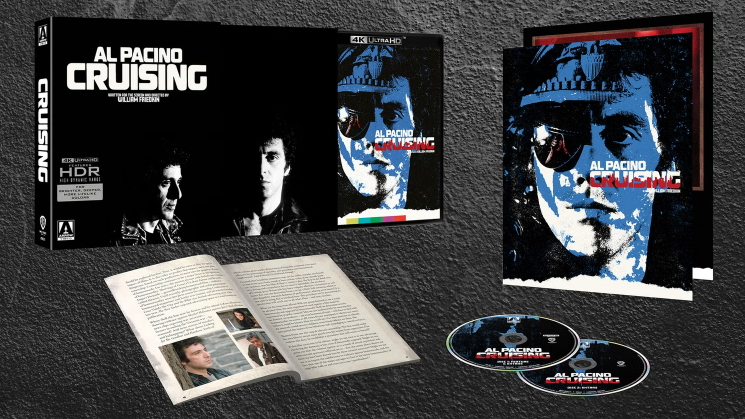
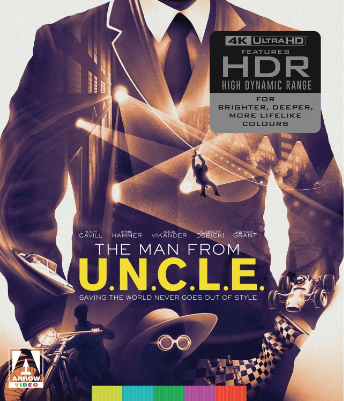
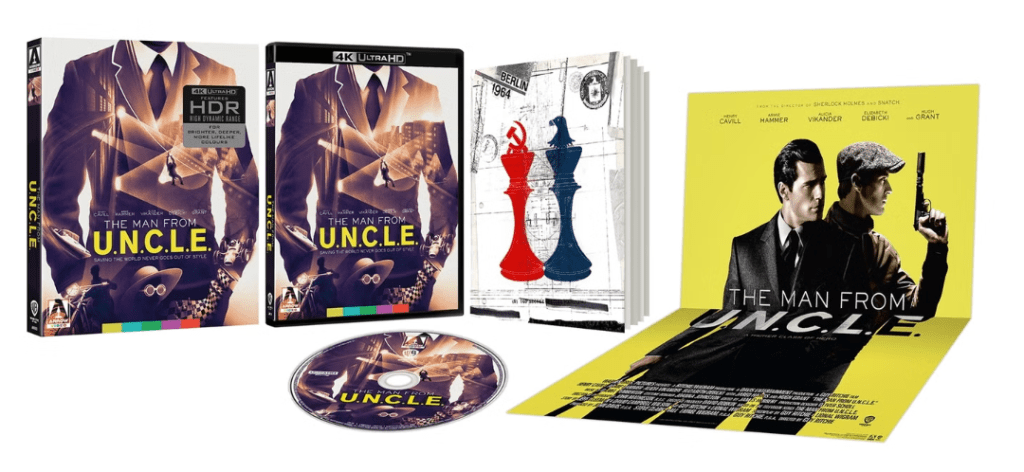
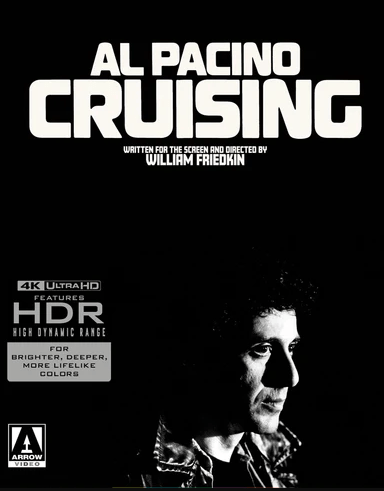
The Arrow Video 4K UHD release of Cruising features a brand-new restoration from a 4K scan of the original camera negative, supervised and approved by writer-director William Friedkin. It also includes a Friedkin-approved newly remastered 5.1 DTS-HD Master Audio mix of the film. The release also includes archival featurettes and two commentaries by Friedkin.
There’s also new commentary featuring the original musicians involved with the soundtrack; Heavy Leather, an alternate musical score by Pentagram Home Video; deleted scenes and alternative footage; on-set audio featuring the club scenes and protest coverage; censored material reels; a theatrical trailer, teasers and TV commercials; interviews with Karen Allen, film consultant and former police detective Randy Jurgensen, editor Bud S. Smith, Jay Acovone, Mike Starr, Mark Zecca and Wally Wallace, former manager of the Mineshaft; Breaking the Codes, a visual essay surrounding the hanky-codes featuring actor and writer David McGillivray; Stop the Movie, a short film by Jim Hubbard capturing the Cruising protests; archival featurettes; William Friedkin’s BeyondFest 2022 Q&A at the American Cinematheque and an extensive image gallery featuring international promotional material, on-set sketches, and more.
It also has a 120-page perfect-bound collector’s book featuring articles from The Village Voice and The New York Times, essays from the film’s extras cast, an introduction from William Friedkin and an archive interview with Al Pacino. The set is enclosed in a reversible sleeve featuring original and newly commissioned artwork by Sister Hyde.
You can get it from MVD.



 B&S About Movies
You must be logged in to post a comment.