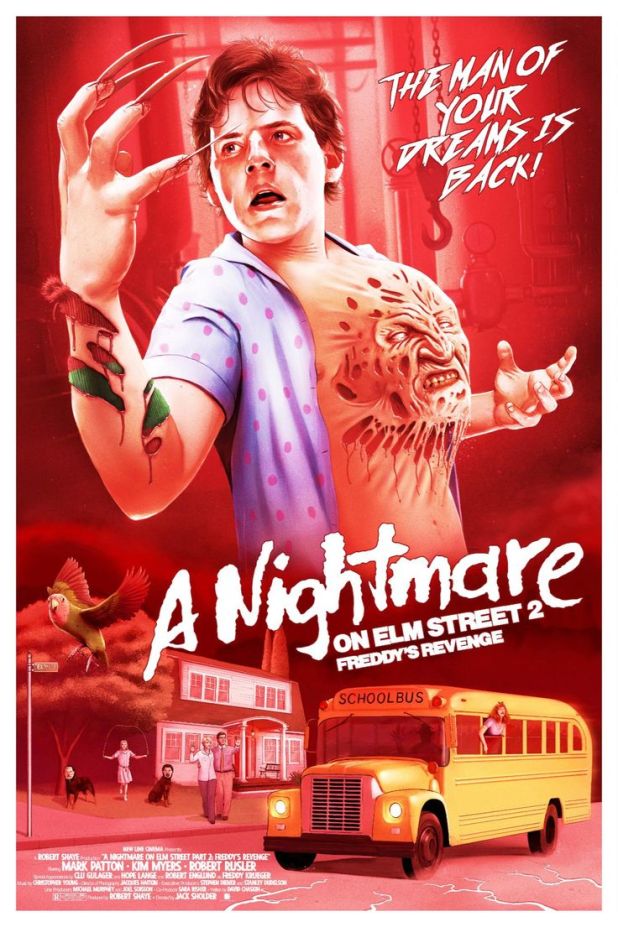
April Ghouls Drive-In Monster-Rama 2025 Primer: A Nightmare on Elm Street Part 2: Freddy’s Revenge (1985)

April Ghouls Drive-In Monster-Rama is back at The Riverside Drive-In Theatre in Vandergrift, PA on April 25 and 26, 2025. Admission is still only $15 per person each night (children 12 and under free with adult) and overnight camping is available (breakfast included). You can buy tickets at the show, but get there early and learn more here.

The features for Friday, April 25 are the first four A Nightmare On Elm Street movies.

Saturday, April 26 has FrankenhookerDoom AsylumBrain Damage and Basket Case 2.

With Craven stepping aside, Jack Sholder (Alone in the Dark, which was the first New Line movie before the original Elm Street and The Hidden) was selected as the director and David Chaskin was selected to write this (it was his first Hollywood script and he’d go on to write I, Madman and The Curse).

Chaskin’s theme for the film — which until the documentary Never Sleep Again: The Elm Street Legacy he would always say was just subtext — is the main character Jesse (Mark Patton) coming to grips with his homosexuality. Patton struggled with his anger over this film for years, as he felt betrayed as the filmmakers knew that he was in the closet. Between this role and playing a gay teenager in Come Back to the Five and Dime, Jimmy Dean, Jimmy Dean, he feared being typecast at best and labeled at worst. Yes, in 1985, this was the world that we lived in. You can see the movie Scream, Queen to learn more about the story.

Chaskin claimed in interviews that Patton just played the role too gay, but Patton bristled at that claim. The emotional stress led Patton to quit acting for some time to pursue a career in interior design. That said, Chaskin claims that he has tried to reach out and apologize to the actor over the years.

Director Sholder has said that he didn’t have the self-awareness to think that the film had any gay subtext, but an unfilmed scene almost had Krueger slide a knife into Jesse’s mouth. Makeup artist Kevin Yagher talked Patton out of filming that scene for the sake of his career.

Years later, Patton would write Jesse’s Lost Journal, a series of diary entries that would set his feelings—and his character’s—straight. Pardon the horrible pun.

The sequel starts with a dream sequence in which Jesse Walsh (Patton) dreams of being stuck inside a school bus with Freddy at the wheel. Jesse’s circle of friends includes Lisa, whom he’s friends with but too shy to ask out, and Grady (Robert Rusler, Sometimes They Come Back), a frenemy who seems more like a crush.

Jesse has moved into Nancy Thompson’s home, which was on the market for five years after she was institutionalized and her mother killed herself. His family has Clu Gulager from Return of the Living Dead as his dad, Hope Lange from Death Wish as his mother and a little sister that he bothers when she’s trying to sleep.

Lisa and Jesse discover Nancy’s diary, which explains how ridiculous the house is to live in. It’s always 97 degrees, birds attack you at will before they spontaneously combust and your parents accuse you of setting it all up.

Meanwhile, Jesse is dealing with all sorts of strangeness, like a sadistic gym teacher who really likes to go to punk clubs and get whipped. One night, a dream takes him to that bar and the gym teacher makes him run laps in the middle of the night. That gym teacher is played by Marshall Bell, who was George in Total Recall, the host for Kuato. Freddy possesses our hero and the coach gets clawed up in the shower. The cops find Jesse wandering the highway naked, which doesn’t seem all that weird to his mother.

Lisa and Jesse go to Freddy’s lair in an abandoned factory, then she has a pool party. Yes, I just wrote that sentence. At the party, they kiss and have perhaps the most awkward make-out session ever, until Freddy causes changes in Jesse’s body that make him run to Grady for help. Yes, he gets so upset about making up with a girl that he runs to his male crush, only to transform into Freddy in an astounding practical effects sequence and kill Grady. He returns to the pool party and lays absolute waste to the partygoers as Freddy before getting chased off by multiple shotgun blasts.

Only Lisa’s love — and kisses — can bring Jesse out of Freddy. But it’s all for nothing, as the nightmare from the beginning becomes real and their school bus turns into a deathtrap. Even though their friend Kerry (who has the best outfits in the movie) tries to calm them down, Freddy’s claw emerges from her chest.
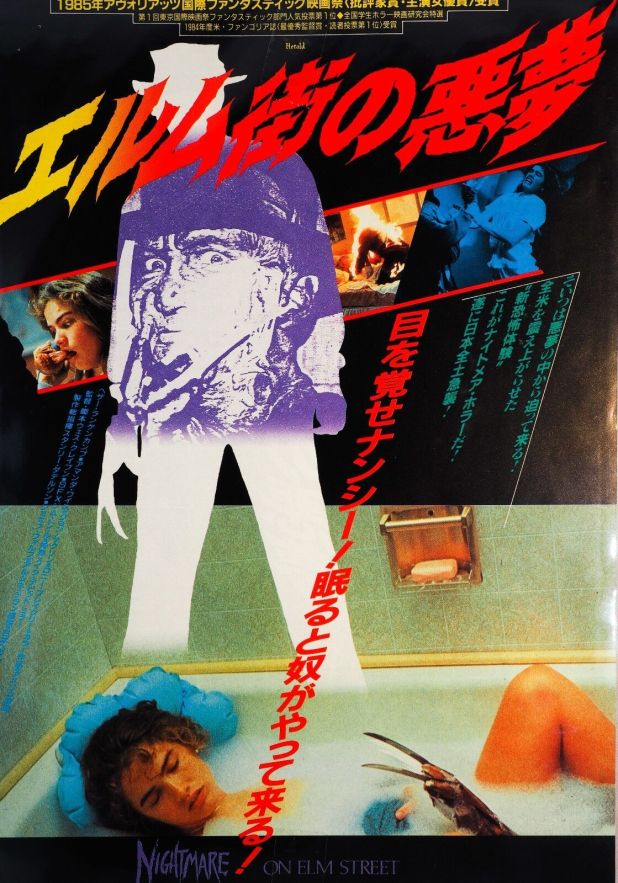
April Ghouls Drive-In Monster-Rama 2025 Primer: A Nightmare On Elm Street (1984)

April Ghouls Drive-In Monster-Rama is back at The Riverside Drive-In Theatre in Vandergrift, PA on April 25 and 26, 2025. Admission is still only $15 per person each night (children 12 and under free with adult) and overnight camping is available (breakfast included). You can buy tickets at the show, but get there early and learn more here.

The features for Friday, April 25 are the first four A Nightmare On Elm Street movies.

Saturday, April 26 has FrankenhookerDoom AsylumBrain Damage and Basket Case 2.

Upon watching this again for the first time in probably thirty years, I was struck by how European the movie feels. Perhaps it’s the color tones throughout, suggesting the patina of Italian horror cinema (both Fulci and Craven cite surrealist filmmaker Luis Buñuel as an influence). It could also be John Saxon having lead billing. Or it doesn’t feel like any horror cinema is currently being made in the United States.

The real villain of this piece is not Freddy Krueger — more on him in a bit — but the parents of Elm Street who have allowed secrets and their assumed authority over their children to do unspeakable and unspoken things. All of them are haunted by it, divorced, depressed and self-medicating with over-dedication to their jobs or their addictions.

There are stories that David Warner was originally going to play Freddy, but that’s been disproven. After plenty of actors tried out and failed to win the part, it went to Robert Englund, who darkened his eyes and acted like Klaus Kinski (!) to get the part.

The other feeling I have about this movie is that it owes a significant debt- as all horror movies post-1978 do to John Carpenter’s Halloween. Much like that film, the true horror happens within the foliage of the suburbs, with shadow people showing up and disappearing. Much of the action on the final night happens within two houses. One of the main characters has the ultimate authority figure, a policeman, as a father. And the cinematography by Jacques Haitkin glides near the characters and around them, much like the Steadicam shots that start Carpenter’s film.

The film starts with Tina Gray (Amanda Wyss, who sets the events of Better Off Dead into motion by breaking up with Lloyd Dobler) waking up from a nightmare in which a disfigured man chases her with a bladed glove. I loved the way this scene looked. You could almost consider Freddy off-brand here, as his arms grow comedically long and he moves way faster than he would in the rest of the series. Yet, by keeping him in the shadows, he’s absolutely terrifying.

When Tina awakens, her nightgown has been slashed, and she’s afraid to go to sleep again. She learns that her friends, Nancy (Heather Langenkamp, who left Stamford University to be in this), Glen (introducing Johnny Depp) and Rod (Jsu Garcia, credited as Nicki Corri) have all been having the same dream. To console Tina, they all stay at her parents’ house overnight. But when Tina falls asleep, Krueger is waiting. Rod awakes to find Tina flying all over the room and up the walls — an astounding effects sequence in the pre-CGI era — and he flees the scene after her death.

Soon, Rod is arrested by Lieutenant Don Thompson (Saxon), Nancy’s father. Freddy now starts pursuing her, chasing her as she falls asleep in class (look for Lin Shaye as the teacher) and later in the bathtub, as his claw raises like a demented and deadly phallus between her thighs. Rod tells her how Tina dies and now she knows that the same killer is definitely after her (Garcia’s watery eyes and lack of focus made Langenkamp think he was acting his heart out; the truth is he was high on heroin for real in this scene). She tries to find the killer, with Glen watching over her, but he’s a lout and easily falls asleep. Only the alarm clock saves her, but no one can save Rod, who is hung in his sleep while rotting in a jail cell.

Nancy’s mom Marge (Ronee Blakley, who was married to Wim Wenders, sang backup on Dylan’s song “Hurricane” and is also in Altman’s Nashville) takes her to a sleep clinic, where Dr. King (Charles Fleischer, Roger Rabbit’s voice) tries to figure out her nightmares. To her mother’s horror, she emerges from a dream holding Freddy’s hat. Soon, she reveals to her daughter that the parents of Elm Street got revenge on Freddy Krueger, a child murderer, after a judge let him go on a technicality. In a deleted scene, we also learn that Nancy and her friends lost a brother or sister they never knew about.

While Nancy is barred up in her house by new security measures, Glen’s parents won’t allow him to see her. Soon, he’s asleep and is transformed into an overwhelming fountain of blood. Nancy falls asleep after asking her father to come in twenty minutes. He doesn’t listen and she pulls Freddy into our world. On the run, she screams for help until her father finally comes to her aid just in time to watch a burning Freddy kill his ex-wife and then both disappear.

This is an incredibly complex stunt in which Freddy is set ablaze, chases Nancy up the stairs, falls back down and runs back up—all in one take! It was the most elaborate fire stunt ever filmed at the time, and Anthony Cecere won an award for the best stunt of the year.

Nancy then realizes that he can’t hurt her if she doesn’t believe in Freddy. She wakes up and every single one of her friends is still alive, ready to go to school. As the convertible hood opens up in the colors of the killer’s sweater, she realizes that she’s still trapped by Freddy, who drags her mother through a window.

In Craven’s original script, the movie simply ended on a happy note. Producer Robert Shaye wanted the twist ending to open the door for a sequel, something Craven had no interest in. Four different endings were filmed: Craven’s happy ending, Shaye’s ending where Freddy wins and two compromises between their ideas.

CUFF 2025: Reveries: The Mind Prison (2025)

Directed by Graham Mason, who also created 2018’s Reveries and 2020’s Reveries: Going Deeper, this was co-written by stars Matt Barats and Anthony Oberbeck, who play two drifters wandering through a desert.

The quote on this film is: “Who are those guys? Poets or something? I always see them around coffeeshops…no laptops…weird…are they artists? Philosophers?…They seem like they must be around 40…”

Or, as CUFF put it, “Reveries: The Mind Prison is a comedy movie/art film hybrid, a sprawling experiment in unbridled creativity and collaboration. Told through a combination of narrative scenes, abstract video montages, and meditative voice-overs, it’s best described as Aki Kaurismäki meets a lo-fi Koyaanisqatsi narrated by Steven Wright, or as Vulture magazine put it, “Like an Ayahuasca session conducted by Mitch Hedberg.” CUFF will host the World Premiere of the feature-length culmination of an eight-year collaboration between CUFF alumni Matt Barats, Anthony Oberbeck, and Graham Mason. The trio have worked on several films that have recently played CUFF, including 2023’s Cash Cow (directed by & starring Barats), 2023’s Dad & Step Dad (produced by Mason and wrote & starring Oberbeck), and 2024’s A Joyful Process (produced by Mason and starring Oberbeck). This is the third movie in a trilogy that includes the comedy art films Reveries (2018, 46m) and Reveries: Going Deeper (2020, 60m).”

What you get here is a journey. Two sunglasses-clad wanders in the desert trying to escape wherever we are, wherever we ended up, and hoping to get out alive. This trip isn’t for everyone, but for those ready for it, it is here.

Reveries: The Mind Prison screens as part of the 2025 Calgary Underground Film Festival, which runs April 17–27. For more information, visit https://www.calgaryundergroundfilm.org/.

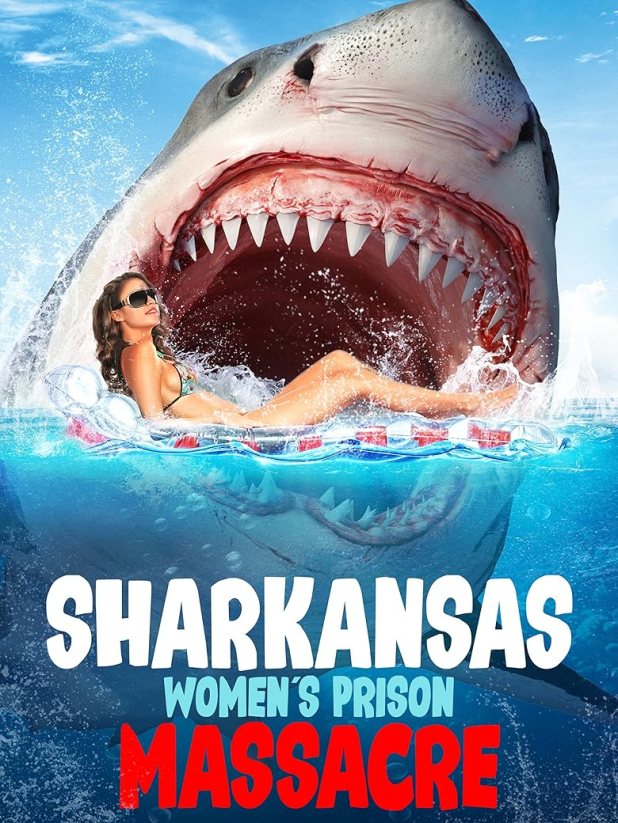
APRIL MOVIE THON 4: Sharkansas Women’s Prison Massacre (2016)

April 21: Gone Legitimate — A movie featuring an adult film actor in a mainstream role.

Employees of the Arkansas Fracking Industries (AFI) somehow go from fracking to releasing a shark covered in spikes into the swamps around a prison, just in time for Anita Conners (Cindy Lucas), Michelle Akira (Christine Nguyen), Sarah Mason (Skye McDonald), Shannon Hastings (Amy Ho) and Samantha Pines (Tabitha Marie) getting broken out by Anita’s grilfriend Honey (Dominique Swain). Meanwhile, detectives Kendra Patterson (Traci Lords) and Adam (Corey Landis) are in a totally different movie, mostly in their car.

Directed and written by Jim Wynorski, this is exactly what you want it to be: angry women busting loose from the big house while running into a shark in the swamp. Improbable. Impossible. Entertaining.

More sharks should show up in places they should never be. This movie was ridiculous and cheap as it should be. I enjoyed every minute.

You can watch this on Tubi.

CUFF 2025: Something Better Change (2024)

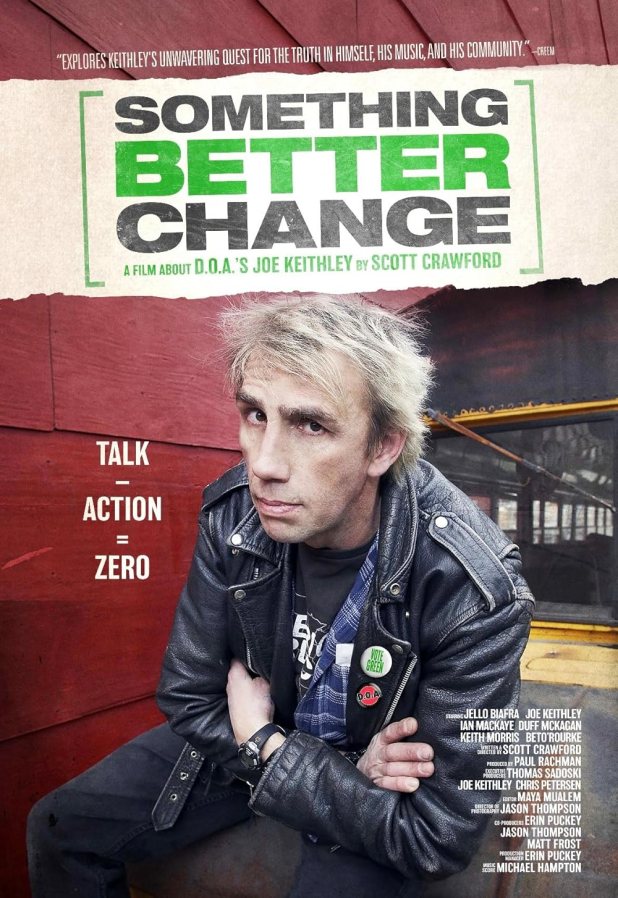
From the CUFF program: “The story of D.O.A. frontman Joey “Shithead” Keithley, who transitioned from a punk activist musician to politician when he was elected for the Green Party in Burnaby, BC. In 2018, punk icon Joe Keithley turned art into reality by winning a council seat in his hometown of Vancouver. When he ran for reelection in 2022, his campaign demonstrated how music can still effect change, even in these surreal times. Something Better Change documents Keithley’s 40+ year journey as an activist musician in Canada’s most iconic punk band, and how it informs him as a Green Party politician today.”

Scott Crawford also directed Creem: America’s Only Rock’n’roll Magazine and Salad Days: A Decade of Punk In Washington.

This features appearances by Ian and Alex MacKaye, Duff McKagan, Jello Biafra, Beto O’Rourke, Keith Morris, and Dave Grohl as it tells the story of how Keithley has transitioned from frontman to politician.

As The Stranglers said in the song of the same name:

“Something’s happening and it’s happening right nowYou’re too blind to see itSomething’s happening and it’s happening right nowAin’t got time to wait”

Joe didn’t want to wait for someone else to do the things he saw that weren’t happening. This shows the journey of someone who once went by Joey Shithead, from punk to a man concerned about his neighbors. Unlike many politicians, he talks about the actions he wants to take, not just running for power or popularity.

I encourage you to see this movie — check out the Facebook and Instagram pages — because it’s inspiring to see someone take action because they genuinely believe in it. It reaffirmed my faith that sometimes, good people do good things.

Something Better Change screens as part of the 2025 Calgary Underground Film Festival, which runs April 17–27. For more information, visit https://www.calgaryundergroundfilm.org/.

CUFF 2025: Sugar Rot (2025)

ABOUT THE AUTHOR: Joseph Perry writes for the film websites Gruesome Magazine, The Scariest Things, Horror FuelThe Good, the Bad and the Verdict and Diabolique Magazine; for the film magazines Phantom of the Movies’ VideoScope and Drive-In Asylum; and for the pop culture websites When It Was Cool and Uphill Both Ways. He is also one of the hosts of When It Was Cool’s exclusive Uphill Both Ways podcast and can occasionally be heard as a cohost on Gruesome Magazine’s Decades of Horror: The Classic Era podcast.

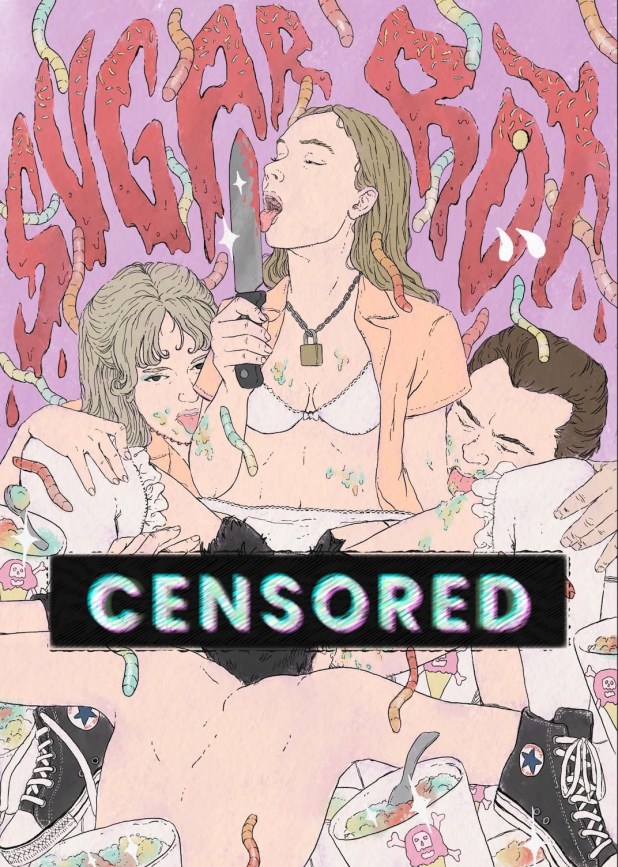
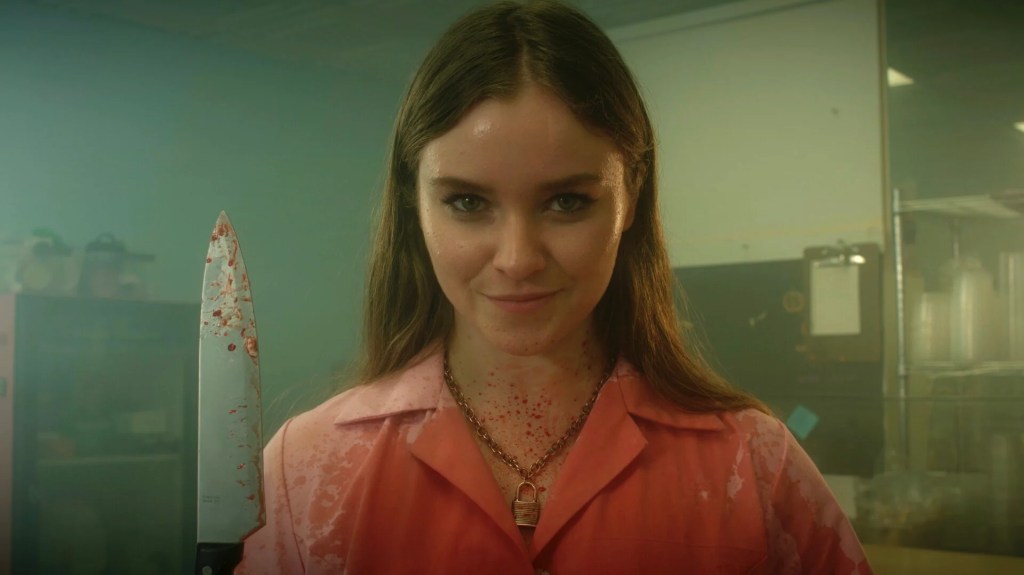
Synopsis from the 2025 Calgary Underground Film Festival site: A punk rock horror film where a girl turns into sweets — and everyone wants a taste. After a brutal assault by an ice cream man, punk girl Candy becomes host to a mutant baby. Her pregnancy accelerates at a horrifying rate, and as her body begins transforming into ice cream, those around her see her not as a person, but as something to be consumed. Fetishized by strangers, and betrayed by those she trusted, Candy fights to reclaim her body before she melts away completely. Fueled by a blistering punk rock soundtrack and dripping with grotesque body horror, this film oozes with raw feminist subtext. Blending midnight movie chaos with social satire, this wild exploitation film has it all—grindhouse grit, surreal shocks, and a heroine who refuses to be devoured.

It needs to be stated up front: Potential viewers of Canadian body horror/exploitation shocker Sugar Rot who wish to avoid films involving rape and other forms of sexual assault will want to steer clear of the film, as writer/director Becca Kozak subjects protagonist Candy (Chloë MacLeod) to numerous amounts of both. 

Kozak tackles social issues revolving around the exploitation and commercialization of women’s bodies, and she doesn’t hold back on pushing buttons and boundaries. There’s something here to offend almost everyone, and at the same time, there’s plenty of what exploitation film aficionados crave: nudity and sexual situations, over-the-top set pieces, and jaw-dropping practical gore effects, with plenty of goop and glop for good measure.

MacLeod gives an all-in performance in her lead role. Some of the situations in Sugar Rot are a bit on the nose, and that extends to character names, such as Candy’s punk-rocker boyfriend being named Sid (Drew Forster) — there’s even a Sid and Nancy reference, if you didn’t get the connection already — and a doctor named Herschell Gordon (Charles Lysne). Forster and Lysne join Michela Ross and Tyson Storozinski as the main supporting players, all of whom give the proper amount of camp and scenery chewing that their deliberately baroque characters require.

ery little is sacred and few targets are safe in Kozak’s debut feature. She had goals for this film and she reached for them, resulting in a colorful — in more ways than one — punk-fueled slice of cinematic anarchy. Sugar Rot will put you off of dessert while giving you food for thought.

SUGAR ROT screens as part of the 2025 Calgary Underground Film Festival, which runs April 17–27. For more information, visit https://www.calgaryundergroundfilm.org/

APRIL MOVIE THON 4: The Sister-In-Law (1974)

April 20: King Yourself! — Pick a movie released by Crown International Pictures. Here’s a list!

Robert Strong (John Savage) goes to visit his brother Edward (Will McMillan) and his wife Joan (Anne Saxon), only for him to fall for his sister-in-law — yes, there’s the title — and meet his brother’s mistress Deborah Holt (Meridith Baer, who invented home staging and has a show on HGTV) and also — run-on sentence much? — get invovled in the drug trade.

Directed and written by Joseph Ruben (The Pom Pom GirlsDreamscapeThe StepfatherSleeping With the EnemyThe Good Son), this also has three songs by Savage on the soundtrack.

Oh, Crown International Pictures. Despite being called The Sister-In-Law, she disappears halfway through this movie and we never see her again. Instead, this becomes a heroin movie. Yes, there’s a cat fight, but this is really the story of two brothers — one who wants to be rich, another who is hitchhiking across the country — and the women are just in the way. And banjo music. So much banjo music.

The ending? A gut punch. Wow.

This is the only movie Anne Saxon ever made and she may have made it under an assumed name.

CUFF 2025: $POSITIONS (2025)

ABOUT THE AUTHOR: Joseph Perry writes for the film websites Gruesome Magazine, The Scariest Things, Horror FuelThe Good, the Bad and the Verdict and Diabolique Magazine; for the film magazines Phantom of the Movies’ VideoScope and Drive-In Asylum; and for the pop culture websites When It Was Cool and Uphill Both Ways. He is also one of the hosts of When It Was Cool’s exclusive Uphill Both Ways podcast and can occasionally be heard as a cohost on Gruesome Magazine’s Decades of Horror: The Classic Era podcast.

An After Hours-type comedy of misfortunes for the mid-2020s, writer/director Brandon Daley’s $POSITIONS finds less-than-lovable loser Mike (Michael Kunicki in an all-in performance) quitting his longtime factory job when his cryptocurrency hits in the $30,000s. Naturally, those figures don’t last for long, and neither does the newfound popularity that he found with his sudden wealth. 

To add insult to injury, his girlfriend Charlene (Kaylyn Carter) gets the better end of the deal when he suggests an open relationship — just ask new flame Lorenzo (Jeffrey A. Hunter). As caretaker for his brother Vinny (Vinny Kress), Mike tries desperately to reaccumulate crypto wealth, even though the brothers’ newly Christian, recovering addict cousin Travis (Trevor Dawkins in a strong supporting role), recently released from prison, tries to convince him that cryptocurrency is a scam.

$POSITIONS is the type of feel-bad comedy in which the protagonist is hard to root for and in which you know matters will only get continuously worse. Daley certainly heaps the challenges onto Mike. 

Daley keeps the proceedings going at a frenetic clip, though the suspense is often tied to shots of the crypto going up or down on Mike’s phone app, with the action doing what it needs to accordingly. If schadenfreude humor is your cup of bitter tea, $POSITIONS is certainly worth a watch.

$POSITIONS screens as part of the 2025 Calgary Underground Film Festival, which runs April 17–27. For more information, visit https://www.calgaryundergroundfilm.org/.

APRIL MOVIE THON 4: Who’s The Man (1993)

April 19: Record Store Day — Write about a movie starring a musician.

Ah, 1993.

The first movie of Ted Demme (The RefBeautiful GirlsBlow), Who’s the Man? unites Yo! MTV Raps hosts Doctor Dré and Ed Lover as barber shop employees turned cops, working for Sergeant Cooper (Dennis Leary, amazing). While they try and become actually decent police officers, their former barbershop boss Nick (Jim Moody) is killed by a developer named Demetrius (Richard Bright) and they get on the case.

If you were a hip hop artist in 1993, chances are you are in this. Guru, Ice-T, B-Real, Apache (“Gangsta Bitch,” anyone?), Ashanti, Bushwhick Bill (“My hands were all bloody from punchin’ on the concrete”), Busta Rhymes (who somehow was in a Halloween movie and said, “Looking a little crispy over there, Mikey, like a fried chicken motherfucker. May he never, ever rest in peace.”), Del the Funkee Homosapien, DJ Lethal, Eric B., Everlast, Fab 5 Freddy, Flavor Flav, Heavy D, House of Pain, Humpty Hump (“Like Anita, I’m givin’ you the best that I’ve got”), Kid Capri, Kriss Kross, Kool G Rap, Melle Mel, Pete Rock, Phife Dawg, Queen Latifah, Run D.M.C., Yo-Yo and even Kurt Loder and Karen Duffy from MTV as a hitman and a cop.

Plus, the soundtrack has “Party and Bullshit” by Notorious B.I.G. on it — his first single — and “Hittin’ Switches”by Erick Sermon.

There are sadly few rapper movies these days. Between this and Tougher Than Leather — plus the movies of the Fat Boys and Kid ‘n Play — times were different once.

You can download this from the Internet Archive.

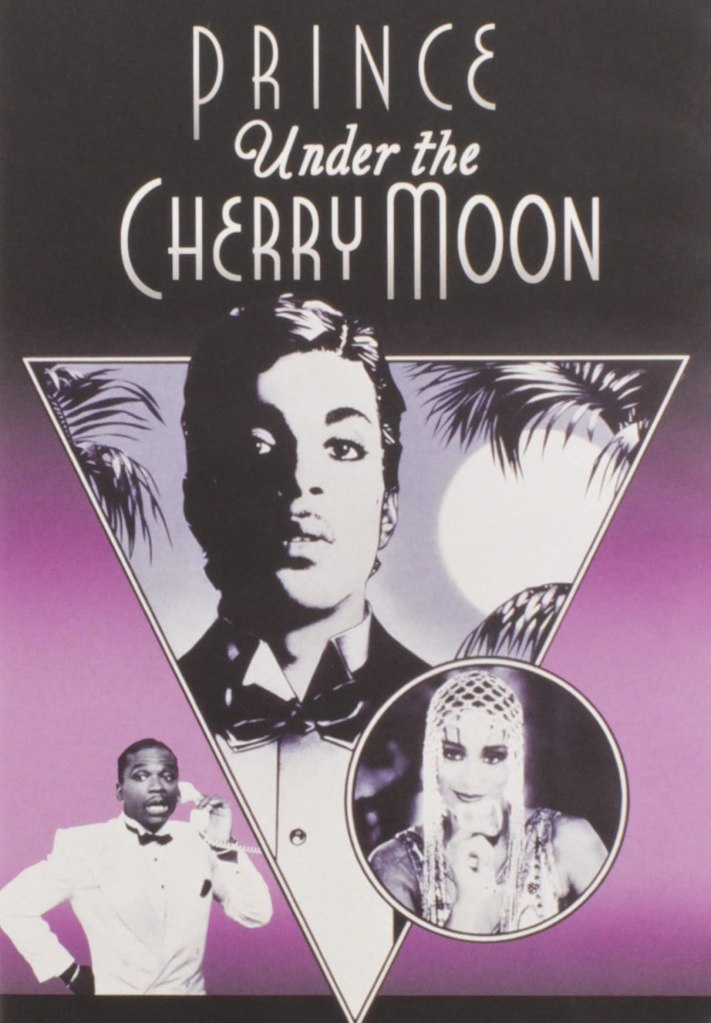
APRIL MOVIE THON 4: Under the Cherry Moon (1986)

April 19: Record Store Day — Write about a movie starring a musician.

ABOUT THE AUTHOR: Jennifer Upton is an American (non-werewolf) writer/editor in London. She currently works as a freelance ghostwriter of personal memoirs and writes for several blogs on topics as diverse as film history, punk rock, women’s issues, and international politics. For links to her work, please visit https://www.jennuptonwriter.com or send her a Tweet @Jennxldn

In late summer, 1984, Purple Rain was the number one film at the American box office. Its soundtrack was the number one album that spawned two number one hit singles on the Billboard Hot 100 chart. The following year, Prince won 4 Grammys, an Oscar and two American Music Awards. 

Following the massively lucrative Purple Rain tour in 1985, Warner Brothers let Prince do whatever Prince wanted. He began construction on his Paisley Park studios and quickly began working on a script for another movie. One reflective of his love for old films and his good mood at the time. The result is a black-and-white comedy called Under the Cherry Moon. A film that harkens back the classic screwball comedies from Hollywood’s golden era like Bringing Up Baby and The Philadelphia Story. 

Early on, there was chatter that Martin Scorsese would direct the film, but Warner Bros. hired Mary Lambert. A few weeks into production, Prince fired her and took over the helm himself, retaining legendary Michael Ballhaus (Raging Bull) as cinematographer. The film was shot in color, but Prince, being the creative alien he was, insisted all release prints be struck in black-and-white. An unusual choice for 1986. 

Prince’s second feature film is about an American pianist/gigolo named Christopher Tracy (Prince) and his best friend Tricky (Jerome Benton.) They live and work in the south of France during the mysterious time in history where people dressed like it’s the 1920s but they have modern computers, boom boxes and speak 1980s modern lingo. 

After reading about her in the paper, which is in English, in France. Christopher and Tricky set their sights on heiress Mary Sharon for their next big financial scam to get a hold of some of that sweet paper that Mary will inherit on her 21st birthday from her greedy, philandering father Isaac Sharon played by Steven Berkoff and her long-suffering mother Mrs. Sharon (Alexandra Stewart).

Prince is essentially playing the Morris Day character from Purple Rain. He even stole Jerome Benton for his sidekick. And it kind of works. Sometimes. Jerome plays…well, Jerome. Again. I particularly enjoy the scene where the two friends argue over Mary. Tricky gets drunk and stomps around in a white cowboy hat, declaring to the sky, “It’s a full moon and the werewolf can KISS. MY. ASS.” 

Despite their different backgrounds and class distinctions, it isn’t long before Christopher starts wooing Mary, who eventually hooks up with him despite being in an arranged engagement to a tightass named Jonathan. She hates Jonathan and confides in her mother, who herself longs for true love, fun and freedom but is too stodgy to do anything about it. 

Mary and Christopher sneak off to have sex in a few different places including a phone booth, a racetrack, and a grotto on the coast where they argue constantly about their class difference and how uptight she is. To complicate things, Christopher is also boinking Isaac’s mistress Mrs. Wellington played by Francesa Annis from David Lynch’s Dune. This really pisses Isaac off. He decides enough is enough and sends his minions out to kill Christopher. 

Meanwhile, Mary finds out about Christopher’s original scheme with Tricky to use her for her money and breaks up with him. The chase is on. Can Christopher get to Mary in time to tell her he truly loves her before the bad guys get to him? Nope. Isaac’s minions shoot and kill Christopher, who dies in Mary’s arms over the song “Sometimes it Snows in April”, one of the few songs Prince wrote about death. 

Did I say this is supposed to be a comedy? That’s the main problem with this film. It’s uneven tone. Some things, like the cinematography, the gorgeous French Riviera locations, wardrobe and soundtrack work well while some, like the script and acting, don’t. If you watch the trailer, it’s clear that even the studio didn’t know how to market this movie. 

Ultimately, it’s all about Prince preening around in awesome outfits being goofy. At one point, he even takes a bath in front of Tricky. In this unforgettable scene, Prince’s character plays with a rubber duckie in the bath while wearing a huge, black sombrero. Before a smattering of dialogue, he growls, “fascist” as he drowns the unlucky duckie in soapy bathwater. Depending on your attachment level to Prince, this scene will either make you laugh or freak you out completely. 

Then there’s a cutsie subplot revolving around their inexplicably young, hot French landlady Katy (Emmanuelle Sallet) who hooks up with Tricky in lieu of rent and calls people “Cousin” like she’s from Uptown, Minneapolis. 

About a year or so after Christopher’s murder, Mary writes Tricky, now back in Miami, an expository letter to fill in the audience on what happened to her. She is living on her own, grieving for Christopher. She has separated from her family completely, broken her engagement to Jonathan and launched a lucrative transatlantic real estate venture with Tricky and Katy.  Mary is cautious at the prospect of finding true love again someday. Because you can’t really do any better than learning what it is to be loved by a male prostitute she knew for a week. 

There is never any mention of anyone being arrested for Christopher’s murder or any comeuppance for Isaac Sharon. The film ends with Tricky chasing Katy up a flight of stairs in their new building, demanding the rent. Then, over the credits, we see the music video of Prince and The Revolution playing the song “Mountains” amongst heavenly clouds. The best scene in the film. 

Along with this song, the film’s soundtrack, titled Parade, also featured the number one hit single “Kiss” although its music video in no way connects the film, instead showcasing Wendy Melvoin. This album was by far the most experimental released by Prince during his time with The Revolution, who by then had expanded in the number of touring musicians and became known as “The Counterrevolution.”  

I love Clare Fischer’s orchestral arrangements on the soundtrack, the best of which is “Mia Bocca”, given to Jill Jones and released separately on her self-titled solo album. Prince and Fischer collaborated by sending tapes through the mail for decades and never actually met. 

The film remains an oddity. Beloved by diehard Prince fans and abhorred by just about everybody else. A commercial and critical failure, it stands as an example of what not to do as a follow-up to a hit movie. 

The album, however, remains one of my favorites in the Prince back catalogue. While Purple Rain’s music propelled the film’s story and expressed the emotions of its character, the music and the movie for Under the Cherry Moon don’t enjoy the same cohesion. “Girls and Boys” is a real banger of a funk pop tune, but we only get to hear a snippet in the film. “Kiss” was a huge hit, but the make out scene it accompanies is downright awkward compared to the smoke and fire on display in Purple Rain’s sex scenes. 

The contributions of Wendy and Lisa on this record cannot be understated nor can the inspiration provided by Wendy’s twin sister Susannah Melvoin. 

Susannah was not only engaged to Prince at the time, but she was also meant to play Mary Sharon. The wrecka stow scene? Yeah, that really happened with Susannah. The funniest scene in the film. 

To ease her disappointment when the studio rejected her, Prince declared to her at sunrise in a hotel room in Paris, “I don’t want you to be in the movie. I want you to be my wife.” The relationship, like this film, didn’t work out quite the way anyone thought and ultimately led to the demise of the greatest band Prince ever had. 

I was lucky enough to see Prince and Revolution on the Parade tour in the summer of 1986 just a month or so before he broke them up. It was the biggest mistake he ever made. They were fantastic. No other band, no matter how great, meshed quite like this one. 

Prince died on April 21st 2016. The same day he recorded “Sometimes it Snows in April” in 1985. A few days later, a light snow fell from the sky above Paisley Park.

Note 1. In 2009, Prince watched Kristin Scott Thomas in one of her recent films. He was so taken by her beauty after more than 20 years, that he composed the song, “Better with Time” for her.