Night Slaves (1970)

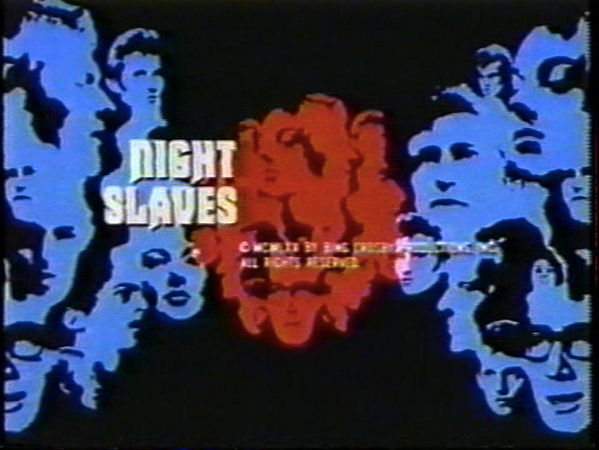
You may notice that all week I’ve talked about how great 70s TV movies are. That’s because they have great pedigrees. Take a look at Night Slaves, which was based on a book written by Jerry Sohl (Die, Monster, Die!The Crimson Cult and episodes of The Outer LimitsTwilight Zone and Star Trek) and directed by Ted Post, who amongst all things made The Baby.

Clay and Marjorie (James Franciscus and Lee Grant) are a couple on the outs who take a vacation after Clay nearly dies in an accident and has a metal plate inserted into his head. The town they decide to visit is certainly nice enough, except that every night, every single person lines up like a zombie, gets in a truck and returns in the morning.

Originally airing on September 29, 1970 on ABC, this has a great cast, including Andrew Prine, Leslie Nielsen, Virginia Vincent and Morris Buchanan.

I dream of a world where more TV movies get released on blu ray. Until then, we have YouTube.


Escape (1971)

A feel like a broken record saying this, but John Llewellyn Moxey made so many different styles of movies and I really love every single one.

Take this failed pilot, in which Cameron Steele (Christopher George!) is a former escape artist turned private investigator into the unknown. The unknown in this case being the secret formula that Doctor Henry Walding (William Windom) and his brother Charles (John Vernon!) had been working on. When thugs kidnap Henry and chain up our hero and toss him in the river, of course he can bring his escape skills out to save the day.

He’s also a rich playboy and the co-owner of a Vegas nightclub called The Crystal Ball with his friend Nicholas Slye (Avery Schreiber!). It’s filled with psychics and occult magic users who would have all made for plenty of great stories if this had actually become a series.

Man, with an adventure under an abandoned theme park and a scarred up Vernon as the heel and plenty of action, this whole movie makes me wistful for what may have been. Plus, it has appearances by William Schallert, Huntz Hall and Gloria Grahame!

You can watch this on YouTube.

The Last Child (1971)

In the future, overpopulation has created a world in which people are allowed to have only one child and are denied all medical care when they turn 65. So, you know, it’s pretty much halfway close to the world we live in.

Another film in the storied career of John Llewellyn Moxey, this was written by Peter S. Fischer, who created Blacke’s Magic and Murder, She Wrote.

Alan and Karen Miller (Michael Cole from The Mod Squad and Janet Margolin) are a couple attempting to have a second child after their first dies. Van Heflin, in his last role, plays Senator Quincy George, a man who attempts to get them into Canada. They must face off with perhaps the most frightening of all villains: Ed Asner.

Honestly, this movie is as good as any theatrical film made at the time, painting a great picture of a world where women have no control over their bodies and the government control is near absolute. It feels closer now than ever before.

You can watch this on YouTube.

Isn’t It Shocking? (1973)

John Badham would one day make StakeoutShort CircuitBird on a WireWarGamesSaturday Night Fever and the 1979 Dracula, but early on in his career he made this made-for-TV movie.

Dan Barnes (Alan Alda) is the police chief of Mt. Angel, Oregon. He’s trying to live a quiet life and all the senior citizen deaths and a motel owner trying to get him to marry her is keeping that from happening. And every one of them is found in the nude, smelling like turpentine.

Louise Lasser, who would play Mary Hartman in just three years, shows up as Barnes’ receptionist Blanche. And Magenta herself, Patrica Quinn, is in this, as is Edmond O’Brien from Dream No Evil, Dorothy Tristan from Rollercoaster, Ruth Gordon (and you better know who she is) and Will Geer (Bear Claw from Jeremiah Johnson).

It tries to be a black and white romantic whodunnit from the past and does a decent job along the way. You can watch this on YouTube.


The Stranger Within (1974)

Richard Matheson took his novelette Trespass, threw in a little science-fiction twist and added no small part of Rosemary’s Baby to make a completely downbeat 70s exploration of the terrors of pregnancy.

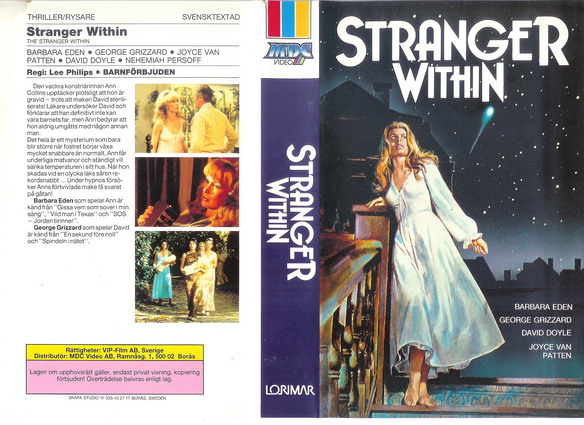
Ann and David Collins (Barbara Eden and George Grizzard) didn’t expect to have a baby. After all, she’d had so many issues when they tried before and he’s since had a vasectomy. Even though he’s sure she’s cheated on him, he sticks around but suggests that an abortion might be best. Yet when Ann tries to terminate the pregnancy, she gets in so much pain that the doctor will not perform the procedure.

Things don’t get any more normal from there, as Ann begins painting strange visions of alien planets and gets pregnancy cravings for tons of salt, raw meat and black coffee. She also forces herself into the coldest temperatures, begins to exhibit amazing healing abilities and disappears into the mountains for days at a time.

Only her friend Phyllis (Joyce Van Patten) and a hypnotist named Bob (David Doyle) are able to get to the truth. She has been impregnated by someone else and it’s an alien who gets drunk on coffee and speaks through her. Woah — this movie gets wild and doesn’t let up, as the end has numerous women rising like zombies and carrying their newborn children to an alien where they all leave our world behind.

Lee Phillips also made The Girl Most Likely To… and The Spell, which are also worth looking for if you love TV movies.

Five Desperate Women (1971)

The line between the giallo and 70s made-for-TV movies is a very thin one and this is one film that easily could be defined as an American cousin of that native Italian — by way of Germany and England — form.

Five young women have their five-year college reunion only to discover that life hasn’t worked out well for all of them. Nonetheless, they try to enjoy their getaway on an isolated island that has no phone service, which seems to offer them the perfect escape.

They are Lucy (Anjanette Comer, who was in The Baby, which was also directed by this film’s director, Ted Post), Dorian (Joan Hackett, Bobby’s mother in Dead of Night), Joy (Denise Nicholas, TV’s In the Heat of the Night), Gloria (Stefanie Powers!) and Mary Grace (Julie Sommars). Bradford Dillman and Robert Conrad play the captain of the boat that takes the women to their vacation spot and the caretaker of the mansion where they stay. Guess what? One of them is a maniac.

This was produced by Aaron Spelling and, as we said above, directed by Ted Post, who always turns in material well above what it should be. It was written by Marc Norman (Shakespeare In Love), Walter Black (who wrote for the Planet of the Apes TV series) and Larry Gordon, who also wrote The Devil’s 8.

You can watch this on YouTube.

The Last Dinosaur (1977)

Also known as Polar Probe Ship: Polar Borer, this film was a co-production of Rankin/Bass and Tsuburaya Productions. It was directed by Tsununobu “Tom” Kotani and Alex Grasshoff, who also made The Wave, a TV movie we watched repeatedly in high school classes.

This movie was intended for theatrical release, but failed to find a distributor. That meant it ended up on ABC, with a 92-minute edit airing on February 11, 1977. In other countries, it played as a 106-minute film (it was a double feature with Sorcerer in the UK!).

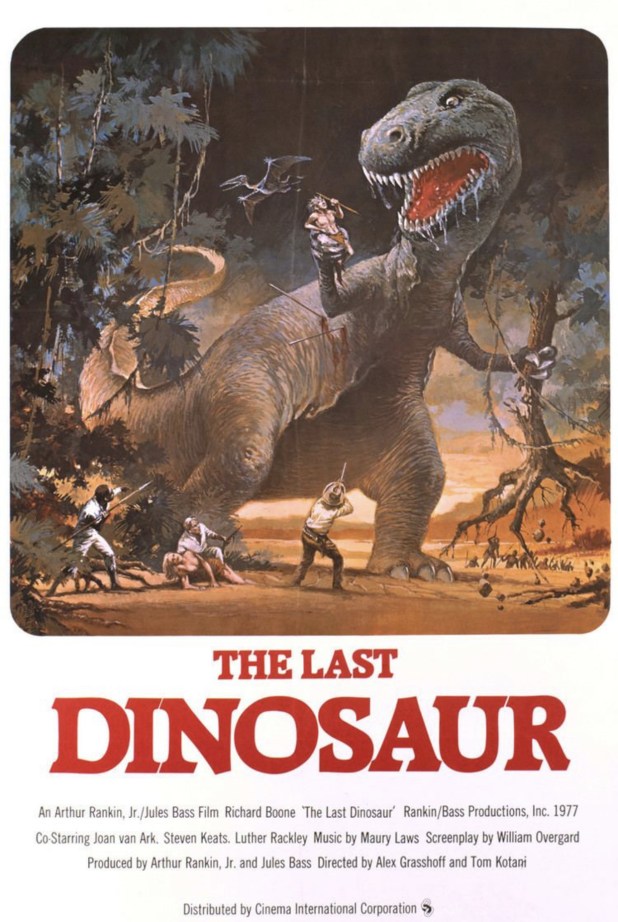
Oil company owner and big-game hunter Maston Thrust (Richard Boone) — what a combination for a heel, right? — is using a laser drill to find oil under the polar ice caps when a T. Rex is discovered living in a valley that is heated by a volcano. The first crew that explores the area dies, other than geologist Chuck Wade (Steven Keats, who also appears in another Rankin/Bass and Tsuburaya film, The Ivory Ape), so a new crew is sent in.

Thrust himself leads it, along with Maasai tracker Bunta (NBA and ABA player Luther Rackley), Dr. Kawamoto (Tetsu Nakamura in his last role), Chuck and Frankie Banks (Joan Van Ark), a Pulitzer Prize-winning photographer who gets on the trip by sleeping with Thrust. Yes, that really happens. Also, it was 1977.

The laser borer gets destroyed fairly early and all modern conveniences fail in the face of multiple dinosaurs, all portrayed with man-in-a-suit techniques, which I absolutely loved. The entire crew is nearly killed by numerous kaiju attacks. Also, there are cave people and one of them, named Hazel, ends up washing Joan Van Ark’s hair.

If you love the T. Rex costume here, well you’ll be excited to know that it was reused as Dinosaur Satan Gottes for the simply baffling Japanese anime/live action mashup Dinosaur War Izenborg, which you can find in the U.S. as Attack of the Super Monsters.

Perhaps the best thing about this movie is its theme song, “He’s The Last Dinosaur.” It’s worth getting through the whole film just to hear it.

Into Thin Air (1985)

Ellen Burstyn has no luck with her movie children, let me tell you.

In this movie, she stars as the Canadian mother of a college student who drives a beat up van from Canada to the United States and then disappears. The police barely help, so she hires her own detective (Robert Prosky, Christine, Grandpa Fred from Gremlins 2) to learn the truth.

The search for the van takes the retired detective to Maine, Nebraska, Colorado and Utah. For some reason, the cops offer no help at all and actually get angry that he’s on the case.

Into Thin Air was based on the real life case of Eric Wilson, who disappeared after driving from Ottawa to Colorado for a summer college class. It’s fictionalized somewhat, as was the documentary Just Another Missing Kid that came out the same year. In that film, director John Zaritsky had the interview subjects recreate their actions for the camera, which isn’t really a documentary, right?

You can watch this on Tubi.


The Great Los Angeles Earthquake (1990)

ABOUT THE AUTHOR: Herbert P. Caine is the pseudonym of a frustrated academic and genre movie fan in Pennsylvania. You can read his blog at https://imaginaryuniverseshpc.blogspot.com.

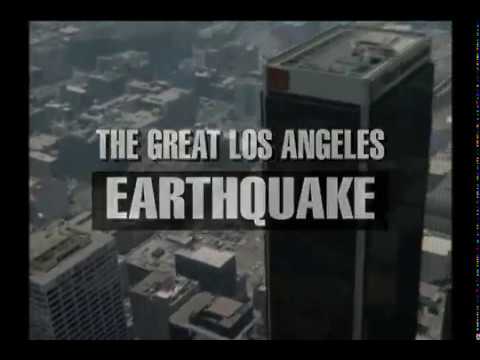
The Great Los Angeles Earthquake is essentially a TV miniseries version of the 1974 disaster movie Earthquake. It makes no attempt to hide this fact, as within the first ten minutes of the movie, we see a clip of the Universal Studios Theme Park ride based off the original movie. Both films use the same sets, according to Wikipedia. The film also starts the same way, with ominous music playing over a helicopter shot of the Los Angeles skyline. The theme music is a weak imitation of John Williams’s original disaster movie score, much as the movie is a weak imitation of the original theatrical release.

The Great Los Angeles Earthquake has the default plot for this genre: an intrepid seismologist, played by Joanna Kerns, has discovered a foolproof method of predicting earthquakes, and all the indications are that Los Angeles is about to be hit with a massive earthquake. However, her attempts to warn the populace are hindered by the machinations of a sleazy real estate developer, played by Robert Ginty from The Exterminator and The Paper Chase, who fears her predictions will cause housing prices to crash. Will she be able to warn the population in time?

One of the main problems facing this disaster film is that it is overloaded with too many supporting characters and subplots and not enough disaster. The earthquake only happens nearly two-thirds of the way through the film. In the meantime, we are treated to a variety of unnecessary and not particularly interesting sub-plots, ranging from the tense relationship between our hero’s sister and her mother to a plot to assassinate a South African trade minister who might become the country’s first black prime minister. The filmmakers would have been better off cutting one or two sub-plots to focus more on the destruction of the city.

However, this issue is mitigated by the quality of the supporting cast. Although Kerns and the other leads are not especially impressive, the supporting players include a number of talented character actors. Robert Ginty is suitably unctuous as the film’s antagonist, playing a more subtle version of Donald Trump. (The film even lampshades this, referring to the character as a wannabe “Donald Trump of the West Coast.”) Richard Herd is also good in a small role as Kerns’s superior at the U.S. Geological Survey, conveying authority and trustworthiness despite having little character development. Ed Begley Jr. does well as Kerns’s subordinate who leaks the story to the press. (Be warned, though: although Begley is prominently featured on the film’s cover, he is only in the film for 10-15 minutes.) Ultimately, the cast stand out is Richard Masur (Clark from The Thing), who plays a sleazy, hard-driving reporter whose efforts to exploit Kern’s warnings for ratings only succeed in making things worse. The reporter goes through a decent character arc as he confronts the destruction wrecked by the earthquake, with Masur conveying his emotional breakdown. Although none of these performers manage to surpass the awesomeness of Marjoe Gortner in Earthquake, they make the film worth watching.

The Great Los Angeles Earthquake also boasts impressive special effects for a TV movie. The film’s practical effects are far more convincing than the cheap CGI that too many televised disaster movies now resort to, with sets that actually shake and collapse and the actors interacting with actual flames. The way the disaster is shot is also effective, conveying the disorientation and chaos such a massive earthquake would actually cause. After the quake, the city looks dark and foreboding as it is engulfed with fire and smoke darkens the sky. Moreover, the last hour of the film is suitably downbeat as people struggle to find their friends and relatives amid the carnage.

Perhaps the most disturbing aspect of the film is how it illustrates the incapacitation of emergency and rescue services in the face of an 8.1 earthquake. Police, fire fighters, and EMS are hindered by the scale of the destruction and the blocking of roads and highways. This unsettles on a far deeper level than any special effect. In a better film, this could be used to show the total breakdown of society in the face of catastrophe, as in the beginning of the original Dawn of the Dead where we see the uselessness of the Emergency Broadcast System in the face of the zombie outbreak. Scenes like this hold real-world resonance, especially in the wake of the pandemic. When I first saw a late-night broadcast of this movie as a kid on the Million Dollar Movie, these elements disturbed me, but now they are arguably the most effective aspects of the film.

The Great Los Angeles Earthquake can be found on YouTube here.
The Phantom of Hollywood (1974)

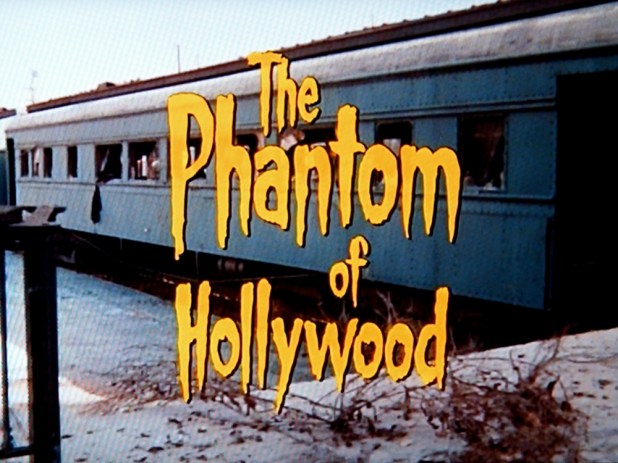
The Phantom of Hollywood was one of the last films shot on the Metro-Goldwyn-Mayer backlot, which was being demolished at the time of filming. It’s actually a major plot point, as it takes the place of the backlot of Worldwide Studios, the fictional studio within this movie.

A disfigured actor — just like the Phantom of the Opera — is killing anyone that tries to take down the studio. There are some great shots of famous films of the past — The Philadelphia StoryGrand HotelMutiny on the BountyThe Wizard of Oz — juxtaposed with the sets that have fallen into disrepair.

In 1974, no one — perhaps save the Phantom — knew the value of this history.

This one has a great cast, with Jack Cassidy (father of Shaun and David), Broderick Crawford, Peter Lawford, Jackie Coogan, John Ireland, Kent Taylor, Corinne Calvet and more appearing. It was written by George Schenck, who the normal world may know as one of the main writers and executive producers of NCIS, but we know as the writer, producer and director of Superbeast (and the writer of Turkey Shoot, too!). Director Gene Levitt is best known for creating Fantasy Island.

You can download this from the Internet Archive.