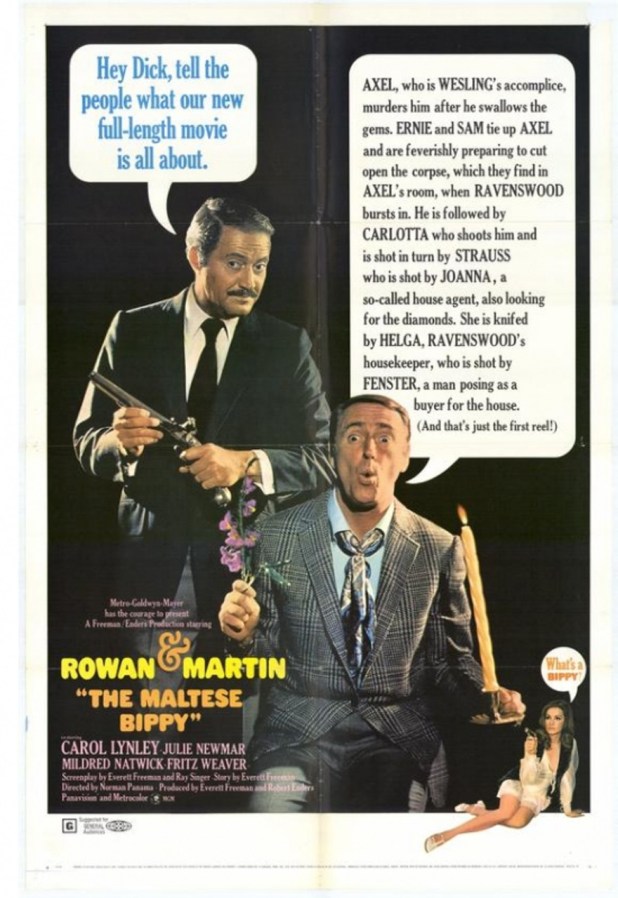
CBS LATE MOVIE MONTH: The Maltese Bippy (1969)

EDITOR’S NOTE: The Maltese Bippy was on the CBS Late Movie on December 23, 1977.

As a kid, I was thrilled when Laugh-In came back to TV. I’d read about it—I was already a devotee of pop culture—and was excited to see this stream-of-consciousness show for myself. Yes, it was before the internet when we couldn’t just dial up everything we wanted to see instantly.

It may seem dated today — it has to; it was nearly sixty years ago — but at the center of this mad show were two men: Dan Rowan and Dick Martin. They were the everymen who couldn’t keep the wild energy of the show from bursting through the screen. But they were also fascinating people in their own right, who knew that the show was the star.

Dan Rowan spent his childhood years following his parents from town to town as they performed their carnival dancing act. He was orphaned at 11 and spent four years in an orphanage. By the time he was 18, he hitchhiked to Los Angeles, where he got a job in the Paramount mailroom. Soon, he was the youngest writer on the lot.

During World War II, Rowan was a fighter pilot, winning the Distinguished Flying Cross with Oak Leaf Cluster, the Air Medal and the Purple Heart. He returned from action and formed his comedy duo with Martin. He was married three times—to Miss America 1945 runner-up Phyllis J. Mathis, Australian model Adriana Van Ballegooyen and TV spokeswoman Joanna Young—and retired in the early 1980s. He only returned to help celebrate NBC’s 60th anniversary in 1988 by appearing with his comedy partner.

Dick Martin didn’t serve in the war — tuberculosis kept him from combat — but was a young writer as well, working on the radio show Duffy’s Tavern. He started teaming with Martin in 1952, playing nightclubs, hosting NBC’s Colgate Comedy Hour and appearing in the movie Once Upon a Horse Together. He also played Lucille Ball’s neighbor on The Lucy Show before Laugh-In became a big hit. After his partner retired, Martin was a frequent game show guest and TV show director. He was married to singer Peggy Connelly and Beyond the Valley of the Dolls star Dolly Read twice.

Anyways…The Maltese Bippy.

Sam Smith and Ernest Grey (Rowan and Martin) are the producers of nudie cuties — their latest film is Lunar Lust — and they’re forced out of their office for not paying the rent. Somehow, a G-rated movie in 1969 could concern pornography, and no one cared.

They move into Ernest’s house by the cemetery in Long Island, a place where a mutilated corpse has already been found and a woman is frightened by a howling man. Oh yeah, Ernest is also given to barking like a dog.

Somehow, despite not being successful, Ernest can have a housekeeper (Mildred Natwick, Do Not Fold, Spindle, or Mutilate). He also has two roommates, the bubbly Robin Sherwood (Carol Lynley, The Poseidon Adventure) and Axel (Leon Askin, Hogan’s Heroes), a Swedish violinist.

Meanwhile, the Ravenswoods next door — Mischa (Fritz Weaver, Creepshow), Carlotta (Julie Newmar!) and Helga (Eddra Gale, Fellini’s 8 1/2) — are vampires who want Ernest to join their pack. Sam thinks they should be a variety act, but the truth is that nearly everyone just wants to search for a giant diamond inside the house. (and more to the point, inside the corpse of the home’s original owner).

Hijinks ensue, and everyone but our heroes perish. But that’s not good enough, so they both present their happy endings to the audience and walk into the sunset together.

Look for a pre-Brady Bunch Robert Reed, David Hurst (the head waiter in Hello, Dolly), character actor Dana Eclar, voiceover actor Alan Oppenheimer, Arthur Batanides  (he was Mr. Kirkland in Police Academy 234 and 6), Jennifer Bishop (who was in the William Grefe movies Mako: The Jaws of Death and Impulse, as well as Al Adamson’s Horror of the Blood MonstersJessi’s Girls and The Female Bunch) and Garry Walberg, who played Jack Klugman’s poker buddy Homer “Speed” Deegan on The Odd Couple and his boss Lt. Frank Monahan on Quincy, M.E.

Director Norman Panama wrote White Christmas and 1959’s Li’l Abner. He also directed the Hope and Crosby — with Joan Collins! — film The Road to Hong Kong.

This isn’t a great movie—or even alright—but the TV lover in me appreciated it and found joy in discovering this buried moment in time.

WILD EYE USA BLU RAY RELEASE: Fist of the Condor (2023)

When the Incan empire fell to invading conquistadors, the martial arts masters who practiced their Rumi Maki style hid a sacred manual containing the secrets behind their deadly fighting technique. But after centuries of careful safeguarding, the manual may fall into the wrong hands, leaving its rightful guardian to battle the world’s greatest assassins to protect the ancient secrets within.

The Fist of the Condor is a secret martial art that allows its fighters to defy gravity in battle. It has been passed down from generation to generation to the purest in heart, but now a set of twin brothers (both roles are played by Chilean martial artist Marko Zaror, who was Chidi in John Wick: Chapter 4) has been challenged to keep the book. Gemelo, one of the brothers, has run, and now the other, Guerrero, must find him while fighting the greatest martial arts experts in the world; all want the book for themselves. Some have even been sent by Gemelo to kill his own brother.

The battle between them seems to be postponed until another movie, as this one ends with a battle between Guerrero and Kalari (Eyal Meyer), his brother’s student and the killer who murdered our hero’s teacher, Master Wook (Man Soo Yoon).

Director and writer Ernesto Diaz Espinoza and Zaror are both worth watching. This movie was a blast from start to finish. Like the best Hong Kong martial arts movies, it has a mystical feel, but thanks to its Chilean origins, it’s very unique. Highly recommended.

Fist of the Condor is available on digital, DVD and Blu-ray from Well Go USA Entertainment.

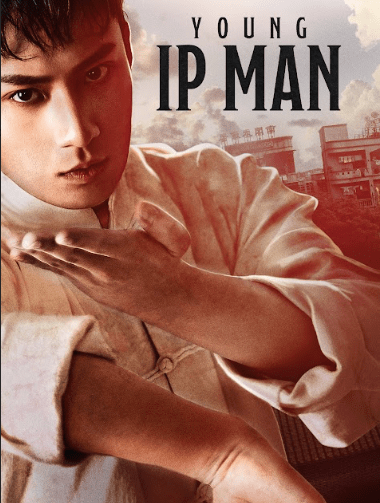
WELL GO USA BLU RAY RELEASE: Young Ip Man (2023)

Director Li Liming, alongside action coordinator Sun Fe, crafts an engaging narrative that explores the life of a younger Ip Man, with the character brought to life by the talented Zhao Wenhao. The story begins when Ip Man arrives in the bustling city of Hong Kong, eager to start his college education. However, his academic aspirations take a dark turn when he and his classmates are taken hostage by a menacing gang leader named Ma Long (played by Mu Feng-bin), who happens to be Ip Man’s former mentor. This twist of fate propels Ip Man into a harrowing ordeal marked by danger and deceit.

As the plot unfolds, Ip Man finds himself embroiled in a treacherous conspiracy that intricately weaves together local authorities, criminal factions, and a deeply personal betrayal from someone he once considered an ally. This betrayal shakes the foundation of his moral beliefs and challenges everything he has learned thus far.

Unlike previous films featuring renowned actors Donnie Yen and Wilson Yip, this rendition does not draw from historical events. Instead, it presents an original and thrilling action narrative that creatively utilizes the iconic Ip Man name. The film shines through its spectacular fight sequences, showcasing a blend of choreography and raw emotion that captivates audiences.

The character of Ma Long undergoes a significant transformation into a villain, driven by the profound corruption of the British colonial regime. Once a man seeking justice, Ma becomes consumed by grief and rage, redirecting his anguish into a destructive mission aimed at dismantling the lives of those in power. His vendetta escalates to the point where he even targets the children of the elite, illustrating the depths of his moral decline. In a reversing of roles, Ip Man, who once revered Ma and learned valuable lessons about right and wrong from him, must now confront the very man who instilled those beliefs.

As the story builds to its climax, Ip Man faces the daunting challenge of defeating all of Ma’s henchmen. Each encounter intensifies the stakes and tests his limits. The ultimate showdown with Ma Long looms ahead, forcing Ip Man to rely not only on his martial arts skills but also on the wisdom he gained during his formative years under Ma’s guidance.

Younger Ip Man is available on digital, DVD, and Blu-ray from Well Go USA Entertainment.

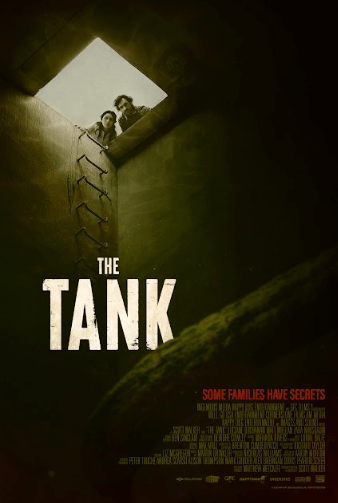
WELL GO USA BLU RAY RELEASE: The Tank (2023)

Ben inherits a mysteriously abandoned coastal property in Hobbit’s Bay, Oregon and takes his family to explore it. The property, with its overgrown house and a gigantic tank, holds a dark secret. As the family delves deeper, they accidentally unleash an ancient, long-dormant creature that had once terrorized the town. The film follows their struggle to survive and escape the wrath of this monstrous entity.

Directed and written by Scott Walker, this has led me to add to my advice of never going home to settle family estates. If your family has an overgrown house with a gigantic tank as part of it, just sell it sight unseen. You don’t need to live there, and you don’t need to open anything to unleash a creature.

The Tank, shot in New Zealand and featuring practical effects by WETA, promises a visually stunning monster. Matt Whelan, as Ben, and Luciane Buchanan, as Jules, deliver compelling performances that carry much of the film’s weight. The tension is palpable, and the audience is aware from the start that a monstrous threat looms.

Or monsters! Who is to say!

It looks great, even if you’ve seen everything in it before, but it’s a dependable monster movie, and sometimes, that’s precisely what you want to watch.

The Tank is available on demand, as well as DVD and Blu-ray from Well Go USA Entertainment.

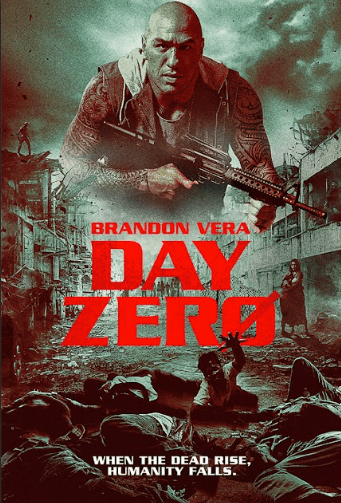
WELL GO USA BLU RAY RELEASE: Day Zero (2022)

After spending eight years in prison without any incidents, Emon, a former elite soldier portrayed by Brandon Vera—known for being the ONE Heavyweight Champion and the 2005 WEC Heavyweight Grand Prix Champion—finally regains his freedom. Emon’s main objective is to reconnect with his estranged wife, Sheryl (played by Mary Jean Lastimosa), and their young daughter, Jane (Freya Fury Montierro). However, upon his release, he quickly realizes that the world he once knew has been dramatically altered by a terrifying virus that has turned much of the population into ruthless, flesh-eating zombies.

As Emon navigates this new and perilous environment, he is relentlessly pursued by swarms of the undead. The urban landscape is fraught with danger, and Emon must utilize his extensive military training and combat skills to survive. His journey is fueled by an overwhelming determination to rescue his family and bring them to safety.

The film masterfully showcases Vera’s abilities and charisma, suggesting a bright future for him in the action movie genre. Directed by Joey De Guzman and skillfully written by Ays De Guzman, Day Zero is a gripping and intense thrill ride from beginning to end. The climax of the film builds to an epic confrontation within a crumbling apartment complex in the Philippines, where Emon faces off against a nearly overwhelming horde of undead. With each encounter, he fights valiantly, showcasing his strength and resilience as he strives to protect his loved ones.

Day Zero offers an adrenaline-pumping experience filled with heart-pounding action and suspense. It’s a must-watch for fans of the zombie genre, combining elements of survival, family and the human spirit’s enduring will to protect those we love.

“Day Zero” is available on digital platforms, DVD and Blu-ray through Well Go USA Entertainment.

CBS LATE MOVIE MONTH: Asylum (1972)

EDITOR’S NOTE: Asylum was on the CBS Late Movie on May 29, 1974 and August 20, 1976.

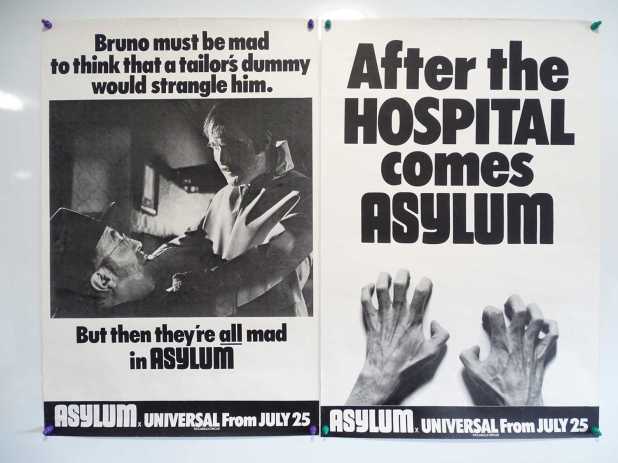
My real job is to write copy for marketing. I’ve been at it for over twenty years, and no matter how many great taglines I see in commercials, nothing moves me more than the copy that has sold my favorite movies. The words that sell Asylum are very special to me:

“Come to the Asylum…to get killed!”

The best lines make you say, “And then?” Or even better, “Why?” Why would I come to the Asylum? Why would I want to get killed? I need to know more. I need to watch this movie.

Asylum is a movie of pedigree. It comes from Amicus, the studio that made portmanteau horror their toast and baked beans. It’s written by Psycho author Robert Bloch, who based the script on several short stories. And it’s directed by Roy Ward Baker, whose films Quatermass and the Pit, The Vampire Lovers and The Vault of Horror belong in every media collection.

You know the narrative structure if you’ve seen an Amicus anthology film. Generally, unrelated people come together, tell their stories and realize that they’re either dead, in hell, or dead and in hell. Then, the narrator points to the camera and says something to the effect of “You’re next!”

Asylum breaks the mold by presenting its tales within a secluded home for the incurably insane. Dr. Martin arrives to interview for a position when he’s met by Dr. Lionel Rutherford, who is in a wheelchair thanks to an attack by inmate Dr. Starr, who was once the head of the place! If Dr. Martin can deduce exactly who Starr is from a series of patients, the job is his.

The first tale, “Frozen Fear,” is a very by-the-numbers EC Comics affair, with butcher paper-wrapped body parts suddenly finding a life of their own.

Yet, “The Weird Tailor” is when Asylum picks up speed and runs toward brilliance. A tailor, on the cusp of losing his shop, accepts a strange job from an even stranger man, played by Peter Cushing. There’s a feeling I get when Peter Wilton Cushing, OBE, appears on screen. It’s a return to childhood, remembering afternoons and late evenings watching endless Hammer movies with no adult cares and that moment of excitement when I recognized him in Star Wars. Here, as a man who has lost his son — Cushing was no stranger to loss, never getting over the death of his wife — he implores the tailor to create a suit for him, one with instructions that must be followed without question. The denouement of this episode still gets me every single time. This is pre-CGI practical magic creating sorcery on celluloid, an utter moment of strange beauty mixed with otherworldly dread.

The ending of “Lucy Comes to Stay” can be defined in the first few moments, but when you have Britt Ekland and Charlotte Rampling on screen together, something so trivial as an easy-to-divine twist is simple to get over.

“Mannikins of Horror” is a masterclass in unexpected twists. Soul transference and eerie toys converge to create a nightmare within the asylum’s four walls. And just when you think you’ve seen it all, the reveal of Dr. Starr will leave even the most seasoned fright fans stunned. Remember – nobody gets out of the Asylum unscathed. The unexpected twists in this tale will keep you guessing and gasping until the very end.

Despite owning thousands of DVDs and Blu-rays, Asylum always finds its way into our home’s player at least once a month. Why? Because it never loses its unique edge. How many films do you know that feature small robots filled with noodle-like guts stabbing doctors with scalpels, while glowing suit-wearing mannequins stalk the screen? And how many manage to combine these frightening moments with an ongoing theme of mankind’s tenuous grasp on sanity and identity? Asylum is a rare gem that accomplishes both, and it’s a film you won’t want to miss.

NOTE: This article originally ran on Horror and Sons.

BONUS: You can listen to the podcast we made about this film!

CBS LATE MOVIE MONTH: Go Ask Alice (1973)

EDITOR’S NOTE: Go Ask Alice was on the CBS Late Movie on April 26 and July 27, 1976.

Originally airing on January 24, 1973, Go Ask Alice is an adaptation of the 1971 book. The film, much like the book, delves into the personal struggles of a troubled teenager, a theme that resonates with many of us. While the book is more of a diary and is written by Anonymous, most people believe that therapist and author Beatrice Sparks wrote it. She’d go on to write several similar books that were also supposed to be the actual diaries of troubled teenagers.

Jamie Smith Jackson portrays Alice, a teenager striving to blend in at her new school, as she confides in her diary. Her quest for acceptance leads her to experiment with LSD at parties, plunging her into a world of substance abuse and family discord. The portrayal of her parents, played by William Shatner and Julie Adams, reflects the societal attitudes towards youth in the 1970s.

Mackenzie Phillips — who would later have drug problems of her own — shows up, and Andy Griffith (the film’s best part), Robert Carradine and Ruth Roman (from The Baby!) all make appearances. Their performances, especially those of Andy Griffith, add depth and intrigue to the film. It’s pretty schmaltzy in parts, but it’s a preachy 1973 TV movie. You kind of expect those kinds of things.

Bonus: You can listen to Becca and I discuss this on our podcast.

TUBI ORIGINAL: Vice News Presents – Sold Out: Ticketmaster And The Resale Racket (2023)

In November 2022, Ticketmaster and its parent company, Live Nation, were widely criticized for the ticket sales for Taylor Swift’s Eras Tour. The pre-sale website crashed within an hour, but 2.4 million tickets were sold despite the outage, breaking the all-time record for the most concert tickets sold by an artist in a single day.

Ticketmaster claimed that “historically unprecedented demand with 14 million showing up” was the cause, but it felt like just another example of bad customer service and worse business practices for so many.

Directed by Pieter Colpaert and Nicholas Fraccaro, this film shows how Ticketmaster and Live Nation, following their significant 2010 merger, have caused ticket sales to increase in price and give you no other option to buy tickets or see a show. This has led to the U.S. Congress attempting to revert the merger, as it appears to be a monopoly that has led to high prices and worse service.

Swift’s tour promoter, AEG Presents, remarked that Ticketmaster has exclusive deals with the majority of U.S. live venues, so they had to work with them. However, AEG Presents has also been criticized for its role in the high ticket prices. Fans have responded by filing a variety of lawsuits.

This should be no surprise to music fans.

In 1994, Pearl Jam was one of the few bands that tried to do something about it. Their complaint with the U.S. Department of Justice antitrust division claimed that Ticketmaster had a “virtually absolute monopoly on the distribution of tickets to concerts.”

It’s a stark reminder that the issue of ticket sales has been brewing for decades, and we’re still grappling with it today. This reiteration of the historical context helps the audience feel connected and part of a larger narrative.

Former Ticketmaster CEO told The Los Angeles Times, “The public brought all this on itself. I have no sympathy for people whining about high ticket prices. They helped create this situation where artists must make all their money on tour. Artists and the market set the prices, and you can’t pay a Motel 6 price and stay at the Four Seasons.”

This movie might not solve the problem, but it does an excellent job of laying it out. By presenting the issue in a clear and comprehensive manner, the film ensures that the audience feels informed and enlightened.

You can watch this on Tubi.

Sources

The Eras Tour: Taylor’s Version – Tiger Tattler. https://thetigertattler.com/5697/opinion/the-eras-tour-taylors-version/

Why has buying tickets for Taylor Swift been such a nightmare? Fans met with errors, disappointment. https://www.clickondetroit.com/entertainment/2022/11/16/why-has-buying-tickets-for-taylor-swift-been-such-a-nightmare-fans-met-with-errors-disappointment/

The Cure’s Robert Smith got Ticketmaster to pay back fans – Los Angeles Times. https://www.latimes.com/entertainment-arts/story/2023-03-16/the-cures-robert-smith-ticketmasters-fees

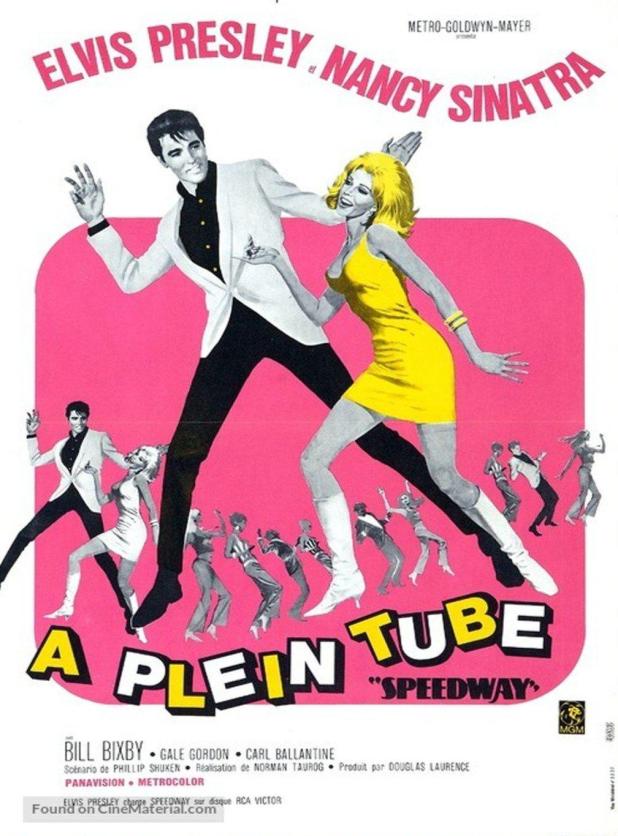
CBS LATE MOVIE MONTH: Speedway (1968)

EDITOR’S NOTE: Speedway was on the CBS Late Movie on May 4, 1973 and February 1 and November 22, 1974.

I always thought the Eddie Murphy joke about Elvis acting — he’d just sing instead of speak — was a joke until this movie.

Elvis embodies the role of Steve Grayson, a NASCAR race driver whose generosity knows no bounds. He showers his friends with gifts, bails them out of financial hardships, and is always there for everyone. This portrayal reflects the real Elvis, who was known for his generosity. He often gifted his Memphis Mafia and even strangers with money, homes and cars.

The bad news is that his manager, Kenny Donford (Bill Bixby), is a compulsive gambler who has mismanaged Steve’s fortune to support his habit. Just like Colonel Tom Parker did to Elvis.

The IRS sends agent Susan Jacks (Nancy Sinatra) to watch over Grayson and ensure that they get their $100,000 in back taxes, but of course, she falls in love with the big lug.

The film is a treat for NASCAR aficionados. It features authentic late-’60s NASCAR footage shot at the Charlotte Motor Speedway. Viewers can catch a glimpse of Richard Petty, Buddy Baker, Cale Yarborough, and Tiny Lund on the track. This is a unique experience as it marks the first time NASCAR drivers were featured in the opening credits. Elvis’ car, a 1967 Dodge Charger, the Cotton Owens team #6 car, driven in real life by David Pearson, adds to the historical charm of the film.

Directed by Norman Turong, who made plenty more with Elvis, as well as movies with Martin and Lewis and Dr. Goldfoot and the Bikini Machine. It was written by Phil Shuken and was the twenty-second movie Elvis made since he debuted in Love Me Tender. Fun fact: It’s the only Elvis movie to feature someone other than him on the soundtrack, with Sinatra singing “Your Groovy Self.”

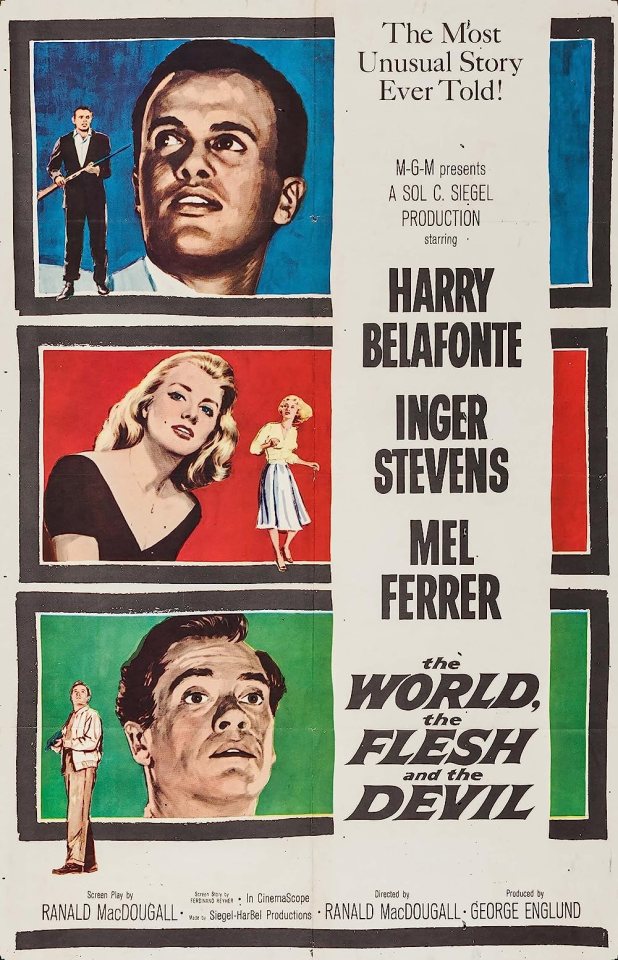
CBS LATE MOVIE MONTH: The World, the Flesh and the Devil (1959)

EDITOR’S NOTE: The World, The Flesh and the Devil was on the CBS Late Movie on March 29 and September 18, 1972; May 13, 1974 and January 27, 1976.

Based on The Purple Cloud by M. P. Shiel and the story “End of the World” by Ferdinand Reyher, this was directed and written by Ranald MacDougall, who also wrote Mildred Pierce.

In his third objection to the ‘prudence of the flesh’ is a sin in Summa Theologica, Saint Thomas Aquinas said, ‘Just as man is tempted by the flesh, so too is he tempted by the world and the devil.’ This theological concept forms the title of the film, ‘The World, The Flesh and the Devil ‘, as these three are the enemies of man. The film uses this title to explore the complex and intertwined nature of these three temptations, and how they manifest in the context of race relations.

Harry Belafonte’s production company, Harbel Productions, set out to create films that would offer a more authentic representation of African-Americans in Hollywood. This film was their first venture. However, by the film’s conclusion, Belafonte and his co-stars, Inger Stevens and Mel Ferrer, found themselves critiquing the film’s portrayal of race relations.

Ralph Burton (Bellafonte) finds himself in a mine when the world ends, a revelation he uncovers as he frees himself from his entrapment. Living alone in a building with mannequins, he soon encounters Sarah Crandall (Stevens), who has been observing him for some time. She falls in love with him, but even as the last two people alive, he is unable to overcome the barriers of segregation.

They soon nurse Benson Thacker (Ferrer) back to health after finding him, and he falls for Sarah. Ralph tries to leave them to be a couple but can’t find himself to leave the city. Benson believes that with Ralph alive, he can never be with Sarah, so they go to war with one another, a ridiculous thing when everyone else is dead, killed by a radioactive cloud. The film’s ending is particularly poignant, as it shows Sarah making Ralph and Benson walk hand in hand down the street, symbolizing a potential for unity and understanding between races, even in the most extreme circumstances.

Source

The World, The Flesh And The Devil – Morrissey-solo Wiki. https://www.morrissey-solo.com/w/index.php?title=The_World,_The_Flesh_And_The_Devil&mobileaction=toggle_view_mobile