APRIL MOVIE THON DAY 6: Uncle Tom’s Cabin (1977)

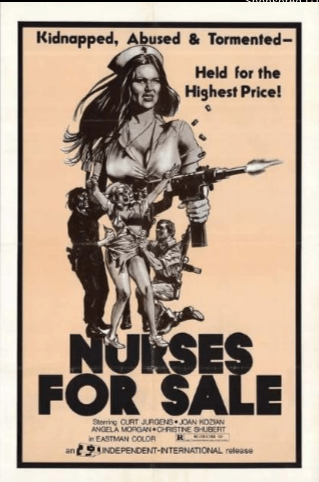
April 6: Independent-International: Write about a movie by Sam Sherman. Here’s a list.

ABOUT THE AUTHOR: Adam Hursey is a pharmacist specializing in health informatics by day, but his true passion is cinema. His current favorite films are Back to the Future, Stop Making Sense, and In the Mood for Love. He has written articles for Film East and The Physical Media Advocate, primarily examining older films through the lens of contemporary perspectives. He is usually found on Letterboxd, where he mainly writes about horror and exploitation films. You can follow him on Letterboxd or Instagram at ashursey. His April Movie Thon list is here.

EDITOR’S NOTE: I love that Adam did the same movie as me!

Why make an entirely new film when you can just add some sleaze to an existing one?

This philosophy was one avenue Independent-International Pictures travelled when releasing motion pictures in the 1960s and 70s. Led by director Al Adamson and producer Sam Sherman, the production company released many profitable films to the drive-in circuit. One method the duo used would be to acquire European films that perhaps did not provide financial success upon initial release and shoot some additional footage that could be inserted into it for a more sensational experience.

Case in point: Uncle Tom’s Cabin. In 1965, German director Gèza von Radvànyi adapted Harriet Beecher Stowe’s iconic novel of American slavery, turning it into a 170 minute epic that did not catch on with audiences, despite premiering at the Cannes Film Festival. Rights to the film were sold to Kroger Babb, one of the most famous exploitation producers who might be best known for his “sex hygiene” film Mom and Dad. Babb cut the film down to 110 minutes and released it in 1975 under the title Cassy (a minor yet important character in the film), but the movie again failed to attract an audience. By the time Sam Sherman and Al Adamson got involved, the year was 1977, and “slavesploitation” was suddenly a hot commodity thanks to Mandingo and Roots. But the content would need to be beefed up for tickets to be sold. No problem. Adamson shot some scenes of rape, interracial love, and torture, and these scenes were (pretty seamlessly) added into the original picture.

I would love to set my eyes on Radvànyi’s original film. Starring Herbert Lom as slave trader Simon Legree, Uncle Tom’s Cabin pulls no punches in showing the struggles of individuals at the hands of such a merciless individual. Uncle Tom, along with other slaves, is sold to Legree to help settle some debts of his owner. Legree is a memorable villain, and Lom’s performance, behind his scarred face, is just the type of person viewers would love to hate. 

Is it possible that the exploitative scenes added by Adamson and Sherman actually do improve the film? Perhaps. There is no doubt as to which scenes were added. And these scenes definitely made me sit up in my chair a bit straighter. As someone who has never read the novel, the film made me research the differences between Stowe’s tome and adaptations over the years. In this version, after attempting to flood the cotton crop, the runaway slaves run into the welcoming arms of the saintly men of a Catholic mission. This ending might have been added to cater to European sensibilities.

But what about the stereotype of the Uncle Tom character himself? In this film, Uncle Tom lays down his life protecting others, a far cry from how Uncle Tom is discussed today as a man who would do anything to please his masters for self-preservation. Turns out the character in this film is closer to the one created by Stowe. Uncle Tom is a Christ-like figure, intentionally written this way to appeal to Christian readers in an attempt to convert them to the abolitionist cause. It worked. As the film announces via a title card at the beginning of the picture, Uncle Tom’s Cabin helped propel Abraham Lincoln’s desire to end the practice of slavery in the United States.

It is amazing to think that an exploitation version of a German film about America’s darkest period in history can actually educate. Will I now read the book I’ve put off reading for so long? Maybe. Of course, I have too many movies to watch to actually read a novel. And many more Al Adamson films to see–Uncle Tom’s Cabin is only the second of his films I’ve seen. I have so much work to do.

APRIL MOVIE THON DAY 6: Uncle Tom’s Cabin (1977)

April 6: Independent-International: Write about a movie by Sam Sherman. Here’s a list.

The source material for this movie is Géza von Radványi’s 1965 epic, a massive, $5 million European co-production that featured Herbert Lom (yes, Chief Inspector Dreyfus himself) and Gert Fröbe (Goldfinger!). It was meant to be a prestigious, sweeping adaptation of the Stowe classic.

It had already been released by none other than Kroger Babb in 1969 (thanks, Good Efficient Butchery) with an hour chopped off. He re-released it under the name Cassy, and it bombed again.

Enter Sam Sherman. He looked at this three-hour prestige piece and saw a void where the commercial elements should be.

Needing money, Babb sold it to him, and Sherman had Al Adamson cut forty more minutes off the already-trimmed-down Babb cut. When Napoleon (Aziz Saad) is killed by an alligator, he cut that part and has an entirely different actor, Prentiss Moulden, take over. Napoleon makes it to a plantation where the widow Melissa (Mary Ann Jenson) is, well, inserted into the Herman Lom villain-led film. As she nurses him back to health, she also ends up asking him to hold her, and then that gives us a whole bunch of lovemaking, which only ends when three bounty hunters catch him, sexually assault him and then pour burning oil all over him while we watch. Marilyn Joi also shows up as a runaway slave who also gets raped, because that’s what audiences were looking for in 1977, said no one other than raincoaters.

In the original, Uncle Tom (John Kitzmiller) dies and forgives the whites for how they treated his people. In this one, well, everyone who had been impacted by the slavers gets some revenge, including castration. We close on the bad guys getting lynched, which is exactly the kind of revenge Southern whites feared. 

This was re-released yet again three years later as White Trash Woman. RIP Sam Sherman. I can only assume that they cremated you, because after watching this, I have no idea what size coffin could contain balls as big as yours.

Murder, She Wrote S3 E17: Simon Says, Color Me Dead (1987)

Jessica investigates when an artist is murdered and his prized painting is missing.

Season 3, Episode 17: Simon Says, Color Me Dead (March 1, 1987)

Simon Thane is a celebrated artist living in Cabot Cove. For the last several years, Thane has jealously guarded his favorite painting, which he has never allowed to be seen publicly. Jessica becomes involved in the story when Thane is murdered and his prized painting stolen, leading our heroine to conclude that the mysterious work of art may contain a clue as to the killer’s identity.

Who’s in it, outside of Angela Lansbury?

As always, Tom Bosley as Sheriff Amos Tupper and William Windom as Dr. Seth Hazlitt are here.

Diane Baker (The HauntedThe Old Man Who Cried Wolf) is Eleanor Thane.

Comedian Foster Brooks plays Simon Thane.

Ann Dusenberry, Tina from Jaws 2, is Carol Selby.

Leonard Frey is Felix Casslaw.

Tess Harper (Tender Mercies) is Irene Rutledge.

Steve Inwood (Cruising) is Cash Logan.

Dick Sargent (Bewitched) is George Selby.

Chris Hebert (Invaders from Mars) is Tommy Rutledge.

In smaller roles, Phillip Clark is Deputy Collins and Daryl Lynn Wood is Martha Sommers.

What happens?

Simon and Eleanor Thane have been staying in Cabot Cove, but haven’t even tried to spend time with J.B. She’s busy being, well, Jessica. Ever the mediator, she steps in when Martha Sommers accuses young Tommy Rutledge of bike theft. Jessica’s solution is to gift Tommy a bike once owned by her late husband, Frank. This highlights her maternal warmth, contrasting sharply with the cold, pretentious salon hosted by the Thanes later that evening, which they at least remember to invite her to.

Yes, Simon Thane isn’t just a celebrated artist. He’s a man who thrives on being the smartest and most elusive person in the room. Living in Cabot Cove for the quiet atmosphere, he has spent his final years obsessively guarding a secret masterpiece.

Man, the guest list is a powder keg. Felix Casslaw is a gallery owner smelling a massive payday; Carol and George Selby seem to have a deep, albeit strained connection to Simon and Eleanor, Simon’s wife, who has spent years in the shadow of his genius and his moods.

Hours after everyone leaves, young Tommy wakes up to a bloody Irene who tells him to go back to bed. Everyone else wakes up to a dead Simon and a missing painting. Irene swears she didn’t kill him, but Amos is convinced that it’s a crime of passion, remarking that “Just because there’s snow on the roof doesn’t mean there’s not fire in the hearth.”

Is he projecting his cop boner onto his favorite mystery writer?

Now, Carol believes that Cabot Cove should have a Simon Thane exhibition and it seems like everyone wants to get richer off his death. Irene claims that before Eleanor went to bed, she went to see Simon to get the money he owed her, but he was already dead. Somehow, in the middle of all of this, we learn that Irene isn’t Tommy’s real mom. An awful lot happens in Cabot Cove.

Anyway, we got a dead artist, and this is why Simon and Eleanor were not talking to J.N. Simon had to die to learn that lesson.

Who did it?

Jessica realizes that the painting wasn’t stolen just for its monetary value. It was stolen because it was a confession in oil. The painting revealed Simon’s true obsession with Carol Selby, but it also captured a truth about their relationship that Carol couldn’t allow to become public. Simon was in love with her; she just would cock tease him by letting him paint her, but the truth is that she never loved him.

Who made it?

Kevin G. Cremin, who was an assistant director on several other episodes, directed. It was written Robert E. Swanson, one of 87 episodes he told the story of.

Does Jessica dress up and act stupid? Does she get some?

No. I say it’s high time we get that.

Was it any good?

Haven’t we already had another artist die on this show? Yes. Many more will die before we’re done.

Any trivia?

Diane Baker and Steve Inwood would be in three more episodes as different characters.

Give me a reasonable quote:

Jessica Fletcher: I wouldn’t be a bit surprised if they started seeing quite a lot of each other. How about some more coffee, Amos? And I will tell you something else to put into your amnesia file.

What’s next?

Jessica investigates when an artist is murdered, and his prized painting is missing.

APRIL MOVIE THON DAY 5: The Passover Plot (1976)

ABOUT THE AUTHOR: Adam Hursey is a pharmacist specializing in health informatics by day, but his true passion is cinema. His current favorite films are Back to the Future, Stop Making Sense, and In the Mood for Love. He has written articles for Film East and The Physical Media Advocate, primarily examining older films through the lens of contemporary perspectives. He is usually found on Letterboxd, where he mainly writes about horror and exploitation films. You can follow him on Letterboxd or Instagram at ashursey. His April Movie Thon list is here.

April 5: Easter Sunday — Watch something religious.

Faith should be strong enough to withstand doubt, perhaps even strengthened by it. There is a theological belief I’ve heard many times in Christian sermons–”The Bible said it. That settles it”. This definitive statement leaves no room for mistranslations or potential bias as the Scriptures were compiled by human men. While they might be divinely inspired, there should be room for questioning.

Biblical scholar Hugh J. Schonfield took his doubts public in 1965 with his book The Passover Plot. After researching non-biblical historical documents, as well as the Gospels, Schonfield reached the conclusion that Jesus was not the Messiah and instead had determined that he should self-manifest himself as the Son of God in order to be elevated to the status of king during a time when Rome occupied Israel.

Jesus had the lineage as a Son of David (his bloodline could be traced back to the former king of Israel, and it had been prophesied that the Messiah would come from his descendants). Israel was experiencing a time of great persecution by Rome. The people were looking for someone who would conquer the Romans and restore sovereignty to the nation. Why couldn’t it be Him?

According to Schonfield, Jesus shrewdly planned the details of His crucifixion. Knowing that His body would need to be removed from the cross prior to the Sabbath, He only needed to survive a few hours. He also conspired to have a medication given to Him while on the cross to slow his heart rate enough to appear dead to the Romans. Unfortunately, the plan backfired when Jesus’ side was pierced with a spear by a Roman soldier (as was common practice during a crucifixion to ensure the person had indeed perished). Jesus died from that wound and would not be able to assert His place as king while on Earth. 

Ten years prior, Greek author Nikos Kazantzakis wrote his own controversial novel, The Last Temptation of Christ. While not basing his story on historical documents, Kazantzakis instead hypothesises Christ’s final temptation–coming down off of the cross and living life as a mortal man. Jesus experiences a normal life, but one that would be ultimately meaningless. He rejects this final temptation and fulfills God’s plan of salvation for humanity.

As one might expect, both of these novels and the films on which they are based became magnets for controversy. The Last Temptation of Christ might be more famous due to being relatively more recent as well as the presence of Martin Scorsese as director. But the cinematic version of The Passover Plot experienced its own boycotts and outrage. Singer Pat Boone went as far as purchasing airtime on syndicated television stations to convince people not to watch The Passover Plot. Did he watch the film before calling for a boycott? The answer to that question is not clear.

I cannot imagine that he actually watched the film and was terribly offended by what transpired. Unfortunately, The Passover Plot is a pretty bland retelling the last days of Christ. Nothing new is really offered despite the promise of blasphemy. We have seen it all before. John baptized Christ in the River Jordan. The Pharisees and Sadducees disturbed by the cult of personality that formed around Christ. Pontius Pilate (here played by a surprisingly subdued Donald Pleasence) complaining about his inability to not offend the Jewish citizens he governs. The brutality of the crucifixion. In fact, if you blink, you might miss the whole conspiracy angle. It is not made clear until the very end, and even then, it is a light vague. 

Honestly, the entire production is brought down by Jesus himself, played by Zalman King, an actor I typically find void of charisma. If nothing else, Jesus has to be charismatic in order to attract followers (although there is also a surprising lack of followers shown here–it is typically just Jesus and his disciples. In the Gospels, Jesus is always surrounded by an ever growing crowd of people clamoring for at least a glimpse if not a full out miracle). If you have ever watched Blue Sunshine, you know that King has an intense stare that comprises around 90 percent of his acting chops. Not much else. Maybe he was holding back, saving all of his, how shall I say, vitality for Red Shoe Diaries.

I’m happy to report that The Passover Plot did not rattle my faith. It did not challenge it either though. And that lukewarm result might be the worst outcome. By being neither hot nor cold, the film quickly becomes forgettable. I haven’t watched The Last Temptation of Christ in maybe 20 or 25 years, but scenes from that film are indelibly etched into my mind. My faith was strengthened by the knowing that Jesus could have let that cup pass by him and led an ordinary life. There is nothing in The Passover Plot (at least the cinematic version) that gives me anything with which to grapple, which might be the ultimate unforgivable sin.

APRIL MOVIE THON DAY 5: Heaven’s War (2018)

April 5: Easter Sunday — Watch something religious.

Listen, you think your local politics are a mess? Try being Jonah Thomas. He’s a U.S. Senator who finds himself trapped in the ultimate filibuster, where the lobbyists are literal demons, and the swing votes are decided by the Heavenly Host.

Director Danny Carrales, a man who spends his days teaching the craft at Liberty University and his nights chronicling the invisible war for our souls, dropped Heaven’s War on me like a prophetic ton of bricks. This is the kind of movie that feels like it was found in a time capsule buried beneath a Christian bookstore that went out of business in 1996, yet it’s talking about things that make today’s headlines look like yesterday’s news.

Thomas told The Worldwide Threat,Heaven’s War is about spiritual warfare and I believe that spiritual warfare, at least from, I think the heat of the battle is probably taking place in DC. I think that’s where a lot of spiritual battles are taking place, and I thought what would be a cool way to represent people’s lives in danger, everyday walks of life, that the powers that be in DC can have a major push towards God or away from God. In this case, I thought,Let’s go ahead and have some bad guys that are senators that are trying to put together this vaccine that will hopefully stop cancer, stop the pain that people go through in that cancer world.”

I thought,What if the vaccine wasn’t actually what they said it would do? It would heal some people, but there’d be a small percentage, which turns out to be a larger percentage of people that would suffer because they took the vaccine.I thought that would be a really cool idea to implement, explaining why there’s such a spiritual battle to stop this vaccine from happening. Little did I know that COVID would come right down the road following the making of this film.”

Yes, the bad guys are trying to cure cancer. And yes, one of them is Joe Estevez. You know the rule: if a movie features a member of the Sheen/Estevez dynasty and involves a government conspiracy, you’re watching Tubi.

Anyways…

Senator Jonah Thomas (Jason Gerhardt) wants to be a good politician, but is there such a thing? He’s been overlooking what’s really important — his family — and worrying about his future. If this movie has any say, he doesn’t have one. Terrorists blow up all the bad guys and try to flip him to their side, but everything is viewed through a lens of supernatural high-stakes poker.

But who is good? Who or what is evil? Why do the lightsabers in this invert the good-guy/bad-guy paradigm of Star Wars, so the heels get blue and the faces get red (thanks for noticing, Logan Harrington on Letterboxd)?

Why do American politics and flags, so many flags, matter to the spiritual world? Why is there so much dialogue? Why does God need a starship? I have so many questions, and this movie just hit me with a wall of flashbacks so dense I felt like I was undergoing a neurological exam. I tried, I really did, but I started to get lost in the temporal slipstream. At least the Senator gets the best help, because when you have Gabriel (Danny Boaz), well, I don’t know how you can do better than have the Angel of Revelation.

There’s also the whole debate over why God lets bad things happen. I think when you’re in the middle of battling actual demons with an angel, the point of all this is moot because you now know God exists, so your faith has been rewarded or your lack of faith has been shown. It feels like a very shooting fish in a holy water barrel situation.

Many of the IMDb reviews are punching down on this or over-praising it, saying things like,…if you are a person of faith, you will enjoy it. If you don’t consider this a love story on several different levels. If you are trying to get into the business, watch and learn how to put all the pieces together to create a great story with conflict that has emotional impact.”

I don’t know about love story, unless you mean the love between a director and his green screen, but Heaven’s War is definitely a trip.

You can watch this on Tubi.

APRIL MOVIE THON DAY 4: Rats (2003)

April 4: World Rat Day — Celebrate this holiday by writing about a movie with a rat in it.

World Rat Day is observed every April 4 to honor the friendly, loyal, and intelligent nature of rats as pets and companions. While mostfancy ratsare known for their social bonds and ability to learn complex tricks, Hollywood usually prefers to cast them as the ultimate harbinger of doom.

If you’re looking to celebrate the loyal and intelligent side of these rodents, Rats (also known by the far more subtle title Killer Rats) is arguably the worst possible choice. 

Brookedale is a decaying architectural nightmare. Formerly a prison, it now functions as a high-security rehab facility for the rich and famous. It sits atop a labyrinth of ancient, stench-filled sewers, the kind of place where you’d expect to find a health code violation, not a miracle cure.

Samantha (Sara Downing) has gone undercover there, hoping to break a story about celebrity drug addicts. There’s just one person in charge, Dr. William Winslow (Ron Perlman), and he loves rats. Just digs them. Even has a pet rat. As a result of his experiments, the rats can all communicate telepathically, and there’s one big rat that rules them all. 

What does that have to do with treating addiction? Look, I didn’t write this movie. Jace Anderson, Boaz Davidson, Brian Irving and Adam Gierasch did. Yes, the writers of Mother of Tears joined up with the director of both Lemon Popsicle and The Last American Virgin to write this. Maybe that explains how a character gets the name Johnny Falls.

This was directed by Tibor Takács, who made The Gate and I, Madman, so we should forgive him for any of his direct-to-streaming and SyFy movies.

How you spend World Rat Day is your own decision to make. For me, I spent it watching Ron Perlman whisper to rodents while a giant animatronic rat terrorized a psychiatric ward.

Also: One time as a kid, I totally had a rat climb up the sewer and into a toilet that I was sitting on while everyone else watched Evel Knievel wipe out in Las Vegas. My grandfather stabbed it with a giant gold serving fork that my parents got for their wedding and had never used before.

You can watch this on Tubi.

Tales from the Darkside S2 E14: Dream Girl (1986)

Directed by Tinma Ranon, who wrote the script based on a story by Barbara Paul, this is about Andrea Caldwell (Carolyn Seymour), a high-strung theater director with a short fuse and zero patience for her lazy maintenance man, Otto (Lou Cutell, Amazing Larry!). After she berates the poor guy and tosses away his magazine, she and her missing lead actor Syd (John Cedar, who wrote and produced The Manitou!) are sucked into a surreal, low-budget dreamscape where Otto is the boss and they’re the help.

Andrea eventually figures that out and decides that the only way to beat a dreamer is to out-dream him. I mean, only a ninja can kill a ninja. She pops some reds to hijack the fantasy, but wakes up in the dream of Joe D’Amico (Dawson Mays), a stagehand Otto was also  keeping captive. The tragedy isn’t just that she fails to take over; it’s the layering of the dreams. In a precursor to films like Inception, she escapes one man’s nightmare only to fall into the subconscious of another person she mistreated.

Can someone get Ken Lauber on the phone? The score in this one sounds a lot like the music from A Nightmare on Elm Street.

What a weird episode.

B & S About Movies podcast Episode 131: Eyes Without a Face

This week, we’ll get into movies that are all Eyes Without a Face, such as The Awful Dr. OrloffFacelessCorruption and Mansion of the Doomed.

You can listen to the show on Spotify.

The show is also available on Apple Podcasts, iHeartRadio, Amazon Podcasts, Podchaser and Google Podcasts

Important links:

Theme song: Strip Search by Neal Gardner.

Donate to our ⁠⁠⁠⁠⁠⁠⁠⁠⁠⁠⁠⁠⁠⁠⁠⁠⁠⁠⁠⁠⁠⁠⁠⁠ko-fi page⁠⁠⁠⁠⁠⁠⁠⁠⁠⁠⁠⁠⁠⁠⁠⁠⁠⁠⁠⁠⁠⁠⁠

APRIL MOVIE THON DAY 3: Luther The Geek Tromatic Special Edition Blu-ray (1989)

April 3: American Circus Day — Write about a big top movie.

As the Encyclopedia Britannica notes, the term “geek” didn’t always imply a tech-savvy enthusiast. In the early 20th century, it was a title of derision for the lowest rung of the carnival hierarchy. These performers, often struggling with severe alcoholism or mental illness, were paid in liquor or room and board to perform “he bite, a gruesome act involving the decapitation of live chickens or rats.

Director Carlton J. Albright turns this historical footnote into a psychological trauma trigger for his protagonist, Luther Watts. The film establishes Luther’s trajectory not through a complex descent into madness, but through a singular, scarring childhood moment: witnessing a caged, desperate carnival geek bite the head off a chicken.

This trauma doesn’t just break Luther; it resets him. He becomes a literal geek in the most archaic sense. By the time we meet him as an adult (played with unsettling commitment by Edward Terry), Luther has shed his humanity, speaking in clucks and replacing his teeth with metal dentures.

Director Carlton J. Albright also wrote The Children, so he has no problem going for, well, the throat here. He has no qualms about putting innocents, including children and the elderly (or a young girl dressed like an old woman), directly in the path of Luther’s metal teeth. He also loves his villain. Luther isn’t a misunderstood monster or a villain with a complex moral code. He is a biological machine driven by a singular, primal urge to feed and destroy.

Extras include the original Lloyd Kaufman DVD intro, Carlton J. Albright’s Blu-ray intro; a director’s commentary with Carlton J. Albright; interviews with Carlton J. Albright, William Albright and Jerry Clarke; bloopers, Troma’s Freak Show and music videos. You can get this from MVD.

VINEGAR SYNDROME BLU RAY RELEASE: Forgotten Gialli: Volume Nine

This is the seventh Forgotten Gialli set from Vinegar Syndrome. You can check out my articles on the others here:

This box set has the following movies:

Madness (1992): Also known as Gli occhi dentro (The Eyes Inside) and Occhi senza volto (Eyes Without a Face), this Bruno Mattei* giallo — made a few decades late, but hey, give the man a break — tells the story of Giovanna Dei (Monica Carpanese, who is also in Mattei’s Dangerous Attraction and Legittima Vendetta). She’s the creator of a comic book called Doctor Dark, the tale of an anti-hero who is a Pagan professor by day and a babysitter killer by night, cutting out his victim’s eyes and replacing them with shards of broken glass. Now, someone is acting out the murders in real life and leaving the ocular evidence in her apartment.

Written by Lorenzo De Luca — who wrote Anthropophagus II and The Fourth Horsemen which will have Franco Nero as Keoma and Fred Williamson as Cobra, as well as appearances by Mick Garris Alex Cox, Ruggero Deodato, Fabio Testi, Enzo G. Castellari, Gianni Garko, Ottaviano Dell’Acqua, R.A. Mihailoff, Massimo Vanni and more but that feels like IMDbs — and shot by much of the same crew that worked on the aforementioned Dangerous Attraction.

There’s a fair amount of story taken from Tenebre — like the line “If they kill someone with a power drill, do they take it out on Black and Decker?” which comes directly from Peter Neal’s question “Let me ask you something? If someone is killed with a Smith and Wesson revolver…do you go and interview the president of Smith and Wesson?” in Argento’s movie, as well as the idea of art becoming real-life murder. Doctor Dark’s trick of putting glass into the eye sockets of his victims feels a lot like Manhunter. And, of course, there’s Eyeball to be taken from as well. And while we’re on the subject, the entire plot of Sexy Cat. But the most grievous theft is in the Italian VHS release of this film, which completely takes two murder scenes from Lamberto Bava’s A Blade in the Dark. Did Mattei think no one would notice**?

That said, it may just be the fact that I love giallo and am a Bruno Mattei apologist, but I found myself liking this movie. You’d have to be a superfan of both for me to recommend it to you, but if you are, come on over and watch it with me.

*Using the name Herik Montgomery.

**Trick question. He didn’t care.

Bugie rosse (1993): A ruthless serial killer is stalking the Roman night, targeting male prostitutes with a cold, methodical precision that feels less like passion and more like pathology. Into this neon-and-shadow underworld steps Marco (Tomas Arana, Body Puzzle), a journalist who thinks he’s chasing a story but quickly realizes the story is starting to chase him back. His investigation pulls him deep into the city’s gay clubs, back rooms and coded encounters—territory that immediately invites comparisons to Cruising, except filtered through the glossy, psychosexual lens of late-period giallo.

Marco’s descent is as much internal as it is procedural. The deeper he goes, the more the film toys with the idea that exposure changes you—that proximity to desire, especially desire you don’t fully understand, begins to blur boundaries. He’s married to Adria (Gioia Scola, who is in another late 80s/early 90s giallo that needs more people talking about it, Obsession: A Taste for Fear), a stewardess who represents stability, normalcy and the hetero safety net the film keeps returning to like a nervous tic. The movie almost reassures the audience she’s there, like a defense mechanism, because otherwise Marco’s increasing discomfort (and curiosity) around male attention might actually lead somewhere more transgressive. And that’s where the tension lives: the film flirts with queerness but keeps one foot planted firmly in early ‘90s conservatism, no matter how one of the suspects, Andrea (Lorenzo Flaherty), makes him feel.

Still, it pushes further than most gialli ever dared. Traditionally, the genre treated queer characters as punchlines, perverts or disposable misdirection. Here, there’s at least a surface-level neutrality as men meet men, desire exists and the camera doesn’t leer at it with the same cruelty you’d expect from earlier entries. There’s even a surprisingly prescient detail: the use of early internet chat rooms as a way for men to connect. In 1993, that’s borderline sci-fi for this kind of movie, and it gives the film a strange, forward-looking edge, as if it accidentally stumbled into predicting the digital cruising culture that would explode years later.

Plus, I’m always happy to see Natasha Hovey (Cheryl from Demons) in a movie, as well as Alida Valli (SuspiriaEyes Without a FaceThe Killer NunFatal Frames). It was directed and written by Pierfrancesco Campanella, who also made the 2003 giallo Bad Inclination and the shorts La goccia maledettaL’idea malvagia and L’amante perfetta.

And then there’s that ending. Full spoiler territory, but it’s the kind of twist that reminds you why you’re watching this stuff in the first place: Adria disguising herself as a young man and deliberately entering her husband’s hunting ground is equal parts absurd and weirdly perfect. It collapses the film’s anxieties about identity, desire and performance into one final, lurid gesture.

Murder In Blue Light (1992): By the time he got to this one, Alfonso Brescia was less a director than a one-man exploitation factory. The guy made 51 movies, jumping genres the way other filmmakers change lenses—westerns, war films, sci-fi knockoffs, crime flicks, gialli—you name it, movies like Killer Caliber .32If One Is Born a SwineNaked Girl Murdered In the ParkWar of the PlanetsStar OdysseyBeast In SpaceIron WarriorMiami Cops and more. He wrote this as well.

Enter Starlet DuBois, played by Florence Guérin, who feels like a relic from an alternate timeline where the giallo boom never died. She’s a decade late to be a proper genre queen, but she makes up for it by diving headfirst into plenty of fun late in the game entries like BizarreCattive RagazzeFacelessToo Beautiful To DieKnife Under the ThroatShe’s the kind of presence these movies need—hypnotic, slightly unreal, like she wandered in from a better production and decided to stay.

Her character’s setup is pure exploitation insanity: by day she’s Starlet, by night she becomes Sherry (kind of like Angel), a Times Square sex worker prowling the neon gutters of the Deuce, hunting for the man responsible for her brother’s death. And what a death it is! This isn’t just backstory, it’s a dare. Russian roulette…with a hand grenade. The result? Multiple casualties, injuries and one very specific mutilation that becomes the film’s obsession. Because the killer she’s tracking isn’t just murdering men. He’s targeting their masculinity in the most literal, grindhouse way possible, turning the whole thing into a revenge story filtered through body horror and psychosexual panic.

Trying to impose some kind of order on this chaos is Flanigan, played by David Hess—yes, that David Hess — bizarrely cast as a quasi-heroic cop. And if that sounds strange, just wait until the movie asks him to dress up as Guérin’s character as part of the investigation. It’s the kind of tonal whiplash only late-era Italian exploitation could deliver: deadly serious one minute, completely unhinged the next.

If this all starts to feel like it’s referencing Body Double, well, that movie was a giallo, so Brescia is just getting back some interest for the Italians. DePalma’s film was called Omicidio a Luci Rosse in Italy, which means Red Light Killer. This is Blue Light Killer.

Stylistically, this is where Brescia’s late-career quirks really take over. He’d been dabbling in music video aesthetics — Iron Warrior already hinted at it — and here you get pulsing lighting, awkward slow motion and sequences that feel like they’re one synth track away from MTV rotation. There are even flashes of primitive computer graphics.

But most of all, it has David Hess in a dress, trying to pretend he’s Florence Guérin, one of the most gorgeous women in the history of, well, existence. And he’s David Hess.

You can get this from Vinegar Syndrome.