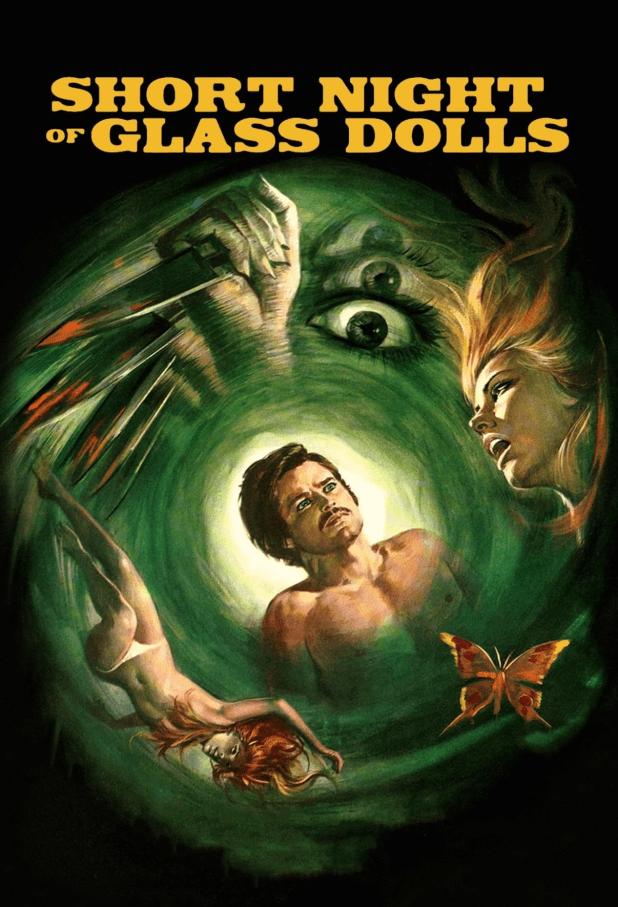
Cinematic Void January Giallo 2025: Short Night of Glass Dolls (1971)

EDITOR’S NOTE: Cinematic Void will be playing this on Thursday, Jan. 23 at 7:30 PM at the Little Theater in Rochester, NY (tickets here). For more information, visit Cinematic Void

Gregory Moore (Jean Sorel, Perversion Story) has a problem. His body has been found in a park in Prague, but the American journalist is anything but dead. His heart is still beating and his mind is still able to replay the sinister events of the last few days, a story that started with the disappearance of his girlfriend Mira (Barbara Bach) and ended even more horribly than he could have imagined.

The debut movie from director Alan Lado, Short Night of Glass Dolls subverts the giallo genre to move slowly into the supernatural. The only other giallo Lado created was Who Saw Her Die?* which, much like this movie, doesn’t seem keen on following the Argento giallo formula like just about everyone else. Lado would also make the baffling Star Wars clone The Humanoid many years later.

Moore resolves to find Mira when the police can’t, so he joins forces with his co-workers Jessica (Ingrid Thulen, Salon Kitty) and Jack (Mario Adorf, The Bird with the Crystal Plumage). Never mind that he’s just had an affair with Jessica.

By the end of the film, we’re left wondering if our paralyzed narrator is really an unreliable one and whether or not he made his own girlfriend disappear. We needn’t feel that way for long. The truth is that she’s fallen into the claws of Klub 99, a black magic group made up of Prague’s social elite that uses the life force of the young and beautiful to stay powerful.

This is one dark giallo that feels like a swirling nightmare that the protagonist can’t wake from. Even when he’s moving and alive, he feels out of place, a man away from not just America, but from reality itself. The scene where he moves behind the audience and red curtain as they watch a man play piano is particularly striking as it separates him from everything else that is going on around him.

There’s only one on-screen murder and Lado really shows that he’s an artist here instead of a slavish follower of giallo convention. It reminds me of a much more downbeat All the Colors of the Dark where the cult is much more powerful. The end scene of the gallery watching the autopsy is a brutal finale.

*I guess you could also consider Last Stop on the Night Train to kind of, sort of be a giallo.

Nosferatu (2024)

ABOUT THE AUTHOR: Jennifer Upton is an American (non-werewolf) writer/editor in London. She currently works as a freelance ghostwriter of personal memoirs and writes for several blogs on topics as diverse as film history, punk rock, women’s issues, and international politics. For links to her work, please visit https://www.jennuptonwriter.com or send her a Tweet @Jennxldn

It’s an exceptionally difficult task for audiences to buy a ticket to a Dracula film, walk in, sit down and watch it with a completely open mind. Nosferatu is an expressionist Dracula film the same as its 1922 unauthorized namesake, based on the Bram Stoker novel that has been adapted into as many successful plays and films as anything Shakespeare ever wrote. Everyone has their favorite film version. Robert Eggers’ version will no doubt become the favorite for a lot of younger film enthusiasts the same way my favorite version is the 1992 Francis Ford Coppola film I saw at age 20. This new version ticks all the boxes in terms of the younger generations’ favorite themes including power imbalance, the need to earn, childhood trauma and gender roles.

The first half hour of the film is excellent. Every frame is a work of art. A perfect depiction of a young man willing to engage in a job he doesn’t want to do because he needs the money. Eggers’ is a master at casting actors whose faces etch across the screen like the ancient lithographs in old books about witchcraft and demonology.  Nicholas Hoult does a great job as the earnest but insecure Thomas Hutter a.k.a Jonathan Harker. Yes, his accent is better than Keanu’s.

The scenes in Count Orlok’s castle are creepy, and beautifully designed, infused with a sense of dreadful inevitability. Bill Skarsgard’s Orlok is damned creepy, physically monstrous, and rips out toddlers’ throats. Box ticked.

The scenes in Orlok’s castle are very engaging. Hutter is clearly under the count’s supernatural influence, even going so far as to take communal wine and bread. He’s in an isolated place, doing a thankless job. The prey in a predator’s game on its territory. If he executes his duties successfully, he’ll have a secure financial future for himself and his new bride, Ellen (Lily-Rose Depp).

Ellen is a victim of childhood trauma. While the link between Vlad and Mina is explained clearly in Coppola’s version as a case of reincarnation, here it’s simply that Ellen was a horny teenager with dark sexual fantasies. Liking sex opened her psyche to the darkness, giving Orlok the opportunity to psychically molest her. Why he chose her, when there were no doubt countless other horny teenagers wandering around during Orlok’s thousand-year existence is never explained. Nor are his origins explained. Ellen was simply the perfect victim and now Orlok wants her as his bride. He was probably lonely since Eggers removed the other vampire brides present in almost all previous adaptations.

Ellen’s adulthood “melancholy” only disappears when her new husband is by her side. Why? Is it because Hutter is Ellen’s new sexual outlet? One sanctioned by the ring on her finger? Is it because traumatized women need protecting? The answers to all these questions are mute because…atmosphere. But hey! Did you notice that the Hutters use candles while their wealthier friends the Hardings use gas lamps? That’s the level of macro filmmaking we’re dealing with here.  

Orlok begins visiting Ellen, who is now staying with the Hardings. 

Orlock comes to her in her dreams bringing Ellen to fits of shaking, eye-rolling and spitting worthy of a ‘70s Italian Exorcist clone. Fortunately, Ms. Depp has the acting chops to pull it off.

Thomas escapes Orlok’s castle, finds refuge with some healing nuns, grabs a horse and starts the journey home. A six-week landlocked journey from Carpathia to Germany. Meanwhile, Orlok ships himself all the way around Europe by boat when he could have just hired some gypsies to bring his coffin in a caravan in six weeks. Why bother showing all the detail involving Thomas Hutter’s journey back and forth by land only to have the count go by boat? Because it was in Bram Stoker’s book, you say? The book that took place in Carfax Abbey in London? It made sense when the story moved from Carpathia to London. Carpathia to Germany by boat? Not so much. Granted, rail was only about a decade old in 1838 when the movie takes place, but still. It’s an oversight in the 1922 version that remains here. I did enjoy seeing a bit more of what went down on the ship and the chaos that ensued from “the plague ship” when it finally docks in northern Germany filled with cute little rats.

When the Hardings begin to grow annoyed with Ellen’s nightly fits, they call on Dr. Sievers (Ralph Ineson) and Dr. — what was his name? — Oh, Hell. I’ll just call him Van Helsing, played by Willem Dafoe. I didn’t care for this version of these characters. Sievers seems to dismiss Ellen as a hysterical female. If he truly believes this, why even bother to seek out his mentor? Dafoe’s Van Helsing, while appropriately strange, was granted no real authority in the proceedings. He doesn’t know how to defeat the vampire. He can only guess. Why is he even there if he can’t help? I mean, come on! When Peter Cushing showed up, we knew we were in good hands. When Anthony Hopkins gave an order to give Lucy a transfusion, the other men listened and obeyed. 

Dafoe’s character’s sole purpose in the film seems to be to tell Ellen that she, simply by virtue of being a normal female with normal sexual desires, can save everyone by allowing her attacker to attack her again. Because the whole thing was her fault to begin with. It was at this point where I seriously began to consider why Robert Eggers chose to retain the outdated sexist themes of the 1922 version. Does he hate women? It was the exact opposite of the way I felt when Mina decapitated Prince Vlad in the ’92 version. My suspicion was vindicated when the lights came up and the woman sat behind me declared to her companion, “This movie is a warning to never marry any woman. Ever.” 

Nosferatu is a film that tells you that Ellen is the hero, while showing you quite the opposite. In fact, Eggers often ignores the golden rule of “show, don’t tell” on every major plot point in this film. In the 1992 version, we didn’t need to be told that Mina was the hero. We could see it with our own eyes through her actions. It improved on the original, more traditional Universal and Hammer versions. Here, there’s a lot of dialogue about Ellen being the hero but, in the end, she dies along with her assailant, sacrificing herself for the greater good, as in the original 1922 film. Even though it was her husband’s fault for selling the count a piece of real estate. She warned him not to go, but Thomas did it anyway and the only self-reflective scene in the movie is when Ellen tells him off for doing it. 

For all my complaints, I am a Drac enthusiast. Nosferatu is worthy of a second viewing, if only for the wonderful visuals, sound design, set design and overall atmosphere. Sometimes good atmosphere is all an audience needs to carry them through, although I have a feeling it won’t play as well at home as it did on a giant IMAX screen. It’s a technical triumph with a cold, hollow script. Like a decent cover version of an old favorite song. A song with a melody that’s so good, it’s nearly impossible to screw it up. 

(Editor’s note: Jenn sent me this note later: “I forgot to mention in my Nosferatu review the really long vampire schlong in IMAX.”)

Exclusive interview with Johannes Grenzfurthner part 4

In the next part of this wide-ranging discussion, Johannes discusses his new film Solvent and how it was made. If you haven’t seen the movie yet, there are some major spoilers regarding its ending.

B&S About Movies: What I’ve enjoyed about your films is their density. They create their own universes and logic. Throughout the three films, you’ve ramped up the intensity by the time Solvent arrives.

Johannes Grenzfurthner: Yes, by the end of Solvent, it really becomes something else—even compared to the craziness and bizarreness of the previous two films. Solvent ultimately creates its own messed-up reality. A critic friend of mine had an interesting reaction: he could only watch the first half-hour in one sitting because some unforeseen work came up. He told me later he almost felt disappointed by how “normal” the beginning seemed. It feels like a very classic found footage film at first, with the helmet camera and the search for stuff. I told him, “Come on, watch the rest of it!” When he finally did, he said, “It totally lived up to what I was hoping for by the end. I can never look at my penis the same way!”

B&S: What was it like to watch with Jon Gries on Solvent? He’s not a big star to the rest of the world, but to me he is.

Johannes: Jon Gries is such a veteran—he’s been acting for 50 years and has been in everything! When we started casting, it was fun because we only needed someone for one day of voice recording for the main character. Since the talent wouldn’t have to come to Austria for weeks, we could afford a more prominent name. We reached out to a lot of actors—it could have been someone else in the end. But thanks to Tom Gorai and Tim League, we connected with Jon Gries.

When we started working with him, I was so glad it worked out the way it did. Looking back, I can’t imagine anyone else in that role. Jon was perfect—his voice, the brittleness in how he talks, everything about it felt right. Watching the film now, hearing his voice, it’s like the perfect storm. Funny enough, I didn’t even realize at first that Jon was Uncle Rico! (laughs)

The crazy part is that Jon was in Thailand when we recorded. I was sitting in my little office in Vienna, directing him remotely while he was in a sound booth in Thailand. Because of the time difference, I got up at 2 a.m. to work with him. It was incredibly hot in the sound booth, and Jon was sweating so much. Because we recorded chronologically, you can hear him getting more and more exhausted as the film progresses.

It ended up being perfect, though. He had to repeat lines, focus, and deal with the heat, and by the end, he was sweating like a pig. Jon even joked that it was almost like method acting—melting away just like the character. We both laughed because, in the end, it felt so right for the role. (laughs)

B&S: I love the end of it! I love how it looks!

Johannes: Thanks! But some guy in a review didn’t. Honestly, I was a little offended by that. He said the melting at the end looked “so CGI.” And I was like, what the fuck? It’s not CGI! We worked for three days in a studio to make that effect. It’s actual wax—our special effects guy created a wax puppet, like in Indiana Jones: Raiders of the Lost Ark.

We melted it with industrial-strength hair dryers, filmed it, and sped it up. It’s such a hands-on, old-school effect. There was so much melted wax on the ground by the end that it almost caught fire! The industrial dryer made it incredibly hot, and there was liquid wax everywhere. At one point, we thought we might burn down the poor special effects guy’s studio. (laughs)

B&S: That’s why I like practical effects; at one point, this effect existed.

Johannes: Exactly. And then, after the shot, you look around the room, and it’s filled with debris. You’ve created something, but now you have to clean it up. You have to deal with it. After you’ve nailed the perfect shot, your next thought is, “What now?” Oh no. (laughs)

Nobody gets into filmmaking to stand around in a green room with dots on your face. Nobody wants that, honestly. But from a production standpoint, I get it. I mean, Marvel couldn’t pump out their movies so quickly if they didn’t rely on CGI and post-production. It makes everything cheaper because it’s more feasible than doing it all practically.

We’ll see where AI takes us in the coming years, but there’s something special about being on set, knowing this is the one moment in time where we can do this. It’s like I’m channeling my inner Whitney Houston. If we mess up the take, that’s it. I love that. There’s something tremendously energizing about a whole team of people focused on that moment in time.

There’s an entire crew—special effects, camera, lighting, everyone—all focused on making those 20 seconds, that one minute, perfect. That’s why I’ll never give up on making films in the real world, in reality. It’s just the best.

B&S: Where did Solvent come from?

Johannes: The idea for Solvent came from this moment when I stepped into my grandfather’s old farmhouse after not having been there for ten years. There had been a rift in our family—my mother and her sister didn’t speak for a decade, partly due to inheritance disputes and family drama. When my aunt passed away, her daughter came back to Austria for the first time in twenty years, and we went to see what she inherited. It felt a lot like the story of Solvent.

When I stepped into that house, I could feel the mold attacking my lungs—it was horrendous. The smell was unbearable, and everything was decaying. But I spent some of my best childhood days there, so walking into that house again, seeing what my aunt had or hadn’t done with it, hit me hard. I saw it through this nostalgic lens—how it used to look in my childhood, compared to how it was now, in ruins. Something in my brain shifted, and I thought, I need to do something with this. It felt like the perfect setting for a horror story.

I’ve always been fascinated by Austrian history, and the movie was born out of a need to confront Austria’s historical baggage—not in a traditional or sanitized way. The farmhouse, tied to my family’s history, became a metaphor for exploring guilt, complicity, and how the past still seeps into the present. Austria has this unique way of dealing with its Nazi past. When I was in school in the 1980s, we didn’t learn a lot about the Nazi era. The German school curriculum, by contrast, was much more proactive about it. But in Austria, it was as if the country didn’t exist between 1938 and 1945. Austrians were very eager to forget, despite the fact that most of the concentration camps were run by Austrians.

Austria was never good at confronting the past, and I saw this gap in my conversations with friends, their parents, and grandparents. It was as if Austria had this hole in its soul, this thing that no one wanted to talk about. The more time passes, the more people forget. And that’s the core of the film—there’s something in the ground in Austria that never goes away, something that still affects us. It doesn’t matter if you talk about it or not—it will catch up with you. It’s very Freudian, embedded into everything, this festering wound that never heals.

In the final part of this interview, we’ll get into the concepts of Solvent, inspirations and Johannes’ favorite films.

The Banker (1989)

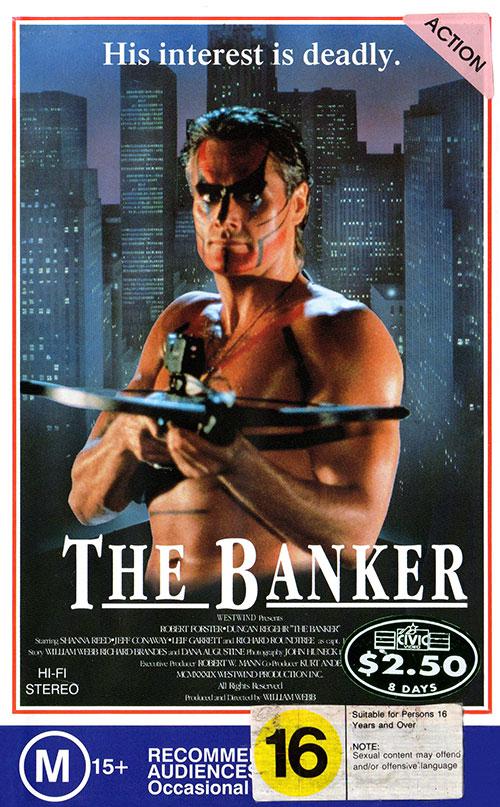
Spaulding Osbourne is a super-wealthy businessman played by Duncan Regehr, who you may know as Dracula from The Monster Squad. He’s come to Los Angeles with a crossbow, a penchant for murdering call girls and the need to paint his face as well as a South American symbol in their blood. His next victim might be Sharon (Shanna Reed), a news reporter on his trail, but not if her ex-husband, Sgt. Dan Jefferson (Robert Forster) can help it.

You read that right. In an American Giallo, Robert Forster is hunting the hunter in the urban jungle. This doesn’t stop there with the wild casting, as Richard Roundtree plays Dan’s captain, and Jeff Conaway and Leif Garrett appear as the pimps who supply Osbourne with the sex workers he needs for his laser-sighted Most Dangerous Game.

Directed by Willaim Web, who also made the beloved Party Line — at the same time! — and written by Dana Augustine and Richard Brandes (Devil In the Flesh), this starts with a Teri Weigel sex scene, which was definitely for the foreign investors.

Forster is the whole reason I watch this. His character has crawled into a bottle since his wife left. He doesn’t have a house. Instead, he lives in his nephew’s treehouse. And he’s mad at everyone around him. This is only topped by the killer’s rituals, which include painting up while watching an entire wall of TVs playing footage of volcanos and sharks.

This isn’t great, but it’s perfect if you watch it before the drunken blackout in the hours between pure darkness and early light.

You can watch this on Tubi.

Cinematic Void January Giallo 2025: Valentine (2001)

EDITOR’S NOTE: Cinematic Void will be playing this Saturday, January 11 at 7 p.m. at the Sie Film Center in Denver, CO. (tickets here). It will be hosted by Keith Garcia, Sie FilmCenter Artistic Director. For more information, visit Cinematic Void.

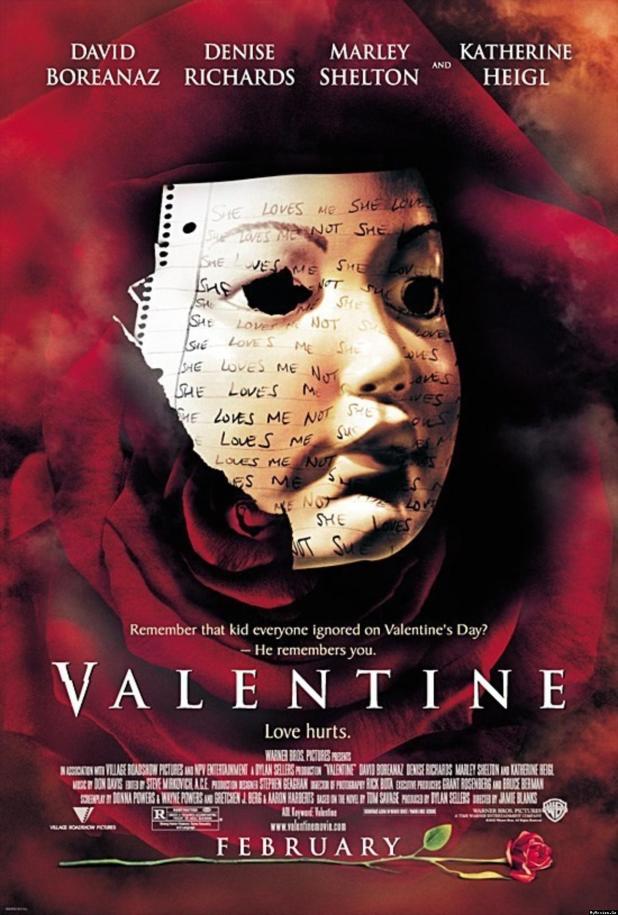
Valentine is a post-Scream slasher that feels closer to a giallo than an American slasher at times, with elaborate death sequences and a masked killer who wears the face of Cupid. It’s packed with the hottest actors of the early 2000’s and directed by Australian Jamie Blanks, who also made Urban Legend and remade Long Weekend in 2008.

The movie starts at a St. Valentine’s Day dance in 1988. Jeremy Melton, the school geek, asks four different girls to dance. Three of them — Shelley, Lily and Paige — instantly reject him while Kate at least gives him a break and says, “Maybe later.”

He finally hooks up with Dorothy, an overweight girl, and they make out in the bleachers. A bully finds them and everyone starts to laugh at the two of them until she claims that he is raping her. This removes Jeremy from school and their lives.

One by one, these girls are stalked and killed. Shelley is now Katherine Heigl and a UCLA med student. After getting a Valentine in her locker, a killer in a trench coat and Cupid mask stalks her and slices her throat. As she dies, his nose begins to bleed. I’m assuming that the people who made this hoped that none of us had ever seen Alone in the Dark.

At her funeral, Kate (Marley Shelton, Grindhouse), Lily (Jessica Cauffiel, Legally Blonde), Paige (Denise Richards), and Dorothy (Jessica Capshaw, daughter of Kate) are questioned by the police. They all get the same Valentines, like the one Dorothy gets that goes so far as to say, “Roses are red, Violets are blue, They’ll need dental records to identify you.” She’s no longer heavy and is part of the in crowd, with a boyfriend named Campbell — who may or may not be a con artist but is definitely a giallo-style red herring.

Lily gets chocolates, but they’re filled with maggots. And at the exhibit of Lily’s boyfriend Max (Johnny Whitworth, AJ from Empire Records), Lily is chased by the killer through the exhibits until she is shot multiple times with arrows — ala the real Saint Valentine — and falls to her death inside a dumpster.

They all realize that the initials on the cars are JM, which means that the killer could be Jeremy Melton. Dorothy admits her lie that sent Jeremy to reform school. It’s at this point that the lead cop, Detective Leon Vaughn (Fulvio Cecere, whose movie 350 Days is all about the life of a pro wrestler) hits on Paige and she strongly rebuffs him.

Kate’s neighbor breaks into her apartment as he has been stealing her panties and is killed with an iron. And as Dorothy plans a huge party, Campbell is killed with an ax. Her friends all assume that he has simply dumped her as she’s still the fat girl in their eyes. Of course, if she listened to Ruthie, Campbell’s crazy ex, she’d know the truth. But she gets brutally killed at the party in a kill that’s reminiscent of Deep Red.

At the party itself, Paige is electrocuted in a hot tub and the power cuts out. Dorothy and Kate begin to argue over who the killer’s identity, with Kate saying that its the mysterious Campbell, while Dorothy accuses Adam (David Boreanaz of TV’s Angel), Kate’s alcoholic ne’er do well boyfriend. They then learn that Lily never made it to California and that she may be dead. After a call from Detective Vaughn, they start to investigate further. As they worry about their safety, they try to call him back but get no answer. Suddenly, they hear a ringtone and follow the sound of it until they find his severed head outside the house.

Kate is absolutely convinced that Adam is Jeremy and runs back inside the house to find him waiting for her. He asks her to dance, but she gets freaked out and runs from him — right into the corpses of Paige and Ruthie. That’s when the Cupid killer runs right into her but is shot by Adam. The mask falls off to reveal Dorothy.

Adam finds it in his heart to forgive Kate, explaining how if you have enough childhood trauma, like how Dorothy dealt with the abuse of being overweight, that anger can stay with you and cause violence. They wait for the police to arrive as he embraces her, telling her that he always loved her. She closes her eyes and we notice that his nose has begun to bleed.

There are plenty of red herrings along the way, like Dorothy’s cherub necklace that could point to her as the killer. And then there’s the fact that that necklace really belonged to Ruthie. But after that gets dealt with, it’s pretty obvious who our killer is.

I liked how each of the murders ends up corresponding to the horrible things that the girls said to Jeremy at the dance, like Paige’s claim that she’d “rather be boiled alive” actually ends up happening.

It’s also refreshing that the women in this, by and large, are aware of how men try to use them and respond in modern ways, such as Paige shutting down the main detective.

Valentine isn’t the best movie you’ll watch, but you can get it for $3 at most streaming sites and for around $2 or less at most used DVD stores. That’s a decent enough price to spend — it goes down as easily as a Valentine’s chocolate but won’t stay with you much longer than a summer fling.

Exclusive interview with Johannes Grenzfurthner part 3

In the next part of my discussion with director Johannes Grenzfurthner, we discuss his film Razzennest and many, many other ideas.

B & S About Movies: I watch a lot of commentary tracks, and bringing the commentary track forward like you did in Razzennest was such an interesting way to tell the movie’s story.

Johannes Grenzfurthner: The idea for Razzennest came to me in the shower—which is unusual for me because I’m not one of those people who typically gets inspired in the shower. But this time, I did. At the time, I was thinking about several different ideas, and a couple of them started to merge into what would eventually become Razzennest.

I’ve always wanted to make a film about the Thirty Years’ War. It was such a pivotal yet horrifying event in European history, and it reshaped the world in profound ways. The war’s sheer brutality forced Europe’s powers to rethink how they interacted, leading to the Peace of Westphalia in 1648 and the modern ideas of nation-states, borders, and diplomacy. But despite its significance, it’s rarely talked about today.

That said, I can’t exactly afford to make a grand historical epic about the Thirty Years’ War. So I asked myself: How can I distill the essence of this topic into a film that’s feasible to produce? That’s when I came up with the idea of the commentary track as the narrative engine—a way for the plot to unfold through audio rather than traditional visuals.

At the same time, I was reflecting on a specific type of arthouse documentary filmmaking. For example, Nikolaus Geyrhalter’s Homo Sapiens—a 2016 documentary where the entire film consists of static shots of desolate places, like abandoned suburbs in Fukushima or decaying shopping malls in Detroit. There’s no narration, no people, no action—just 100 minutes of atmospheric imagery. It’s like a coffee-table book of disaster zones.

I found the film both frustrating and oddly fascinating. On the one hand, it’s audacious in its minimalism and breaks traditional storytelling rules—something I respect. On the other hand, it left me thinking, “What even is this? Is it a movie?” That tension stuck with me.

So I thought: What if I applied that style to a fictitious film? Imagine an arthouse documentary filled with decaying landscapes, old farm equipment, creepy things crawling on trees—all presented with that stark, detached aesthetic. And over that, you hear a commentary track about the Thirty Years’ War, even though the war itself is never depicted visually. That satirical juxtaposition—of historical chaos with visual stillness—became the foundation for Razzennest.

In the end, the film is a collision of these different ideas: my fascination with the Thirty Years’ War, my critique of certain arthouse tendencies, and the creative challenge of telling a story in an unconventional way.

B&S: I think about it every time I record a commentary track.

Johannes: The process was fascinating. In the story, they begin by recording a straightforward commentary track. But as the narrative unfolds, it shifts—ghosts attack or materialize, and the session transforms into an audio horror experience. For me, crafting this felt much closer to creating an audio play than making a traditional film. We did multiple takes, leaving space for improvisation, which gave the project a dynamic, experimental energy.

Audio plays operate with a different set of rules for depicting reality, and that’s something I leaned into. For example, I enjoy found footage films, and to some extent, all my movies borrow from that genre. But found footage has this almost obsessive fixation on realism—often to its detriment. Take the way characters in found footage films handle cameras: they shake them violently, supposedly to make things look more “authentic.” Yet in real life, even if someone were fleeing from a monster, they wouldn’t be that erratic with their filming. People know how to hold their phones or cameras, and modern devices even have built-in stabilizers to smooth things out.

It’s ironic: found footage films try so hard to mimic realism that they end up undermining it. They create a version of realism that feels forced and artificial. That’s where I deviate. For me, realism isn’t the goal. It’s about creating a compelling experience, even if that means breaking away from those so-called “rules” of realism.

B&S: Totally – it’s almost like they’ve built their own visual language within the genre.

Johannes: Exactly. But at the same time, they’re so obsessed with this idea of realism—except it’s not realism at all. For example, I’ve had people say, “The voice acting isn’t realistic; this is a found footage film, so it should sound like a real audio commentary track.” And when I ask them, “What do you mean by that? What kind of realism are you looking for?” they can never articulate it.

For me, this is a classic issue, especially in the horror genre. Fans often have very rigid ideas of how things should look or sound. If something deviates even slightly from their expectations, they become skeptical. Horror fans can be incredibly conservative about how stories are presented.

You see this with the reactions to the recent Halloween films. They’re solid movies that try to do something different, but fans hate them because they’re not the originals or don’t replicate the ’80s vibe. It’s as though fans are chasing a feeling from the past that can’t be recreated. They don’t want something new—they want more of the same.

B&S: People hated the third one at one point.

Johannes: Exactly. The mistake was that they didn’t make the shift earlier. If they had done it with the second film, it would have been clear that Halloween was evolving into a series of standalone, Halloween-themed horror films. But by defining the franchise so firmly around Michael Myers, they locked themselves into that narrative.

B&S: Your movies don’t fit into any easy category. There’s a fine line between arthouse and grindhouse, but if you put a Neon or A24 logo on it…

Johannes: This absolutely gets to the heart of it. Fucking elevated horror. There’s no term I hate more because it’s just pretentious bullshit. Especially in Austria and Germany, where this kind of distinction was ingrained for decades.

In the States, it’s different—you’ve always had a market-driven approach. If it sells, it’s valid. But in Austria and Germany, there was this ridiculous divide, even in music. We had terms like E-Musik (Ernst, or “serious” music) and U-Musik (Unterhaltung, or “entertainment” music). Classical music, opera—those were “serious.” Pop music or anything commercial? Lesser, disposable. The same thing happened with literature. Science fiction, horror, and other genre works were completely dismissed. Even someone like Philip K. Dick didn’t get taken seriously.

And then there’s television. Sure, Austrian public broadcasters did show horror or sci-fi, but it was either cheap Italian stuff they could afford, or it aired very late at night. And when they did show something more significant, it was completely butchered by the German dubbing process. Dubbing often ruined the tone, turning something serious or creepy into unintentional comedy. It was like genre cinema wasn’t even given a fair chance to breathe.

What’s maddening is that we finally started moving past this nonsense. There’s been real, meaningful discussion about the value of science fiction, horror, and genre works. These things are no longer stuck in the cultural ghetto. And sure, 95% of science fiction is crap—but guess what? 95% of everything is crap. It’s about finding the 5% that speaks to you. That’s personal. But the term elevated horror? It drags us right back into that old mindset.

Suddenly, we’re dividing horror into “quality” and “non-quality.” Eggers makes the “good” horror, while everything else is trash? Give me a break. It’s infuriating. Horror doesn’t need a pretentious sublabel to justify its existence. It’s already valid.

B&S: George Romero wasn’t making elevated horror when he started. It was to make money.

Johannes: He’s the patron saint of Pittsburgh, yeah? (laughs)

B&S: I like when art can come out of trying to make money.

Johannes: Of course! Look, we’re living in capitalism. Everyone’s trying to make a living, and Romero wasn’t any different. He didn’t set out to create some highbrow genre redefinition—he made films that could sell. And honestly, that’s one of the reasons his work resonates. It was raw, unfiltered, and tapped directly into the zeitgeist of his time.

Now, take something like A24. It’s also a profit-oriented business. They’ve carved out a niche and a target audience, and they’re incredibly smart about it. They package their films in a way that screams “prestige” or “art,” even when those films are tackling the same themes and ideas as the so-called “lowbrow” stuff. It’s still about making money, but the branding is the trick.

And sure, from a marketing perspective, I get why they lean into terms like “elevated horror.” It’s neat. It’s tidy. It puts things in a drawer so you can say, “This is for the artsy crowd. This isn’t just horror. It’s sophisticated.” But is that helpful? Not really. It creates this artificial divide, suggesting some horror is “better” or “smarter” just because it has a slow pace, a melancholic score, and someone crying in a wide shot.

Night of the Living Dead was a bunch of people making something gritty and intense on a shoestring budget. And yet, it’s one of the most influential films ever made—not just in horror, but in cinema, period. That’s the beauty of genre—it can tackle big, meaningful ideas without putting on a suit and tie and asking for permission to be taken seriously.

The problem with “elevated horror” as a label is that it reinforces these old hierarchies. It tells people, “This is the good kind of horror,” while everything else gets dismissed. It’s the same elitist nonsense we’ve been fighting against for decades in art, music, literature—you name it. Horror doesn’t need elevation. It’s already valid. It doesn’t need permission from the arthouse crowd to matter. It’s a genre that can be as brutal, poetic, or ridiculous as it wants—and that’s exactly what makes it great.

In the next part of this interview, we’ll get into Johannes’ new movie, Solvent.
Traces of Red (1992)

When you see the phrases neo-noir or erotic thriller, read them as Giallo. Isn’t that what it all is, anyway? And who thought that one day, we’d have Jim Belushi as the protagonist of a psychosexual murder movie?

Director Andy Wolk would one day make The Christmas Shoes, but for now, he’s putting this together from a script by Jim Piddock, who has been in a lot of Christopher Guest’s films as an actor but wrote this and two episodes of Silk Stalkings before being the writer of Tooth Fairy.

Belushi is Jack Dobson, a Palm Beach homicide cop who we initially find flat on his back, dead from a gunshot wound to the chest. His narration takes us back to one evening that shows off just how smooth Jack is, defending a waitress from a rude customer and then immediately taking her back to his place, where he plays some smooth jazz before waking her up to coffee in bed. This movie wants you to know two things: Belushi fucks. And Belushi fucks good.

Along with his partner, Detective Steve Frayn (Tony Goldwyn), Jack is trying to figure out who is sending him lipstick-sealed threats. Is it meant for his brother Michael (William Russ), who is running for office? And is Jack so on the make that he’s willing to potentially sleep with his brother’s wife, Susan (Victoria Bass), his partner’s wife, Beth (Faye Grant), and definitely get horizontal and Belushi-sweaty with femme fatale Ellen Schofield (Lorraine Bracco)? This movie also wants you to know that every old man in Palm Beach has a filthy mouth, and they all have something to say about how badly they want to schtup Ellen, even if she rode her last husband into a heart attack.

Ellen also sleeps with Steve, even though Steve loves his wife. Everybody is getting with everybody in Palm Beach, which may as well be Rome. Women connected to Jack keep dying, their faces covered with lipstick — yay, Traces of Red! — which his brother reveals is something his first-grade teacher used to do to him before she would rape him. This is a wild departure for the Giallo, not just making its male protagonist vulnerable but seemingly switching him to the villain.

Or maybe not.

Despite being shot by his partner — it looked like he was about to choke out Steve’s wife — it’s soon revealed that the big brother was the one doing all the killing. And hey! There’s Belushi, looking like he just smoked one of his weed strains like Oreoz — they’re from the streets — or Rewrite. His brother grabs his gun and blows his brains out, ending on a downer note.

Despite being in theaters for a few days, this did big business on home video. Maybe it’s because Belushi wore all his own ties, and people recognized him not just as a fuckable prince of a man but as a sartorial style icon. You know, we should be nicer to him. And by that, I should be nicer to him. For all the horrible things on Twitter, I’ve learned that he’s a pretty chill person — growing all that weed will do that — and the more I think about it, the more good roles in movies by great directors he’s been in. He may need a Tarantino casting intervention so that he can complete this late-career reevaluation.

So yeah. Belushi in a Giallo, complete with an investigation into a misworking printer and trying to figure out a shade of lipstick and a certain perfume. Who knew?

You can watch this on Tubi.

Cinematic Void January Giallo 2025: The Bird with the Crystal Plumage (1970)

EDITOR’S NOTE: Cinematic Void will be playing this on Saturday, Jan. 11 at midnight at the Coolidge Theater in Brookline, MA (tickets here) and Monday, Jan. 13 at 7:00 p.m. at Los Feliz 3 in Los Angeles, CA (tickets here). For more information, visit Cinematic Void

Aside from Mario Bava’s influential films, such as Blood and Black LaceThe Girl Who Knew Too Much, no other movie has left as indelible a mark on the Giallo genre as Dario Argento’s 1970 directorial debut. Before this, Argento was a journalist who contributed to the screenplay of Sergio Leone’s Once Upon a Time in the West.

The title of the film, The Bird with the Crystal Plumage, is a metaphor for the protagonist’s predicament. Just as the bird is trapped by the beauty of the crystal plumage, Sam is trapped by the beauty of the art gallery and the mystery it holds. This metaphorical title sets the tone for the film and its exploration of the relationship between art and violence. In the film, Sam Dalmas (played by Tony Musante) is an American writer struggling with writer’s block. He travels to Rome for a change of scenery, accompanied by his British model girlfriend, played by Suzy Kendall. Just as he decides to return home, he witnesses a black-gloved man attacking a woman inside an art gallery. Desperate to save her, he finds himself helpless, trapped between two mechanical doors as the woman silently pleads for help.

The woman, Monica Ranier, is the gallery owner’s wife. Although she survives the attack, the police suspect Sam may be involved in the crime and confiscate his passport to prevent him from leaving the country. Unbeknownst to them, a serial killer has been targeting young women for weeks, and Sam is the only witness. Haunted by the attack, Sam’s memory is unreliable, leaving him without a crucial clue that could solve the case, adding a layer of suspense to the narrative.

This film introduces several tropes that would become hallmarks of the genre: the foreign stranger turned detective, the gaps in memory, and the black-clad killer—elements that later Giallo films would pay homage to. These elements, along with Argento’s unique visual style and use of suspense, would go on to influence a generation of filmmakers and shape the Giallo genre as we know it today.

Another recurring theme in Argento’s work appears for the first time here: the notion that art can incite violence. In this instance, a painting depicting a raincoat-clad man murdering a woman plays a significant role.

As the story unfolds, Sam receives menacing phone calls from the killer, and the masked assailant attacks Julia. The police manage to isolate a sound in the background of the killer’s conversations—the call of a rare Siberian bird. This bird, a Grey Crowned Crane, plays a significant role in the film’s narrative, serving as a clue that brings the police closer to unraveling the mystery. The film’s use of this rare bird as a plot device is a testament to Argento’s skill as a storyteller and his ability to create tension and suspense.

Alberto, Monica’s husband and the owner of the art gallery, ultimately attempts to kill her, revealing that he orchestrated the attacks. However, in true giallo fashion, mistaken identity is a crucial plot twist. Even though this film was made nearly fifty years ago, I won’t spoil the reveal of the real killer.

I recall my parents seeing this movie before I was born and disliking it so much that they would mention “that weird movie with the bird that makes the noises” whenever they encountered a confusing film. Ironically, I grew to love Argento’s work. My fascination with Giallo and difficult-to-understand films is a form of rebellion against their opinions.

This film, an uncredited adaptation of Fredric Brown’s novel *The Screaming Mimi*, was initially considered a career misstep by actress Eva Renzi. The film’s producer even wanted to replace Argento as director. However, when Argento’s father, Salvatore, spoke with the producer, he noticed that the executive’s secretary appeared shaken. When he asked her what was wrong, she revealed she was still terrified from watching the film. Salvatore convinced her to explain her fear to her boss, ultimately leading to Argento staying as director.

The outcome of this struggle? It is a film that played in one theater in Milan for three and a half years, leading to countless imitators—and inspired many elements in films featuring lizards, spiders, flies, ducklings, butterflies, and more—for decades to come. Argento would later continue his so-called Animal Trilogy with The Cat O’Nine Tails and Four Flies on Grey Velvet, then Deep Red before moving into more supernatural films like Suspiria and Inferno.

The Russian Bride (2018)

ABOUT THE AUTHOR: Joseph Perry writes for the film websites Gruesome Magazine, The Scariest Things, Horror FuelThe Good, the Bad and the Verdict and Diabolique Magazine; for the film magazines Phantom of the Movies’ VideoScope and Drive-In Asylum; and for the pop culture websites When It Was Cool and Uphill Both Ways. He is also one of the hosts of When It Was Cool’s exclusive Uphill Both Ways podcast and can occasionally be heard as a cohost on Gruesome Magazine’s Decades of Horror: The Classic Era podcast.

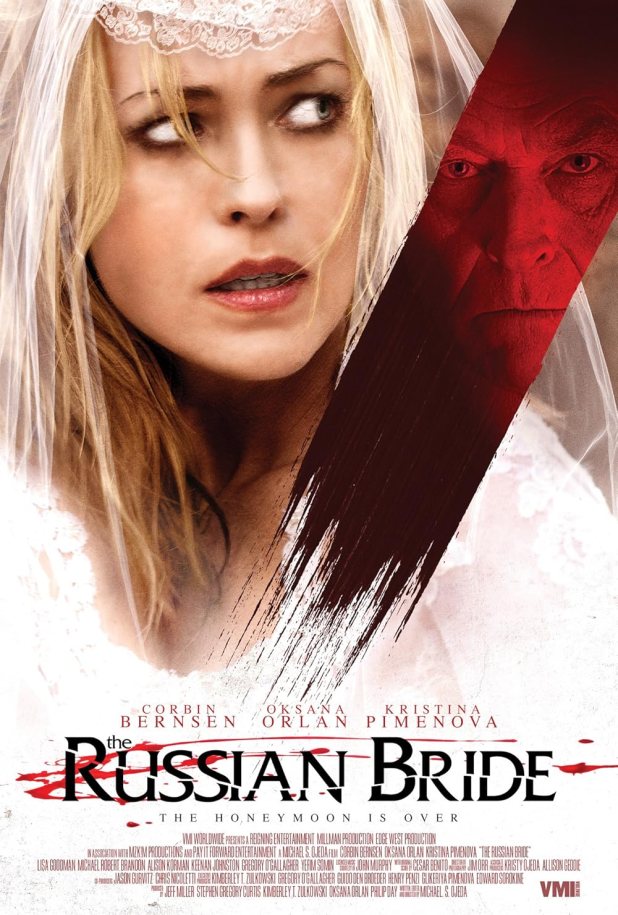
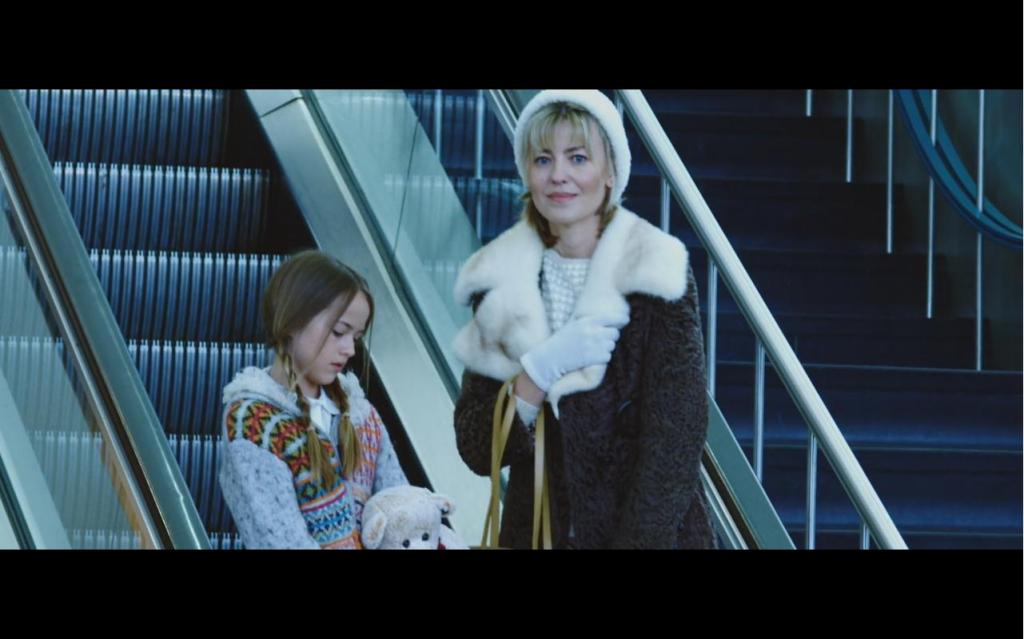
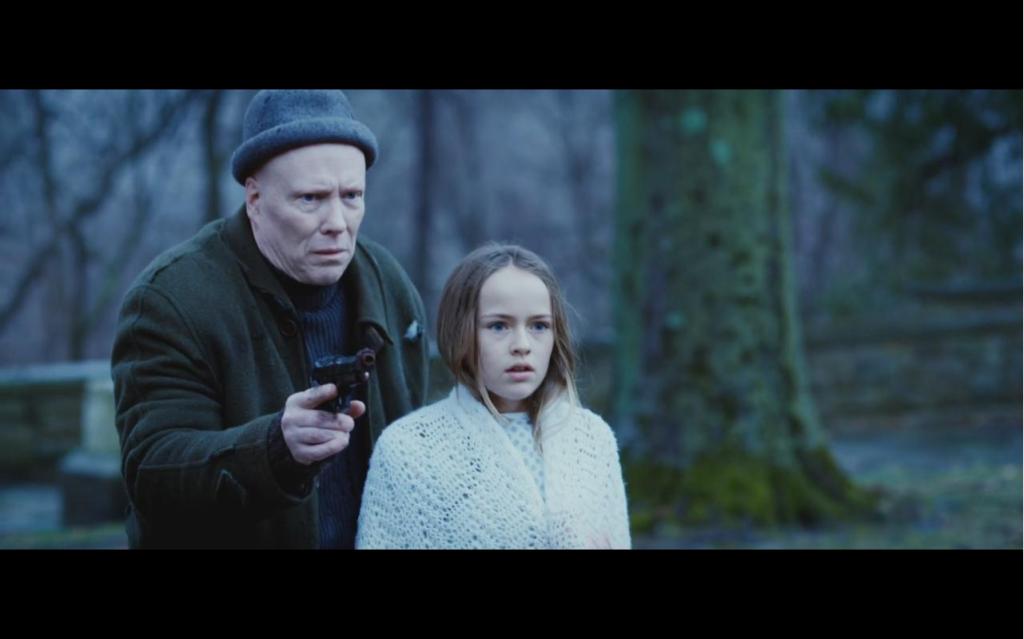
Writer/director Michael S. Ojeda’s The Russian Bride is bound to be a divisive film, with everything hinging on how much fun each viewer decides to have with an effort that starts out with pseudo-heavy, gothic melodrama before going all out with a third act that swings for insane, exploitation cinema fences. My interest levels went back and forth during the movie’s running time, but when it was all over, the film provided enough jaw-dropping, head-scratching moments — peppered with a few unintentional laughs — for me to give it a recommendation.

Almost everything in The Russian Bride is about as subtle as a hammer to the skull — which you are guaranteed in this outing — not the least of which is Corbin Bernsen’s scenery chewing realization of Karl Frederick, a very well-to-do retired physician living in a secluded mansion who chooses single mother Nina (Oksana Orlan) to be his titular wife. Her young daughter Dasha (Kristina Pimenova) is part of the package deal, and viewers sense that has something to do with the plot early on when Frederick sees her on his computer screen for the first time, and gives a less than subdued foreshadowing reaction.

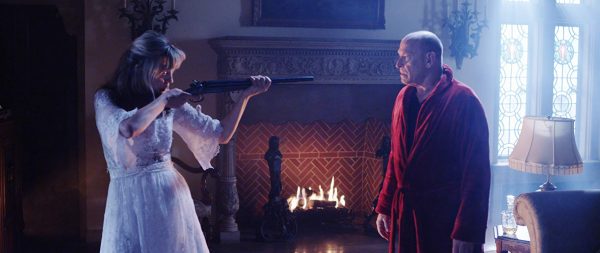
Ojeda’s screenplay is heavy on the tropes, from red herring villainous-seeming sorts, to just-short-of-moustache-twirling baddies, to Nina’s plight going from one cocaine-addicted man to another, to the possibility of supernatural forces at play, to lightning strikes at dramatic moments, especially with a character posed for effect in that particular shot. What makes The Russian Bride worth seeking out is its absolutely nutsoid third act, when Nina, so drugged up by villainous forces that she can barely move a facial muscle, makes a heroic comeback to save her daughter from certain doom. Orlan throws her all into this insane transformation, and truly makes it a blood-soaked blast. She is terrific throughout, wonderfully portraying a loving, protective mother and a woman trying to adjust to a new life in a different set of circumstances, but her furious, frantic turn in the final third of the film is absolutely top notch.

The film is interesting in that it balances a fine line between being hokey and predictable, and being engaging and fascinating. For every negative such as occasionally bad CGI, there is something high quality such as Jim Orr’s gorgeous cinematography. When the story seems to be laying on yet another predictable element, an outré quirk comes along to grab the attention of viewers once again. Another high point of the film is the solid work by the supporting cast members, who know how far to push their characters without wandering into hamminess territory.

The Russian Bride is one to watch for fun, preferably with a theater audience or with friends at home, and not one to overanalyze. For those who wish to do the latter, though, there should be plenty to mine for discussions regarding both the immigration experience in the United States and the current wave of neoexploitation — or perhaps postexploitation? — cinema. As for me, I’m in on this one for the decidedly absurd good time it ultimately provides.