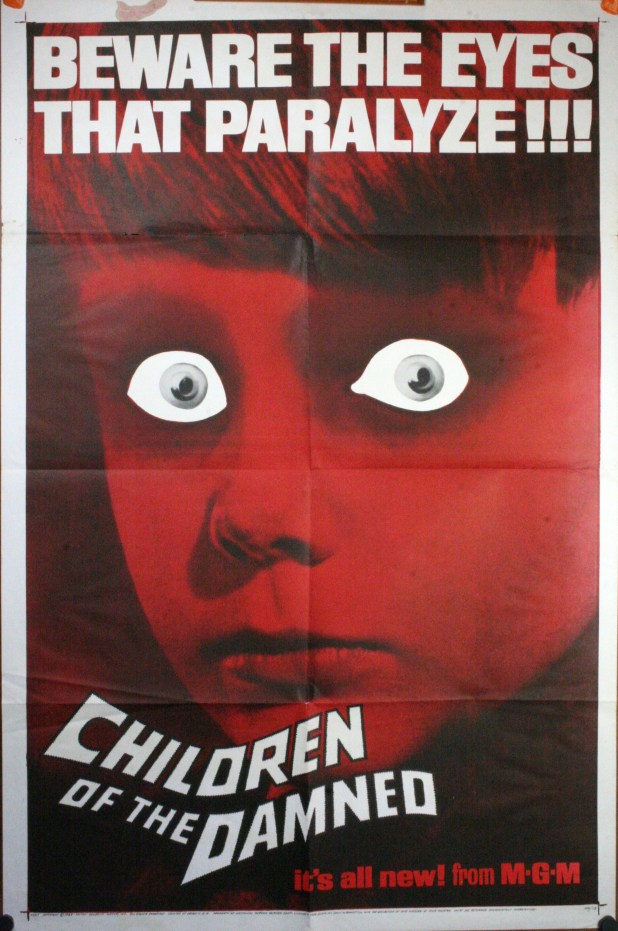
CBS LATE MOVIE MONTH: Children of the Damned (1964)

EDITOR’S NOTE: Children of the Damned was on the CBS Late Movie on March 6 and October 4, 1972 and September 3, 1973.

Directed by Anton Leader and written by John Briley (GhandhiPope Joan), Children of the Damned features six children from six countries, all born under miraculous circumstances. These children, with their extraordinary abilities, come to be seen as the next stage in human evolution, a theme that the film explores in depth.

British psychologist Tom Lewellin (Ian Hendry) and geneticist David Neville (Alan Badel) start by studying Paul (Clive Powell), a London-born young boy whose mother hates him. He joins the others who quickly escape and hide in an abandoned church.

Paul, Nina, Rashid, Mi Ling, Aga Nagolo, and Mark, the six children, are not just a threat to the governments of the world, but also symbols of resilience. Despite the world’s rejection, they continue to fight back when attacked, showing a strength that is both inspiring and unsettling.

The idea that these are all the children of aliens is abandoned, however, as this movie is just about the kids and not where they came from. I personally prefer the much darker first film, which delves more into the children’s origins and the implications of their abilities. However, this sequel still maintains a bleak tone as the group realizes that they have arrived at a time when humans are not yet ready to deal with evolution or have their better future selves walk among them.

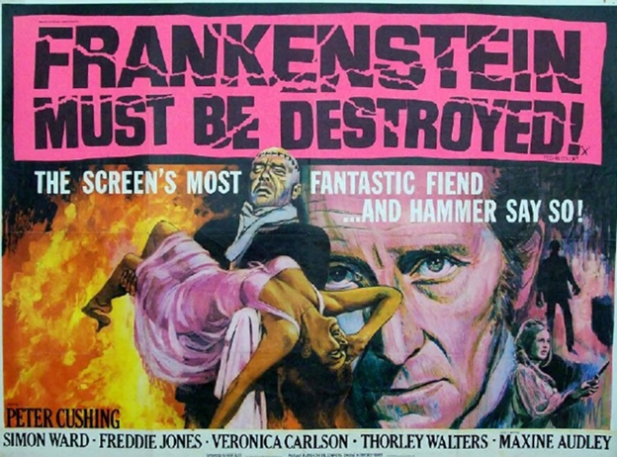
CBS LATE MOVIE MONTH: Frankenstein Must Be Destroyed (1969)

EDITOR’S NOTE: Frankenstein Must Be Destroyed was on the CBS Late Movie on March 10 and July 19, 1972 and November 23, 1973.

There’s a moment in this movie where Baron Victor Frankenstein (Peter Cushing) assaults Anna Spiegler (Veronica Carlson) that was filmed over the objections of Cushing, Carlson and director Terence Fisher, who finally ended shooting when he felt enough was enough. This moment isn’t even in the original script but was added at the demand of Hammer executive James Carreras, who was under pressure to keep the American distributors happy. The fact that a rape scene is what it took is pretty upsetting,

The film starts in a lab where a thief has broken in. By the time he starts his crime, a masked man has broken in as well and decapitated a doctor. The thief reports the crime to the police as the masked man reveals himself to be Dr. Frankenstein, now known as Mr. Fenner. He’s renting a room from Anna, whose fiancee, Karl Holst (Simon Ward), is one of the doctors overseeing the care of Frankenstein’s assistant, Dr. Frederick Brandt (George Pravda).

Karl has a secret. He’s been stealing narcotics to treat Anna’s mother, a fact that Frankenstein uses against him. They work together to free Brandt, and Karl even kills a man in the middle of a robbery, further giving the doctor power over him.

After Brandt has a heart attack, they take his brain and place it into the body of Professor Richter (Freddie Jones). When his wife refuses to accept him because of his horrifying appearance, he goes wild. By the end, he’s poured liquid paraffin all over his house and lures the doctor there, planning to burn him alive or put him out of commission long enough until the next movie in the series, Frankenstein and the Monster from Hell. Yes, I realize there’s also The Horror of Frankenstein, but that movie is a remake of Curse of Frankenstein and has Ralph Bates in the lead role.

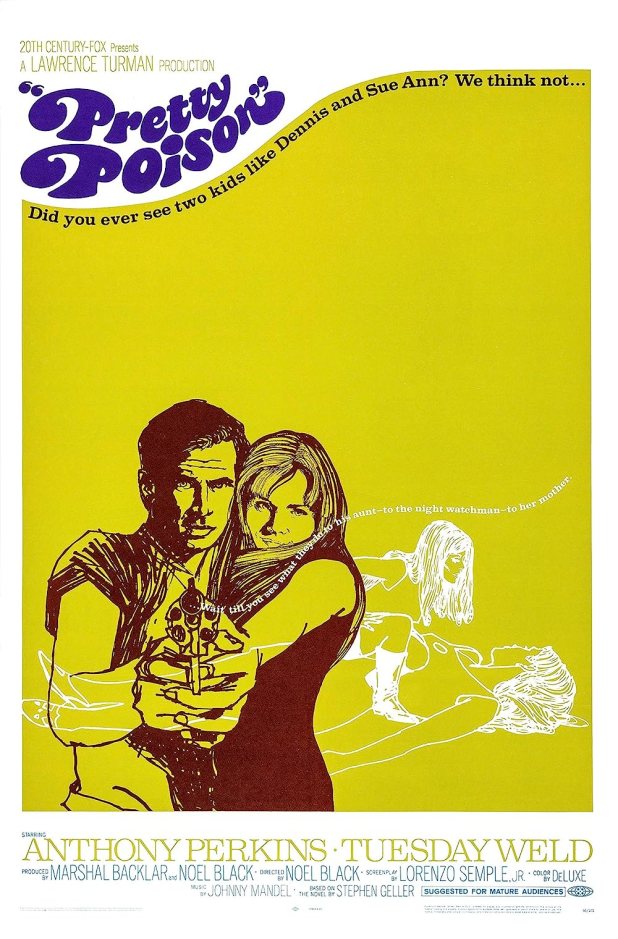
CBS LATE MOVIE MONTH: Pretty Poison (1968)

EDITOR’S NOTE: Pretty Poison aired on the CBS Late Movie on May 15 and December 5, 1973 and July 23, 1974.

Dennis Pitt (Anthony Perkins) wants a life of adventure, and he gets it.

On parole from a mental institution — he set the fire that accidentally claimed the life of his aunt — he works a menial job watching bottles go through the line at Sausenfeld Chemical Company. So when he sees the gorgeous Sue Ellen Stepanek (Tuesday Weld) march across the field in her majorette uniform, he brings her along into the games in his head, pretending to be a CIA agent and having some fun with a young and innocent teenager.

Except that Dennis goes from being the antagonist to the protagonist.

Directed by Noel Black (Private School) and written by Lorenzo Semple Jr. (the TV BatmanFlash Gordon) from the book She Let Him Continue by Stephen Geller, Pretty Poison spends so much of the movie making us think that Dennis is the same kind of killer that Perkins played in Psycho — the last film he was in before going back to the stage — and he’s really just a scared little boy being shocked by the evil inside a gorgeous young lady.

Semple told Shock Magazine, “It was very hard to cast. Tuesday was excellent for it but Tony was much too obvious for it. We really tried to find somebody young to do it. We never could find a new, young actor the studio would go with.”

Weld had tremendous issues with Black. She told Rex Reed it was “The least creative experience I ever had. Constant hate, turmoil and dissonance. Not a day went by without a fight. Noel Black, the director, would come up to me before a scene and say, ‘Think about Coca-Cola.’ I finally said, ‘Look, just give the directions to Tony Perkins, and he’ll interpret for me.” She further hated the movie, saying, “I don’t care if critics like it; I hated it. I can’t like or be objective about films I had a terrible time doing.”

The movie pretty much disappeared in theaters, and any reputation it had came from critics like Pauline Kael, who vilified Fox for its failure to market Pretty Poison. 1968 was a strange year. However, it was a time when the country felt like it was falling to bits, and Robert Kennedy and Martin Luther King were both shots. A film that has a young woman gleefully accepting murder and even turning a gun on her mother (Beverly Garland) was going to have a hard time.

But wow — this movie. It really took me unaware, and I loved the turn Perkins gives to his character; at the end, he is so frightened of Weld that he willingly goes to prison for her crimes. She’s learned nothing and is already moving on to her next victim, yet the end teases that parole officer Morton Azenauer (John Randolph) has figured her out. At one point, it seems like Dennis has all the answers, but when the world cracks on him, he becomes a child.

By the way, Dennis and Sue Ellen go to see The St. Valentine’s Day Massacre, directed by Roger Corman.

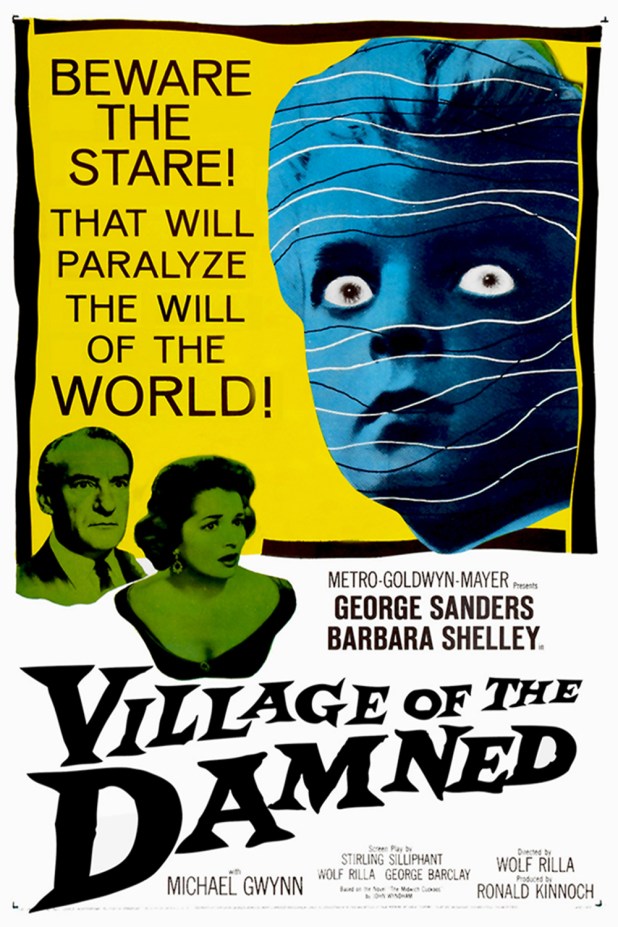
CBS LATE MOVIE MONTH: Village of the Damned (1960)

EDITOR’S NOTE: Village of the Damned on the CBS Late Movie on February 25 and August 17, 1972; January 11, 1974 and January 17, 1975.

Based on The Midwich Cuckoos by John Wyndham, this movie was delayed by two years when MGM gave in to pressure from the Catholic Legion of Decency, who objected to the depiction of virgin birth and other blasphemous implications of this story. It was sent to MGM-British Studio, where director Wolf Rilla and producer Ronald Kinnoch punched up — and made more English — the script by Stirling Silliphant.

The population of Midwich was asleep for four hours. No one knows why. But two months later, all women of childbearing age are pregnant, giving birth at just seven months old to children who communicate with their minds, have platinum hair and have the brightest eyes.

Professor Gordon Zellaby (George Sanders) and his wife Anthea (Barbara Shelley) are the parents of David, one of these extraordinary children. Midwich is not the only place affected, as similar births have occurred in other parts of the world. The town is gripped by fear of these children, who walk in unison, dress alike, and possess the power to control others.

After attempting to understand the children, he realizes the futility of his efforts. There’s no controlling them. For the survival of humanity, they must be eliminated. He envisions a mental barrier, a distraction, and uses it to plant a bomb in their school. The explosion claims their lives, as well as his own, in a tragic end.

This is a happy ending in 1960.

British censors were worried that the glowing eyes of the children would scar people who saw it—many of whom survived the Blitz, mind you—and demanded another version without the effect.

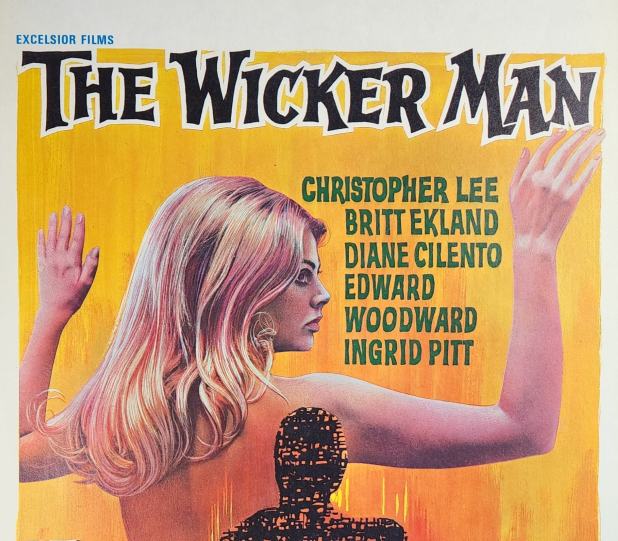
Bucheon International Fantastic Film Festival: The Wicker Man (1973)

The Wicker Man begins with Christopher Lee, a Hammer star, talking to writer Anthony Shaffer about more interesting roles. Shaffer had read the David Pinner novel Ritual — which had first been written as a script for Michael Winner, and I can’t even imagine what he would have done — and turned that inspiration into his own story.

Shaffer’s vision for the film was unique. The story delves into the intersection of modern religion and ancient pagan practices. It departs from the typical blood and gore of horror, opting instead for a creeping, unknown terror that lurks in the shadows. This unique approach is what we now refer to as folk horror.

The Wicker Man stands at the crossroads of art and horror, somewhere between movies like Performance and The Devil Rides Out, but with a twist, as the traditional rules of horror no longer apply. The concepts of good and evil, as defined by Judeo-Christian beliefs, are absent in this story. Instead, it’s a journey into the unknown, exploring ancient ways that have existed long before the modern era.

Christian Sergeant Neil Howie (Edward Woodward) is initially presented as the virtuous hero. He is on the island of Summerisle investigating Rowan Morrison’s disappearance, yet the villagers refuse to admit that she ever existed.

He’s shocked at these people’s ways, which include putting frogs in their mouths to cure illness and dancing around phallic maypoles. He finds images of past May Queens. He meets Lord Summerisle (Lee), who leads this village. And he sees the answers that he seeks, despite perhaps not liking them.

There’s also tempted by Willow MacGregor (Britt Ekland, who was three months pregnant; she was dubbed by Annie Ross, and her body double was dancer Rachel Verney), and there’s a scene where she dances with a wall between her and Howie that is volcanic. It has no nudity, but it’s filled with sensual energy.

Director Robin Hardy also made The Fantasist and The Wicker Tree, a very loose sequel to the original movie. Hardy first published the sequel as a novel, Cowboys for Christ, about American Christian evangelists who travel to Scotland and end up in a similar situation. Lee plays the Old Gentleman, who is either Summerisle or not.

Shaffer also wrote The Loathsome Lambton Worm, a direct sequel that begins immediately after the ending of The Wicker Man. In it, Howie is saved by his fellow police officers. The movie features a fire-breathing dragon and is much more fantastic than the first one.

I watched this film as part of The Bucheon International Fantastic Film Festival (BIFAN), along with the Folk Horror: Lands of Cruelty, Beliefs of Terror program. It includes films like Valerie and Her Week of WondersEyes of Fire, Kill List, the 2019 French version of la LloronaWoodlands Dark and Days BewitchedBldg. NIn My Mother’s Skin and To Fire You Come at Last. You can learn more at their official site.

EXPLORING: What’s with all the Zombie sequels?

In the spirit of my deep dives into Demons and La Casa, I was excited to discover just how many movies use the title Zombi or Zombie. As I learned which ones were which, I figured it would be a good idea to share my scholarly research.

Dawn of the Dead (1978): Obviously, Zombi is Dawn of the Dead. It was released under that title in Italy and features an international cut by producer Dario Argento that is nine minutes shorter. Debuting nine months before the film played its native country, Zombi: L’alba dei Morti Viventi (Zombies: Dawn of the Dead) has more music by Goblin, less exposition and a faster pace, as well as dialogue and gore that never appeared in any version of Romero’s cuts.

Speaking of that Goblin score—The Goblins—three of their songs are in the U.S. version, and much of the soundtrack would show up in Bruno Mattei’s Hell of the Living Dead (as well as Tsui Hark’s Dangerous Encounters of the First Kind; Hark was a zombie fan, one assumes, as he made another film around this time called We’re Going to Eat You).

It’s intriguing to me that Dawn is the next part of the story in America. For Italy, it was the first part of their consciousness. While it would be followed by four official sequels and a remake in the West, the unofficial world of Italian exploitation would soon take over and create an entirely new monster from the shambling corpse that originated in Western Pennsylvania.

Zombi 2 (1979): When Enzo G. Castellari stepped away from making an Italian sequel to Zombi , the rules regarding intellectual property rights for installments to movies in Italy were quite hazy. This allowed for Lucio Fulci to be hired to continue the story. His film would sail away from the scientific explanation of zombies in Romero’s work and goes to voodoo for its origins, taking the ultraviolence that Tom Savini created in Monroeville and amping it up for the island of Matul.

Writer Dardano Sacchetti, who wrote this movie as Nightmare Island, said his influences included The Island of Doctor Moreau and classic zombie tales like I Walked with a ZombieThe Walking Dead and Voodoo Island.

I don’t need to sell you the magic of this movie. Romero told Paul Weedon when asked, “So I didn’t pay attention to it and I didn’t go to see them. I’ve seen them since, of course, and I think they’re sort of fun. But I had no particular care or concern about it at all.

I’ve always been sort of off in my corner doing my thing. And I’ve just hit the point where I can’t do that anymore, you know? I can’t hide and just bring the zombies out. I used to be the only guy working with zombies, except for those guys, like Fulci. And that died quickly.”

In Germany, Day of the Dead was Zombi 2.
Zombi 3 (1988): Directed by Fulci and/or Bruno Mattei, written by Claudio Fragasso and Rossella

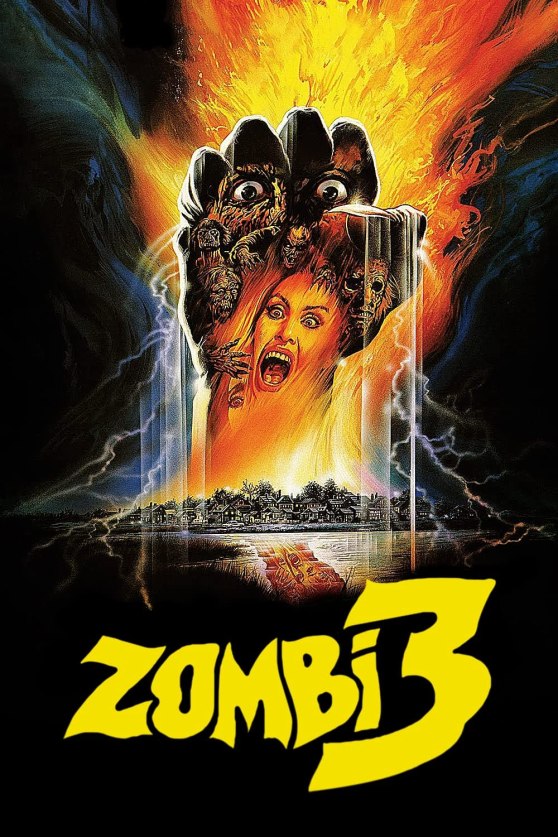
Zombi 3 (1988): Directed by Fulci and/or Bruno Mattei, written by Claudio Fragasso and Rossella Drudi, and all sorts of strange, Zombi 3 was shot in the Philippines. That’s where either Fulci got sick before it was finished or fought with producers. Either way, Mattei finished Strike Commando 2, went home to spend the holidays with his family, and returned to finish the movie with Fragasso.

In the magazine X-Rated, Mattei was diplomatic and even complimentary of Fulci, saying, “…the film’s soul is from Fulci. It was his object, not mine. I only took it over after the main production was finally finished. Fulci was informed about everything, and there was little discussion about it.”

While charitably a mess, the film does have a standout moment with a great flying zombie head attack. This scene, despite the film’s overall quality, is a testament to the creativity and ingenuity of the filmmakers. Additionally, the film features a DJ narrating the movie, a nod to The Warriors, which adds a unique and entertaining element to the viewing experience.

This is not the only movie listed as Zombi 3. Others include Umberto Lenzi’s Nightmare City, which was released as Zombi 3: Efialtis stin poli (Zombies 3: Nightmare In the City) in Greece; Andrea Bianchi’s Burial Ground, which was released as Zombie 3 in Japan, Zombi Horror on Italian video and Zombie 3 – Die Rückkehr der Zombies (Zombie 3: Return of the Zombies) in Germany; Marino Girolami’s Zombie Holocaust (remixed in the U.S. as Doctor Butcher, M.D.) was released as Zombie 3, José Luis Merino’s The Hanging Woman (AKA Orgy of the Dead, Beyond the Living Dead, Return of the Zombies and Bracula: Terror of the Living Dead) was sold as Zombie 3 and Jorge Grau’s Let Sleeping Corpses Lie (AKA The Living Dead at Manchester MorgueDon’t Open the WindowDon’t Speak Ill of the Living Dead and Breakfast at the Manchester Morgue) was released in Greece as Zombi: Epidromi apo to nekrotafeio (Zombies: Graveyard Raid) and in Brazil and Italy as Zombi 3, despite being made four years before Dawn.

Zombie 4: After Death (1989): Claudio Fragasso, who directed this, refers to it as the “last gasp” of Italian zombie movies. The movie starts as researchers discover that the natives are practicing voodoo. They kill the priest, who places a curse that brings the dead back to life before he dies. Only a young girl named Jenny survives thanks to an enchanted necklace her parents gave her.

Jess Franco’s and Jean Rollin’s A Virgin Among the Living Dead may have been made in 1974, but it was released on video in the U.S. as Zombie 4: A Virgin Among the Living Dead.

In Greece and Australia, Panic (AKA Bakterion) was released as Zombi 4, and Bruno Mattei’s Hell of the Living Dead was also released as the fourth movie in this series.

Zombi 5: Killing Birds (1987): Whether this was directed by Joe D’Amato, Claudio Lattanzi or Claudio Fragasso, this movie has zombies killing people, birds eating eyeballs and the same house from The Beyond. It somehow also has Robert Vaughn in the cast. I still can’t figure out how they got him.

Jess Franco’s Revenge In the House of Usher was also released as Zombie 5: Revenge in the House of Usher (that title is on the video box only, not the actual movie); Hell of the Living Dead (which was released as Zombi 4 as well) was retitled Zombi 5: Ultimate Nightmare in America. Seeing as how it rips off Dawn‘s soundtrack, that actually makes sense.

Zombi 5 in Australia is really León Klimovsky’s Revolt of the Zombies (which was re-released in 1980 by Independent Artists as Walk of the Dead complete with red flashes during the gore; it was picked as a Dog of the Week by Siskel and Ebert; it also has the title Invocation of the Devil so that it could be mistaken as an Exorcist movie).

Zombi 6, anyone?:  In Australia, Zombi 6 is a movie that desperately wishes it were ZombiDawn of the Mummy. It even has the same markup artist as Fulci’s movie, Maurizio Trani. The Down Under version of Zombi VII: Last Rites is from another entirely different film series. It’s the fourth Blind Dead movie, Night of the Seagulls. Finally, Zombi VIII: Urban Decay is an Australian-made movie.

Jess Franco’s Oasis of the Zombies AKA The Abyss of the Living Dead is also Zombi 6.

Strangely enough, Absurd might be a sequel to Antropophagus, but it was sold on video as Zombie 6: Monster Hunter. That’s OK. Antropophagus came out as Zombie 7.
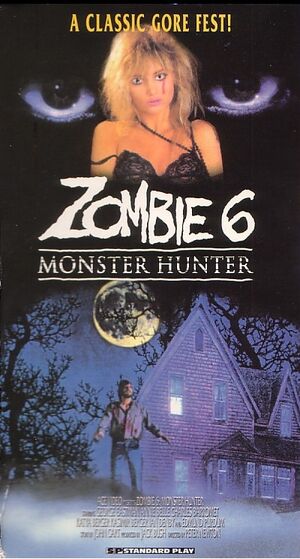
Even more Zombi: The North Korean kaiju film Pulgasari is a big story in and out of itself — director Shin Sang-ok was kidnapped and taken to North Korea by Kim Jong-il to make the movie — but for our purposes, it was called Zombi 34: The Communist Bull-Monster in Pakistan.

Andreas Schnaas’ Zombie ’90: Extreme Pestilence was also released as Zombi 7.

How does each country number the movies? Glad you asked.

Italy

Note: While Zombi 4 is titled Zombi 4 in America, in Italy, the film is titled Oltre la more (After Death), while Zombi 5 is Uccelli assassin (Killing Birds).

Great Britain

  • Zombie Flesh Eaters (1979) — Zombi 2
  • Zombie Flesh Eaters 2 (1988) — Zombi 3
  • Zombie Flesh Eaters 3 (1989) — After Death

Thailand

Germany

Australia

  • Zombi IV: Bakterion (1982) — Panic AKA Bakterion
  • Zombi V: Vengeance (1973) — Vengeance of The Zombies
  • Zombi VI: The Mirage (1981) — Dawn of The Mummy
  • Zombi VII: Last Rites (1975) — Night of The Seagulls
  • Zombi VIII: Urban Decay (2020)

America

T-Z Video/Eddie’s Entertainment also released these movies on VHS in America as Zombi sequels.

Greece

  • Zombi 2: To nisi ton zontanon nekron (Zombies 2: The Island of the Living Dead) (1979) — Zombi 2
  • Zombi 3: Efialtis stin poli (Zombies 3: Nightmare In the City) (1980) — Nightmare City
  • Zombi 4: Meta thanaton (Zombis 4: After Death) (1989) — After Death
  • Zombi 4 (1982) — Panic AKA Bakterion
  • Zombi 5: Matomena nyhia thanatou (Zombies 5: Bloody Claws of Death) (1988) — Killing Birds
  • Zombi: Epidromi apo to nekrotafeio — Let Sleeping Corpses Lie

In summary, I’m sure I missed something, so please add your notes in the comments, and you’ll be credited.

Sources

Wikipedia: Zombi film series

Zombi 3 – Wikipedia. https://en.wikipedia.org/wiki/Zombi_3

Rate Your Music: “The Confusing as Fuck Zombi Series

Matul Island | Rotten Ink. https://rottenink.wordpress.com/tag/matul-island/
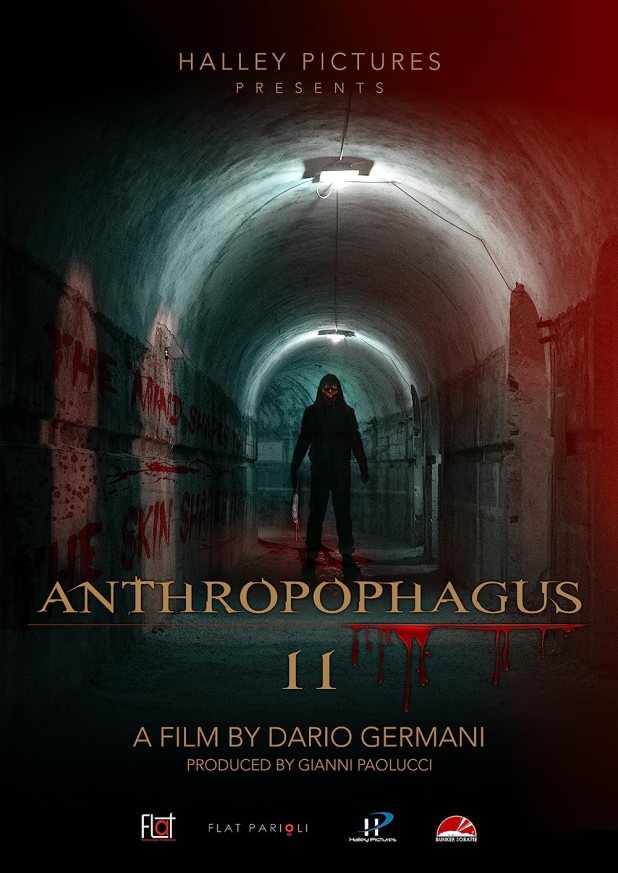
Bucheon International Fantastic Film Festival: Anthropophagus II (2022)

It’s pretty amazing to me that this movie exists, seeing as how Anthropophagus came out all the way back in 1980—and was spelled Antropophagus—and already has had several spiritual and unofficial sequels, like Absurd—which is closer to Halloween than D’Amato’s first film, which was released as The Grim Reaper in the U.S.*—and the German sort of sequel Anthropophagous 2000, which was made in 1999.

You don’t need to really know anything about the original to watch this.

The BIFFF website has a great line about this: “It ticks off all the boxes of Italian Z-grade trash cinema: an outrageously idiotic script, paper-thin and brain-dead female characters who are more likely to break out into a pillow fight than to engage in a scientific discussion on their thesis (we do hope the filmmakers have met actual women in real life), bad acting made worse by hilarious dubbing and such outlandish amounts of blood, guts, intestines, brain mush, baby removals and other such niceties that put Hostel to shame. In short: pure, unfiltered bad taste.”

A teacher named Nora (Monica Carpanese, who is also in Claudio Fragasso’s 2022 movie Karate Man) has assigned her students — Giulia (Jessica Pizzi, The Slaughter), Angela (Giuditta Niccoli), Diletta (Maria D’Ascanio), Betty (Chiara De Cristofaro), Sonia (Shaen Barletta), Cinizia (Valentina Capuano) and Isabel (Alessandra Pellegrino) — to an assignment that will help her thesis paper on the impact of isolation. She’s gotten the keys to a fallout shelter where numerous people have already died, asked the girls to not bring their phones, and everyone just goes along with this plot.

Meanwhile, a mysterious man (Alberto Buccolini) is hunting them all.

Antropophagus is best known for a scene where Klaus Wortman (George Eastman, who also co-wrote the script for the 1980 movie) tears a fetus out of Maggie (Serena Grandi) and eats it right on camera. For being a degenerate exploitation filmmaker, that film’s director, Joe D’Amato, waited until nearly the movie’s end. Here, it happens three minutes in.

Director Dario Germani started his career as a cinematographer (he’s still working as one, as he made Emanuelle’s Revenge with Carpanese last year, as well as the aforementioned Karate Man), and he understands that for this movie to work, the tunnels — the Bunker Soratte, Gallerie del Monte Soratte — that it takes place within have to be claustrophobic. There are some nice shots within this, as well as some gore — skin rolling off arms — that got close to disturbing me. Writer Lorenzo De Luca doesn’t do much to tie this to the original, and instead, it feels like it could easily be a ripoff of The Hills Have Eyes or Hostel.

Credit — or blame — for putting this together goes to Giovanni Paolucci. Yes, the same man who wrote Ark of the Sun God before writing and producing the last period of Bruno Mattei’s career (from Attrazione pericolosa — which starts Carpanese — to Zombies: The Beginning) and Dracula 3D.

I have to be honest. Yes, this movie is terrible, but if it was shot on film and made in 1980, the dubbing, bad acting and lack of story would not bother me. I wish the monster in this had an intimidating size and aura like George Eastman. The dubbing is so bad here that it made me love what I was watching. That said, I can only imagine someone who hasn’t made it through the assembled canon of D’Amato, Mattei and Fragasso would detest this movie.

*I can make this even more confusing by saying that Absurd was also released as Zombi 6 and Antropophagus as Zombi 7, but let me tell you, breaking down which movies are called what Zombi numbers will give you a migraine. Check out this article to learn more.

I watched this film as part of The Bucheon International Fantastic Film Festival (BIFAN). You can learn more at their official site.

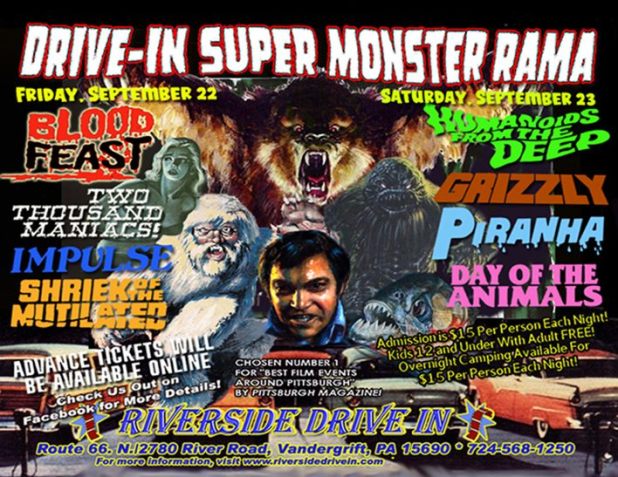
Get ready for the Drive-In Super Monster Rama in September!

Coming up this September at the Riverside Drive-In is the Drive-In Super Monster Rama! plays for two awesome nights! For just $30 ($15 a night), you get eight astounding movies! Make your travel plans now!

Night one: Blood Feast, Two Thousand Maniacs!, Impulse and Shriek of the Mutilated

Night two: Humanoids from the Deep, GrizzlyPiranha and Day of the Animals

You can hang out with some of the biggest movie fans ever, get great food, buy movies, get a drink from me and so much more. See you September 22 and 23!


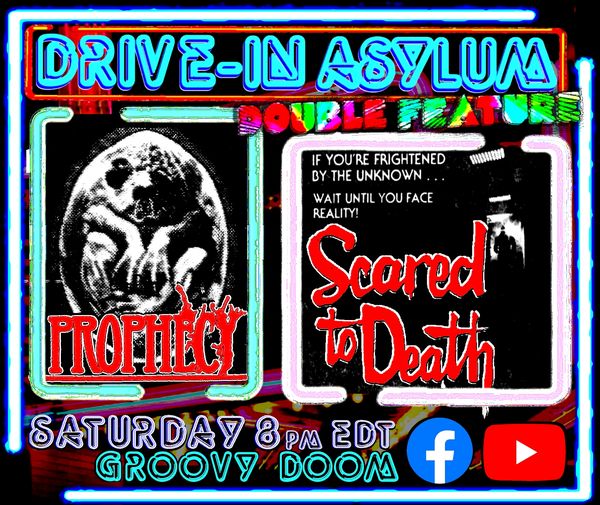
BEARS AND BEASTS ON THE DIA DOUBLE FEATURE!

This week, we’re heading into the woods and wilds to meet a mutant bear and a SYNthesized GENetic ORgansism. Join Bill and me at 8 PM EST on the Groovy Doom Facebook and YouTube channels.

Up first…Prophecy which you can watch on YouTube and the Internet Archive.

Every week, we talk about the movies, share the ad campaigns and have two drinks. Here’s the first recipe:

Gummy Katahdin

  • 1.5 oz. pineapple vodka
  • 1 oz. rum
  • 2 oz. pineapple juice
  • 4 oz. Hawaiian Punch
  • Prepped gummy bears

Day before…

Take a plastic container and line it with 20 or more gummy bears. Pour 3 ounces of pineapple vodka over them and let soak for a day.

Drink…

  1. Combine all ingredients in a shaker with crushed ice and several uncrushed agitator ice cubes. Shake up like you’re a bear destroying an oil industry worker.
  2. Pour in a glass, then drop in those drunken gummy bears. Roar loudly.

Up next is the slasher with a killer that might not be human known as Scared to Death. You can watch it on YouTube and Tubi.

Here’s the second drink.

Spinal Fluid

  • 1.5 oz. pineapple vodka
  • 1 oz. sour apple schnapps
  • 2 oz. pineapple juice
  • .5 oz. lime juice
  • 4 oz. Mountain Dew
  1. Shake all ingredients except Mountain Dew in a shaker filled with ice.
  2. Pour over crushed ice, then top with Mountain Dew.

See you Saturday night!

Chattanooga Film Festival wrap-up

I’m sad to see another year end at the Chattanooga Film Festival. If you’d like to help the festival — and get some cool movies every month — you can keep the film fun going by joining their Patron. Starting at just $2 a month, you can support independent cinema. At $5 a month, you can join the Double Secret Cinema Society. At $10, you get two secret movies on the 13th of every month!

Here’s what I watched this year. You can also check out the Letterboxd list.

Salute Your Shorts: Includes Stephen King’s All That You Love Will Be Taken AwayPunch the BossSolitudeDon’t Look Too Far AheadGreenhouseAfter HoursAnyaCrossing TidesHarmoniousNetneutalRetributionThe Businessman and Morse Code.

Dangerous VisionsTell Alice I Love HerFetal PositionGlitchNo Overnight ParkingVexedSeaborneMickey DogfaceThe InvertsSplinterStop DeadThey Call It…Red CemeteryMemento Moti, Stop ScrollingDead Enders and Gnomes.

Fun Size EpicsA Good ScreamRingwormsKickstart My HeartShallots and GarlicGreetingsThe Lizard LaughedBlack TeaFarmer EdPicture DayCanalThe Five Fingers of a DogLikenessWhen You’re GoneThe Waiting Room, Or Eggs In PurgatoryCafe CicatrizThe Spirit Became Flesh and the Stewards.

WTF (Watch These Films)CONTENT: The Lo-Fi ManSeatbeltsDon’t Let Kyle Sit DownWe Forgot About the ZombiesVariations On a Theme, Foot TroubleGold and Mud, The Earthling, The Promotion, Vertical Valor, Foul and FIN.

Red Eye Films: Obsession: A Taste for Fear, Campfire Tales, Tales from the Crypt, The Divine Enforcer, The Haunted, Club Life, Necronomicon: Book of the Dead, Silver Slime, Killing Spree and Possibly In Michigan

American Meltdown

Bad Girl Boogey

Beaten To Death

Brutal Season

End Zone 2

Followers

Hell Hath No Fury

Invoking Yell

King On Screen

Local Legends

Mrs. Booker On 8th Avenue

New Religion

Poundcake

Satan Wants You

Soft Liquid Center

Sour Party

Space Happy

Stag

Subject

Summoning The Spirit

Tales from the Crypt: Bordello of Blood

Tearsucker

The Bigfoot Trap

The Elderly

The Haunting of Hype House

The Last Movie Ever Made

The Legend of Mexman

The Once and Future Smash

The Third

The Weird Kidz

Trap

Trim Season

We Might Hurt Each Other

Next year can’t get here soon enough. Thanks again to everyone involved with CFF.