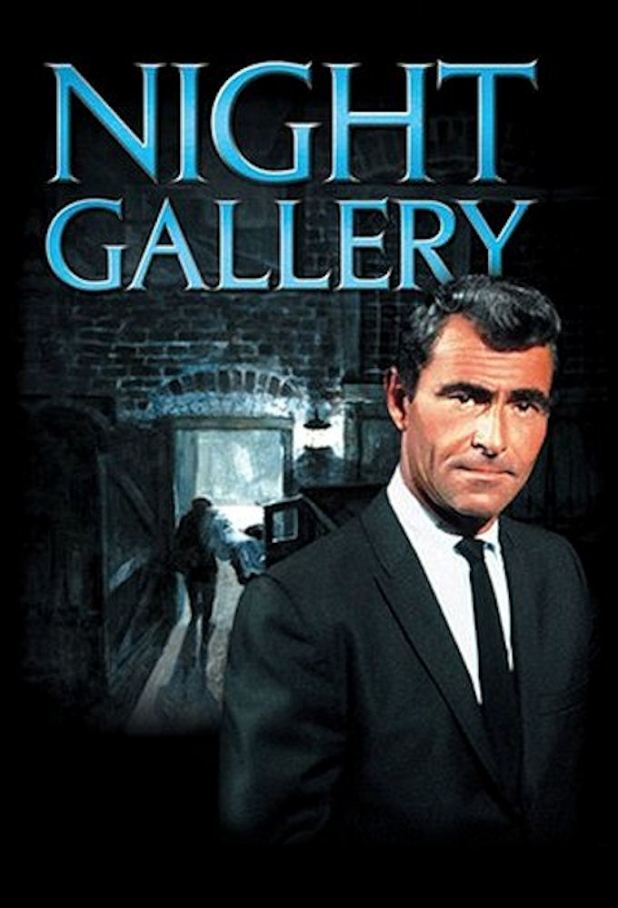
Night Gallery season 2 episode 8: The Diary/A Matter of Semantics/Big Surprise/Professor Peabody’s Last Lecture

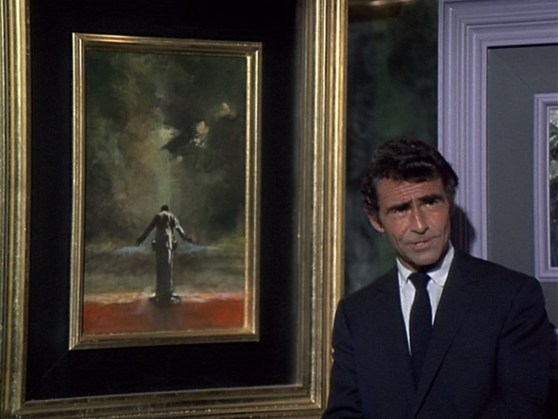
When I see four stories on a Night Gallery, I get worried. It means that Jack Laird is messing up the dark doom that Rod Serling is bringing and I despise that.

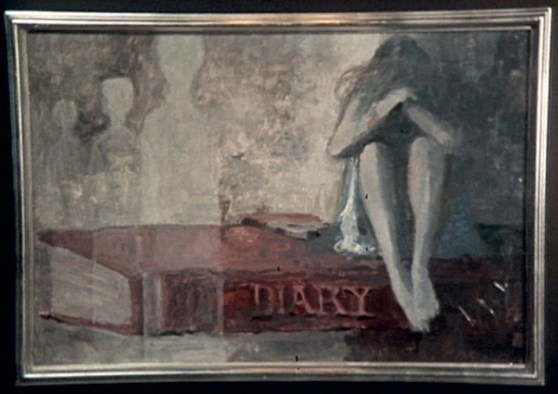
In “The Diary,” Holly Schaeffer (Patty Duke, who was pregnant with Sean Astin during filming) brutalizes an aging and disgraced Hollywood legend named Carrie Crane (Virginia Mayo). Before she dies, Crane gives her a diary where everything comes true. It’s simple, yet it works. Director William Hale and writer Serling create a short and sweet story here; it also has some of the most amazing early 70s furniture — and a Lindsay Wagner cameo — that makes it even more watchable.

“A Matter of Semantics” is Laird directing from a Gene R. Kearney script. Count Dracula (Cesar Romero) goes to a blood bank. Another one note Laird joke that ruins the momentum of the show.

“Big Surprise” has Chris (Vincent Van Patten), Jason (Marc Vahanian) and Dan (Eric Chase) seeking whatever Mr. Hawkins (John Carradine) has buried. Again, it’s simple and quick, but this time effective. Then again, I’m someone that Carradine always works for. Director Jeannot Szwarc does a good job on the Richard Matheson script, which is just the right level of strange.

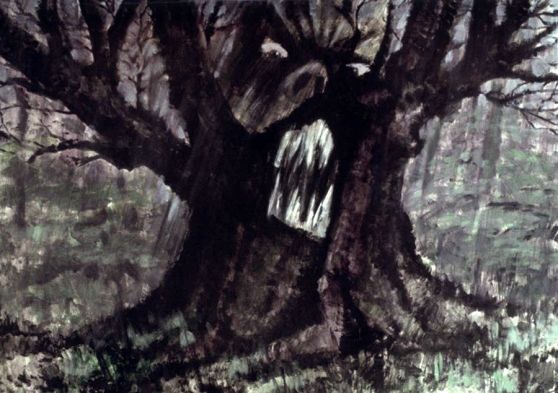
“Professor Peabody’s Last Lecture” may be silly and over the top, but this Jerrold Freedman-directed (he also was the man who made VictimsThe Boy Who Drank Too MuchA Cold Night’s Death and Kansas City Bomber) effort from a Laird script is the first time that many may have heard the name H.P. Lovecraft. Professor Peabody (Carl Reiner) makes light of primitive cultures without realizing that those that live beyond the wall of the endless are always listening.

It mentions writers associated with Lovecraft as well, like Robert Bloch and August Derleth, who added Catholicism’s views of right and wrong to Lovecraft’s mythos, which take them away from their never to be understood cosmic horrors and turn Cthulu into more space kaiju, which I feel mean saying sounds like something right in the perfect headspace for Jack Laird. While this segment has a dumb ending, it has a great race toward doom.

All in all, even with Laird creating more on this episode, there’s enough that’s on the good side for once. If you can make it through his segments, there’s plenty to like here.

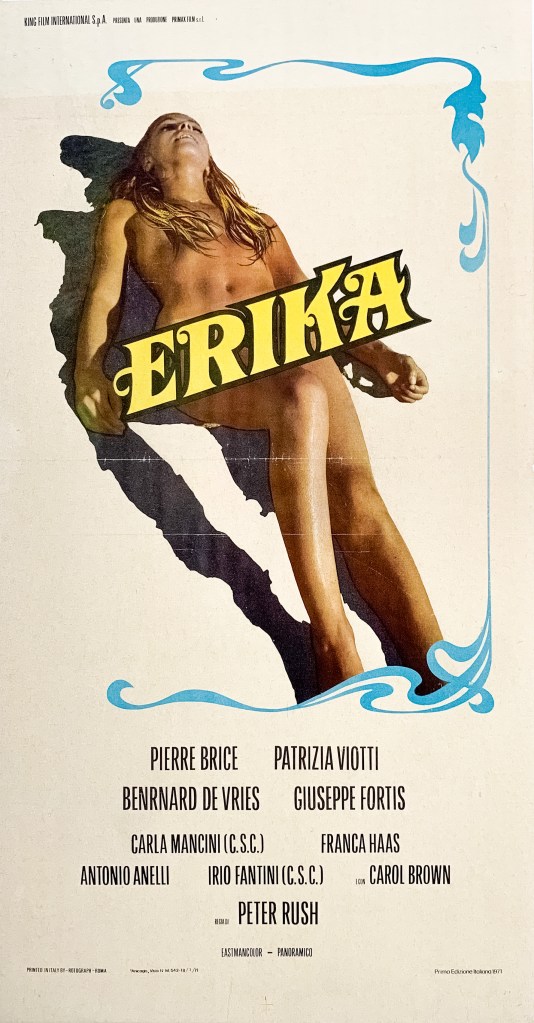
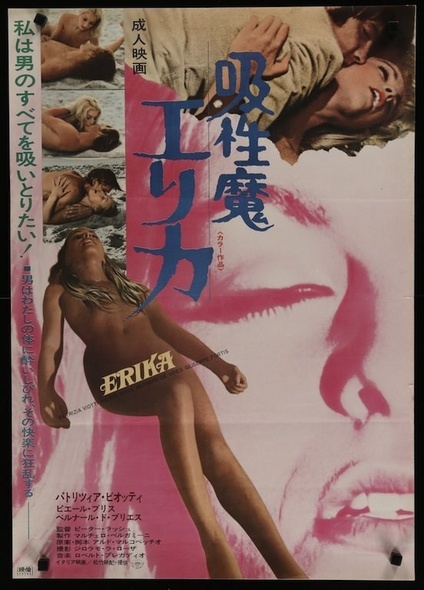
NEW WORLD PICTURES MONTH: Erika (1971)

Filippo Walter Ratti made some classy movies in his life. There’s the biographical Eleonora Duse, the Zorro ripoff The Black Mask (which made over a hundred million lire), the Christmas Carol remix It’s Never Too Late and a story of the 1944 Ardeatine massacre titled Ten Italians for One German. In 1966, he made Operation White Shark, a Eurospy film and then didn’t make anything for five years.

Then he made Erika.

Ratti used the name Peter Rush for this and his next three movies, the last of his career. Night of the Damned has a witch killing people to stay young. Mondo Erotico is, you know, a mondo. Crazy Desires of a Murderer is a giallo by way of gothic castles and eyeballs being torn out of the heads of gorgeous women.

Then there’s Erika.

I can’t believe that Erika played the U.S. and even more, I can’t believe that a hardcore version was supposed played Cannes in 1971.

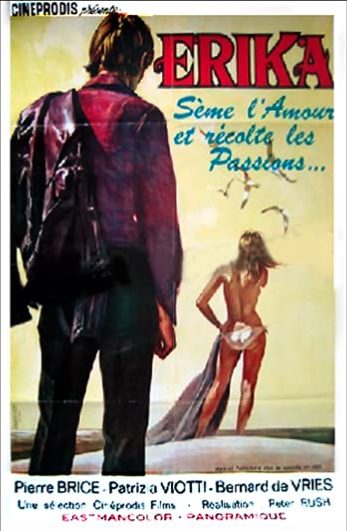
It feels more like a movie that Joe D’Amato would have made — well, did make — with Patrizia Votti (AmuckLa morte scende leggera) as the twenty-year-old Erika who makes her way from Germany to the home of her mother’s acquaintance Baron Giovanni Laurana (Giuseppe Fortis, War of the Planets). Dropped a gorgeous young blonde into a house full of Italian men is a bad idea, as you can guess, as she instantly hooks up with the Baron’s son Renato (Pierre Brice, who is also in Ratti’s Night of the Damned, as is much of the cast, which makes me think both of these movies were shot at the same time*), despite the fact that he’s due to be married to Concettina (Carla Mancini, who was chained up in The Girl In Room 2A). There’s also the younger brother Luca (Bernard De Vries), who Erika also falls for, and the film gradually goes from frothy sex comedy to near gothic tragedy by the end. Erika is gorgeous and seems unattainable, yet she destroys everyone she touches.

Erika supposedly made 300 million lire but was banned for how sexy it all is. This seems kind of ridiculous, as it’s nowhere near as dirty as Italian movies can be. But who knows, 1971 was sort of early. It has a really provocative soundtrack by Roberto Pregadio, too. He also did the scores for Smile Before Death, Death Carries a CaneSS Experiment Camp and The Last House on the Beach.

*They even share the same screenwriter, Aldo Marcovecchio, and that film also had an adult version — Night of the Sexual Demons — that screened in Cannes. They were both made at Elios Studios in Rome, so I think this has gone from theory to close enough to truth. To be fair, everything from Phenomena to Play MotelKeoma and Shanghai Joe were made there. Also, not that it’s infallible, but Wikipedia says that both films were made one after the other on the same sets.

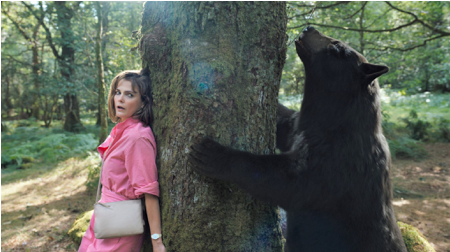
Cocaine Bear (2023)

ABOUT THE AUTHOR: Jennifer Upton is an American (non-werewolf) writer/editor in London. She currently works as a freelance ghostwriter of personal memoirs and writes for several blogs on topics as diverse as film history, punk rock, women’s issues, and international politics. For links to her work, please visit https://www.jennuptonwriter.com or send her a Tweet @Jennxldn

Unless you’ve been hiding under a rock, you’ve seen the incredible trailer for this film.

Cocaine Bear is, as advertised, a non-stop romp of comedy horror.

This movie is a breath of fresh air. It’s the exact opposite of any of the more recent films that seem to be all the rage. You know the ones. The ones so far up their own asses, we can see the director’s dental work. Whenever I hear the phrase, “elevated horror” I hear Jack Burton’s voice in my head opining, “I don’t even know what the hell that means.”

This is the kind of movie that looks back to an age when guys like Roger Corman and William Girdler made back in the old days with a cast of likeable characters in jeopardy chased by a monster. Like all good movie monsters, this one is sympathetic. She’s a mother black bear who stumbles upon a bunch of cocaine and well…she likes it. Her cubs like it too. This movie is so ballsy it even has kids trying coke, although they do spit it out. It offers no preachy eco or anti-drug messages. It does what movies were invented to do. Entertain! The kills are scary and the humor organic to the situation as batshit as it is. There’s no wink-wink self-aware bullshit here. It’s a bear high on cocaine killing people. That’s what you get.

The film clocks in at 90 minutes. Proof positive that a movie doesn’t need to be 3 hours long to be good. It’s a tight script, weaving together several sub-plots and likable characters together with enough over-the top action and gore to satisfy even the most jaded B-movie fan. 

The performances are good. Despite the short running time, each character is given enough development that we feel it when something bad happens to them. Ray Liotta couldn’t have asked for a better swansong even if he’s not looking his best here.

The music by Devo’s Mark Mothersbaugh strikes the perfect balance between the ‘80s and 2023 and the camera work and editing are as good as any movie with twice the budget. 

Cocaine Bear will no doubt usher in a new era of low-budget copycats. Attack of the Meth Gator has already been announced. Kudos to Universal for greenlighting such a fun concept and bigger kudos to director Elizabeth Banks for pulling it off. Lest I forget WETA who have done an excellent job with the bear. Remember when animal fur was hard to pull off in computer generated characters? It’s damn near perfect here.

See this one with a like-minded friend or a group of friends and you’re going to have a good time. It likely won’t play the same on a quiet evening at home. Hopefully, its success will make horror movies fun again. I haven’t laughed this hard at a movie in ages.

The Burial (2021)

When Molly’s (Faith Kearns) boyfriend Brian (Vernon Taylor) gets a phone call from his estranged brother Keith (Spencer Wetzel), he heads off for an unplanned family reunion at their remote cabin. She goes along for the ride because, well, people always go back home and deal with old trauma in horror movies without thinking twice about it. I guess they do in real life, too. I mean, Brian even tells her that his brother has issues, but she just jumps at the chance to do something.

When they get to the cabin, they learn that Keith has shot Lenny (Aaron Pyle), who may or may not be dead but is definitely inside Keith’s head. More to the point, maybe he should have killed Lenny. Then again, if you’re new to a family, this might not be the way to introduce your brother to your girlfriend.

Director and writer Michael Escalante interned at Roger Corman’s New Horizons Pictures during his last year at UCLA. This is his first full-length film. He’s obviously learned how to use his budget effectively and get the most out of what he has. The cast works together well, the suspense gets tightened up and this small movie succeeds, proving that Escalante is destined for bigger things.

The Burial is available on digital and on demand from Terror Films.

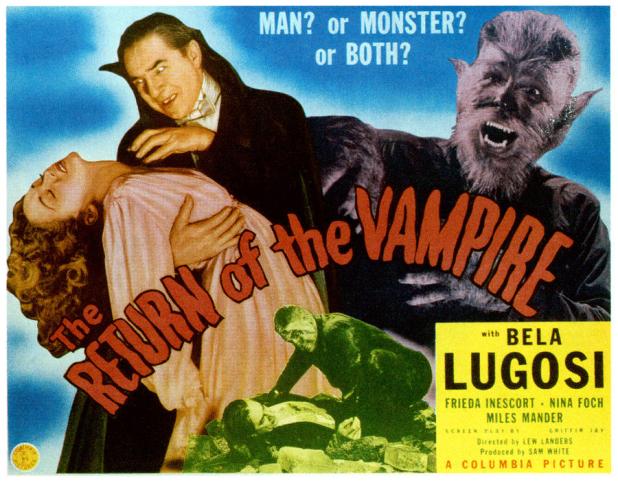
MILL CREEK THRILLERS FROM THE VAULT: The Return of the Vampire (1943)

EDITOR’S NOTE: This was originally on the site on April 21, 2022.

This isn’t an official sequel to the 1931 Universal Studios film Dracula but it really feels like it, except that Lugosi’s name is Armand Tesla and this is made by Columbia. This would be the actor’s last major studio movie.

Lady Jane Ainsley (Frieda Inescort) is stalked by Tesla twice, once during the first World War and again during the second. The first time they crossed paths, she ended up staking him and freeing Andréas, a werewolf, from his curse. He becomes her assistant and his makeup would go on to be used again in 1956’s The Werewolf.

Twenty four years later, during the blitz, some cemetery workers find the body of Tesla and remove the stake from his heart, thinking that it’s shrapnel. Now Tesla walks the Earth again, with Andréas back in thrall, taking the name of Hugo Bruckner, a scientist who has escaped from a concentration camp and is coming to work with Ainsley. Meanwhile, Sir Fredrick Fleet of Scotland Yard believes that Ainsley is a murderer and that there’s no way there can be a vampire.

Director Lew Landers also made 175 other movies, with probably The Raven being his best-known film.

It’s pretty wild that Columbia did everything they could to make their own Dracula movie. Universal did threaten to sue, as they had the Lon Chaney Jr.-starring Son of Dracula coming out. If you think you may have seen this before, it is the movie playing in Iron Maiden’s video for “Number of the Beast.”

Mill Creek’s Thrillers from the Vault set also includes The Black Room, The Man They Could Not HangBefore I Hang, The Devil Commands, The Man With Nine Lives, The Boogie Man Will Get You and Five. There’s also a documentary, Madness and Mayhem: Horror in the 30s and 40s. You can get it from Deep Discount.

MILL CREEK THRILLERS FROM THE VAULT: The Boogie Man Will Get You (1942)

The last movie Karloff made under his contract with Columbia Pictures and filmed in after his success in the 1941 Broadway production of Arsenic and Old Lace, this is the last of the Columbia Karloff as mad scientist films and is a comedy version of that story. It was directed by Lew Landers (The Return of the VampireTerrified) and written by Edwin Blum (who in addition to a writing career that stretched from 1935’s The New Adventures of Tarzan all the way to 1986’s Gung Ho — with stops in-between including Stalag 17 and episodes of The Man from U.N.C.L.E. and The New People — as well as being the scriptwriter who came up with the nickname Tricky Dick for Richard Nixon), based on a story by Hal Fimberg and Robert B. Hunt.

Karloff is Professor Nathaniel Billings, a scientist who has fallen behind on his mortgage. He sells his gigantic home to Winnie Layden (Miss Jeff Donnell, who took her first name from the comic strip Mutt and Jeff; she played Gidget’s mom and housekeeper Stella Fields on General Hospital) who decides to pull off that The Beyond plan of turning a place filled with dead bodies into a hotel. She also hires Billings’ staff, housekeeper Amelia Jones (Maude Eburne) and maintenance man Ebenezer (George McKay), all while ignoring that he’s growing superhumans for the war effort.

Winnie’s ex-husband Bill (Larry Parks) wants her to reconsider the sale — pretty wild to have a divorced couple in a Hayes Code movie — so he explores the house, finds the bodies and tries to get the law involved in the form of sheriff Dr. Arthur Lorentz (Peter Lorre), who promptly starts working with Professor Billings and using a traveling powder puff salesman (former NYSAC, NBA and The Ring light heavyweight champion Slapsie Maxie Rosenbloom). Then everyone learns another murderer is in the hotel as well as a potential German agent.

It’s no Arsenic and Old Lace, but it certainly tries to make you think that it’s exactly that movie.

Mill Creek’s Thrillers from the Vault set also includes The Black Room, The Man They Could Not Hang, Before I Hang, The Devil Commands, The Man With Nine Lives, The Return of the Vampire and Five. Each movie has a commentary track — The Boogie Man Will Get You has Larry Strothe, Matt Weinhold, Shawn Sheridan and James Gonis from Monster Party Podcast — and there’s also a documentary, Madness and Mayhem: Horror in the 30s and 40s. You can get it from Deep Discount.

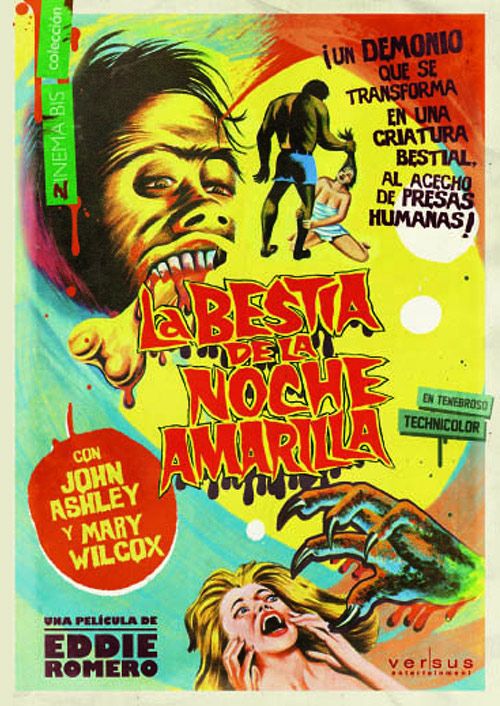
NEW WORLD PICTURES MONTH: Beast of the Yellow Night (1971)

EDITOR’S NOTE: This was originally on the site on January 17, 2020.

Eddie Romero directing and John Ashley starring? That was all I really needed to know. Man, anything remotely connected with these two — like the Blood Island films — and I’m ready to go.

This was also the first release for Roger Corman’s distribution company New World Pictures. After successfully distributing Beast of Blood in 1970, Kane W. Lynn’s Hemisphere Pictures tried to get the distribution rights to this, but got cut out of the deal.

Ashley’s new company, Four Associates Ltd. went on to produce The Twilight People, The Woman Hunt and Ebony, Ivory & Jade. As for Lynn, he worked with Sam Sherman to make Brain of Blood. Me? I’m happy all around at whatever these maniacs decided to make.

While Ashley would say that this was the most cerebral of the Philippines-based horror movies he made — and its success led to Corman making more movies there like The Big Doll House — Eddie Romero would say, “We really tried for quality. I don’t think it did very well. They prefer out and out gore.”

As World War II ends, Satan himself — Vic Diaz from Night of the Cobra Woman — spares Joseph Landgon’s (Ashley) life if he becomes his disciple. So over the next 25 years, Langdon possessed people and forces them to do the bidding of his dark master.

However, he wants to free himself from the Lord of the Flies, but instead becomes a hairy monster who could pretty much be a werewolf. He’s in the body of Phillip Rogers now and that man’s wife tries to save him. An old blind bandit named Sabasas finally saves him, asking him to pray for his soul just as an inspector catches up to him and shoots our — well, I guess he isn’t the hero — turning him into an ancient corpse.

Mary Charlotte Wilcox, who plays the wife, is also in the absolutely bonkers film, Love Me Deadly, which I love me dearly. She also shows up in Psychic KillerBlack Oak ConspiracyStrange Brew and was a cast member of SCTV and Maniac Mansion.

Once he moved back to America, Ashley produced The A-Team. In one episode, he plays a movie producer trying to get a movie made. That movie? Beast of the Yellow Night.

You can watch this on Tubi.

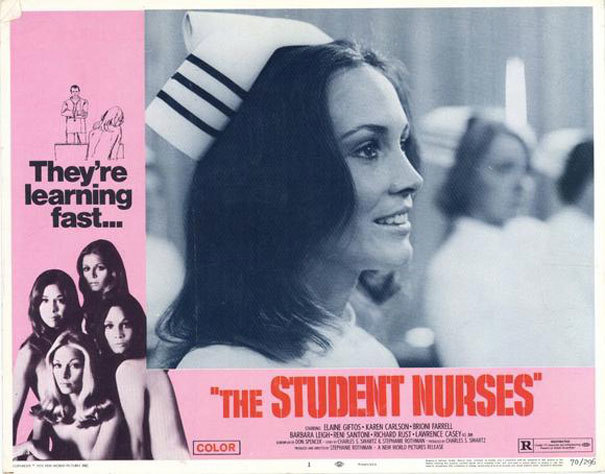
NEW WORLD PICTURES MONTH: The Student Nurses (1970)

When Roger Corman got New World Pictures running, he hired Stephanie Rothman — who started working for him since 1964 as his assistant — to write and direct its second film. Rothman had no idea what an exploitation movie was until she saw a review that called her movie one.

She said to Interview, “I had never heard that term before. Roger never used it. So that’s how I learned that I had made an exploitation film. Then I went and did some research to find out exactly what exploitation films were, their history and so forth, and then I knew that’s what I was doing, because I was making low-budget films that were transgressive in that they showed more extreme things than what would be shown in a studio film, and whose success depended on their advertising, because they had no stars in them. It was dismaying to me, but at the same time I decided to make the best exploitation films I could. If that was going to be my lot, then that’s what I was going to try and do with it.”

The genius of Rothman is that she could take the expected — men have fantasies over nurses — and make a movie that sure, has all the nudity that the exploitation tag demands, but also challenge viewers and make them see more than just breasts.

In an interview with Henry Jenkins, she said, “…we were free to develop the story of the nurses as we wished, as long as there was enough nudity and violence distributed throughout it. Please notice, I did not say sex, I said nudity. This freedom, once I paid my debt to the requirements of the genre, allowed me to address what interested me… political and social conflicts and the changes they produce. It allowed me to have a dramatized discussion about issues that were then being ignored in big-budget major studio films: for example, a discussion about the economic problems of poor Mexican immigrants… and their unhappy, restive children; and a discussion about a woman’s right to have a safe and legal abortion when, at the time, abortion was still illegal in America. I have always wondered why the major studios were not making films about these topics. What kind of constraints were at work on them? My guess is that it was nothing but the over-privileged lives, limited curiosity and narrow minds of the men, and in those days they were always men, who decided which films would be made.”

Keep in mind, Rothman made this in 1970, when women were still fighting to be seen as equal.

There are four student nurses, all sharing the same house as they navigate the adult world for the first time. Phred (Karen Carlson) is in love with Dr. Jim (Lawrence P. Casey) but accidentally ends up in his roomate’s bed. Sharon (Elaine Giftos) loses her objectivity when helping a terminally ill boy try and live. Lynn (Xenia Gratsos) decides that hospitals aren’t really treating people that really need it, so she starts a free clinic with a revolutionary named Victor Charlie (Reni Santoni). Priscilla (Barbara Leigh, who didn’t just date Elvis and Steve McQueen, but was the first live model to wear the Vampirella costume on the cover of the magazine) is the free spirit that ends up in the arms of a drug dealing biker who knocks her up and drives away, leaving her all alone to get an abortion from Dr. Jim, Lynn and Sharon in a brutal scene that Rothman juxtaposes with tender lovemaking moment.

It’s all very Valley of the Dolls but with a message and not sheer insanity inside. And it moves, let me tell you, it flies. Acid trips, love, loss, pain, growing into who you will be. There are a lot of big messages in here. And yes, lots of breasts. But those are the prerequisites for Rothman to tell her story. Corman asked her to direct a sequel to either this or The Big Doll House, but she turned both down. After The Velvet Vampire, she left for Dimension Pictures. After nearly a decade of trying to make movies her way, she quit around 1978. She told the Austin Chronicle, “For a few years I ran a small proto-union for a group of University of California professors, doing their lobbying and writing a political newsletter about labor issues of concern to them. Then, starting with a small inheritance, I began to invest in commercial real estate.”

She’s said she looked back on her career with both satisfaction and regret, never making the movies she really wanted to make. Even then, she made something out of nothing.

As for Corman, he nearly owned the market on young girls doing jobs in a sexy way after this, including more nurses (The Young Nurses, Private Duty Nurses, Candy Strip Nurses and Night Call Nurses), models (Cover Girl Models), stewardesses (Fly Me) and teachers (Summer School Teachers and The Student Teachers).  They’re good, but not this good.

You can watch this on Tubi.
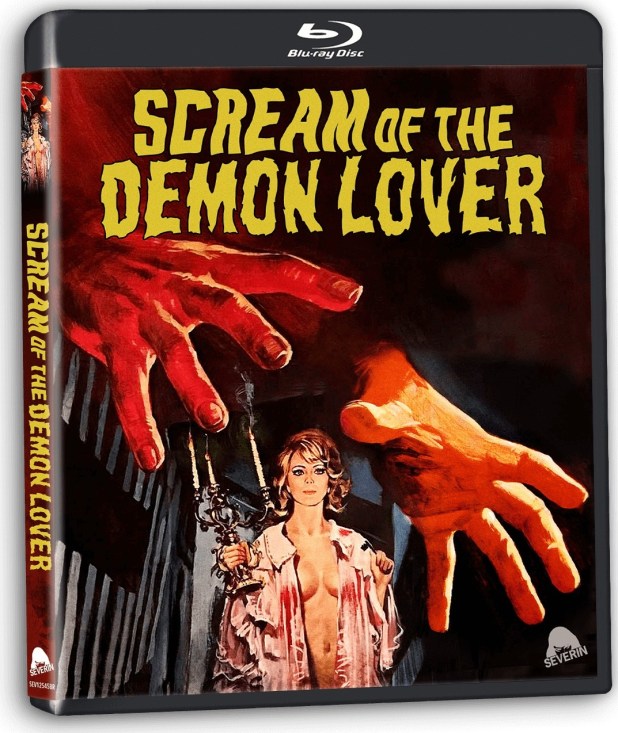
NEW WORLD PICTURES MONTH: Scream of the Demon Lover (1970)

Scream of the Demon Lover goes by many names. Blood CastleIl castello dalle porte di fuoco (The Castle With Doors of Fire). El Castillo de FrankensteinKillers of the Castle of BloodAltar of BloodEl asesino del castillo sangriento (The Bloody Castle Killer). Scream of the Demon LoverLe monstre du château (The Castle Monster). Murhaaja kauhujen linnassa (The Murderer In the Castle of Horrors, what a title!). Ivanna: El castillo de la puerta de fuego (Ivanna: The Castle With the Doors of Fire). Mördaren i skäcken hus (The Killer In the House of Horrors). Das Geheimnis von Schloß Monte Christo (The Mystery of Castle Monte Cristo).

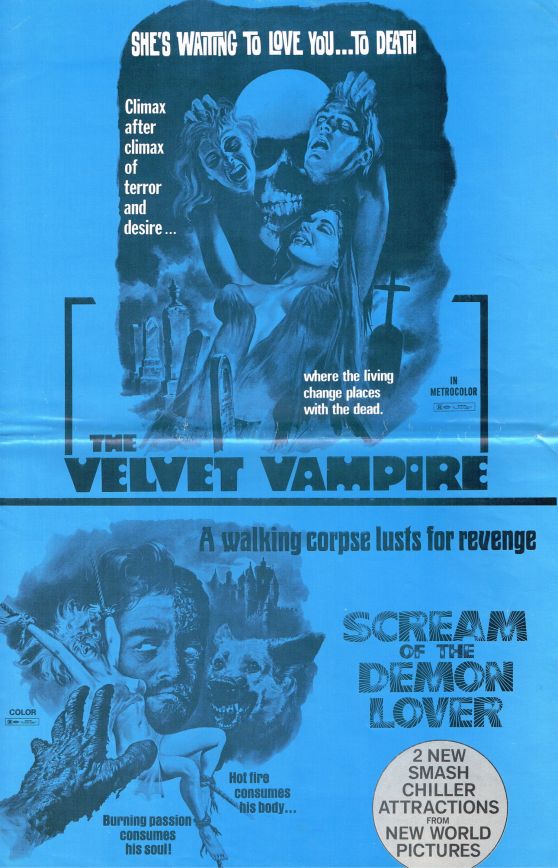
In the U.S., New World Pictures cut it down to 78 minutes so it could fit on a double feature with The Velvet Vampire. It was also syndicated for television with all of the nudity missing, of course.

Biochemist Dr. Ivana Rakowsky (Erna Schurer, Strip Nude for Your KillerDeported Women of the SS Special Section) is a very rare thing: a woman in an Italian gothic horror film who is capable and not just a damsel in distress — well, she is at times, but work with me here — but a capable scientist who travels to the castle of Baron Janos Dalmar (Carlos Quiney, who played Zorro in three films, Zorro’s Latest Adventure; Zorro, Rider of Vengeance and Zorro the Invincible) to assist him in his experiments. She has some problems getting there. The only person that will give her a ride to the castle, Fedor (Ezio Sancrotti), tells her that she’ll die in there and then tries to assault her.

The Baron isn’t very kind to her either. Not at first, as he believes no woman can be a scientist. She shows him that she can handle it, even if his housekeeper Olga (Cristiana Galloni) has issues with her. Also, seeing as how this is an early 70s Italian/Spanish horror movie, there are also plenty of psychosexual moments. You see, Dr. Ivana sleeps in the nude and she has dreams where a scarred man visits her bedside and tortures her. Somehow, in the midst of all this, these two mismatched leads fall in love after science fonds them.

Castle Xenia has many secrets. After all, Igor Dalmar, the last owner, blew himself up real good and the Baron is his brother. Igor’s body is in a milk bath and he wants Dr. Ivana to help him bring Igor back to life. Olga, in case you didn’t guess, used to be with the Baron. And the new maid, Cristiana (Agostina Belli, who somehow went from being in movies like this and The Eroticist to being in the original Scent of a Woman), seems to want the lady doctor more than any man in this movie that still has his skin on.

As you can imagine from the town in the open of the film, young women are dying and everyone thinks it’s the Baron. The man who keeps torturing the good doctor with a red hot poker and fumes while whispering, “Stay pure,” hints that these girls have all died because they weren’t virgins. And even more to the case of whodunit, each of these young ladies has lost their innocence to the Baron before they were killed. So who is it? Olga, who hates every women who gets near her forever lost lover? Cristiana? Or is Igor perhaps not so bereft of life? And why does the Baron have a library of werewolf and occult books that rivals Danzig’s?

Director José Luis Merino also made the Paul Naschy movie The Hanging Woman, another movie with a ton of other titles but I prefer Beyond the Living Dead.

This movie hits all my buttons. Foggy castle. Strange science. Gorgeous young scientists with diaphanous see-through gowns carrying candelabras through a cobwebbed castle. Gnarled up monsters sneaking their way through the countryside with dogs howling in the Bava-esque moonlight. Man, I’ve been thinking about this since I watched it and every review I read that says that it’s a boring dubbed Italian piece of schlock makes me want to conduct sinister experiments in the night and get this thing up to a higher rating on IMDB while unleashing my hound — a five-pound chihuahua — on anyone with the bad taste to dislike this epic.

This movie is part of Severin‘s Danza Macabra box set along with The Monster of the OperaThe Seventh Grave and Lady Frankenstein. It’s exciting to be able to get the full version, uncensored, with the kind of quality that Severin delivers for this movie.

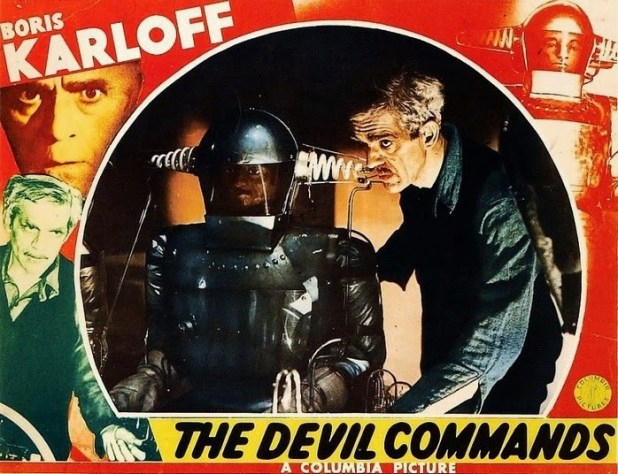
MILL CREEK THRILLERS FROM THE VAULT: The Devil Commands (1941)

Director Edward Dmytryk is best known for his film noir movies, winning Oscars for directing Crossfire and The Caine Mutiny and being named as one of the Hollywood Ten. This group of blacklisted film industry professionals refused to testify to the McCarthy-led House Un-American Activities Committee and as a result served time in prison for contempt of Congress. In 1951, however, Dmytryk testified to the HUAC and named Arnold Manoff, Frank Tuttle, Herbert Biberman, Jack Berry, Bernard Verhous, Jules Dassin, Michael Gordon and 15 others. He claimed that the Alger Hiss case, which found Communist spies in the U.S. and Canada, and the invasion of South Korea changed his mind. That said, he also probably wanted to fix his own career.

The screenplay was by Robert Hardy Andrews and Milton Gunzburg, the inventor of the Natural Vision stereoscopic 3-D system, from a story by William Sloane, who also wrote To Walk the Night.

Boris Karloff plays Dr. Julian Blair, a brain wave researcher, who loses his wife Helen (Shirley Warde) when she dies in a car crash. He becomes obsessed with speaking to her in the world beyond death and is helped by his buitler Karl (Ralph Penney) and a Spiritualist medium named Mrs. Walters (Anne Revere), whose influence over the once logical man worries his research assistant Richard (Richard Fiske) and daughter Anne (Amanda Duff).

I enjoy how in these Columbia films Karloff is the villain yet there are reasons why he has gone wrong. It’s an intriguing way of approaching an antagonist and Karloff makes each of them their own unique version of an archetype.

Mill Creek’s Thrillers from the Vault set also includes The Black Room, The Man They Could Not Hang, Before I HangThe Boogie Man Will Get You, The Man With Nine Lives, The Return of the Vampire and Five Each movie has a commentary track — The Devil Commands has Tom Weaver — and there’s also a documentary, Madness and Mayhem: Horror in the 30s and 40s. You can get it from Deep Discount.